

 TL;DR:
You cannot fully wipe a C drive while Windows is actively running; the safest approach for most users is using the "Reset this PC" feature with the "Remove everything" setting, or booting from official Windows installation media to delete partitions during a custom setup.
● When selling or donating a Windows 10/11 device, manually enable the "clean-data" option during the reset process, or use the manufacturer's secure erase tool for SSDs, to actively overwrite files and prevent future recovery.
● Disk Management can only format or delete a system partition if the drive is connected as a secondary, offline disk to another computer; otherwise, advanced users must use the DiskPart `clean all` command via a bootable setup to write zeroes across every sector.
● Always back up data or extract missing files using tools like Wondershare Recoverit before executing any destructive steps, as data cannot be recovered after a full overwrite, secure erase, SSD TRIM execution, or without the original BitLocker recovery key.
Ask AI for a summary
 ChatGPT
 Perplexity
 Gemini
 Claude
 Grok
Grok
Quick answer: You cannot fully wipe the C drive while Windows is actively running from it. For most Windows 10/11 users, the safest route is Reset this PC > Remove everything, then turn on the clean-data option if you are selling or donating the computer. If you plan a fresh install, boot from official Windows installation media and erase the Windows partitions during setup. Use DiskPart clean or clean all only after you have backed up or recovered files, because the wrong disk number can erase the wrong drive.
The phrase wipe C drive sounds simple, but users usually mean different things: remove personal files before selling a laptop, reinstall Windows from scratch, clean a malware-damaged system, or erase an old boot drive attached to another PC. Those goals need different tools. A Windows reset may reinstall Windows. DiskPart may remove partition information. A full clean or SSD secure erase may make recovery unrealistic.
This guide starts with the decision you should make first: do you need to keep Windows, reinstall Windows, protect private data before resale, or recover files before any destructive step? It follows Microsoft guidance for Reset this PC, Windows installation media, Disk Management, and the Microsoft DiskPart clean command.
If files on the C drive still matter, recover or back them up before you reset, format, delete partitions, or run DiskPart. Recoverit Windows Data Recovery can help scan readable storage for deleted, formatted, or inaccessible files before risky repair. It cannot repair Windows, wipe a drive, bypass BitLocker, or recover data that has already been overwritten by a secure erase or full clean.
In this article
Part 1. Wipe C Drive or Reset PC: Choose the Right Goal
Before following any steps, decide what you want the result to be. A true wipe removes the operating system area, so it is not the same as cleaning junk files or freeing space. It is also not the same as a normal reset if you choose to keep personal files.
| Your goal | Best method | Data risk |
| Keep using the PC but remove apps and personal files | Reset this PC with Remove everything. Use Windows 11 Settings > System > Recovery or Windows 10 Settings > Update & Security > Recovery. | High. Back up or recover files first. |
| Sell, donate, or hand over the PC | Reset this PC with Remove everything and the clean-data option. For sensitive SSD data, check the PC or SSD maker's secure erase guidance. | Very high. The goal is to make personal data hard or impossible to recover. |
| Wipe C drive and reinstall Windows from scratch | Boot from official Windows installation media, choose a custom install, and delete or format the Windows partitions only after data is safe. | Very high. A clean install can overwrite recoverable space. |
| Erase a former C drive connected as a second drive | Use Disk Management, DiskPart, or the manufacturer's erase tool while booted from another drive. | High. Confirm the disk number, size, and model before deleting anything. |
| Recover lost files after an accidental wipe | Stop using the drive. Scan it from another bootable system or recovery environment if possible. | Recovery depends on overwriting, SSD TRIM, encryption, and whether the disk is still readable. |
For search intent, this page should focus on how to wipe C drive, wipe C drive Windows 11, wipe C drive Windows 10, wipe C drive before selling PC, wipe C drive and reinstall Windows, and DiskPart clean C drive. It should not compete with broader topics such as generic hard drive formatting, USB formatting, or factory reset recovery. Those are related paths, but the core here is destructive OS-drive wiping with data protection first.
Part 2. Before You Wipe C Drive: Back Up or Recover Files First
Wiping C drive can remove your desktop files, downloads, browser profiles, app data, email archives, project folders, game saves, and Windows user profile data. Before you erase anything, check these items:
- User folders: Desktop, Documents, Downloads, Pictures, Videos, Music, and custom folders outside the standard libraries.
- App data: accounting files, local database files, exported chats, email PST/OST files, Adobe project folders, CAD files, code repositories, and game saves.
- Browser and accounts: bookmarks, password manager exports, two-factor backup codes, synced account status, and recovery email access.
- Licenses and installers: paid software activation keys, VPN profiles, drivers, and installers that may be hard to find later.
- Encryption keys: BitLocker recovery key, device encryption status, and any external-drive passwords. Recovery software cannot bypass encryption without the legitimate key.
- Backup destination: use an external drive, another internal drive, NAS, or cloud folder. Do not back up to the same C drive you are about to wipe.
If Windows still boots, copy your files manually or use a trusted backup tool. If Windows is unstable, the C drive appears RAW, or files are missing, use recovery software before wiping. For a full walkthrough after reset scenarios, see Recoverit's guide to recover data after factory reset. If the issue involves a failing hard drive or SSD, also review hard drive recovery and SSD data recovery limits before taking destructive actions.
Use Recoverit only when the storage is readable or detectable. If the drive is physically failing, not detected anywhere, or securely erased, software recovery may not be possible.
Step 1. Select the readable C drive or system disk
Install Recoverit on a different drive if possible. Launch it and select the system drive, readable Windows partition, or external enclosure that contains the old C drive data. Do not install or save new files to the wiped drive, because new writes can overwrite recoverable data.

Step 2. Scan for files you still need
Start a scan and let it complete. Filter by file type, file path, file size, or modified date when the result list is large. If the drive is unstable or making unusual noises, stop DIY scanning and consider professional help.

Step 3. Preview and recover to another drive
Preview recoverable documents, photos, videos, archives, or email files when preview is available. Save recovered files to a different disk, external USB drive, or network location. Never restore files back to the same C drive before the wipe or reinstall is finished.

Try Wondershare Recoverit to Back Up or Recover Files
 Security Verified. Over 7,302,189 people have downloaded it.
Method 1: Use Reset This PC for Windows 10/11
Best for: users who want an official Windows workflow, want to remove personal files, or want to prepare a PC for reuse without manually partitioning the disk.
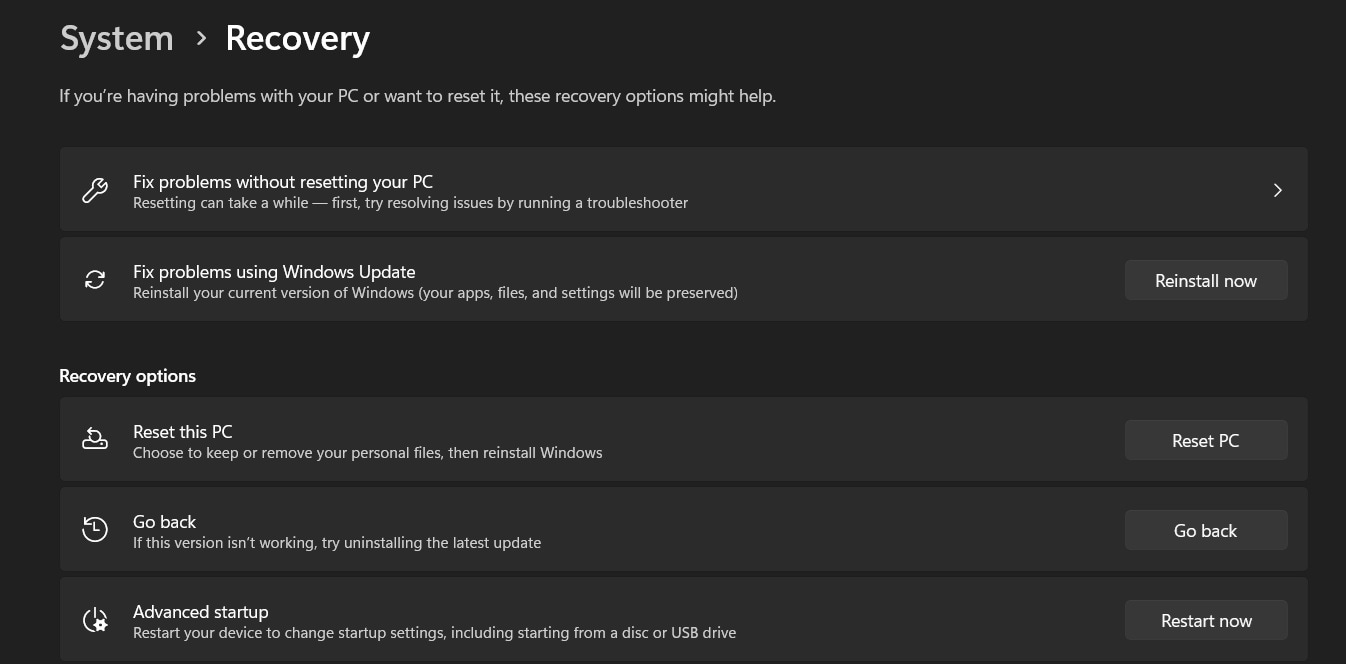
Microsoft's Reset this PC feature reinstalls Windows and lets you choose whether to keep personal files or remove everything. For this topic, choose Remove everything if your intent is to wipe C drive. If you are selling or donating the PC, review the clean-data option because it takes longer and is designed to make file recovery harder.
Windows 11 path: Go to Settings > System > Recovery > Reset PC.
Windows 10 path: Go to Settings > Update & Security > Recovery > Reset this PC > Get started.
- Open Settings, find Recovery, and choose Reset PC or Get started under Reset this PC.
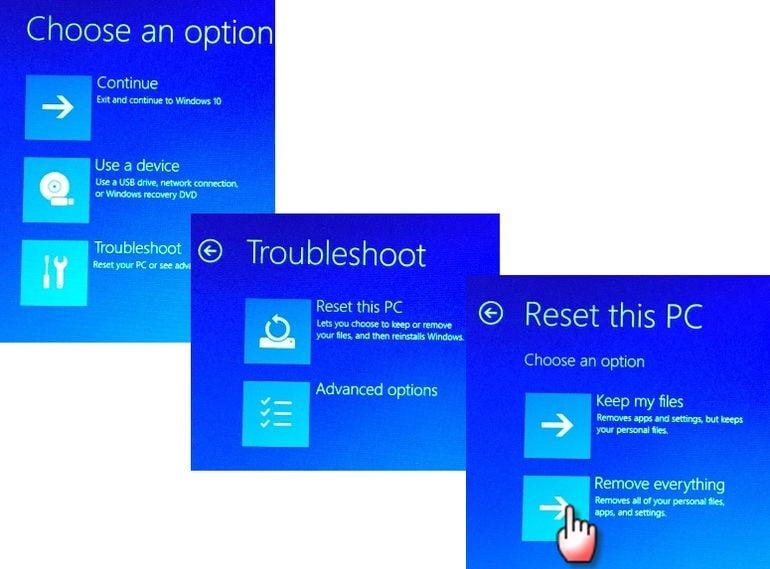
- Choose Remove everything. Do not choose Keep my files if your goal is to wipe the C drive before handover.
- Choose Cloud download or Local reinstall. Cloud download can help when local Windows files are damaged, but it needs internet access and enough data allowance. Local reinstall is faster when the local recovery files are healthy.
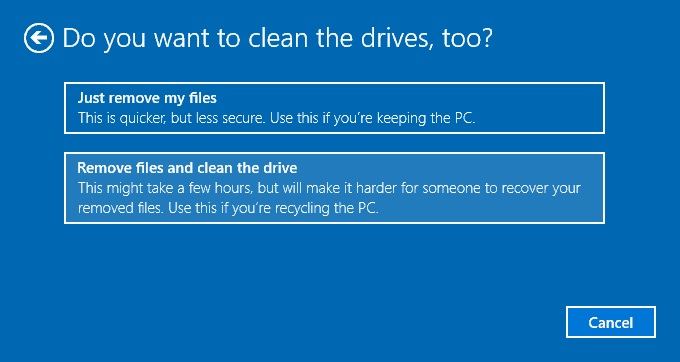
- Open the additional settings screen and turn on the clean-data or clean-drive option if the PC is leaving your possession. This takes longer than a normal reset.
- Confirm the summary carefully. Keep the laptop plugged in and let Windows finish the reset. The PC may restart several times.
Important limit: Reset is not the same as a certified enterprise data-destruction process. For business disposal, regulated data, or high-risk devices, follow your organization's data sanitization policy or use approved vendor tools.
Method 2: Wipe C Drive During Windows Reinstall From USB
Best for: users who want a clean Windows installation, cannot boot the old system, or want to rebuild the OS after backup or recovery.
Use Microsoft's official Windows installation media page to create a bootable USB. This process erases the USB flash drive you use as installation media, so use an empty USB drive or back it up first. If your PC has more than one internal disk, disconnect drives that do not need to be changed. That reduces the chance of deleting the wrong partition.
- Create Windows installation media on a spare USB drive using Microsoft's official tool.
- Insert the USB drive into the affected PC. Restart and open the boot menu. Common boot keys include F12, F11, Esc, F2, or Del, depending on the device maker.
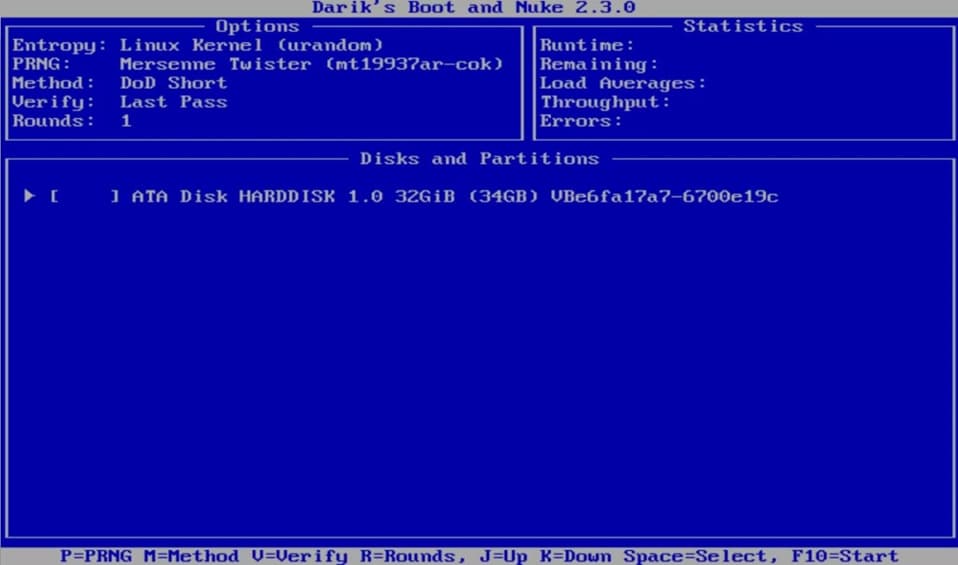
- Choose the USB installation device and follow Windows Setup until you reach the installation type screen.
- Select Custom: Install Windows only. When asked where to install Windows, choose the Windows disk and delete or format only the partitions that belong to the old Windows installation.
- If the PC has a single Windows disk and you have already recovered or backed up files, you can delete the Windows, Recovery, EFI/System, and MSR partitions for that disk, then install Windows into unallocated space. If you are not sure which disk is which, stop and check the disk size and model.
When this method is better than Reset: use a USB reinstall when Windows Recovery Environment is broken, the system is severely corrupted, or you want a clean partition layout. When it is riskier: Windows Setup can overwrite data immediately after you delete partitions or start installation, so recover first.
Method 3: Use DiskPart Clean or Clean All
Best for: advanced users, technicians, and cases where Windows Setup or Disk Management cannot remove a partition layout. This is also useful when an old Windows disk is attached as a secondary drive and you want to erase its partition structure.
DiskPart is powerful because it works at the disk level. It is also dangerous because the command acts on the selected disk. Microsoft states that clean removes partition or volume formatting from the disk with focus, while clean all writes zeroes to every sector and completely deletes data from the drive.
| Command | What it does | When to use it |
clean |
Removes partition information from the selected disk. It is faster but not a secure erase. | Before reinstalling Windows when data is already backed up or no longer needed. |
clean all |
Writes zeros across the selected disk. It takes much longer and makes recovery far less likely. | When you intentionally want a deeper erase and understand the recovery consequence. |
| Manufacturer secure erase | Uses the SSD or PC maker's supported erase workflow. | When selling an SSD-based PC and handling sensitive data. |
- Back up or recover files first. Then boot from Windows installation media or Windows Recovery Environment. Press Shift + F10 on the setup screen to open Command Prompt.
- Type
diskpartand press Enter. - Type
list diskand press Enter. Compare disk size, number, and model if available.
- Type
select disk X, replacingXwith the correct disk number. Do not guess.
- Type
cleanfor a quick partition-table removal, orclean allonly when you intentionally want a deeper overwrite.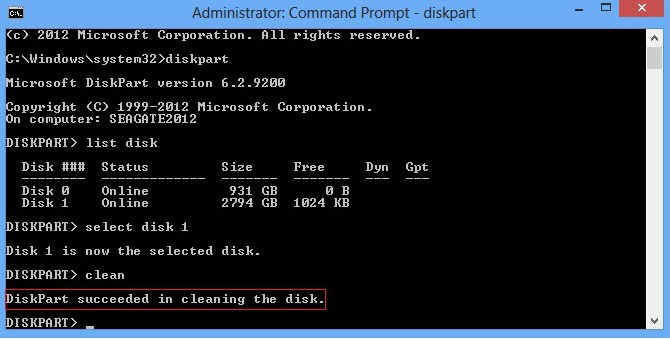
- When DiskPart reports success, type
exit. Continue with Windows Setup or shut down the PC.
Recovery warning: If you run clean all, use a secure erase tool, or reinstall Windows over the same space, recovery becomes much less likely. Recoverit may help after accidental deletion, quick formatting, or partition loss when sectors have not been overwritten, but it cannot recover overwritten data.
Method 4: Use Disk Management Only When the C Drive Is Offline
Best for: erasing an old system drive that is connected to another working PC, or deleting non-system partitions. This is not the right way to wipe the active C drive while Windows is running from it.
Windows Disk Management can format, delete, extend, shrink, and assign drive letters to volumes, but Windows protects the running system volume. If you right-click the active C drive while booted from it, destructive options may be unavailable. Use this method only when the target drive is not the currently running Windows installation.
- Connect the old Windows drive to another PC using an internal port, dock, or USB enclosure. Confirm you are not working on the host PC's active Windows disk.
- Right-click Start and choose Disk Management.
- Find the target disk by capacity, disk number, and partition layout. If you have any doubt, disconnect other removable drives and check again.
- Right-click the old Windows partition or volume and choose Delete Volume or Format, depending on whether you want unallocated space or a usable empty volume.
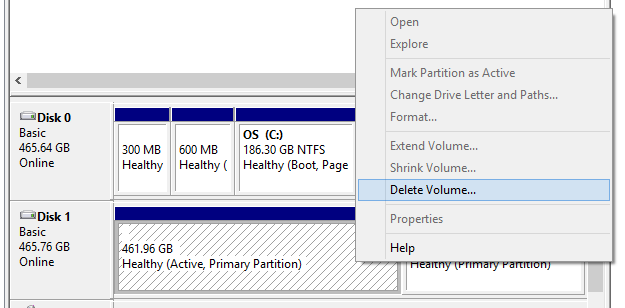
- Confirm only after recovery and backup are complete. Formatting a volume destroys data on that partition.
Disk Management is convenient, but it is not a privacy wipe by itself. A quick format mainly prepares the file system for reuse. If you need resale-level sanitization, choose Windows Reset clean-data options, DiskPart clean all, or vendor-approved secure erase depending on the drive type and risk level.
Part 7. What Not to Do Before or After Wiping C Drive
Most failed C-drive wipe stories come from doing one risky thing too early. Use this checklist before you reset, reinstall, or run commands.
- Do not rely on recovery after a full wipe: recovery is more realistic before destructive steps. After overwriting, secure erase, or SSD TRIM activity, lost files may be unrecoverable.
- Do not install recovery software onto the same C drive: installation writes new files and may overwrite recoverable data.
- Do not save recovered files to the source disk: use another internal drive, external drive, or network location.
- Do not run DiskPart by disk number from memory: disk numbers can change after rebooting or connecting USB devices.
- Do not wipe a BitLocker-protected drive without the recovery key: if you need files later, you need legitimate access to decrypt them. Recoverit cannot bypass BitLocker.
- Do not restore all files blindly after malware: recover personal files first, scan them, and avoid restoring unknown executables, scripts, or suspicious archives.
- Do not wipe the wrong drive during Windows Setup: unplug backup drives before reinstalling Windows when possible.
Part 8. Final Verdict
The best way to wipe C drive depends on why you are doing it. For most people, Reset this PC > Remove everything is the cleanest official route. For a true fresh install, use official Windows installation media and erase the Windows partitions during setup. For advanced disk cleanup, DiskPart is effective but unforgiving. Disk Management is useful only when the old C drive is offline or connected as a secondary disk.
The safest sequence is always the same: identify the goal, recover or back up files, verify the target disk, then erase. Recoverit fits before the destructive step, especially when files are missing, Windows is unstable, or the old C drive is still readable. Once you securely wipe, fully overwrite, or reinstall over the same space, no software can promise to bring everything back.
FAQ
-
Can I wipe C drive without deleting Windows?
Not in the strict sense. A complete C-drive wipe removes the Windows installation area. If you want Windows to remain usable, use Reset this PC and choose Remove everything, which removes personal files and apps while reinstalling Windows. -
Can I wipe C drive while Windows is running?
You cannot fully erase the active C drive from the same running Windows session. Use Reset this PC, Windows Recovery Environment, Windows installation media, or attach the drive to another computer before erasing it. -
Is Reset this PC enough before selling a computer?
For typical home use, Reset this PC with Remove everything and the clean-data option is the most practical built-in route. For business disposal, regulated data, or highly sensitive files, follow an approved data sanitization policy or use manufacturer-supported secure erase tools. -
Can Recoverit recover files after wiping C drive?
Recoverit may help if the drive is readable and the lost files have not been overwritten, such as after accidental deletion, quick format, or partition loss. It cannot guarantee recovery after clean all, secure erase, heavy overwriting, SSD TRIM, physical drive failure, or inaccessible encryption. -
What is the difference between DiskPart clean and clean all?
DiskPart clean removes partition or volume formatting from the selected disk and is relatively fast. DiskPart clean all writes zeroes to every sector of the selected disk, takes much longer, and is intended as a deeper destructive erase. -
How do I wipe C drive from BIOS?
BIOS or UEFI usually does not wipe Windows by itself. It lets you boot from USB, open vendor secure erase tools, or start Windows installation media. From there, you can reset, reinstall, use DiskPart, or run an approved drive erase utility. -
Should I use clean all on an SSD?
Use clean all only when you intentionally want a destructive overwrite and have already backed up data. For SSD resale or disposal, the SSD or PC maker's secure erase workflow is usually the better source of device-specific guidance.


