

 TL;DR:
You can recover fragmented files from a detectable gaming drive by immediately halting all new game installations or updates to prevent data overwriting, and using backups or a specialized deep scan tool like Recoverit.
● Restore intact game saves and configuration files using your game launcher's cloud sync or the Windows Previous Versions feature before initiating a sector-by-sector recovery scan.
● Save all recovered game assets to a completely separate storage drive, as recovering data to the original drive or running a defragmentation process will permanently overwrite the fragmented file clusters.
● Expect significantly lower recovery success rates on SSD gaming drives compared to HDDs because automated TRIM commands and wear-leveling processes quickly and permanently clear deleted fragments.
Ask AI for a summary
 ChatGPT
 Perplexity
 Gemini
 Claude
 Grok
Grok
Can You Recover Fragmented Files From Gaming Drives?
You can often recover fragmented file from Gaming Drives if the drive is still detectable, the data clusters have not been heavily overwritten, and you handle the device carefully. Stopping new game installs or updates, checking for existing fragments, and scanning the gaming drive with a dedicated recovery tool give you a realistic chance to bring back usable game data.
However, recovery is never certain. If the gaming drive is failing, encrypted without access, or has been used intensively after the problem appeared, some fragmented files may be partially damaged or no longer recoverable. Working methodically and avoiding risky actions such as formatting or rebuilding large game libraries is essential to protect what is left.
In this article
Common Reasons Fragmented Files Get Lost From Gaming Drives
Fragmented files on gaming drives can disappear or become unreadable for a mix of hardware, software, and user-related reasons. Understanding what most likely happened helps you choose the safest recovery approach.
- Heavy game installs and updates constantly rewriting large assets on the same gaming drive, which increases fragmentation and the risk that parts of older files are overwritten or lost.
- Improper shutdowns, power failures, or forced restarts while a game is saving or patching, leaving game data in an inconsistent or partially written, fragmented state.
- File system errors or corrupted game library indexes on HDD or SSD gaming drives, causing the operating system or launcher to lose track of fragmented clusters.
- Manual deletion, disk cleanup, or moving libraries between drives without verifying copies, which can remove fragmented saves or configuration files you still needed.
- Bad sectors or emerging hardware faults on a gaming HDD, where some fragments become unreadable even though other parts of the same file still work.
- Accidental formatting or quick reinitialization of a partition that held your gaming library, leaving fragmented file remnants present but no longer referenced by the file system.
How to Recover Fragmented Files From Gaming Drives
To recover fragmented files from gaming drives, start with non-destructive checks, then fall back on backups and finally a specialized recovery tool if needed. Work from the least invasive methods to deeper scans so you avoid unnecessary overwrites.
Method 1. Check the Gaming Drive and Search for Existing Fragments
Start by confirming that your gaming drive is readable and that fragmented files have not simply been moved, hidden, or renamed by the game launcher or the operating system.
- Connect your gaming drive directly to the PC using a reliable SATA, USB, or NVMe connection and ensure it appears in File Explorer or Finder.
- Browse the main game library folders for your platform, such as Steam, Epic, Origin, or console export folders, and sort by date modified to locate recent fragments.
- Use the operating system search box to look for partial file names, temporary file extensions, or generic data folders created by the relevant game.
- Enable viewing of hidden files and system files in folder options, then recheck the game folders and root directories of the gaming drive for overlooked fragmented items.
- If the drive is making unusual noises or disconnecting frequently, stop using it immediately to avoid further fragmentation or physical damage before deeper recovery.
Method 2. Restore Fragmented Game Data from Backup or Previous Versions
If you use game launchers, system restore, or backup tools, they may hold earlier, less fragmented copies of your game data or configuration files that can be restored quickly.
- Open your main game launcher, such as Steam or Epic Games, and check its cloud save or backup settings for options to restore game data to the same or another drive.
- On Windows, right click the main game folder or library folder on the gaming drive, choose Properties, then use the Previous Versions or Restore Point tabs if available.
- If you use file backup software or system image tools, open them and browse snapshots for your gaming drive, focusing on dates before the fragmentation or data loss occurred.
- Restore only the affected game folders or data directories to a different storage location, such as another internal or external drive, to avoid overwriting remaining fragments.
- After restoring, compare folder sizes and test the game or files to confirm whether the backup version includes the missing data or still requires deeper recovery.
Method 3. Use Recoverit to Recover Fragmented Files from Gaming Drives
When manual checks and backups are not enough, Recoverit can scan your gaming drive sector by sector to locate fragmented files and reconstruct recoverable data without modifying the original drive.
Recoverit is a professional data recovery tool that can scan gaming drives for deleted, lost, or fragmented files, including large game assets and configuration data. You can download it from the Recoverit official website and run a deep scan before making any risky changes to your drive.
- Full drive scanning for deleted, lost, and fragmented files on HDD, SSD, and external gaming drives.
- Flexible filtering and preview options to identify useful recovered data before saving anything.
- Read only recovery workflow that avoids modifying the original gaming drive during scanning.
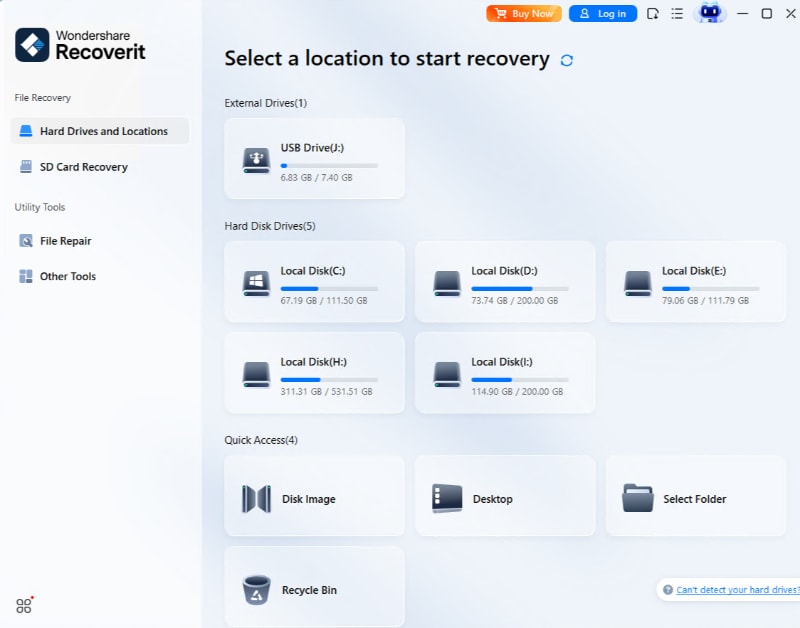
- Choose a Location to Recover Data. Open Recoverit and select the gaming drive or the exact partition where your games and data were stored, confirming its size and label match your usual game library.
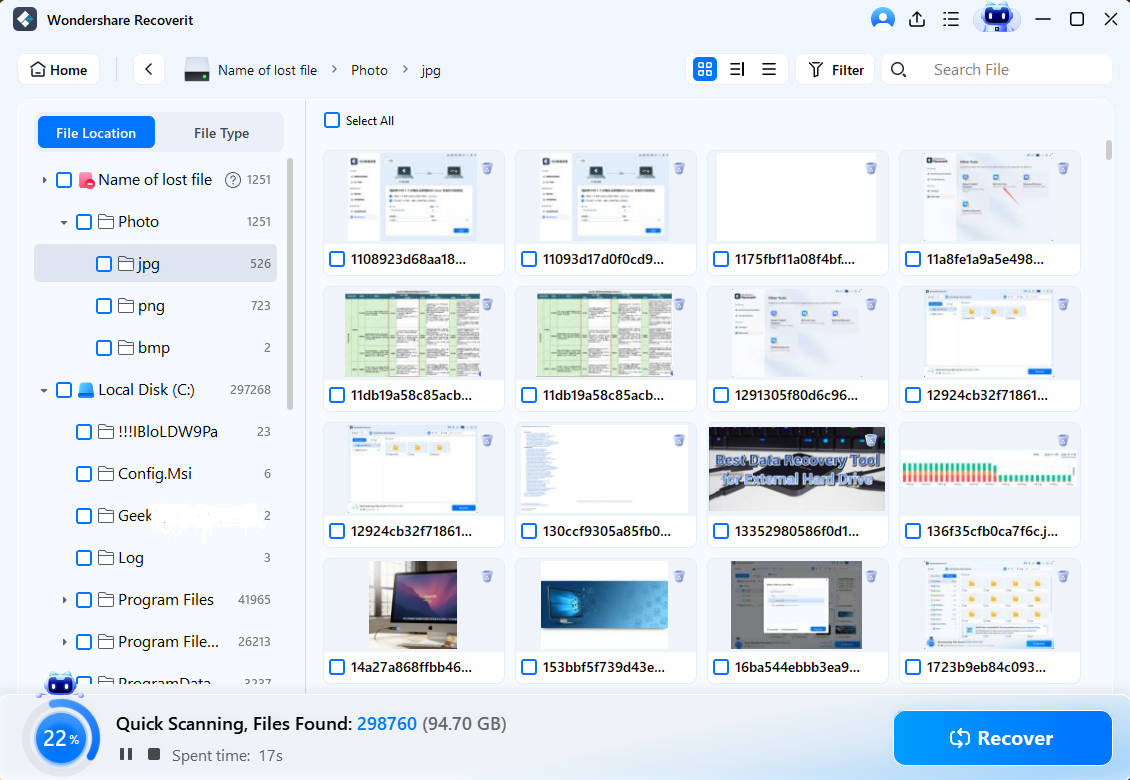
- Deep Scan the Location. Start a deep scan so Recoverit can analyze the full gaming drive, following fragmented clusters to detect recoverable files. Let the scan finish without launching games or copying new data.
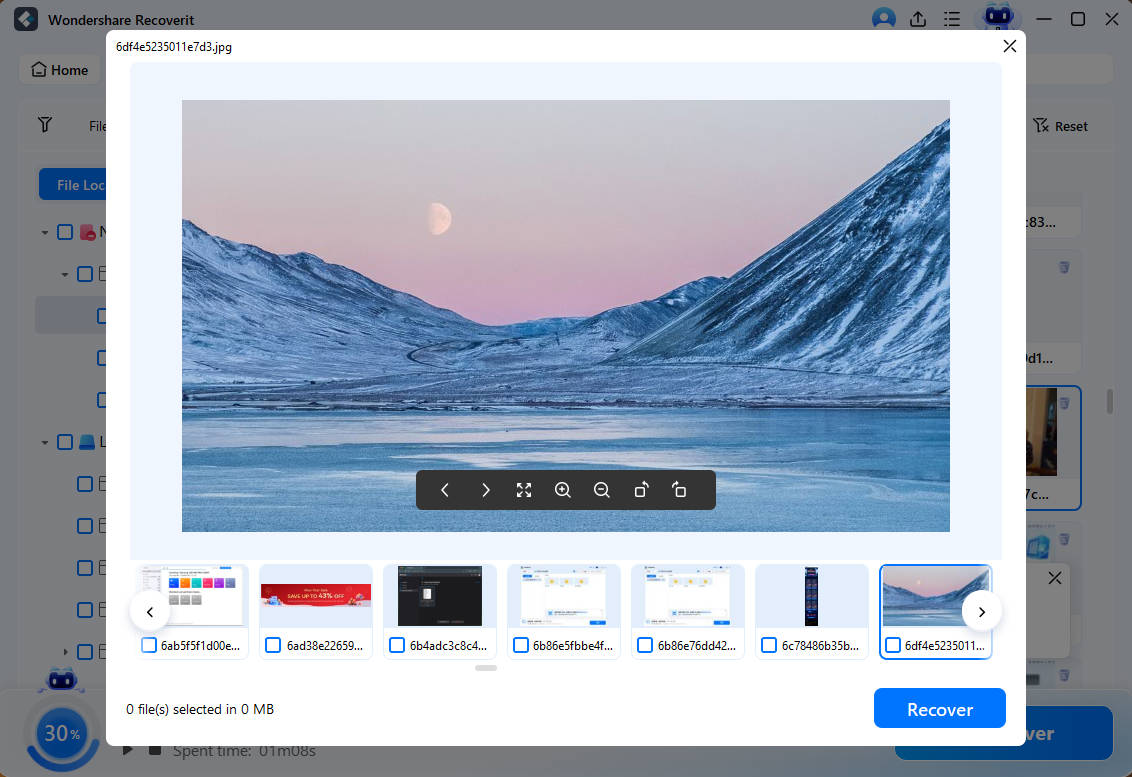
- Preview and Recover Your Desired Data. Filter results by file type or path, preview supported files when possible, then choose the fragmented files and related folders to recover to a different, healthy drive or partition.
Try Recoverit to Recover Fragmented Files from a Gaming Drives
 Security Verified. 3,591,664 people have downloaded it.
What to Check Before and During Recovery
Before you start any recovery work on a gaming drive, confirm the drive status and environment so you do not unintentionally worsen fragmentation or lose more data.
- Confirm the Gaming Drive Is Detected: Before recovery, check that the gaming drive appears in Disk Management or Disk Utility with the correct size. If it is not detected, avoid repeated reconnecting that may worsen issues.
- Avoid Formatting or Rebuilding Libraries: Do not format the gaming drive, reinstall games, or force rebuilds of large libraries before scanning. These actions can overwrite fragmented clusters and reduce the chance of recovery.
- Use a Stable Connection and Power Source: Connect external gaming drives directly to trusted USB ports and avoid hubs. For internal drives, ensure the PC has stable power so scans are not interrupted mid process.
- Check for Encryption or Access Restrictions: If the gaming drive uses BitLocker, hardware encryption, or account based permissions, unlock and mount it first. Recovery tools cannot bypass passwords, keys, or security policies.
- Prepare Enough Space on a Different Drive: Plan a separate internal or external drive with enough free capacity to store recovered game files and assets, especially if your gaming library contains many large titles.
- Monitor Drive Health During Recovery: If you notice loud clicking, extreme slowdown, or frequent disconnections, pause recovery attempts and consider professional help, as continuing can further damage a failing gaming drive.
Tips to Improve the Recovery Success Rate
Adopting a careful workflow and prioritizing critical data can improve the likelihood that your recovered game files are usable after a problem with fragmented data.
- Stop Installing or Updating Games: Avoid new installations, patches, or game updates on the affected gaming drive. These operations write large amounts of data that may overwrite fragmented file clusters you hope to recover.
- Prioritize the Most Important Game Data: Focus recovery on saves, configuration files, and irreplaceable content first. Game executables and downloadable assets are usually reinstalled later from platforms like Steam or console stores.
- Group Related Fragments During Recovery: When selecting files in the recovery tool, recover related folders together, such as the entire save or asset directory, to reduce the chance of missing pieces from a fragmented dataset.
- Verify Recovered Files Inside the Game: After restoring data to another drive, point your game launcher to the recovered folder or import saves, then launch the game to ensure levels load and settings behave as expected.
- Create a Fresh Backup After Recovery: Once you confirm your recovered fragmented files are usable, back them up to a separate drive or cloud storage so future fragmentation or drive failures are less disruptive.
- Defragment Only After Securing Data: For HDD based gaming drives, consider defragmentation only after successful recovery and backup. Never rely on defragmentation itself as a recovery method for fragmented or deleted files.
Conclusion
Recovering fragmented files from gaming drives is often possible if you act early and avoid overwriting data. Start with simple checks and backups, then move to a dedicated recovery tool like Recoverit for deeper scanning.
Always recover to a different drive and test game data carefully. With a cautious workflow and regular backups afterward, you can reduce the impact of future fragmentation or drive issues on your gaming library.
FAQ
-
1. Can fragmented game files on a gaming drive be fully recovered?
Sometimes. If the fragmented clusters have not been overwritten and the drive is still readable, a deep scan with a recovery tool may reconstruct usable files, but success is never guaranteed. -
2. Should I defragment my gaming drive to fix fragmented files?
No. Defragmentation rearranges data and can permanently overwrite deleted or fragmented file remnants. Perform recovery and make backups first, then consider defragmenting only a healthy HDD if needed. -
3. Can I recover fragmented files from an SSD based gaming drive?
You may recover some data from SSDs, but wear leveling and TRIM can quickly clear deleted fragments. Stop using the SSD immediately and run a recovery scan as soon as possible for the best chance. -
4. Is it safe to reinstall games on the same gaming drive before recovery?
It is risky. Reinstalling games writes large new files that may overwrite lost fragments. Complete your recovery attempts first, then reinstall games on the same or another drive afterward. -
5. Can Recoverit fix corrupted or incomplete game installations?
Recoverit can help recover lost or fragmented files from the drive, but it does not repair every corrupted game installation. You may need to verify files or reinstall through your game launcher after recovery.


