


 TL;DR:
Troubleshooting Mac video playback requires first determining the failure location: apply browser-specific adjustments for Safari streaming issues, and verify codec compatibility or transfer integrity for local downloaded files.
● Resolve Safari-specific streaming interruptions by temporarily disabling content-blocking extensions and removing the affected site's stored data, as these browser conflicts cannot be fixed by third-party video repair software.
● If a downloaded MP4 or MOV file fails in QuickTime Player, press Command + I in Finder to confirm it is not an incomplete zero-byte transfer, then test the file in an alternative media player to bypass unsupported codec combinations.
● Restrict the use of Recoverit V15 for Mac to structurally damaged local media or genuinely lost data, working exclusively from a file copy and noting that severe file damage or SSD TRIM operations may render the video permanently unrecoverable.
Ask AI for a summary
 ChatGPT
 Perplexity
 Gemini
 Claude
 Grok
Grok
If videos are not playing on your Mac, the first useful test is to play a different video in another app. When a video fails only in Safari, investigate the website, network, browser extensions or saved site data. When a downloaded file fails in QuickTime Player but other videos work, the video format, incomplete transfer or file integrity may be responsible.
These steps apply to MacBook Air, MacBook Pro, iMac and Mac mini with supported macOS releases. Begin with reversible checks; do not delete the original download or reformat its drive. A Mac video that will not open is not necessarily corrupted, and a recovery app cannot repair a streaming service.
In This Article
Part 1. Identify Why Videos Will Not Play on Your Mac
The symptom and the location of the video tell you which fix is most likely to help. Start with this simple comparison rather than clearing every Safari setting or installing a codec package.
| What fails | Most useful first check | Likely cause to investigate |
| A website video will not play in Safari, but downloaded clips open | Try another website and a private window | Site-specific data, extension or network issue |
| Every video site fails in Safari, but works in another browser | Check Safari settings, extensions and macOS updates | Safari or system configuration |
| One downloaded MP4 or MOV will not open | Inspect the actual format, size and source | Unsupported encoding, interrupted download or damaged file |
| All local files fail in the same media player | Test a known-good file in a different player | App compatibility or media framework issue |
| A previously saved video disappears after a crash or transfer | Check Trash, backups, original folder and synced copies | Actual file loss; recovery may be relevant |
Before changing settings: Check that your Mac has internet access if the video is online; compare the same link in another browser and another website. For a local file, check that its size is plausible and the transfer has finished. If no player can read only that one file, continue with Part 3 rather than resetting Safari.
Part 2. Fix Safari Not Playing Videos on Mac
Safari video failures usually require browser-specific checks, not file repair software. Try the next methods individually, refresh the affected website after each one, and stop once normal playback returns.
Fix 1. Temporarily Disable Safari Extensions
Content blockers, privacy extensions and playback helpers can interfere with video scripts or media delivery on individual websites. Disabling one extension for a test is reversible and helps isolate the cause.
Step 1. With Safari open, choose Safari > Settings from the menu bar, then open Extensions.
Step 2. Temporarily turn off one recently added video-related or content-blocking extension using its checkbox.
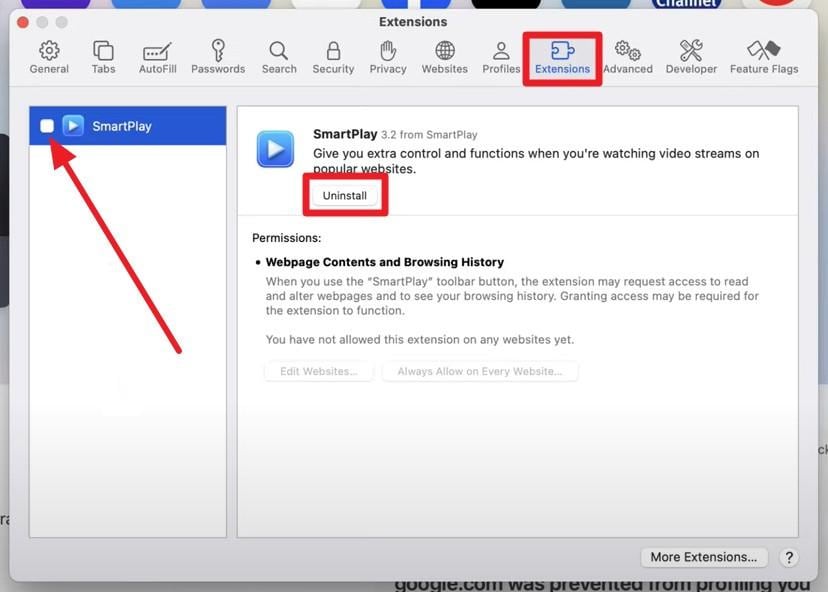
Step 3. Reload the failing video page. If it plays, update or remove the responsible extension, then re-enable the others. If playback remains broken, restore the original extension settings and proceed to the next check.
For extension controls and permissions, consult the official Safari extensions guide.
Fix 2. Remove Website Data for the Affected Video Site
If an individual streaming site keeps failing after a browser refresh, its stored cookies or website data may be corrupted or inconsistent. Remove data for that site first instead of wiping every website sign-in.
Step 1. In Safari open Safari > Settings > Privacy, then select Manage Website Data.
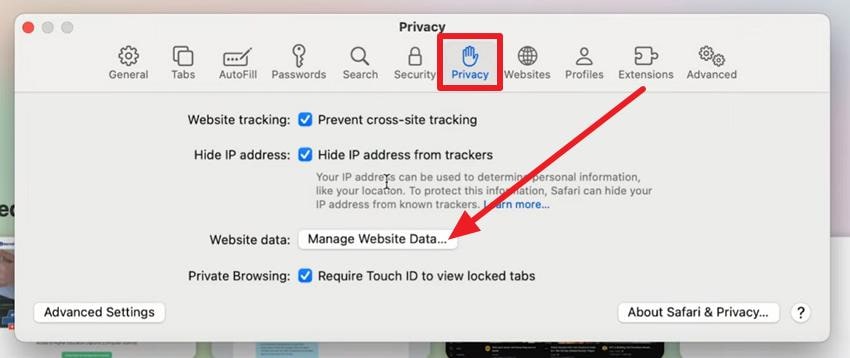
Step 2. Search for the affected website, select its entry and choose Remove. Close the dialog, revisit the site and sign in again if required.
If it still fails: Try a Safari private window to distinguish stored browsing data from a network or website-wide problem. Clearing website data signs you out of that site and may reset its preferences. Apple documents these options in its Manage Website Data instructions.
Fix 3. Update macOS and Safari Together
Safari updates are distributed with the macOS update process. If videos consistently fail across several websites, a supported system update can address browser and media-related defects without changing your downloaded files.
Step 1. Save open documents and make a recent backup, then select Apple menu > System Settings > General > Software Update.
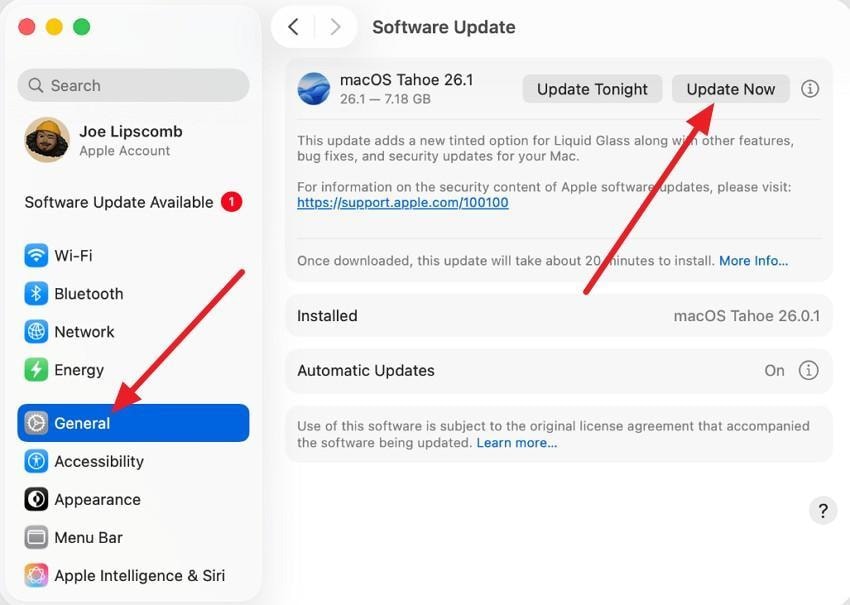
Step 2. Install applicable updates offered for your Mac, following on-screen instructions and keeping a MacBook connected to power. The screenshot shows a macOS Tahoe update screen; the offered version depends on your device and date.
Step 3. Open Safari after the update and retry the same video on the same site. If you are already up to date, investigate site permissions, VPN/proxy filtering and the network instead of repeatedly reinstalling Safari. Refer to Apple’s Safari website troubleshooting for related checks.
Fix 4. Force Quit Safari Only If It Stops Responding
If the app freezes completely, closing the unresponsive process may be necessary. This is different from a video that merely buffers while the browser remains responsive.
Step 1. When Safari cannot be closed normally, use Apple menu > Force Quit or press Option + Command + Esc.
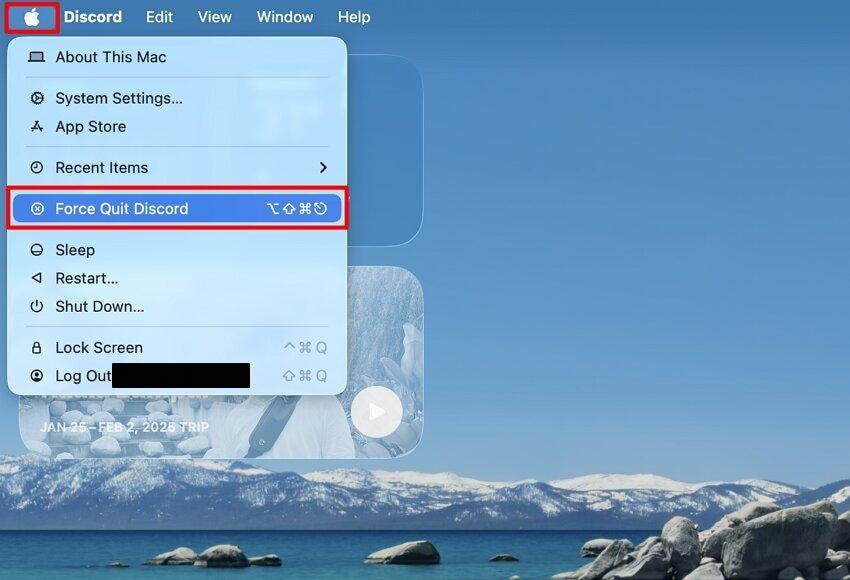
Step 2. Select Safari and choose Force Quit. The Apple menu can name the currently active app instead of Safari, as in the example screenshot. Unsaved text or form data may be lost, so use this only when the app is not responding.
Step 3. Reopen Safari without restoring the previously problematic tab if possible. Test the site again; if it still fails, compare network access and another browser rather than repeating forced quits.
Part 3. Fix Downloaded Videos Not Playing on a Mac
Downloaded movies have a different failure path. A file extension such as MOV or MP4 identifies the container but does not guarantee every encoded video or audio stream is supported in the player. Check the source file before converting or attempting repair.
Fix 5. Inspect the Video Type and File Size in Finder
A downloaded file may be the wrong format, a partial transfer or even a web shortcut rather than a complete playable video. Finder can reveal useful basic information without editing the source.
Step 1. Locate the downloaded video in Finder, select it and press Command + I or choose File > Get Info.
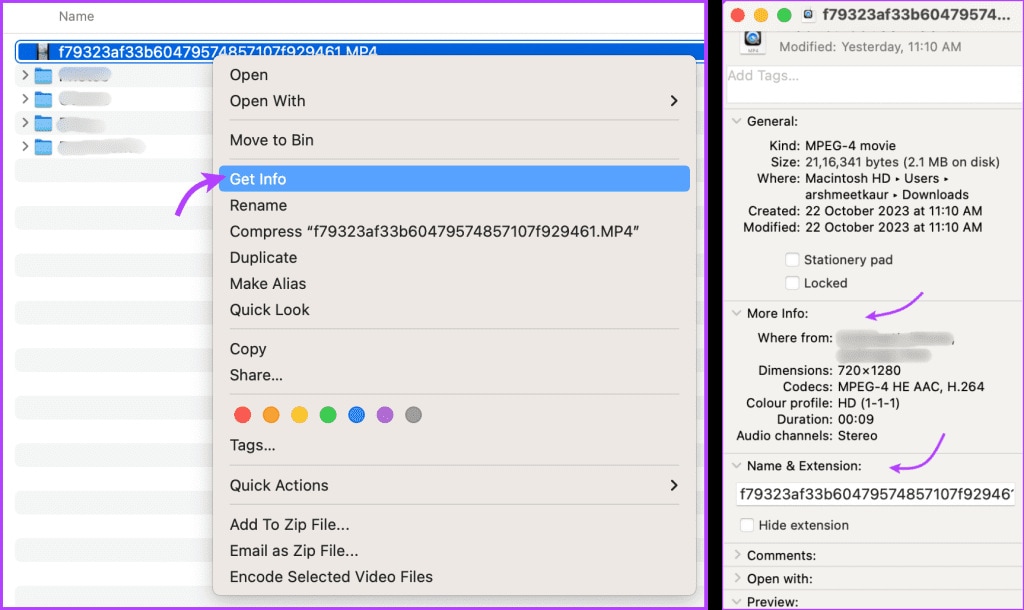
Step 2. Review the Kind, filename extension, file size and the source location. A zero-byte or unexpectedly tiny download is a reason to check the original transfer, not to assume software can rebuild missing video frames.
Step 3. Compare the same file on the originating camera, device or backup when available. If the source still works, copy it again without overwriting the only good copy. If the file looks complete but the player reports incompatibility, try Fix 6.
Fix 6. Open the File in Another Compatible Media Player
QuickTime Player supports many common Apple media formats, but not every possible codec combination inside MOV, MP4, AVI or MKV. Another trusted app can help determine whether the issue is a playback compatibility problem.
Step 1. Right-click the saved video in Finder and open the Open With submenu.
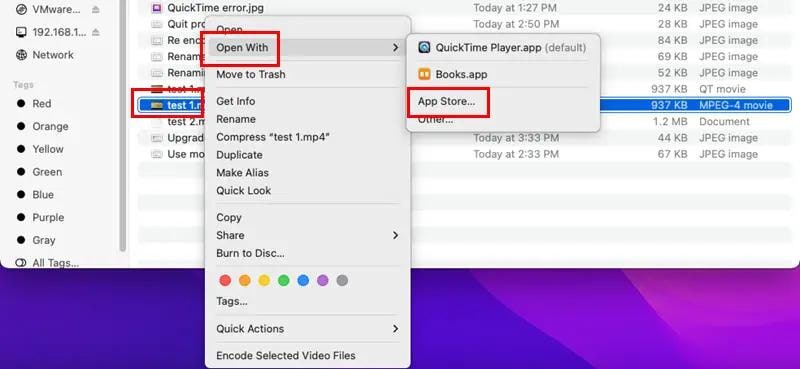
Step 2. Choose another trusted installed player and try a short playback test. If a compatible player works, the file is not necessarily corrupt; you may convert a copy into a supported format if you need QuickTime compatibility.
Step 3. If the video opens in QuickTime, use Window > Show Movie Inspector to inspect available format information before changing the file. Apple explains how to open and play files in QuickTime Player.
If no player can open the same previously working file: Check whether the transfer was interrupted or the source copy has also become damaged. Avoid replacing the original with an experimental conversion; move to Part 4 only after ruling out compatibility and incomplete downloading.
Part 4. Repair a Corrupted Video or Recover One That Has Disappeared
A corrupt file and a missing file are not interchangeable problems. Recoverit for Mac has separate workflows for video repair and data recovery, and neither can fix a Safari server issue or reconstruct content that was never actually saved.
Method 1. Repair a Local Video File That Is Actually Damaged
If the file once opened normally but now fails in multiple compatible players after a recording interruption or damaged transfer, a dedicated repair attempt may be appropriate. Work with a copy, not the only surviving original.
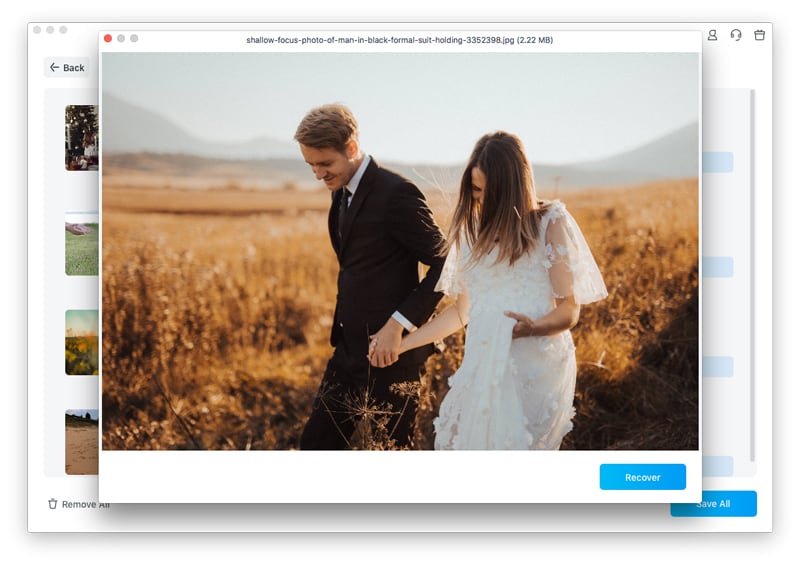
Step 1. Open the supported Video Repair function in Recoverit V15 for Mac and add the corrupted video file for assessment.
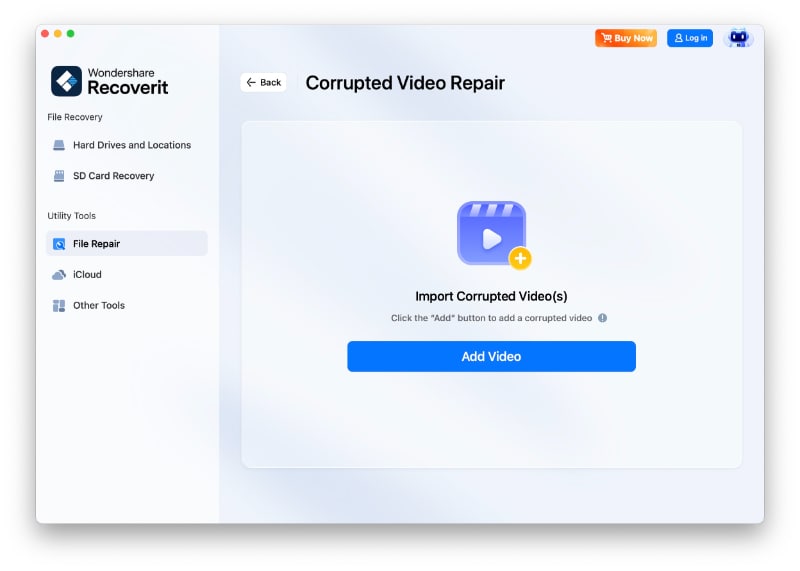
Step 2. Choose Repair and allow the process to finish. The outcome depends on the remaining usable video data; severe structural damage may still be unrecoverable.
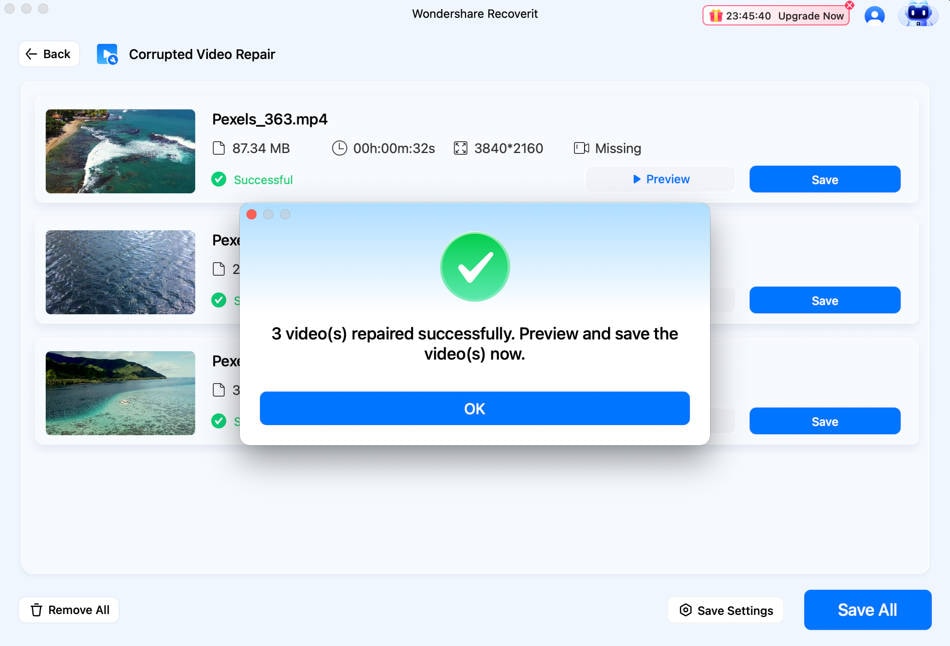
Step 3. Preview the result if offered and save an acceptable repaired file under a different name or destination. Do not claim a file is fixed until it plays through the affected portion.
Do not use this workflow: For streaming sites, DRM restrictions, a merely unsupported codec, or missing source bytes where no usable media remains. In those cases, investigate the actual source instead.
Method 2. Recover a Video That Was Deleted or Went Missing
If an earlier saved video has disappeared, first check Trash, the original directory and any Time Machine or cloud backup. File recovery makes sense only if the video was previously present on readable storage and is now genuinely missing.
Step 1. Stop writing new data to the affected disk. On a healthy Mac, launch Recoverit for Mac from a safe location and select the original storage volume or folder.
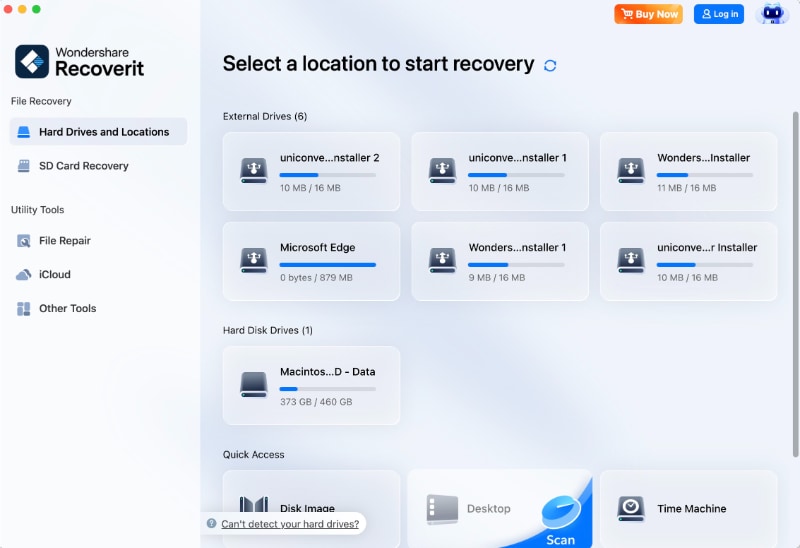
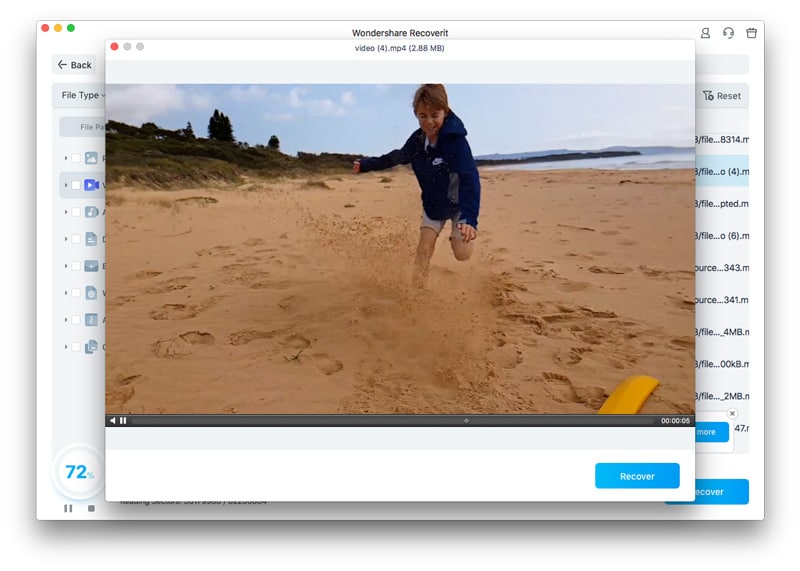
Step 2. Scan the chosen source and inspect the available results. Use the preview when supported to determine whether the recovered video is actually readable.

Step 3. Select recoverable files and save them to a different physical drive to reduce overwriting risk. Recoverit cannot guarantee a specific deleted file can be restored; SSD TRIM and subsequent writes may permanently remove usable content.
Important: If the source drive is physically failing or keeps disconnecting, stop repeated scans and consider professional help. For local playback trouble with a file that still exists, follow Part 3 instead of treating it as deleted.

Conclusion
The quickest way to fix videos not playing on a Mac is to identify where they fail. Safari-only problems call for extension, website-data and system checks; one unplayable download calls for verifying the actual file type, integrity and codec support.
Start with the safest test and keep an untouched copy of important videos. Repair a video only when evidence points to damaged local media, and use file recovery only when previously saved data really is missing. Neither type of tool fixes a website outage or a Mac hardware problem.
FAQ
-
Why will videos not play on my MacBook Air or MacBook Pro?
The most useful first check is whether the problem affects Safari websites, one local file, or every media player. Browser settings and network issues differ from codec incompatibility, partial downloads and corrupted local video files. -
Why does Safari not play videos even when Chrome works on my Mac?
Safari extensions, website data or browser-specific site compatibility may be contributing. Disable extensions temporarily, remove data for the affected site, check applicable macOS updates and compare the same video in a Safari private window. -
Why is my downloaded MP4 or MOV not playing in QuickTime?
The extension alone does not identify every codec in the file. Try another trusted compatible player, verify the transfer completed and check whether the original device or backup can play the file. -
Can I repair a downloaded video without deleting it?
Keep the original file unchanged while troubleshooting. If it is truly corrupted, test a copy with a repair workflow and check the preview before saving a result separately. A damaged or empty source file may not be repairable. -
Does Recoverit fix Safari videos that will not load?
No. Recoverit has local video repair and file recovery functions, but does not change Safari settings, fix the internet connection or repair a streaming platform. Use it only for the appropriate local-file condition. -
Can deleted Mac videos always be recovered?
No. Recovery depends on the storage device, whether the file was previously saved, any subsequent writes, encryption and SSD TRIM. Use backups first and avoid writing recovered files back to the affected drive.


