


 TL;DR:
Retrieving data from an Android phone with a broken screen requires bypassing access restrictions using methods matched to the specific hardware damage, such as using an OTG adapter with a USB mouse for dead touchscreens or connecting a supported device to an external display.
● ADB file extraction is only possible if USB debugging was previously enabled and the connected computer was authorized before the screen broke.
● Files saved on a removable microSD card can be extracted via a PC card reader or scanned with Recoverit for missing data, provided the card was not encrypted as adopted internal storage.
● Do not factory reset the device to troubleshoot connection issues, as encrypted internal storage data remains inaccessible until the lock screen is successfully bypassed to approve the USB File Transfer prompt.
Ask AI for a summary
 ChatGPT
 Perplexity
 Gemini
 Claude
 Grok
Grok
"How do I recover data from an Android with a broken screen? The screen on my Moto 5G is damaged to the point that I cannot operate the touch screen. A lot of my data was backed up in Google, but there are some things that are only in the device itself."
A broken Android screen does not always mean your photos, videos, contacts, and documents are gone. Android broken screen data recovery depends on three things: whether the phone still powers on, whether you can unlock or authorize the device, and whether the files are stored in cloud backup, internal storage, or a removable microSD card.
Start with backup checks and non-destructive access methods first. Do not factory reset, flash firmware, or approve any repair that wipes the phone before you have tried the safer options below. If the files are on a removable microSD card or already on a computer-readable storage device, Recoverit can help scan that storage for deleted or lost files. It cannot bypass an Android screen lock, decrypt internal phone storage, or repair damaged phone hardware.
In this article
-
- Method 1. Check Google Photos, Drive, Contacts, and Android Backup
- Method 2. Connect the Phone to a Computer via USB File Transfer
- Method 3. Use an OTG Adapter and USB Mouse
- Method 4. Connect the Phone to an External Display
- Method 5. Use Samsung Smart Switch for a Backup
- Method 6. Use ADB if USB Debugging Was Enabled Before
- Method 7. Remove the microSD Card and Recover Files Separately
- Method 8. Use a Professional Repair or Data Recovery Service
Part 1. Can Android Broken Screen Data Recovery Work?
Yes, you can often retrieve data from an Android phone with a broken screen, but only if there is still a valid path to the files. A cracked display is a screen problem; the storage chip may still be intact. The real blocker is usually access: the phone may need to be unlocked, the USB file transfer prompt may need approval, or the storage may be encrypted behind the screen lock.
Use this table to understand your chances before trying any recovery method:
| Phone condition | Can you recover the data? | Best safe next step |
| Screen is cracked, but touch still works | Usually yes | Unlock the phone, use USB File Transfer, and copy the files to a computer. |
| Screen is visible, but touch does not respond | Often yes | Use an OTG adapter and USB mouse to unlock the phone and approve File Transfer. |
| Screen is black, but the phone rings, vibrates, or charges | Possible | Try an external display if supported, ADB only if previously enabled, or a screen repair. |
| Phone is locked and you cannot approve prompts | Difficult | Check Google/Samsung backups first, then consider screen replacement before deeper repair. |
| Files were stored on a removable microSD card | Usually yes, if the card is readable | Power off the phone, remove the card, and scan it on a computer if files are missing. |
| Phone does not power on or is not detected anywhere | Uncertain | Use a professional phone repair or data recovery service before trying resets. |
Part 2. Check These Things Before Broken Screen Android Data Recovery
Before you try broken Android screen data recovery, protect the data that may still be intact. The wrong first step can make recovery harder, especially if the phone is locked, encrypted, or physically unstable.
| Check | What to do | Why it matters |
| Avoid reset or flashing | Do not factory reset, re-flash firmware, or erase the phone before recovery. | These actions can remove local data and reduce recovery options. |
| Keep the phone charged | Charge the phone with a reliable cable and adapter. | Every method fails if the device shuts down during access or backup. |
| Check cloud backups first | Sign in to your Google account and check Photos, Drive, Contacts, and Android backup. | If the data is already synced, you may not need to touch the damaged phone. |
| Identify the storage location | Recall whether photos and downloads were saved to internal storage or a removable microSD card. | Internal storage and removable cards require different recovery paths. |
| Stop using a removable card | If files were deleted from a microSD card, stop saving new files to it. | New data can overwrite deleted files and lower recovery chances. |
| Test basic hardware | Try another USB cable, another port, and another computer before assuming the phone is dead. | A bad cable or port can look like a phone recovery failure. |
Part 3. Choose the Right Recovery Path by Phone Condition
The fastest way to recover data from a phone with a broken screen is to match the method to the exact failure. Do not start with ADB, repair tools, or reset suggestions unless the simpler paths are impossible.
| What still works? | Try this first | Use this only if needed |
| You can unlock the phone | USB File Transfer | Smart Switch for supported Samsung devices |
| Display works, but touch is dead | OTG adapter and USB mouse | External keyboard or accessibility shortcuts |
| Display is black, but phone runs | External display if the model supports video output | ADB if USB debugging was already enabled and authorized |
| Only cloud data is needed | Google Photos, Drive, Contacts, and Android backup | Samsung Cloud or other app backups |
| Files are on a removable microSD card | Remove the card and copy files with a card reader | Use Recoverit if files are deleted, missing, RAW, or corrupted |
| Phone is locked, dead, or not detected | Professional screen repair with no-wipe instructions | Phone data recovery lab for board or storage damage |
Part 4. How to Retrieve Data from an Android Phone with a Broken Screen
Try the methods below in order. They start with backup checks and low-risk access, then move to device-specific tools and professional help.
Method 1. Check Google Photos, Drive, Contacts, and Android Backup
This is the safest place to start because it does not require the broken phone screen at all. If backup or sync was enabled, you can retrieve photos, videos, contacts, documents, and some app data from another device.
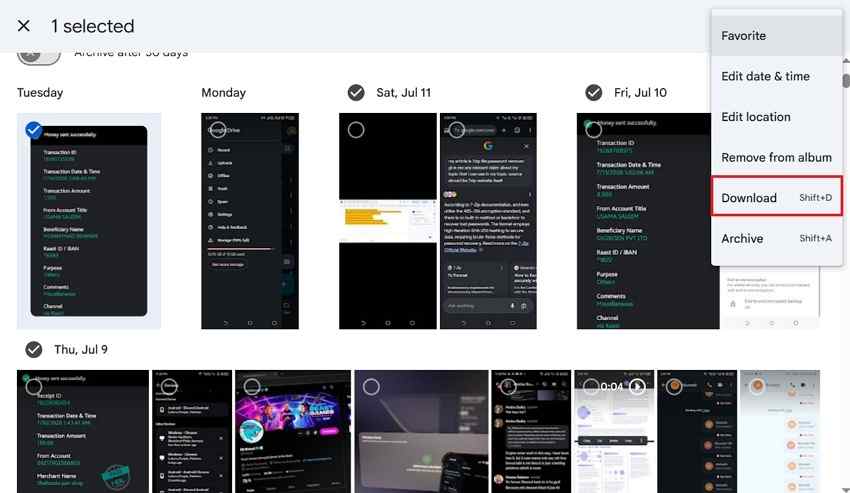
Step 1. Open Google Photos, sign in with the same Google account, select the synced photos or videos, and choose Download.
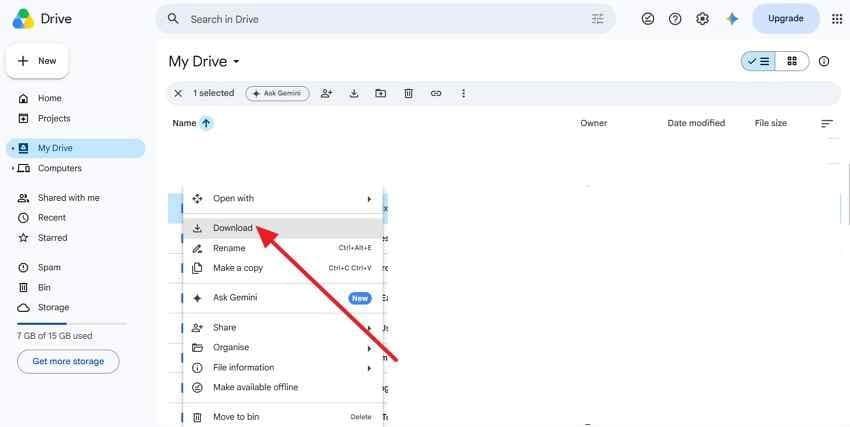
Step 2. Open Google Drive, check My Drive, Computers, shared folders, and manually uploaded backup folders, then download the files you need.
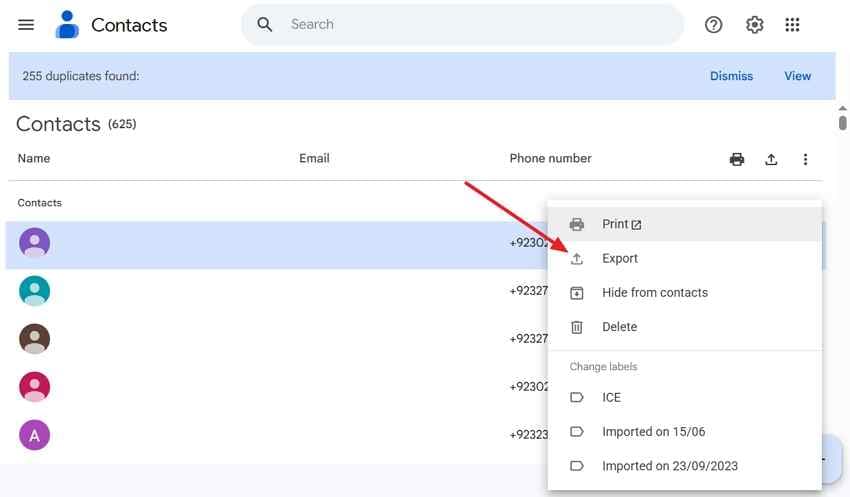
Step 3. Open Google Contacts, confirm your saved contacts are present, then use Export if you need a copy.
Step 4. On another Android phone, sign in with the same Google account during setup and check whether Android backup offers a device restore. This can help restore settings, call history, SMS, and supported app data, depending on what was backed up before the screen broke.
Method 2. Connect the Phone to a Computer via USB File Transfer
USB File Transfer is useful when the screen is cracked but still usable. It usually requires you to unlock the phone and approve the file transfer mode on the damaged screen. If you cannot unlock the phone or approve the prompt, skip to the OTG, external display, backup, or repair options.
Step 1. Connect the Android phone to your Windows PC with a data-capable USB cable.
Step 2. Unlock the phone. If a USB notification appears, choose File Transfer or Transfer files.
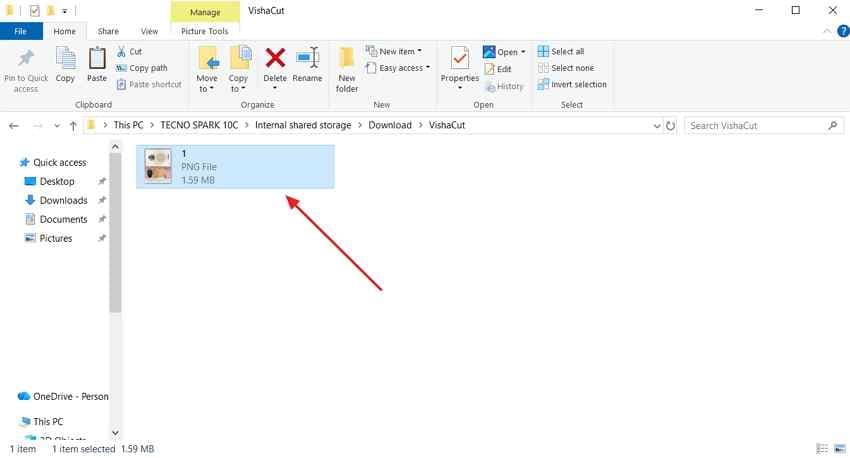
Step 3. On the PC, open File Explorer > This PC > your Android device. Copy folders such as DCIM, Pictures, Download, Documents, and app export folders to your computer.
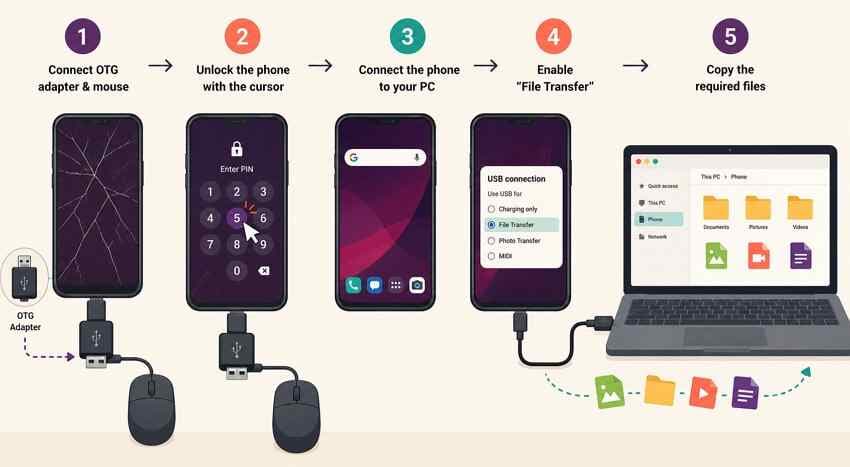
Method 3. Use an OTG Adapter and USB Mouse
If the display is visible but the touchscreen does not respond, an OTG adapter can let you control the phone with a mouse. This method works best when the phone supports OTG and you can still see enough of the screen to enter the passcode and approve prompts.
Step 1. Connect a USB OTG adapter to the phone, then connect a wired USB mouse to the adapter.
Step 2. Use the cursor to unlock the phone with your PIN, pattern, or password.
Step 3. Connect the phone to your computer, choose File Transfer, and copy important files to the PC.
Method 4. Connect the Phone to an External Display
If the Android screen is black but the phone still turns on, an external display may help you see and control it. This only works on phones that support video output through USB-C DisplayPort Alt Mode, HDMI output, Samsung DeX, Motorola Ready For, or a similar feature. Many Android models do not support wired video output.
Step 1. Connect a USB-C to HDMI adapter or compatible display dock to the phone.
Step 2. Connect the adapter to a monitor or TV. If the display shows the phone screen, connect a mouse through the dock or pair a Bluetooth mouse if it was already available.
Step 3. Unlock the phone, back up important app data, and copy files to a computer or cloud storage.
Method 5. Use Samsung Smart Switch for a Backup
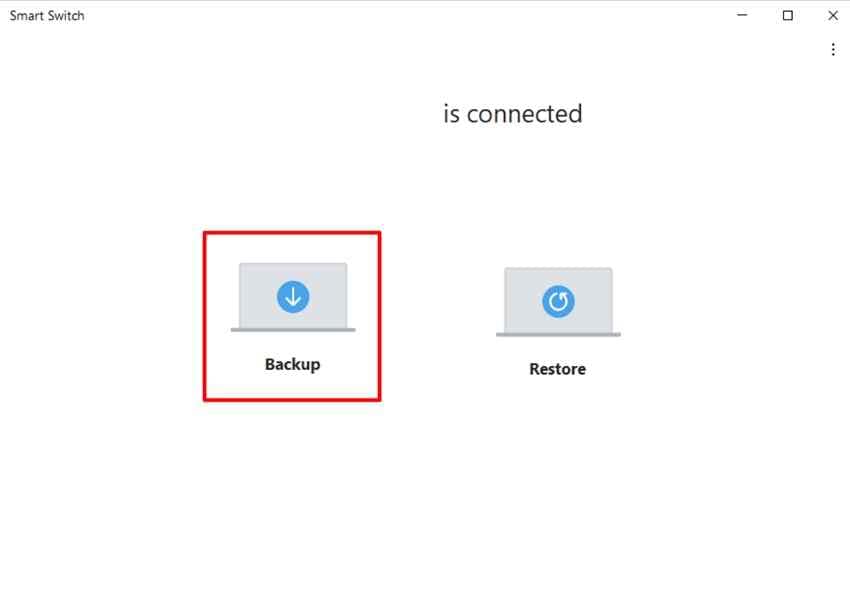
Samsung Smart Switch can help back up supported Samsung phones to a computer. It is most useful if the phone can still be unlocked, the computer was previously trusted, or you can approve the connection with an OTG mouse or external display. If the phone is locked and no prompt can be approved, Smart Switch may not be able to access the data.
Step 1. Install and open Smart Switch on your PC, connect the Samsung phone with a USB cable, and choose Backup if the device is recognized.
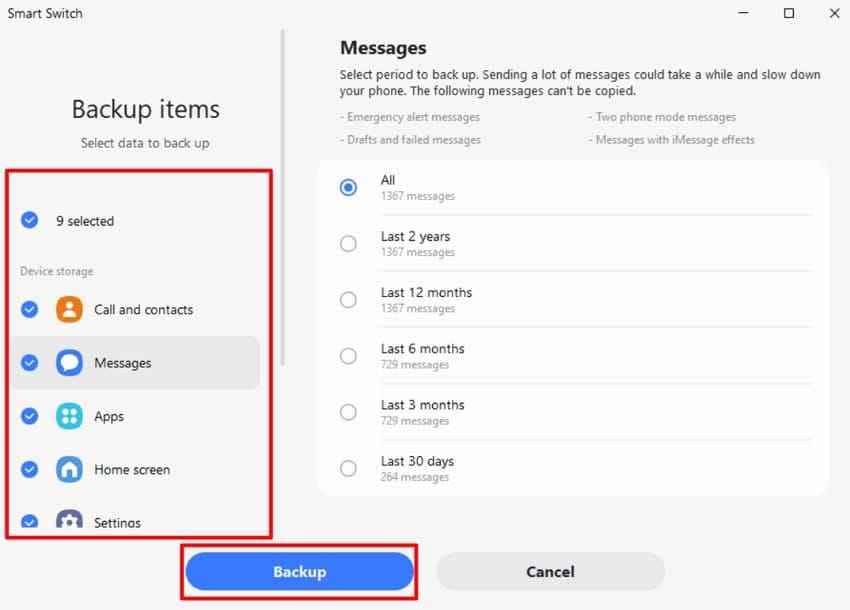
Step 2. Select the data types you want to back up, then start the backup and wait until Smart Switch confirms it is complete.
Method 6. Use ADB if USB Debugging Was Enabled Before
ADB can copy files from an Android phone to a computer without using the touchscreen, but it has strict requirements. USB debugging must have been enabled before the screen broke, and the same computer must already be authorized or you must be able to approve the authorization prompt on the phone. If adb devices shows unauthorized and you cannot approve the prompt, ADB will not solve the problem.
Step 1. Install Android SDK Platform Tools, connect the phone to the PC, open Command Prompt in the platform-tools folder, and run:
adb devices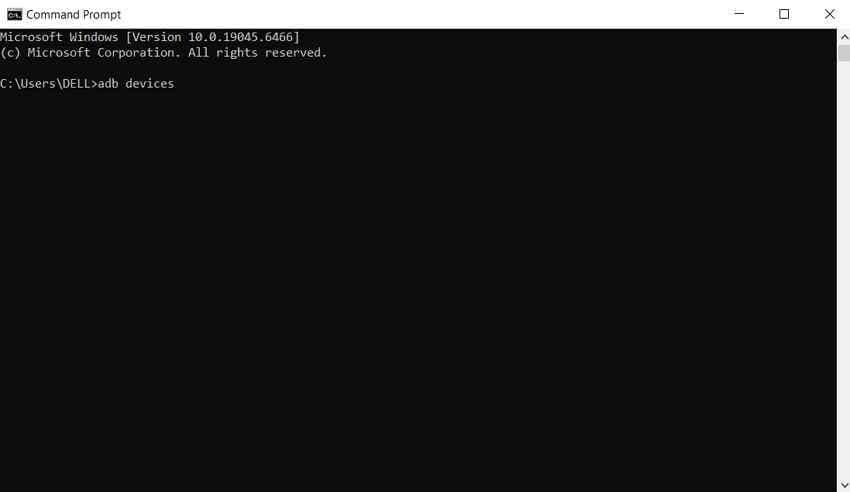
Step 2. If the device is listed as authorized, copy the shared storage folder to your computer with a command like this:
adb pull /sdcard/ C:\android-backup\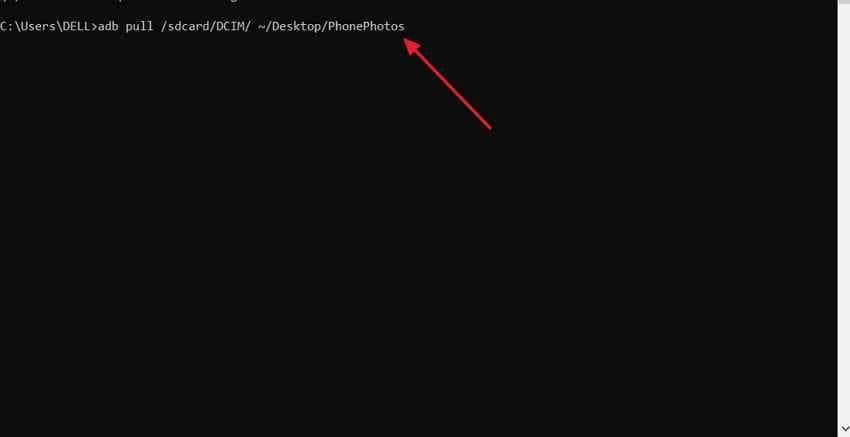
Step 3. Check the backup folder on your computer. The copied data may include common shared-storage folders, but it may not include protected app data, encrypted files, or content stored inside private app sandboxes.
Method 7. Remove the microSD Card and Recover Files Separately
If your Android photos, videos, or documents were saved to a removable microSD card, you can often recover them without accessing the broken phone screen. This is the best match for Recoverit because the card can be scanned directly on a Windows computer.
One limitation matters: if the microSD card was formatted as internal or adopted storage, it may be encrypted for that phone and may not be readable when removed. In that case, screen repair or professional help may be needed.
Step 1. Power off the phone if possible, remove the tray, and take out the microSD card.
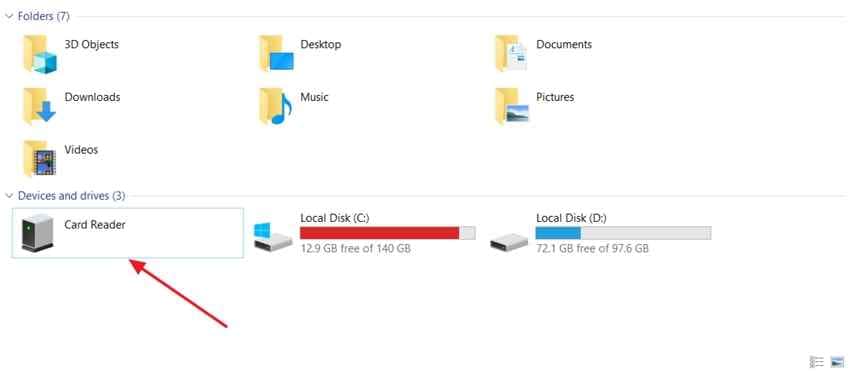
Step 2. Insert the card into a card reader and connect it to your computer.
Step 3. Copy visible files first. If files are missing, deleted, corrupted, or the card appears RAW, scan the card with data recovery software before formatting it.
Method 8. Use a Professional Repair or Data Recovery Service
Use professional help when the phone is locked, the screen is completely black, the phone does not output video, the computer cannot detect it, or the important files are only in internal storage. For many modern Android phones, replacing the screen or digitizer is safer than trying to bypass storage access.
Before handing over the device, tell the repair shop that data preservation is the priority. Ask them not to factory reset the phone, not to flash firmware, and not to replace the main board unless you approve it. If the storage chip or motherboard is damaged, a specialized phone data recovery lab may be required.
Part 5. Recover Deleted Files from a Broken Android microSD Card with Recoverit
Recoverit Windows Data Recovery is useful when the broken Android phone used a removable microSD card, or when phone files were already copied to a computer, USB drive, memory card, or other computer-readable storage device. It scans readable storage for deleted, lost, formatted, RAW, or corrupted files before you format the card or send the phone for repair.
It is important to use Recoverit in the right place. Recoverit is not an Android internal-storage unlocker. It cannot bypass a PIN, password, or pattern, enable USB debugging remotely, decrypt Android internal storage, or repair a broken phone screen.
When Recoverit Can Help
- Photos, videos, audio files, documents, or downloads were stored on a removable microSD card.
- The microSD card is detected by a Windows computer through a card reader.
- Files were deleted, lost after formatting, hidden after corruption, or missing after the card became RAW.
- Android files were copied to a PC, external drive, USB drive, or SD card and were later deleted or lost there.
When Recoverit Cannot Help
- The target files are only inside locked Android internal storage.
- The phone cannot be unlocked or authorized for USB access.
- The microSD card was formatted as internal/adopted storage and is encrypted for that phone.
- The storage device is physically dead and not detected by the computer or Disk Management.
- The deleted data has already been overwritten by new photos, apps, downloads, or system activity.
How to Scan the microSD Card Safely
After you remove the microSD card from the broken Android phone, do not format it even if Windows asks. Connect it through a card reader, then scan it with Recoverit.
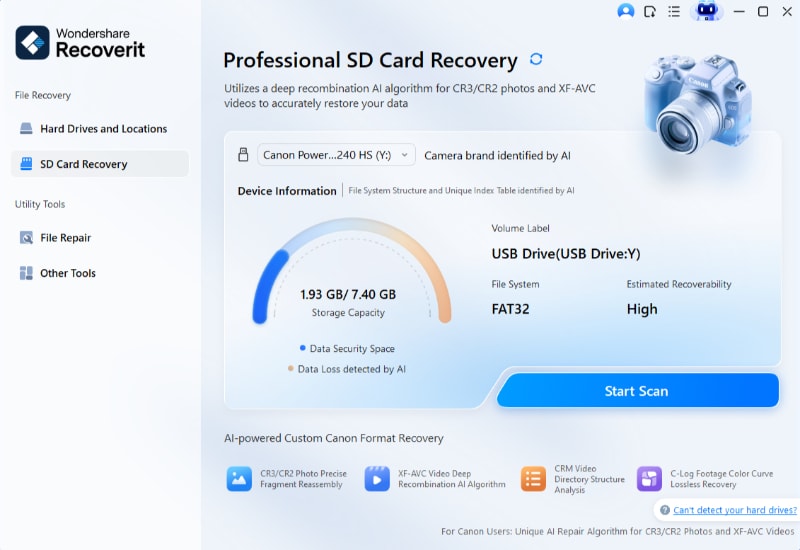
Step 1. Select the microSD card. Open Recoverit on your Windows computer, choose the connected microSD card from the device list, and click Start Scan.
Step 2. Let Recoverit scan for missing files. Wait for the scan to finish. Use file type filters or file location view to find photos, videos, documents, and other recoverable files.
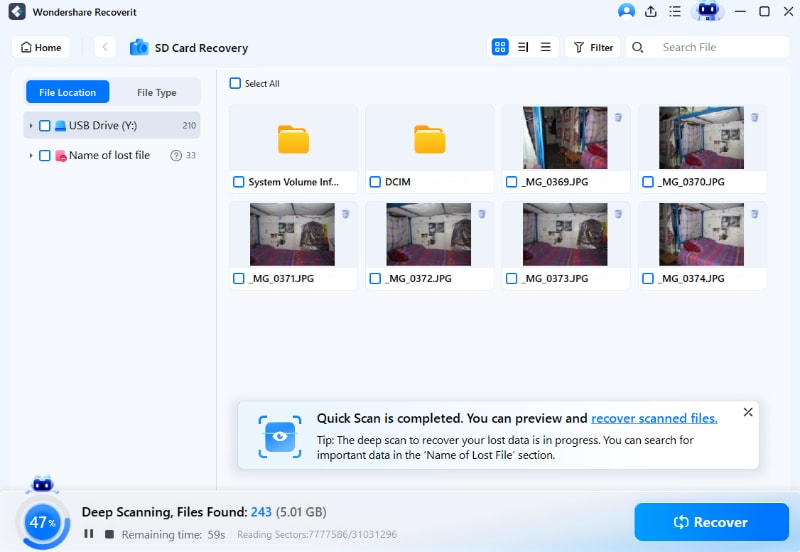
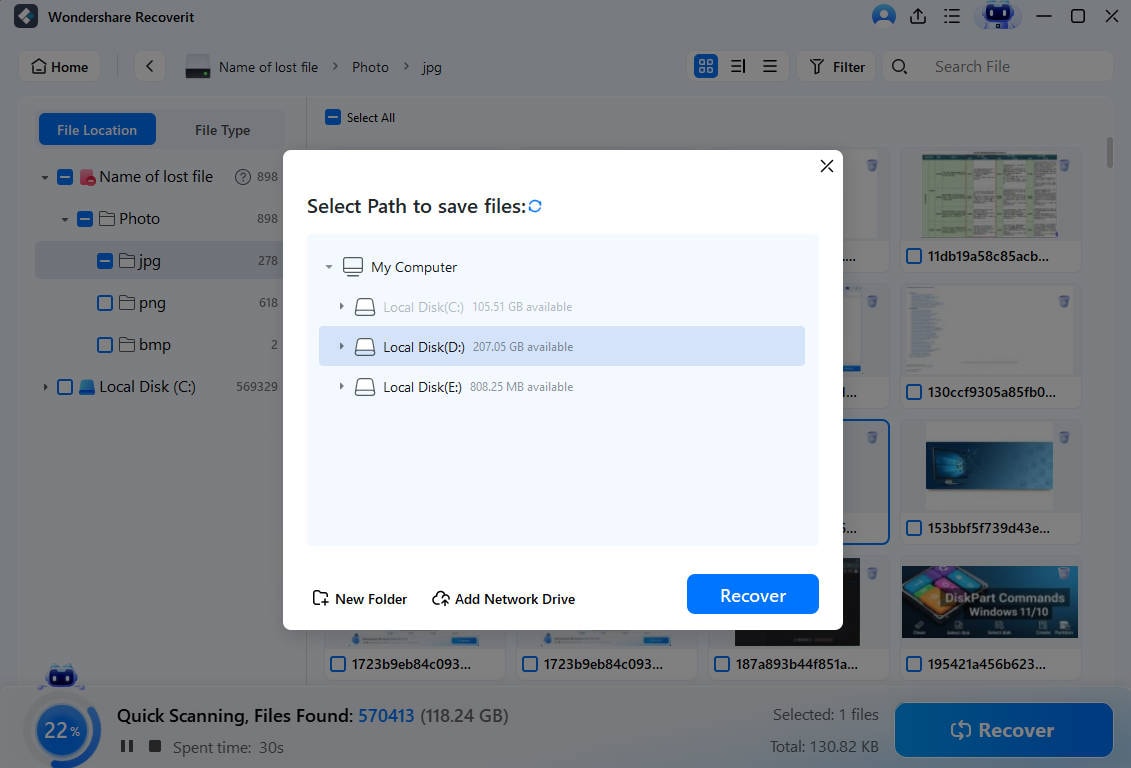
Step 3. Preview and recover to another location. Preview recoverable files, select what you need, click Recover, and save the restored files to your computer or another drive instead of the same microSD card.
Part 6. Why Some Broken Android Recovery Methods Do Not Work
If you tried to retrieve data from a broken screen Android phone and nothing worked, the failure is usually caused by access limits rather than the recovery steps themselves.
| Reason | What it means | What to do next |
| USB debugging was never enabled | ADB cannot access the phone without prior debugging access. | Use backups, OTG, external display, or repair instead. |
| The computer was not authorized | ADB may show the phone as unauthorized and require approval on the broken screen. | Try a previously trusted computer or repair the display. |
| File Transfer prompt cannot be approved | USB connection may default to charging only. | Use an OTG mouse or external display to approve File Transfer. |
| The phone is locked or encrypted | Modern Android internal storage is protected by the lock screen and encryption. | Recover from backups, repair the screen, or use a professional service. |
| The phone does not support video output | A USB-C to HDMI adapter will not show anything on unsupported models. | Try OTG, backups, Smart Switch, or repair. |
| The microSD card is adopted internal storage | The card may be encrypted for that specific phone. | Do not format it; repair the phone or ask a data recovery lab. |
| Hardware is damaged | Board, port, battery, or storage damage can prevent detection. | Stop repeated attempts and consult a repair or recovery specialist. |
| Deleted files were overwritten | New data may replace old deleted file space. | Stop using the storage device and scan it as soon as possible. |
Part 7. How to Prevent Data Loss If Your Android Screen Breaks Again
A broken screen is unpredictable, but your recovery options are much better when backups and access settings are already prepared.
- Turn on Google Backup: Back up device settings, call history, SMS, app data, and other supported data to your Google account with Android backup.
- Use Google Photos or another photo backup service: Keep camera photos and videos synced with Google Photos so a broken screen does not trap the only copy.
- Copy important files to a computer regularly: Move DCIM, Downloads, documents, voice recordings, and export folders to your PC or external drive.
- Keep account recovery information updated: Make sure you can access your Google account, Samsung account, recovery email, and recovery phone number.
- Export important app data: For chat apps, notes, password managers, and authenticator apps, enable their own backup or export features.
- Back up before repair: If the phone is still usable, create a backup before sending it to a service center.
- Use removable storage carefully: If you rely on a microSD card, keep a second backup and scan the card before formatting it after corruption.
Conclusion
Android broken screen data recovery is possible in many cases, but the right method depends on what still works. Check Google backups first, then try USB File Transfer, OTG mouse control, external display access, Smart Switch, ADB, or microSD card recovery according to the phone condition. If the phone is locked, encrypted, dead, or stores the only copy in internal storage, screen repair or a professional recovery service is usually safer than risky reset attempts.
Use Recoverit when the files are on a removable microSD card or another computer-readable storage device. It can help recover deleted or lost files from readable storage before formatting or repair, but it does not unlock Android phones or decrypt internal storage.
FAQ
-
Can Android broken screen data recovery work if the touchscreen is dead?
Yes, if the display is still visible. Connect an OTG adapter and USB mouse, unlock the phone with the cursor, approve File Transfer, and copy the files to a computer. If the display is also black, try an external display if your phone supports video output. -
How do I retrieve data from an Android phone with a black broken screen?
Start by checking Google Photos, Drive, Contacts, and Android backup from another device. If the phone still powers on, try external display output, ADB only if USB debugging was enabled and authorized before, or a professional screen repair with clear no-wipe instructions. -
Can Recoverit recover data from Android internal storage with a broken screen?
No. Recoverit cannot bypass an Android lock screen, enable USB debugging remotely, or decrypt modern Android internal storage. It can help recover files from a removed microSD card or other computer-readable storage used by the phone. -
Can I use ADB if USB debugging was not enabled before the screen broke?
No. ADB requires USB debugging to be enabled in advance, and the computer must be authorized. If the phone shows as unauthorized and you cannot approve the prompt on the broken screen, use backups, OTG control, external display access, or repair instead. -
Should I factory reset a broken Android phone before data recovery?
No. A factory reset can remove local data and make recovery much harder. Try cloud backups, USB File Transfer, OTG mouse access, external display, microSD card recovery, or professional help before any reset or firmware flashing. -
Can I recover deleted photos from a broken Android phone's microSD card?
Yes, if the photos were saved on a removable microSD card and the card is still readable by a computer. Remove the card, connect it with a reader, avoid formatting it, and scan it with Recoverit to look for deleted photos and videos.


