TL;DR:
To successfully recover lost or deleted files from Mac-ready drives formatted with APFS, HFS+, or exFAT, you must immediately stop writing new data to the device and use specialized logical recovery software like Recoverit to extract data from unallocated disk sectors.
● Continued use of the affected drive, installing apps, or running macOS updates will permanently overwrite the hidden data sectors, which makes file recovery impossible.
● If macOS prompts you to "Initialize," "Erase," or "Format" a corrupted external drive, cancel the request immediately to preserve the raw data structures for deep scanning.
● You must save all recovered files to a separate, healthy drive or partition with sufficient free space to avoid overwriting the original source device during the restoration process.
Ask AI for a summary
 ChatGPT
 Perplexity
 Gemini
 Claude
 Grok
Grok
Mac-ready drives data recovery focuses on restoring lost, deleted, or inaccessible files from storage devices that are formatted or optimized for macOS. Whether you are using an external hard drive, SSD, USB flash drive, or SD card labeled as Mac-ready, data loss can occur due to accidental deletion, formatting, corruption, or connection issues. Understanding how Mac-specific file systems like APFS, HFS+, and exFAT behave is essential if you want to improve your chances of a successful recovery. This guide explains how Mac-Ready drives work, common data loss scenarios, and how to safely use professional tools like Recoverit to get your files back.
Try Recoverit to Perform Data Recovery
 Security Verified. 3,591,664 people have downloaded it.
In this article
What Is Mac-Ready Drives data recovery
Mac-ready drives data recovery is the process of restoring files from storage media that are formatted or configured to work seamlessly with macOS. These drives can be internal Mac disks or external devices such as HDDs, SSDs, USB flash drives, and SD cards.
Many drives are sold as "Mac-ready," meaning they are preformatted with APFS, HFS+, or exFAT so a Mac can read and write to them immediately. When files disappear because of accidental deletion, formatting, corruption, or disconnection issues, mac data recovery techniques and tools are used to scan the disk and rebuild or copy the lost data.
Instead of repairing hardware, mac hard drive recovery focuses on logical recovery: identifying data remnants in sectors that macOS no longer references in the file system and safely restoring them to another location.
How Does Mac-Ready Drives data recovery Work
Mac ready drives data recovery relies on how macOS tracks files on APFS, HFS+, and other compatible file systems. When you delete or format data, macOS typically removes file references from the directory structure but does not immediately erase the underlying sectors. Until those sectors are overwritten, specialized software can still access them.
Data recovery tools like Recoverit scan a drive at two levels:
- Logical scan: Reads file system metadata (APFS containers, HFS+ catalogs, partition tables) to locate recently deleted items and intact folders.
- Deep scan: Examines the disk sector by sector, using file signatures and patterns to reconstruct data even when file system structures are damaged or missing.
Once recoverable data is found, the software lets you preview and then copy files to a healthy destination. This avoids writing new data to the affected drive, which could overwrite sectors containing deleted content and make mac ready drives data recovery impossible.
| Action on Mac-Ready Drive | Impact on Data Recovery |
|---|---|
| Simple deletion or emptying Trash | High recovery success rate if the drive is not used heavily afterward. |
| Quick format or re-partitioning | Files may still be recoverable as long as sectors are not overwritten. |
| Continuous new file writes after loss | Recovery chance drops because old data sectors get overwritten. |
Types of Mac-Ready Drives data recovery
Common Mac-Ready Drive Types and File Systems
Mac ready drives data recovery covers a wide variety of devices and formats that are optimized for macOS. Knowing which one you are using helps you choose the right approach.
- Internal Mac hard drives and SSDs – Typically formatted as APFS on newer macOS versions or HFS+ on older systems. These drives store system files, apps, and personal data.
- External hard drives and SSDs – Sold as "Mac-ready" with HFS+ or exFAT, and often used for Time Machine backups or bulk storage. External drive recovery mac scenarios are common when these disks are unplugged improperly or reformatted.
- USB flash drives and SD/microSD cards – Frequently formatted as exFAT or FAT32 for cross-compatibility with Windows and cameras. SD card recovery mac workflows often involve photo and video projects.
- Network and multi-platform drives – Some network-attached storage (NAS) and multi-OS external drives use exFAT or other shared file systems that a Mac can read and write.
Each file system has unique metadata structures:
- APFS – Default modern macOS format, supports snapshots and encryption, and requires tools capable of apfs data recovery.
- HFS+ – Legacy macOS format with journals and catalogs, relevant for hfs data recovery.
- exFAT/FAT32 – Cross-platform formats often used on removable drives; corruption or unsafe ejection frequently leads to data loss.
Typical Data Loss Scenarios on Mac-Ready Drives
Many mac ready drives data recovery cases stem from similar issues. Recognizing them early can help you respond correctly.
- Accidental deletion and emptied Trash – Files deleted from Finder and then removed from Trash no longer appear in macOS, but disk sectors may still contain data.
- Accidental formatting or re-partitioning – Choosing the wrong drive in Disk Utility and formatting it can wipe file system structures while leaving raw data untouched for a time.
- Drive corruption or file system damage – Sudden power loss, unsafe ejection, or malware can damage APFS or HFS+ structures, causing volumes to become unreadable or appear as "uninitialized."
- Connection issues – Faulty cables, hubs, or ports may cause intermittent disconnections, leading to logical errors or damaged partitions on external Mac-ready drives.
- Operating system errors and upgrades – macOS updates or system crashes may trigger boot problems, missing user folders, or unmounted APFS containers.
In all these scenarios, prompt action and minimal use of the affected drive greatly improve your chances of a successful mac data recovery with tools like Recoverit.
Practical Tips for Mac-Ready Drives data recovery
Before attempting any mac ready drives data recovery, focus on preventing further damage to your data.
- Stop writing to the affected drive – Do not save new files, install apps, or run macOS updates on the problem disk. Overwriting sectors is the main reason recover files on mac attempts fail.
- Check basic connections first – For external drives, test different USB/Thunderbolt ports, cables, or hubs. If the drive powers on and appears in Disk Utility, there is a better chance of recovery.
- Avoid reformatting prompts – If macOS asks to "Initialize," "Erase," or "Format" a drive, cancel and try data recovery first. Formatting can complicate or partially erase recoverable data.
- Use Disk Utility cautiously – First Aid can repair minor file system issues, but it will not recover deleted files. Run it only if the drive will not mount and you have no recent backup.
- Create a disk image when possible – For failing drives or critical data, create a sector-by-sector image and run mac hard drive recovery on the image instead of the original disk.
- Prepare enough free space – Store recovered files on a separate drive or partition with ample space to avoid overwriting the source device.
- Do not run multiple recovery tools at once – Using several utilities simultaneously on the same drive can cause conflicts; choose a reliable solution like Recoverit and complete its scan first.
How to Use Recoverit to Recover Lost Data
Recoverit is a professional data recovery software from Wondershare designed to restore lost, deleted, or formatted files from a wide range of Mac-ready drives, including internal disks, external HDDs and SSDs, USB flash drives, and memory cards. With an intuitive interface and powerful scanning engine, it makes mac ready drives data recovery accessible even to non-technical users. You can learn more and download it from the Recoverit official website.
Key Features Offered by Recoverit
- Supports mac data recovery from APFS, HFS+, exFAT, and other Mac-compatible file systems used by internal and external Mac-ready drives.
- Offers quick and deep scan modes to locate recently deleted files as well as items buried in corrupted, formatted, or partially overwritten sectors.
- Allows file preview before recovery so you can confidently recover files on mac and restore only the data you actually need.
Step-by-Step Guide on How To Recover Lost Data
1. Choose a Location to Recover Data
Launch Recoverit on your Mac and view the main interface. Under the list of available locations, you will see internal drives such as "Macintosh HD," external Mac-ready disks, and connected memory cards. For example, if you need external drive recovery mac after accidentally formatting an APFS external SSD, select that specific drive or partition. Once you have highlighted the correct source, click "Start" to proceed.

2. Deep Scan the Location
Recoverit begins scanning the chosen location and lists discovered files in real time, organized by file type and path. You can pause or stop the scan, but for the best mac ready drives data recovery results, allow the deep scan to complete. During this phase, the software analyzes sectors one by one, which is especially useful for hfs data recovery, apfs data recovery, and complex cases like corrupted SD cards or reformatted external drives.

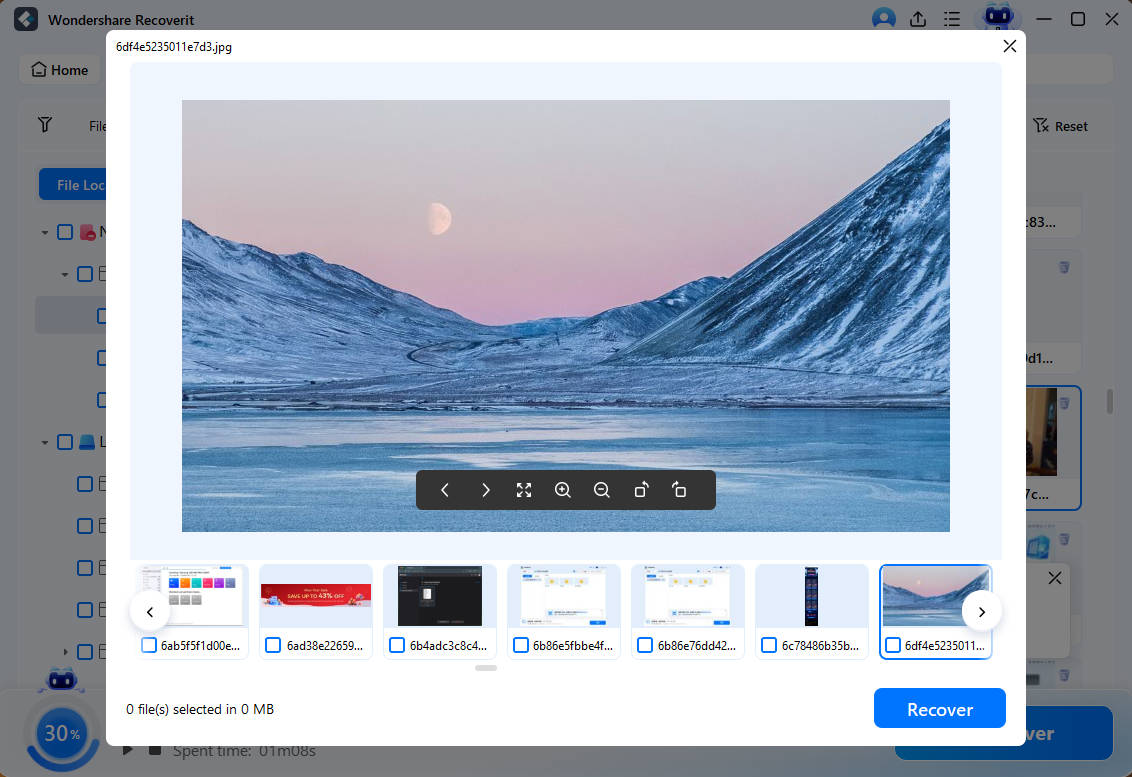
3. Preview and Recover Your Desired Data
When the scan concludes, browse the results and use filters for file type, date, or search by name to quickly locate what you need. Click a file to open a preview window and verify its contents, which is particularly helpful for photos, videos, documents, and emails. After selecting all target items, click "Recover" and choose a safe destination on a different drive. This ensures you recover files on mac without overwriting data on the original Mac-ready drive.
Conclusion
Mac ready drives data recovery involves understanding how macOS file systems like APFS, HFS+, and exFAT handle deletion, formatting, and corruption. When files vanish from your internal disk, external hard drive, SSD, USB flash drive, or SD card, quick action and careful handling of the affected device are crucial for a successful outcome.
By avoiding risky steps such as reformatting or writing new data, and by choosing a reliable tool such as Recoverit, you can dramatically improve the chances of recovering important photos, documents, videos, and other content. Recoverit offers an accessible way to scan Mac-ready drives, preview what is recoverable, and safely restore selected files to another location, making it a powerful ally in everyday mac hard drive recovery and sd card recovery mac scenarios.
Next: Sandisk Data Recovery
FAQ
-
What is a Mac-Ready drive and why does it matter for data recovery
A Mac-Ready drive is a storage device preformatted or configured for macOS, usually with APFS, HFS+, or exFAT, so it works out of the box with a Mac. Knowing the drive is Mac-Ready helps you choose compatible mac ready drives data recovery tools that understand these file systems. -
Can I recover data from a formatted Mac-Ready external drive on Mac
Yes, in many cases you can. If the drive has only been quickly formatted and not heavily used afterward, external drive recovery mac with Recoverit can scan underlying sectors and restore files that still exist on the disk. -
Should I stop using my Mac-Ready drive immediately after data loss
Yes. You should stop writing new data to the affected drive as soon as you notice data loss. Continued use may overwrite sectors that contain deleted or lost files, making mac data recovery much more difficult or impossible.