TL;DR:
A microSD card is a removable NAND flash memory solution for compact electronics that requires matching the specific capacity format, speed class, and file system to your device's hardware limits to ensure stable performance.
● Storage capacity dictates the file system: microSDHC cards (4 GB to 32 GB) use FAT32 and restrict individual files to 4 GB, whereas microSDXC cards (64 GB to 2 TB) use exFAT for larger files like continuous 4K video, though older devices may lack support for capacities above 32 GB.
● Performance ratings define minimum sustained write speeds: U3 or V30 classes are necessary for stable 4K recording on action cameras and drones, while A1 or A2 Application Performance Classes are required to smoothly run apps directly from the card on Android devices.
● To minimize file corruption, maintain 10 to 20 percent free space and format the card inside the host device; if data loss occurs, immediately stop using the card to prevent overwriting and restore the files to a separate destination drive using recovery software like Recoverit.
Ask AI for a summary
 ChatGPT
 Perplexity
 Gemini
 Claude
 Grok
Grok
A microSD card is a tiny, removable flash memory card used to expand storage on phones, cameras, drones, dash cams, game consoles, and many other devices. Despite its small size, a microSD card can store huge amounts of photos, videos, apps, and documents, making it one of the most convenient ways to carry data anywhere. Understanding what microSD is, the different types available, and how it works will help you choose the right card, avoid performance issues, and reduce the risk of data loss.
Try Recoverit to Perform Data Recovery
 Security Verified. 3,591,664 people have downloaded it.
In this article
What Is microSD
A microSD card is the smallest member of the SD (Secure Digital) memory card family. It measures about 15 x 11 x 1 mm and is widely used in compact electronics where internal space is limited but extra storage is essential.
Because microSD storage is removable, you can move data between devices, expand a device that has limited built-in memory, or create backups by copying the card contents to a computer or another drive.
Common Uses of microSD Cards
- Smartphones and tablets for apps, photos, music, and offline videos.
- Action cameras, drones, and dash cams for continuous HD/4K video recording.
- Handheld consoles and portable gaming systems for downloadable games and saves.
- Security cameras and smart home devices for motion-triggered video clips.
- MP3 players, e-book readers, and other small gadgets needing extra memory card capacity.
microSD vs Full-Size SD Cards
| Aspect | microSD Card vs SD Card |
|---|---|
| Physical size | microSD is much smaller and lighter, ideal for phones, drones, and compact cameras. Full-size SD is larger, suited to DSLRs and laptops. |
| Compatibility | A microSD card can be used in a full-size SD slot via an adapter. The reverse is not possible because SD cards are physically bigger. |
| Typical usage | microSD: portable and embedded devices. SD: professional cameras, camcorders, card readers on laptops, and some printers. |
How Does microSD Work
A microSD card uses NAND flash memory to store data electronically, with no moving parts. Information is written as electrical charges inside memory cells, which remain even after the power is removed.
Core Components Inside a microSD Card
- Flash memory chips: Where your actual data is stored as bits (0s and 1s).
- Controller: A tiny processor that manages reading, writing, wear-leveling, and error correction.
- Gold contacts: The exposed pads that connect the card to your device so data can be transferred.
Read/Write Process in Simple Terms
- When you record a video or take a photo, the device sends that data to the microSD controller.
- The controller decides where to store the data blocks to balance wear across the memory cells.
- Error correction codes are added to help detect and fix small data errors later.
- When you open the file, the controller retrieves those blocks, checks for errors, and streams the data back to the device.
This process happens extremely fast. However, if power is suddenly lost, the card is removed mid-write, or cells become worn out, the file system can become corrupted, leading to lost or unreadable files.
File Systems Used on microSD Cards
- FAT32: Common on microSD and microSDHC cards up to 32 GB. Compatible with almost all devices but limits individual files to 4 GB.
- exFAT: Used by most microSD and microSDXC cards above 32 GB. Supports larger files and is standard for 4K video recording.
- Other formats: Some devices may reformat cards to proprietary or Linux-based file systems, which can affect how recovery tools access the data.
What are the Types of microSD
Not all microSD cards are the same. They differ by capacity category, performance class, and special optimizations such as video or application speed ratings. Choosing the right type is crucial for stable recording and smooth app performance.
microSD Capacity Categories
The most common microSD types are defined by capacity and the file system they typically use.
| Type | Capacity Range and Typical Use |
|---|---|
| microSD | Up to 2 GB. Uses FAT12/16. Rare today and generally too small for modern photos and videos. |
| microSDHC | 4 GB to 32 GB. Usually formatted with FAT32. Good for basic storage, HD video, and general smartphone use. |
| microSDXC | 64 GB to 2 TB. Usually formatted with exFAT. Ideal for 4K/8K video, high-resolution photos, and large game libraries. |
When comparing microSD vs SDHC, remember that "microSD" describes the size, while SDHC (and SDXC) describe capacity groups. You can have a microSDHC or a microSDXC card, as well as full-size SDHC/SDXC cards.
Speed Classes and Performance Ratings
Beyond capacity, a microSD card is also labeled with speed and performance markings that indicate minimum write speeds or app performance. These numbers are important for cameras, drones, and devices that require sustained data rates.
| Marking | Meaning |
|---|---|
| Speed Class (C2, C4, C6, C10) | Minimum write speeds from 2 MB/s up to 10 MB/s. C10 is now the standard for HD video. |
| UHS Speed Class (U1, U3) | U1 guarantees at least 10 MB/s, U3 at least 30 MB/s, suitable for 4K recording in many cameras. |
| Video Speed Class (V10, V30, V60, V90) | Higher sustained speeds for 4K and 8K video, with V30 commonly recommended for action cameras and drones. |
| Application Performance Class (A1, A2) | Optimized for running apps from the microSD card, with minimum random read/write IOPS for smoother performance. |
How to Choose the Right microSD Card
- Match the capacity your device supports (some older devices cannot use microSDXC cards above 32 GB).
- Follow the device manual's recommended speed class for video recording or burst photography.
- For Android apps on card storage, choose A1 or A2-rated microSD cards.
- Avoid extremely cheap or unknown brands that may be counterfeit or fail quickly.
Practical Tips for microSD
Properly using and caring for your microSD card can significantly reduce the risk of data corruption and prolong its lifespan.
How to Use microSD Cards Safely
- Always eject before removing: Use "Safely remove" or "Eject" on your phone, camera, or computer before pulling out the card.
- Format in the device: For cameras and drones, format the microSD card in the device where it will be used to ensure correct file system settings.
- Do not mix heavy tasks: Avoid recording 4K video while copying large files to a card from a computer at the same time.
- Keep it clean and dry: Store cards in a protective case and keep the contacts free from dust and moisture.
How to Avoid microSD Corruption and Data Loss
- Do not fill the microSD storage completely; keep at least 10–20% free for best performance and longevity.
- Replace cards that show errors, slow writes, or frequent file corruption.
- Avoid frequent hot-swapping of cards while the device is powered and busy.
- Use reliable card readers and quality USB ports when transferring data to a computer.
- Back up critical photos and videos regularly to a PC, external drive, or cloud service.
What to Do If a microSD Card Stops Working
- Stop using the card immediately to prevent overwriting recoverable data.
- Try reading it on another device or card reader to rule out hardware issues.
- Check Disk Management (Windows) or Disk Utility (macOS) to see if the card is detected.
- If the card is recognized but files are missing or unreadable, use microSD data recovery software such as Recoverit.
- If the card is physically damaged or not detected at all, consider professional data recovery services.
How to Use Recoverit to Recover Lost Data
Recoverit by Wondershare is a professional data recovery tool that helps you rescue lost or deleted files from microSD cards, SD cards, USB drives, hard disks, and more. Whether your microSD was accidentally formatted, became inaccessible, or suffered file corruption, Recoverit offers a straightforward way to scan and restore your important photos, videos, and documents. To learn more and download the software, visit the Recoverit official website.
Key Features Offered by Recoverit
- Supports recovery from microSD, SD, USB, HDD, SSD, and many other internal and external storage devices.
- Recovers photos, videos, office documents, and hundreds of other commonly used file types.
- Provides a user-friendly interface with file preview and selective recovery so you only restore the data you actually need.
Step-by-Step Guide on How To Recover Lost Data
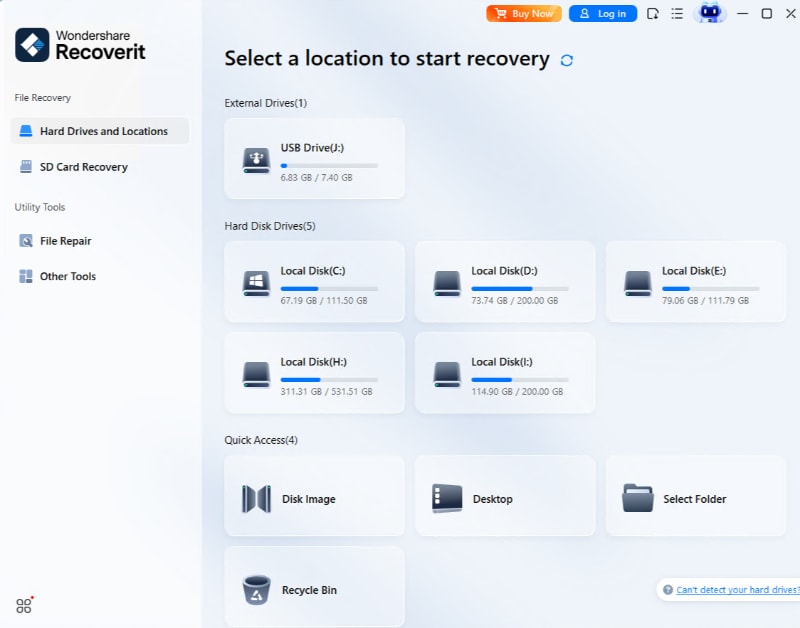
1. Choose a Location to Recover Data
Launch Recoverit on your computer and connect the affected microSD card using a reliable card reader or built-in card slot. On the main interface, review the list of available locations and select the microSD card as the target device. Confirm your selection so Recoverit knows exactly where to search for lost or deleted files.
2. Deep Scan the Location
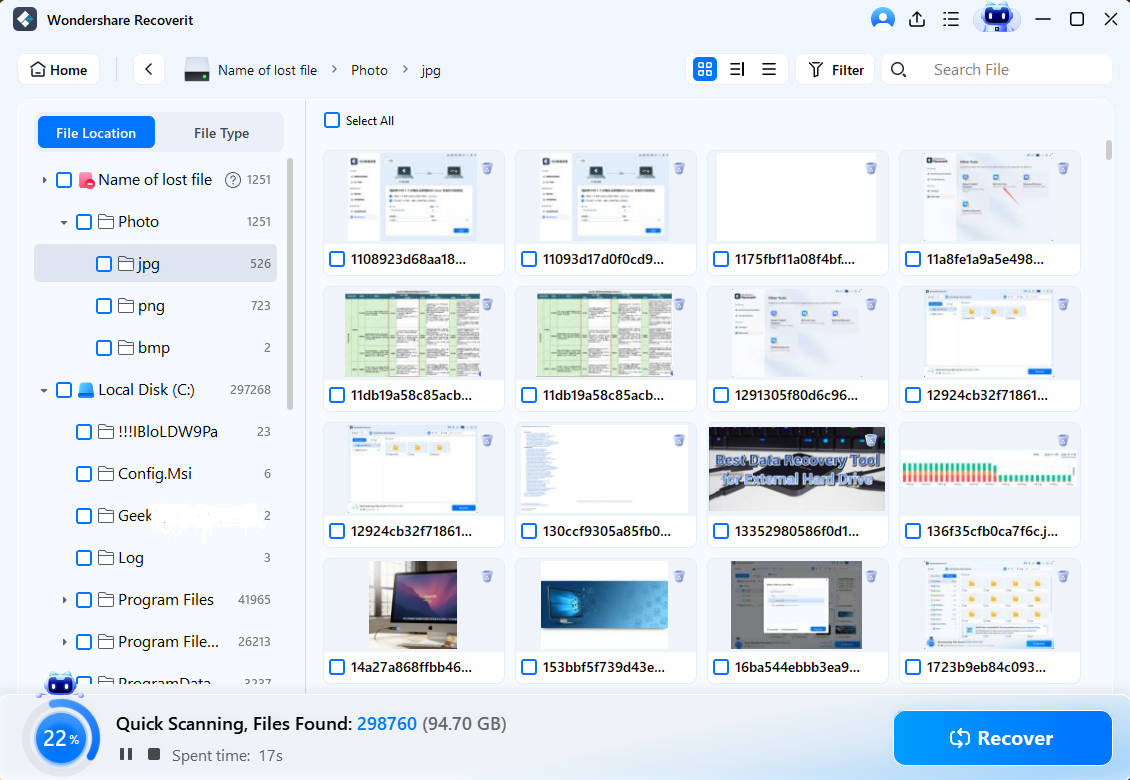
Click Start to begin scanning the selected microSD card. Recoverit first performs a quick scan and then automatically continues with a deeper sector-by-sector scan to find as many recoverable files as possible. You can monitor the progress, pause or stop the scan, and filter results by file type or path while the software continues analyzing the device in the background.
3. Preview and Recover Your Desired Data
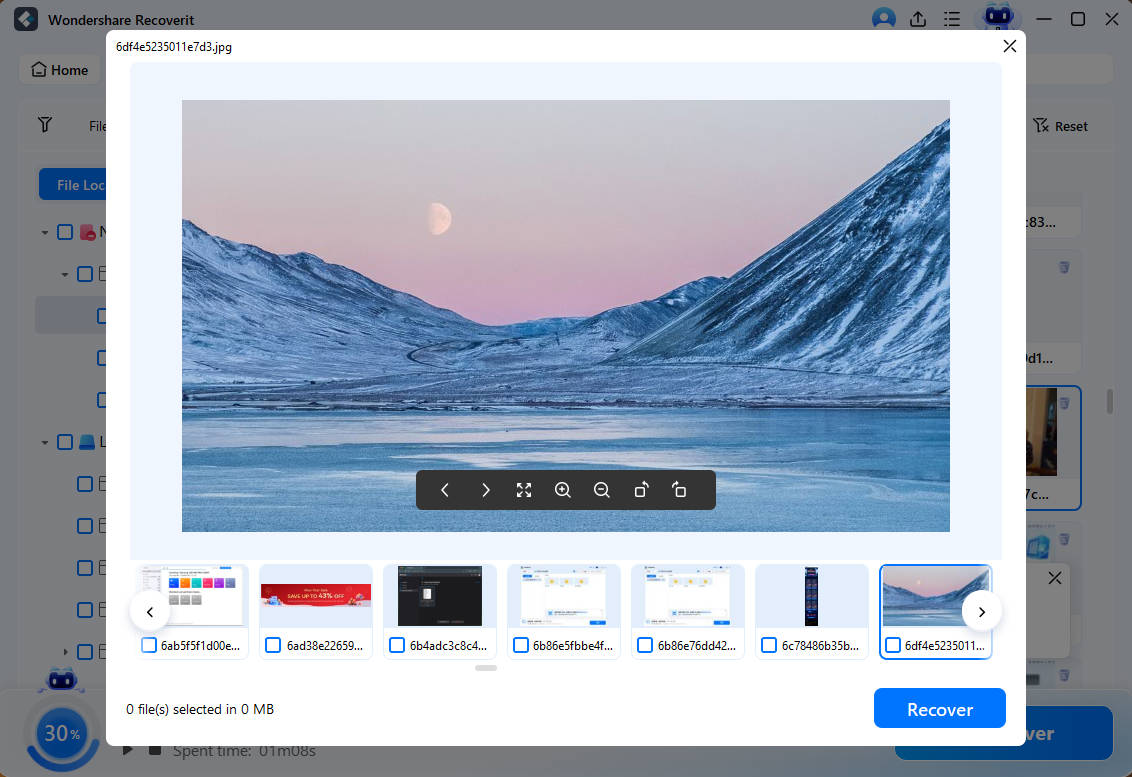
When the scan is complete, browse the list of found items and use the built-in preview feature to check photos, videos, and documents before restoring them. Select the specific files or folders you want to recover, then click Recover. Choose a safe destination on your computer that is different from the original microSD card to avoid overwriting data, and let Recoverit complete the recovery process.
Conclusion
A microSD card is a compact and versatile storage solution that adds flexible capacity to smartphones, cameras, and many portable devices. Knowing how microSD technology works, the main categories and speed classes, and how to handle the card correctly helps you get reliable performance and protect your files.
Even with careful use, microSD data loss can still happen because of deletion, formatting, or corruption. With a dedicated tool like Recoverit, you can scan your microSD card, preview the recoverable content, and restore important files before they are permanently lost.
Next: SDHC
FAQ
-
What is a microSD card used for?
A microSD card is used to expand storage on devices such as smartphones, action cameras, drones, dash cams, handheld consoles, and tablets. It stores photos, videos, music, apps, and documents in a small, removable form factor. -
What is the difference between microSD, SDHC, and SDXC?
microSD describes the physical card size, while SDHC and SDXC describe capacity ranges and file system standards. microSDHC cards typically hold 4 GB to 32 GB, and microSDXC cards usually offer 64 GB and above. -
Can I recover deleted files from a microSD card?
Yes, you can often recover deleted files from a microSD card as long as the data has not been overwritten. Stop using the card immediately, connect it to a computer, and run recovery software such as Recoverit to scan and restore lost files.