


 TL;DR:
To fix Microsoft Word crashing on a Mac, first secure your unsaved work by saving the AutoRecovered copy, then determine whether a single corrupted file or an app-wide software conflict is triggering the failure.
● If only one specific document crashes, duplicate the file in Finder and use Word's built-in Recover Text option via the Open menu to extract its readable content.
● If Word crashes with every file, resolve the app-level conflict by updating Microsoft Word and macOS, disabling recent third-party add-ins, and testing the Mac in Safe Mode before attempting a full software reinstallation.
● Never delete the AutoRecovery folder as an initial fix, and note that data recovery software can only retrieve previously saved files missing from the drive, not unsaved edits lost from memory.
Ask AI for a summary
 ChatGPT
 Perplexity
 Gemini
 Claude
 Grok
Grok
If Microsoft Word keeps crashing on your Mac, first protect any unsaved work, then identify whether the problem affects one document or Word as a whole. That distinction matters: a single damaged file needs a different fix from an app-wide crash caused by an outdated Office build, an add-in, or the Mac startup environment.
⚡Quick Fix: Stop Word Crashes Without Losing Work
● Protect the document first: reopen Word and save any AutoRecovered copy before deleting caches, templates, or app data.
● If every document crashes Word: update Word and macOS, restart the Mac, check Microsoft's current Word for Mac known issues, then isolate add-ins or test Safe Mode.
● If only one document crashes: work from a duplicate and use Word's Recover Text option instead of repeatedly opening the original.
● If a file is now missing: check AutoRecovery, Version History, Trash, and backups before using data recovery software.
Try Wondershare Recoverit to Perform Data Recovery
 Security Verified. Over 7,302,189 people have downloaded it.
In This Article
-
- Fix 1. Quit Word, Restart the Mac, and Retest
- Fix 2. Update Microsoft Word and macOS
- Fix 3. Test With a New Blank Document and a Local Copy
- Fix 4. Isolate Recent Word Add-ins and Extensions
- Fix 5. Start the Mac in Safe Mode
- Fix 6. Use Recover Text for One Damaged Word Document
- Fix 7. Reinstall Word or Microsoft 365 as a Last App-Level Step
Part 1. Diagnose Why Word Keeps Crashing on Mac
Do not start by deleting Word folders or repairing the whole disk. First identify the failure boundary. Apple recommends checking whether the problem is limited to one app or file, while Microsoft maintains a current Word for Mac known-issues page for crashes, performance problems, and add-in conflicts.
Check Whether One File or All Files Trigger the Crash
Open Word without immediately reopening the problem document. If Word stays open, create a new blank document and type a few lines. Then test a second known-good document.
- Only one document crashes: Treat the file as the main suspect. Make a duplicate before testing repair or conversion options.
- Every document crashes: Focus on Word, Office updates, add-ins, the user environment, or macOS compatibility.
- Word crashes before a document opens: Update Office first, check Microsoft's current known issues, and isolate startup or add-in conflicts.
- Several unrelated apps also crash: The problem may be broader than Word. Follow Mac-level troubleshooting rather than changing Word files repeatedly.
Apple's current guidance for an app that closes unexpectedly starts with quitting and reopening the app, restarting the Mac, installing software updates, and reinstalling the app only if earlier steps fail. See Apple's app-crash troubleshooting guidance.
Match the Crash Pattern to the Best First Fix
| What You See | Most Likely Area to Check | Best First Action |
| Word crashes with every document | Office build, macOS compatibility, add-in, or app installation | Update Word and macOS, then retest |
| Only one .doc or .docx file crashes | Document-specific corruption or embedded content | Duplicate the file and use Recover Text |
| Crash started after installing or updating an add-in | Third-party add-in conflict | Disable or uninstall that add-in using its vendor instructions |
| Word works in Safe Mode but crashes after a normal startup | Software loaded during normal macOS startup | Review recent background software and extensions |
| Word crashed and an unsaved document disappeared | AutoRecovery, AutoSave, or file-loss scenario | Recover the document before destructive troubleshooting |
Part 2. Protect Unsaved Word Work Before Troubleshooting
A Word crash can be inconvenient, but deleting recovery data can turn a temporary app problem into permanent document loss. Protect the current work first, especially before reinstalling Office, removing containers, or experimenting with templates.
Save the AutoRecovered Copy First
Microsoft says AutoRecover periodically saves a recovery copy in the background and, after an unexpected shutdown, Word normally checks for an AutoRecover file the next time it opens. The default interval is 10 minutes unless the user changed it.
Step 1. Reopen Word after the crash. If Word automatically opens a recovered document, immediately use Save or Save As to keep a normal copy.
Step 2. If no recovered copy appears, open Finder and choose Go > Go to Folder.
Step 3. Check the current AutoRecovery location documented by Microsoft for your Word release. Microsoft's support pages may show a slightly different container path depending on the release, so use the path on the current Recover files in Office for Mac page rather than copying an old path from a forum.
Step 4. If you find the needed AutoRecovered version, open it and save it under a new name before continuing with crash troubleshooting.
For a complete set of recovery routes, including AutoRecovery, Version History, Trash, Time Machine, and deleted-file recovery, use the dedicated Recover unsaved or deleted Word documents on Mac guide.
Do Not Clear the AutoRecovery Folder as a First Fix
The old version of this article recommended deleting files from Word's AutoRecovery folder to stop crashes. That ordering is unsafe because AutoRecovery exists specifically to preserve work after an application or system crash. Microsoft also notes that choosing Don't Save when closing a file removes its AutoRecover file.
Do not empty AutoRecovery until you have saved every recovery copy you may need. If troubleshooting eventually requires resetting Word-specific data, back it up first and use current Microsoft instructions for the exact Word version.
Part 3. 7 Safe Fixes When Word Keeps Crashing on Mac
Use the fixes below in order. They begin with reversible, low-risk checks and move toward broader changes only when the crash persists. After each fix, test the same symptom before changing another variable; otherwise, you may not know what actually solved the problem.
Fix 1. Quit Word, Restart the Mac, and Retest
Step 1. If Word still responds, save the document and choose Word > Quit Word. If it is frozen, use Option-Command-Escape and force quit Word only when a normal quit is impossible.
Step 2. Restart the Mac from the Apple menu. Avoid holding the power button unless the whole Mac is unresponsive, because a forced shutdown can discard unsaved changes.
Step 3. Open Word first, create a blank document, and then test the document that previously crashed. If only that file still fails, skip to Fix 6 instead of changing the whole Office installation.
If Word is frozen rather than actually closing, the separate Microsoft Word frozen on Mac guide covers the not-responding workflow without duplicating it here.
Fix 2. Update Microsoft Word and macOS
Microsoft's Word for Mac known-issues page was updated in July 2026 and continues to list crash and add-in issues. Microsoft also states that some Office installations on unsupported or outdated operating systems can enter reduced-functionality mode, so updating the supported OS and Office build is an important early check.
Step 1. Open Word and choose Help > Check for Updates. If Microsoft AutoUpdate opens, install the available update or choose Update All.

Step 2. If Word came from the Mac App Store, open the App Store, select Updates, and install the Word or Microsoft 365 update there instead.
Step 3. Check macOS updates from Apple menu > System Settings > General > Software Update. Install a compatible update after confirming you have a current backup.
Step 4. Restart Word and repeat the exact action that previously caused the crash. For current Office update instructions, see Microsoft's Office for Mac update guide and the current Word for Mac known-issues page.
Fix 3. Test With a New Blank Document and a Local Copy
If Word itself stays open, determine whether the crash follows one file, one storage location, or every document.
Step 1. Create a blank document and save it locally on the Mac.
Step 2. If Word handles the blank document normally, duplicate the problem file in Finder before testing it again.
Step 3. If the file is on a network share, external drive, or cloud-synced folder, copy the duplicate to a normal local folder and open the copy. A successful local test does not prove the original storage is damaged; it simply narrows the failure boundary.
Step 4. If only that document crashes in every location, use the document-specific repair route in Fix 6.
Fix 4. Isolate Recent Word Add-ins and Extensions
Third-party add-ins can crash Word. Microsoft's current Word for Mac known-issues page, for example, documents a fixed case in which the WordRake add-in caused Word for Mac to crash. Treat a crash that began immediately after an add-in installation or update as a strong reason to isolate that add-in.
Step 1. Note which add-ins, writing assistants, citation tools, document-management integrations, or security extensions were added or updated shortly before the crashes began.
Step 2. Use the add-in vendor's documented method to disable or uninstall one suspect at a time. Do not delete random files from Library folders based on an old path because add-in locations and management methods vary.
Step 3. Restart Word and reproduce the original action. If the crash disappears, update or replace the isolated add-in before enabling it again.
Step 4. If your Mac is managed by an employer or school, ask IT before removing managed Office add-ins or background security software.
Fix 5. Start the Mac in Safe Mode
Safe Mode is useful when Word crashes only under the normal Mac startup environment. Apple says Safe Mode helps identify whether software loaded as the Mac starts is involved. The startup procedure differs between Apple silicon and Intel Macs.
Apple silicon Mac: Shut down the Mac completely. Press and hold the power button until Loading startup options appears, select the startup volume, hold Shift, and click Continue in Safe Mode.
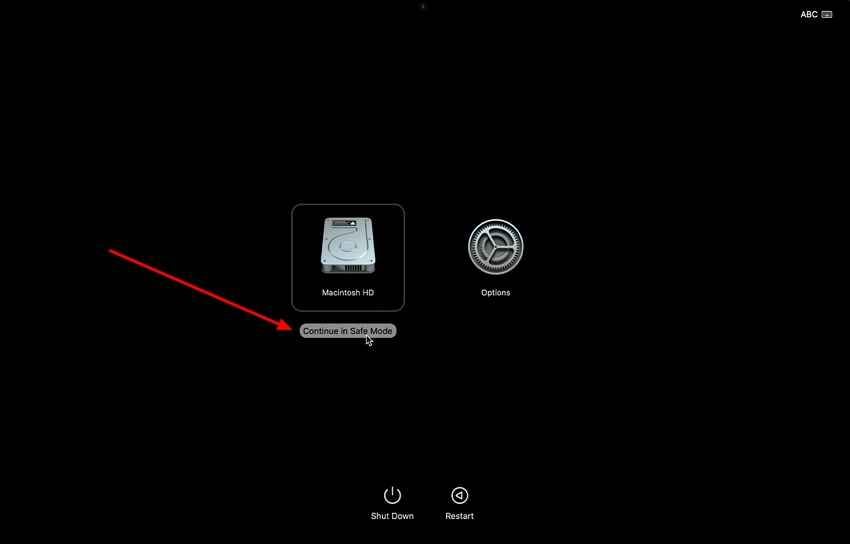
Intel Mac: Turn on or restart the Mac and immediately hold Shift until the login window appears. Log in; Apple notes that you may be asked to log in a second time.
Open Word in Safe Mode and repeat the same test. If Word works there but crashes after a normal restart, focus on recent startup software, extensions, or add-ins. If Word still crashes in Safe Mode, Safe Mode has not isolated the cause; continue with the document test or reinstall route rather than assuming the Mac hardware is bad.
Use Apple's current Safe Mode instructions for the exact processor-specific sequence.
Fix 6. Use Recover Text for One Damaged Word Document
If Word works with other documents but consistently crashes or fails when opening one file, preserve the original and test Word's built-in Recover Text option on a duplicate.
Step 1. Duplicate the problem .doc or .docx file in Finder so the original remains untouched.
Step 2. In Word, open Word > Preferences > General and enable Confirm file format conversion at Open, following Microsoft's current instructions.
Step 3. Choose File > Open. In the Open menu near the lower-right area, select Recover Text, then open the duplicate.
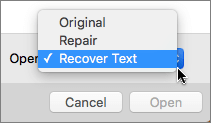
Step 4. If Word extracts readable text, save the result as a new document. Recover Text may not preserve all formatting, objects, or embedded content, so compare the recovered text with another copy or backup if available.
This is a document-recovery feature, not a general fix for an app-wide crash. Microsoft documents it in Recover files in Office for Mac.
Fix 7. Reinstall Word or Microsoft 365 as a Last App-Level Step
Reinstall Office only after you have protected unsaved work, installed current updates, tested another document, and isolated obvious add-in conflicts. Reinstalling too early makes diagnosis harder and can remove app settings or local Office data.
Step 1. Confirm that important documents are stored outside the Word application folders and that any Outlook or Office data you need is backed up.
Step 2. Follow Microsoft's official Uninstall Office for Mac instructions. If you remove user Library containers, read Microsoft's warning carefully because some Office data, including Outlook data, can be affected.
Step 3. Restart the Mac, download Microsoft 365 or Word from the same legitimate source you normally use, reinstall it, and install all available updates before adding third-party extensions back.
Step 4. Test Word before restoring optional add-ins. If a clean, current installation still crashes with multiple new blank documents, collect the crash details and contact Microsoft or your organization's IT support instead of repeatedly deleting system files.
Part 4. What Not to Do When Word Is Crashing
Several older fixes still circulate online, but they are either poorly scoped or risky when used before document protection. Avoid turning a Word crash into a data-loss problem.
- Do not empty AutoRecovery first: Those files may be the only recent copy of unsaved work after the crash.
- Do not rename the Mac startup disk just because Word crashes: The old article treated the drive name as a common Word cause, but current Microsoft and Apple crash guidance does not support that as a general first-line fix.
- Do not run Disk Utility First Aid as a Word-specific repair: First Aid is for file-system and disk-structure problems. Consider it only when the Mac shows broader storage symptoms, and protect readable data first.
- Do not delete random Word preference, container, or template files from outdated forum paths: Back up first and use current Microsoft instructions for the exact Office release.
- Do not force shut down a responsive Mac: A forced power-off can discard unsaved application state. Use it only if normal controls no longer work.
Part 5. Recover a Word File Missing After a Crash
A crash and a deleted file are different problems. Stabilizing Word does not automatically restore a document, and recovery software cannot recreate edits that existed only in memory and were never written to storage. Use native recovery sources first, then scan storage only when a file truly became deleted, lost, or inaccessible.
Check Native Recovery Options First
- Reopen Word: Save any AutoRecovered document Word presents after the crash.
- Check AutoRecovery: Follow Microsoft's current Office for Mac recovery page for the correct hidden folder path.
- Check Version History or AutoSave: If the file was stored in OneDrive or SharePoint and AutoSave was enabled, look for an earlier cloud version.
- Check Trash and backups: Restore a deleted copy from Trash or a verified Time Machine or other backup before scanning the source disk.
If the document was never saved and no AutoRecovery or cloud copy exists, disk recovery software cannot reconstruct text that was only in RAM.
Use Recoverit Only for a Truly Deleted or Missing File
If the Word document previously existed on disk but is now deleted, missing, or inaccessible and no usable backup contains it, Recoverit Word Recovery can scan a detectable storage location for recoverable document data. Stop unnecessary writes to the source disk first because new data can overwrite deleted content.
Step 1. Select the original storage location.
Launch Recoverit and choose the drive or folder where the Word document was stored before it disappeared.
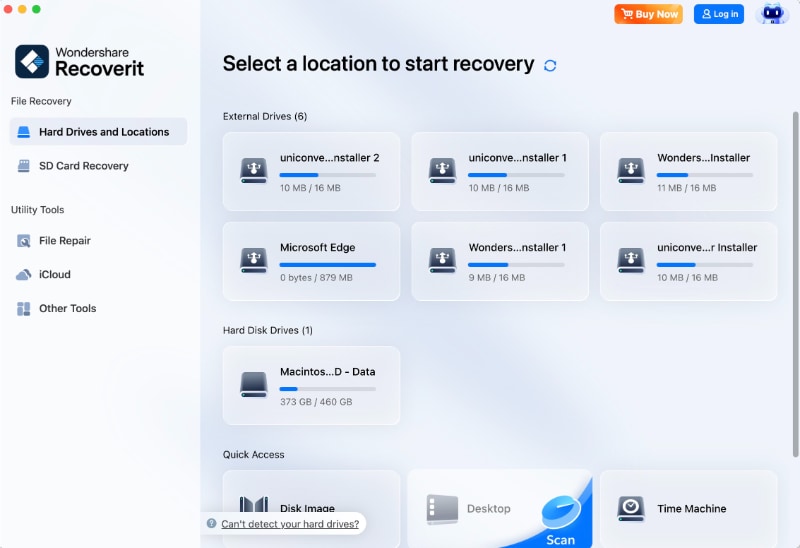
Step 2. Scan and narrow the results.
Start the scan and use file type, path, name, date, or other available filters to focus on Word documents.

Step 3. Preview before recovery.
Preview the candidate Word file when preview is available. A readable preview is useful evidence that you found the intended copy, but it does not guarantee that every byte of the final exported file is intact.
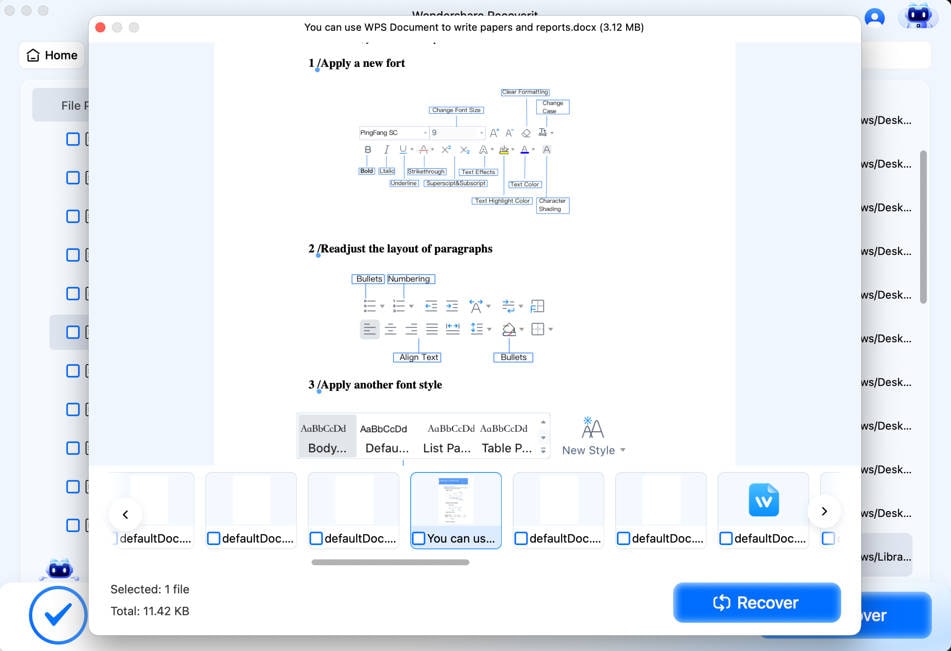
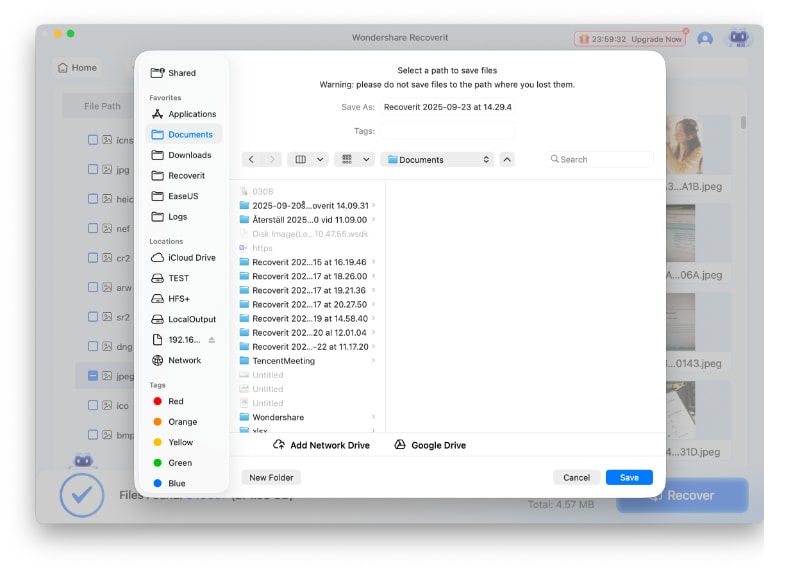
Step 4. Recover to a different healthy location.
Select the file, click Recover, and save it to a different healthy drive or volume rather than the source location. Then open the exported document normally and verify its contents before making any irreversible change to the original storage.
Recoverit cannot guarantee recovery after overwrite and is not the right tool for a physically failing drive that clicks, repeatedly disconnects, overheats, or disappears from macOS. In those cases, minimize further use and consult a professional recovery service.
Part 6. Prevent Word From Crashing Again
Once Word is stable, reduce the chance that the same failure returns. The goal is not to install more cleanup tools; it is to keep Word, macOS, documents, add-ins, and backups in a controlled state.
- Keep Word and macOS supported and current: Install compatible Office and macOS updates instead of running an old Word build indefinitely.
- Keep AutoSave or frequent saves enabled: AutoRecovery is a fallback, not a replacement for normal saving.
- Review add-ins after major updates: If Word starts crashing immediately after an add-in or Office update, isolate the newest change first.
- Keep important documents backed up: Use Time Machine, OneDrive, SharePoint, or another versioned backup workflow appropriate to your environment.
- Separate app-wide problems from file-specific ones: Test a blank document before resetting Word or reinstalling Microsoft 365.
- Preserve crash evidence: Note the Word version, macOS version, document involved, action that triggered the crash, and whether Safe Mode changes the result. Those details make Microsoft or IT support more effective.
Conclusion
When Word keeps crashing on a Mac, the safest troubleshooting path is to protect unsaved work first, identify whether the crash is document-specific or app-wide, then update Word and macOS before moving to add-in isolation, Safe Mode, document recovery, or reinstalling Office. Avoid old advice that starts by deleting AutoRecovery data or running disk repair without evidence of a storage problem. If the crash has already left a previously saved document missing, check AutoRecovery, Version History, Trash, and backups before scanning the original storage for recoverable data.
Recover a Word File Missing After a Crash
Security Verified. Over 7,302,189 people have downloaded it.
FAQ
-
Why does Microsoft Word keep crashing on my Mac?
Common areas to check include an outdated Word or macOS build, a document-specific problem, a third-party add-in, or software loaded during normal Mac startup. Start by testing a blank document, then update Word and macOS before changing templates or app data. -
What should I do first if Word crashes before I save?
Reopen Word and save any AutoRecovered document it presents. If no recovered copy appears, use Microsoft's current Office for Mac recovery instructions before deleting Word caches, templates, or AutoRecovery files. -
Should I delete the AutoRecovery folder to stop Word crashing on Mac?
Not as a first step. AutoRecovery files can contain unsaved work from a crash. Save every recovery copy you need before considering any reset that removes Word recovery data. -
Why does Word crash only when I open one document?
If other documents and a new blank file work normally, the individual document is a stronger suspect than the Word installation. Duplicate the file first, then try Word's Recover Text option or restore an earlier version from a backup or cloud version history. -
How do I update Microsoft Word on a Mac?
If Word was installed from Microsoft, open Word and choose Help > Check for Updates, then install available updates in Microsoft AutoUpdate. If it came from the Mac App Store, update it through the App Store. -
Can Safe Mode fix Word crashing on a Mac?
Safe Mode is mainly a diagnostic test. If Word works in Safe Mode but crashes after a normal startup, software loaded during normal startup becomes a stronger suspect. Use Apple's current processor-specific Safe Mode instructions. -
Can Recoverit restore an unsaved Word document that was never written to disk?
No recovery software can reconstruct edits that existed only in memory and were never saved or written by AutoRecovery. Recoverit is relevant when a Word file previously existed on detectable storage and was later deleted, lost, formatted, or became inaccessible.


