
Oct 30, 2026 • Filed to: Solve Mac Problems • Proven solutions
⚡ Quick Answer: How to Fix Error Code 43 on Mac?
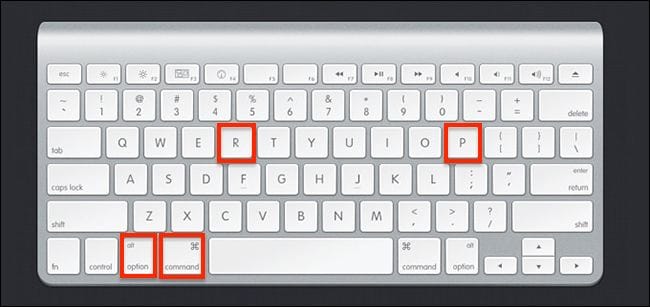
Error code 43 appears when macOS can't complete a file operation because a required item can't be found. To fix it, run Disk Utility > First Aid on your Macintosh HD, reset PRAM/NVRAM (restart and hold Command + Option + P + R for 20 seconds), unlock Trash files with chflags -R nouchg in Terminal, or Force Quit Finder (press Option + Command + Esc). If you lost data while fixing the error, recover it with Wondershare Recoverit for Mac.
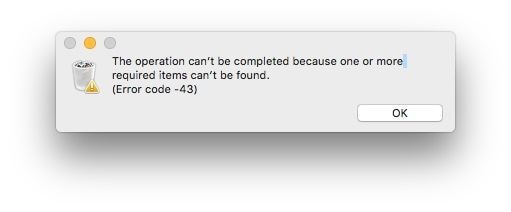
If you are a Mac user, then you might already know how smooth and secure the macOS is. Nevertheless, there are times when users encounter issues like error 43 on Mac. The error usually occurs when we try to delete some files or move them from one location to another. Since there can be different reasons for the macOS error code 43, it is important to diagnose the problem and troubleshoot it accordingly. In this post, I'm going to tell you what is error code 43 and how we can fix it.
Part 1: What is Error Code 43 on Mac?
In order to fix the error code 43 on Mac, it is important to know what could have caused it in the first place. Ideally, when we try to move some files from one location to another or delete them from the storage or Trash, we get the error 43 Mac screen. It states that "The operation can't be completed because one or more required items can't be found. (Error code -43)" which stops the transfer or deletion of files on Mac.
While the macOS error code 43 can take place at any time, it is mostly observed while moving files from a USB drive. For instance, you can get the error code 43 USB on Mac while deleting some files from a pen drive or transferring them from the USB drive to your Mac storage.
You could be getting the error code 43 prompt on your Mac due to the following reasons:
Why Does Error Code 43 Appear on Mac?
- No shared disk points: There may be no common mount point where your files are stored.
- Missing files: The files you are trying to access might no longer be available.
- Corrupted disk or partition: The storage where your data lives can be corrupted or unavailable.
- Illegal characters in the filename: Special symbols not allowed by macOS can trigger the error.
- Incomplete download or copy: The file was not copied entirely from its source and is now unavailable or corrupt.
- Locked or in-use content: The content you are accessing could be locked or in use by another application.
- Permission restrictions: You may not have the authority to access the content (locked by the admin).
Other issues related to hard disk partitions or the macOS firmware can also cause error code 43 on Mac.
Apart from this, any other issue related to the hard disk partitions or the macOS firmware can also cause the error 43 on Mac.
Part 2: How to Fix Error Code 43 on Mac?
As you can see, there could be all kinds of reasons for getting the error code 43 on Mac. Therefore, you can try some of these suggestions to fix error 43 on Mac, depending on its major cause.
Method 1: Fix the Mac Drive with Disk Utility
The easiest way to fix the Finder error code 43 is by using the Disk Utility application in Mac. It is an inbuilt application that can be used to scan your hard disk and repair it automatically. In case if a hard disk corruption has caused the MacBook error code 43, then this would be able to fix it.
Step 1. Firstly, you need to launch the Disk Utility application on your Mac. For this, you can just look up "Disk Utility" in the Spotlight search or go to Finder > Applications > Utilities > Disk Utility.
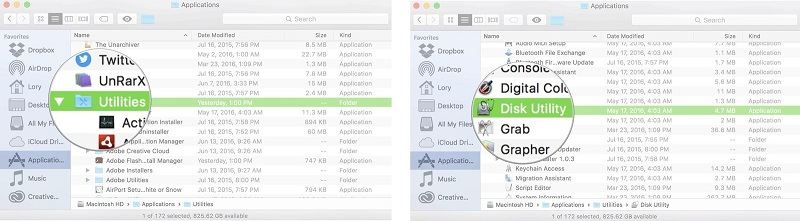
Step 2. Once the Disk Utility application would be launched, you can view various partitions and external drives on the sidebar. From here, select your Macintosh HD (the main storage of your Mac).
Step 3. This will enable various operations on the right that you can perform on your hard disk. From the toolbar, click on the "First Aid" button and choose to run the first aid scan on your hard disk.
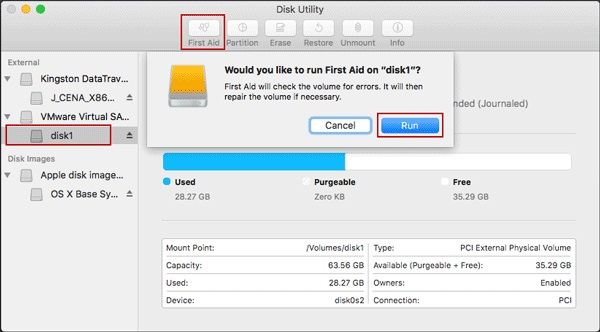
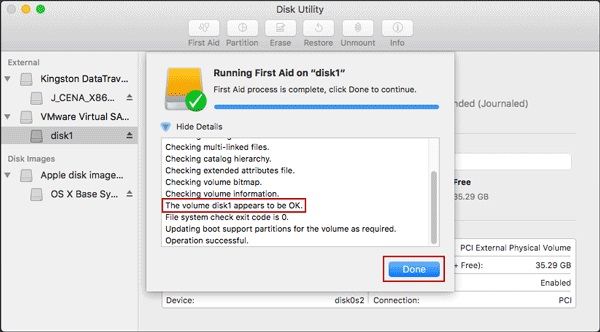
Step 4. Agree to the prompt and wait for a while as your Mac would run the scan and tries to fix the error code 43 on Mac. In the end, you can view the results and restart your Mac to resolve it.
Method 2: Reset PRAM and NVRAM on Mac
Chances are that a firmware issue related to your Mac's PRAM or NVRAM can also cause the error 43 in Mac. PRAM, which stands for Parameter Random Access Memory, stores details related to your system configuration, display settings, hard disk configuration, and so on. Similarly, NVRAM (Non-Volatile Random Access Memory) has details about the device, display, and other permanent system components.
If either PRAM or NVRAM has been corrupted in your Mac, then it can cause numerous issues – including the error code 43 USB on Mac. You can fix it by resetting the PRAM and NVRAM on your Mac by following these steps:
Step 1. Firstly, go to your Mac's Finder and click on the "Shut Down" option to turn your Mac off.

Step 2. Wait for a while for Mac to get turned off and press the Power key to restart it. Immediately, press and hold the Command + Option + P + R keys simultaneously for around 20 seconds while your Mac restarts.
Step 3. Now, you will hear the system chime for the second time that will depict the PRAM has been restored on Mac. Let go of the keys now and wait as your Mac would be restarted with no issues.
Method 3: Get Rid of Locked Files in the Trash
Locked or inaccessible files in the Trash can trigger Finder error code 43. Unlock them with Terminal:
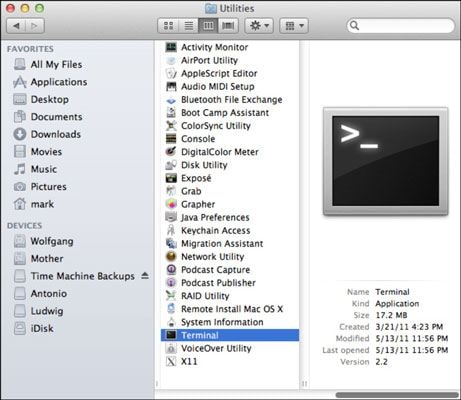
- Launch Terminal from Finder > Applications > Utilities.
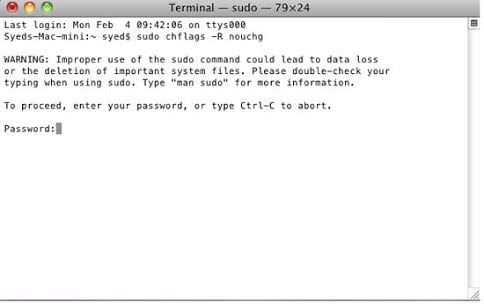
- Run the command
chflags -R nouchgto unlock the files, and enter your account password when prompted.
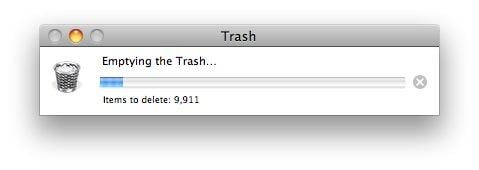
- Open the Trash app, press
Command + Ato select all files, then drag them into the Terminal window and press Return to remove them.
Method 4: Forcefully Quit Finder
Finder is one of the most important components in Mac which is responsible for the way we interact with the system. Nevertheless, sometimes it might not get initialized correctly, leading to the Finder error code 43 in Mac. The good thing is that you can easily fix this issue by forcefully quitting the Finder.
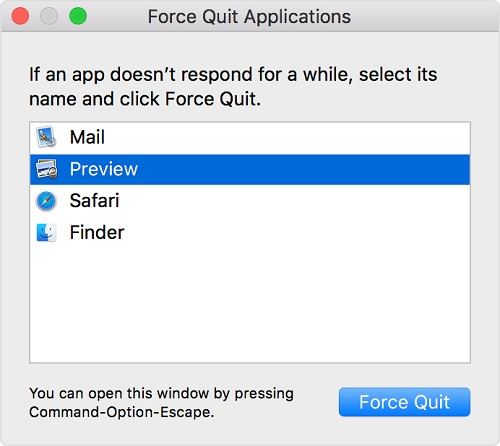
Step 1. Just go to the upper-left corner of your screen, click on the Apple logo, and choose to Force Quit the Finder. Alternatively, you can also press the Option + Command + Esc keys at the same time.

Step 2. This will open the Force Quit application window on the screen. From here, you can just select Finder and click on the "Force Quit" button to close it forcefully.
Part 3: How to Recover Lost Data After Fixing Error Code 43?
Sometimes, while fixing the error code 43 in Mac, users end up losing their important files. For instance, the files that are locked could be deleted or you would have formatted the USB drive having some corrupt content. Well, if you have also lost your important files in the process, then you can take the assistance of Recoverit Data Recovery. The application can scan the internal hard disk of your Mac or any other external device for unforeseen data loss.
Video tutorial: How to Recover Deleted Files That Did Not Go to the Trash Bin

How to Recover Lost Data After Fixing Error Code 43
Wondershare Recoverit for Mac scans your internal hard disk or any external device for unforeseen data loss and supports photos, videos, documents, music, compressed files, and more.
- Select a location to scan: Launch Recoverit from Finder > Applications, then pick the entire drive, a partition, or browse to select folders. You can also connect an external device and select it here.
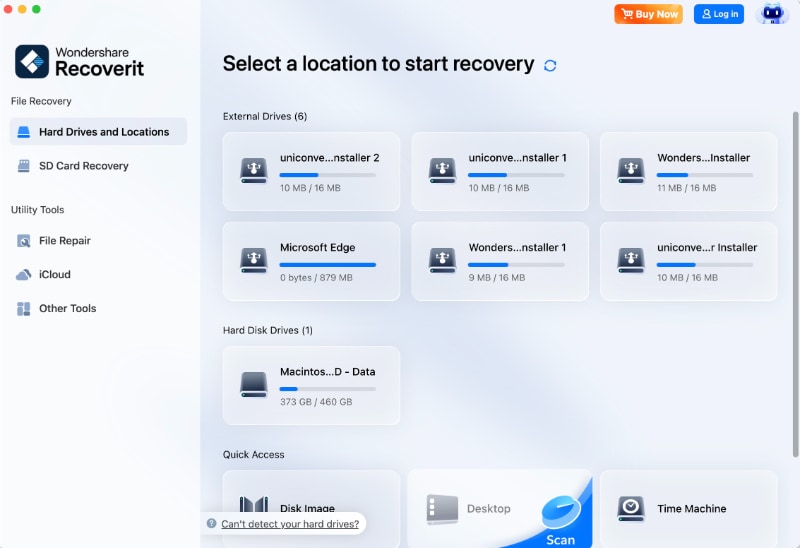
- Start the scan: Begin the data recovery process and wait for the scan to finish. You can view progress on screen and pause it anytime. Use the filter option to pinpoint data by file type, size, and more.

- Preview and save your data: Preview files such as photos, audio, and documents (up to 15 MB each), select the lost files, and click the Recover button to get them back.
Part 4: How to Avoid Error Code 43 from Appearing on Mac?
Now when you know how to fix the error 43 on Mac, you would easily be able to use your Mac without any hassle. Though, if you don't want to encounter the error code 43 on Mac again, then consider following these suggestions.
How to Avoid Error Code 43 on Mac
- Complete file transfers: Never stop a data transfer from one place to another mid-process.
- Finish removal processes: When deleting files from your Mac or Trash, let the process complete.
- Keep software updated: Update all applications and upgrade your Mac regularly to avoid security threats.
- Scan storage regularly: Check your Mac's storage from time to time and avoid practices that can corrupt it.
- Use reliable apps: Only use trusted third-party applications and save files in a secure manner.
- Use separate user accounts: Create different accounts and lock important data via the admin account.
- Avoid overwriting files: Don't save new files under the same names or folders as existing content.
- Don't force-restart: Avoid abrupt restarts or shutdowns that can corrupt files or applications.
This brings us to the end of this extensive guide on what is error code 43 and how to fix it. As you can see, the error code 43 on Mac can happen due to numerous reasons that I have discussed here. Also, I have come up with different ways to fix the macOS error code 43 that you can implement without any technical hassle. Lastly, if you have lost your data while fixing the error 43 on Mac, then consider using a reliable application like Recoverit Data Recovery. Trusted by professionals, it will let you get back your lost data under different scenarios without any trouble.
People Also Ask
-
What is Error Code 43 on a Mac?
Error Code 43 is a generic Finder message meaning an operation like moving or deleting a file cannot be completed. The core issue is that Finder cannot locate the necessary file data, or the filename contains special characters it can't handle. -
Why does Error Code 43 happen when I move files?
Error Code 43 usually occurs because the file's name contains illegal characters (like/or:), the file is locked, or the drive itself has minor corruption. It can also happen with incomplete downloads where the file is essentially a placeholder. -
How do I fix Error Code 43 on my Mac?
Check the filename for odd characters and try force-relaunching Finder. If that fails, run Disk Utility > First Aid, reset PRAM/NVRAM by holdingCommand + Option + P + Rduring restart, or unlock Trash files withchflags -R nouchg. -
Can I recover files lost while fixing Error Code 43?
Yes. Run Wondershare Recoverit for Mac, select the drive or folder where the files were lost, scan it, preview the recoverable files, and click Recover to restore them to a different location.
What's Wrong with Mac
- Recover Your Mac
- Recover your data for free.
- What is New in MacOS 13 Ventura?
- Back Up Macbook Before Upgrade
- How to Downgrade MacOS System
- Files overwritten? Recover it.
- Top 5 Mac recovery tools.
- Get USB drive files on Mac.
- Recover a formatted SD card.
- Fix Your Mac
- Mac won't turn on? Solved.
- Know and fix kernel panic.
- You installed macOS anyway.
- Force quit Mac to fix issues.
- Make frozen Mac responsive.
- Delete Your Mac
- Delete files and folders.
- Do Ctrl Alt Delete on Mac.
- Format USB to FAT32.
- What's Other on Mac?
- 3 ways to format your Mac.
- Learn Mac Hacks


Recoverit Editorial Team
chief Editor