


 TL;DR:
To resolve a Mac kernel panic without risking data, disconnect nonessential peripherals to isolate the trigger, test system stability in Safe Mode, and secure a backup before running Apple Diagnostics, Disk Utility First Aid, or a macOS reinstallation.
● Isolate software conflicts from hardware defects by comparing normal boot stability against Safe Mode, which requires holding the power button for startup options on Apple silicon Macs or holding the Shift key during restart on older Intel-based models.
● Stop troubleshooting and seek authorized service if the Mac panics in Safe Mode, Apple Diagnostics returns a hardware reference code, or Disk Utility cannot detect the internal physical disk while in macOS Recovery.
● Handle missing files as a separate logical issue by minimizing new writes and extracting data to a different healthy drive using recovery tools compatible with your specific system, ranging from macOS 10.15 Catalina through macOS 27 Golden Gate.
Ask AI for a summary
 ChatGPT
 Perplexity
 Gemini
 Claude
 Grok
Grok
A kernel panic on Mac is an emergency system stop that forces macOS to restart because it cannot safely continue. If your MacBook, MacBook Air, MacBook Pro, iMac, Mac mini, or Mac Studio restarts unexpectedly and then reports that it restarted because of a problem, Apple treats this as an unexpected restart that can result from software or hardware. Apple says these restarts are usually caused by installed software or connected devices.
This guide was fact-checked on September 28, 2026. It follows Apple's current macOS guidance, including macOS 27 Golden Gate compatibility, while keeping separate startup instructions for older Intel Macs, including systems that still run macOS Catalina. The goal is to protect important data first, identify a repeatable trigger, and then use the least destructive fix that matches the evidence.
In This Article
-
- Fix 1. Disconnect Nonessential External Devices
- Fix 2. Update macOS and Recently Changed Software
- Fix 3. Start the Mac in Safe Mode
- Fix 4. Run Apple Diagnostics
- Fix 5. Run Disk Utility First Aid Only After Protecting Data
- Fix 6. Reinstall macOS Without Erasing the Mac
- Fix 7. Remove the Specific Trigger Instead of Performing a Broad Cleanup
- Fix 8. Erase or Replace Hardware Only After the Data Is Safe
Part 1. What a Kernel Panic Means on Mac
A kernel panic is not the name of one specific defect. It is the Mac's protective response to a fatal system-level condition. Apple's current unexpected restart guidance says unexpected restarts are usually caused by software installed on the Mac or by connected devices, while software and hardware issues can both require a restart.
That distinction matters. A panic after connecting a dock should be investigated differently from a MacBook that panics even in Safe Mode, and a one-time restart after an update should not be treated like a machine that reboots every few minutes.
| What You See | What It Suggests | Best First Action |
| One kernel panic, then normal operation | A transient software, update, or device event is possible; one event alone does not identify a failing component. | Save your work, install compatible updates, and watch for a repeat pattern. |
| Panic starts after connecting a dock, drive, display, interface, or adapter | An external device, cable, power path, firmware, or related software may be involved. | Disconnect nonessential devices and reconnect one at a time. |
| Normal boot panics but Safe Mode is stable | Software that loads during a normal startup becomes more likely. | Update or remove recently added startup software, plug-ins, drivers, VPN/security tools, or device utilities one at a time. |
| Safe Mode also panics | The problem is less likely to be an ordinary login item; macOS, storage, firmware, or hardware still remain possible. | Run Apple Diagnostics and check the startup disk only after protecting important data. |
| Disk Utility cannot see the internal physical disk | Software repair cannot target a storage device that macOS Recovery cannot detect. | Stop destructive attempts and arrange service or professional data-recovery advice if the data matters. |
| Files are missing or inaccessible after repeated crashes | The kernel panic and the data-loss symptom need to be handled as separate problems. | Minimize new writes and preserve or recover the files before major repair steps. |
If your main symptom is only the exact alert "Your computer restarted because of a problem", that shorter guide focuses on the message itself. If the Mac is caught in a broader reboot loop without a confirmed panic, see the separate MacBook keeps restarting guide. This page stays focused on kernel-panic diagnosis.
Part 2. Identify the Cause Before You Fix It
The fastest route is usually to look for a repeatable trigger. Write down what changed immediately before the first panic: a macOS update, a new app, a VPN or antivirus update, a storage/display driver, a dock, external SSD, audio interface, RAM or PCIe hardware on an applicable desktop Mac, or a new peripheral.
Check the Panic and Diagnostic Reports in Console
Modern macOS provides a safer route than relying on one hard-coded Finder path. Open Applications > Utilities > Console, then review the categories under Reports. Apple's Console guide documents crash reports, spin reports, log reports, diagnostic reports, and Mac Analytics Data. You can open a report in a separate window and search within it.
- Open Console and select a report category under Reports.
- Sort by date and start with entries created around the time of the restart.
- Open a report and search for terms such as panic, panicString, or a recurring third-party product/component name.
- Do not treat one unfamiliar identifier as proof. Look for the same clue across repeated panics and compare it with what changed on the Mac.
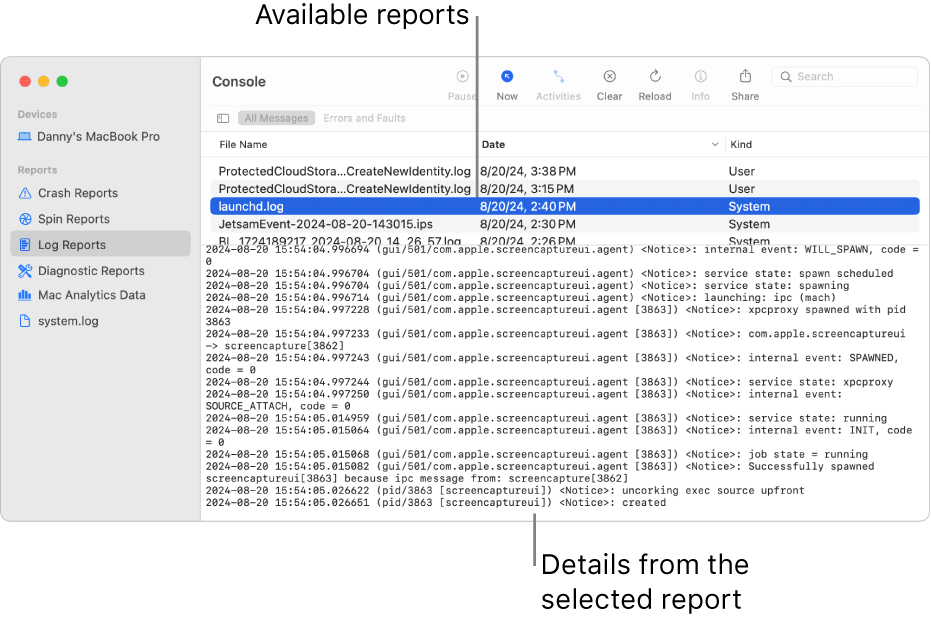
A repeating third-party component is a useful lead, not a verdict. Update that software from its developer or remove it using the vendor's documented uninstaller, then test again. Avoid deleting random items from system folders or running old kernel-extension removal commands just because a generic guide recommends them.
Part 3. Fix a Kernel Panic on Mac Safely
Use the fixes in this order. The first four mostly isolate software and peripherals. Disk repair and reinstallation come later because a repeatedly crashing or failing storage device deserves a current backup before it is asked to do more work.
Fix 1. Disconnect Nonessential External Devices
Apple explicitly recommends testing a continuing kernel panic with nonessential devices disconnected. Shut down the Mac, disconnect external drives, docks, hubs, capture devices, audio interfaces, card readers, adapters, printers, and other third-party hardware that is not required to start the Mac. Keep only the essentials needed to use the computer.
- Start the Mac with nonessential devices disconnected.
- If the panic stops, reconnect one device.
- Restart or use the Mac long enough to reproduce the original pattern.
- Repeat one device at a time until the problem returns.
If one device reliably triggers the panic, test another cable or direct port where appropriate and check the manufacturer's current macOS compatibility and firmware. Do not keep repeatedly powering a storage device that clicks, drops offline, smells burnt, or becomes unusually hot.
Fix 2. Update macOS and Recently Changed Software
Apple recommends the latest macOS that is compatible with the Mac because updates improve security, stability, and compatibility. On current macOS, open System Settings > General > Software Update. Apple's Software Update instructions state that Software Update offers only software compatible with that Mac model. Back up important data before installing a major system update.
- Back up important files before installing a system update.
- Open System Settings > General > Software Update.
- Install the latest compatible macOS update shown for that Mac.
- Update apps, plug-ins, device utilities, VPN/security products, virtualization software, and drivers that changed near the first panic.
- If the panic began immediately after installing third-party system-level software, use the developer's documented uninstaller rather than manually deleting system files.

For macOS Catalina and older Intel Macs: the exact Settings interface differs from newer macOS, but the same principle applies: install the latest compatible update available for that Mac and update third-party software to versions explicitly compatible with the installed macOS. Do not force a newer major release onto unsupported hardware as a kernel-panic fix.
Fix 3. Start the Mac in Safe Mode
Safe Mode is a diagnostic comparison. Apple says it can help identify whether an issue is caused by software that loads as the Mac starts. It does not prove that all hardware is healthy, and it is not the same as repairing the kernel.
Apple silicon:
- Choose Apple menu > Shut Down and wait until the Mac is fully off.
- Press and hold the power button until Loading startup options appears.
- Select the startup volume.
- Press and hold Shift, then click Continue in Safe Mode.
- Log in. Safe Boot should appear in the menu bar.
Intel-based Mac:
- Turn on or restart the Mac.
- Immediately press and hold Shift until the login window appears.
- Log in; you may be asked to log in again.
- Confirm that Safe Boot appears in the menu bar.
These steps match Apple's current Safe Mode instructions. If the Mac is stable only in Safe Mode, review recently installed software and System Settings > General > Login Items & Extensions. Apple also documents a controlled login-item isolation test: remove login items, restart, then add them back one at a time until the problem returns.
Fix 4. Run Apple Diagnostics
If panics continue after software and peripheral checks, use Apple Diagnostics to look for internal hardware issues. Apple's current Apple Diagnostics instructions specify different startup steps for Apple silicon and Intel Macs. Before testing, disconnect external devices except the keyboard, mouse, display, Ethernet if applicable, and AC power.
- Disconnect nonessential external devices and shut down the Mac.
- Apple silicon: Hold the power button until startup options appear, release it, then hold Command-D until the Mac restarts.
- Intel: Turn on the Mac and immediately hold D. If that does not work, try Option-D.
- Follow the onscreen test instructions and record any reference code.

On macOS Tahoe 26 and later, Apple Diagnostics may ask you to choose a specific diagnostic instead of automatically running the same test sequence used on earlier systems. A diagnostic code is useful evidence to take to Apple or an authorized repair provider; do not translate a code into a DIY component replacement unless Apple's reference documentation supports that action.
Fix 5. Run Disk Utility First Aid Only After Protecting Data
Disk Utility is appropriate when the panic is accompanied by startup-disk symptoms, mounting problems, directory errors, or repeated startup failures. It is not the first step for every kernel panic. Apple's current Disk Utility repair guide, published September 14, 2026, says to make sure you have a current backup before using First Aid.
- If the startup disk is involved, enter macOS Recovery instead of trying to repair the active startup volume from a normal session.
- Open Disk Utility and choose View > Show All Devices.
- For the device you are checking, start with the last volume in the hierarchy.
- Click First Aid > Run.
- Repeat upward through the remaining volumes, volume group if present, container, and finally the physical device.
- Quit Disk Utility and restart the Mac.

If Disk Utility cannot see the physical internal disk, or it repeatedly reports an error it cannot repair, do not jump straight to Erase. If important files are not backed up, protect the data first and then decide between service, professional recovery, or a destructive repair.
Fix 6. Reinstall macOS Without Erasing the Mac
If the panic persists after isolation, updates, Safe Mode, diagnostics, and appropriate disk checks, Apple lists macOS reinstallation as a next step. Apple's current reinstall macOS instructions, published September 14, 2026, say that reinstalling from macOS Recovery does not remove apps or personal data, but Apple still recommends backing up first if possible.
- Apple silicon: Shut down, hold the power button until the system volume and Options appear, select Options, and click Continue.
- Intel: Restart and immediately hold Command-R to reinstall the current macOS; Apple also documents Option-Command-R for the latest compatible version and Option-Shift-Command-R for the original or closest available version.
- In Recovery, select Reinstall macOS and click Continue.
- Select the current macOS volume when prompted and follow the onscreen instructions.
- Test normal startup before considering any erase.

Fix 7. Remove the Specific Trigger Instead of Performing a Broad Cleanup
If a panic report, Safe Mode test, or controlled reconnect test points to one product, remove or update that product rather than deleting caches, running generic cleanup apps, or removing system extensions at random. Apple specifically advises uninstalling third-party plug-ins or enhancement software when they are incompatible with the installed macOS.
- Use the vendor's current uninstaller for VPN, security, storage, display, audio, virtualization, or filesystem software when one is provided.
- Check whether the problem began after a specific app, driver, device utility, or macOS update.
- Change one variable at a time and restart between tests so you know which change mattered.
- Do not disable System Integrity Protection merely to make a recovery or troubleshooting app run. The older instruction to use csrutil disable as a routine kernel-panic fix should not be followed.
Fix 8. Erase or Replace Hardware Only After the Data Is Safe
An erase is not a normal first-line kernel-panic fix. Consider it only after important data is verified elsewhere and the evidence points to an operating-system or disk state that cannot be repaired non-destructively. Likewise, if diagnostics or repeated testing points to hardware, move to service rather than dismantling the Mac based on a generic tutorial.
For a Mac with irreplaceable data and signs of physical storage failure, such as repeated disappearance, abnormal noises from an external drive, a burning smell, liquid damage, or severe instability, stop repeated scans and repair attempts. The priority changes from "fix the Mac" to "preserve the storage and evaluate recovery."
Part 4. Recover Missing Files After a Kernel Panic
A kernel panic does not automatically mean files were deleted. If the Mac starts and your files are present, back them up normally. Use recovery software only when files are actually deleted, missing, formatted, or inaccessible and the affected storage is still readable enough to be detected.
Before installing anything, check Trash, recently deleted locations used by the relevant app, and an existing Time Machine or cloud backup. If the files are still missing, minimize new writes to the affected source. Installing software, downloading updates, or saving recovered files back to the same drive can overwrite recoverable data.
When Recoverit Is an Appropriate Option
Wondershare Recoverit for Mac is relevant when the loss is logical, for example, files were deleted, a readable volume was formatted, or files became inaccessible after a crash, and the storage device remains detectable. It is not a substitute for hardware service when a drive is physically failing.
Compatibility note: Recoverit V15's current public Mac product page lists support for macOS 27 Golden Gate, macOS 26 Tahoe, macOS 15 Sequoia, macOS 14 Sonoma, macOS 13 Ventura, macOS 12 Monterey, macOS 11 Big Sur, and macOS 10.15 Catalina.
- Select the affected location: Launch Recoverit on a supported Mac environment and choose the drive or location where the files were lost.
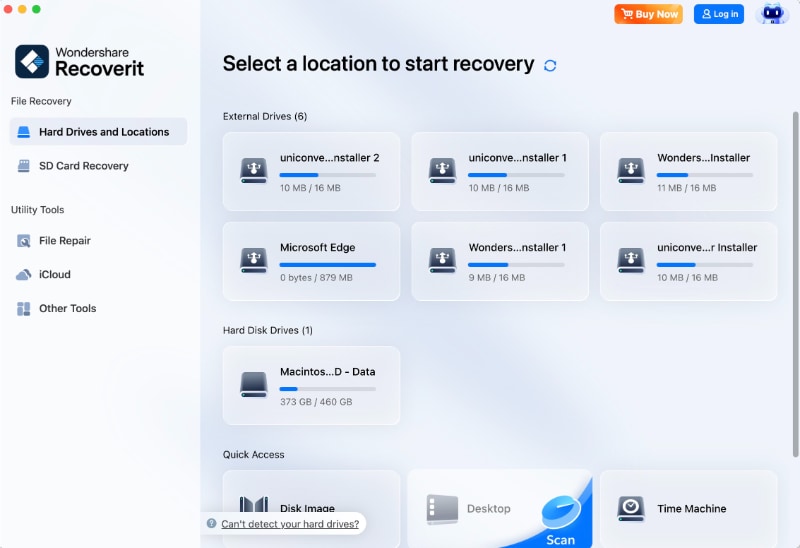
- Scan the location: Start the scan and avoid writing new data to the source while the scan is running.

- Preview and recover: Preview the files you need, select them, and save the recovered copies to a different healthy drive or location.
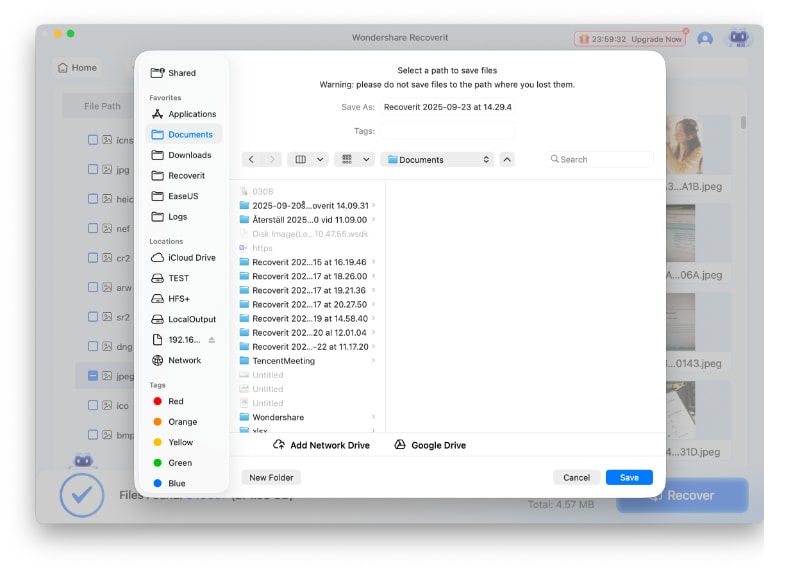
The current Recoverit for Mac user guide documents the select, scan, preview, and recover workflow and warns against saving recovered files back to the location where they were lost. No software can guarantee recovery after the original data has been overwritten.

Part 5. When a Mac Kernel Panic Needs Service
Stop cycling through software fixes and move to service when the evidence points beyond normal startup software. The following signals justify escalation:
- Apple Diagnostics returns a hardware reference code you cannot resolve using Apple's documentation.
- The Mac panics in both normal startup and Safe Mode, especially after nonessential devices are removed.
- The internal physical storage device is missing from Disk Utility in macOS Recovery.
- The panic returns after a non-erasing macOS reinstall.
- The Mac cannot reliably enter startup options or Recovery, or it fails before those environments load.
- There is liquid damage, impact damage, unusual heat, a burning smell, or other clear physical symptoms.
Keep a copy of the panic reports and any Apple Diagnostics reference code. A repeatable timeline, including what was connected, which macOS version was installed, whether Safe Mode worked, and whether Recovery was stable, gives a technician far more useful evidence than a list of random fixes already attempted.
Part 6. Reduce the Chance of Another Kernel Panic
No maintenance routine can guarantee that a Mac will never panic, but a few habits reduce avoidable conflicts and make recovery easier:
- Keep macOS and system-level apps compatible: Update VPN clients, security tools, storage utilities, virtualization software, plug-ins, and device drivers when you update macOS.
- Avoid unsupported system modifications: Do not disable SIP or lower startup security unless a specific trusted workflow requires it and you understand the security tradeoff.
- Maintain a current backup: A verified backup turns a serious troubleshooting session into a repair problem instead of a data-loss emergency.
- Retire unstable peripherals: Replace cables, hubs, drives, or devices that repeatedly disconnect, cause panics, or behave abnormally.
- Record recurring patterns: If a panic returns, note the time, connected hardware, active task, and recent change, then compare it with Console reports.
The key is to diagnose, not to over-clean. Partitioning the startup disk, clearing caches on a schedule, or reinstalling macOS repeatedly is not a substitute for identifying the software, peripheral, storage, firmware, or hardware condition that actually correlates with the panic.
Conclusion
A kernel panic on Mac is a symptom, not a diagnosis. Start with the least destructive checks: disconnect nonessential devices, install compatible updates, compare normal startup with Safe Mode, and use Apple Diagnostics when hardware is a concern. Protect important files before First Aid, macOS reinstallation, erasing, or hardware replacement.
If files are actually missing after repeated crashes, treat data loss as a separate problem. Minimize writes to the affected storage, recover or restore important data to a different healthy location, verify the files, and only then continue with repairs that can modify the source.
FAQ
-
Is a kernel panic on Mac serious?
One isolated kernel panic can be transient, but repeated panics deserve investigation because the cause can range from incompatible startup software to external hardware, storage, firmware, or an internal hardware problem. Save important work, update compatible software, and look for a repeatable trigger. -
How do I know whether a Mac kernel panic is caused by software or hardware?
There is no single perfect test. A Mac that becomes stable after disconnecting one device or in Safe Mode points more strongly toward a peripheral or startup-software conflict. Panics that continue in Safe Mode, Apple Diagnostics reference codes, or a startup disk that disappears in Recovery raise hardware or storage concern, but they still need confirmation. -
How do I fix a kernel panic on a MacBook Air, MacBook Pro, or iMac?
The diagnostic order is broadly the same: protect data, disconnect nonessential devices, review reports, update compatible software, test Safe Mode, run Apple Diagnostics, use First Aid only when appropriate, and reinstall macOS without erasing if earlier steps fail. Startup keystrokes differ between Apple silicon and Intel models. -
Where can I find kernel panic logs on macOS?
Use the Console app in Applications > Utilities and review report categories around the time of the restart. Console can open reports in separate windows and search within them. This is more robust than relying on one legacy folder path that may not describe every current report type. -
Does reinstalling macOS after a kernel panic delete my files?
Apple says reinstalling macOS from macOS Recovery keeps files and user settings intact when you reinstall without erasing the disk. Back up first anyway, especially if the Mac is unstable or the startup disk may be failing. Erasing the disk is a separate destructive action. -
What should I do about kernel panic on macOS Catalina?
Most diagnostic principles are the same, but Catalina-era Macs are Intel-based and use Intel startup keys. Start Safe Mode by holding Shift during startup, install the latest compatible updates available for that Mac, and update or remove incompatible third-party system software. Do not use Apple silicon startup instructions on an Intel Catalina Mac.


