

 TL;DR:
To fix a DJI Spark battery that refuses to charge, you must bypass its protective safety states by executing specific button sequences to wake it from deep hibernation, performing a hardware reset, or clearing its internal flight data memory.
● To wake a battery that has entered hibernation mode after 10 days of inactivity, connect it to a charger for 5 minutes, disconnect it, press the power button for 3 seconds, release and hold it again for 20 seconds, then reconnect the charger.
● Force a hard reset to clear frozen circuit boards or sensor errors by pressing the power button once, holding it for 15 seconds until all LEDs flash, leaving the battery unplugged for 5 minutes, and then attempting to charge.
● Connect the drone to the DJI GO 4 app to delete unneeded flight logs and update the firmware, because the battery will automatically disable its charging function if its internal memory reaches full capacity.
Ask AI for a summary
 ChatGPT
 Perplexity
 Gemini
 Claude
 Grok
Grok
A DJI Spark Intelligent Flight Battery is a 1480 mAh, 11.4 V, LiPo 3S pack with a maximum charging voltage of 13.05 V and 16.87 Wh of energy. If it will not charge, first decide which state you are seeing: the pack never starts charging, it starts and then stops, or DJI GO 4 holds the level above 95% and will not push it to 100%.
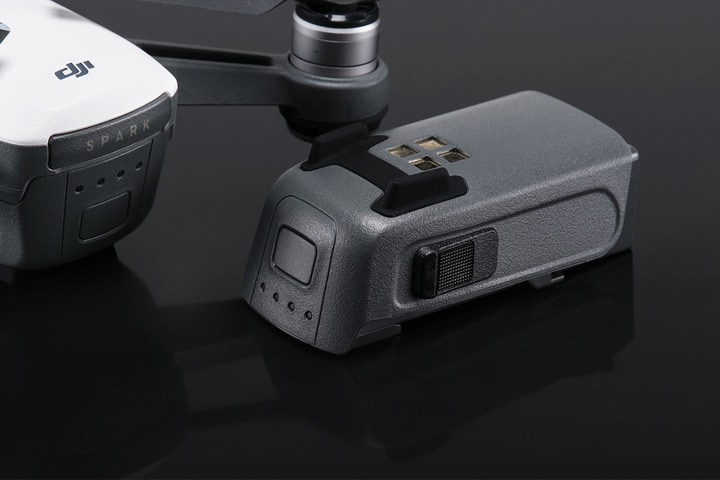
Charge only between 5℃ and 40℃. That charging range is not the same as the aircraft operating range of 0℃ to 40℃. Use the official DJI USB charger, rated at a maximum of 18 W with 5V/3A, 9V/2A, or 12V/1.5A output. A full charge takes about 80 minutes on that charger. Do not force-charge, open, puncture, heat, freeze, or modify the pack.

Try Recoverit to Recover Drone Data
 Security Verified. Over 7,302,189 people have downloaded it.
Quick Diagnosis: Read the DJI Spark Battery LEDs First
The Battery Level LEDs tell you whether the pack is asleep, protecting itself, or waiting for a firmware retry. A DJI GO 4 reading above 95% is not a charging failure.
| Battery LED Symptom | Official Meaning | Best First Action |
| No LEDs light up on the charger | Sleep mode, hibernation, a weak charger, or a damaged pack | Use the official 18 W charger, leave the pack connected through a full charge, then mount it |
| LED 4 blinks twice per second | Temperature protection is likely | Warm the pack gradually to room temperature, then charge it inside 5℃ to 40℃ |
| LED 4 keeps blinking during charging | The pack may be outside the charging range, or the charger is not suitable | Move the pack into a 5℃ to 40℃ room and switch to the official DJI USB charger |
| LED 2 and LED 3 stay solid | Battery firmware update failed | If the pack can power on and is above 75%, retry the update in DJI GO 4 |
| One LED blinks repeatedly during charging | Current, voltage, or protection warning | Cross-test the cable, outlet, hub slot, and official 18 W charger |
| All four LEDs blink abnormally | Possible battery fault or protection state | Stop charging and contact DJI Support if a second official charger does not help |
DJI GO 4 shows more than 95% but not 100% |
Normal overcharge protection | Use the battery normally. Charging may resume after the level drops |
Part 1: Why Is the DJI Spark Battery Not Charging?
A Spark pack that will not start is different from a pack that stops mid-charge, a pack that only fails in one accessory, and a pack that simply sits above 95%. Match the symptom to the official Spark behavior before you replace the 1480 mAh battery.
| What You See | Official Spark Cause | What To Check First |
| A brand-new battery will not power the aircraft | The pack is in sleep mode | Connect it to the charger, fully charge it, then mount it |
| A stored or depleted pack shows no LEDs | Hibernation or over-discharge | Leave it on the official charger. On the Portable Charging Station, reseat it after 10 seconds |
| An unused pack later shows a lower level by itself | If the level is above 65% and the pack stays idle for more than 10 days, Spark starts a controlled auto-discharge. After it starts, it takes about 2 days to reach 65%. Spark cannot set this timer in the app |
This is normal. Charging or powering on resets or stops it. A power-button press does not stop it. Discharge stops below 3.8 V. Storage below 0℃ will not enable auto-discharge |
Charging never starts, or it runs far past 80 minutes |
The adapter is below the official 18 W charger, or the cable, hub, or outlet failed |
Switch to the official USB charger, another outlet, or another hub slot |
| LED 4 blinks, or charging stops after a hot or cold flight | The pack is outside the 5℃ to 40℃ charging range |
Do not use the aircraft 0℃ to 40℃ flight range as the charging range |
| LED 2 and LED 3 stay solid | Battery firmware update failed | Retry the update in DJI GO 4 only if the pack can power on and is above 75% |
The old 1480 mAh pack powers on but will not hold a charge |
Cell aging or damage on the 16.87 Wh pack |
Open Battery Info in DJI GO 4 if the aircraft can start, then contact DJI Support if warnings repeat |
| The pack is swollen, leaking, cracked, or wet | The battery is unsafe to charge | Stop use and contact DJI Support |
Official Spark Charge Times and Wake Cues
| Charging Method | Official Spark Cue | Use It When |
DJI USB charger, maximum 18 W, output 5V/3A, 9V/2A, or 12V/1.5A |
About 80 minutes for one battery |
You are charging a single pack from a wall outlet |
| Spark battery charging hub | 52 minutes for 1 battery, 55 minutes for 2 batteries, 85.2 minutes for 3 batteries |
You are charging more than one pack |
| Spark Portable Charging Station | It wakes a hibernating battery first. If charging does not start after 10 seconds, remove the pack and insert it again |
The wall charger is not available, or the pack stayed dark on the station |
| New or long-stored battery | The pack may be in sleep mode until it is connected and fully charged | First use, or the aircraft will not start after storage |
Idle storage above 65% for more than 10 days |
Controlled auto-discharge starts, then takes about 2 days to reach 65%. Spark cannot set the timer in the app |
The later drop is normal. Charging or powering on resets it. Storage below 0℃ will not start auto-discharge |
30 seconds if it detects no device, charging is complete, or the station is below 5%. A powered-on Spark or battery also powers off when you place it in a turned-on station. That shutdown is normal.Part 2: How to Fix DJI Battery Not Charging Issue?
Work in this order. The official Spark cues below tell you when a step actually applies, so you do not treat a 95% reading or a later drop after more than 10 days idle above 65% as a dead battery.
| Priority | Fix | When to Use It | Official Cue |
| 1 | Inspect the pack before any charge | Every time, especially after a crash, heat, or long storage | Stop immediately if you see swelling, leakage, cracks, odor, extreme heat, or damaged terminals |
| 2 | Move the pack into the charging temperature range | LED 4 is blinking, or the pack just came from a hot or cold flight | Charge only between 5℃ and 40℃, not the aircraft 0℃ to 40℃ flight range |
| 3 | Use the official 18 W DJI USB charger |
Charging never starts, or it runs far past one hour | One healthy pack should finish in about 80 minutes |
| 4 | Cross-test the hub, station, outlet, or a second Spark battery | One accessory fails and another works | Hub times are 52, 55, and 85.2 minutes. On the station, reseat the pack after 10 seconds |
| 5 | Wake a sleeping or hibernating pack | The battery is new, long stored, or shows no LEDs | Connect it, fully charge it, then mount it. A later drop after more than 10 days idle above 65% is normal auto-discharge |
| 6 | Retry the battery firmware in DJI GO 4 | The pack can power the aircraft | LED 2 and LED 3 stay solid. Retry only above 75% |
| 7 | Contact DJI Support | The same pack still fails after official charging gear and a second method | Repeated LED protection, no LEDs after a full official charge, or any physical damage |
Fix 1: Cross-Test the Official 18 W Charger, Hub, Outlet, and Battery
A weak phone adapter can make a healthy 1480 mAh Spark pack look dead. The official DJI USB charger is rated at a maximum of 18 W, with 5V/3A, 9V/2A, or 12V/1.5A output, and one battery should finish in about 80 minutes.
- Power off Spark and remove the battery.
- Inspect the charger, cable, hub, station contacts, and battery terminals for dirt, corrosion, bent pins, cracks, or burn marks.
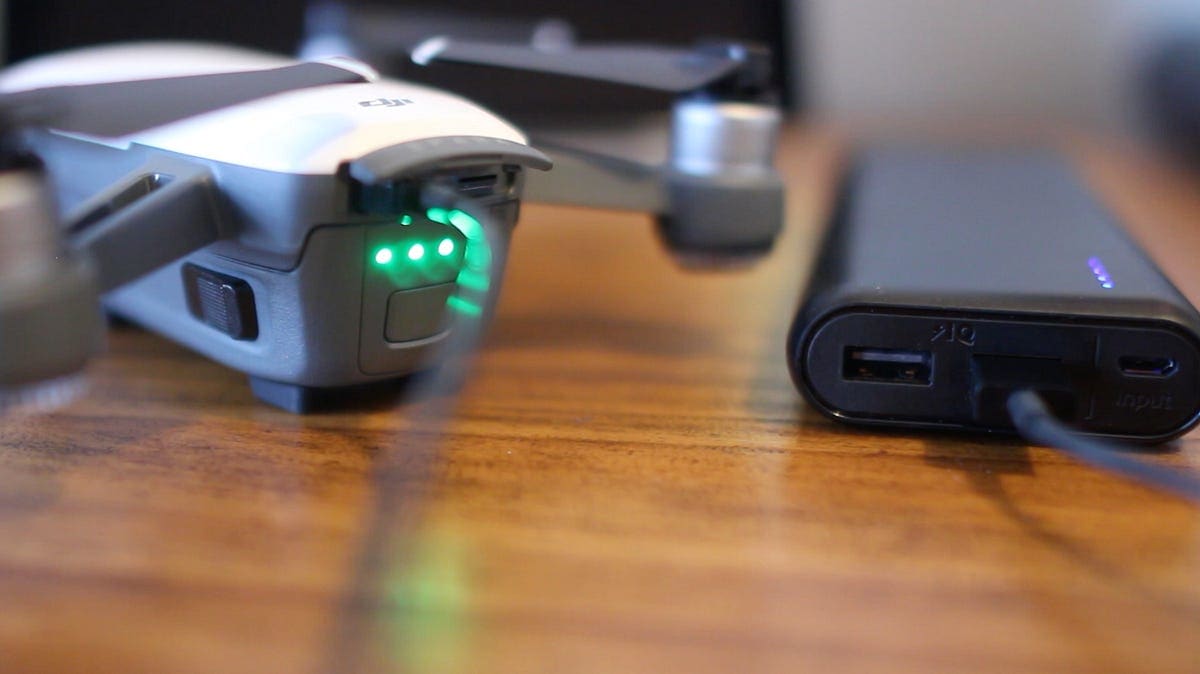
- Clean accessible contacts with a dry soft cloth only.
- Connect the pack to the official DJI USB charger, not a low-power phone brick.
- If that charge is still running far past
80 minutes, try another outlet and another official cable. - If you use the Spark charging hub, test another slot and compare against the official
52,55, and85.2 minutetimes. - If you use the Portable Charging Station and nothing happens, wait
10 seconds, then remove the pack and insert it again. - If one known-good Spark battery charges on the same gear and this pack does not, the battery is the problem. If no Spark battery charges, replace the charger or hub first.
18 W.Fix 2: Wake the DJI Spark Battery From Sleep or Hibernation
DJI says a brand-new Spark battery can sit in sleep mode. Connect it to the charger, fully charge it, then mount it. A depleted pack that was stored for a long time can also stay dark until the charger or Spark Portable Charging Station wakes it. That is different from the controlled auto-discharge that starts only if the level is above 65% and the pack stays idle for more than 10 days. After it starts, Spark takes about 2 days to bring the level down to 65%.
- Check the pack for swelling, leakage, cracks, or damaged terminals before you connect power.
- Connect it to the official DJI USB charger or Spark charging hub.
- Leave it connected through a full charge. Do not assume it is dead because the LEDs stay dark at first.
- If you are using the Portable Charging Station, wait
10 seconds. If charging still does not start, remove the battery and insert it again.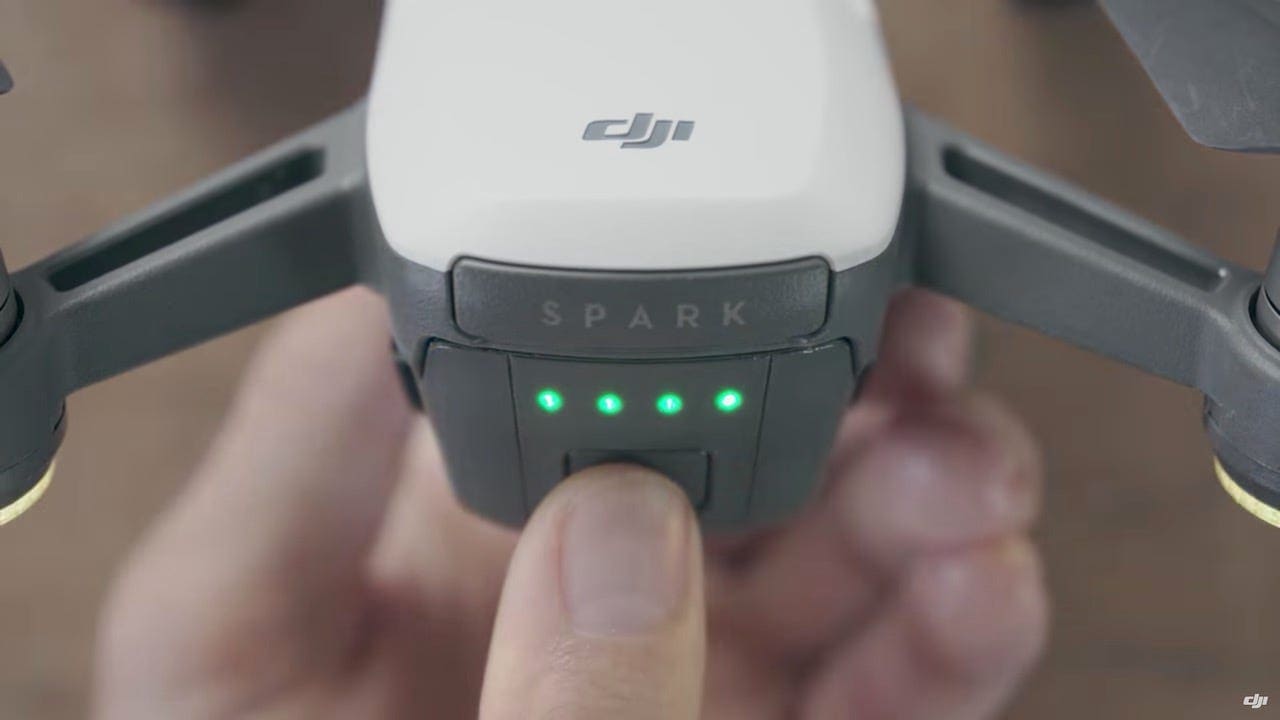
- After the LEDs respond, let the pack finish charging before you install it in Spark.
- If the level dropped while the pack sat unused above
65%for more than10 days, treat that as auto-discharge first. After it starts, it takes about2 daysto reach65%. The Spark app cannot change the timer. Charging or powering on resets or stops it. Pressing the power button does not stop auto-discharge. The process stops when the voltage falls below3.8 V. Storage below0℃will not enable it.
30 seconds, or a Spark that powers off after you place it in a turned-on station, is following official behavior. It is not proof that the 1480 mAh pack has failed.Fix 3: Retry Battery Firmware Update in DJI GO 4
Spark's official FAQ says the two middle Battery Level Indicators stay solid when the battery firmware update fails. DJI's Intelligent Flight Battery LED guidance is to retry the update only when the battery level is above 75%. Use DJI GO 4. Do not force an update on a pack that cannot power on.
- Finish the charger, temperature, and sleep checks first if the pack cannot start the aircraft.
- Charge the remote controller and keep a stable phone connection.
- Install the Spark battery only if it can power on safely.
- Open DJI GO 4, connect to Spark, and confirm the battery is above
75%. - Follow the official firmware prompt and do not power off the aircraft during the update.
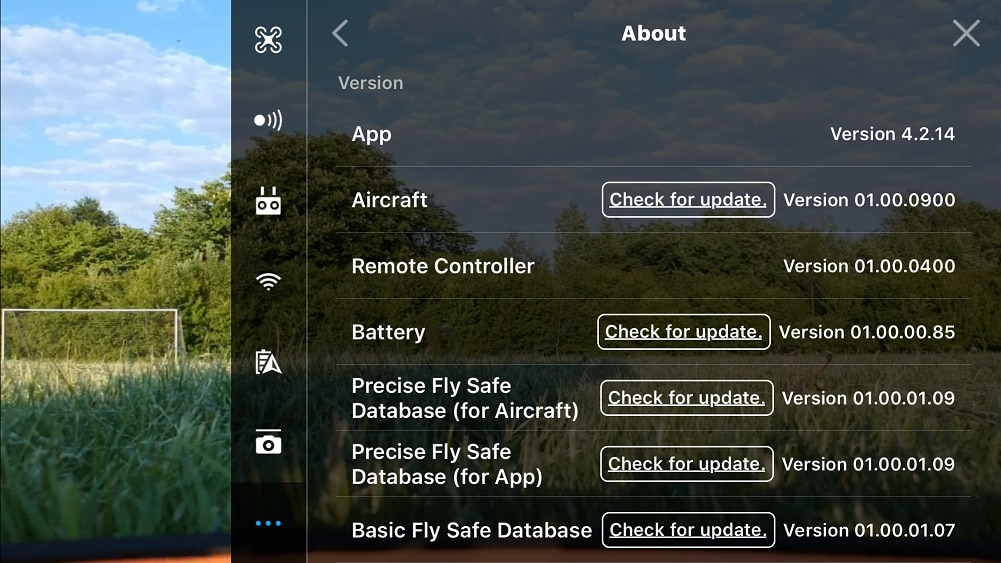
- If LED 2 and LED 3 stay solid, retry the battery firmware again with the same
75%floor. - Restart the aircraft and try charging the pack on the official
18 Wcharger afterward.
Fix 4: Check Charging Temperature, Contacts, and App Warnings
Spark can fly between 0℃ and 40℃, but it can charge only between 5℃ and 40℃. If LED 4 blinks, first bring the pack into the charging range and switch to the official charger before you assume the cells are dead.
- Bring the battery indoors and wait until it is between
5℃and40℃. - If the pack is cold, warm it gradually. If it just finished a flight, let it cool before charging.
- Inspect the battery and charger contacts, then wipe them with a dry soft cloth.
- Connect the official
18 WDJI USB charger and watch LED 4. - If the aircraft can start, open DJI GO 4 and check Battery Info for temperature, cell, or update warnings.
- A reading above
95%is normal. Do not keep forcing a top-off to100%. - Photograph any error prompt before you contact DJI Support.
| Official Protection | What To Do | What Not To Do |
| LED 4 blinks twice per second | Warm the pack to room temperature, then charge inside 5℃ to 40℃ |
Do not use a hair dryer, heater, fire, or microwave |
| LED 4 keeps blinking on the charger | Bring the pack into 5℃ to 40℃ and switch to the official charger |
Do not treat every LED 4 blink as a failed 1480 mAh pack |
| Battery is still hot after flight | Let it cool naturally before charging | Do not charge immediately because the aircraft can still fly at 0℃ to 40℃ |
| Dirty or oxidized contacts | Clean gently with a dry soft cloth | Do not scrape the terminals or use liquid cleaners |
Fix 5: Power-Cycle the Battery and Decide Whether It Needs DJI Service
On Spark, press the battery button once to check the power level. That short press is a status check, not a repair. Pressing and holding the same button for about 9 seconds resets the aircraft Wi-Fi. Do not use that long press as a battery reset.
- Remove the battery from Spark.
- Press the battery button once and read the Battery Level LEDs.
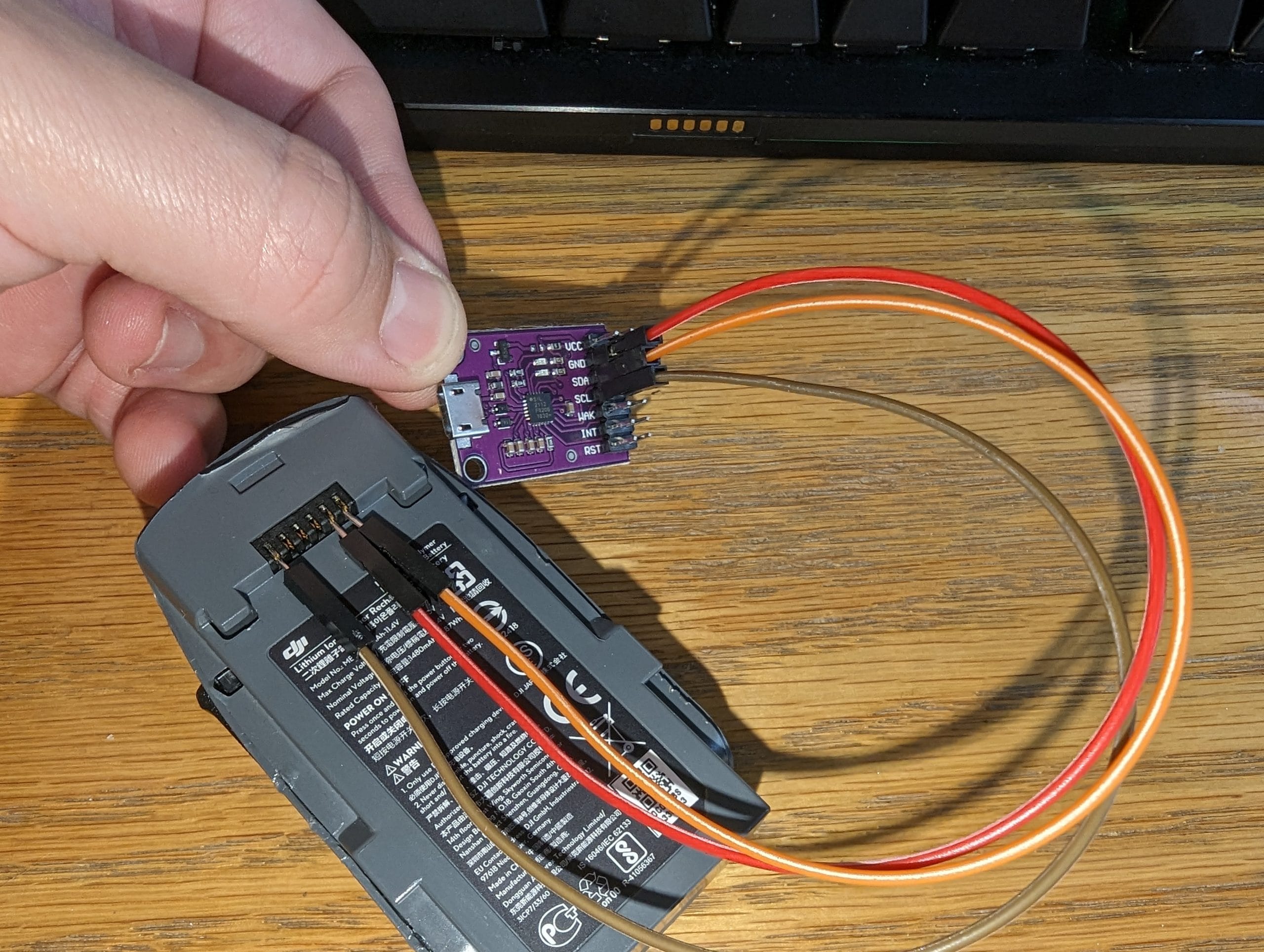
- If the LEDs respond, power the pack off, wait several minutes, and reconnect the official charger.
- If the pack can start the aircraft, open DJI GO 4 and check Battery Info, error prompts, and firmware status.
- Contact DJI Support if the pack stays dark after an official full charge, keeps showing protection LEDs, or has any swelling, leakage, cracks, odor, or damaged terminals.
Part 3: Lost DJI Spark Footage on the microSD Card?
A charging failure does not erase Spark footage by itself. A sudden power-off can still interrupt a recording or leave the card unreadable. Spark stores photos as JPEG and videos as MP4 (H.264) on a FAT32 microSD card. Power off the aircraft, remove the card, and recover those files from the card. Do not keep flying onto the same card.
Recoverit can scan microSD cards, SD cards, USB drives, and computer disks for recoverable Spark photos and videos. It does not repair the Spark battery, the 18 W charger, the charging hub, or the battery cells.
- Power off Spark and remove the microSD card.
- Do not record new footage or format the card.
- Insert the card into a computer with a stable card reader.
- Open Recoverit and choose the card under SD Card Recovery.
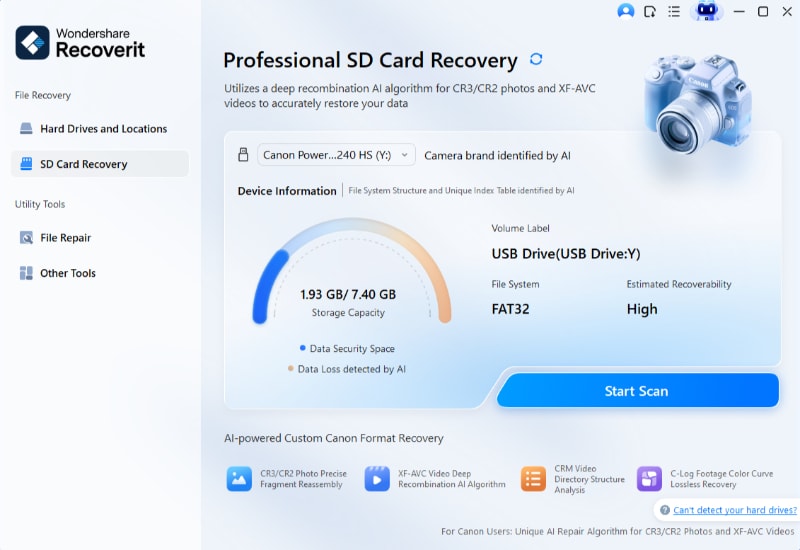
- Click Scan, then filter for
JPEGphotos andMP4videos.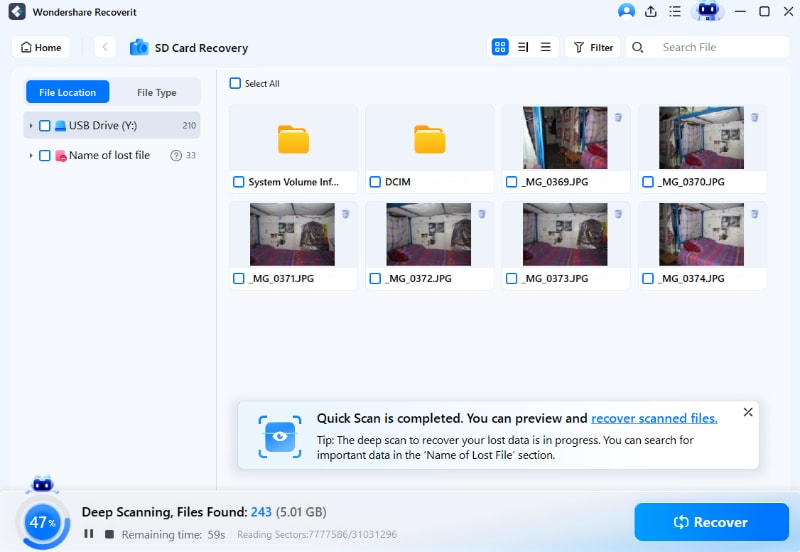
- Preview the recoverable files when the scan can show them.

- Click Recover and save the files to the computer or another drive, not back to the same card.
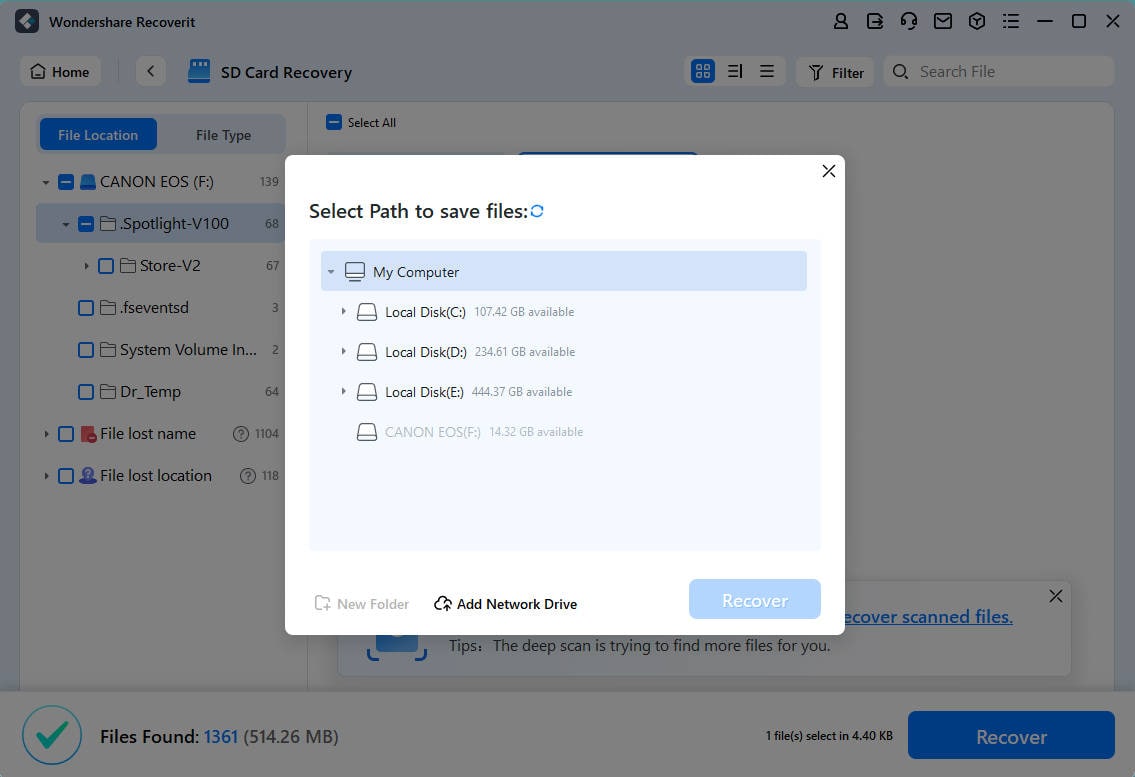
MP4 first. If the recovered clip is still unreadable, run video repair on a copy afterward.Related Video >>: How to Recover Deleted or Corrupted Videos from Drone

Part 4: Tips to Avoid the DJI Spark Battery Not Charging Issue
Spark's official FAQ says to fully charge the battery once every three months. If a pack sits unused above 65% for more than 10 days, Spark starts a controlled auto-discharge and then takes about 2 days to reach 65%. That later drop is not a failed charger. For general Intelligent Flight Battery care, DJI also recommends storing a pack around 40% to 65% if you will not use it for more than 10 days.
| Battery Care Tip | Why It Matters | Official Practice |
| Charge only in the charging range | Temperature protection can block charging even when the aircraft can still fly | Charge between 5℃ and 40℃. Do not use the 0℃ to 40℃ flight range as the charging range |
Use the official 18 W charger or hub |
A weak adapter can stall a healthy 1480 mAh pack |
Expect about 80 minutes on the USB charger, or the hub times of 52, 55, and 85.2 minutes |
| Fully charge every three months | Long storage at a very low level can over-discharge the cells | Follow the Spark FAQ: fully charge the battery once every three months |
Store around 40% to 65% if unused for more than 10 days |
General Intelligent Flight Battery care reduces deep storage damage | Do not leave a depleted Spark pack in storage, and do not treat a later drop from above 65% as a charger fault |
| Leave auto-discharge alone | Spark cannot set the idle timer in the app | It starts only above 65% after more than 10 days idle, then takes about 2 days to reach 65%. Charging or powering on resets it. A power-button press does not stop it. Storage below 0℃ will not enable it |
| Inspect before every charge | A damaged pack is unsafe | Check swelling, leakage, cracks, odor, heat, and terminals |
| Keep firmware current in DJI GO 4 | A failed battery update can leave LED 2 and LED 3 solid | Retry only when the pack is above 75% |
Try Recoverit to Recover Lost Data from Drone SD Card
Security Verified. Over 7,302,189 people have downloaded it.
Conclusion
When a DJI Spark battery is not charging, start with the official limits: a 1480 mAh, 11.4 V pack, the 18 W USB charger, the 5℃ to 40℃ charging range, and the Battery Level LEDs. A charge that stops above 95% in DJI GO 4 is normal. A later drop after unused storage above 65% for more than 10 days is controlled auto-discharge, not a dead charger. A charge that never starts needs the official charger, a sleep-mode wake, or a 10-second reseat on the Portable Charging Station.
If LED 2 and LED 3 stay solid, retry the firmware in DJI GO 4 only above 75%. If the pack is swollen, stays dark after an official full charge, or keeps showing protection LEDs, stop and contact DJI Support.
If the same power loss interrupted a recording, remove the FAT32 microSD card and scan it with Recoverit for JPEG and MP4 files. Recoverit can help with lost Spark footage. It does not repair the battery.
FAQ About DJI Spark Battery Not Charging
-
How long should a DJI Spark battery take to charge?
DJI says about80 minuteswith the official USB charger. The Spark charging hub takes52 minutesfor one battery,55 minutesfor two batteries, and85.2 minutesfor three batteries. The official USB charger is rated at a maximum of18 W. -
Why does a new DJI Spark battery not work?
DJI says a brand-new Spark battery can be in sleep mode. Connect it to the charger, fully charge it, and then mount it on the aircraft. -
Is it normal if DJI GO 4 shows 95% instead of 100%?
Yes. DJI says it is normal when Spark is powered on with a fully charged battery, as long as the current level is higher than95%of the total power. This is not a charger failure. -
Why is the Spark Portable Charging Station not charging the battery?
If the battery is in hibernation, the station wakes it first. If charging does not start after10 seconds, remove the battery and insert it again. The station also turns off after30 secondswhen it detects no device, charging is complete, or the station is below5%. -
Can Recoverit fix a DJI Spark battery that will not charge?
No. Recoverit can recover lost SparkJPEGphotos andMP4videos from aFAT32microSD card after a power loss. It cannot repair the Spark battery, charger, charging hub, or battery cells. -
Why did my unused Spark battery drop by itself?
If the battery is above65%and sits idle for more than10 days, Spark starts a controlled auto-discharge. After it starts, it takes about2 daysto reach65%. Spark cannot set this timer in the app. Charging or powering on resets or stops it. Pressing the power button does not stop it. The process stops below3.8 V. Storage below0℃will not enable auto-discharge.


