
 TL;DR:
Stop using your DJI drone's SD card immediately to prevent data overwriting, and recover lost footage by scanning the drive with data recovery software, extracting mobile cache files from the DJI GO app, or checking the 30-day "Recently Deleted" folders in your synced cloud storage.
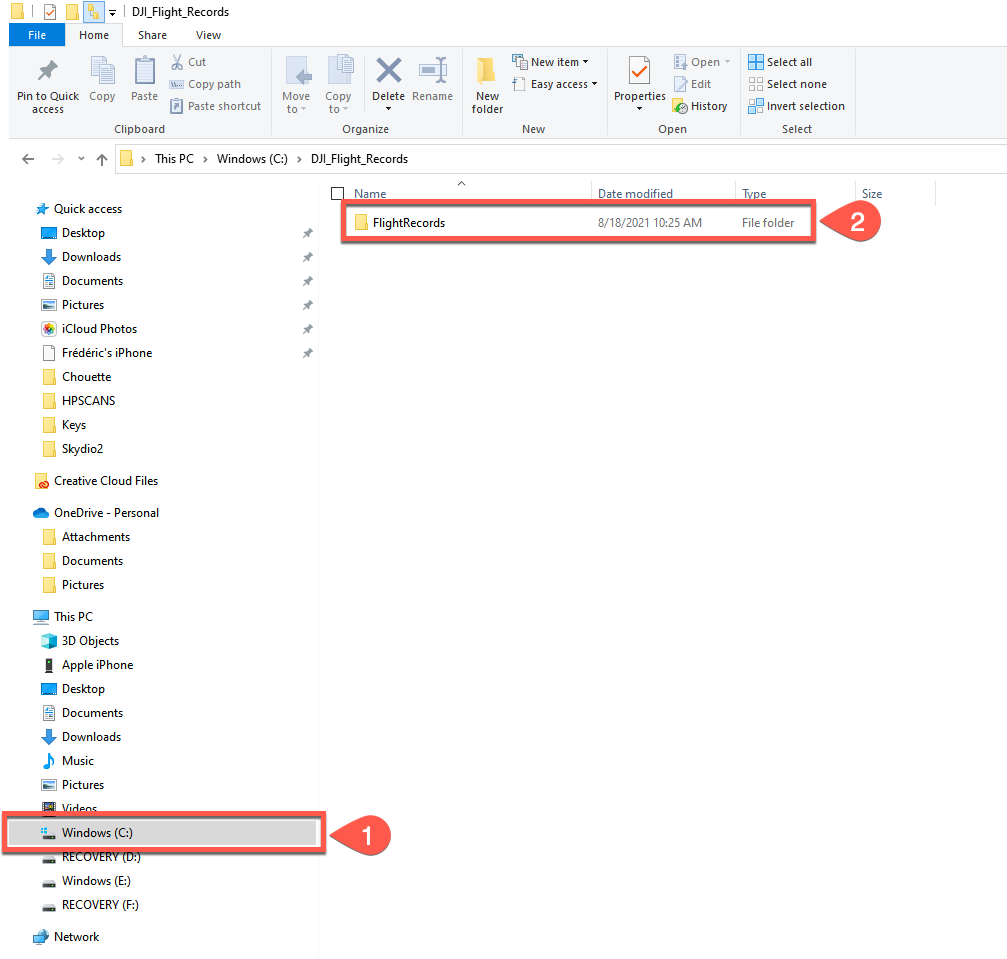
● If the physical SD card is missing or damaged, you can retrieve lower-quality backup videos and image thumbnails stored locally inside the "cache" or "FlightRecord" folders on your connected smartphone or tablet.
● For unreadable SD cards, running the "chkdsk X: /f" command as an administrator in the Windows Command Prompt can repair the drive's file system errors and restore access so you can extract the files.
● Recovered media files that are corrupted or unplayable can sometimes be automatically repaired by attempting to open them in VLC or QuickTime, or by converting the video format from MOV to MP4.
Ask AI for a summary
 ChatGPT
 Perplexity
 Gemini
 Claude
 Grok
Grok
Lost DJI drone footage is often still recoverable if you stop using the storage device quickly and check the right location first. Depending on the drone model, the original photos and videos may be stored on a microSD card, the aircraft's internal storage, an SSD, downloaded copies in DJI Fly or DJI GO 4, or local storage on a DJI RC remote controller.
This guide explains how to restore pictures and videos from DJI drones by checking the aircraft storage, smartphone downloads, remote controller album copies, computer backups, and recovery software. It also clarifies when flight records and cached previews can help identify a missing session, and when they are not a replacement for the original full-quality footage.

Part 1: Common Causes of DJI Drone Photo and Video Loss
- Accidental deletion: Files are removed from the aircraft album, SD card, or exported folder by mistake.
- Formatting errors: The microSD card or internal storage is formatted before the footage is backed up.
- Card corruption or incompatibility: DJI support notes that recording can stop automatically when the microSD card has an error, is incompatible, or is full.
- Low battery or interrupted recording: Sudden shutdown can leave incomplete or damaged video files.
- Transfer interruption: USB or app export fails before the files are fully copied to the phone or computer.
- Crash or flyaway: The aircraft or storage media becomes physically inaccessible after an impact or loss event.
- Storage confusion: The files may still exist, but they are stored in the aircraft internal storage, SSD, SD card, or remote controller album instead of the place you expected.
Part 2: Can I Restore DJI Drone Footage Easily?
Yes, DJI drone footage is often recoverable when the storage device is still detected and the original data has not been overwritten. Recovery is easier when the files were only deleted recently, the card was quick formatted, the aircraft still powers on, or the originals were already downloaded to a phone, remote controller, or computer.
Recovery becomes harder when the aircraft is missing, the storage is physically damaged, or new recordings have already overwritten the lost data. Before running any repair tool, first determine where the footage was originally stored and whether a direct export path still exists.
Part 3: Where DJI Drone Files May Still Be Stored
| Possible Location | What You May Find | Best Next Step |
| Aircraft internal storage or SSD | Original full-quality photos and videos still stored in the drone | Connect the aircraft to a computer with USB-C and export the originals |
| microSD card inside the drone | Original full-quality files on removable storage | Remove the card and connect it through a card reader |
| DJI Fly or DJI GO 4 album downloads | Original files downloaded to the smartphone through the app | Open the album and export or copy the downloaded files to safe storage |
| DJI RC series remote controller | Files in DJI Album on internal storage or controller microSD |
Export the files from the controller to a computer or mobile device |
| Flight records and preview images | Flight timestamps, route clues, and disconnected-session image evidence | Use them to locate the aircraft or identify the missing session, not as full-resolution originals |
Part 4: How to Restore Pictures and Videos from DJI Drones
Start with direct export methods before scanning or repairing anything. If the original files still exist in the aircraft, SD card, phone album, or DJI RC storage, exporting them is safer than file recovery software. Use recovery software only when the originals are actually deleted, formatted, or inaccessible.
Method 1: Use Recoverit to Recover Deleted DJI Drone Files
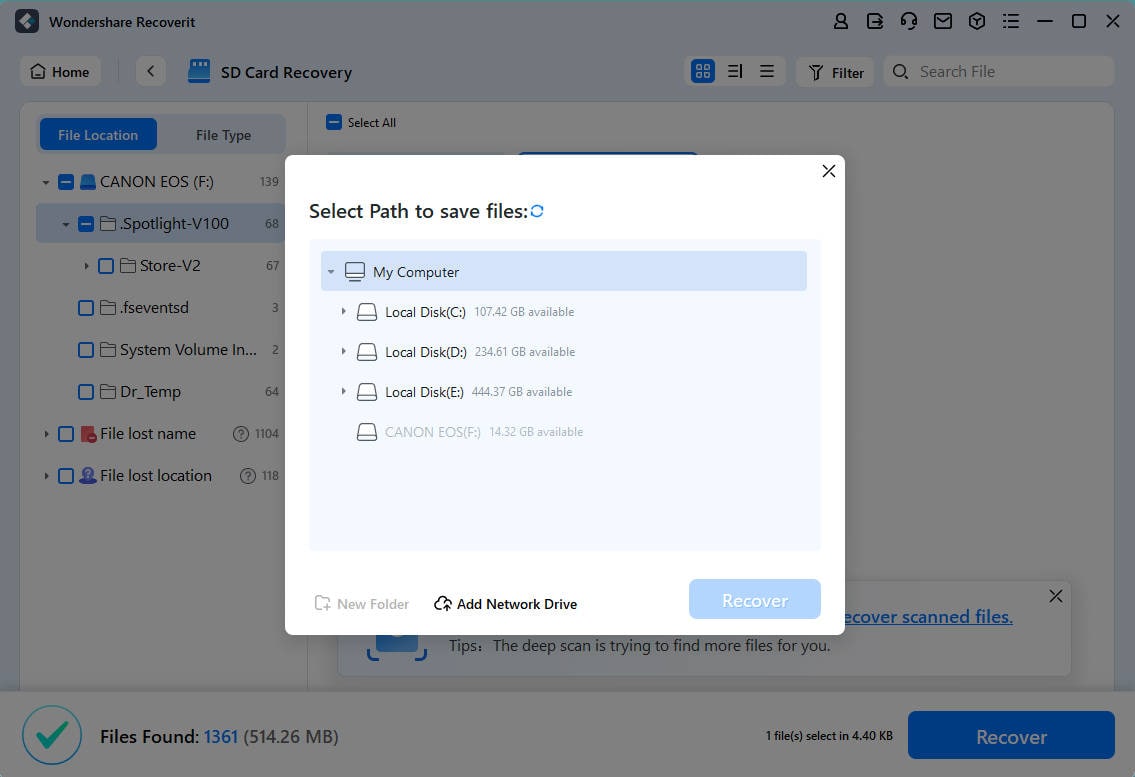
Recoverit is a useful option when the DJI drone files were deleted, the microSD card was formatted, or the storage still appears in the system but the media files are missing. It is most effective when the storage device is still detectable and you need a guided recovery workflow.
- Power off the drone and remove the microSD card, or connect the aircraft storage to the computer if the footage was saved internally.
- Open Recoverit and choose the DJI storage device under SD Card Recovery.
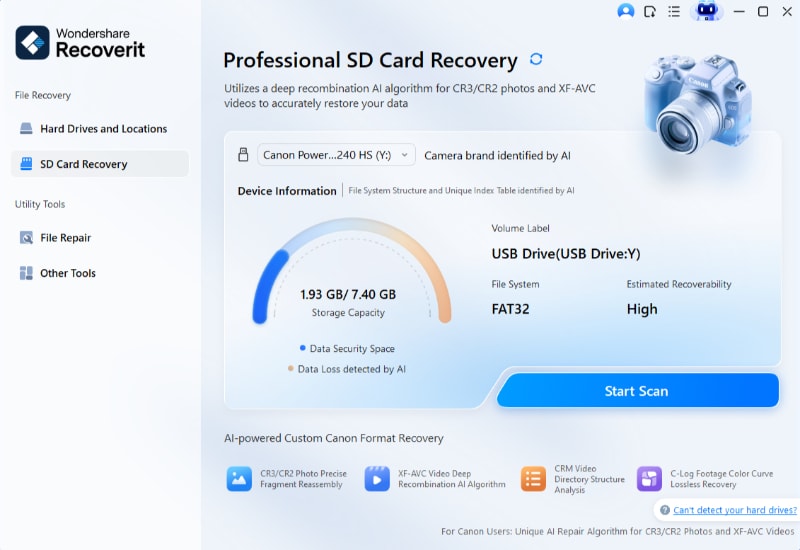
- Start the scan and let the software search for deleted or lost files.
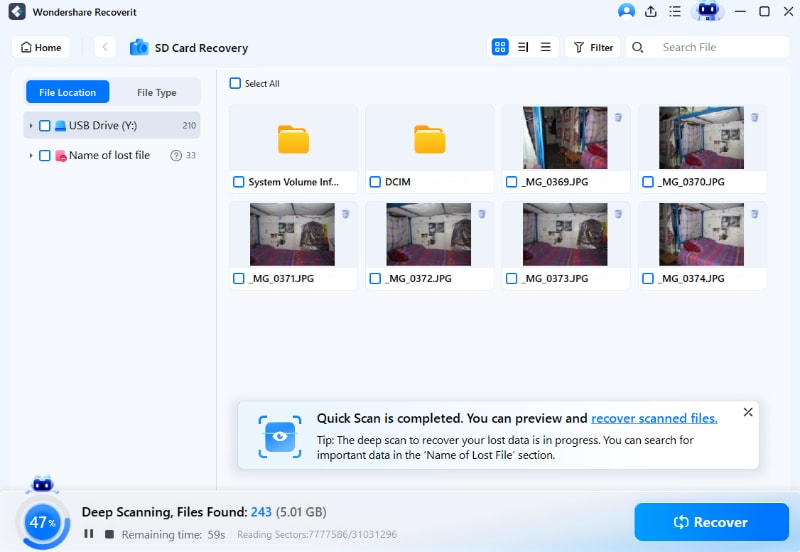
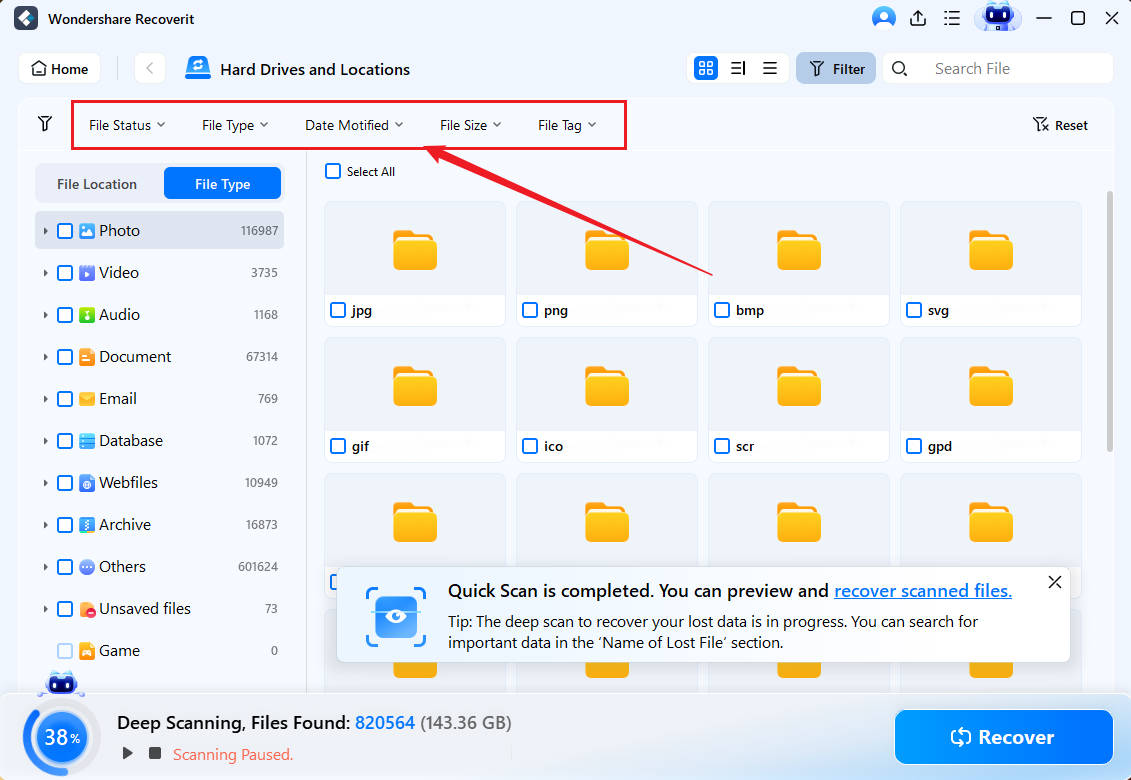
- Use file filters and preview to identify the DJI photos and videos you want to restore.
- Click Recover and save the files to your computer or another external drive.
Video Tutorial on How to Recover Lost Footage from DJI

Method 2: Export Original Files Through DJI Official Transfer Paths
DJI's official export guide shows that drone photos and videos can be exported in several direct ways before you use recovery software. Depending on the model, you may be able to use QuickTransfer, the Download function in DJI Fly or DJI GO 4, a USB-C connection to the aircraft, or a card reader for the microSD card.
- Check whether the footage is stored in the aircraft internal storage, SSD, or the microSD card.
- If your model supports QuickTransfer, connect your smartphone directly to the aircraft and download the original files.
- If you use DJI Fly or DJI GO 4, open the album and use Download to save the selected files.
- If the aircraft storage is still intact, connect the drone to a computer with a USB-C cable and copy files from the storage volume.
- If the files are on the microSD card, remove the card and export the originals through a card reader.
Method 3: Check DJI Fly, DJI GO 4, and DJI RC Local Album Copies
The DJI Fly app album can display photos and videos from DJI Fly and your mobile device. If you previously downloaded originals from the aircraft to your phone, tablet, or DJI RC series remote controller, the files may still exist locally even if the card inside the drone is now damaged or missing.
- Open DJI Fly or DJI GO 4 and check the album for downloaded pictures and videos.
- If you use a DJI RC series controller, check the
DJI Albumpath on the controller's internal storage or microSD card. - Copy any found files to your computer, SSD, HDD, or another safe storage location.
- If you use phone or computer backup software, also check whether these downloaded files were synced to your normal photo or backup folders.
Method 4: Use CHKDSK Only After the Important DJI Files Are Recovered
chkdsk is a Windows repair command for logical file system errors. It is not a true deleted-file recovery method. Use it only after you have already restored the important DJI footage or confirmed that no more recoverable files are needed from the card.
- Connect the DJI microSD card to your Windows PC and confirm its drive letter, such as
F:. - Open Command Prompt as administrator.
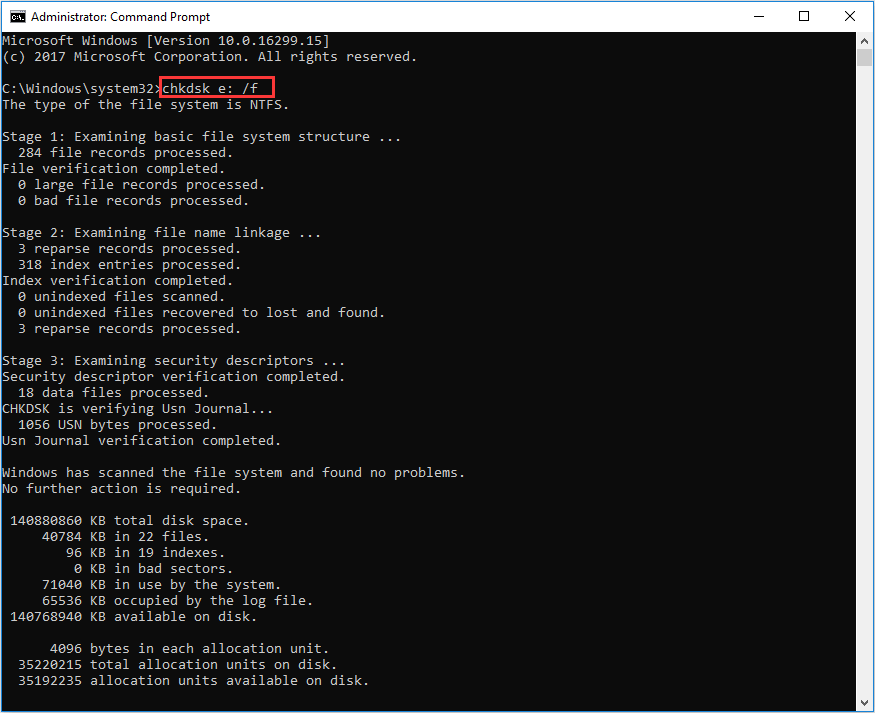
- Run
chkdsk F: /fand wait for the repair process to finish. - Reconnect the card and test whether the storage becomes readable again.
chkdsk as your first recovery action. Recover the files first, then repair the card later.Method 5: Check Computer Backup Folders, Cloud Sync, and Flight Records
If the footage was previously exported from the aircraft, the easiest restore source may be a folder that already exists on your computer, NAS, or cloud-synced photo library. If the aircraft is missing, Find My Drone and the flight records can help you identify the session, map location, and disconnected image information, but they do not replace the original full-resolution media.
- Search your computer for DJI export folders, DCIM folders, or folders matching the flight date.
- Check any photo or cloud sync library that may have copied exported drone media from your phone or computer.
- If the aircraft is missing, open Find My Drone in DJI Fly or DJI GO 4 to review the last known location and image clues.
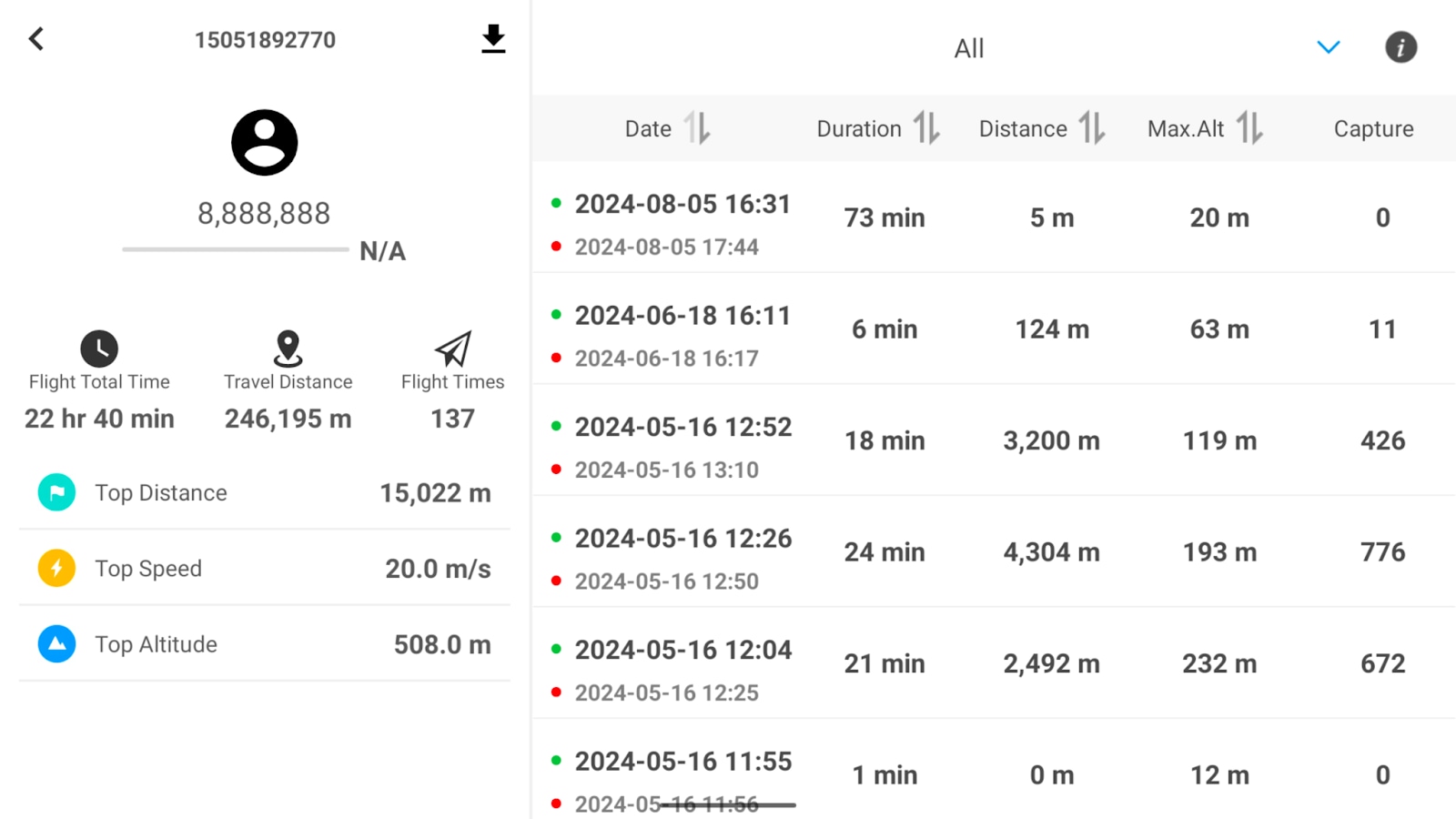
- Open the flight records to confirm the flight date, route, and session timing, then use that information to search your local copies more efficiently.
Part 5: Pro Tips to Restore DJI Drone Footage Successfully
- Stop using the storage immediately: New recordings can overwrite deleted drone footage.
- Identify the true storage location first: Check internal storage, SSD, microSD, app downloads, and remote controller album copies.
- Export before you recover: If the originals are still directly accessible, copy them out before using any repair or recovery tool.
- Use a reliable card reader and cable: Unstable connections can interrupt export and make the situation worse.
- Use a compatible microSD card: DJI support notes that incompatible or faulty cards can cause automatic stop recording issues.
- Recover to another drive: Never write recovered footage back to the same drone storage device during recovery.
- Use flight records as clues: Match flight date, location, and session details when searching for exported copies.
- Repair only after backup: Run
chkdskor reformat the card only after the important files are already safe.
Conclusion
You can often restore pictures and videos from DJI drones if you first determine where the originals were stored and avoid writing new data to that location. The safest path is to check direct export options first, including the aircraft internal storage, microSD card, DJI Fly or DJI GO 4 album downloads, and DJI RC album files.
If the originals were deleted or formatted, use Recoverit on the storage device while it is still detectable. Use flight records and Find My Drone as supporting clues, not as replacements for the original files, and keep chkdsk for post-recovery repair only.
FAQs
-
Can I recover deleted videos from my DJI drone's internal storage?
Yes, you can recover files from DJI drones with internal storage. Use data recovery software like Recoverit to scan the drone's memory. Connect your drone to a computer via USB cable. The recovery process is similar to SD card recovery, but it may take longer due to the larger storage capacity. -
How long can I wait before trying to restore the DJI drone footage?
You should start recovery immediately after losing files. Success rates drop over time as new data overwrites deleted files. However, you can still recover lost footage from a DJI drone weeks or months later. Professional recovery tools can find files even after extensive use of the storage device. -
Do all DJI drone models support the same recovery methods?
Most recovery methods work across all DJI drone models. The DJI GO app cache method works for older drones, while the DJI Fly app is for newer models. SD card recovery works universally. Cloud backup methods depend on your phone settings, not the drone model. Professional recovery software supports all DJI drone storage formats.


