

 TL;DR:
To safely resolve a DJI SD card error without losing your footage, immediately power off the aircraft and copy or recover your files before attempting any write-based repairs like CHKDSK, Mac First Aid, or formatting.
● Verify your exact aircraft model against DJI's official recommended storage list, as supported capacities and V30 or U3 speed requirements differ significantly across specific devices like the Mavic 4 Pro, Mini 5 Pro, and Avata 2.
● Data recovery software like Wondershare Recoverit can retrieve deleted, quick-formatted, or RAW media only if the card remains physically readable by Windows or macOS, whereas cracked, overheating, or completely undetected cards require a professional recovery lab.
● In-device formatting through the DJI Fly or DJI GO 4 app is exclusively a final preparation step for reuse and must only be executed after verifying that your MP4, MOV, JPG, and DNG files are safely backed up to a separate external drive.
Ask AI for a summary
 ChatGPT
 Perplexity
 Gemini
 Claude
 Grok
Grok
⚡ TL;DR: Fix A DJI SD Card Error Safely
Protect The Footage First: power off the DJI device, stop using the card, and cancel any computer prompt that asks you to format it.
Match The Symptom: an unavailable card, slow-speed warning, false-full message, RAW volume, and physically undetected card require different actions.
Start With Non-Destructive Checks: confirm the model-specific DJI card requirement, reseat the card with the device powered off, and test another reader or known-compatible card.
Repair Or Format Last: use CHKDSK, Disk Utility First Aid, or DJI in-app formatting only after the important DJI files are safely copied or recovered.
A DJI SD card error usually means the aircraft or camera cannot reliably recognize, read, or write to the microSD card. The cause may be an unsupported card, insufficient write speed, a full card, file-system damage, a reader problem, a damaged card, or a fault in the DJI card slot.
If the card contains DJI photos or videos you still need, do not format it, run CHKDSK or First Aid, delete files, or record another flight yet. Copy any readable footage first. If files are missing or the computer asks to format the card, recover them before attempting a write-based repair.

In this article
-
- Check The Official Card Requirement For Your DJI Model
- Power Off, Reseat, And Cross-Test The Card
- Assign A Windows Drive Letter
- Update Or Reinstall The Card Reader Driver
- Run CHKDSK Only After The Files Are Safe
- Use Windows Error Checking Or Mac First Aid
- Check Remaining Space In The DJI App
- Update DJI Firmware And The App
- Format The Card In DJI Fly Or DJI GO 4
Part 1. Match Your DJI SD Card Error To The Safest First Action
The exact warning matters more than the number of fixes you try. Use the table below to decide whether you should test compatibility, protect the files, repair the file system, or stop using the card.
| What You See | Likely Area To Check | Safest First Action | Do Not Do Yet |
| “SD card unavailable,” “card cannot be recognized,” or no card in DJI Fly | Card seating, model compatibility, damaged card, or aircraft card slot | Power off, reseat the card, test it in a reader, and try one known-compatible spare card. | Do not repeatedly force a damaged card into the slot. |
| “SD card speed slow,” “invalid speed,” dropped recording, or recording stops quickly | Card speed, model compatibility, free space, heat, or card wear | Check the exact DJI model in the official card list and check remaining storage in DJI Fly or DJI GO 4. | Do not assume a Class 10 label alone meets the current model requirement. |
| The card says full, but expected files are missing | Hidden files, file-system damage, or genuinely full storage | Stop recording and inspect or recover the card before deleting or formatting anything. | Do not free space by deleting files when the card’s contents are uncertain. |
| Windows or macOS asks to initialize, erase, or format the card | RAW, unreadable, or incompatible file system | Cancel the prompt and recover the DJI footage first if it is still needed. | Do not initialize, create a new volume, or erase the card. |
| The card appears in Disk Management but not File Explorer | Missing drive letter, RAW file system, or damaged partition metadata | If the partition is healthy, assign a letter. If it is RAW or unallocated, recover before repair. | Do not create a new partition on unallocated space. |
| The card was formatted or DJI files were deleted | Logical data loss | Stop all writes and scan the physical card with recovery software. | Do not record a test flight or save recovered files to the same card. |
| The card is cracked, burned, wet, overheating, or absent from every reader | Physical card or controller failure | Stop DIY attempts and consider a professional recovery lab for valuable footage. | Do not format, bend, scrape, heat, or repeatedly reconnect the card. |
| Recording stops at 30 minutes without another card warning | Possible aircraft recording limit rather than card failure | Check the model documentation and the recorded clips before altering the card. | Do not format the card for this symptom alone. |
DJI’s current support guidance identifies incompatible cards, damaged cards, full storage, and a damaged aircraft card slot as recognized causes. It also advises testing the card in another device and backing up readable data before formatting. The correct path therefore starts with the state of the footage, not with a repair command.
Part 2. Why DJI SD Card Errors Happen
A card can work in a phone or computer and still fail in a DJI device. Each DJI model has its own supported capacity and tested-card list, while higher-bitrate recording needs sustained write performance rather than a high peak speed printed on the package.
- The Card Is Not Supported By The Model: DJI publishes a current recommended storage card list for drones. Capacity and tested models differ across Mini, Air, Mavic, Avata, FPV, and newer aircraft.
- The Card Cannot Sustain The Recording Load: DJI recommends UHS-I Speed Class 3 or above for many current products. A card may mount normally yet fail during a high-bitrate video mode.
- The Card Is Full: DJI states that recording may stop when the microSD card has no sufficient space. A false-full message can also point to damaged allocation information, so protect the files before deleting anything.
- The File System Was Interrupted: A crash, battery loss, removing the card while writing, or disconnecting during transfer can leave directories or a video container unfinished.
- The Card Was Prepared For Another Device: A computer or camera may use a file system or layout the DJI product does not expect. After the files are safe, in-device formatting is the most reliable way to prepare the card for reuse.
- The Reader Or Aircraft Slot Has A Problem: A bad adapter, unstable USB reader, worn contact, or damaged aircraft port can look like card corruption.
- The Card Is Failing Physically: Flash wear, controller failure, moisture, impact, heat, and counterfeit capacity can cause intermittent recognition or repeated write errors.
- Firmware Or App State Is Involved: If a tested card fails only in one aircraft, update the official app and firmware after the files are protected, then test again.
Do not rely on a generic internet table that assigns one cause to every DJI error code. Error messages and codes can vary by model, firmware, controller, and app version. Record the exact warning, aircraft model, firmware version, card model, capacity, and speed symbols before troubleshooting.
Part 3. Recover DJI Footage Before Repairing Or Formatting
Formatting can make a usable card work in the aircraft again, but it is not a recovery method. CHKDSK and Disk Utility First Aid can also change file-system structures while repairing them. If the card contains missing or inaccessible footage, recovery belongs before those operations.
When Recoverit Is The Right First Step
Recoverit Memory Card Recovery is appropriate when the DJI microSD card is still detected by Windows or macOS but files were deleted, the card was quick-formatted, folders appear empty, the volume is RAW or unreadable, or the computer asks to format it.
| Good Fit | Why |
| Deleted DJI photos or videos | A scan may find remaining file records or media signatures if later recordings have not overwritten them. |
| Quick-formatted DJI microSD card | The old file content may remain until new DJI footage reuses the same storage area. |
| RAW, inaccessible, or empty-looking card that still reports the correct capacity | Recovery can scan the readable card before a file-system repair or format changes its metadata. |
| Mixed DJI media, including MP4, MOV, JPG, and DNG | File-type filters, search, preview, and selective recovery help separate wanted clips from older card content. |
| Cracked, burned, overheating, or completely undetected card | Not a good fit. Software needs a readable source; valuable physical-failure cases should be assessed by a lab. |
Recovery results depend on overwriting, fragmentation, encryption, and the physical state of the card. A filename or thumbnail alone does not prove that every video frame survived, so preview representative files and keep the original card unchanged until the recovered copies are verified.
How To Recover DJI Photos And Videos From The Card
- Connect The Physical Card: power off the DJI device, remove the microSD card, and connect it through a stable reader. Cancel any operating-system format prompt.
- Select The DJI Card: open Recoverit, locate the detected card under SD Card Recovery, confirm its capacity, and start the scan.
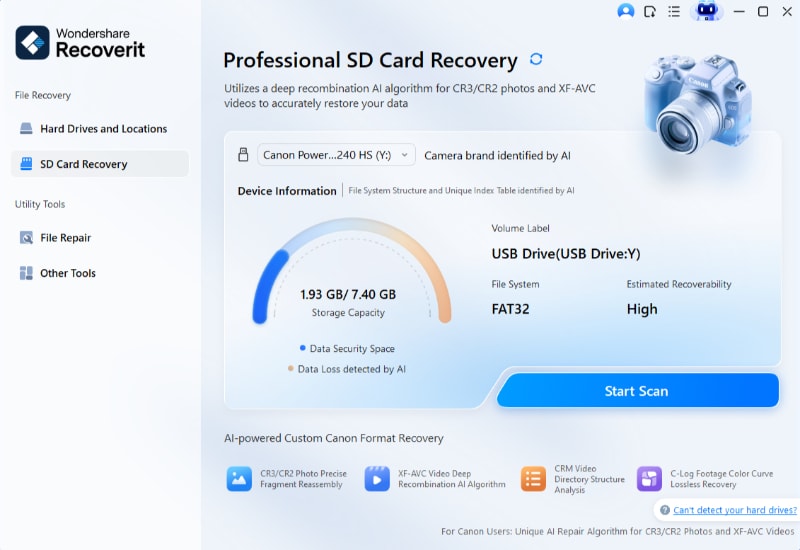
- Review The Scan: let the scan examine the card. Do not reconnect it to the drone or write other files while the scan is running.
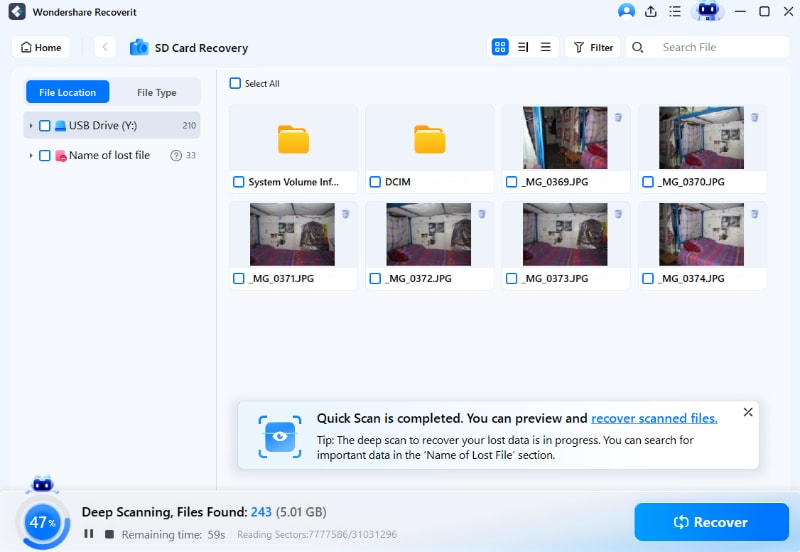
- Filter And Preview: narrow the results by photo or video type, extension, size, date, and path. Preview supported MP4, MOV, JPG, DNG, and other relevant files where available.
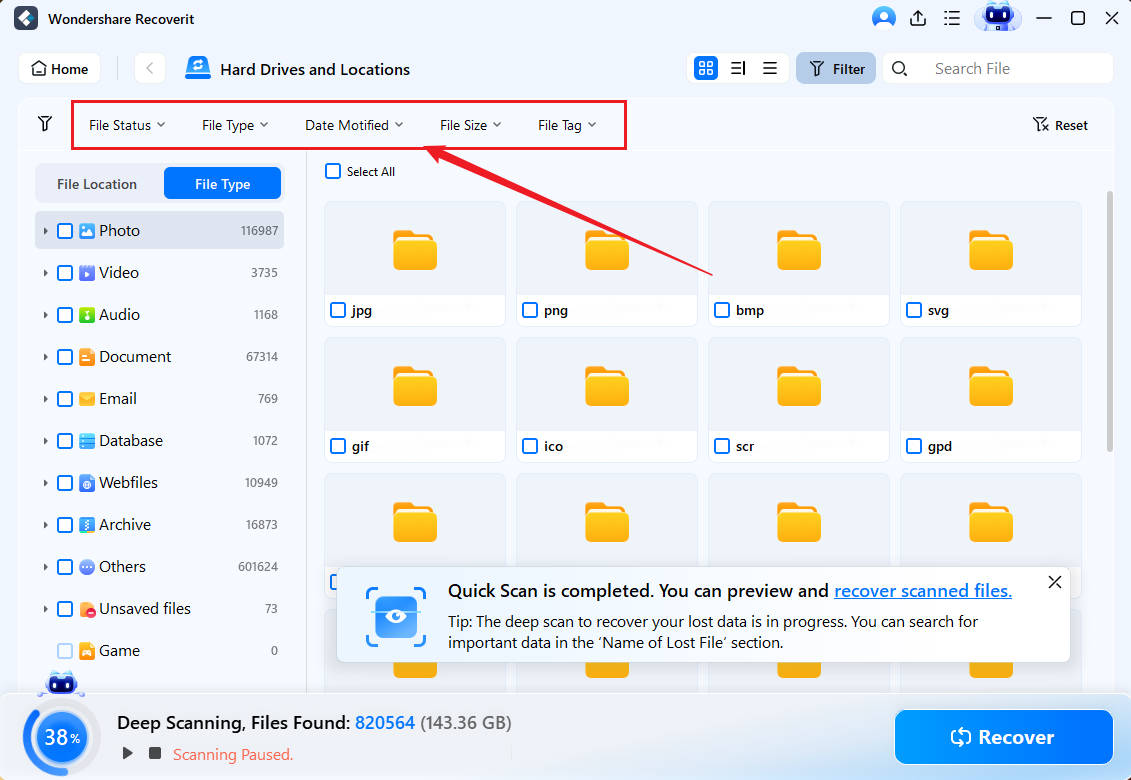
- Recover To Another Drive: select the required files, click Recover, and choose the computer or a healthy external drive—not the affected DJI card.
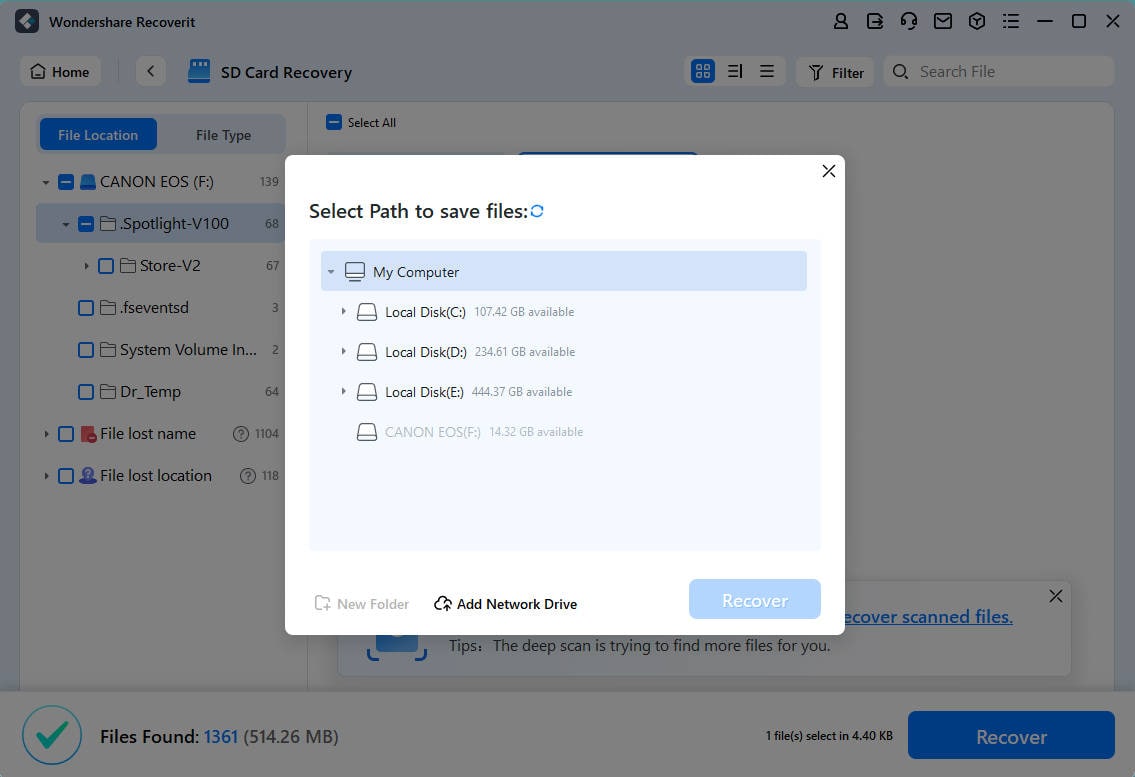
For cache locations, internal storage, formatted cards, and model-specific recovery cases, follow the complete DJI file recovery guide. Keeping that workflow separate prevents this troubleshooting page from competing with the dedicated recovery topic.
Part 4. 9 Safe Ways To Fix DJI SD Card Errors
Start with the lowest-risk method that matches your symptom. Methods 5, 6, and 9 can change the card, so use them only after the important footage is copied or recovered.
Method 1. Check The Official Card Requirement For Your DJI Model
“U3” or “V30” is not the whole compatibility decision. DJI’s current list gives model-specific supported capacities and tested card models, including recent Mini, Air, Mavic, Avata, FPV, and other aircraft.
- Identify The Exact Model: note whether the device is, for example, a Mini 3 Pro, Mini 4 Pro, Mini 5 Pro, Air 3S, Mavic 3 Pro, Mavic 4 Pro, or Avata 2.
- Open The DJI List: use the official recommended-card page and find the exact aircraft model.
- Compare The Full Card Name: check capacity, UHS rating, Video Speed Class, application rating, and model number—not only the brand.
- Protect Existing Files: copy or recover any readable footage before replacing or formatting the current card.
- Test One Listed Card: if the listed card works while the original does not, the original card or its format is the likely problem.
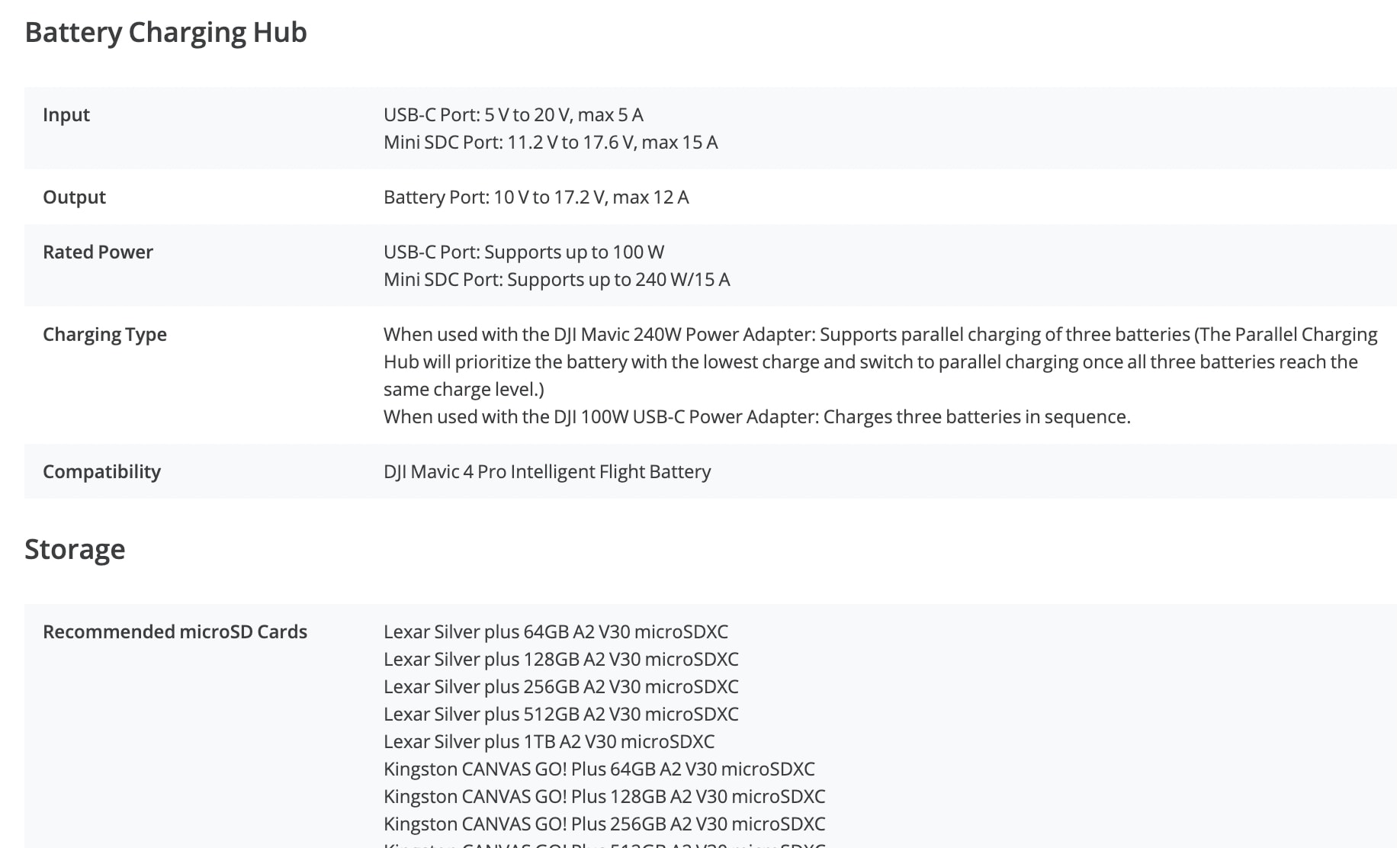
Do not copy a capacity limit from another model. For example, DJI’s current list shows different capacity and card recommendations for Mavic 4 Pro, Mavic 3 Pro, Mavic 2 Pro, Mini 5 Pro, Mini 4 Pro, and DJI FPV.
Method 2. Power Off, Reseat, And Cross-Test The Card
This isolates the card, reader, and aircraft slot without changing stored data.
- Power Off Completely: stop recording, power off the aircraft or camera, and wait until activity has ended.
- Remove The Card: eject it according to the model manual. Do not use force.
- Inspect It Dry: check for cracks, corrosion, heat damage, or worn contacts. Use a clean, dry, lint-free cloth only if the contacts need light cleaning.
- Reseat The Card: insert it in the correct orientation until it is fully seated.
- Cross-Test: test the card in a stable reader and test one known-compatible spare card in the DJI device.
- Copy Readable Files: if the original opens anywhere, copy the needed footage immediately.
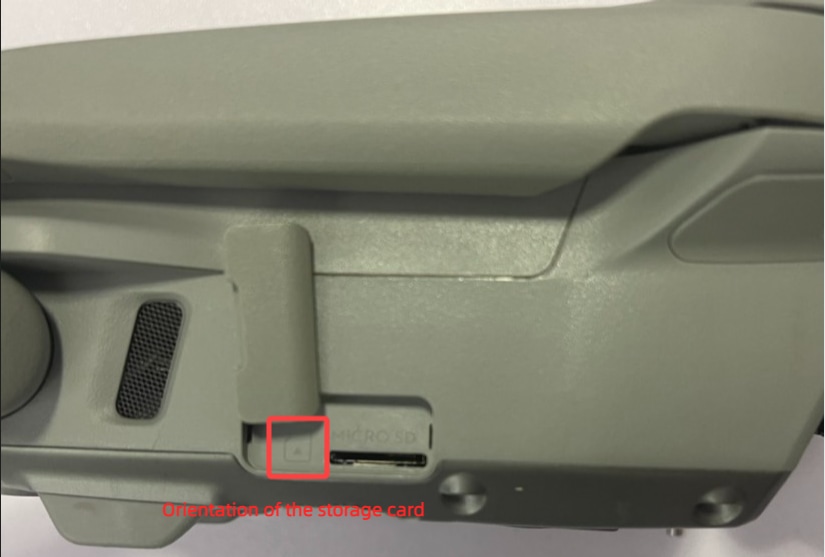
If the original card fails in every device, but the spare works in the DJI product, replace or recover the original card. If multiple compatible cards work elsewhere but fail only in the aircraft, the aircraft slot or firmware needs attention. DJI’s official card installation guide shows that card-slot location and contact orientation differ across current aircraft.
Method 3. Assign A Windows Drive Letter
Use this only when Windows Disk Management shows a healthy partition with the expected capacity but File Explorer does not show the card. Assigning a letter does not format the card.
- Open Disk Management: press Windows + X and select Disk Management.
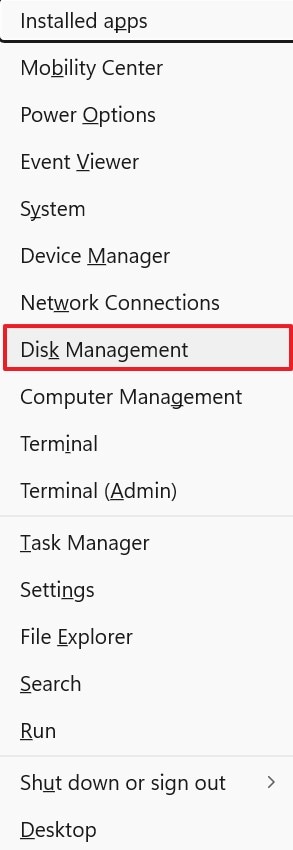
- Identify The Card Carefully: match the capacity and existing partition. Do not select the system disk.
- Open The Letter Menu: right-click the healthy card volume and choose Change Drive Letter And Paths.
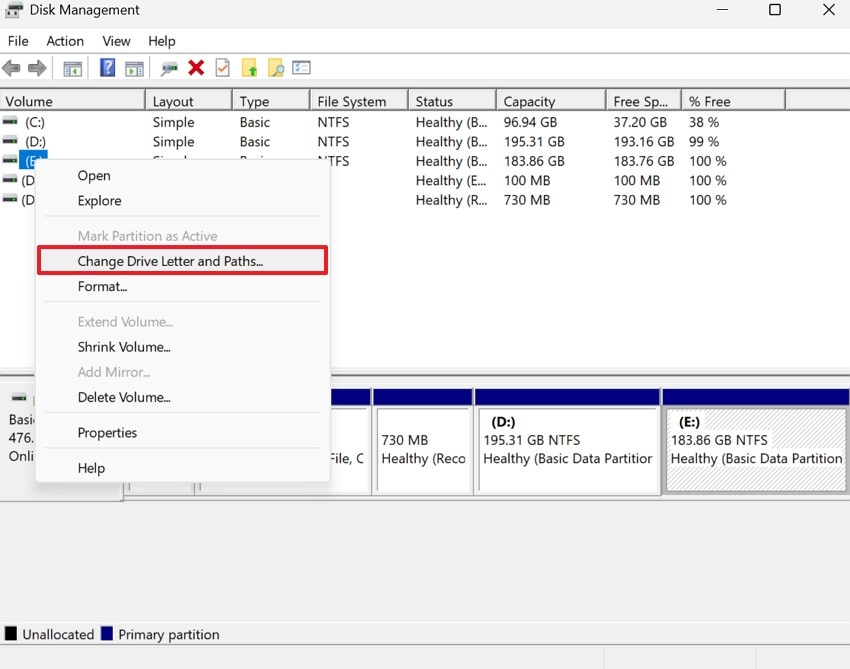
- Add Or Change The Letter: choose an unused drive letter and confirm.
- Copy The Files: open File Explorer and immediately copy any accessible DJI media to another drive.
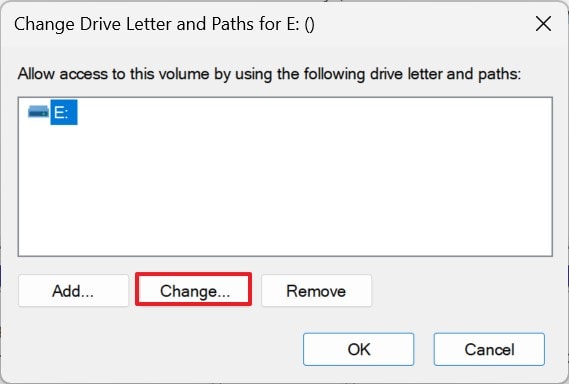
If Disk Management reports RAW, Unallocated, or No Media, do not use this method as a reason to create a volume. Recover first or follow the dedicated SD card not recognized guide.
Method 4. Update Or Reinstall The Card Reader Driver
This method applies when the DJI card works in another computer or device, but the Windows reader is missing, unstable, or marked with a device error.
- Open Device Manager: press Windows + X and select Device Manager.
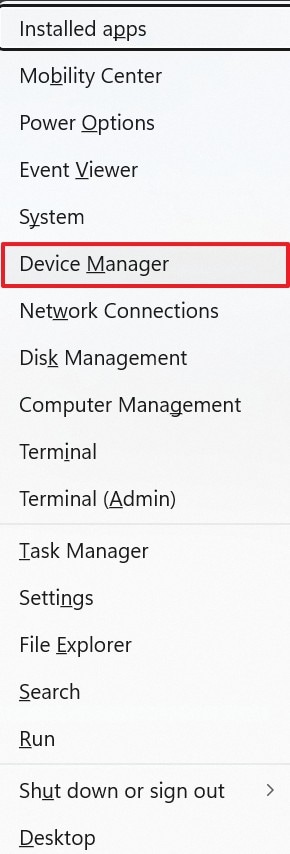
- Locate The Reader: check Disk Drives, Portable Devices, and Universal Serial Bus Controllers.
- Update It: right-click the reader or USB storage device and choose Update Driver.
- Reinstall If Needed: if the reader still fails, uninstall that reader device, restart Windows, and let Windows detect it again.
- Retest Safely: reconnect the reader and copy readable footage before further card repairs.
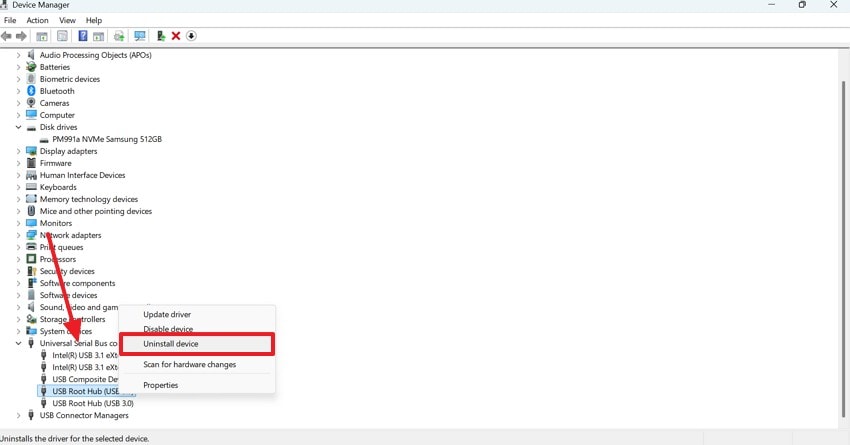
If other cards work in the same reader, the DJI card is more likely to be the problem. If the same DJI card works through another reader, replace the faulty reader rather than formatting the card.
Method 5. Run CHKDSK Only After The Files Are Safe
Microsoft documents the /f parameter as a command that fixes errors on a volume. That means it writes changes; it is not a deleted-file recovery command. Use it only on a logically damaged, Windows-readable card after the important DJI media is copied or recovered.
- Confirm The Drive Letter: verify the DJI card’s letter in File Explorer or Disk Management.
- Protect The Files: copy readable media or finish recovery before continuing.
- Open An Elevated Prompt: search for Command Prompt and choose Run As Administrator.
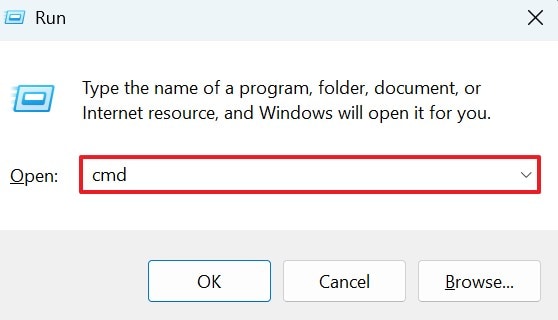
- Run The Correct Command: enter
chkdsk F: /f, replacingF:with the verified card letter. - Let It Finish: do not remove the reader while CHKDSK is working.
- Copy And Retest: check the repaired volume, copy any newly accessible files, and test the card in the DJI device only after the data is safe.
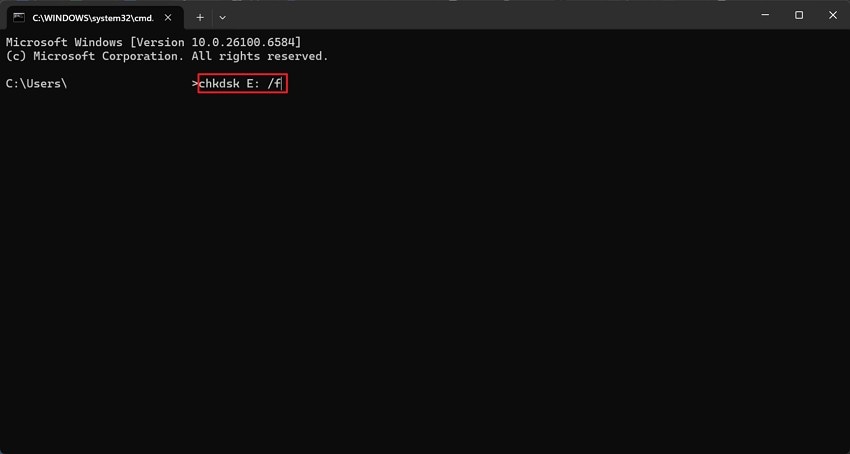
Do not run CHKDSK when the card is physically damaged, repeatedly disconnects, reports the wrong capacity, or contains the only copy of irreplaceable footage. Read the current Microsoft CHKDSK documentation before using additional parameters.
Method 6. Use Windows Error Checking Or Mac First Aid
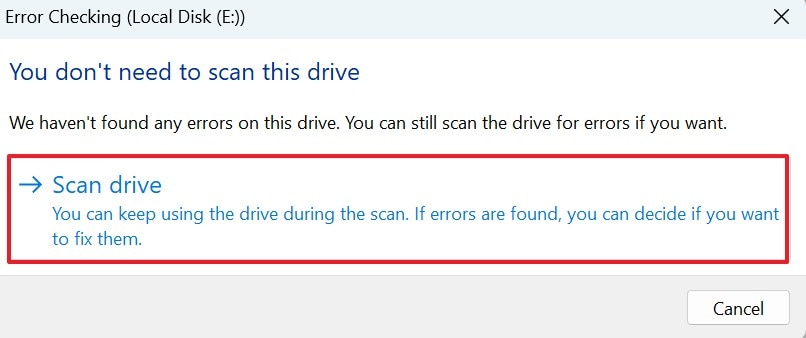
These graphical tools check and repair file-system structures; neither is designed to recover deleted DJI files. Use them only after backup or recovery.
Windows Error Checking
- Open Properties: in File Explorer, right-click the DJI card and select Properties.
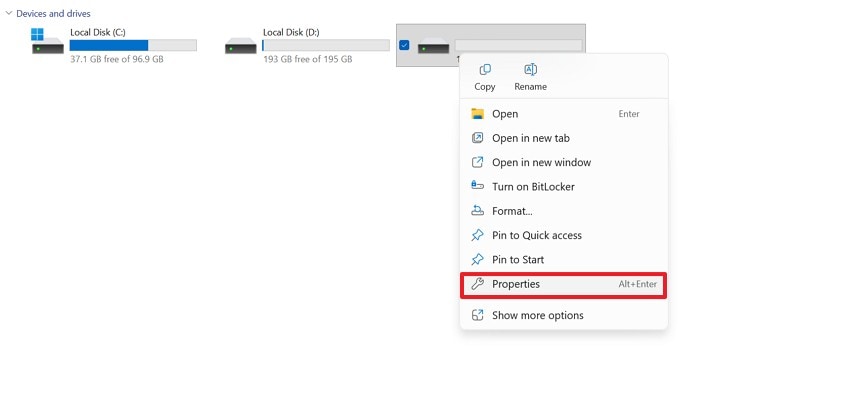
- Open The Tools Tab: select Tools and click Check.
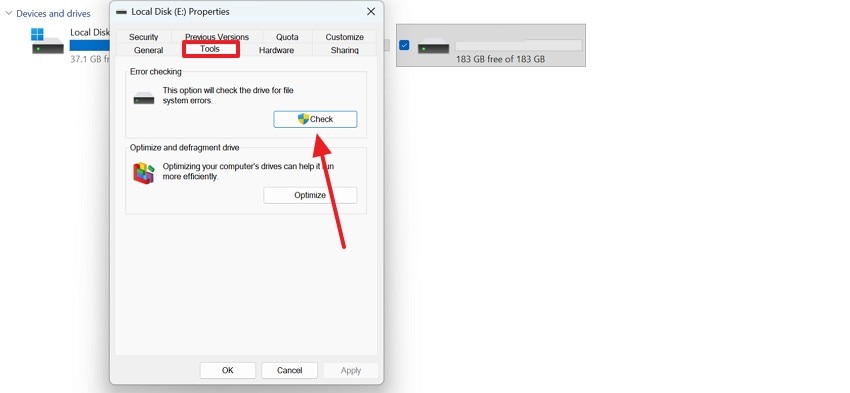
- Scan The Drive: follow the prompt to scan or repair the card, then reconnect it and verify the result.
Mac Disk Utility First Aid
- Open Disk Utility: launch it from Applications > Utilities.
- Show All Devices: choose View > Show All Devices so the physical card and its volume are visible.
- Select The Volume: confirm the correct external card by capacity.
- Run First Aid: click First Aid, confirm, and let Disk Utility complete the check.
- Copy And Retest: copy accessible DJI files and test the card only after the result is verified.
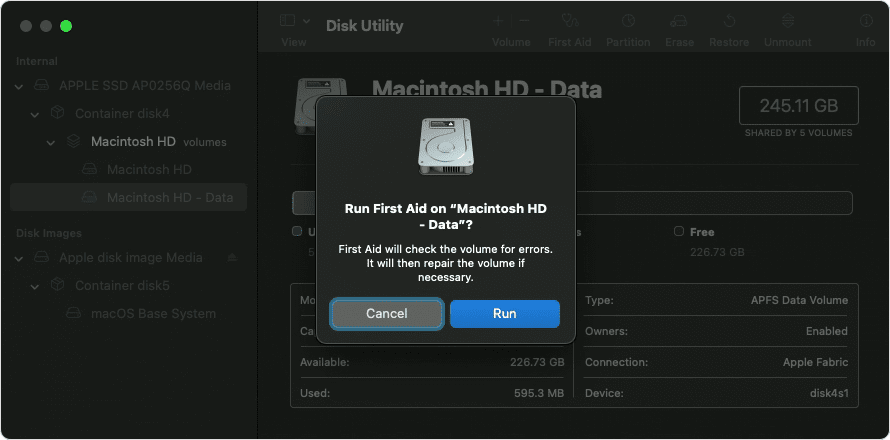
Apple explains that First Aid checks and repairs formatting and directory-structure errors but cannot repair every storage problem. It does not replace a deleted-file scan. See Apple’s current Disk Utility repair guidance.
Method 7. Check Remaining Space In The DJI App
DJI lists a full card as one reason recording stops after a few seconds or minutes. Check the storage display before treating every recording stop as corruption.
- Open The Camera View: connect the aircraft and controller, then open DJI Fly or DJI GO 4.
- Check Storage: review the remaining microSD or aircraft storage shown by the app.
- Export First: copy the wanted media to a computer or another drive.
- Free Space Safely: after the copies are verified, delete unwanted items or format the card in the DJI device.
- Retest Recording: record a short non-critical clip and confirm the card remains available.
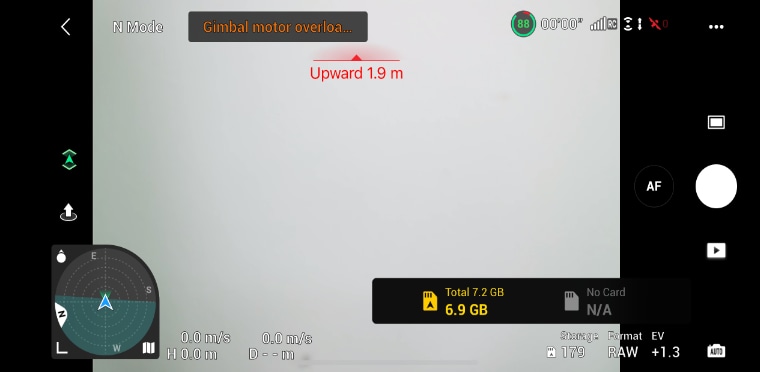
If the app says the card is full but expected files are missing, do not delete or format it. Treat that mismatch as possible file-system damage and return to the recovery-first path.
Method 8. Update DJI Firmware And The App
Use this method when a recommended card works in another device but repeatedly fails in one DJI product, or when the error began after a software change. Protect the files before updating.
- Record The Current Versions: note the aircraft, controller, and app versions plus the exact card warning.
- Protect The Card: remove it and copy or recover the files before the update.
- Prepare The Hardware: charge the aircraft and controller and maintain a stable network connection.
- Use Official DJI Software: check for updates in DJI Fly, DJI GO 4, or the official tool specified for the model.
- Restart And Retest: restart the devices, insert a model-listed card, and record a short test clip.
Use DJI’s current drone firmware update guide because the supported app or DJI Assistant 2 edition differs by model. If multiple listed cards still fail only in that aircraft after an official update, stop changing cards and contact DJI Support. The card slot or camera hardware may require service.
Method 9. Format The Card In DJI Fly Or DJI GO 4
Formatting is the final reuse step, not the first recovery step. DJI’s recognition-error guidance says to back up readable information before formatting the card. If any footage is missing, recover it first.
- Verify The Backup: open representative copied or recovered DJI photos and videos from another drive.
- Insert The Card: place the card in the powered-off aircraft, then power on and connect the controller.
- Open System Settings: enter the camera view in DJI Fly and tap the System Settings icon in the upper-right corner.
- Choose The DJI Format Option: open Camera and select Format. In DJI GO 4, use the corresponding camera settings and format control.
- Confirm The Correct Storage: make sure the microSD card—not internal aircraft or controller storage—is selected.
- Test The Card: after formatting completes, record and play back a short non-critical clip.
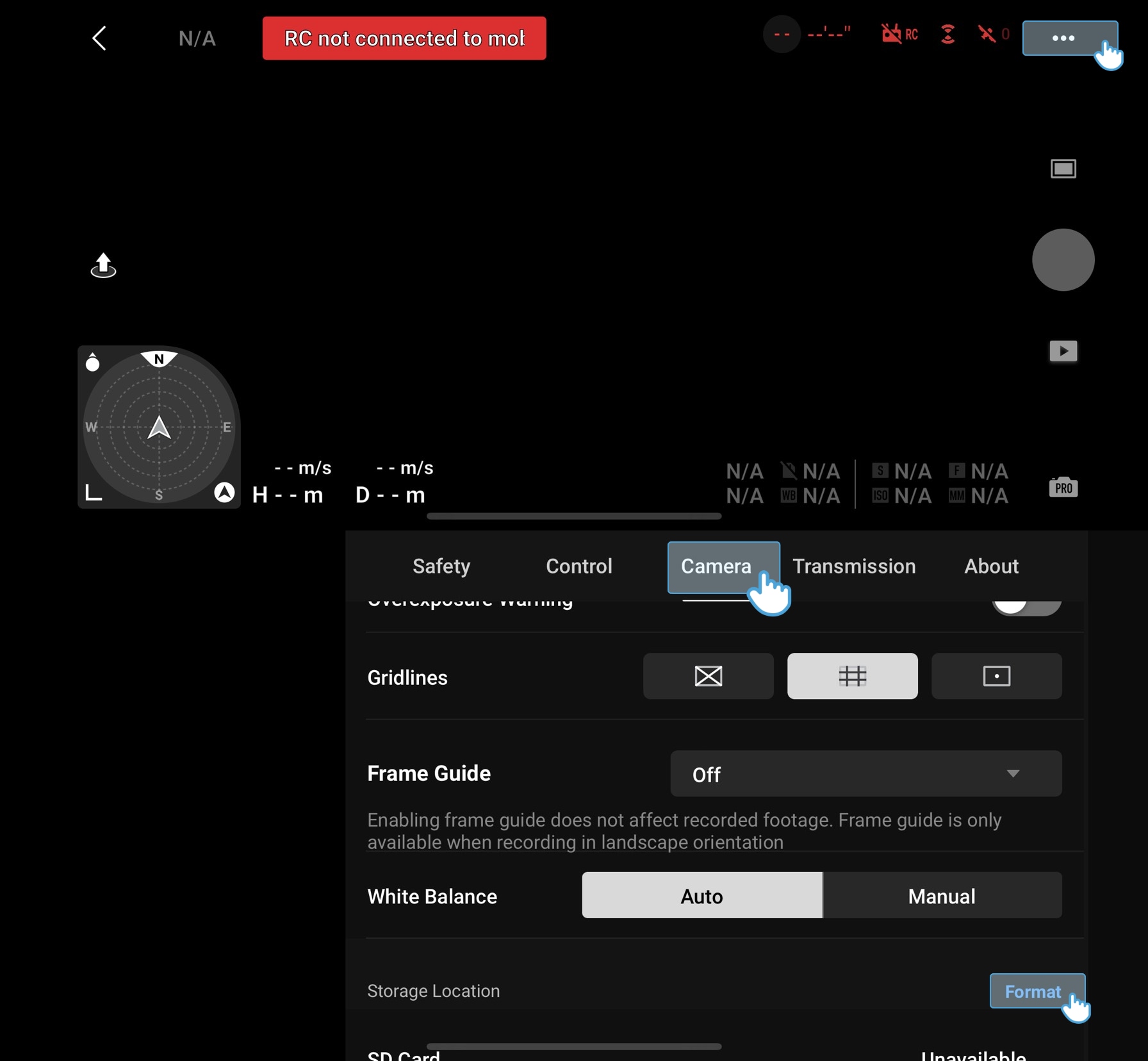
If the error returns after an in-device format, retire the suspect card and test a card from DJI’s current list. If several listed cards fail only in the same aircraft, contact DJI Support. For model-specific formatting paths on DJI Fly, DJI GO 4, Avata, FPV, Osmo Action, Windows, and Mac, use the separate DJI SD card formatting guide.
Part 5. Which SD Card Format And Speed Does Your DJI Need?
There is no single card capacity or product list that applies to every DJI device. DJI’s current official page should be the source of truth because supported capacities and tested cards can change with new products and firmware.
| DJI Family Or Example | Current Official Guidance To Check | Why A Generic Answer Is Risky |
| DJI Mini 5 Pro and Mavic 4 Pro | DJI’s current list includes SDXC/UHS-I recommendations through 1TB for these models. | The same capacity must not be assumed for older Mini or Mavic models. |
| DJI Mini 4 Pro, Mini 3/3 Pro, Air 3/3S, and Mavic 3 family | Use the exact model row; many current recommendations use U3/V30 cards, with capacities varying by model. | A matching speed logo does not prove that a particular capacity and card model were tested. |
| Mavic 2 Pro or Mavic 2 Zoom | DJI currently lists UHS-I Speed Grade 3 cards with a 128GB maximum. | A newer 512GB or 1TB card may exceed the older aircraft specification. |
| DJI FPV, Avata, and Avata 2 | Check the separate model row and storage location, including aircraft and goggles where applicable. | The aircraft, goggles, and internal storage may have different format controls. |
| DJI Osmo Action, Pocket, 360, or other handheld products | Use the product specifications and DJI’s Osmo recognition-error guide. | The drone recommendation page is not the authoritative list for every Osmo product. |
- Use The Model List, Not Brand Reputation Alone: one brand can have both listed and unlisted models, capacities, and revisions.
- Treat U3 And V30 As Minimum Clues: many current DJI devices call for UHS-I Speed Class 3 or tested V30-class cards, but high-specification modes may have additional requirements.
- Let The DJI Device Prepare The Card: after backup or recovery, formatting in the aircraft or official app applies the layout expected by that product.
- Do Not Force NTFS: a Windows-friendly format is not automatically supported by the DJI device.
- Do Not Generalize FAT32 And exFAT Blindly: many DJI specifications associate FAT32 with smaller microSDHC cards and exFAT with larger microSDXC cards, but the current model documentation should control the decision.
Part 6. When The Card Works But A DJI Video Will Not Play
An SD card error and a corrupt DJI video are related but different problems:
| Symptom | Correct Task | Next Path |
| The MP4, MOV, JPG, or DNG file is missing | Data recovery | Protect the card and scan it before repair or formatting. |
| The file exists but has zero bytes | Source investigation | Look for another original, cache, internal-storage copy, or recoverable card data; a zero-byte file contains no media payload to repair. |
| The video exists and has a realistic size but will not open or seek | Video-container or stream repair | Preserve the original, work from a copy, and use a dedicated DJI video-repair workflow. |
| The last recording ended during a crash or power loss | Incomplete recording assessment | Preserve the card and original file; avoid converting or editing the only copy before recovery and repair options are assessed. |
If the recovered file is present but unplayable, use the dedicated DJI video repair guide. Do not keep rescanning a card for a file that has already been recovered with a valid size unless another copy or fragment is still missing.
Part 7. When To Stop DIY Troubleshooting
Software can help only when a computer or reader can communicate with the card. Stop repeated testing and seek professional advice when the footage is valuable and any of these signs appear:
- The microSD card is cracked, burned, wet, corroded, or unusually hot.
- The card repeatedly disconnects or freezes every reader during access.
- No tested reader or computer detects the card at all.
- The card reports zero bytes, “No Media,” or a capacity far smaller than its label.
- The aircraft card slot has visible damage or rejects several known-compatible cards.
- The footage is commercially or personally irreplaceable and additional writes would create unacceptable risk.
A lab may use specialized hardware for controller or flash access, but physical recovery is never guaranteed. Ask how the service handles donor parts, encryption, confidentiality, diagnosis fees, and return of the original media before authorizing work.
Part 8. Prevent Another DJI SD Card Error
- Use The Current DJI List: select the exact aircraft or product model instead of assuming that every U3 or V30 card is compatible.
- Format Only After Two Verified Copies: transfer important footage to primary storage and a second backup before preparing the card for the next flight.
- Format In The DJI Device: once the files are safe, use DJI Fly, DJI GO 4, the aircraft, goggles, or camera menu specified for that model.
- Power Off Before Removal: never remove the microSD card while recording, finalizing a clip, or writing thumbnails and metadata.
- Check Space Before Takeoff: confirm the selected storage location and remaining capacity in the app before a critical shoot.
- Retire A Repeating Offender: if a listed card again becomes slow, unavailable, or corrupt after a verified format, replace it rather than trusting it with another important flight.
- Carry A Tested Spare: a known-compatible spare helps isolate a card fault from an aircraft-slot problem in the field.
- Keep The Card As Capture Media: move completed projects to backed-up computer or external storage instead of using the drone card as the only archive.
The safe order is simple: stop writes, identify the symptom, protect or recover the footage, try the matching low-risk fix, format only when the files are safe, and replace or escalate when the error returns.
FAQ
-
Can I Fix A DJI SD Card Error Without Formatting?
Often, depending on the cause. Power off and reseat the card, confirm it is recommended for the exact DJI model, test another reader, assign a missing Windows drive letter, and update the reader or DJI software before considering a format. If files are missing, recover them before any write-based repair. -
What Does DJI SD Card Error Code 10023 Mean?
Third-party pages commonly associate 10023 with a card malfunction, but DJI’s current public recognition guide does not provide a universal code-to-cause definition for every model and firmware version. Record the complete message and model, protect the footage, check the official card list, cross-test the card, and contact DJI if listed cards continue to fail in one aircraft. -
Why Does My DJI Say The SD Card Is Unavailable Or Not Recognized?
DJI lists an incompatible card, damaged card, and damaged aircraft card port as possible recognition-error causes. Power off, reseat the card, test it in another device, and test one card from DJI’s current model-specific list. Back up or recover readable files before formatting. -
Why Does My DJI SD Card Say Full When It Is Not?
The card may contain hidden files, the DJI app may be showing a different storage location, or file-system allocation data may be damaged. Stop recording, check the card on a computer, and protect the footage before deleting, repairing, or formatting anything. -
What Format Should A DJI SD Card Use?
Use the format supported by the exact DJI model and let the aircraft or official app prepare the card after backup. Many DJI specifications use FAT32 for smaller microSDHC cards and exFAT for larger microSDXC cards, but capacity and file-system support vary. Do not assume NTFS or another computer format is accepted. -
Can Recoverit Recover Files From A DJI SD Card Error?
Recoverit can scan a DJI microSD card that remains readable by Windows or macOS for deleted, quick-formatted, RAW, or inaccessible photos and videos. Results depend on overwriting, fragmentation, and card condition. Save recovered files to another drive, not the affected card. -
Is CHKDSK Safe For A DJI SD Card?
CHKDSK is a legitimate Microsoft file-system repair tool, but the /f parameter writes repairs to the volume. It is not a deleted-file recovery tool. Copy or recover important DJI footage first, and do not run it on a physically unstable or intermittently disconnecting card. -
What If No Computer Or Reader Detects The DJI Card?
Try one known-good reader, another port, and another computer. If the card remains absent, reports No Media, shows the wrong capacity, becomes hot, or is visibly damaged, software recovery may not have a readable source. Stop repeated attempts and consider a professional recovery lab for valuable footage.


