

 TL;DR:
When a USB flash drive is not recognized in Windows 10 or Windows 11, verify its detection status in Disk Management or Device Manager before attempting destructive actions like formatting, initializing, or running CHKDSK with repair parameters.
● If Disk Management displays a healthy partition without a drive letter, manually assign an unused letter to restore access, whereas drives showing as RAW, unallocated, or prompting to format require file recovery before creating a new volume.
● If Device Manager lists an Unknown USB Device, safely troubleshoot by testing another PC or port, updating or uninstalling the device driver, and disabling the USB selective suspend power setting.
● Wondershare Recoverit can only scan devices detected as readable storage; stop DIY attempts and seek professional repair if the flash drive shows as No Media, 0 bytes, overheats, or exhibits physical damage.
Ask AI for a summary
 ChatGPT
 Perplexity
 Gemini
 Claude
 Grok
Grok
A "USB device not recognized" message can mean several different problems. It may be a loose port, a missing drive letter, an outdated driver, a USB power-saving issue, file-system corruption, or a failing flash drive. The mistake is treating all of these cases the same. A quick driver refresh is low risk. Formatting, initializing, or running repair commands on the wrong USB drive can cost you the files you are trying to save.
This rewrite focuses on the real search intent behind USB flash drive not recognized: users want to know what to check first, which fixes are safe, when the data is at risk, and how to recover files before destructive repair. It also reflects Windows 10/11 behavior. Microsoft states that Disk Management works the same in Windows 10 and Windows 11, and warns that formatting a volume destroys data on that partition. That warning is the center of the workflow below.
If the USB drive is still readable at some level, Recoverit USB Data Recovery can help scan for deleted, formatted, hidden, corrupted, or inaccessible files before you format the flash drive. Recoverit cannot repair a dead USB controller or bypass encryption, but it is a strong first step when the flash drive is detected as storage and you need the files back.
In this article
-
- Fix 1. Test the port, cable, and another PC
- Fix 2. Update or reinstall the USB driver
- Fix 3. Assign a drive letter in Disk Management
- Fix 4. Change USB power management settings
- Fix 5. Check Windows Update and optional drivers
- Fix 6. Use CHKDSK only after data is safe
- Fix 7. Format only after recovery and backup
Part 1. Check Where Windows Can See the USB Drive
Before fixing anything, find out where Windows can see the flash drive. This one check decides whether you should update drivers, assign a drive letter, recover files, or stop DIY attempts.
| Where the USB drive appears | What it usually means | Best next step |
| File Explorer shows the USB drive and files open normally | The drive is recognized. Your issue may be intermittent. | Back up important files and monitor the drive. |
| File Explorer does not show it, but Disk Management shows a healthy partition without a drive letter | Windows can see the volume, but it has no letter. | Assign a drive letter in Disk Management. |
| Disk Management shows RAW, unallocated, or asks to format | The file system or partition table may be damaged. | Recover files first; format only after backup. |
| Device Manager shows Unknown USB Device | Driver, descriptor, port, or device communication problem. | Update or uninstall the device driver, then reconnect. |
| Disk Management shows No Media or 0 bytes | The USB controller may respond, but NAND storage may not be readable. | Try another PC once. If unchanged, stop repeated DIY attempts. |
| No sound, no light, no Device Manager entry, no Disk Management entry | Possible physical, connector, or controller failure. | Do not keep plugging it in repeatedly. Consider a professional recovery service. |
This diagnosis is also where Recoverit fits. If the USB drive is visible in Windows as a disk or readable storage, recovery software may scan it. If the device is not detected anywhere, software cannot force the hardware to appear.
Part 2. What Not to Do Before Recovering USB Files
When a USB drive holds important files, avoid steps that write new data or alter the file system until you have a backup or recovery result.
- Do not format first: Microsoft warns that formatting a volume destroys data on the partition. Quick format is still a high-risk action when files are not backed up.
- Do not initialize the disk: initialization can write new partition information to the USB drive.
- Do not delete or create partitions: these actions make later recovery harder.
- Do not run
chkdsk /forchkdsk /rbefore recovery: Microsoft explains that CHKDSK with repair options fixes file-system errors and can change file-system metadata. - Do not save recovered files to the same USB drive: recovering back to the source drive can overwrite additional data.
- Do not keep testing a hot, bent, cracked, or water-damaged USB drive: repeated power cycles can make hardware failure worse.
Part 3. Recover Files Before Formatting or Repairing the USB Drive
Use this workflow if the flash drive is detected by Windows or by Recoverit, but files are missing, the drive asks to format, or File Explorer cannot open it. Recoverit is for data recovery from readable storage; it cannot repair a dead USB controller or physically broken flash memory.
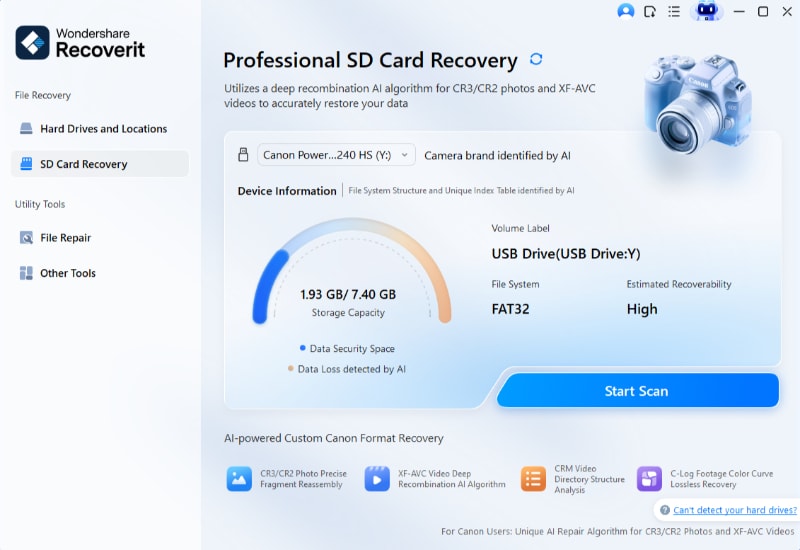
Step 1. Select the detected USB drive
Connect the USB drive directly to the computer. Open Recoverit, choose the USB drive under external devices or removable storage, and start from the detected device. If the flash drive does not appear in Windows, Disk Management, Device Manager, or Recoverit, software recovery is unlikely to work.
Step 2. Scan the USB drive
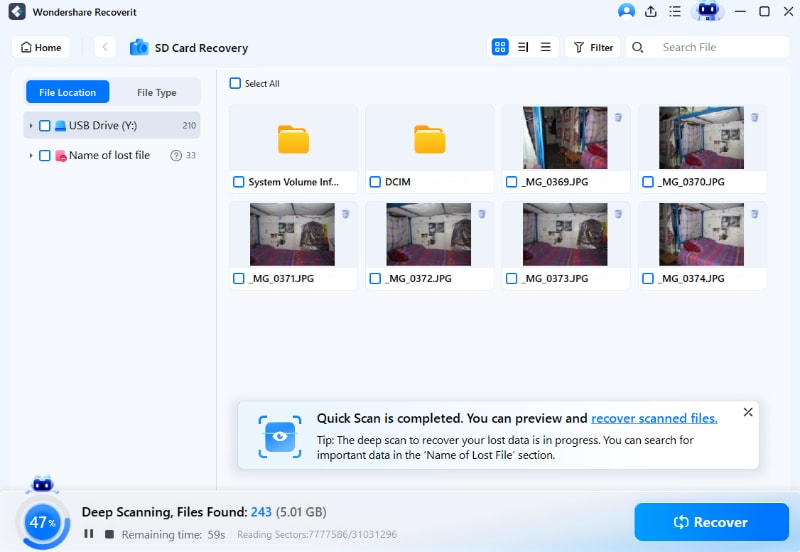
Let Recoverit scan the flash drive for recoverable files. If the original folders are damaged or hidden, use file type filters for documents, photos, videos, archives, audio files, and other formats instead of relying only on folder names.
Step 3. Preview and recover to another drive
Preview files where possible, select the data you need, and recover it to a computer drive or another external disk. Do not save recovered files back to the same malfunctioning USB drive.

For more USB-specific recovery guidance, see USB Data Recovery, recover files from formatted flash drive, and unformat USB device.
Part 4. Safe Fixes for USB Device Not Recognized in Windows 10/11
Use these fixes in order. Start with low-risk checks. Save formatting for last, and only after your files are recovered or confirmed unnecessary.
Fix 1. Test the port, cable, and another PC
Unplug the USB drive and reconnect it directly to a different USB port. Avoid unpowered hubs during testing. If the drive uses a USB-A to USB-C adapter, test another adapter. Then try the flash drive on another Windows PC. If it works elsewhere, the first computer likely has a port, driver, power, or Windows issue.
If the flash drive has a loose connector, bent shell, burning smell, clicking adapter, or unusual heat, stop testing. That points to hardware risk rather than a normal Windows driver problem.
Fix 2. Update or reinstall the USB driver
Microsoft's Device Manager driver guide says Windows normally gets many drivers through Windows Update, but Device Manager can also update or reinstall drivers. For a USB drive that appears as Unknown USB Device, try this:
- Right-click Start and select Device Manager.
- Expand Universal Serial Bus controllers.
- Look for Unknown USB Device, a device with a warning icon, or a USB Mass Storage entry.
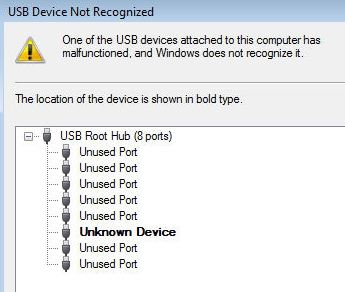
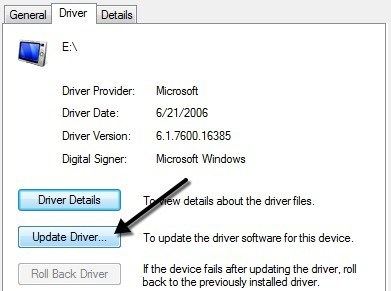
- Right-click the device and choose Update driver. If that does not help, choose Uninstall device, unplug the USB drive, restart Windows, and reconnect it.
Fix 3. Assign a drive letter in Disk Management
If Disk Management shows the USB partition as healthy but File Explorer does not show it, the problem may be a missing or conflicting drive letter. Microsoft's Disk Management page lists drive-letter changes as a built-in disk task in Windows 10 and Windows 11.
- Right-click Start and select Disk Management.
- Find the USB drive by size and label. Do not select the wrong disk.
- If the partition is healthy but has no letter, right-click the volume and choose Change Drive Letter and Paths.
- Assign an unused letter and reopen File Explorer.
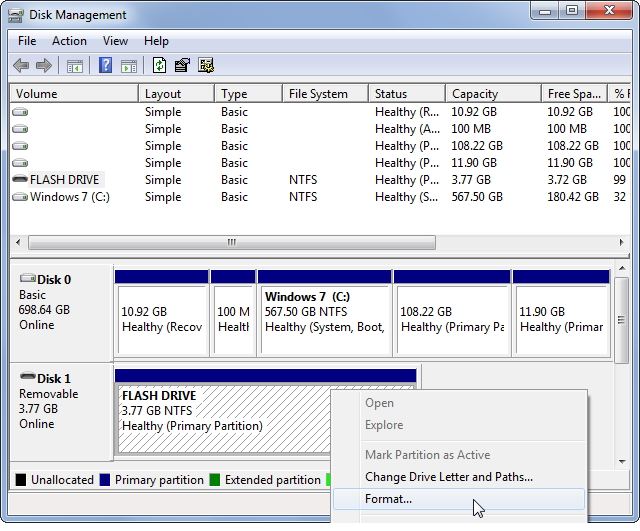
If Disk Management shows RAW, unallocated, or a format prompt, recover files first instead of creating a new volume.
Fix 4. Change USB power management settings
USB power saving can cause some removable drives to disconnect or fail to wake correctly. Microsoft documentation explains that USB selective suspend is part of the Windows USB power model. For a desktop troubleshooting test, you can stop Windows from turning off USB root hubs and then reconnect the drive.
- Open Device Manager and expand Universal Serial Bus controllers.

- Double-click a USB Root Hub or Generic USB Hub.
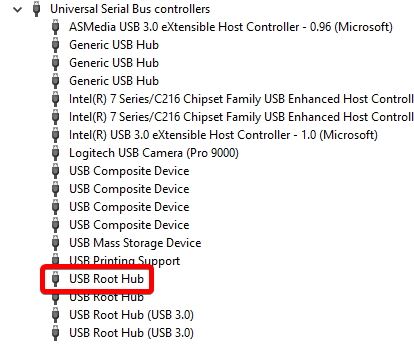
- Open the Power Management tab.
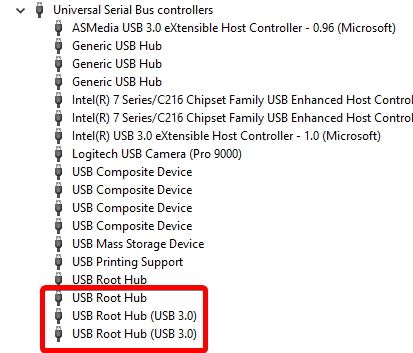
- Uncheck Allow the computer to turn off this device to save power, then select OK.
- Repeat for other USB hubs and reconnect the flash drive.
Fix 5. Check Windows Update and optional drivers
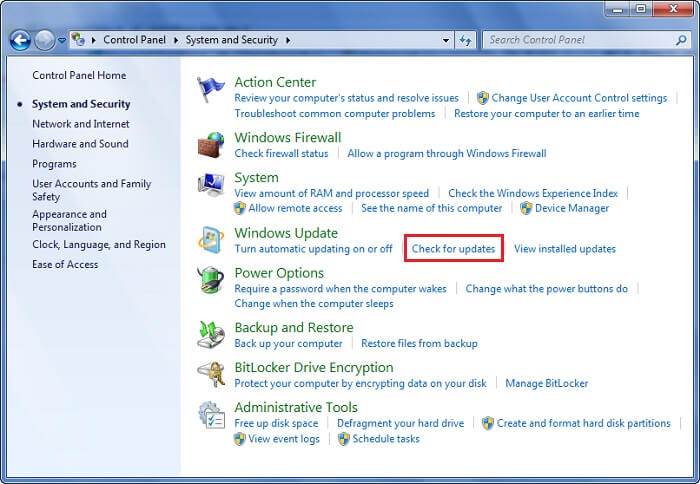
For modern Windows 10 and Windows 11, driver delivery often goes through Windows Update. Open Settings > Windows Update, install available updates, and check optional driver updates if Windows offers them. Restart the PC and reconnect the USB drive.
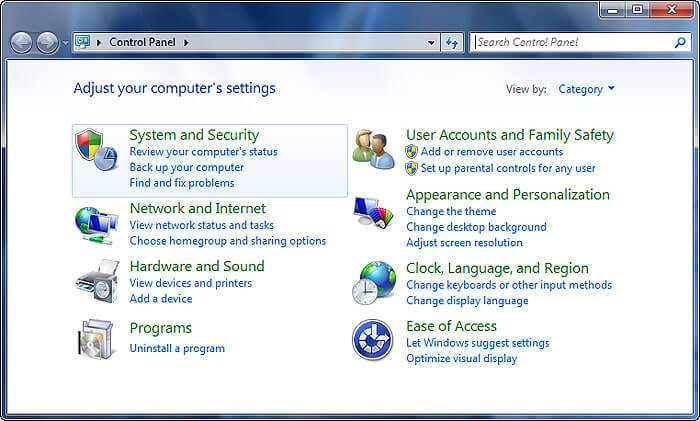
The old Control Panel screenshots below come from the current Recoverit source page and show the historical Windows update route. The exact Windows 11 Settings interface is different, but the intent remains the same: install relevant Windows and driver updates before assuming the flash drive is dead.
Fix 6. Use CHKDSK only after data is safe
CHKDSK can check the file system and metadata of a volume for errors. Microsoft CHKDSK command documentation notes that CHKDSK without repair parameters displays volume status, while parameters such as /f or /r fix errors. That repair action can change the file system, so do not run it first if the USB contains irreplaceable files.
After recovery or backup, you may run a read-only check first:
chkdsk E:
Replace E: with the USB drive letter. If files are already backed up and Windows reports logical errors, you can decide whether to run repair:
chkdsk E: /f
Avoid running repair commands on a drive that repeatedly disconnects, overheats, or shows physical damage symptoms.
Fix 7. Format only after recovery and backup
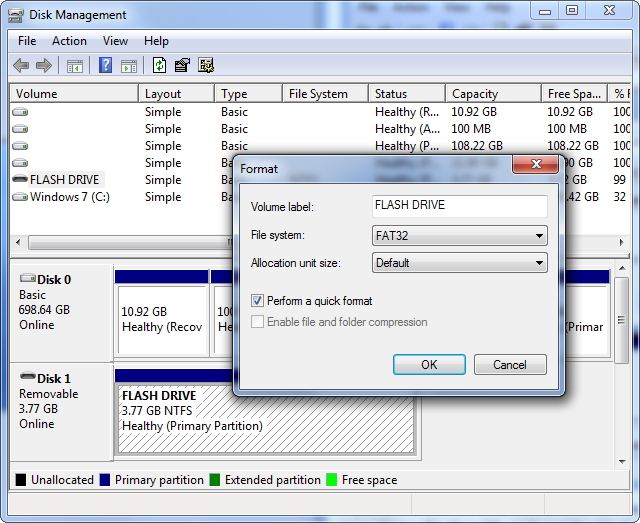
Formatting is a last resort for a flash drive that is detected but has file-system damage, RAW status, or repeated access errors. It can make the USB usable again, but it does not protect the old files. Recover or back up files first.
- Open Disk Management.
- Confirm the USB drive by size and disk number.
- Right-click the USB volume and choose Format.
- Choose a file system such as exFAT for broad modern compatibility or NTFS for Windows-focused use.
- Complete the format only if the data is already safe.
If the drive returns to RAW, no media, 0 bytes, or repeated disconnection after formatting, replace it. Do not rely on it for important files.
Part 5. Video Tutorial: USB Device Not Recognized
The current article includes this Recoverit video tutorial for users who prefer a visual walkthrough. Use it as a companion to the safer written workflow above, especially the step that protects data before formatting.

Part 6. When to Stop DIY Fixes
Not every USB recognition failure is software-related. Stop do-it-yourself fixes and consider professional help if:
- The flash drive is bent, cracked, corroded, burned, or water-damaged.
- The USB connector moves loosely inside the shell.
- The device heats up quickly when connected.
- Multiple computers show no device, no sound, no Disk Management entry, and no Device Manager entry.
- Disk Management shows No Media or 0 bytes after testing on more than one PC.
- The USB drive contains business-critical files and there is no backup.
Recoverit can help with logical data loss on readable storage. It cannot repair a broken USB controller, rebuild NAND chips, or recover data from a device that no computer can detect.
Part 7. Prevention Checklist for USB Drives
- Keep two copies: USB drives are portable, not archival storage. Keep another copy on a PC, external drive, NAS, or cloud backup.
- Eject before unplugging: use Safely Remove Hardware when large transfers are still pending.
- Avoid cheap hubs for important transfers: unstable hubs can interrupt writes and damage file-system metadata.
- Do not fill the drive completely: leave free space to reduce write errors and performance problems.
- Scan suspicious USB drives: malware can hide files or alter shortcuts. If files are missing after infection, see recover files from virus infected USB.
- Replace unstable drives: repeated disconnects, RAW status, and no-media errors are warning signs.
Part 8. Final Verdict
The best fix for a USB flash drive not recognized in Windows depends on where the device still appears. If it is visible in Disk Management, start with drive letter, recovery, and file-system-safe steps. If it appears as Unknown USB Device, focus on Device Manager, Windows Update, and power management. If it is not detected anywhere, repeated software fixes will not help.
The safest rule is simple: if the USB drive contains valuable files, recover first and repair second. Use Recoverit when the device is still detected and you need files before format or CHKDSK. Use Windows tools to restore access only after the data is protected.
FAQ
-
Why is my USB flash drive not recognized in Windows 11?
Common causes include a faulty port, missing drive letter, outdated driver, USB power management, file-system corruption, RAW partition, or failing flash drive hardware. Check File Explorer, Disk Management, and Device Manager before formatting. -
Can I recover files from a USB drive that is not recognized?
Yes, if Windows or recovery software can still detect the USB drive as storage. Recover files first and save them to another drive. If the device is not detected anywhere, software recovery is unlikely to work. -
Should I format a USB drive that asks to be formatted?
Not before recovery. Formatting can make the drive usable again, but it destroys the current file-system references. Recover or back up important files first, then format only if needed. -
Is CHKDSK safe for a USB drive that has important files?
Run CHKDSK without repair parameters first if you only need a status check. Avoid chkdsk /f or /r before recovery because repair actions can modify file-system metadata. Back up or recover files first. -
Why does Disk Management show my USB drive but File Explorer does not?
The USB partition may have no drive letter, may be RAW, may be unallocated, or may have file-system damage. If it is healthy with no letter, assign one. If it is RAW or asks to format, recover files first. -
Can Recoverit fix a dead USB flash drive?
No. Recoverit can help recover files from readable USB storage, but it cannot repair a physically broken connector, dead controller, damaged NAND memory, or a USB drive that no computer can detect.


