TL;DR:
A BAK file is a generic backup copy generated by software like operating systems or SQL Server, which can usually be opened and restored by identifying the source application and reverting its `.bak` extension to the original file format.
● To safely open standard document or configuration BAK files, create a duplicate first to preserve the safety net, then rename the extension (e.g., to `.docx` or `.db`) to load it in its native program.
● Database backups, specifically SQL Server `.bak` files, cannot be opened by renaming and must be formally imported via SQL Server Management Studio or T-SQL RESTORE commands.
● If a BAK file is accidentally deleted, you must immediately stop writing new data to the affected drive to prevent overwriting and use a recovery tool like Wondershare Recoverit to retrieve it.
Ask AI for a summary
 ChatGPT
 Perplexity
 Gemini
 Claude
 Grok
Grok
A BAK file is usually a backup created by software to protect your original data in case something goes wrong. You might see .bak extensions for documents, databases, configuration files, or even entire applications. When a program updates or overwrites important information, it often generates a BAK file so you can roll back to a previous version if needed. Understanding how to open, restore, and manage a BAK file is essential, especially when critical data seems lost or corrupted. This guide explains what a BAK file is, common types you will encounter, practical tips for using them safely, and how to recover missing BAK files with reliable data recovery tools.
Try Recoverit to Perform Data Recovery
 Security Verified. 3,591,664 people have downloaded it.
In this article
What Is BAK File
A bak file is a generic backup file that uses the .bak file extension. Instead of overwriting your original document, database, or configuration, many applications save a copy with .bak added to the name so you can revert if needed.
Because .bak is not tied to one specific format, a bak file extension can correspond to a wide range of underlying file types, including text, images, archives, and especially databases like SQL Server or proprietary application data.
In practical terms, a BAK file acts as a safety net: if an update fails, a file becomes corrupted, or you accidentally overwrite important content, you can restore from the .bak copy instead of losing everything.
How Does BAK File Work
Applications use BAK files as simple versioning and rollback mechanisms. When a program detects a risky change, it quickly duplicates the existing data and saves it as filename.bak (or similar), then proceeds with the update. If the operation fails, the software or user can revert to the backup.
On Windows, you often see a windows bak file when system utilities, registry tools, or installers create backup copies of configuration files. On servers, a database backup file with .bak is standard practice so administrators can recover a database to a specific point in time.
Technically, the contents inside a .bak file are usually identical to the original file, just renamed. That is why you can often restore or open bak file items by renaming the extension back to the correct format and loading it in the proper application.
Types of BAK File
Not every bak file is the same. The extension is generic, but the underlying data type depends entirely on the application that created it. Understanding which category your .bak belongs to helps you decide which program to use to open or restore bak file backups safely.
Common BAK File Categories
Most BAK files fall into a few broad groups:
| Type of BAK file | Description |
|---|---|
| Document or project BAK | Created by editors or productivity apps (word processors, design tools, IDEs) to store a previous version of a file before changes are saved. |
| Configuration or system BAK | Used by operating systems, installers, or utilities to protect configuration, registry, and settings files so you can undo problematic changes. |
| Database BAK | A sql bak file or other database backup file that contains a full or partial backup of a database for disaster recovery or migration. |
Each category has its own method to open bak file content: documents may need a rename, whereas a database backup requires specialized restore tools.
Typical Programs That Create BAK Files
Many different applications generate BAK files automatically. Below are some common examples and how they use the .bak file extension.
| Program or environment | How it uses BAK files |
|---|---|
| Microsoft SQL Server | Creates .bak database backups that you can restore through SQL Server Management Studio or T-SQL RESTORE commands. |
| Text and code editors | Editors such as Notepad++ or IDEs may create filename.bak as a snapshot before overwriting a file during save operations. |
| System tools and installers | Backup system files or configuration data as .bak so changes can be reversed if an update, driver install, or registry edit causes issues. |
When you encounter an unknown BAK file, checking where it is stored and which program last touched that folder often reveals what created it and how you should restore bak file data from it.
Practical Tips for BAK File
Managing BAK files correctly ensures they remain a dependable safety net instead of clutter or confusion. Use the following practices to open, restore, and clean up backup files without risking data loss.
How to Open BAK File Safely
Because there is no single universal viewer for every bak file, the key is to identify its original type and source application.
- Determine which program created it by checking the folder path (e.g., SQL backup directory, project folder, app config directory) and file size.
- Make a copy of the BAK file before editing or renaming it, so you keep an untouched backup.
- Try renaming the extension. For example, change filename.bak to filename.docx, .db, .psd, or .sql depending on what you expect.
- Open the renamed file in the appropriate program. If it fails, revert the name and try a different suspected format.
How to Restore BAK File Versions
To restore bak file data and replace a damaged or outdated original, follow a cautious process so you do not overwrite your only working copy.
- Stop using the affected application to avoid further changes to files that rely on the .bak backup.
- Copy the BAK file to a safe folder and rename it to its expected extension.
- Open or import it into the program that originally created it (for example, restore a sql bak file in SQL Server Management Studio).
- Verify the contents and version. Only overwrite the current file once you are certain the backup is correct and complete.
When It Is Safe to Delete BAK Files
While you can delete some BAK files to save space, do not remove them blindly.
- Retain recent .bak backups for mission-critical systems, databases, and projects.
- Delete only old, clearly superseded backups once you know the newer version is stable.
- For automated backup systems, configure retention policies rather than deleting files manually.
- Before removing a windows bak file from system folders, confirm that the related application or update is functioning correctly.
How to Use Recoverit to Recover Lost Data
If a BAK file is accidentally deleted, becomes inaccessible, or is lost due to drive damage, specialized recovery software can often restore bak file copies from your storage device. Recoverit is a professional data recovery tool from Wondershare that helps you restore deleted, lost, or formatted files from computers, external drives, memory cards, and more. You can learn more and download it from the Recoverit official website.
Whether you are missing a database backup file, a project .bak, or another type of backup, Recoverit can deeply scan your disk and help you recover bak file data safely.
Key Features Offered by Recoverit
Recoverit is designed to make bak file recovery and general data restoration straightforward, even for non-technical users.
- Recovers a wide range of file types, including bak file backups, office documents, images, videos, archives, and database files.
- Supports data recovery from internal hard drives, external HDDs/SSDs, USB flash drives, SD cards, and other common storage devices.
- Allows you to preview recoverable files before restoring so you can confirm and selectively recover bak file items you truly need.
Step-by-Step Guide on How To Recover Lost Data
Use the following workflow to recover lost or deleted BAK files with Recoverit.
1. Choose a Location to Recover Data
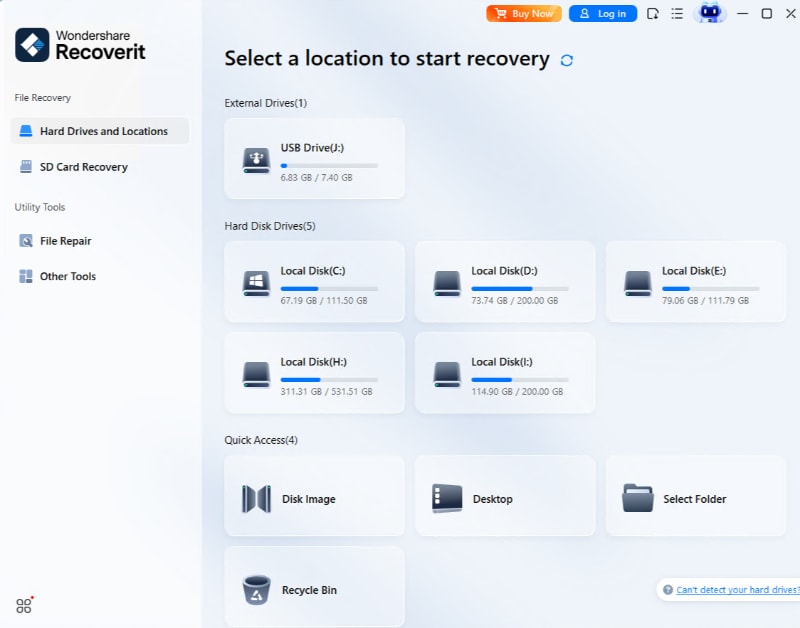
Launch Recoverit and check the list of available drives and locations on the main interface. Select the disk, partition, or external device where your bak file was stored before it was deleted, lost, or became inaccessible. Click the Start button so the program can begin scanning that specific location for recoverable data.
2. Deep Scan the Location
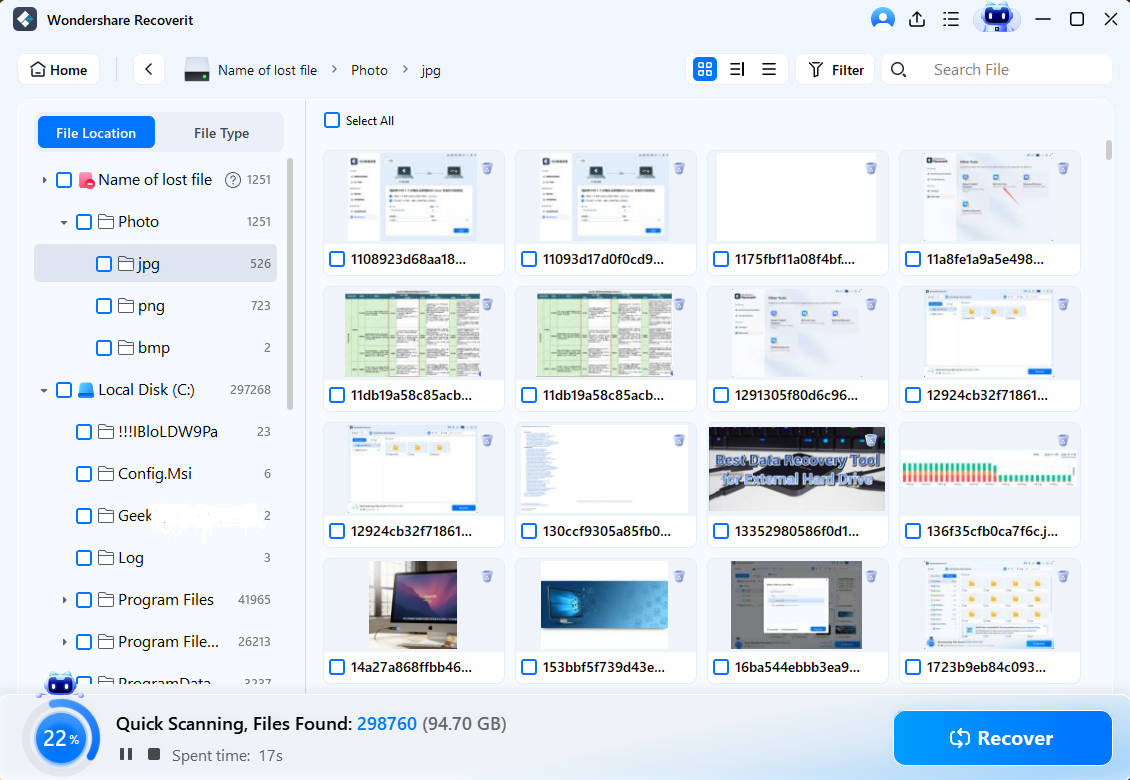
Recoverit will first run a quick scan and then automatically continue with a deep scan to search for more lost files, including hidden or fragmented BAK files. During this process, you can monitor the number of discovered items and use filters by file type, path, or search keywords like ".bak" to narrow down the results. Allow the scan to finish so the software can locate as many bak file backups and related data as possible.
3. Preview and Recover Your Desired Data
When the scan completes, browse through the result list or use the search bar to find specific BAK files. Click a file to preview details where supported, confirm it is the backup you want, then select it. Finally, click Recover and choose a different safe location on another drive to save the restored data, avoiding overwriting the original area where you lost the bak file.

Conclusion
A BAK file is a simple but powerful safeguard created by many applications to preserve earlier versions of your important data. Knowing which program generated the backup and how to rename, open bak file entries, or restore bak file data lets you quickly roll back from errors, corruption, or unwanted changes.
When a crucial database backup file or project backup goes missing, professional tools like Recoverit provide a practical way to recover bak file copies from your storage device. Combined with careful handling of drives and a sensible backup routine, .bak files can be an effective layer of protection in your broader data safety strategy.
Next: Gz File
FAQ
-
What is a BAK file used for?
A BAK file is a backup copy created by software to protect your original data. It lets you restore a previous version of a file, database, or configuration if something goes wrong, such as corruption, failed updates, or accidental edits. -
How do I open a BAK file?
There is no single universal program for all BAK files. To open one, you usually need the application that created it. Often you can rename the file extension from .bak to the original type, such as .docx, .db, or .sql, and then open it in the corresponding program. -
Can I safely delete BAK files?
You can delete BAK files if you are sure you no longer need the backups and your system is running correctly. However, removing them eliminates a rollback option, so it is safer to keep recent BAK files for critical projects or databases and only delete outdated copies after confirming stable operation. -
How do I restore data from a SQL BAK file?
For SQL Server, you typically use database management tools. In SQL Server Management Studio, choose Restore Database, select the .bak file as the source, map the database name and destination, and then run the restore operation. -
How can I recover a deleted BAK file?
If a BAK file has been deleted, stop writing new data to that drive and use data recovery software like Recoverit as soon as possible. Scan the affected drive, filter or search for .bak files in the results, preview what you find, and then recover the needed backups to a different storage location.