

 TL;DR:
Resolving Error 0x80070057 requires matching your repair method to the specific action that triggered it, as the code simply indicates Windows received an unreadable or out-of-range value during an update, file transfer, backup, or disk formatting process.
● Prioritize data recovery before running CHKDSK, DiskPart Clean, or formatting on inaccessible drives, as these built-in repair commands rewrite disk structures and can permanently erase recoverable files from a failing disk.
● If the error appears during file copies or Windows Backup, ensure the destination drive is formatted as NTFS, check that file paths remain under 260 characters, and verify no single file exceeds the 4 GB limit of FAT32 drives.
● For errors occurring during a Windows Update, remove damaged installation files by temporarily stopping the update services and completely deleting the contents of the C:\Windows\SoftwareDistribution\Download folder.
Ask AI for a summary
 ChatGPT
 Perplexity
 Gemini
 Claude
 Grok
Grok
"I recently tried rearranging my work area. I powered down my PC and moved it from a vertical position to a horizontal position. After I powered it up I started to get "Error 0x80070057 The parameter is incorrect" messages when I tried to copy files from both of the 3 GB SATA drives…" - SciroccoNW
Some files copy without trouble, while others fail even though nothing appears different. That uneven behavior usually means the error comes from a particular file, drive setting, or Windows process. The 0x80070057 error can appear during file transfers, updates, backups, installations, or drive access. This guide helps you identify what triggered it and apply the fix that matches your situation.
Try Recoverit to Perform Data Recovery
 Security Verified. 3,591,664 people have downloaded it.
In this article
-
- Fix 1. Restart Windows and Retry the Failed Update
- Fix 2. Check Storage Space and Pending Restarts
- Fix 3. Run the Windows Update Troubleshooter
- Fix 4. Clear the Windows Update Download Cache
- Fix 5. Reset Windows Update Components
- Fix 6. Repair Windows With DISM and SFC
- Fix 7. Install the Failed KB Update Manually
-
- Fix 1. Reconnect the Drive and Try Another USB Port
- Fix 2. Replace the Cable, Card Reader, or Enclosure
- Fix 3. Check Whether the Drive Appears in Disk Management
- Fix 4. Assign a Different Drive Letter
- Fix 5. Check the File System Without Formatting First
- Fix 6. Run CHKDSK Only After Recovery or Backup
- Fix 7. Test the Drive Health on Another Computer
-
- Fix 1. Confirm That the Correct Disk Is Selected
- Fix 2. Check Disk Partition Style and Boot Mode
- Fix 3. Delete Only the Unneeded Target Partition
- Fix 4. Recreate the Installation Media if Setup Files Are Damaged
- Fix 5. Let Windows Setup Create Required Partitions
- Fix 6. Use DiskPart Clean Only After Backup or Recovery
Part 1. Identify Where Error 0x80070057 Appears
The code itself tells you almost nothing, so what you were doing when it appeared carries the whole diagnosis.
What the Code Actually Means
Microsoft lists this as ERROR_INVALID_PARAMETER, error 87, described simply as the parameter being incorrect. In its HRESULT form, it appears as 0x80070057.
A parameter here is any value one part of Windows hands to another. When that value is missing, out of range, or points somewhere unreadable, the operation stops and reports this. Windows knows the value was wrong, but not why; therefore, the message never explains itself.
Use a Scenario Table to Choose the Right Fix
Each scenario has a different underlying cause. Find yours below and go straight to that section.
| Where It Appeared | Usual Cause | Go To |
| Checking For or Installing Updates | Damaged files in the update cache | Part 3 |
| Opening an External Drive or SD Card | File system or partition metadata unreadable | Part 4 |
| Copying, Moving, or Extracting Files | Path length, file size limit, or a bad sector | Part 5 |
| Creating a Backup or System Image | Unsupported destination or a stale backup set | Part 6 |
| Formatting, Partitioning, or Installing | Wrong disk selected, or partition style mismatch | Part 7 |
Pay close attention when a drive will not open or only certain files refuse to copy. These symptoms can indicate drive damage, so check Part 2 before attempting repairs that may further affect your data.
Part 2. Protect Data Before Risky Repairs
Several fixes for error 0x80070057 rewrite disk structures. That is usually safe on a healthy drive, but it may permanently erase recoverable data from a failing one.
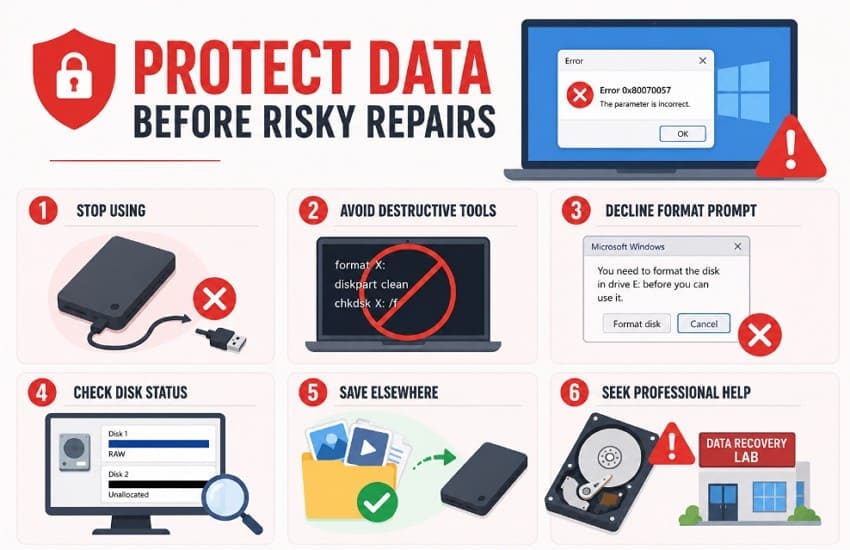
- Stop Using the Affected Drive: Disconnect the external drive or memory card instead of retrying. Repeated retries and failed writes may accelerate drive failure or further corrupt metadata.
- Avoid Destructive Repair Tools: Do not format the drive, run DiskPart Clean, or use CHKDSK before securing your files. These actions can overwrite structures that recovery software still needs.
- Decline the Format Prompt: Windows may ask you to format a drive it cannot mount. Close that message until all important files have been recovered.
- Check Whether the Disk Still Appears: Open Disk Management and look for the drive, even if it shows as RAW or unallocated. A listed disk may still be recoverable.
- Save Files Elsewhere: Store recovered files on a separate healthy drive. Saving them to the affected volume may overwrite data that has not been recovered yet.
- Choose Professional Recovery for Physical Damage: Clicking, buzzing, repeated disconnections, CRC errors, or input/output errors usually indicate hardware failure. Stop using the drive and contact a recovery lab.
Part 3. Fix Error 0x80070057 During Windows Update
Update failures with this code can result from damaged files, storage shortages, pending restarts, or incorrect system configurations.
Fix 1. Restart Windows and Retry the Failed Update
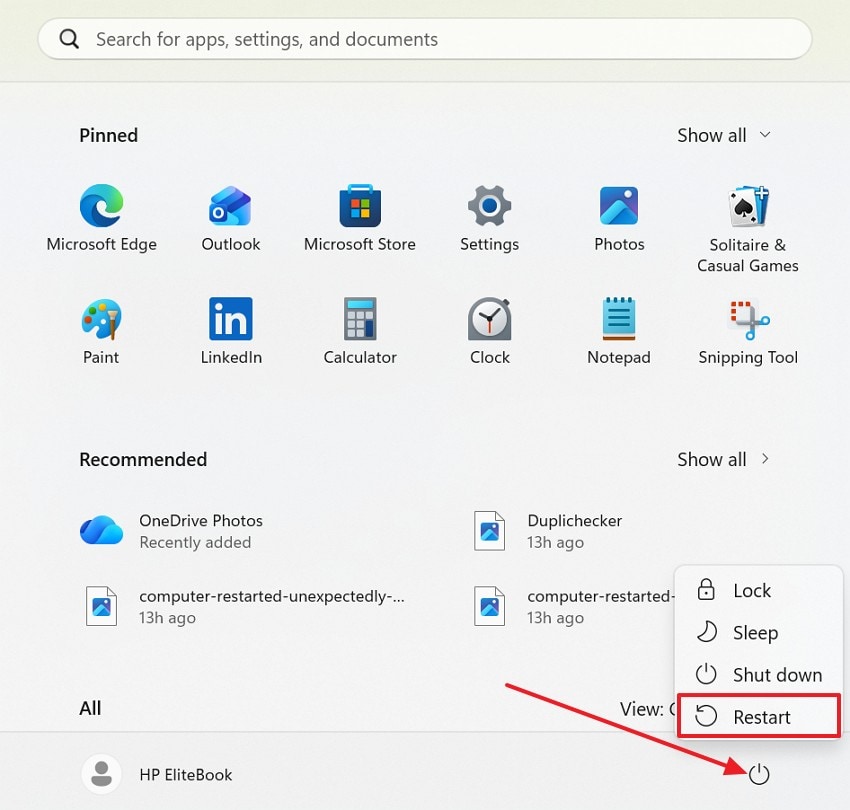
A restart releases locked files and completes update tasks left unfinished in the background. Follow these steps to restart Windows and retry the update:
Step 1. Save your work, open “Start” “Power,” and select “Restart.”
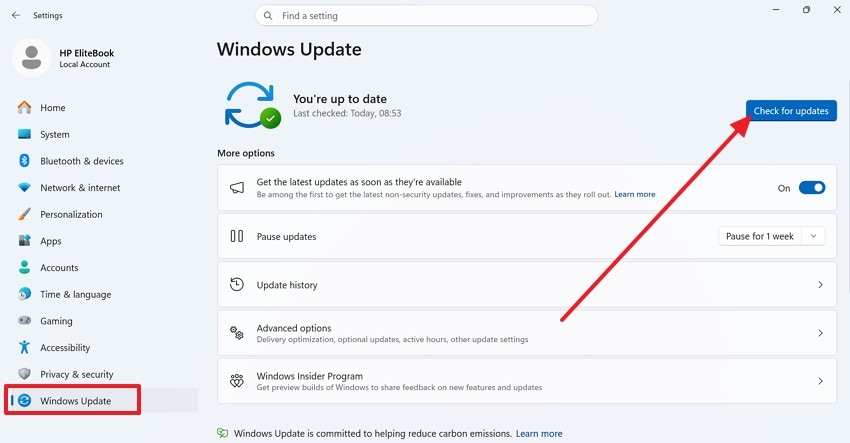
Step 2. After Windows loads again, open “Settings” “Windows Update” > “Check for Updates.”
Fix 2. Check Storage Space and Pending Restarts
Insufficient storage or an unfinished restart can trigger error 0x80070057 during an update. Use these steps to clear the two common update blockers:
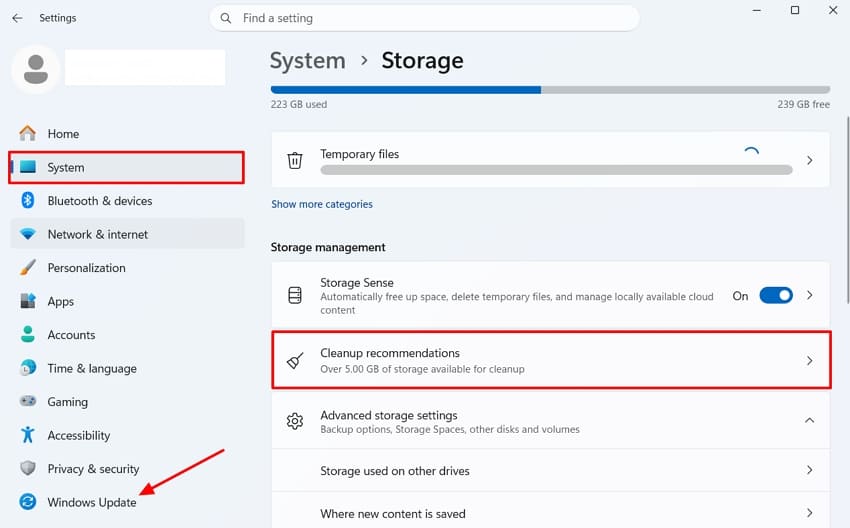
Instructions. Open “Settings” > “System” “Storage” > Use the “Cleanup recommendations” to make space > Access “Windows Update” and complete any restart request before retrying.
Fix 3. Run the Windows Update Troubleshooter
The built-in troubleshooter checks update services and repairs several common configuration problems automatically. Here is how to run the Windows Update troubleshooter:
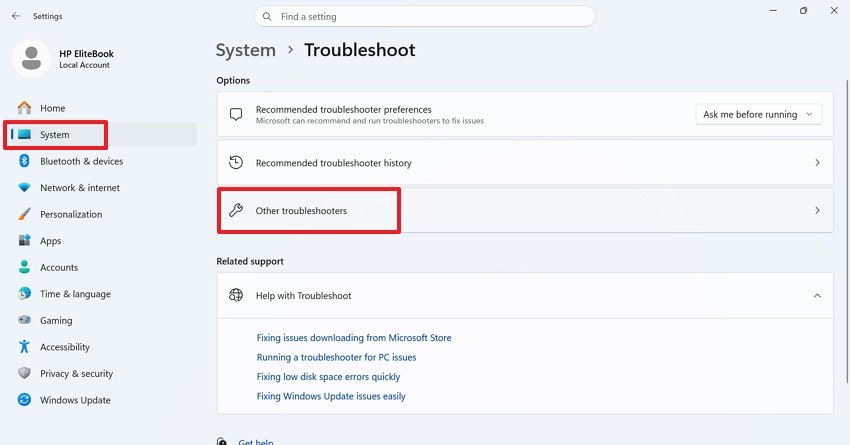
Step 1. In “Settings” “System” “Troubleshoot” > “Other Troubleshooters.”
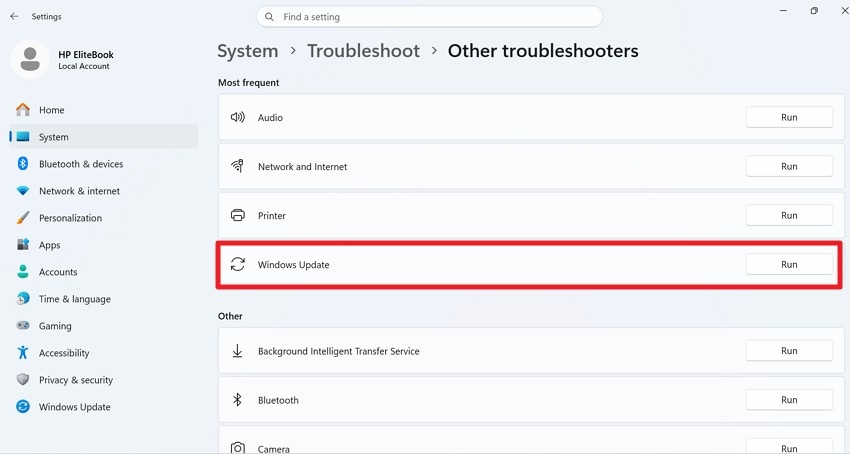
Step 2. Then, locate “Windows Update” > “Run” to begin scanning.
Fix 4. Clear the Windows Update Download Cache
Damaged or incomplete update files may repeatedly cause error 0x80070057 because Windows keeps reusing the same download. Follow these steps to remove the existing update cache safely:
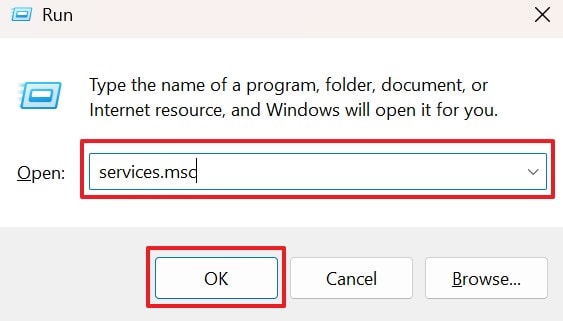
Step 1. Press “Windows + R” > Type “services.msc” > Press “Enter.”
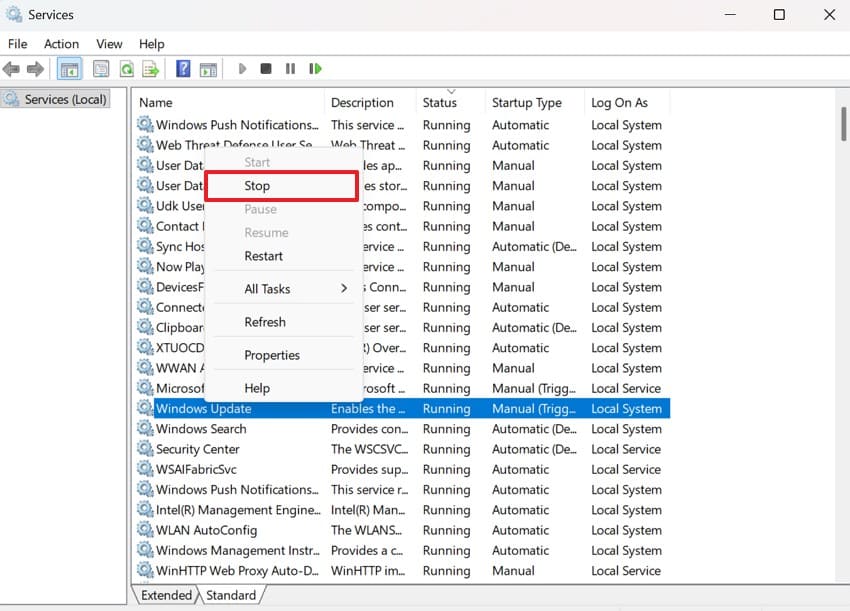
Step 2. Right-click “Windows Update” > Select “Stop.”
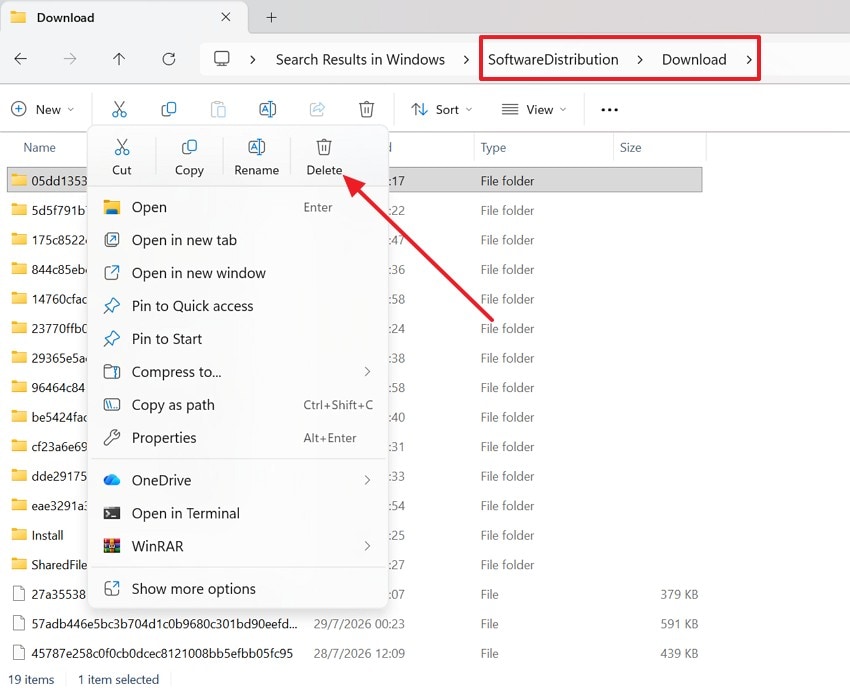
Step 3. Open “C:\Windows\SoftwareDistribution\Download” in File Explorer. Delete everything inside the “Download” folder.
Fix 5. Reset Windows Update Components
Where clearing the cache changes nothing, rebuilding the whole store is the next step.
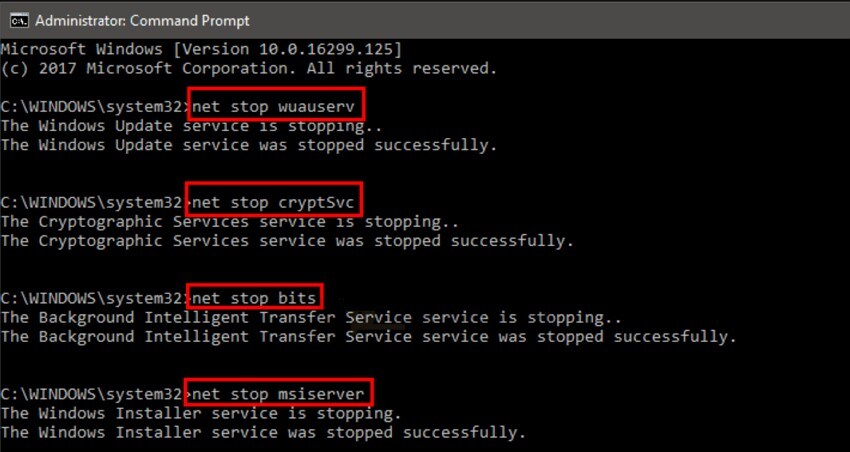
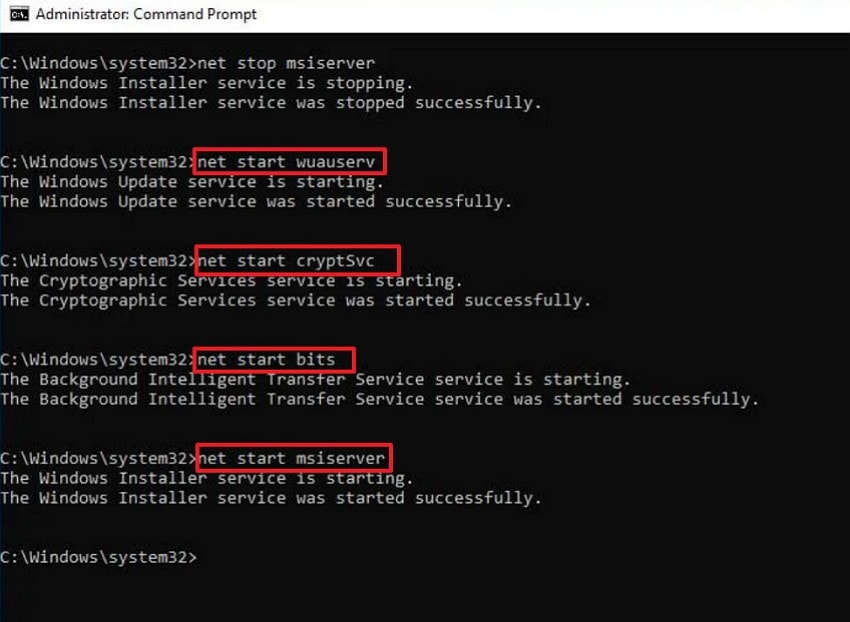
Step 1. In Command Prompt, run the following commands to stop the Windows Update services: “net stop wuauserv,” “net stop cryptSvc,” “net stop bits,” “net stop msiserver.”
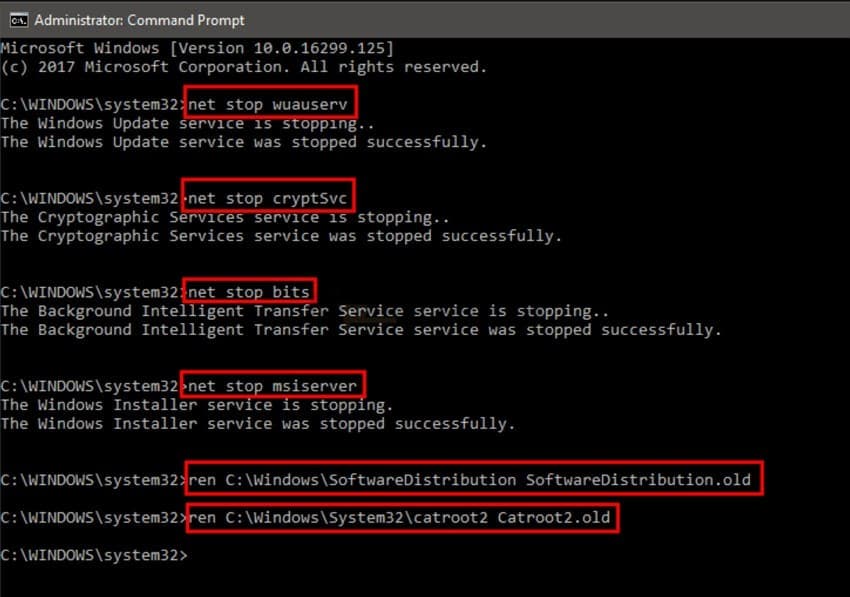
Step 2. Then, to rename the update folders, run these commands:
ren C:\Windows\SoftwareDistribution SoftwareDistribution.old
ren C:\Windows\System32\catroot2 catroot2.old
Step 3. Restart the Windows Update services with these commands: “net start wuauserv,” “net start cryptSvc,” “net start bits,” “net start msiserver.”
Fix 6. Repair Windows With DISM and SFC
Damaged servicing files produce invalid parameters throughout the update process. Thus, follow the instructions below to repair Windows with DSIM and SFC:
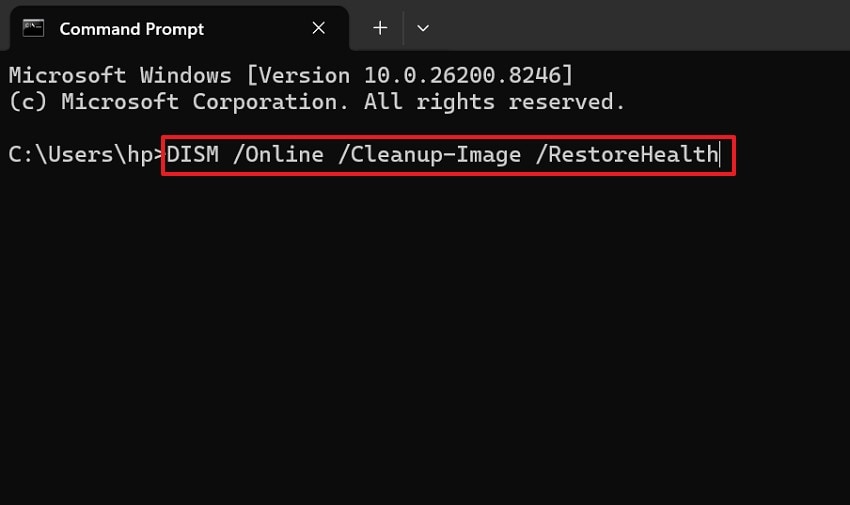
Step 1. Start with “DISM /Online /Cleanup-Image /RestoreHealth” and wait for it to finish.
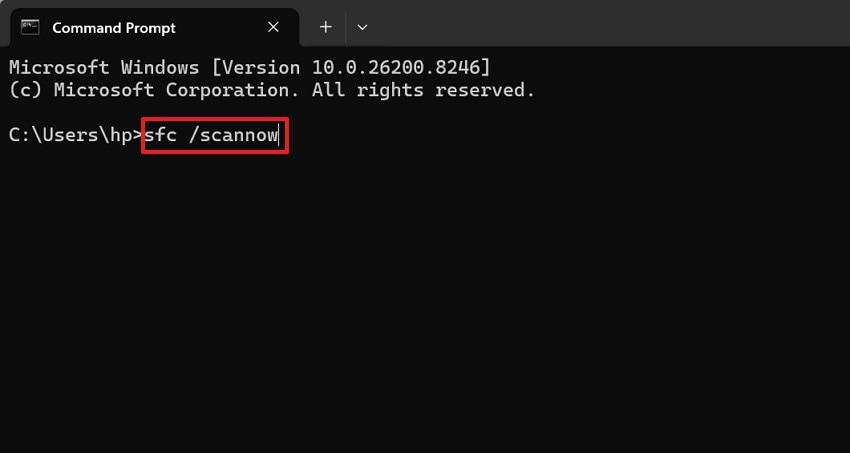
Step 2. Then follow with “sfc /scannow” before restarting.
Fix 7. Install the Failed KB Update Manually
Fetching the package yourself avoids the update client altogether. Note the KB number shown in your update history, look it up in the Microsoft Update Catalog, and install the file directly.
Part 4. Fix "The Parameter Is Incorrect" on an External Drive
The fixes below address the drive issues that commonly trigger 0x80070057 in Windows 11:
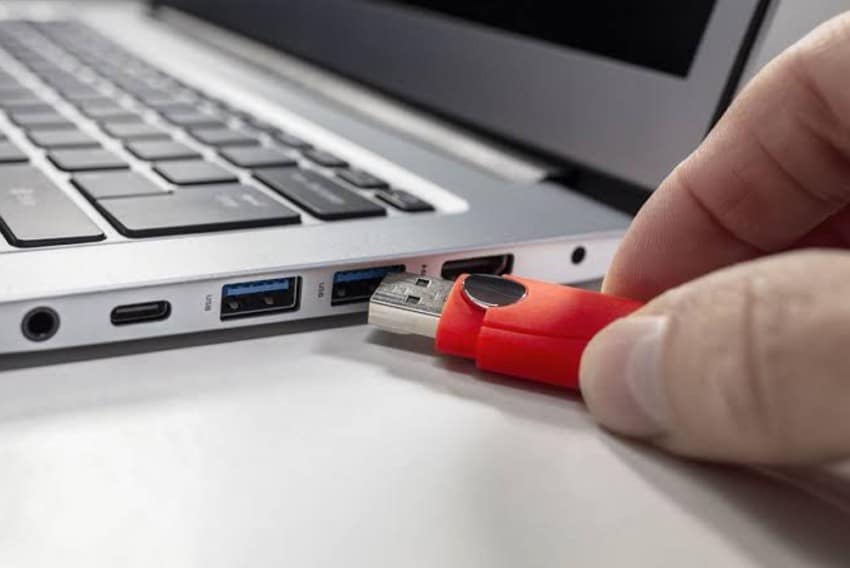
Fix 1. Reconnect the Drive and Try Another USB Port
Underpowered ports and hubs cause exactly this symptom on portable drives. Connect directly to a rear port on a desktop, or to the port nearest the power connector on a laptop.
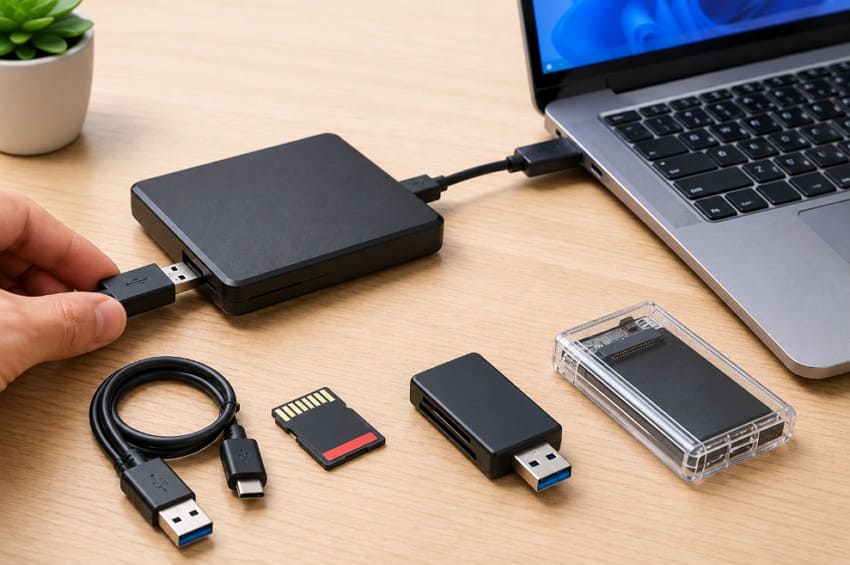
Fix 2. Replace the Cable, Card Reader, or Enclosure
A degrading cable or a failing USB bridge chip garbles data in transit, and Windows reports what it receives as invalid. Swapping the cable is the cheapest test available.
Fix 3. Check Whether the Drive Appears in Disk Management
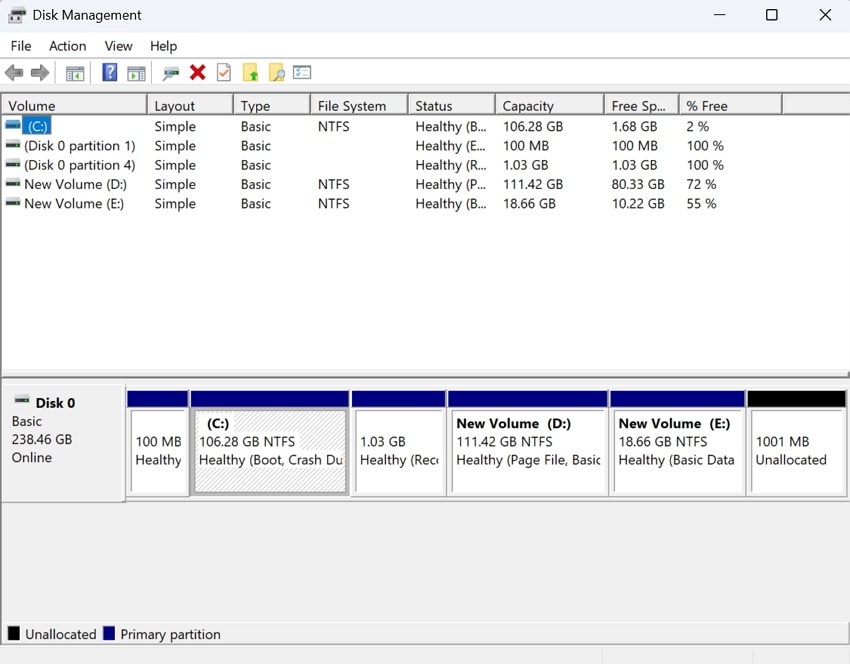
Press “Windows + X” and open Disk Management. A drive listed there, even without a letter or file system, is still reachable. One that is absent entirely points to the enclosure, the cable, or the drive itself.
Fix 4. Assign a Different Drive Letter
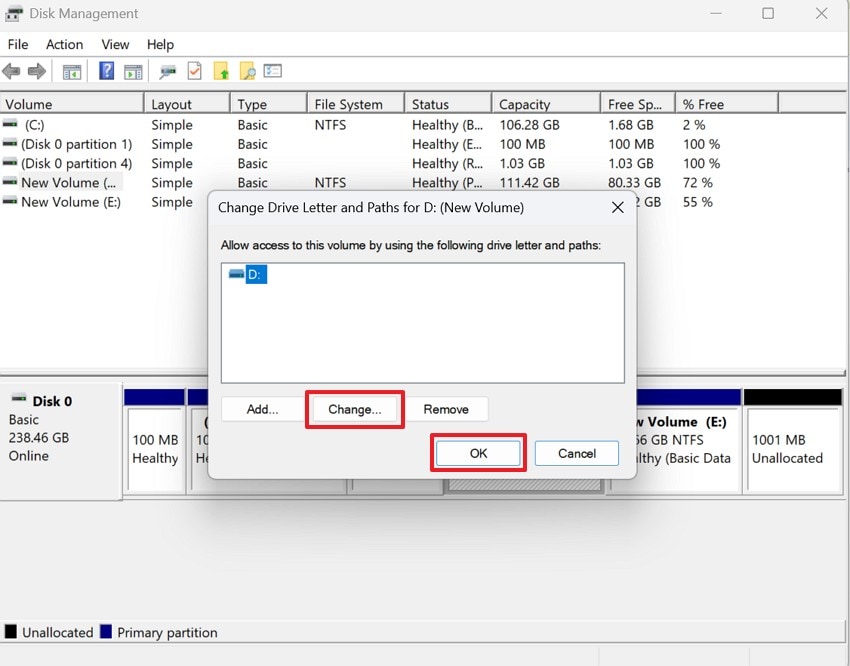
Drive-letter conflicts can stop Windows from mounting the volume correctly. In “Disk Management,” right-click the partition, select “Change Drive Letter and Paths,” click “Change,” choose an unused letter, and select “OK.”
Fix 5. Check the File System Without Formatting First
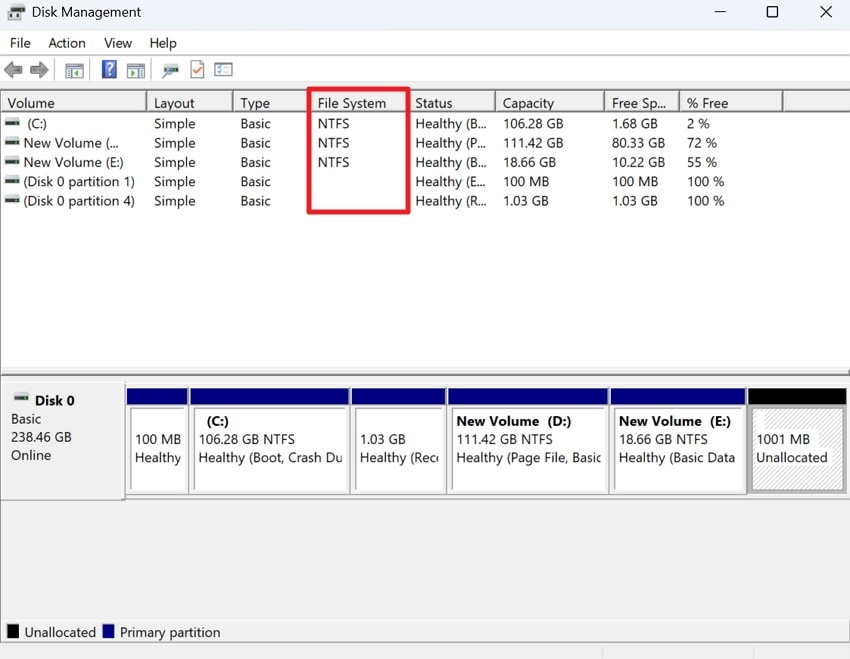
Note what Disk Management reports for the volume. NTFS or exFAT means the structures survived at least partially. RAW means Windows could not parse them at all, and recovery should come before any repair.
Fix 6. Run CHKDSK Only After Recovery or Backup
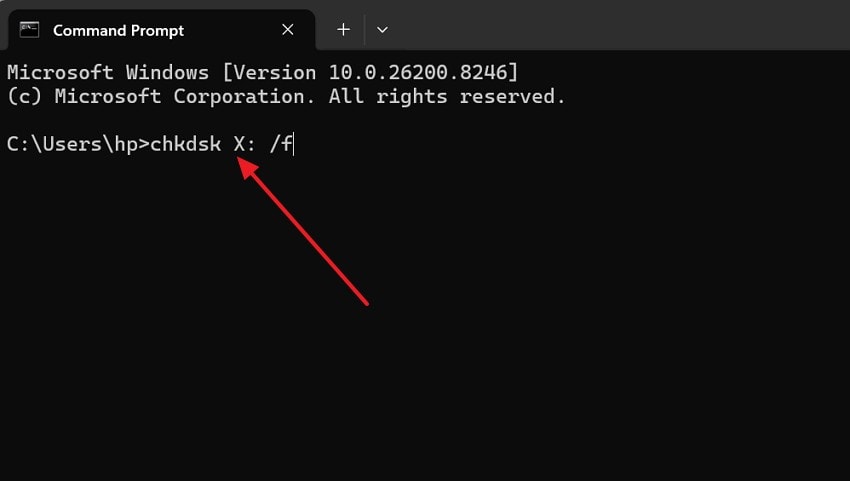
With your files secured, "chkdsk X: /f" repairs the file table and directory entries. Use /r to locate bad sectors and recover readable data, although scanning takes considerably longer.
Fix 7. Test the Drive Health on Another Computer
If the drive mounts normally on another machine, the fault lies with the original PC's ports or drivers. One failing everywhere carries the fault inside it.
Part 5. Fix 0x80070057 While Copying or Moving Files
Copy failures usually break a specific rule rather than indicating damage, and each rule has its own signature.
| Constraint | What Fails | How to Resolve It |
| Path Length | Paths beyond roughly 260 characters | Shorten folder names or copy nearer the root |
| Invalid Characters | Names holding:? " < > or a trailing dot | Rename before copying |
| FAT32 File Size | Any single file above 4 GB | Reformat the target to exFAT or NTFS |
| Free Space | Destination smaller than the payload | Check the destination before starting |
| Permissions | No write access on the target folder | Take ownership or copy elsewhere |
| A Damaged File | One file fails while the rest succeed | Recompress, split, or re-copy that file |
FAT32 rejects large videos or disk images despite free space. If one file alone fails, suspect a bad sector; copy everything else, then recover it.
Part 6. Fix 0x80070057 During Backup or System Image Creation
Most cases of “the parameter is incorrect” 0x80070057 during backup trace back to the destination drive.
Fix 1. Confirm the Backup Destination Is Available
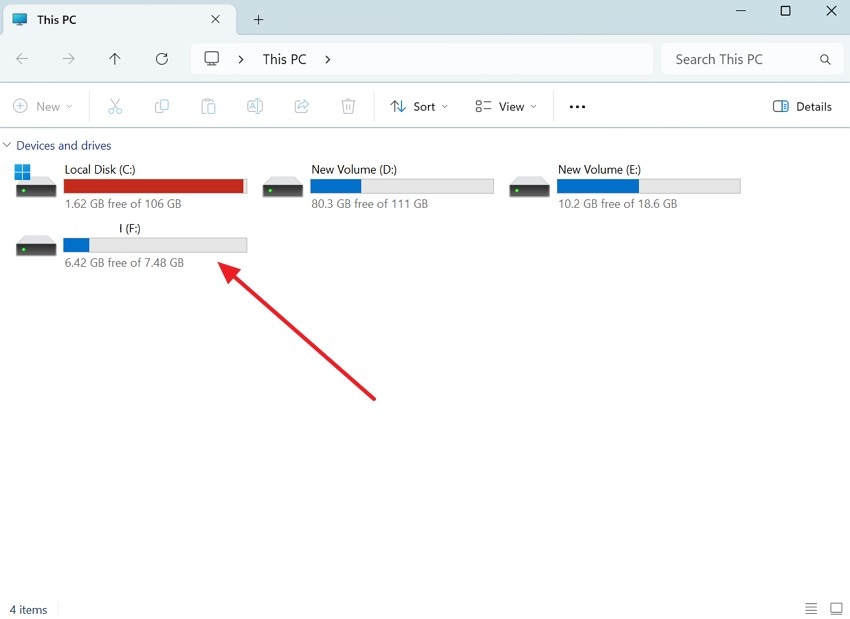
Reconnect the target drive and confirm it is writable in File Explorer. Network destinations need the share reachable and the credentials current, and either can lapse without warning.
Fix 2. Remove an Incomplete or Corrupted Backup
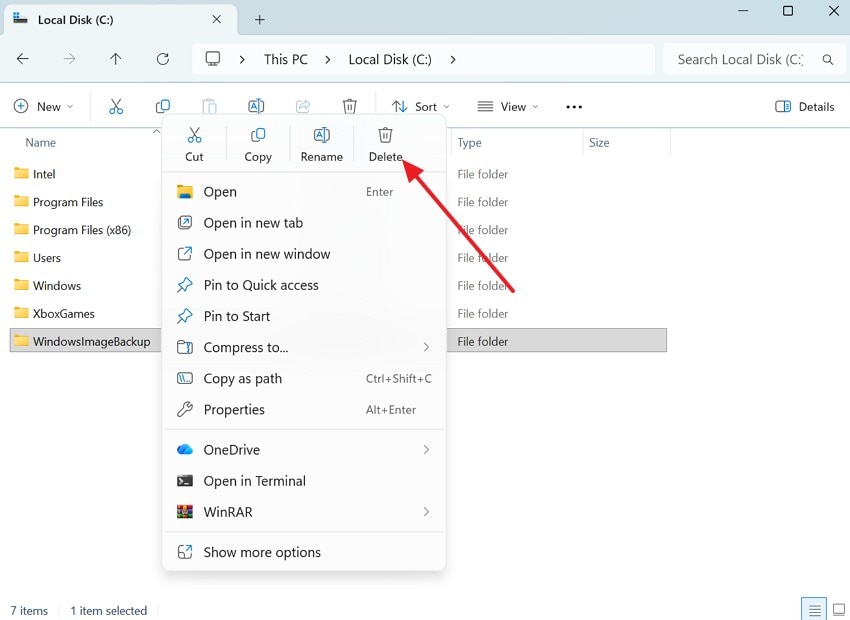
A previous backup that ended part-way leaves a set Windows tries to extend rather than replace. Delete the “WindowsImageBackup” folder from the destination and start a fresh backup.
Fix 3. Check Source and Destination Drives After Data Is Safe
After recovering your files, run CHKDSK on both the source and destination drives. Follow the steps explained in "Run CHKDSK to Repair File System Errors" in Part 4, then retry the backup.
Fix 4. Review Excluded or Unsupported Partitions
Windows Backup requires an NTFS destination and rejects FAT32 drives with this error. Use the steps in "Check the File System Without Formatting First" in Part 4 to verify the destination file system before creating another backup.
Fix 5. Restart Required Backup Services
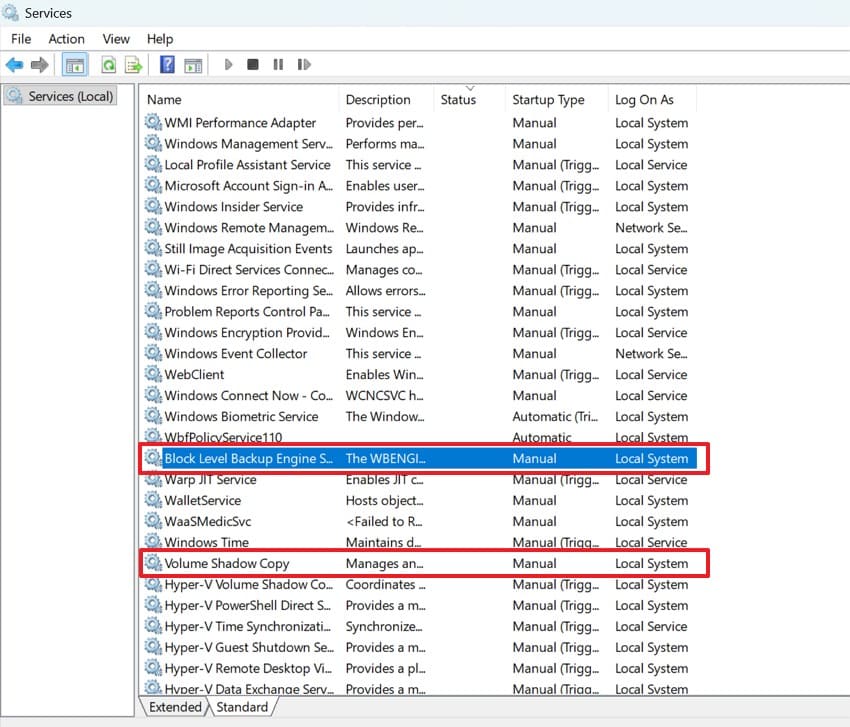
Run “services.msc” and confirm “Volume Shadow Copy” and “Block Level Backup Engine Service” are both running. Restart them, then retry the backup.
Fix 6. Create a New Backup Configuration
Where the existing job keeps failing, build a new one rather than editing it. A configuration carrying a stale destination path reproduces the same failure each time. Follow the steps below to create a new backup configuration:
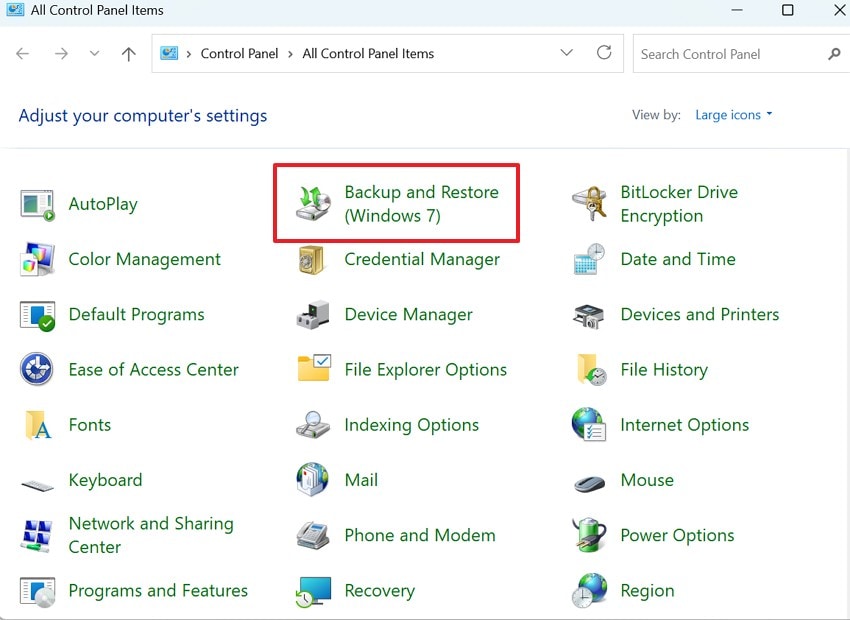
Step 1. Open “Control Panel” “Backup and Restore (Windows 7).”
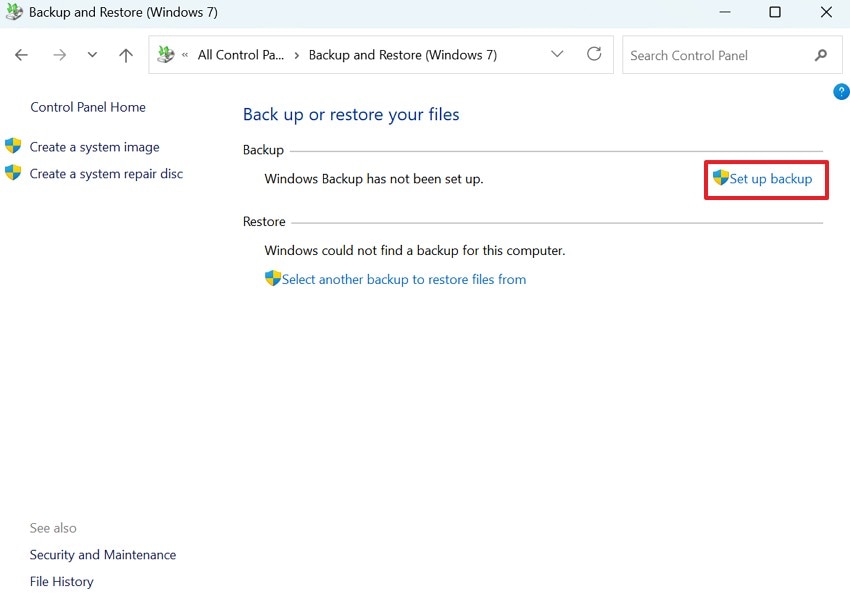
Step 2. Select “Set Up Backup,” choose the destination and folders, then save and begin.
Part 7. Fix 0x80070057 During Formatting or Windows Installation
When formatting or installation triggers error 0x80070057, Windows cannot access the selected target.
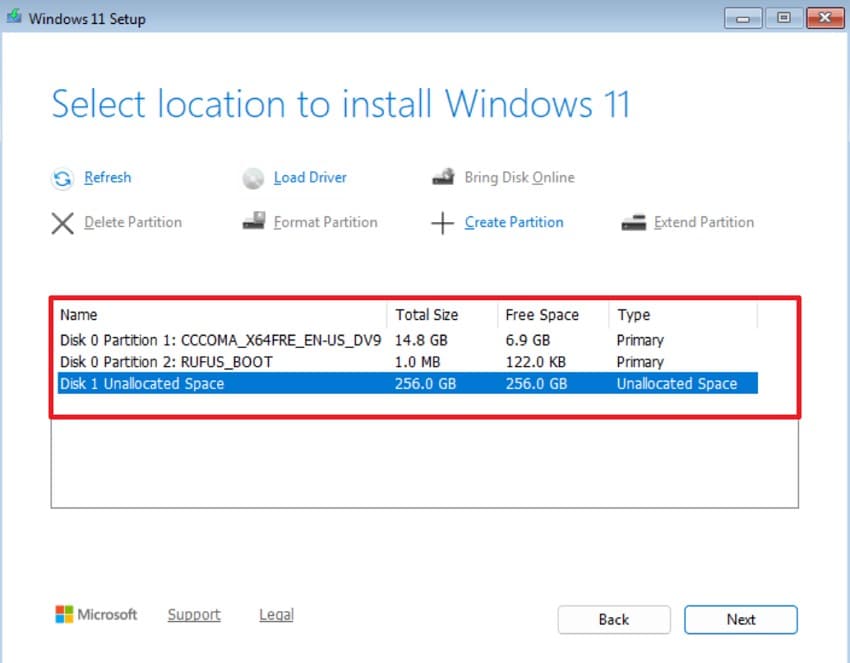
Fix 1. Confirm That the Correct Disk Is Selected
Numbering begins at zero, and any attached USB stick shifts what follows. Match capacity as well as number before continuing.
Fix 2. Check Disk Partition Style and Boot Mode
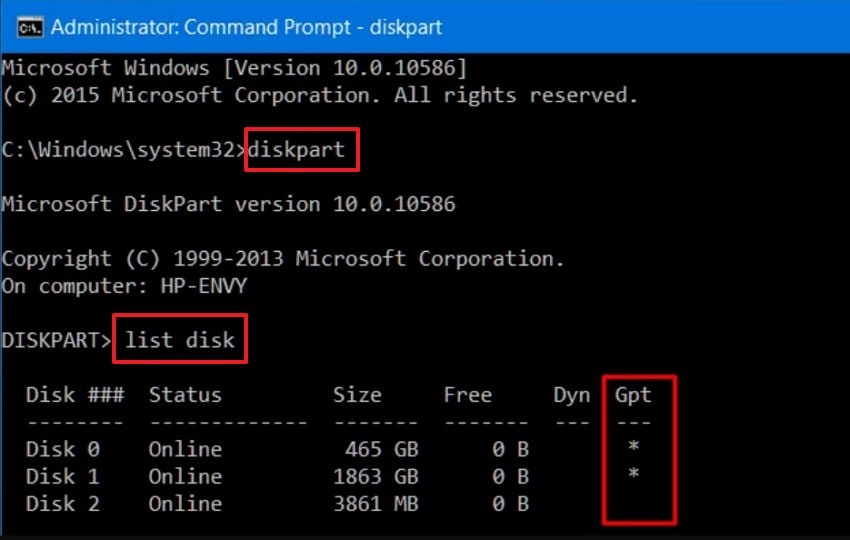
A UEFI installer needs a GPT disk, and a legacy installer needs MBR. Press "Shift + F10," type "diskpart," then "list disk," and check the GPT column for an asterisk.
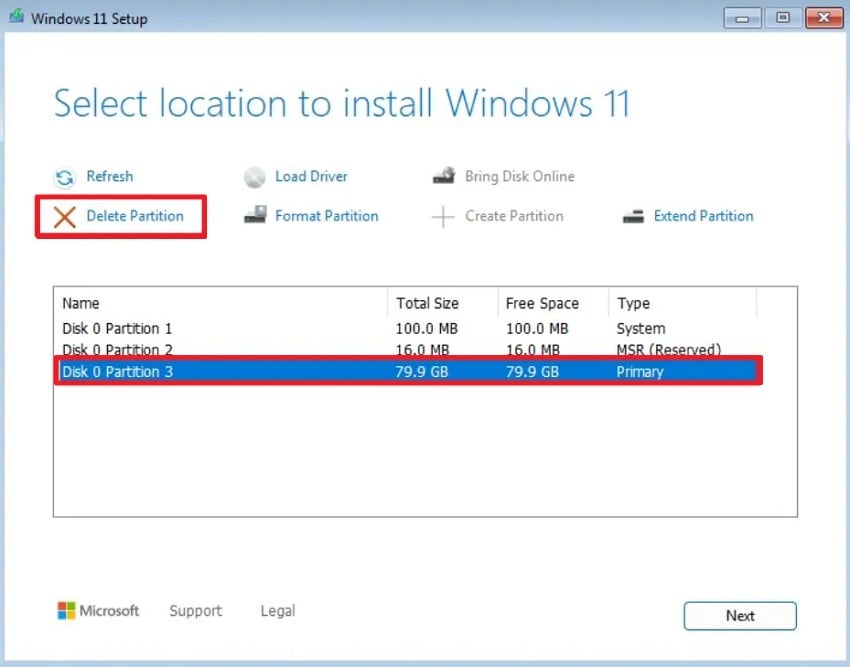
Fix 3. Delete Only the Unneeded Target Partition
Remove the partitions belonging to the disk you are installing on and nothing else. Deleting a partition on the wrong disk is the most common mistake at this step.
Fix 4. Recreate the Installation Media if Setup Files Are Damaged
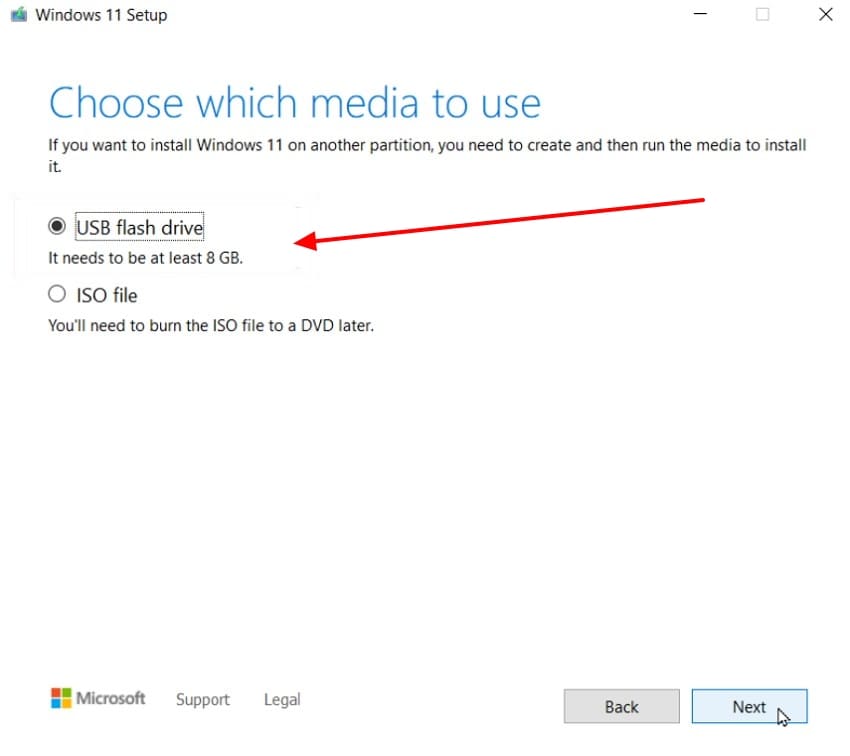
Corrupted setup files can trigger error 0x80070057 during Windows installation. Download the latest Windows 11 Media Creation Tool from Microsoft's official website. Then select “USB Flash Drive,” click “Next,” and create a new bootable installation USB drive.
Fix 5. Let Windows Setup Create Required Partitions
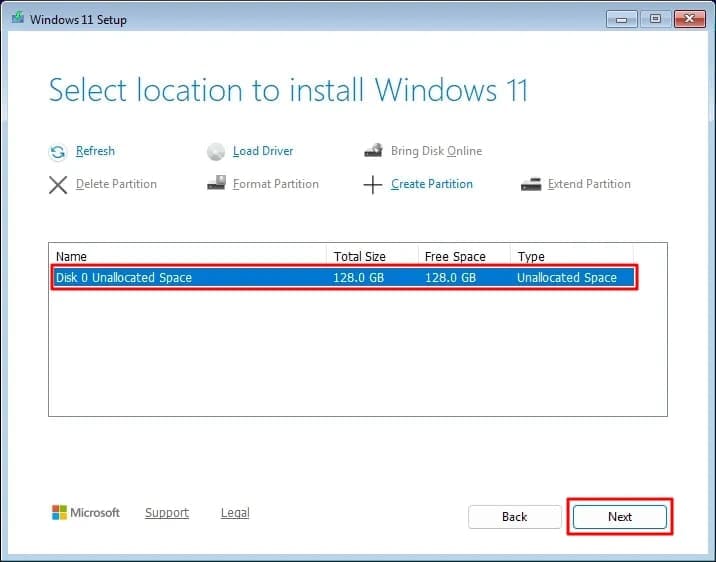
Select “Unallocated Space” and choose “Next” rather than defining partitions yourself. Setup then sizes the recovery, EFI, and system partitions correctly on its own.
Fix 6. Use DiskPart Clean Only After Backup or Recovery
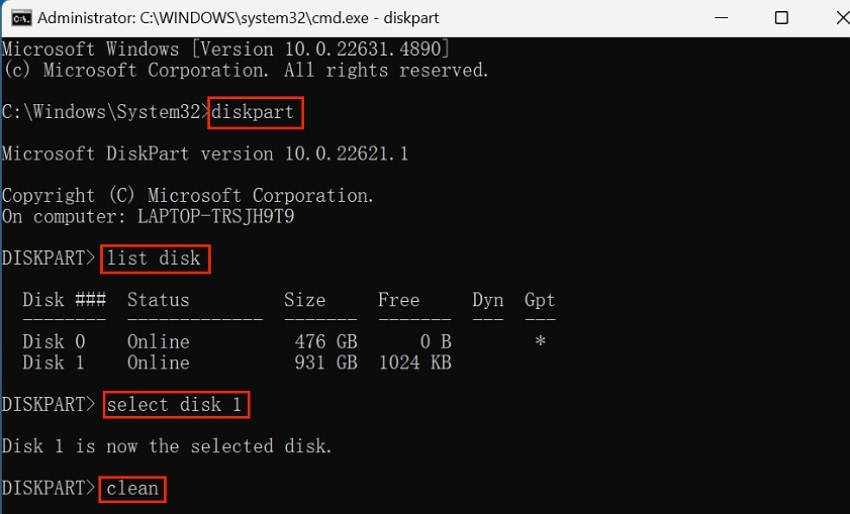
The clean command permanently erases the selected disk without confirmation or recovery. Use it only after backing up or recovering all important files. Use the instructions below to run diskpart clean command:
Instructions. Open Command Prompt as admin and run “diskpart” > “list disk,” “select disk X” > “clean” only after recovery.
Part 8. Last Options and Prevention
After resolving error 0x80070057, these final measures address remaining issues and help prevent recurrence.
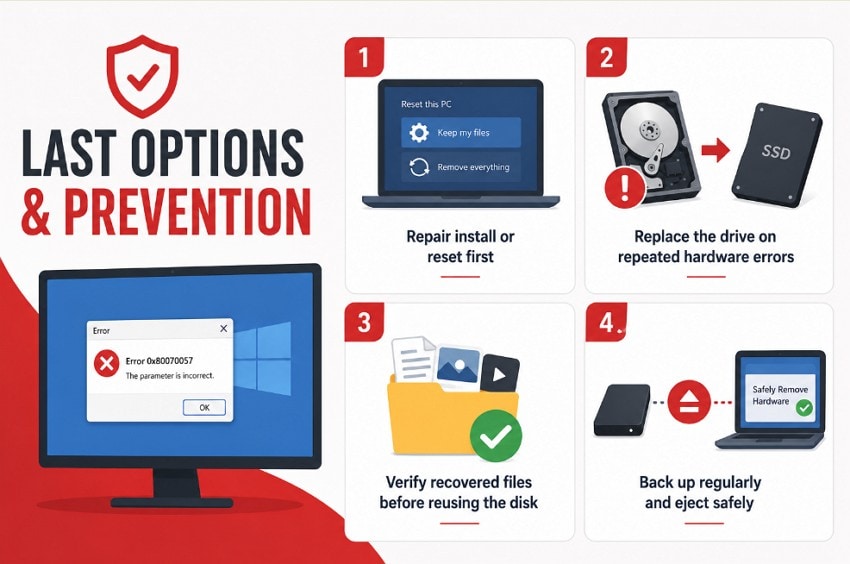
- Repair Install or Reset First: Choose “Keep My Files,” which rebuilds Windows while preserving your profile and documents.
- Replace Drive on Repeated Hardware Errors: A disk producing input and output errors will keep failing whatever you repair.
- Verify Recovered Files: Open a sample of documents and play a few videos rather than trusting file sizes alone.
- Back Up Regularly and Eject Safely: Write caching means pulling a drive without ejecting genuinely risks the metadata damage behind this error.
Part 9. Recover Files From a Drive Showing Error 0x80070057
Some repairs overwrite the very disk structures that recovery software depends on. If your files are still unrecovered, formatting, DiskPart Clean, or repeated repair attempts can turn a recoverable drive into permanent data loss. That risk is highest when 0x80070057 Windows 11 appears because the drive's file system has already become unreliable.
Recoverit offers a safer starting point by scanning the drive before destructive repairs begin. It recovers files directly from the remaining data, helping you secure important documents before attempting fixes that rewrite the drive.
Key Features
- Sector-Level Deep Scan: Searches underlying drive sectors when Windows cannot access the damaged file system.
- Pre-Repair Recovery: Scans files before CHKDSK, formatting, or DiskPart operations overwrite useful disk structures.
- RAW Drive Recovery: Recovers files from RAW or inaccessible partitions that File Explorer cannot open.
- Important Note: The tool copies data and repairs nothing. It will not clear error 0x80070057, rebuild a file system, or revive a drive that Disk Management cannot see.
How to Scan a Drive That Will Not Open Using Recoverit
Follow these steps to recover important files before applying repairs that rewrite the drive:
Step 1. Select the Affected Volume
Select the affected drive under “Hard Drives and Locations,” then click “Start” to begin scanning.

Step 2. Let the Scan Complete Undisturbed
Wait for the scan to finish, then use the “Filter” or search to locate the required files.

Step 3. Recover to Separate Storage
Preview the recovered files, click “Recover,” and save them to a different drive.

Conclusion
The parameter is incorrect; 0x80070057 describes a symptom rather than a cause, and the situation that produced it decides the fix. Update failures need the cache rebuilt, copy failures usually break a size or path rule, and a drive that will not open needs recovery before repair. When files are at stake, scan with Recoverit before anything is overwritten.
FAQ
-
Does error 0x80070057 mean my hard drive is failing?
Not by itself, since the same code appears during updates and file copies on healthy disks. Treat it as a hardware sign when it repeats across many files or comes with clicking and slow transfers. -
Why do some files copy while others fail with this error?
Files that fail are usually oversized for the target file system or sitting on unreadable sectors. Copy everything else first, then handle the remainder as a recovery task. -
Should I format a drive showing "the parameter is incorrect"?
Not until your files are copied elsewhere. Formatting replaces the index that recovery software uses to rebuild names and folders, which makes the result far worse. -
Can Recoverit fix error 0x80070057?
No, Recoverit retrieves files and repairs nothing. Use it to secure data before CHKDSK, a format, or DiskPart makes recovery harder.


