

 TL;DR:
The VIDEO_TDR_FAILURE (0x116) stop code on Windows 10 and 11 indicates a graphics driver timeout recovery failure, best resolved by identifying the specific crashing module like atikmpag.sys or nvlddmkm.sys and performing a clean driver reinstall or rollback before assuming physical GPU damage.
● To resolve driver conflicts, first attempt the Roll Back Driver option in Device Manager if the crash followed a recent update, or use vendor-specific software like the AMD Cleanup Utility to cleanly install an OEM-approved driver matching your exact GPU model.
● Do not attempt invasive workarounds such as manually replacing atikmpag.sys system files, blindly disabling laptop integrated graphics, or altering the TdrDelay registry key, as Microsoft restricts these registry changes to developer debugging rather than end-user troubleshooting.
● If the 0x116 stop error persists in Safe Mode or after a clean driver installation, the root cause is likely physical hardware, requiring you to revert any GPU overclocks and verify cooling, power delivery, and RAM stability using the Windows Memory Diagnostic (mdsched.exe).
Ask AI for a summary
 ChatGPT
 Perplexity
 Gemini
 Claude
 Grok
Seeing VIDEO_TDR_FAILURE or VIDEO_TDR_FAILURE (0x116) after a game, video call, render, or even at startup? Windows detected a graphics processing timeout and could not successfully reset the display driver. The stop screen may name atikmpag.sys, nvlddmkm.sys, or another display-related driver. The filename helps narrow the next check, but it does not prove your graphics card is physically damaged.
This guide covers Windows 10 and Windows 11, including AMD, NVIDIA, and Intel systems. Start by recording the driver name, checking recent changes, and backing up important files if the PC is stable. Then work through reversible fixes before clean driver removal or hardware diagnosis. A display-driver crash is not the same problem as a corrupt video file.
In This Article
-
- Fix 1. Install Applicable Windows Updates
- Fix 2. Update the Correct Graphics Driver From Your PC or GPU Vendor
- Fix 3. Roll Back a Graphics Driver That Was Just Updated
- Fix 4. Use Safe Mode if the PC Keeps Crashing Before Login
- Fix 5. Cleanly Reinstall AMD Drivers When atikmpag.sys Keeps Appearing
- Fix 6. Reinstall a Matching NVIDIA or Intel Graphics Driver
- Fix 7. Test RAM, Cooling, Power, and Overclock Stability
- Fix 8. Repair Windows Components With DISM and SFC
Part 1. What VIDEO_TDR_FAILURE 0x116 Means and How to Identify the Driver
The exact stop code and the module shown beside it are more useful than a generic blue-screen description. First identify whether this was a true Windows bug check, then match the named driver to the graphics hardware installed on your PC.
Windows calls its mechanism Timeout Detection and Recovery (TDR). According to Microsoft’s 0x116 bug-check documentation, the 0x116 stop code means an attempt to reset the display driver after a timeout failed. A brief recovered display timeout and a system-stopping 0x116 error are not interchangeable.
| Stop-screen file | Common graphics association | Start with |
| atikmpag.sys or atikmdag.sys | AMD/ATI graphics driver stack | AMD/OEM driver version, rollback, AMD Cleanup Utility only if necessary |
| nvlddmkm.sys | NVIDIA graphics driver stack | NVIDIA/OEM driver update or rollback; clean reinstall if repeatedly failing |
| igdkmd64.sys or another Intel display module | Intel graphics driver stack | OEM/Intel graphics driver and laptop hybrid-graphics compatibility |
| No module listed | Not enough evidence to identify a particular GPU | Reliability Monitor, minidumps and driver dates before changing anything |
Important: The file name identifies a driver module involved in the failure, not a certain root cause. Insufficient cooling, unstable overclocks, memory instability, inadequate power, driver conflicts, and defective hardware can also trigger a TDR timeout.
Check 1. Record the Crash Timeline Before Changing Drivers
When the PC still boots, the Reliability Monitor timeline can reveal whether the VIDEO_TDR_FAILURE began immediately after a display-driver or Windows update. Record the crash date and recent software changes rather than uninstalling several unrelated drivers.
Step 1. Press Windows + R, type perfmon /rel, and press Enter.
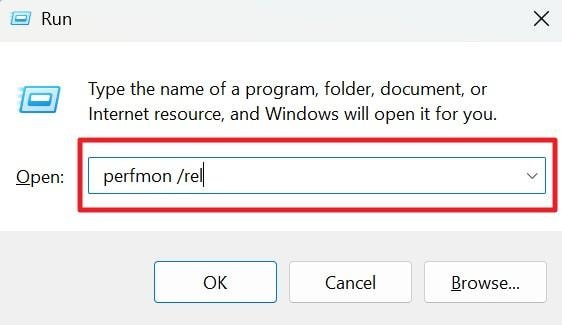
Step 2. Select the crash date. Note any hardware errors, Windows failures, driver installations, or update events around the same time. Save the exact stop code and the “What failed” filename if displayed.
If the computer cannot stay on long enough: Skip to Fix 4 to reach Safe Mode. For repeat blue screens, a technician may also inspect C:\Windows\Minidump; never upload a dump containing sensitive information publicly.
Check 2. Identify the Installed GPU and Driver Date
Many laptops contain both integrated and discrete graphics. Identify the device and driver provider before downloading anything: applying an unrelated AMD, Intel, or NVIDIA package may create another incompatibility.
Step 1. Right-click Start, open Device Manager, and expand Display adapters. Check every GPU listed there.
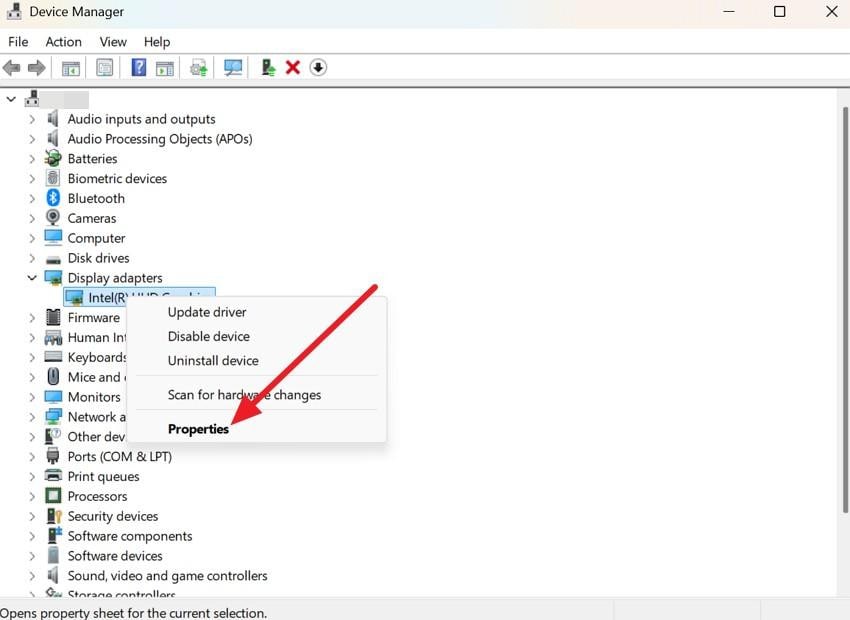
Step 2. Right-click the relevant adapter and select Properties > Driver. Record Driver Provider, Driver Date, Driver Version, and your exact laptop or GPU model.
If the PC has two GPUs: Prefer the computer manufacturer’s recommended graphics package for the exact model when it customizes hybrid graphics or power management. Avoid disabling the integrated GPU merely because a dedicated card is also installed.
Part 2. How to Fix VIDEO_TDR_FAILURE on Windows 10 and Windows 11
The order below moves from updates and reversible driver changes toward clean installation and hardware checks. After each fix, restart normally and repeat the specific activity that previously caused the crash; stop when the PC remains stable.
Fix 1. Install Applicable Windows Updates
Start with normal system updates if Windows is stable. They can include display compatibility and platform fixes, although they cannot repair a failing graphics card. Make a backup or restore point before major driver changes.
Step 1. On Windows 11, open Settings > Windows Update > Check for updates. On Windows 10, go to Settings > Update & Security > Windows Update.
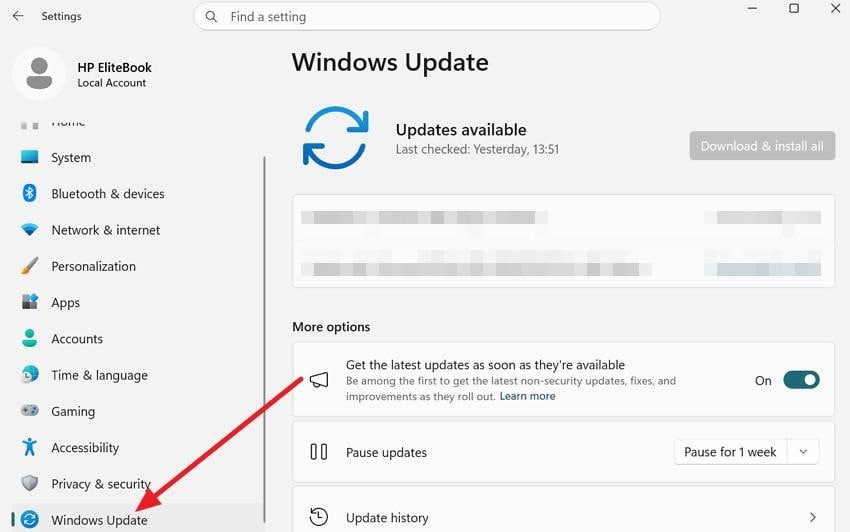
Step 2. Install applicable updates and restart. Check whether the 0x116 crash recurs. If it began immediately after an update, proceed to Fix 3 rather than continually installing newer packages.
Windows 10 support: Standard Windows 10 servicing ended on October 14, 2025. Microsoft recommends moving to supported Windows 11 hardware or using eligible Extended Security Updates (ESU) where available; see its Windows 10 support notice.
Fix 2. Update the Correct Graphics Driver From Your PC or GPU Vendor
A current, model-compatible driver may resolve a timeout introduced by an old or damaged installation. This method is most appropriate when the crashing driver has not recently been updated, and the current version is known to be compatible with your Windows release.
Step 1. Use the GPU name and laptop model you recorded above. Check the PC manufacturer’s support page first for systems with customized drivers. For desktop GPUs, use the official AMD, NVIDIA, or Intel driver-download route.
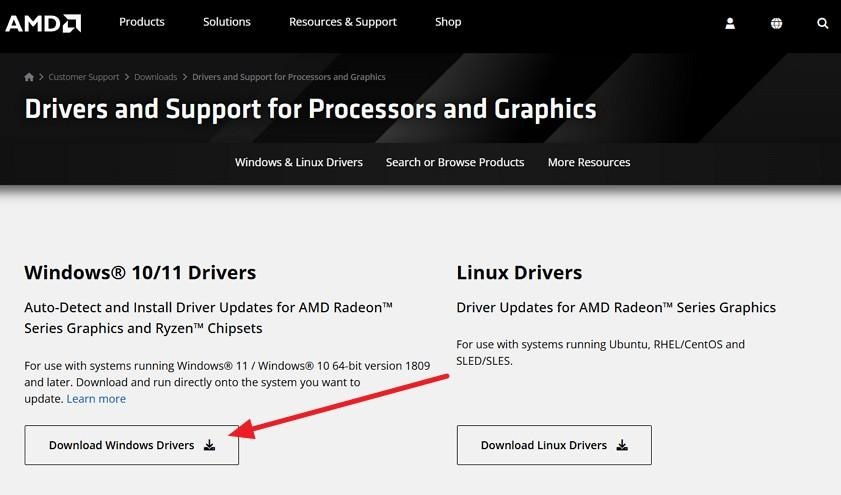
Step 2. Download a stable driver specifically supporting your GPU model and Windows version. Install it using the vendor’s instructions, restart, and retest the same workload.
If a driver update makes the blue screen worse: Return to the earlier working version using Fix 3. Device Manager automatic search does not guarantee the newest vendor release; avoid third-party driver download aggregators.
Fix 3. Roll Back a Graphics Driver That Was Just Updated
When VIDEO_TDR_FAILURE began right after a graphics update, undoing that particular update is usually more informative than making several additional changes. Windows can roll back only when it still has a previous package available.
Step 1. Open Device Manager > Display adapters, right-click the affected GPU, then select Properties > Driver > Roll Back Driver.
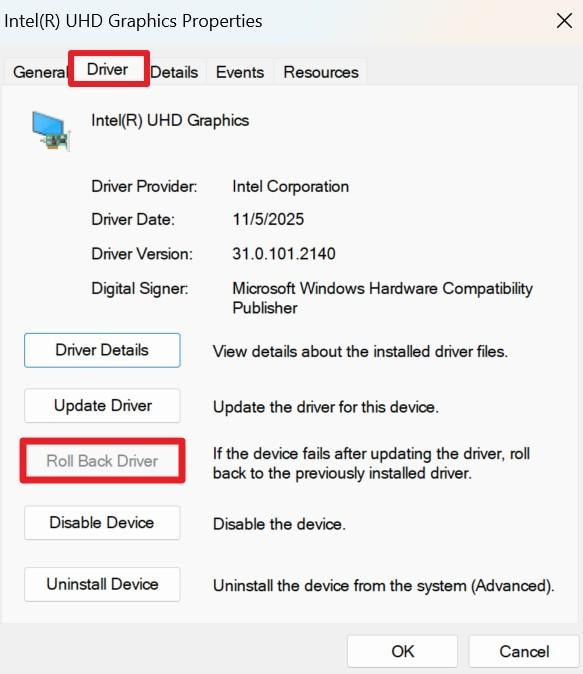
Step 2. If the button is enabled, select it, give the reason when prompted, restart, and verify whether the same activity is stable. The example image shows a disabled Roll Back Driver button: in that situation, Windows has no previous driver package available.
If rollback is unavailable, obtain a known-compatible driver from the computer or GPU manufacturer rather than copying old system driver files into Windows. Microsoft documents the procedure in its Device Manager driver rollback guide.
Fix 4. Use Safe Mode if the PC Keeps Crashing Before Login
If Windows blue-screens repeatedly during startup, Safe Mode starts with a limited set of drivers. A stable Safe Mode session points toward normal-startup software or drivers, but it does not conclusively rule out every hardware problem.
Step 1. On Windows 11 when accessible, open Settings > System > Recovery > Advanced startup > Restart now. On Windows 10, use Settings > Update & Security > Recovery > Advanced startup.
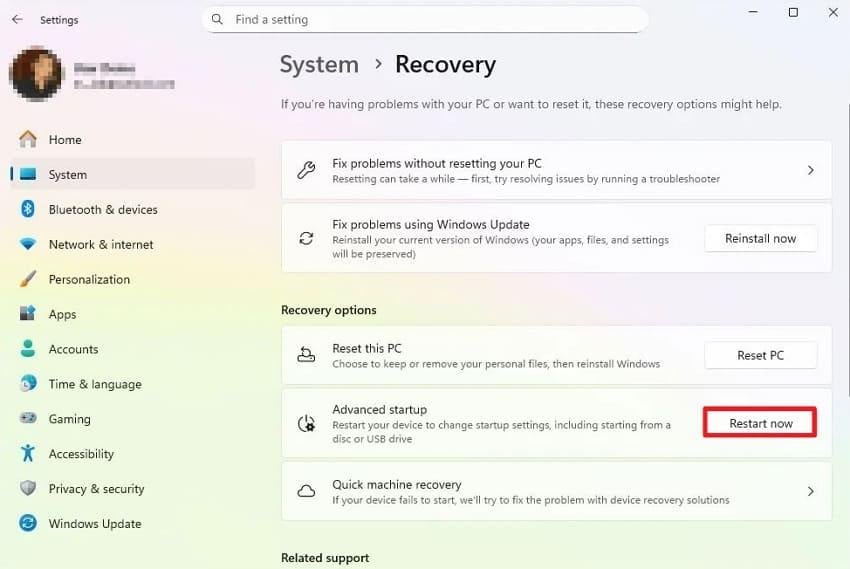
Step 2. After reboot, select Troubleshoot > Advanced options > Startup Settings > Restart, then press 4 or F4 for Safe Mode. If Windows cannot reach Settings, use Windows recovery media or the recovery environment entered after repeated failed startups.
If the stop error also happens in Safe Mode: Prioritize memory, cooling, firmware, storage, and hardware diagnosis; do not assume a software-only problem.
Fix 5. Cleanly Reinstall AMD Drivers When atikmpag.sys Keeps Appearing
This AMD-specific method applies when an AMD/ATI graphics module is repeatedly implicated and normal updating or rollback fails. A clean driver installation is safer than renaming atikmpag.sys or atikmdag.sys under System32.
Step 1. Download an OEM-approved AMD graphics driver for your exact device. If you need to remove a broken AMD installation, download the official AMD Cleanup Utility first. Save work and close all applications before running it.
Step 2. Run AMD Cleanup Utility. If it asks to reboot into Safe Mode, choose Yes and allow the process to complete. It removes AMD graphics/audio driver components but is not a general Windows repair tool.
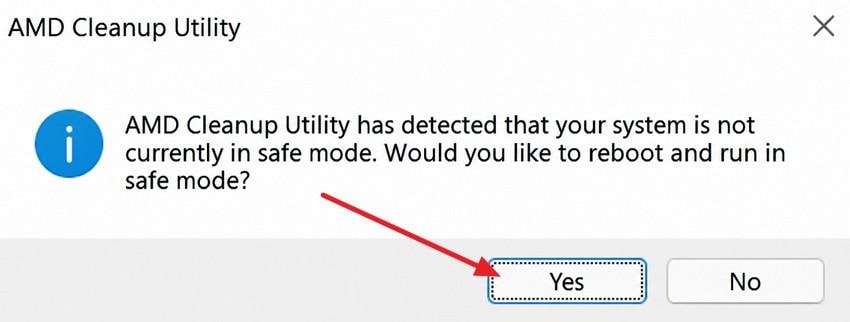
Step 3. Restart normally and install the downloaded, compatible AMD driver. Reboot once more and test the task that previously triggered the crash.
If atikmpag.sys BSOD returns: Test GPU cooling, power delivery and RAM; a persistent 0x116 error after a clean, compatible driver reinstall requires a hardware-aware diagnosis. Do not manually replace Windows system driver files from an outdated C:\ATI package.
Fix 6. Reinstall a Matching NVIDIA or Intel Graphics Driver
For nvlddmkm.sys, use a compatible NVIDIA driver. For an Intel display module, begin with the PC manufacturer’s Intel graphics package, especially on laptops with hybrid graphics. Do not disable integrated graphics as a universal solution.
Step 1. For NVIDIA, select the exact GPU series, model, operating system, and suitable driver type on NVIDIA Drivers. For Intel, follow the Intel clean graphics driver installation instructions and check OEM customization guidance.
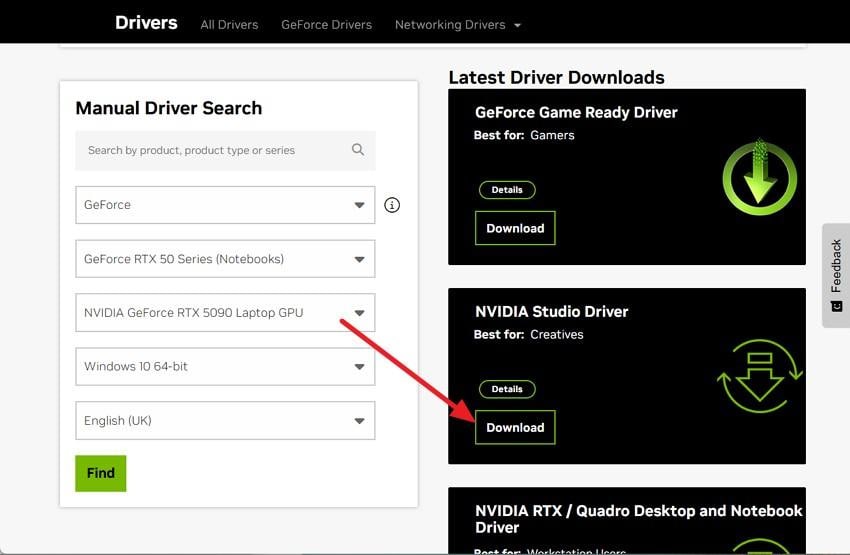
Step 2. Install or reinstall the vendor-appropriate graphics package. Use any officially documented clean-install option only if a standard update or rollback has failed. Restart and test for VIDEO_TDR_FAILURE.
If the installer rejects the package: Stop and recheck the GPU model, laptop/OEM compatibility and Windows version; do not force-install a driver for another model.
Fix 7. Test RAM, Cooling, Power, and Overclock Stability
Microsoft lists insufficient cooling or power, memory configuration, overclocking, and defective hardware among possible causes of TDR failures. These checks become more important when crashes occur under graphics load or persist across multiple driver versions.
Step 1. Save open work. Press Windows + R, run mdsched.exe, and choose Restart now and check for problems to run Windows Memory Diagnostic.
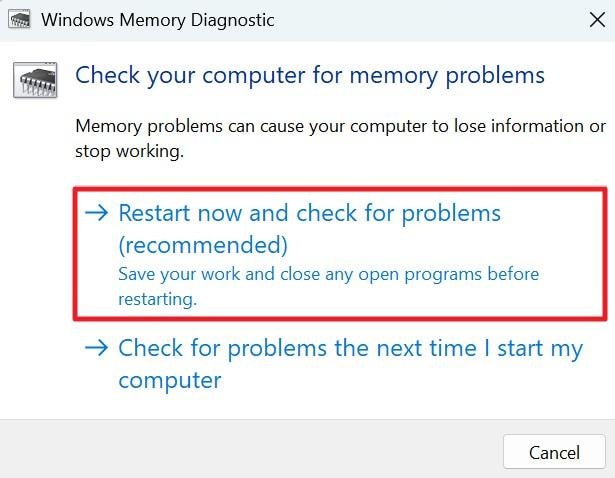
Step 2. After Windows restarts, review the test result in Event Viewer > Windows Logs > System under MemoryDiagnostics-Results. If errors are reported, arrange qualified hardware testing before reinstalling Windows.
Also return any manually applied GPU/VRAM overclock or undervolt to manufacturer-supported defaults, check fan airflow and temperature under load, and inspect power cabling if appropriate. Do not open a sealed laptop or handle live electrical components. A clean memory diagnostic result alone does not prove the GPU and PSU are healthy.
Fix 8. Repair Windows Components With DISM and SFC
If graphics and hardware checks do not explain the problem, corrupted Windows components may be worth checking. DISM and SFC repair system components; neither directly repairs the GPU or guarantees an end to repeated TDR failures.
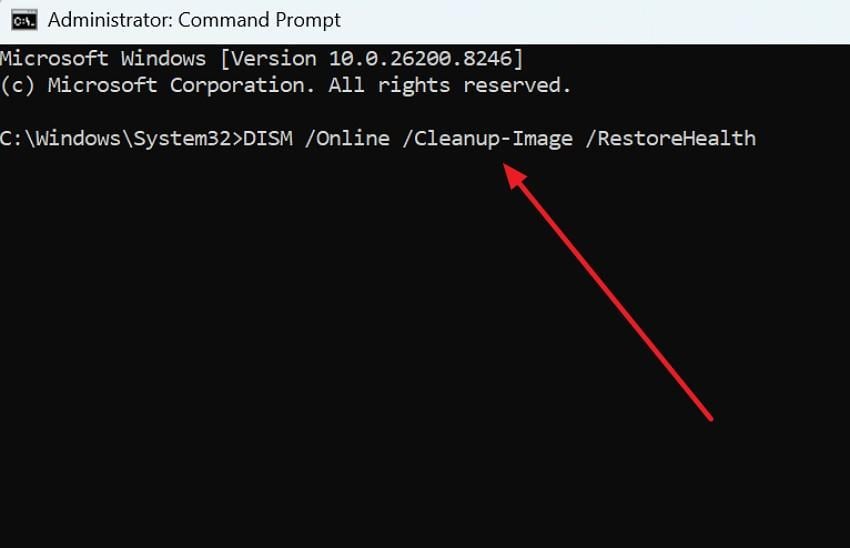
Step 1. Open Terminal (Admin) or Command Prompt (Admin). Run DISM /Online /Cleanup-Image /RestoreHealth and let it finish.
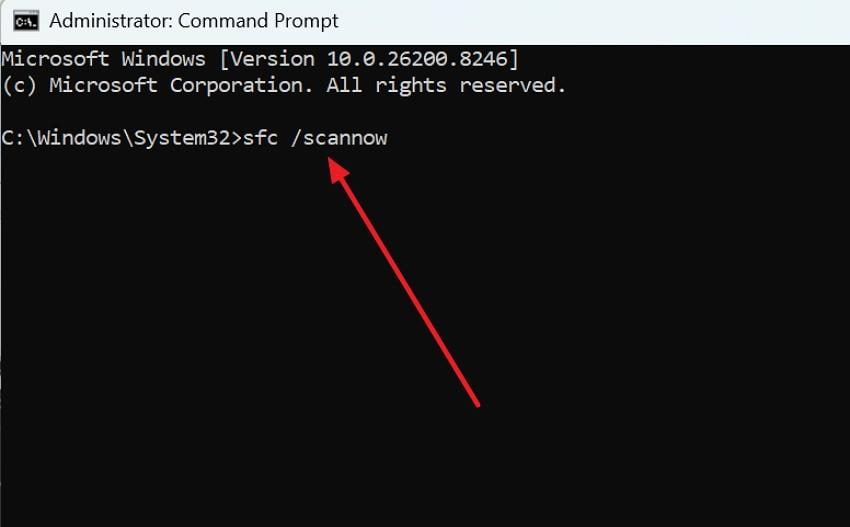
Step 2. In the same elevated window, run sfc /scannow. Wait until verification ends, restart, and retest normal display use.
If Windows cannot remain stable long enough to complete the scan: Return to Safe Mode and work with your PC manufacturer or a technician. Forcing repeated repair runs on a drive showing physical failure may create additional risk to unsaved data.
Part 3. What Not to Do With VIDEO_TDR_FAILURE, and When Hardware Service Is Needed
Some older video TDR failure articles recommend invasive changes before identifying the driver or confirming the hardware issue. Avoid those shortcuts because they may hide the error, prevent startup, or create a more difficult recovery situation.
- Do not increase TdrDelay as a general fix. Microsoft states that TDR registry keys are for driver development testing and debugging; end users should not manipulate them as ordinary troubleshooting.
- Do not rename or overwrite atikmpag.sys and atikmdag.sys manually. Use a signed, compatible AMD/OEM driver installation process instead.
- Do not blindly disable Intel integrated graphics. Hybrid-graphics laptops may require it for normal display output, external ports, or power-management behavior.
- Do not assume a video-repair tool will stop a Windows blue screen. A TDR crash is a GPU/driver recovery failure, not evidence that the media file itself is corrupted.
- Seek professional service when crashes continue after suitable driver reinstall and factory-default settings, especially alongside overheating, graphical artifacts, power failures, or a failed diagnostic.
If the whole PC freezes without a 0x116 stop code, follow a broader Windows 11 freezes troubleshooting guide rather than assuming every lockup is a TDR failure.
Part 4. Recover Files That Disappeared After a VIDEO_TDR_FAILURE Crash
A display-driver failure can interrupt a file save or cause a sudden restart. Before using data recovery software, check the application’s built-in autosave or recovery copies, OneDrive or other cloud version history, File History, and the Recycle Bin. Files that existed only in unsaved application memory may never have been written to storage.
When Recoverit Can Help After a TDR Crash
If a file was previously saved to an internal or external drive but is now genuinely missing, Wondershare Recoverit for Windows can scan the affected location for recoverable deleted or inaccessible stored files. It does not fix the blue screen, reverse a GPU failure, or restore an unsaved file that never existed on disk.
Before scanning: Avoid writing new files to the affected drive, particularly on SSDs where TRIM and overwriting may make deleted content unrecoverable. If practical, install recovery software on a separate drive and plan a separate destination for recovered files.
Recover Previously Saved Files With Recoverit V15
Use the current Recoverit V15 Windows user guide as the source for these product screenshots. The process is location selection, scanning, and previewing or saving files that can actually be read.
Step 1. Open Recoverit and choose Hard Drives and Locations. Select the drive or folder that previously held your saved file, then click Start.
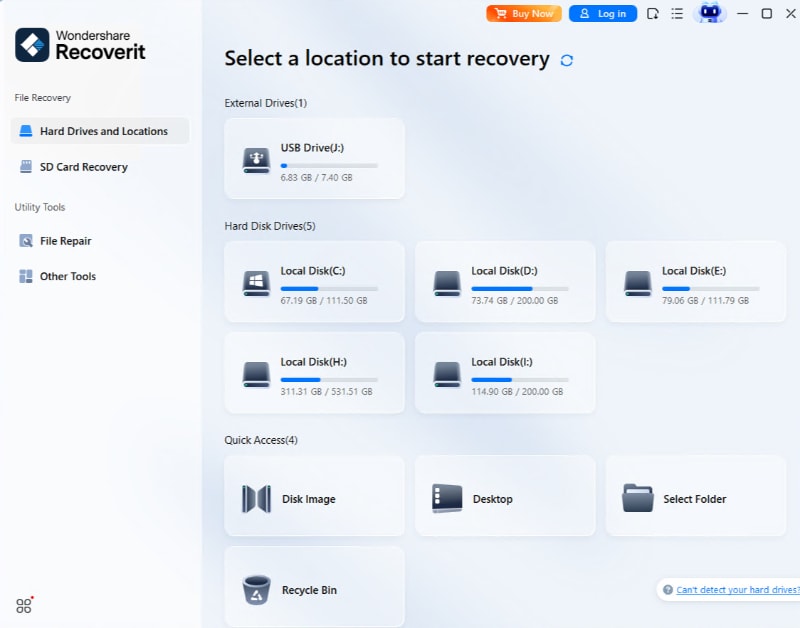
Step 2. Allow the scan to look for recoverable items. Use search or file-type filters to narrow the results; a file name appearing in the list does not guarantee intact contents.
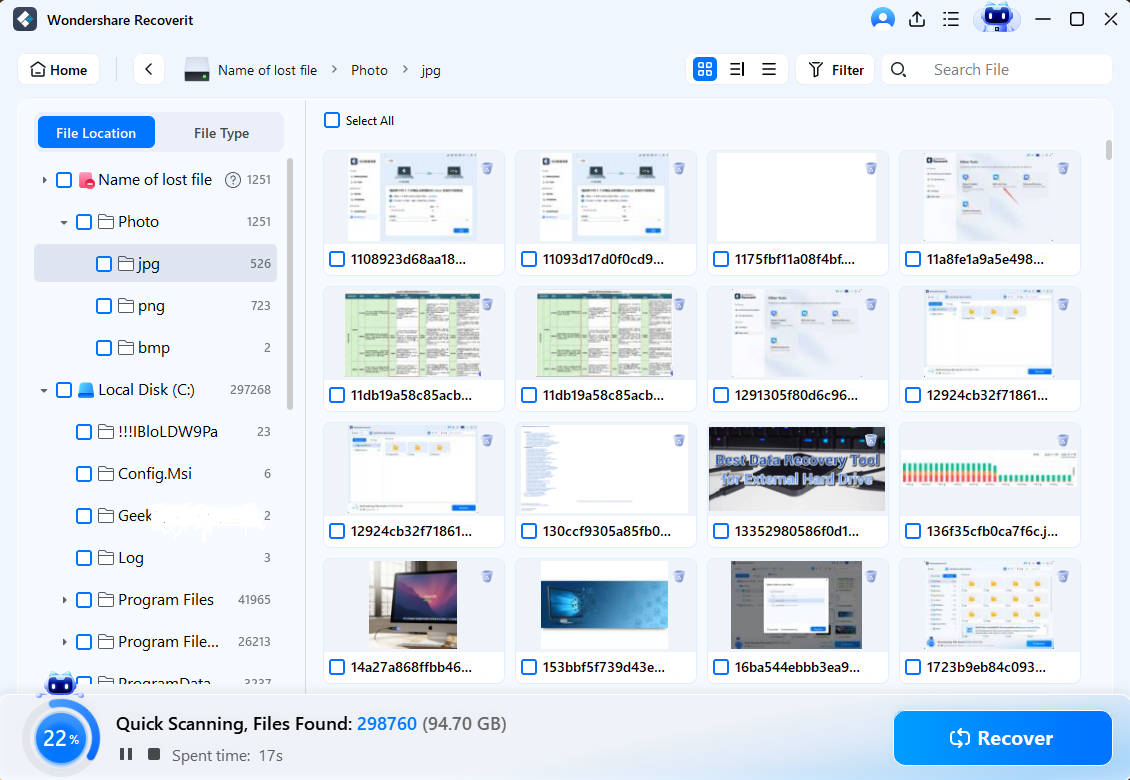
Step 3. Preview the candidate file where supported. Click Recover only for the files you want, then choose a different physical drive as the destination.
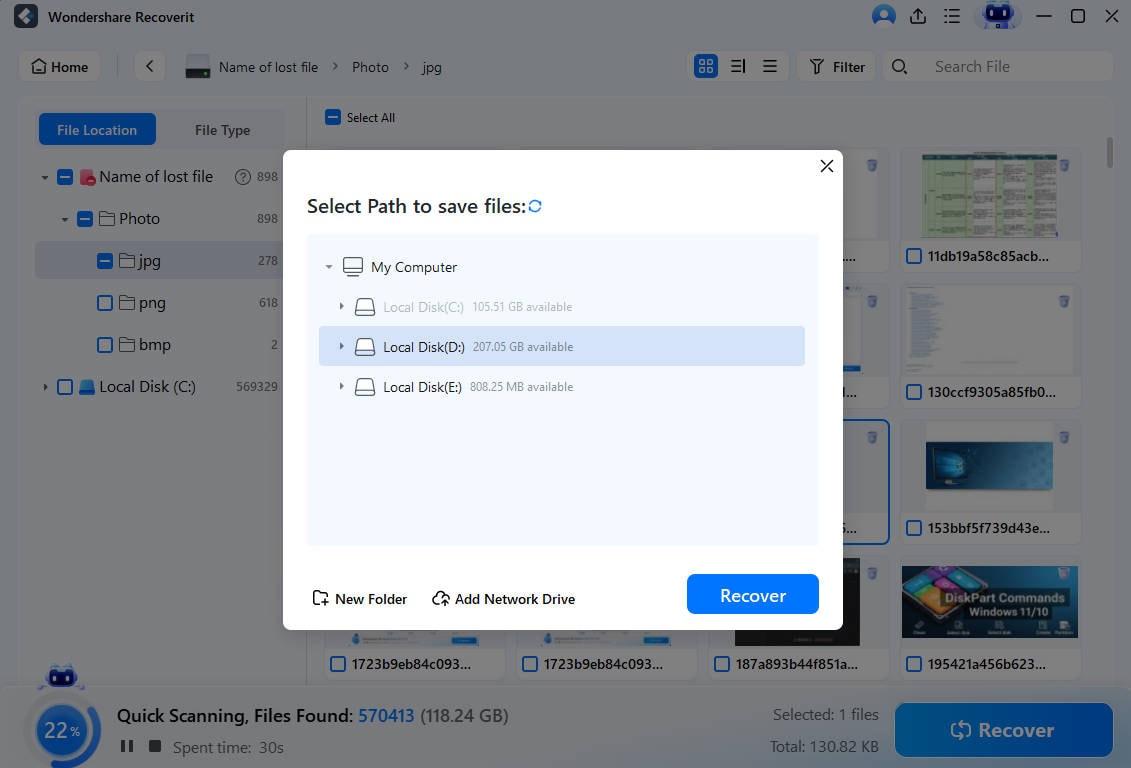
Limits: Successful recovery depends on remaining data and device condition. Overwritten files, SSD blocks cleared by TRIM, physically failed drives, and work that was never saved to disk cannot be promised recoverable. If a drive is failing or no longer detected reliably, stop repetitive scanning and consult a professional recovery service.
Conclusion
The VIDEO_TDR_FAILURE (0x116) stop code means Windows could not reset a timed-out graphics driver. Identify whether the implicated module belongs to AMD, NVIDIA, or Intel; check the crash timeline; then try compatible updates, rollback or a vendor-approved clean install as appropriate. Persistent crashes call for memory, cooling, power, and hardware checks—not risky driver-file replacements or registry delays.
If a crash also caused previously saved data to disappear, protect the source drive before checking backups and using appropriate file-recovery software. Recoverit is a separate data-recovery option, not a solution for the graphics error itself.
FAQ
-
What does VIDEO_TDR_FAILURE (0x116) mean?
Windows attempted to reset the display driver after a GPU timeout, but the recovery failed. The stop code 0x116 is distinct from a momentary driver timeout that Windows successfully recovers from. -
Does atikmpag.sys mean my AMD graphics card is broken?
No. It points toward an AMD or ATI display-driver module involved in the crash, but an incompatible driver, overheating, memory problems, insufficient power, or hardware faults can also be responsible. -
How do I fix atikmpag.sys BSOD on Windows 10 or 11?
Start by recording the AMD GPU model and driver date. Try a compatible OEM or AMD graphics driver, roll back a recently installed driver, and consider AMD Cleanup Utility if normal installation fails. Do not manually replace the atikmpag.sys file. -
Is VIDEO_TDR_FAILURE the same as VIDEO_TDR_TIMEOUT_DETECTED?
No. 0x116 refers to a failed attempt to recover a timed-out display driver. The related 0x117 timeout detection is a different event and can be captured as a live dump without the same bug-check behavior. -
Should I change TdrDelay in Registry Editor to fix a blue screen?
No. Microsoft documents TDR registry settings for display-driver developers testing and debugging drivers, and specifically advises ordinary end users not to alter them. -
Why does VIDEO_TDR_FAILURE happen during gaming or video playback?
Games, rendering, and hardware-accelerated video can stress the graphics driver and GPU. A timeout may reflect a driver conflict, unstable tuning, cooling, power or other hardware issues; it does not by itself mean the video file is corrupt. -
Can Recoverit repair a VIDEO_TDR_FAILURE blue screen?
No. Recoverit can be considered for previously saved files that disappear or become inaccessible after a crash. It does not repair graphics drivers, GPUs or Windows stop codes, and cannot recreate unsaved content that never reached a disk.


