

 TL;DR:
To recover a previous version of a Word document on a Mac, use the built-in Browse Version History for cloud-saved files, check the AutoRecovery folder for crash recoveries, or restore from Time Machine for locally overwritten documents.
● The Browse Version History feature is restricted to Office 365 or 2019 documents stored on OneDrive or SharePoint, and will appear greyed out for locally saved files.
● If Word crashes before saving, access the auto-saved versions directly by navigating to the ~/Library/Containers/com.Microsoft.Word/Data/Library/Preferences/AutoRecovery directory.
● For unsaved documents without Time Machine backups, run the open $TMPDIR command in the Mac Terminal to access the TemporaryItems folder, then rename any identified .tmp files to .doc or .docx to open them.
Ask AI for a summary
 ChatGPT
 Perplexity
 Gemini
 Claude
 Grok
Grok
If you need to recover an earlier version of a Word document on Mac, the right method depends on where the file was saved and what happened to it. A document stored in OneDrive or SharePoint may have Version History; a file that closed after a crash may be available through Word AutoRecovery; and a deleted or overwritten local file may require Time Machine or recovery software.
Stop editing or saving new files to the affected Mac drive when a local document is missing or was overwritten. Check Word, the Trash, cloud storage, and backups before scanning the drive.

This guide explains five practical recovery paths for earlier, deleted, or unsaved Word documents on Mac.
| Scenario | Best First Method | Key Limitation |
| File is saved in OneDrive or SharePoint | Browse Version History | The file must be stored in a supported cloud location |
| Word crashed before saving | Reopen Word and check AutoRecovery | Recovery data may not exist after every crash |
| Accidentally saved over a local file | Time Machine Backup | A backup from before the change is required |
| No backups and file was overwritten | Recoverit Data Recovery | Stop using the affected drive before scanning |
Method 1: Browse Version History in Word or OneDrive
Version History is the best first option when the Word document is saved in OneDrive or SharePoint and your Microsoft account has access to earlier copies.
- Open the document in Word for Mac or open its location in OneDrive or SharePoint.
- Choose File > Browse Version History, when the option is available.
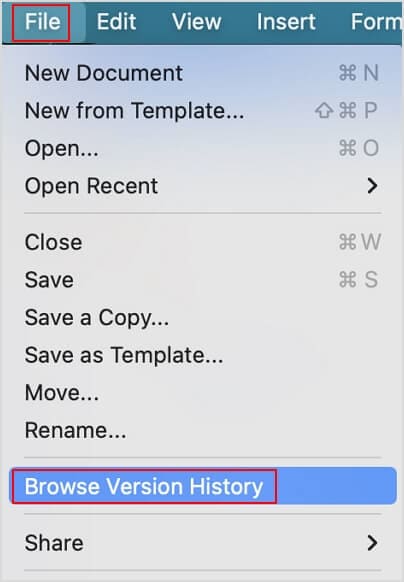
- Select a version by its date and time.
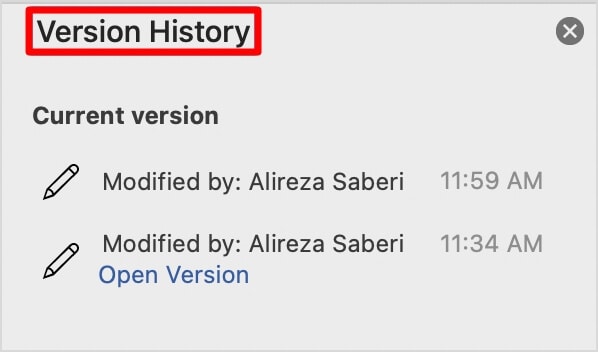
- Review the document before replacing the current copy.
- Choose Restore, or save a copy of the earlier version to a separate location.
Method 2: Recover an Unsaved Word Document with AutoRecovery
AutoRecovery may help when Word or macOS closed unexpectedly before you saved the document. The exact folder path can vary by Microsoft Office and macOS version, so use Word's recovery prompt or the current Microsoft support instructions first.
- Reopen Microsoft Word immediately after the crash.
- Check whether Word displays a recovered document in the Document Recovery pane.
- If no recovery pane appears, use Finder's Go > Go to Folder to inspect the AutoRecovery location for your installed Word version.
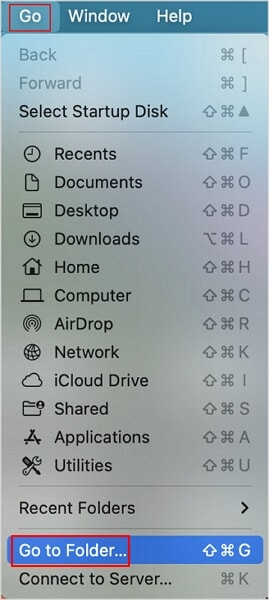
- Open a candidate file and save it with a new name to another folder.
- Compare the recovered content with the last version you remember editing.
Method 3: Check Temporary Word Files Carefully
Temporary files may contain fragments of an unsaved Word document, but this is not guaranteed. Use Finder or Terminal to inspect temporary locations only when the document was unsaved or Word closed unexpectedly.
- Open Finder and press
Command + Shift + Gto use Go to Folder. - Inspect the current Word AutoRecovery or temporary location for your Office and macOS version.
- Copy a candidate file to another folder before opening or renaming it.
- Try opening the copy in Word. Do not overwrite the original temporary file.
- If the file is incomplete or will not open, try Word recovery, Time Machine, or a full storage scan instead.
.tmp file is not automatically a valid Word document. Do not simply rename every temporary file to .docx.Method 4: Restore an Earlier Word Version with Time Machine
Time Machine can restore a local Word file or an earlier copy when the document folder was included in a backup created before the unwanted change.
- Connect the Time Machine backup drive, if it is not already connected.
- Open the folder where the Word document was stored.
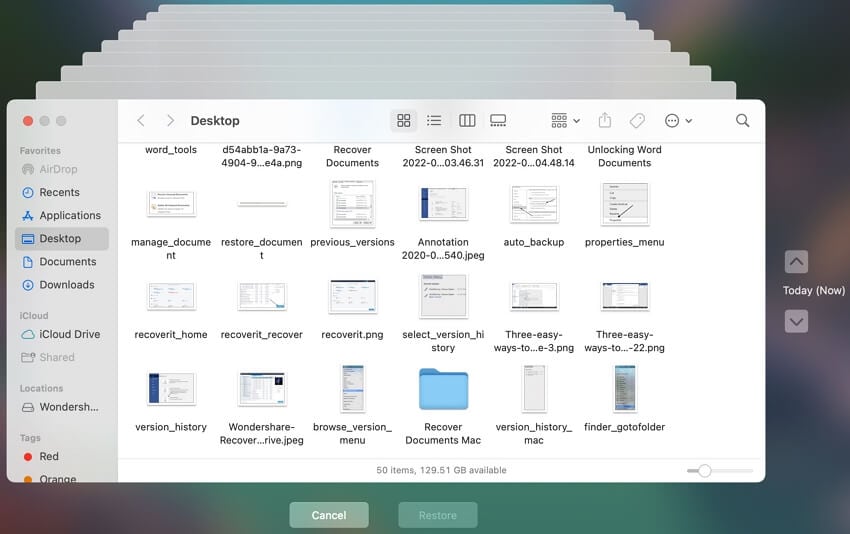
- Click the Time Machine icon and choose Browse Time Machine Backups.
- Use the timeline to select a date before the document was overwritten or deleted.
- Select the document and choose Restore, or restore a copy to another folder for comparison.
- Open the restored document and confirm its contents before replacing the current file.
Method 5: Recover a Deleted or Overwritten Word File with Recoverit
Use Recoverit Data Recovery when the Word file was deleted from a local Mac drive, emptied from Trash, or overwritten without a usable backup. It can scan a storage device that macOS still detects, but the result depends on whether the document data has been overwritten.
- Protect the source: Stop saving new files to the drive where the document was stored.
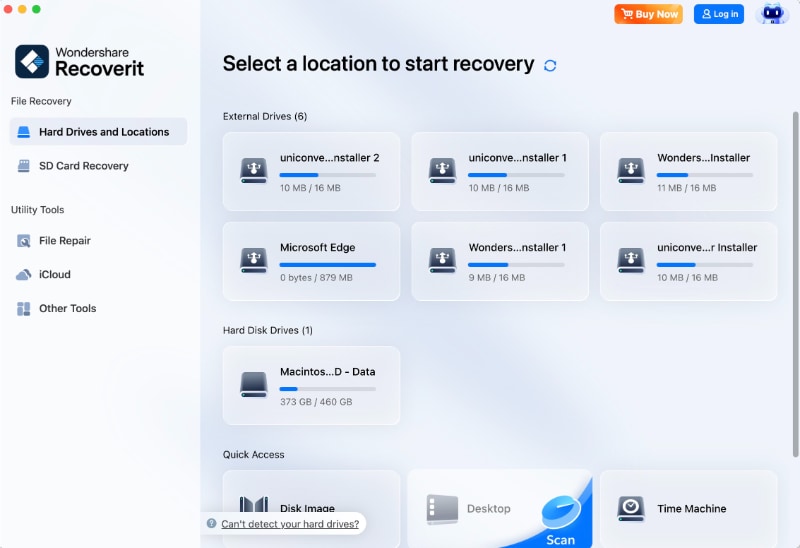
- Select the location: Open Recoverit and choose the Mac drive, external drive, or folder location that contained the Word file.
- Scan the storage: Start the scan and avoid using the affected drive while it runs.

- Filter the results: Search for
.doc,.docx,.asd, and relevant temporary file results.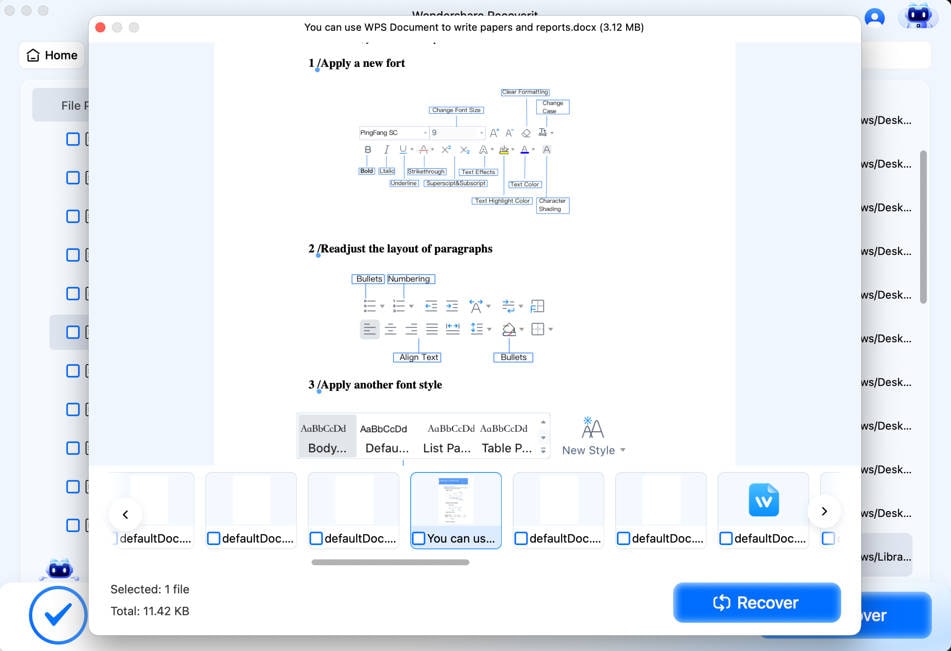
- Preview and compare: Use file size, date, preview, and document content to identify the correct version.
- Recover elsewhere: Save the result to another drive or folder, not the original location.
- Verify in Word: Open the recovered file and confirm the text, images, tables, and formatting.
What If the Recovered Word Document Will Not Open?
- Work on a copy: Keep the original recovery result unchanged.
- Check the extension: Confirm whether the file is
.doc,.docx, or a Word recovery file. - Try Word's Open and Repair: Use it on a copy when the document is detected but reports corruption.
- Compare other results: A different scan result may contain a more complete version.
- Check the file size: A zero-byte or unusually small result may be incomplete.
- Use a backup: Time Machine, OneDrive, SharePoint, or iCloud may provide a cleaner copy.
Tips to Prevent Word Version Loss on Mac
- Act quickly: Stop using the affected drive after deletion.
- Save to another location: Do not save recovered or restored files over the source file.
- Use Time Machine: Keep regular backups of important documents.
- Use Version History: Store collaborative documents in OneDrive or SharePoint when appropriate.
- Keep manual copies: Store important documents on an external drive or approved cloud service.
- Verify recovered files: Open the document and check text, images, tables, and formatting.
- Protect the Mac drive: If it is slow, failing, or repeatedly disconnecting, limit further use and consider professional recovery.
Conclusion
To recover an earlier Word document version on Mac, first identify where the file was stored. Use Version History for OneDrive or SharePoint files, reopen Word for an AutoRecovery result, and use Time Machine for local files included in a backup.
For a deleted or overwritten local document without a usable backup, stop using the affected drive and scan it with recovery software. Save any restored version to another location, compare it with the current copy, and verify the document before continuing to edit.
FAQ About Recovering Previous Word Versions on Mac
-
Can I recover an earlier version of a Word document on Mac?
Yes, when the file is available in Version History, Time Machine, AutoRecovery, another backup, or readable storage that has not overwritten the data. -
Does Mac have Windows File History for Word documents?
No. On Mac, use Word or OneDrive Version History, AutoRecovery, Time Machine, iCloud, or another backup depending on where the file was stored. -
Where does Word store AutoRecovery files on Mac?
The location varies by Word and macOS version. Reopen Word first, then check the current Microsoft-supported AutoRecovery location for your installation. -
Can I recover a Word file after saving over it?
Try Version History or Time Machine first. If no backup exists, stop using the affected drive and scan it with recovery software. -
Can I rename a TMP file to DOCX to recover it?
Not reliably. A TMP file may be incomplete or unrelated to Word. Copy it first and try opening it in Word only after confirming its source. -
Where should I save a recovered Word document?
Save it to another drive or folder, not the original location, then compare and verify the document before replacing the current copy.


