

 TL;DR:
You cannot format an SD card while write protection is active; you must first unlock the physical switch, test a working adapter, or clear the software read-only attribute before initiating the format.
● Eject the storage to ensure the physical LOCK slider on the full-size SD card or microSD adapter is pushed to the unlocked position, and test a different card reader to rule out hardware accessory faults.
● To clear software-level protection on Windows, open an administrator command prompt, launch DiskPart, select the exact SD card by its capacity, and execute the attributes disk clear readonly command.
● Format the writable card using exFAT for modern devices or FAT32 for older SDHC requirements, but if the card continues to show 0 bytes, reports no media, or permanently rejects writes, the internal controller is likely failing and cannot be fixed by formatting.
Ask AI for a summary
 ChatGPT
 Perplexity
 Gemini
 Claude
 Grok
Grok
TL;DR: How To Format A Write-Protected SD Card
1. Check The Data: If the SD card contains files you need, copy or recover them before formatting. Formatting and DiskPart commands can remove file-system information.
2. Make The Card Writable: Move the full-size SD card or adapter slider away from LOCK, then try another adapter or card reader. A microSD card itself normally has no lock switch.
3. Clear Windows Read-Only Status: If Windows still says the disk is write-protected, use DiskPart's attributes disk clear readonly command after selecting the correct card by capacity.
4. Format The Card: Once the card accepts a small test write, format it in File Explorer, Disk Management, DiskPart, the SD Memory Card Formatter, or Disk Utility on Mac.
A write-protected SD card cannot be formatted until it becomes writable. This guide shows how to check the lock, protect or recover files, clear Windows read-only status, and format an SD or microSD card safely.
Quick answer: You cannot reliably format an SD card while write protection is active. First eject the card and check the LOCK slider on the full-size card or microSD adapter. If the card is not physically locked, test another adapter or reader. On Windows, open DiskPart as administrator, select the SD card by its capacity, run attributes disk clear readonly, and then format the writable volume in File Explorer or Disk Management. If the card contains important files, recover them before formatting. A card that stays read-only, shows 0 bytes, reports no media, disconnects, or has physical damage may be failing rather than merely protected.
In This Article
-
- Method 1. Unlock The SD Card Or Adapter
- Method 2. Replace The Adapter Or Card Reader
- Method 3. Clear Read-Only Status With DiskPart
- Method 4. Format The Card In File Explorer
- Method 5. Format The Card In Disk Management
- Method 6. Format The Card With DiskPart
- Method 7. Use The SD Memory Card Formatter
Part 1. Can You Format A Write-Protected SD Card?
Not while the write-protection restriction is active. Formatting creates or rewrites file-system structures, so the computer must be allowed to write to the SD card. A write-protected card may still let you open and copy existing files, but it can reject new files, deletions, partition changes, and format requests.
The goal is therefore a two-stage process: make the card writable, then format it. Unlocking the card is not the result users are searching for; it is the prerequisite that allows the requested format operation to complete.
| Card Situation | Can You Format It Now? | Correct Next Step |
| The full-size SD card or adapter is set to LOCK | No | Move the slider away from LOCK, reconnect the card, and try again. |
| Windows reports "The disk is write-protected" but the card has normal capacity | Not Yet | Test the reader, clear the disk-level read-only attribute, and then format. |
| The card has important photos, videos, or documents | Do Not Format Yet | Copy or recover the files to another drive first. |
| The card has 0 bytes, no media, or an unstable capacity | Usually No | Check one known-good reader. If the result is unchanged, treat it as a possible hardware failure. |
| The card accepts a small test file and reports its normal capacity | Yes | Choose the file system required by the camera, phone, computer, or other target device and format it. |
Do not use an unknown "SD card protection removal tool" to force a format. It can write new metadata to the card, bundle unwanted software, or make later recovery more difficult. Use the card manufacturer's instructions, Windows storage tools, macOS Disk Utility, or the official SD Memory Card Formatter.
Part 2. Check The Card Before Formatting
Before following any format method, identify the card, protect the data, and check whether the storage is stable. These checks prevent the most common mistake in this workflow: erasing the wrong disk or formatting the only copy of important files.
- Decide Whether The Data Matters: If the card contains the only copy of photos, videos, recordings, or documents, do not format it. Go to Part 5 first.
- Cancel Format Prompts: Select Cancel when Windows, macOS, a camera, phone, dashcam, or game console asks you to format or initialize the card.
- Check The Capacity: Compare the capacity shown by the computer with the label on the card. A 0-byte, no-media, or dramatically smaller capacity is a warning sign.
- Use A Different Destination: If you copy or recover files, save them to the computer or another healthy drive, never back to the source card.
- Stop If The Card Is Unstable: Repeated disconnects, unusual heat, a cracked or bent card, liquid exposure, or a changing capacity can indicate hardware failure. Do not keep reconnecting it as a test.
If the card is empty or the files are already backed up, continue to the Windows or Mac formatting steps. If it is readable but protected, the read-only state may help prevent new writes from overwriting recoverable deleted data, so recover first when the files are valuable.
Part 3. How To Format A Write-Protected SD Card On Windows
Use the Windows workflow in this order: check the physical lock, rule out the adapter or reader, clear a software read-only attribute, and then format the card. The first two methods are reversible. The formatting methods erase the card's file system and should only be used after the data is safe.
Method 1. Unlock The SD Card Or Adapter
A standard SD card usually has a small slider on its left edge. The printed LOCK position is intended to prevent compatible devices from writing to the card. A microSD card normally has no physical lock switch, but a full-size adapter used with it may have one.
- Eject The Card: Remove the SD card from the camera, computer, or reader.

- Move The Slider Away From LOCK: Slide it firmly toward the unlocked position. Use the printed LOCK label as your reference and do not force a loose or damaged slider.

- Reconnect And Test A Nonessential Write: Insert the card again and try to create a temporary folder or copy a disposable file. If the card still rejects the write, continue with Method 2.
If the slider moves back to LOCK, feels loose, or the card is reported as protected in multiple readers, replace the adapter or card. Do not put tape, glue, or objects inside a reader to defeat its lock detection.
Method 2. Replace The Adapter Or Card Reader
A defective adapter or reader can cause the computer to report a protected card even when the card is not locked. This is a common issue with microSD cards because the microSD card, full-size adapter, and reader form a single connection path.
- Try A Known-Good Adapter: If you are using a microSD card, replace its full-size adapter with one that is not loose, cracked, or damaged.
- Use Another Card Reader: Connect the card directly to a different USB card reader or another computer. Avoid a USB hub while testing.

- Check The Result: Confirm that Windows shows the normal capacity and try one small, nonessential write. If only one reader reports write protection, replace that accessory and format the card through the working connection.
Do not run destructive commands while you are still unsure whether the reader or adapter is the cause. One controlled test with a known-good accessory is usually enough to separate an accessory problem from a card problem.
Method 3. Clear Read-Only Status With DiskPart
When Windows detects the card with the correct capacity but displays "The disk is write-protected," DiskPart can clear a disk-level read-only attribute. This command does not override a physical lock, repair a failing controller, or recover an undetected card. Selecting the wrong disk can affect your internal drive, so compare the size carefully.
- Open An Administrator Command Prompt: Press Windows + R, type
cmd, and press Ctrl + Shift + Enter.
- Start DiskPart: Type
diskpartand press Enter.
- List The Disks: Type
list disk. Compare each listed size with the physical capacity of the SD card. - Select Only The SD Card: Type
select disk n, replacing n with the correct disk number. If the capacity is not clearly identifiable, stop. - Check The Attribute: Type
attributes diskand look for Read-only: Yes. - Clear Read-Only: Type
attributes disk clear readonlyand press Enter.
- Reconnect And Test: Type
exit, safely eject the card, reconnect it, and try a small write. If the write succeeds, continue with Method 4, 5, 6, or 7.
If DiskPart says the attributes could not be cleared, do not immediately run clean. The physical lock, adapter, reader, storage policy, firmware, or card hardware may still be enforcing read-only access. Protect any needed files first.
Method 4. Format The Card In File Explorer
File Explorer is the simplest way to format a writable SD card that already has a usable volume. Use it for a healthy card after important files have been copied or recovered.
- Open The Card: Press Windows + E and select This PC.
- Open Format: Right-click the SD card drive and select Format. Confirm the drive letter and capacity before continuing.
- Choose The File System: Select the format supported by the device that will use the card. FAT32 is common for older devices and many SDHC cards; exFAT is common for larger SDXC cards and modern devices. Check the device manual when compatibility matters.
- Choose Quick Format: Leave Allocation unit size at its default unless the device manufacturer specifies a different value. Quick Format is normally appropriate for a healthy card that has already been checked.
- Start And Verify: Select Start, confirm the warning, wait for the process to finish, safely eject the card, reconnect it, and copy a small test file.
Formatting erases the card's file-system structures. It is not a data-preserving repair. If Windows cannot offer the file system your target device requires, use Disk Management, DiskPart, the SD Memory Card Formatter, or the device's own format function.
Method 5. Format The Card In Disk Management
Disk Management is useful when the SD card is detected but has no drive letter, an inaccessible volume, or a partition layout that File Explorer cannot use. It is still destructive, so verify the disk and protect the data first.
- Open Disk Management: Right-click the Start button and select Disk Management, or press Windows + R, type
diskmgmt.msc, and press Enter. - Identify The SD Card: Compare the disk number and capacity with the physical card. Do not continue if the identity is uncertain.
- Format An Existing Volume: Right-click the SD card volume, select Format, choose a compatible file system, and confirm the volume label and format options.
- Create A Volume If Needed: If the card contains unallocated space and the data is already safe, right-click the correct unallocated area, choose New Simple Volume, assign a drive letter, and select the required file system.
- Test The Formatted Card: Safely eject and reconnect it, then write and read a small test file before using it for important data.
If Disk Management shows No Media, 0 bytes, or a capacity that changes between connections, formatting is unlikely to solve the problem. Continue to Part 7 instead of repeatedly initializing the card.
Method 6. Format The Card With DiskPart
DiskPart can rebuild the card's partition information when normal formatting does not work. Use this method only when the card is empty or its files have been safely recovered. The clean command removes partition information and can make recovery more difficult.
- Open DiskPart As Administrator: Open an elevated Command Prompt, type
diskpart, and press Enter. - Identify The Card: Run
list diskand select the SD card withselect disk n. Compare its capacity again before the next command. - Remove The Existing Partition Information: Run
clean. Do not useclean allas a routine format command; it writes across the disk, takes much longer, and creates additional wear.
- Create A Partition: Run
create partition primary, then runselect partition 1. - Format The Partition: Run
format fs=exfat quickfor a device that supports exFAT, or runformat fs=fat32 quickwhen the target device specifically requires FAT32. Windows may reject FAT32 on larger cards.
- Assign A Drive Letter: Run
assign, then typeexit. Reconnect the card and test it with a small file.
If DiskPart reports that the disk is write-protected during clean or format, stop issuing destructive commands. Return to the physical lock, reader, and read-only checks. A card that remains protected after those checks may have a controller or flash-memory failure.
Method 7. Use The SD Memory Card Formatter
The SD Association's formatter is designed for SD, SDHC, SDXC, and SDUC media and can be preferable to a generic operating-system format when the target is a camera, recorder, phone, or other SD device. It cannot bypass a physical lock, a failing card, or a card that the computer cannot detect correctly.
- Protect The Files: Copy or recover important data and close applications that are using the card.
- Check The Card Connection: Unlock the card or adapter and connect it through a reliable reader. Confirm that the formatter sees the correct card and capacity.
- Install The Official Formatter: Download it from the SD Association Formatter page, then install the current version for your operating system.
- Select The Correct Card: Open the formatter and verify the drive letter, card type, and capacity. Never format a disk that you cannot identify.
- Choose The Format Option: Use the default quick format option unless the target device or the formatter documentation requires another choice. Confirm the erase warning.
- Test The Result: After formatting, safely eject and reconnect the card. Test it in the target device and keep a separate backup of important files.
If the official formatter also fails with a write-protection or I/O error, the problem is probably not a Windows File Explorer limitation. Use the checks in Part 6 and Part 7.
Part 4. How To Format A Write-Protected SD Card On Mac
macOS cannot bypass a physical lock switch, a faulty adapter, or a failing card controller. After unlocking the full-size card or adapter and confirming that the card appears with its normal capacity, use Disk Utility.
- Protect The Data: Copy or recover needed files before opening Disk Utility's erase function.
- Open Disk Utility: Open Applications > Utilities > Disk Utility.
- Show Physical Devices: Select View > Show All Devices so the SD card device and its volumes are visible.
- Select The SD Card: Choose the external SD card, not the Mac's internal drive. Confirm its manufacturer, name, and capacity.
- Erase The Card: Click Erase, choose a name and a file system supported by the target device, and confirm. ExFAT is commonly used for modern cross-platform cards; MS-DOS (FAT) is used when a device requires FAT32.
- Verify The Card: Wait for the erase operation to finish, eject the card, reconnect it, and test a small file before relying on it.
If Disk Utility says the card is read-only, reports no media, or cannot see its real capacity, try one known-good adapter and reader. If the same result remains, do not repeatedly erase it; the card may be failing.
Part 5. Recover Files Before Formatting The Card
Formatting is appropriate only when the data is already safe or the card is empty. If Windows or macOS can read the card but will not let you write to it, that is the best time to copy important files or use recovery software before changing the file system.
Recoverit memory card recovery belongs before the format step, not instead of it. Recoverit is recovery software, so it does not format a card, remove a physical lock, repair a failed controller, or bypass encryption. It is useful when the card is detected and readable enough to scan.
Method 8. Recover Readable Files With Recoverit
- Connect The Card: Insert the SD or microSD card into a reliable reader. Cancel any prompt asking you to format or initialize it.

- Select The Card: Open Recoverit on Windows or Mac and choose the SD card under external devices. Confirm its capacity and identity before scanning.
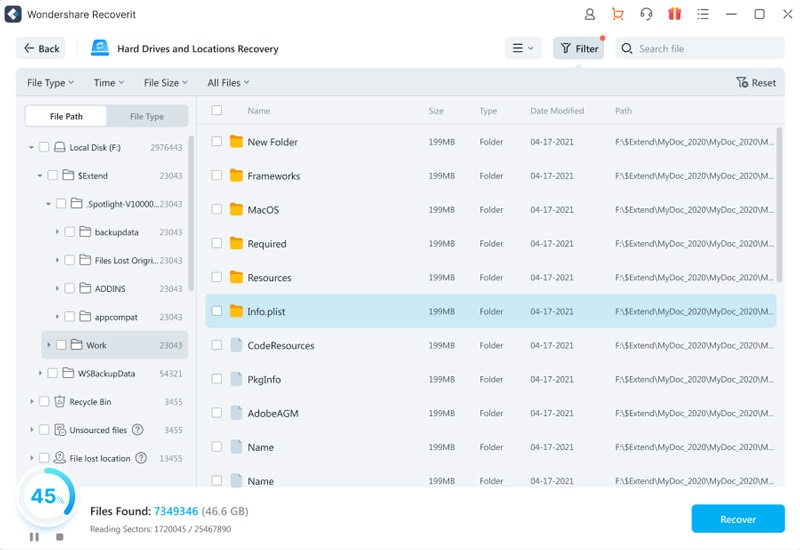
- Scan The Storage: Start the scan and keep the card connected. A corrupted or previously formatted card can take longer to scan than a recently deleted file set.
- Preview The Results: Filter by file type or path and preview important photos, videos, documents, and other supported files.

- Recover To Another Drive: Select the needed files and save them to the computer or a separate healthy drive. Never save recovered files to the source SD card.
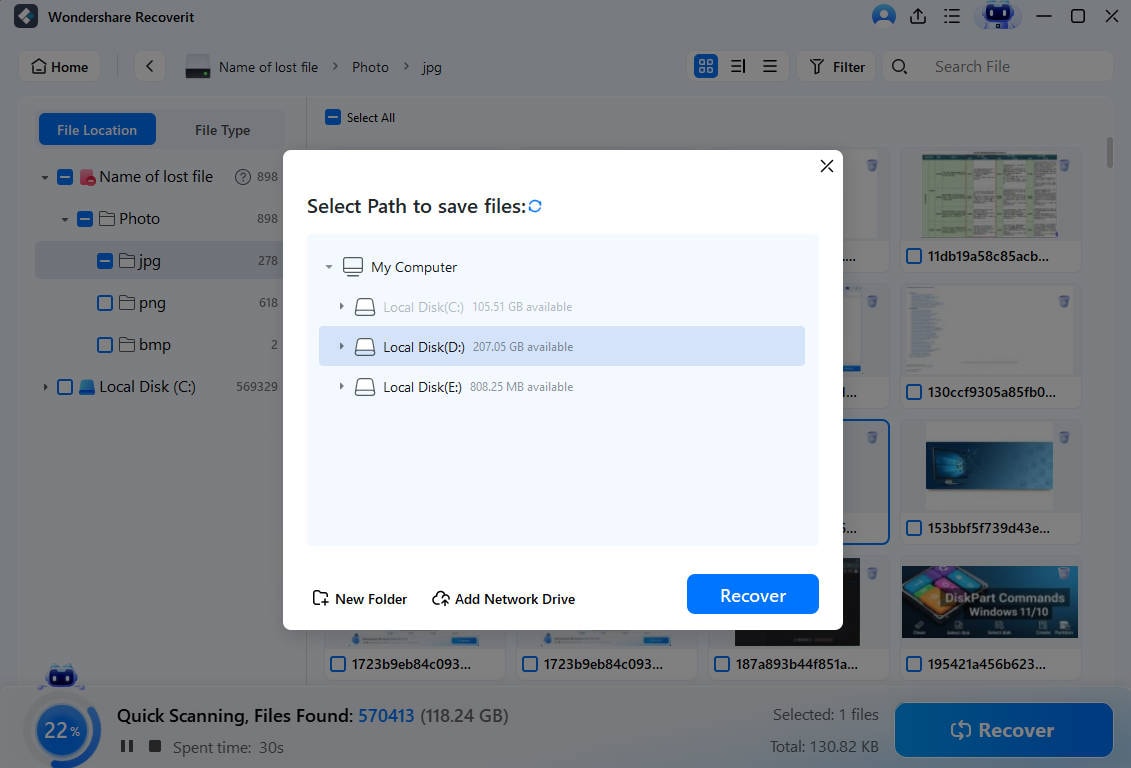
- Verify Before Formatting: Open recovered photos and documents, play important videos, and compare file sizes. Format the original card only after the recovered files are safe.
Recover Files Before Formatting Your SD Card
 Security Verified. Over 7,302,189 people have downloaded it.
For related recovery scenarios, see how to recover files from a formatted SD card and how to recover data from a corrupted SD card. If the card is not detected by any reliable reader, recovery software cannot scan it and a professional service may be required.
Part 6. What To Do If The Card Is Still Write-Protected
If the card remains protected after the physical lock, reader, and DiskPart checks, use one final Windows policy check only when the card is stable and the data is safe. This setting is not present on every Windows installation, and changing the registry cannot repair a failing card.
- Open Registry Editor: Search for Registry Editor, right-click it, and select Run as administrator.

- Open The Storage Policy Path: Go to
HKEY_LOCAL_MACHINE\SYSTEM\CurrentControlSet\Control\StorageDevicePolicies. Export the key first if it exists and you want a rollback copy.
- Check WriteProtect: If a WriteProtect DWORD exists, set its value to 0. A value of 1 enables the policy. Do not create unrelated registry keys just because the path is missing.

- Reconnect And Test: Close Registry Editor, restart Windows if needed, reconnect the card, and test whether it accepts a small write. If it does, format it with Method 4, 5, 6, or 7.
On a work or school computer, an administrator may enforce the policy again. If the registry change has no effect, do not keep modifying system settings. Test the card on another computer and evaluate the card's health.
Part 7. Why Formatting Still Fails
A failed format does not always mean that the format command was wrong. The result usually points to the layer that is blocking the write operation.
| What You See | Likely Cause | Safest Response |
| The card works in one reader but is protected in another | Adapter, reader, USB port, or lock-detection problem | Use the working reader and replace the faulty accessory. |
| DiskPart clears read-only, but formatting still fails | Physical lock, storage policy, file-system damage, or card failure | Check the adapter and another computer; recover files before further repair. |
| The card is readable but rejects every new file | The controller may have forced the card into a protective permanent read-only state | Recover the files and replace the card rather than trusting a forced format. |
| The card shows 0 bytes, no media, or an incorrect capacity | Reader, controller, power, flash-memory, or counterfeit-card problem | Try one known-good reader. Stop repeated tests if the result is unchanged. |
| The card disconnects during a scan or format | Unstable connection or failing storage | Stop writing, protect the data, and consider professional recovery. |
| The target device rejects a successfully formatted card | Unsupported file system, capacity, partition layout, or card speed | Check the target device manual and format the card in that device when recommended. |
Do not treat chkdsk, Disk Utility First Aid, clean, or a full overwrite as harmless tests when the card contains important files. These operations can change metadata or write to a deteriorating device before the data has been protected.
Part 8. When To Replace The Card
Replace the SD card after protecting or recovering the data when it repeatedly becomes write-protected, loses files, disconnects, reports a changing capacity, or fails formatting in more than one known-good reader. A successful format is not proof that a worn or unstable card is safe for irreplaceable recordings.
Stop DIY attempts and contact a professional recovery service when the card is cracked, bent, wet, burned, not detected by any reliable reader, reported as 0 bytes, or contains critical business, legal, or production data. Keep the original card unchanged and describe the format or repair commands already attempted.
Do not open the card, scrape its contacts, freeze it, heat it, bend it, or repeatedly power-cycle it. Those actions do not repair flash memory and can reduce the chance of controlled recovery.
Part 9. Prevent Future SD Card Formatting Errors
- Keep Two Copies: Copy photos, videos, and documents to a computer and a separate backup drive before formatting the card.
- Format For The Target Device: When the manufacturer recommends it, format the card in the camera, phone, dashcam, drone, console, or recorder that will use it.
- Choose A Compatible Card: Match the card capacity, speed class, and sustained write performance to the host device.
- Eject Safely: Wait for transfers and recordings to finish, then eject the card through Windows or macOS before removing it.
- Protect The Adapter: Store microSD cards in a case and replace loose or damaged full-size adapters.
- Retire Unreliable Cards: Replace cards that show missing files, slow writes, repeated format prompts, write errors, or random disconnects.
- Leave Free Space: Avoid filling a card completely during long recording sessions and verify transfers before deleting the source files.
For device-specific workflows, see how to format an SD card on Android or how to format a memory card.
Conclusion
To format a write-protected SD card, first make it writable: check the physical lock on the SD card or microSD adapter, test another reader, and clear the Windows read-only attribute when appropriate. Then format the card in File Explorer, Disk Management, DiskPart, the official SD Memory Card Formatter, or Mac Disk Utility using a file system supported by the target device.
Protect or recover important files before any format, clean, or repair command. If the card remains read-only, shows 0 bytes, disconnects, or has physical damage, the issue is probably a failing card rather than a simple formatting setting. Recover the data if possible and replace the card instead of trusting it with future files.
Frequently Asked Questions
-
How Do I Format A Write-Protected SD Card?
First check the physical LOCK slider and the adapter or reader. If Windows still detects the card with its normal capacity, use DiskPart to runattributes disk clear readonly. After the card accepts a small write, format it in File Explorer, Disk Management, DiskPart, or the official SD Memory Card Formatter. Recover important files before formatting. -
How Do I Format A Write-Protected MicroSD Card?
A microSD card normally has no lock switch, so check the full-size adapter and reader first. Then test another computer and clear the Windows read-only attribute if the card is detected correctly. Recover needed files, make the card writable, and format it with a file system supported by the target device. -
How Do You Format An SD Card That Is Write-Protected?
You must remove or resolve the restriction before formatting. Unlock the card or adapter, try a different reader, clear the DiskPart read-only attribute, and then format the writable card. If it stays protected in multiple readers, it may be failing and should be recovered and replaced. -
Why Does My SD Card Say The Disk Is Write-Protected?
The cause may be the physical lock, a faulty adapter or reader, a Windows disk attribute, a storage policy, or a card controller that has forced the media into a permanent read-only state. The message alone does not identify which cause is present. -
Does DiskPart Remove SD Card Write Protection?
DiskPart can clear a Windows disk-level read-only attribute withattributes disk clear readonly. It cannot override a physical lock, repair a failed controller, or make a card readable when Windows reports 0 bytes or no media. Select the correct disk by capacity before running commands. -
Can I Use Clean To Format A Write-Protected SD Card?
Only when important files are backed up or recovered and you have confirmed the correct disk. DiskPartcleanremoves partition information and is destructive. It cannot fix a card that is physically locked or failing. -
What File System Should I Use When Formatting An SD Card?
Use the file system supported by the target device. FAT32 is common for older devices and many SDHC cards, while exFAT is common for larger SDXC cards and modern devices. Check the camera, phone, console, dashcam, or recorder manual before choosing. -
Why Is My SD Card Still Write-Protected After DiskPart?
The physical lock, adapter, reader, storage policy, firmware, or card hardware may still be enforcing read-only access. If the card is readable, recover the files and replace it. If it shows 0 bytes, no media, or repeated disconnects, stop formatting attempts and seek professional advice. -
Can Recoverit Format A Write-Protected SD Card?
No. Recoverit is data recovery software, not a formatter or write-protection remover. It can help recover files from a readable SD card before you resolve the protection and format the card. Save recovered files to another drive. -
Can I Recover Files From A Write-Protected SD Card?
Often, if the card is detected and readable. Stop writing to it, cancel format prompts, scan it with a recovery tool such as Recoverit, and save recovered files to a different drive. Physical damage or an undetected card may require a professional lab. -
Should I Replace An SD Card That Keeps Becoming Write-Protected?
Yes, after protecting or recovering the data. Repeated write protection, missing files, slow writes, changing capacity, and random disconnects can indicate an unreliable card. Do not use it for irreplaceable photos, videos, or backups after a temporary format succeeds.


