

 TL;DR:
Verify a suspected failing graphics card by testing alternative connections, rolling back drivers, and running system diagnostics before pursuing hardware repairs, as visual artifacts and system crashes are frequently caused by faulty displays, memory errors, or software conflicts.
● Connect a known-working external monitor using a supported HDMI, DisplayPort, or USB-C output; if the external image remains stable while a built-in laptop panel shows distortion, the internal screen or cable is at fault rather than the integrated GPU.
● Isolate driver and system conflicts by pressing Ctrl + Shift + Esc to see if Windows Task Manager flickers alongside affected applications, running the Windows mdsched memory diagnostic tool, or booting an iMac or MacBook into Safe Mode to bypass non-essential macOS software.
● Stop troubleshooting and seek authorized hardware service if distortion appears during startup screens before Windows or macOS loads, and only use data retrieval software like Recoverit if a GPU crash causes logical file loss on a physically readable storage drive.
Ask AI for a summary
 ChatGPT
 Perplexity
 Gemini
 Claude
 Grok
Colored blocks on screen, unexpected blackouts, and games that crash can be signs of a failing graphics card. But the same symptoms can come from a bad display cable, a recent graphics-driver update, overheating, unstable memory, or a single application. Replacing a GPU before checking those alternatives can be expensive and unnecessary.
Start by noting when the problem appears: before Windows or macOS loads, only in one game, on one monitor, or across several apps and displays. The tests below work from simple, reversible checks toward hardware diagnosis, with separate instructions for Windows PCs, laptops, and iMacs.
In This Article
-
- Method 1. Check a Second Display and a Known-Good Cable
- Method 2. Check Windows Task Manager and the Affected App
- Method 3. Inspect, Update, or Roll Back the Graphics Driver
- Method 4. Rule Out RAM Errors Using Windows Memory Diagnostic
- Method 5. Start an iMac or MacBook in Safe Mode
- Method 6. Run Apple Diagnostics for Suspected iMac Graphics Failure
Part 1. Eight Symptoms of a Failing Graphics Card
A failing GPU can affect pixels, graphics processing, display output, and system stability. Each sign below matters more when it repeats in different conditions rather than appearing once.
| Warning sign | What you might notice | Other possible cause |
| Visual artifacts | Colored squares, checkerboards, strange polygons, or random pixels | Game rendering, driver, cable, display panel |
| Repeated black screens | Monitor loses image while the PC remains on | Cable, monitor, dock, power or driver reset |
| Crashes under graphics load | Games or editing software regularly freeze or close | Application bug, RAM, overheating or power delivery |
| Driver resets and errors | Display temporarily flashes, or an adapter reports a problem | Driver installation or OS conflict |
| Abnormal GPU heat | Performance drops or the system shuts down during sustained load | Blocked vents, cooling failure or aggressive tuning |
| Repeated graphics-related system crashes | Restart or stop error occurs across several 3D workloads | RAM, power, kernel drivers or motherboard issue |
| Display corruption during startup | Distortion appears before the operating system has loaded | Panel, cable, firmware or GPU hardware |
| GPU disappears or is not detected | Discrete adapter becomes unavailable or reports an error | Power, connection, firmware or driver issue |
Which Signs Are Strongest Evidence of Hardware Trouble?
One blurry video or one application crash is weak evidence. Reproducible artifacts in firmware or startup screens, across multiple displays and workloads, make a hardware or display-chain problem more plausible.
A graphics card that fails at stock settings after you have tried a known-good cable, monitor, supported drivers, and proper cooling deserves professional testing. A graphics-card error code or a GPU fan running loudly is a useful clue, not a stand-alone verdict.
What Can Look Like Video Card Failure?
The graphics card is one component in a larger system. Testing the entire path prevents a normal screen, faulty RAM module, or unstable power supply from being mistaken for a dead GPU.
If lines stay in exactly the same place on a laptop panel while an external display looks normal, investigate the built-in screen, backlight, or cable first. If only one game shows artifacts, test another game or app and check that application's updates. If problems began immediately after a driver update, start with driver rollback instead of opening the computer.
Part 2. How to Tell Whether Your GPU Is Failing
These six methods are arranged from non-invasive observations to system diagnostics. Save important work before a restart and stop testing if you notice burning smells, electrical damage, severe overheating, or liquid exposure.
Method 1. Check a Second Display and a Known-Good Cable
This is especially useful for laptop GPU failure symptoms and desktop computers with an external monitor. It helps separate a faulty screen or connection from a broader graphics or startup problem.
Step 1. Turn off the computer and monitor. Reseat the display cable, disconnect unnecessary adapters or docks, and try a different known-working cable or monitor input.
Step 2. Connect a known-working external display to a laptop using a supported HDMI, DisplayPort, or USB-C video output. Select the correct monitor input, start the computer, and check whether the image remains stable.
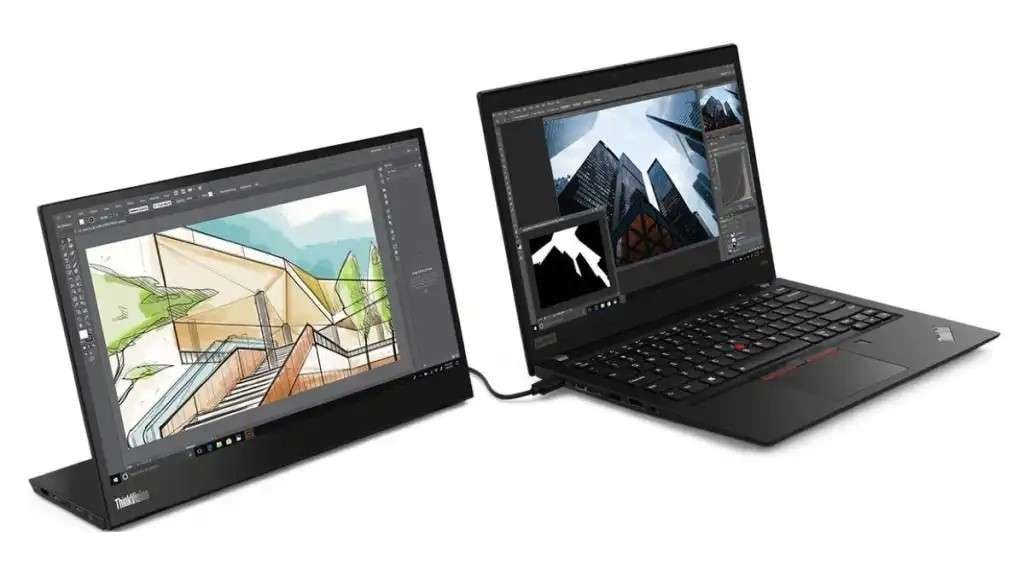
Step 3. Compare the same screen or workload on each display. If the external picture is stable while the built-in panel is distorted, suspect the laptop panel, backlight, or internal display cable before blaming the GPU.
If it fails: When neither screen shows a manufacturer logo, the problem may involve the GPU, memory, power, or motherboard. Do not repeatedly force boot attempts; record the behavior and consult the device maker's diagnostics. A separate laptop black-screen troubleshooting guide covers display-only scenarios in greater detail.
Method 2. Check Windows Task Manager and the Affected App
Windows can help identify whether the problem follows one application or the display driver. This method requires a desktop you can still access.
Step 1. Press Ctrl + Shift + Esc to open Task Manager. If the display is flickering, observe whether Task Manager flickers with the rest of the desktop.
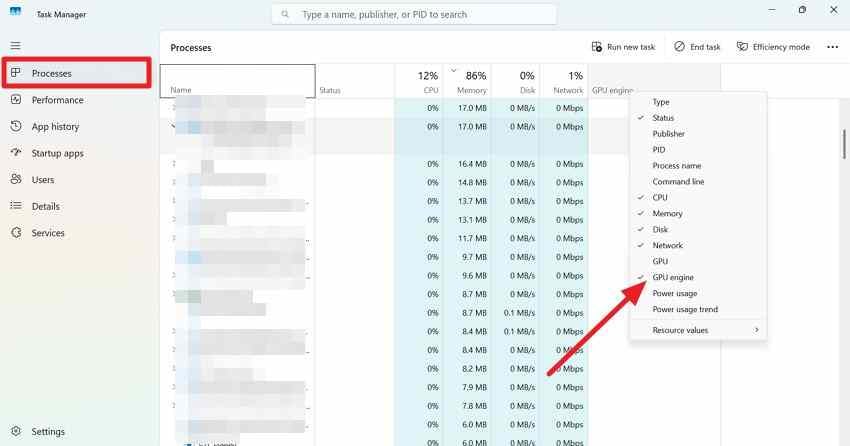
Step 2. Open Performance and select the GPU to review activity and memory use while you reproduce the issue gently. Under Processes, you can also enable the GPU engine column where available to identify the adapter being used.
Step 3. Test a second graphics-intensive application at normal settings. If only one app crashes, investigate that app's configuration before diagnosing physical GPU failure.
If it fails: Microsoft notes that Task Manager flickering with the desktop points toward the display driver, while a stable Task Manager alongside a flickering app suggests an application conflict. You can try Windows + Ctrl + Shift + B once to reset the graphics driver; this is not a permanent hardware fix. See Microsoft's screen-flicker diagnostics.
Method 3. Inspect, Update, or Roll Back the Graphics Driver
A GPU can appear to be failing when a display-driver update is incompatible with a particular Windows version or laptop. Prefer the driver validated for your exact machine, especially on dual-GPU laptops.
Step 1. Open Device Manager, expand Display adapters, and select the graphics device. Open Properties and read its device status; record any error code.
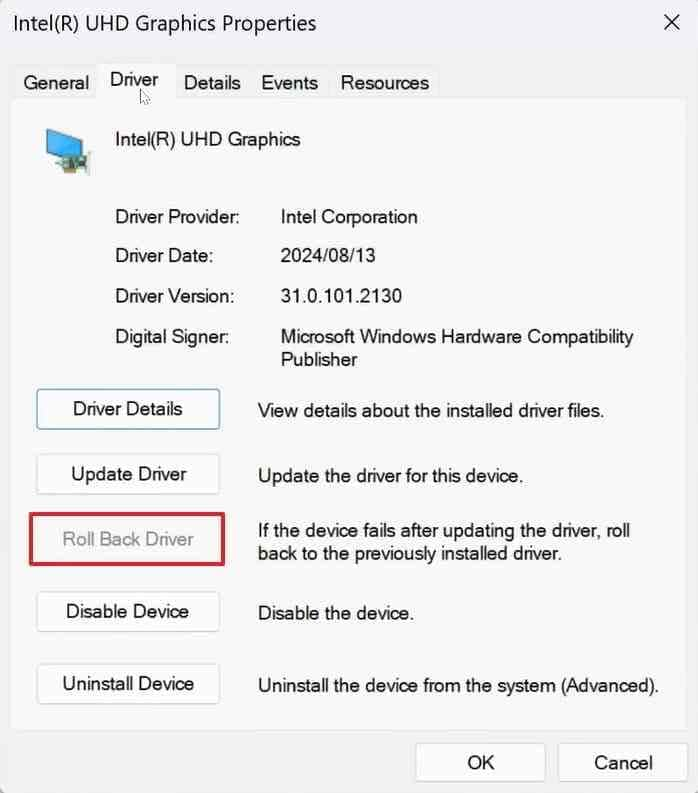
Step 2. If the issue began immediately after a driver update, open the Driver tab and select Roll Back Driver if available. Restart and reproduce the original symptom.
Step 3. Otherwise, check your PC or GPU manufacturer's official support page for a compatible display driver. Install the exact model-supported package, restart, and test without simultaneously changing overclocking or firmware settings.
If it fails: The rollback button can be unavailable when Windows has no earlier driver package. Do not download generic driver installers from unofficial sites. Device Manager reporting normal status also does not prove that every graphics workload is stable.
Method 4. Rule Out RAM Errors Using Windows Memory Diagnostic
Faulty system memory can cause freezes and crashes that resemble GPU failure. Windows includes its own diagnostic utility; you do not need to create a separate bootable disk just to run this initial RAM test.
Step 1. Save all open files and close applications. Press Windows + R, enter mdsched, and press Enter.
Step 2. Select Restart now and check for problems (recommended). Allow the computer to restart and finish the memory diagnostic.
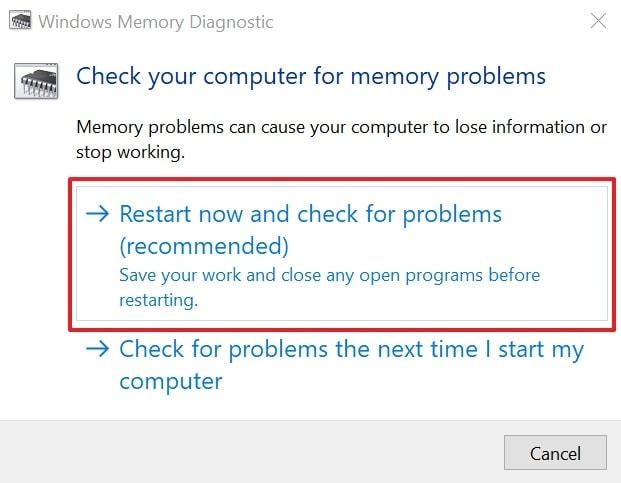
Step 3. After Windows starts again, review the result notification. If necessary, search Event Viewer for the relevant memory-diagnostic results or consult your device manufacturer.
If it fails: A RAM error needs separate attention, while a pass does not eliminate every intermittent hardware issue. Microsoft's Windows memory diagnostic instructions document this built-in test.
Method 5. Start an iMac or MacBook in Safe Mode
Safe Mode helps test whether a startup item, extension, or other software loaded during normal startup contributes to macOS display instability. It does not by itself confirm or rule out a graphics-chip defect.
Step 1. Determine whether your Mac uses Apple silicon or an Intel processor, then shut it down completely.
Step 2. On Apple silicon, hold the power button until startup options appear, select the startup disk, hold Shift, and select Continue in Safe Mode. On an Intel Mac, turn it on and immediately hold Shift until the login window appears.
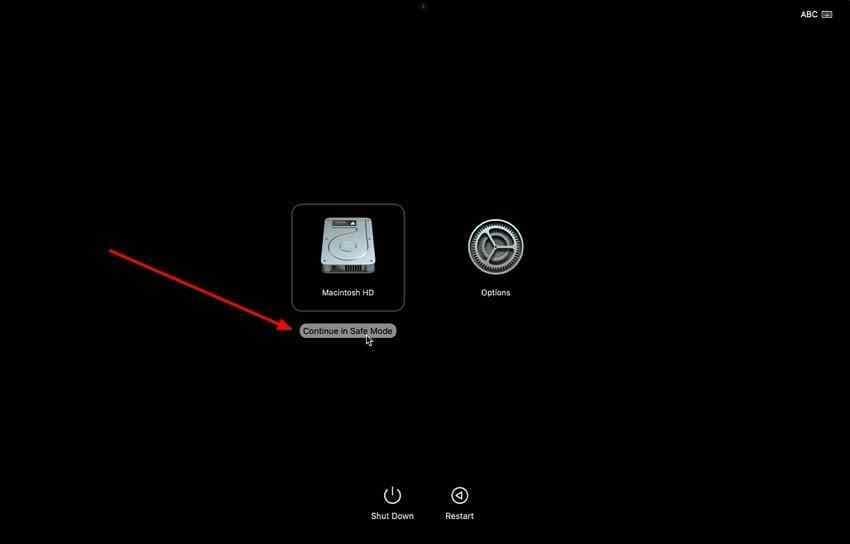
Step 3. Sign in and check whether the visual glitch or crash still occurs during light normal use. Restart normally afterward to compare results.
If it fails: A problem that disappears in Safe Mode suggests investigating login items or software; one that persists needs wider hardware, firmware, or macOS diagnosis. Follow Apple's Safe Mode instructions for your Mac type.
Method 6. Run Apple Diagnostics for Suspected iMac Graphics Failure
An iMac graphics card failure can resemble a broken display, startup-disk issue, or macOS crash. Apple Diagnostics can flag some internal hardware problems and provide reference codes for service, but a clean result cannot guarantee that the GPU is healthy.
Step 1. If possible, update macOS and back up important files. Shut down and disconnect nonessential devices, keeping the required power, keyboard, mouse, and display connections.
Step 2. On an Apple silicon Mac, hold the power button until startup options appear, then hold Command + D until the Mac restarts. On an Intel iMac, turn it on and immediately hold D; try Option + D if needed.
Step 3. Follow the prompts. If offered an offline test, select Run Offline unless support has initiated an online diagnostic session. Record any reference codes before contacting a repair provider.
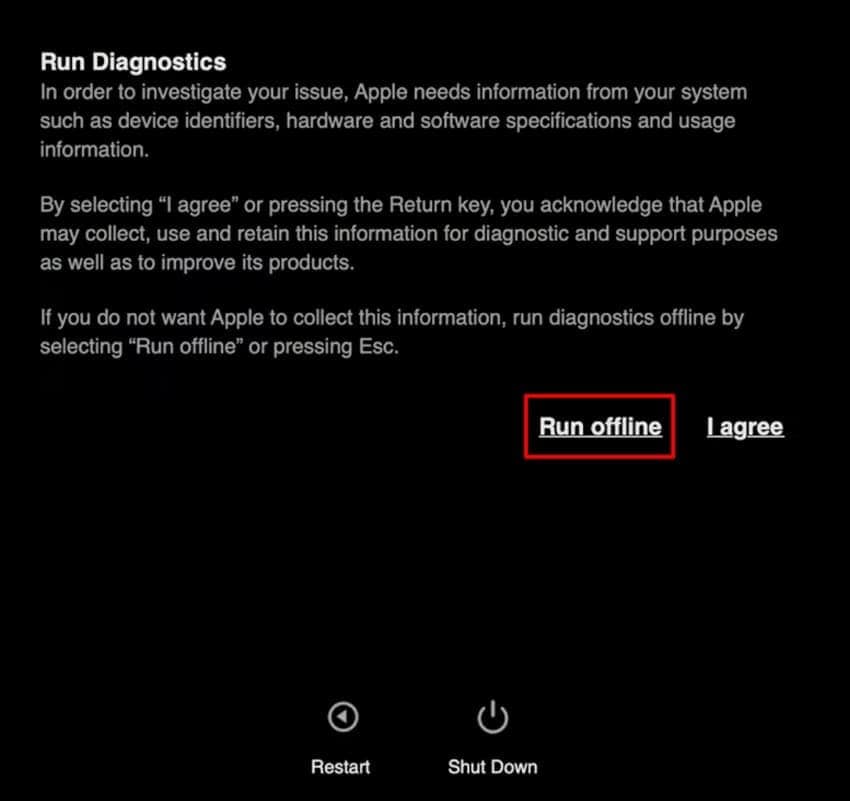
If it fails: The available tests vary by Mac model and macOS release. In macOS Tahoe 26 and later, a selection of component tests may appear. Review Apple's current Diagnostics procedure and arrange service when unexplained crashes persist.
Part 3. Laptop and iMac Graphics Card Failure: What Is Different?
The warning signs overlap, but the repair path depends on how the GPU is integrated into the computer. A desktop expansion card, laptop graphics chip, and iMac logic-board design do not offer the same options.
| Device | Useful clue | Best next decision |
| Desktop PC with discrete GPU | Artifacts persist on known-good monitors and at default settings | Request GPU, PSU, and motherboard testing before replacement |
| Windows gaming laptop | Only built-in display fails, external screen works | Inspect panel and display cable; avoid assuming laptop GPU failure |
| Dual-GPU laptop | Issue occurs only when discrete graphics are used | Check which adapter is active and use OEM-validated drivers |
| Intel iMac | Startup artifacts, recurring graphics crashes, or Diagnostics reference codes | Document exact model and arrange authorized hardware diagnosis |
| Apple silicon iMac | Similar display corruption or restart symptoms | Use current Apple silicon Diagnostics and service guidance; do not assume a removable video card |
Can You Replace a Failing GPU in a Laptop?
On many laptops the graphics processor is integrated or soldered to the system board, so replacing it is not like changing a desktop PCIe graphics card. External-monitor results, OEM diagnostics, warranty terms, and a repair quote should guide the decision.
If a laptop is still usable, back up work first. Avoid repeatedly running intense GPU stress tests when the machine is already overheating, shutting down, or producing persistent boot-time artifacts.
What About iMac Graphics Card Failure Symptoms?
Older Intel iMacs and current Apple silicon iMacs use different hardware architectures. A historical issue or repair program involving one old model must not be applied automatically to every iMac with lines or a black screen.
For an iMac that freezes, starts with distorted graphics, or crashes in unrelated apps, compare Safe Mode with normal startup, run Apple Diagnostics, and document the exact model and macOS version. Consider an external-display comparison only where the model supports it. If the problem is reproducible outside ordinary apps, seek service rather than attempting unsupported internal repairs.
Part 4. Protect Files Before Graphics Card Repair or Replacement
Video card failure normally affects graphics output rather than automatically deleting or corrupting files stored on a drive. However, forced shutdowns, interrupted recording or saving, a damaged file system, or major hardware work can put important files at risk.
When Is Recoverit Relevant?
First try a normal backup if the computer and storage are accessible. Recoverit is relevant only when files are actually missing or inaccessible because of logical storage loss, the drive remains detectable, and recoverable data has not been overwritten.
For example, a crash during a long video export may leave a missing or incomplete file. Recoverit can scan accessible storage for recoverable lost files, but it cannot repair a failed graphics card, restore a video that was never saved, or guarantee recovery from a physically failed drive. See the Recoverit video recovery feature for the supported recovery workflow.
Method 7. Recover Missing Files from Readable Storage with Recoverit
Use these steps only if files disappeared after a crash and the affected storage is still readable. If the system remains unstable, work from another healthy computer with the source drive attached safely, and avoid installing recovery software on the drive that contains the missing files.
Step 1. Open Recoverit on the working system, choose the drive or location where the files were lost under Hard Drives and Locations, and start the scan.
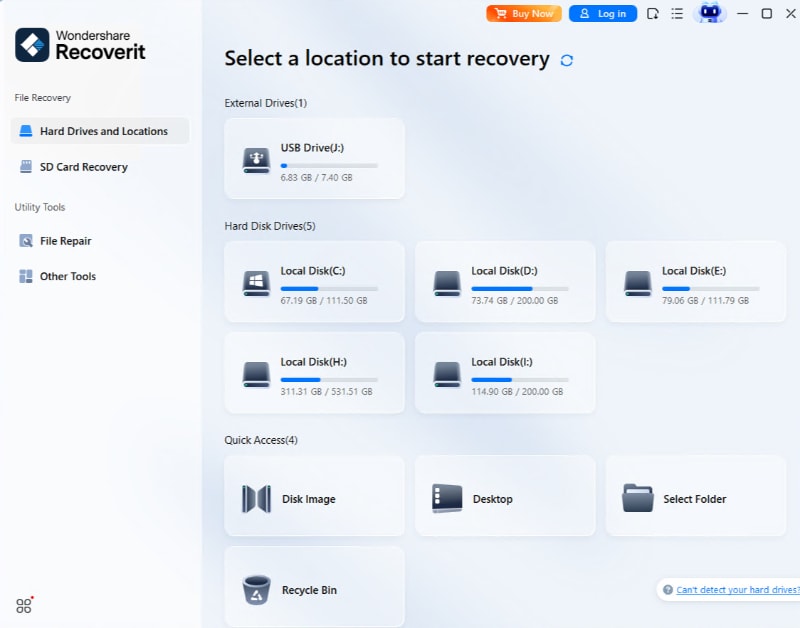
Step 2. Let Recoverit scan the selected location, then use file-type filters to review potential video and project files. Scanning cannot reconstruct data already overwritten or never saved.
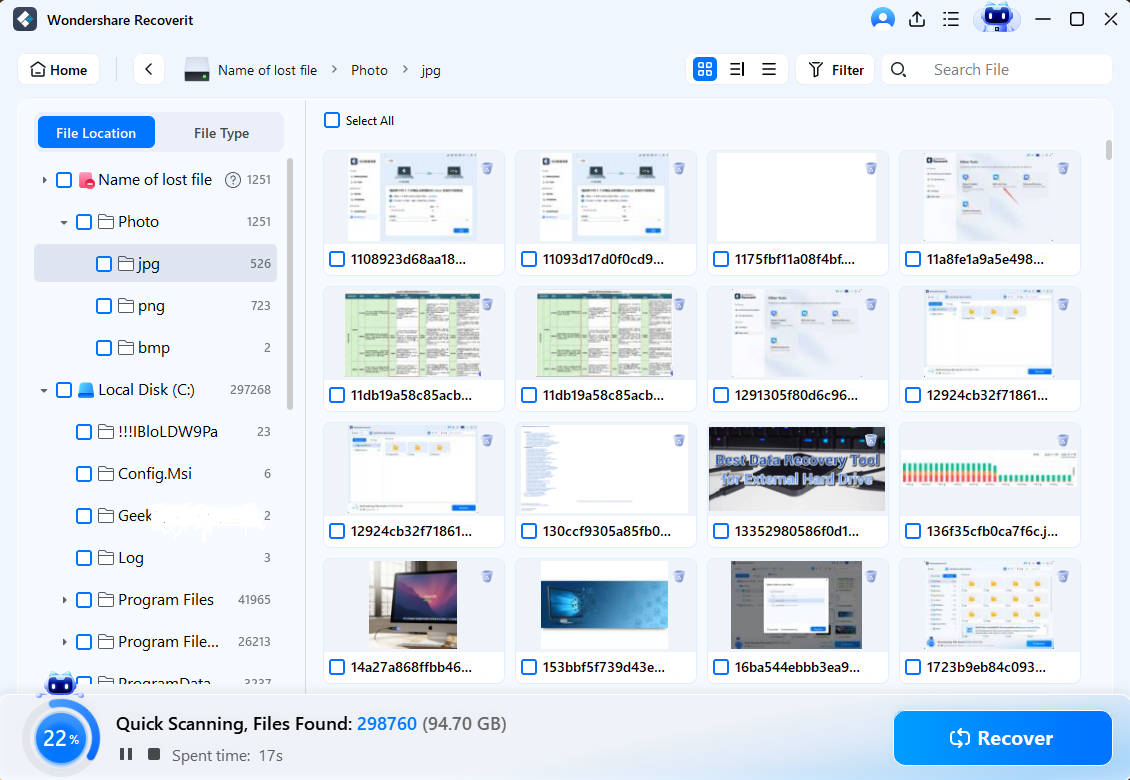
Step 3. Preview recoverable files where supported, select what you need, and choose Recover. Save recovered files to a different drive to reduce overwrite risk.
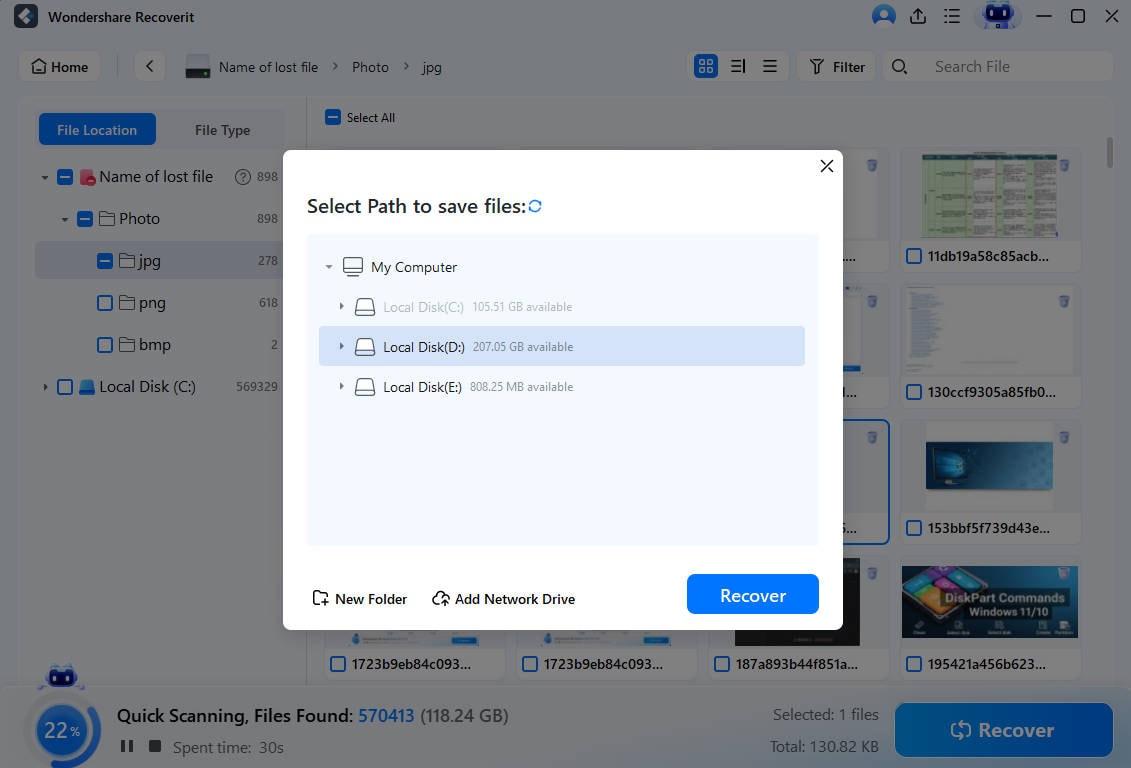
If it fails: If the drive is absent, making unusual mechanical noises, repeatedly disconnecting, or showing physical damage, stop DIY scans and consult a professional recovery service. A graphic glitch shown only during video playback is not proof the video file itself is corrupt.
Part 5. When to Repair, Replace, or Stop Troubleshooting
Once safe checks are complete, focus on repeatability and the effect of changing one variable at a time. The goal is to avoid both unnecessary GPU replacement and risky attempts to operate failing hardware.
When Software Checks May Be Enough
If the issue started immediately after a driver or application update and disappears after a compatible rollback, the original symptom was likely software-related. If swapping one cable or monitor resolves it, investigate the display chain instead. Return overclocked or undervolted settings to manufacturer defaults only using the documented controls for your hardware.
When Professional Hardware Service Is Safer
Seek qualified service for artifacts already visible during startup or firmware screens, recurrent no-display behavior on known-good monitors, repeated shutdowns at stock settings, GPU detection errors that survive supported driver troubleshooting, or any electrical, liquid, or thermal damage.
Before approving service, record the symptom, exact GPU or Mac model, operating-system version, error codes, and whether a second display worked. Ask about warranty coverage and data-preserving procedures. Do not open power supplies, bake a GPU, remove soldered components, or repeatedly force stress tests in hopes of a permanent repair.
Conclusion
The clearest failing graphics card symptoms are recurring artifacts, black screens, graphics-related crashes, and device detection problems across multiple conditions. None alone proves that the GPU hardware is bad. Test a known-good display and cable, check Windows drivers and RAM when applicable, and use Safe Mode or Apple Diagnostics for iMac and MacBook cases.
Back up important files before major hardware work. If data has genuinely been lost from accessible storage, a recovery scan may help, but it will not fix graphics hardware. When symptoms persist at default settings or appear before the operating system loads, document your findings and arrange qualified diagnosis.
FAQ
-
What are the first signs of a failing graphics card?
Repeated visual artifacts, black screens, display-driver resets, crashes under graphics load, and a missing GPU are warning signs. Test another display and driver configuration before treating them as proof of bad hardware. -
How can I tell whether my GPU or monitor is failing?
Compare a known-good cable and second monitor. A defect limited to one screen points toward that panel, cable, or input. Problems across multiple displays and before the operating system starts increase suspicion of a wider graphics or hardware fault. -
Can a graphics card fail without visible artifacts?
Yes. A failing or unstable GPU may produce black screens, detection errors, driver resets, or crashes without obvious colored pixels. Those symptoms also have non-GPU causes. -
What are the symptoms of iMac graphics card failure?
Possible signs include distorted graphics, repeated black screens, and instability during startup or graphics work. The exact diagnosis depends on the iMac model, macOS version, display hardware, and Apple Diagnostics results. -
Is a failing laptop GPU replaceable?
In many laptops the GPU is soldered or integrated rather than user-replaceable. A manufacturer or qualified technician can advise whether the repair involves a component, display assembly, or system board. -
Does a GPU crash corrupt my video files?
Not necessarily. A graphics-driver crash generally affects playback or display output. An interrupted recording, write operation, or failing storage device can separately damage or lose a file. Check the file from a stable computer before assuming corruption. -
Can Recoverit repair a failed video card?
No. Recoverit is for supported file recovery and repair workflows, not GPU hardware repair. It may help only if important files are genuinely missing or recoverable from readable storage. -
Should I stress-test a GPU that is already overheating?
No. Stop sustained high-load testing when there are severe temperature problems, repeated shutdowns, burning smells, or visible physical damage. Record the symptoms and seek qualified hardware service.


