 TL;DR:
To safely uninstall Microsoft Office on a Mac, move the intended application bundles from the Applications folder to the Trash, and avoid deleting shared Library containers unless you require a full suite reset and have securely backed up your local Outlook data.
● Uninstalling Microsoft 365 applications does not delete your personal Word or Excel documents stored elsewhere on the system, nor does it cancel your active subscription billing.
● If you are troubleshooting a single broken application, remove and reinstall only that specific app rather than performing a full suite removal that affects shared profile settings.
● Before downloading a fresh installer, verify that your computer is running one of the three most recent major macOS versions to ensure compatibility with Microsoft's current support window.
Ask AI for a summary
 ChatGPT
 Perplexity
 Gemini
 Claude
 Grok
Grok
To uninstall Microsoft Office on Mac, quit the Office apps, open Finder > Applications, select the Microsoft apps you want to remove, and move them to Trash. If you need a complete suite cleanup, Microsoft's current Mac procedure also removes specific files from ~/Library/Containers and ~/Library/Group Containers, but that deeper cleanup can remove Outlook data. Back up local Outlook data before you continue. Follow Microsoft's current Office for Mac uninstall instructions rather than using an old folder list.
If you only need to uninstall Outlook, Word, or Excel on Mac for a reinstall, start with that app alone. Do not delete shared Office containers unless you deliberately want a broader Office profile reset. Also, uninstalling an Office app normally does not delete documents stored elsewhere and does not cancel a Microsoft 365 subscription. Apple's current Mac app-removal guidance confirms both points. Review Apple's current uninstall guidance if you want to verify what app deletion does and does not remove.
In This Article
Part 1. Before You Uninstall Microsoft Office on Mac
A Mac Office uninstall can mean several different things: removing the whole Microsoft 365 suite, reinstalling one broken app, clearing a damaged Office profile, removing license files, or simply signing out. These actions are not interchangeable. Choosing the narrowest action first reduces the chance of deleting local Outlook data or shared Office settings unnecessarily.
Choose What You Actually Want to Remove
Before you remove anything, use the table below to match your goal with the smallest effective action.
| Your Goal | Best Starting Action | Delete Office Library Containers? |
| Uninstall all Microsoft 365 or Office apps | Remove Word, Excel, PowerPoint, Outlook, and OneNote from Applications. | Only if you want Microsoft's full cleanup and have protected Outlook data. |
| Reinstall Outlook for Mac | Remove Microsoft Outlook only, then reinstall it from the correct Microsoft or App Store channel. | No, not as the first step. |
| Uninstall Word or Excel only | Remove only Microsoft Word or Microsoft Excel from Applications. | No, unless a documented troubleshooting workflow specifically requires a broader reset. |
| Fix an Office activation or wrong-license problem | Check the active account and license first. | No. Use Microsoft's license-specific troubleshooting when appropriate. |
| Cancel Microsoft 365 | Use the subscription billing workflow for the account or store that sold the subscription. | No. Uninstalling apps does not cancel billing. |
If your reason for reinstalling is that Word will not launch, first rule out a narrower app problem. Recoverit's separate guide to Microsoft Word not opening on Mac covers lower-risk checks before a full suite reinstall.
Protect Outlook and Local Files First
Once you know which Office component you want to remove, take a moment to protect the data that is easiest to lose by mistake.
Word, Excel, and PowerPoint documents are normally stored outside the Office application bundles, so deleting the apps does not automatically delete those documents. Outlook needs more care because a full Office Library cleanup can remove locally stored Outlook data. Microsoft explicitly warns users to back up Outlook data before deleting the relevant Office folders from the user Library.
- Finish syncing: Let Outlook and OneDrive finish syncing before you remove anything.
- Protect local-only Outlook data: If mail, folders, drafts, archives, or other items exist only on this Mac, verify a supported backup or migration route before deleting Office containers.
- Save work outside Office containers: Confirm important Word, Excel, and PowerPoint files are in Documents, Desktop, OneDrive, iCloud Drive, another cloud location, or a separate backup.
- Managed Mac: If your work or school manages Microsoft 365, ask your administrator before removing licenses or shared Office data.
Part 2. How to Uninstall Microsoft Office or Microsoft 365 on Mac
The current Microsoft procedure applies to Microsoft 365 for Mac and supported perpetual Office releases such as Office 2024 and Office 2021. If you still call it Office 365, the current consumer suite is generally branded Microsoft 365, but the uninstall intent is the same.
Remove Microsoft Office Apps from Applications
Start with the application bundles, because this is the least destructive way to uninstall Microsoft Office or Microsoft 365 on a Mac.
Step 1. Quit Office apps.
Save open work, then quit Word, Excel, PowerPoint, Outlook, OneNote, and any other Office app you plan to remove.
Step 2. Open Finder > Applications.
Locate the Microsoft apps you want to uninstall. For a complete Microsoft Office uninstall, select the Office apps in scope. Do not automatically include OneDrive, Teams, Edge, or other Microsoft software unless you also intend to remove those products.

Step 3. Move the selected apps to Trash.
Hold Command while clicking to select multiple apps. Then Control-click or right-click the selection and choose Move to Trash. Enter an administrator name and password if macOS requests one.
Step 4. Stop here if you only need an app-only reinstall.
If your goal is simply to reinstall Outlook, Word, Excel, or the Office application bundles, this is the least destructive stopping point. The Library cleanup below is for a deeper suite reset and can remove local Office data.
Remove Office Library Files for a Complete Cleanup
If the app-only uninstall did not solve the problem, use the deeper cleanup below to remove the remaining Office support files that Microsoft documents.
Warning: Continue only if you deliberately want the full Microsoft cleanup and you have protected local Outlook data. Do not delete the entire Containers or Group Containers directory.
Step 1. Open your user Library.
In Finder, press Command + Shift + G, enter ~/Library, and select Go.

Step 2. Open the Containers folder.
Microsoft currently lists the following Office-related folders. Some may not exist on every Mac. Move only the listed items that are present:
- Microsoft Error Reporting
- Microsoft Excel
- com.microsoft.netlib.shipassertprocess
- com.microsoft.Office365ServiceV2
- Microsoft Outlook
- Microsoft PowerPoint
- com.microsoft.RMS-XPCService
- Microsoft Word
- Microsoft OneNote
Step 3. Review Group Containers.
Go back to ~/Library, open Group Containers, and, if you are following the complete Microsoft cleanup, move these documented folders to Trash if present:
- UBF8T346G9.ms
- UBF8T346G9.Office
- UBF8T346G9.OfficeOsfWebHost
Note: Microsoft's current documentation warns that the Library cleanup can remove Outlook data. If you are unsure whether local Outlook data has been backed up, stop before this step rather than guessing which shared folders are safe to delete.
Remove Office from the Dock and Restart
After the main uninstall is finished, use the short cleanup below to remove stale shortcuts and confirm that macOS reflects the change.
Step 1. For any Office icon that remains in the Dock, Control-click it and choose Options > Remove from Dock.

Step 2. Restart your Mac. Microsoft includes a restart as the final step of its current uninstall sequence.
Step 3. Verify that the intended apps are no longer in Applications and that your personal documents are still present. If you kept the apps in Trash while verifying, empty Trash only after you are sure you removed the correct items.
Part 3. How to Uninstall Outlook, Word, or Excel Only
You do not have to turn a single-app problem into a full Office reset. For the keyword intents uninstall Outlook for Mac, uninstall Word on Mac, and uninstall Excel on Mac, the safest first move is to remove only the affected application bundle.
Uninstall Outlook on Mac
If Outlook is the only app causing trouble, keep the uninstall narrow so you do not remove shared Office data unnecessarily.
- Quit Microsoft Outlook.
- Open Finder > Applications.
- Control-click Microsoft Outlook and choose Move to Trash.
- Restart the Mac if you are troubleshooting an Outlook installation problem.
- Reinstall Outlook from the same legitimate channel that matches your license or account.

Do not delete shared Office Group Containers merely because you are uninstalling Outlook. Microsoft's complete suite cleanup can remove Outlook data, so a single-app reinstall should stay narrow unless a Microsoft support workflow specifically calls for profile or license cleanup. If you use Outlook as a standalone app, Microsoft's current guidance confirms that Outlook for Mac is available from the Mac App Store; work or school accounts may still require an eligible organization license.
Uninstall Word or Excel on Mac
The same Finder-based approach works for Word and Excel, and you usually do not need to turn a single-app reinstall into a full Office reset.
To uninstall Word from Mac, remove Microsoft Word from Applications. To uninstall Excel on Mac, remove Microsoft Excel. Keep your .docx, .xlsx, and other personal files where they are. If you are reinstalling only one broken app, avoid deleting the suite-wide Library folders unless the ordinary app reinstall fails and a current Microsoft troubleshooting path calls for a deeper reset.

Is There an Office Uninstaller for Mac?
Before you look for a one-click remover, it helps to separate normal app removal from deeper licensing or profile troubleshooting.
Microsoft's current Mac uninstall guidance uses Finder plus a documented Library cleanup rather than a one-click suite uninstaller. Microsoft does provide a separate Office License Removal Tool, but that tool removes Office license files for activation troubleshooting; it does not replace the normal app-uninstall procedure.

Part 4. How to Reinstall Microsoft 365 or Office on Mac
Reinstall from Microsoft or the correct App Store channel after you have verified that your documents and any local Outlook data are safe. Do not download Office installers from unofficial mirrors.
Check macOS Support Before Reinstalling
Before you download a fresh installer, verify that your Mac and your Office license still match a currently supported release.
Microsoft's current policy says Office for Mac is supported on the three most recent major macOS versions. When Apple releases a new major macOS version, Microsoft drops the oldest supported major version and supports the newest plus the previous two. Because that window changes over time, check the current Microsoft Office system requirements before reinstalling instead of relying on an old static compatibility table.
Note: Office 2019 for Mac is no longer a current supported release; Microsoft's system-requirements page records that Office 2019 for Mac support ended in October 2023. If you are replacing an old install, confirm that your license and macOS version match a currently supported Microsoft release.
Download Microsoft 365 or Office 2024
Once support and licensing are confirmed, use Microsoft's current download path so you get the right installer for your account.
Use Microsoft's current install and reinstall workflow. Sign in with the Microsoft account or work/school account associated with your license, then choose Install apps from the Microsoft 365 Apps page.

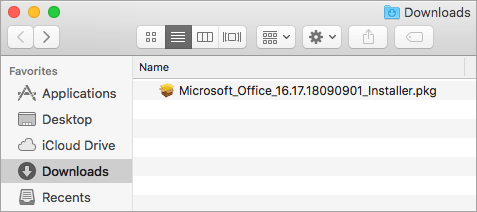
After the download finishes, open Finder > Downloads and double-click the Microsoft Office installer.pkg file. Microsoft notes that the exact file name may vary slightly.
Install the Full Suite or Only the Apps You Need
After the installer package opens, follow the prompts below and choose a full or partial app install based on what you actually need.
Step 1. On the installer welcome screen, select Continue, review the license agreement, and choose Agree.
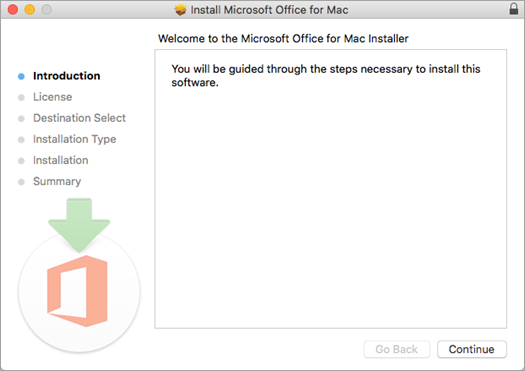
Step 2. Choose the installation type. If you only want to reinstall Outlook, Word, Excel, or another Microsoft 365 app, Microsoft currently provides a Customize option in the installer. Use it to uncheck programs you do not want.
Step 3. Review the disk-space requirement and install location, select Install, and enter your Mac login password if prompted.
Step 4. When installation finishes, select Close. Open Word, Outlook, or another installed Office app and sign in with the account associated with your Microsoft 365 or Office license.
Use the License Removal Tool Only for Licensing Problems
If the reinstall succeeds but activation still fails, move to a license-specific fix instead of repeating the same uninstall cycle again.
If the apps reinstall correctly but Office activates with the wrong account, stays in a view-only state, or continues to show an activation problem, do not keep uninstalling the entire suite. Microsoft's Office License Removal Tool for Mac is designed to remove Office license files so the apps can be reactivated with the correct account.
Important: The license removal tool removes Office licenses, not your Office apps. Before you use it, make sure you know the Microsoft account and password associated with the license you intend to reactivate.
Part 5. How to Uninstall Office 2011 on Mac
Because Office 2011 is a legacy product, the goal here is a basic app removal rather than a modern Microsoft 365 cleanup or relicensing workflow.
The keyword uninstall Office 2011 Mac describes a legacy product rather than the current Microsoft 365 workflow. Microsoft ended support for Office 2011 for Mac on October 10, 2017, stopped security and software updates, and retired most Office 2011 online help. Microsoft now recommends moving to a current Microsoft 365 or Office release. See Microsoft's Office 2011 for Mac end-of-support notice.
For a basic removal, quit the Office 2011 apps and move the Office 2011 applications from Finder to Trash. Avoid copying old, version-specific Library-cleanup commands from outdated tutorials: Microsoft no longer maintains most Office 2011 support content, and legacy file paths may not match a modern Mac. If you are replacing Office 2011, verify that your Mac supports the current Office release you plan to install before deleting your working copy.

Part 6. What If a Word or Excel File Is Missing After Uninstalling Office?
If the uninstall is finished but a document is gone, shift from app troubleshooting to file-location and recovery checks.
Uninstalling Word, Excel, Outlook, or the Microsoft 365 app bundles should not by itself delete ordinary documents stored elsewhere. If a document is missing after cleanup, first determine whether the file itself was deleted, moved, unsynced, or stored inside a local app-specific location that was removed.
Work through the checks below in order, because the quickest explanation is often a moved or unsynced file rather than permanent loss.
- Check Trash before emptying it.
- Check OneDrive, iCloud Drive, Time Machine, or another backup if the document was stored there.
- Search Finder by the file name and extension.
- If a local file was actually deleted and is not in a backup, stop writing new data to the source volume to reduce overwrite risk.
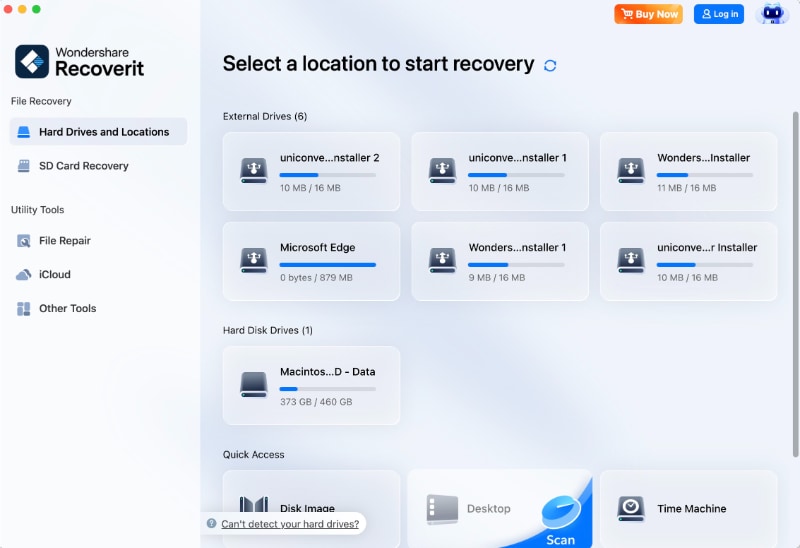
If the file was truly deleted from local Mac storage and built-in copies are unavailable, Recoverit Mac file recovery can be considered for a logical data-loss case when the source storage is still detectable. Save any recovered files to a different healthy location. No recovery software can guarantee a file after its data has been overwritten, and repeated disconnects, unusual noises, liquid damage, or an undetectable drive are reasons to stop DIY scanning and consider professional recovery instead.
Conclusion
For most users, the safest Mac Office uninstall is narrower than a full cleanup: quit Office, remove only the apps you actually want to uninstall, and reinstall from the correct Microsoft or App Store channel. Use the deeper Library cleanup only when you intentionally need a full Office reset and have protected Outlook data first. Keep license removal, subscription cancellation, app removal, and file recovery as separate tasks so one troubleshooting step does not create a new data-loss problem.

FAQ
-
Does uninstalling Microsoft Office on Mac delete Word or Excel files?
No. Removing the Office app bundles does not normally remove documents stored elsewhere on the Mac or in cloud storage. However, a deeper Office Library cleanup can remove local Outlook data, so back up Outlook before deleting documented Office containers. -
Does uninstalling Microsoft 365 on Mac cancel my subscription?
No. App removal and subscription billing are separate. Uninstalling Microsoft 365 from a Mac does not cancel the subscription. Manage cancellation through the Microsoft account or store that sold the subscription. -
Can I uninstall only Outlook, Word, or Excel on Mac?
Yes. Quit the app, open Finder > Applications, and move only Microsoft Outlook, Microsoft Word, or Microsoft Excel to Trash. Start with this app-only removal before deleting shared Office Library containers. -
How do I reinstall Outlook for Mac after uninstalling it?
If Outlook came from Microsoft's Microsoft 365 installer, sign in with the account associated with your license, download the current installer, and use Customize if you want only selected apps. If you use the standalone Outlook app from the Mac App Store, reinstall it through the App Store. -
Is the Microsoft Office License Removal Tool an Office uninstaller for Mac?
No. It removes Office license files for activation troubleshooting. It does not replace the normal Finder-based process for uninstalling Microsoft 365 or Office apps. -
Should I still use Office 2011 for Mac?
Office 2011 may still run on some older systems, but Microsoft ended support in 2017 and no longer provides security updates or most online help for it. If possible, move to a current Office release that your Mac supports.


