TL;DR:
Discarded Gmail drafts bypass the Trash folder entirely, making the temporary "Undo" prompt the only guaranteed recovery method for personal accounts.
● Put any previously logged-in mobile devices or computers into airplane mode before opening them to stop Gmail from syncing the deletion, which may allow you to copy surviving text from an offline compose window.
● Google Workspace administrators can use Google Vault to extract discarded drafts and autosaved versions for organizational accounts, but this must be done before the system automatically purges them within 30 days and 1 day, respectively.
● Data recovery software like Recoverit cannot retrieve browser-only drafts from Google servers and only works if you need to restore deleted local email files (PST, OST, EML, EMLX, MBOX) or existing Google Takeout archives from a local storage drive.
Ask AI for a summary
 ChatGPT
 Perplexity
 Gemini
 Claude
 Grok
Grok
If you need to recover deleted draft Gmail content, act immediately. A discarded Gmail draft normally does not go to Trash, and personal Gmail does not provide a version history for restoring old draft text. The short Undo prompt is the best built-in recovery option.
After Undo disappears, your chances depend on whether another copy exists: a minimized compose window, another device that has not synced yet, an existing Google Takeout export, a desktop mail client profile, or a Google Workspace Vault search by an eligible administrator. Recoverit Email Recovery can help only when Gmail-related data existed as recoverable local files, such as PST, OST, EML, EMLX, MBOX, or a downloaded Takeout archive.
In this article
Part 1. Can You Recover a Deleted or Discarded Gmail Draft?
Sometimes, but not always. Gmail automatically saves messages you are working on in the Drafts label, but a discarded draft is not handled like a normal deleted email. Google Help states that when you delete a draft, you cannot recover it from Trash. That makes the first seconds after the loss critical.
The Short Answer for Gmail Draft Recovery
For personal Gmail, the only reliable built-in recovery is the short Undo option that appears immediately after discarding a draft. If that disappears, Gmail usually cannot restore the draft for you. You can still check unsynced devices, existing exports, local email clients, browser sessions, or Workspace Vault if the account belongs to an organization that uses it.
Deleted Draft vs Discarded Draft vs Unsaved Draft
Use the terms carefully because they lead to different recovery paths.
| What Happened | What Gmail Does | Best Recovery Chance |
| Deleted from the Drafts list | Removes the saved draft from Drafts rather than placing it in Trash like a regular message. | Use Undo immediately. Workspace Vault may help only for eligible organizational accounts. |
| Discarded in the compose window | Closes the compose window and marks the draft for removal from the user's view. | Click Undo at once, then check an unsynced device before it reconnects. |
| Never auto-saved | The latest text never reached Gmail's servers. | Check the still-open tab, restored browser session, clipboard, or another local copy. |
| Older auto-saved version overwritten | Gmail keeps showing the latest user-visible draft version, not a Docs-style version history. | Personal Gmail usually cannot restore it; Vault may surface older autosaved versions for eligible Workspace searches. |
Where Gmail Stores Auto-Saved Drafts
Google's Gmail Help says Gmail drafts are saved automatically and can be found in the label named Drafts. Vault documentation adds an important admin-side distinction: Gmail data can include unsent drafts, discarded drafts, and automatically saved versions of drafts. However, ordinary Gmail users only see the current user-visible draft, not every earlier autosaved version.
Do Deleted Gmail Drafts Go to Trash?
No. Google Help explicitly says a deleted draft cannot be recovered from the bin. That is why checking Trash usually wastes time for this specific problem. Trash recovery applies to normal deleted messages, not discarded Gmail drafts.
When a Gmail Draft Is Permanently Lost
A Gmail draft is likely lost for a personal account when Undo has expired, no tab or compose window remains open, every synced device has updated, and no local export or email client copy exists. For Google Workspace accounts, Vault may still find discarded drafts or autosaved versions until they are purged, but that requires admin privileges and depends on Vault availability and retention behavior.
Part 2. Why Gmail Drafts Disappear
Knowing the cause helps you avoid the wrong recovery path. A discarded draft, an unsaved browser session, and an overwritten sync copy are different problems.
| Cause | What Actually Went Wrong | What to Try First |
| The draft was accidentally discarded | The discard icon or delete action removed the draft from the visible Drafts label. | Use Undo immediately, then check unsynced devices. |
| Gmail did not finish auto-saving | A connection drop, browser crash, or session timeout prevented the latest text from reaching Gmail. | Restore the browser tab or session and check the still-open compose window. |
| Another tab or device overwrote the latest version | Editing the same draft in multiple places can sync an older or empty state over the text you expected. | Disconnect other devices and copy any remaining draft text before syncing. |
| Offline sync or a third-party email client failed | Outlook, Thunderbird, Apple Mail, or mobile offline storage may have a stale or unsynced copy. | Open the client offline and copy the draft text if present. |
| The draft was created in a different Google Account | The active account at compose time was not the one you are now searching. | Switch accounts and search Drafts in each signed-in Gmail account. |
| A browser extension or session problem interrupted Gmail | A crash, blocked script, cleanup extension, or forced sign-out interrupted compose state. | Avoid clearing browser data and restore the previous browser session. |
Part 3. What to Try Immediately After a Gmail Draft Disappears
Speed matters. If you are trying to recover discarded draft Gmail content, do these checks before signing out, reconnecting devices, clearing browser data, or composing a new version.
Use the Undo Option Immediately
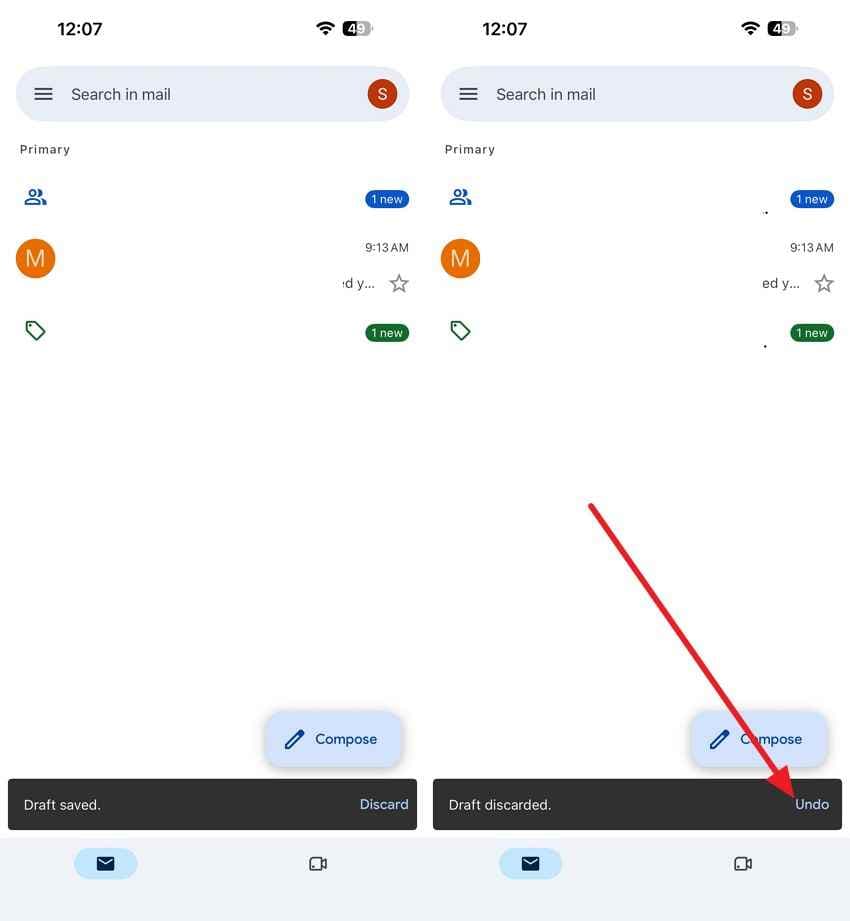
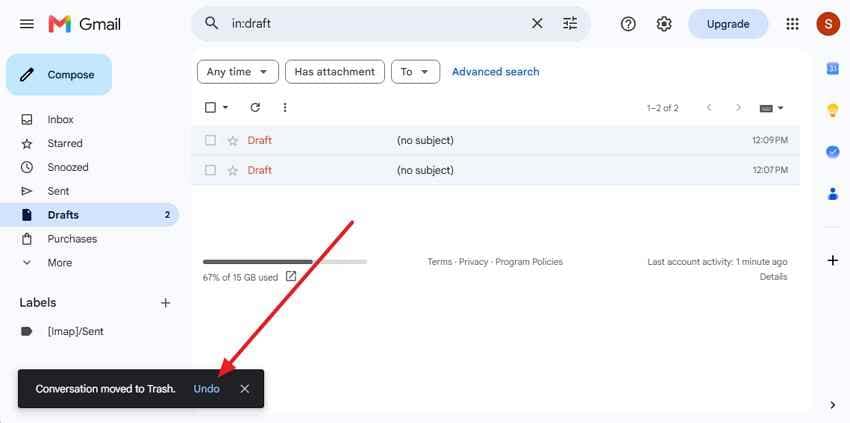
After you discard a draft, Gmail usually shows a short Undo prompt. This is the most direct recovery method because it can return the draft inside Gmail with message body, subject, formatting, recipients, and successfully uploaded attachments.
On iPhone or Android: If you tap Discard by mistake, tap Undo at the bottom of the Gmail app immediately.
On Gmail web: If you delete or discard the draft, click Undo in the lower-left prompt before it disappears.
Check Drafts and Minimized Compose Windows
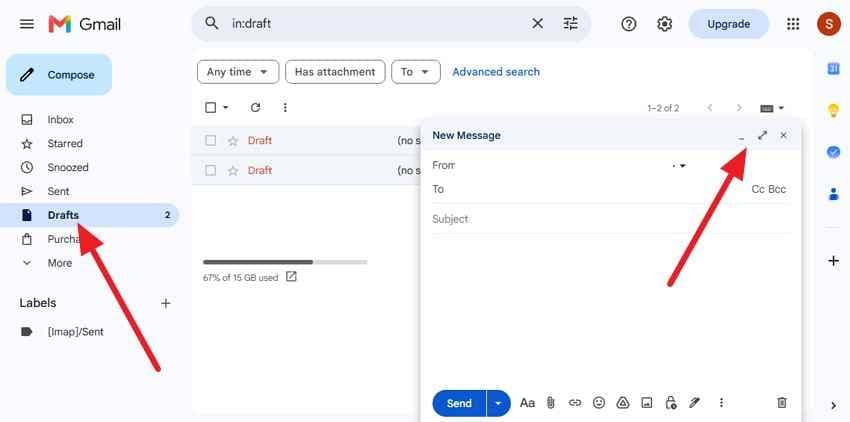
Open the Drafts label and look for minimized compose windows at the bottom-right corner of Gmail web. A minimized compose box can look like a closed draft when it is only hidden. Also check whether the draft appears under a conversation thread rather than as a standalone item.
Restore the Closed Browser Tab or Previous Session
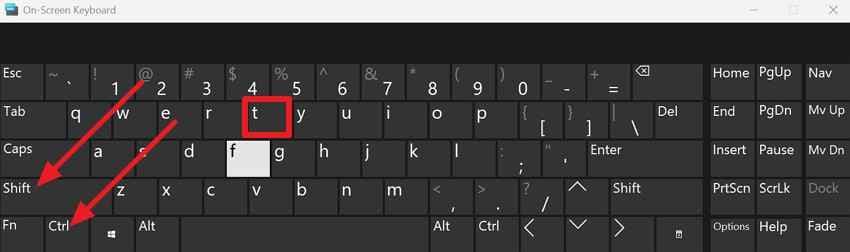
If the browser tab closed but the draft was not deliberately discarded, restore the tab quickly. Press Ctrl + Shift + T on Windows or Command + Shift + T on Mac. If the browser crashed, accept the browser's restore-session prompt before opening a fresh Gmail session.
Check Another Synced Device Before It Updates
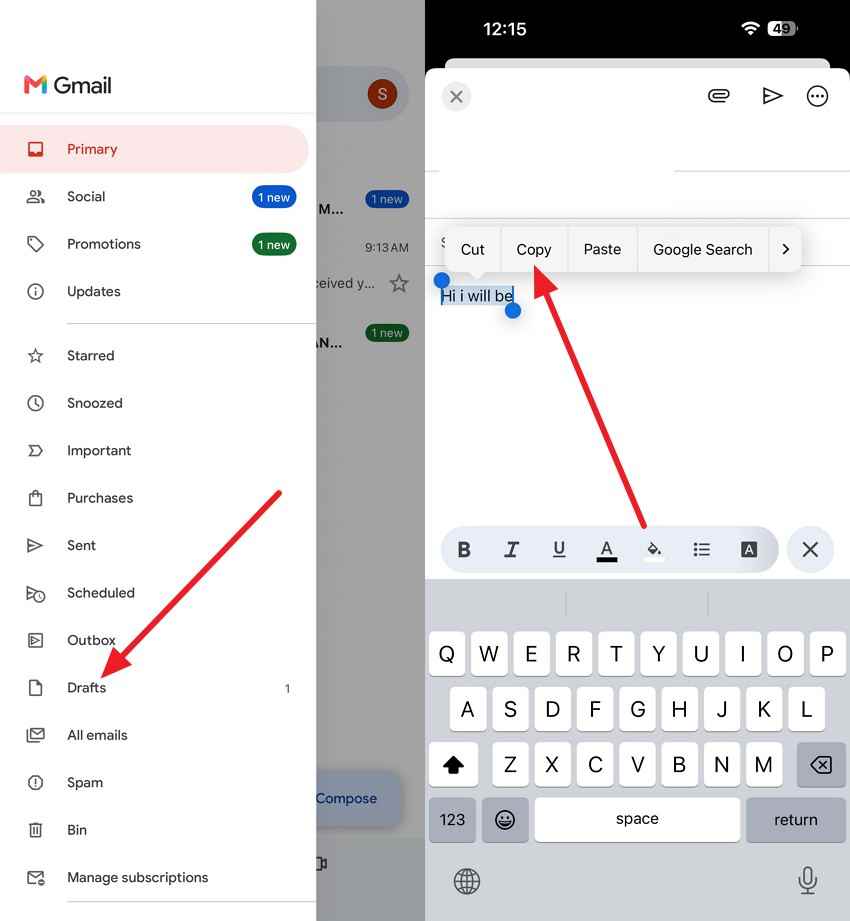
A phone, tablet, or second computer may still hold an older local state if it has not synced. Put that device in airplane mode or disconnect it from the internet before opening Gmail. If the draft appears, copy the text into Notes, Google Docs, or a local file before reconnecting.
Instructions: Open Gmail while offline, go to Drafts, open the possible draft, copy the body text, and save it outside Gmail. Reconnect only after the text is safe.
Search the Correct Google Account
If you use multiple Google accounts, the draft may belong to another account. Switch accounts and search Drafts in each one. Use recipient, subject, unique phrases, or in:anywhere plus keywords, but remember that discarded drafts usually will not appear in Trash for personal Gmail.
Avoid Clearing Browser Data Too Soon
Do not clear cookies, cache, session data, or browser history while you are still trying to recover the draft. Cleanup tools, extension resets, and sign-outs can remove the last traces of a compose session that a browser might otherwise restore.
Part 4. Advanced Ways to Find a Lost Gmail Draft
If the immediate options are gone, ask a more practical question: did the draft or a copy of it ever leave Gmail's live compose window? If yes, try these paths.
Check an Existing Gmail Export
A Google Takeout archive created before the draft disappeared may contain it. Google's Gmail export documentation says downloaded Gmail data includes message content, headers, attachments, and labels including draft messages. It also says you can download data that has not been deleted.
That last point matters: creating a new export after the draft is gone will not bring back a discarded draft that Gmail no longer has in your account. If you already have an MBOX export from before the loss, open it in a local client such as Thunderbird and search for the subject, recipient, or unique text.
Check a Synced Outlook, Thunderbird, or Apple Mail Profile
Desktop email clients configured with Gmail through IMAP can keep local data. Disconnect the computer from the internet before opening the client so it does not immediately sync the deletion. Then check local Drafts, All Mail, local folders, and search for phrases from the lost draft.
Search Local Email Files and Offline Mail Stores
If the mail client profile or local email files still exist, search for file formats tied to that client. Outlook commonly uses OST or PST data files. Thunderbird profile storage can contain MBOX-like mailbox files. Apple Mail stores local mail data that can include EMLX files. If those local files were deleted, skip to Part 5 before using the drive further.
Ask a Google Workspace Vault Admin to Search Available Draft Data
Google Vault is for administrators and legal personnel in Google Workspace organizations. It is not available to ordinary personal Gmail users. Google Vault documentation says Vault searches Gmail messages including drafts, discarded drafts, and autosaved versions.
Step 1. Ask an eligible Vault admin to sign in to vault.google.com, open or create a matter, choose Search, and select Gmail.
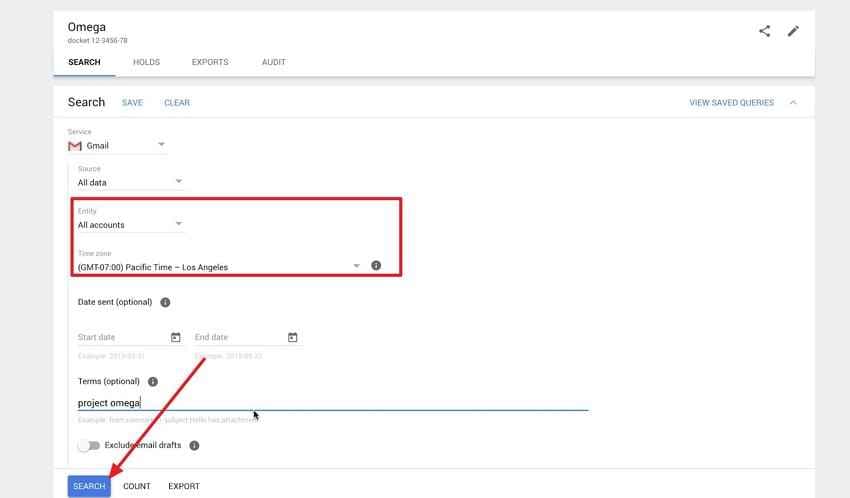
Step 2. Search the correct account, time zone, date range, and terms. Do not turn on options that exclude drafts if the goal is to find discarded or autosaved draft data.
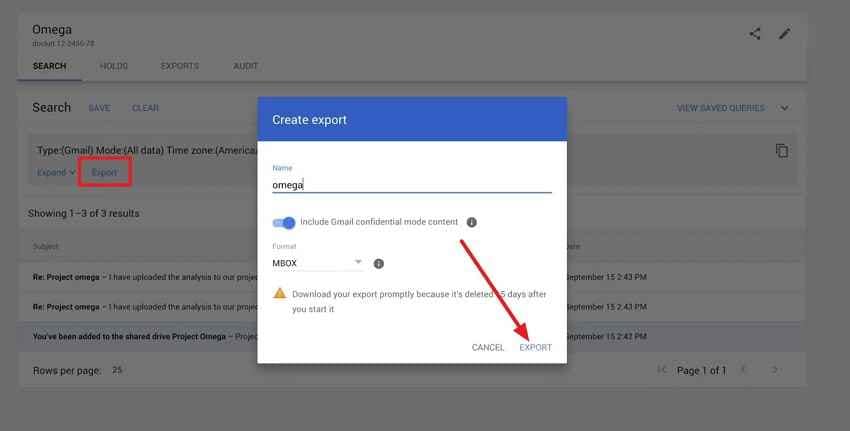
Step 3. If the message is found and exportable, the admin can export available results. Vault exports are evidence or message files, not editable Gmail drafts.
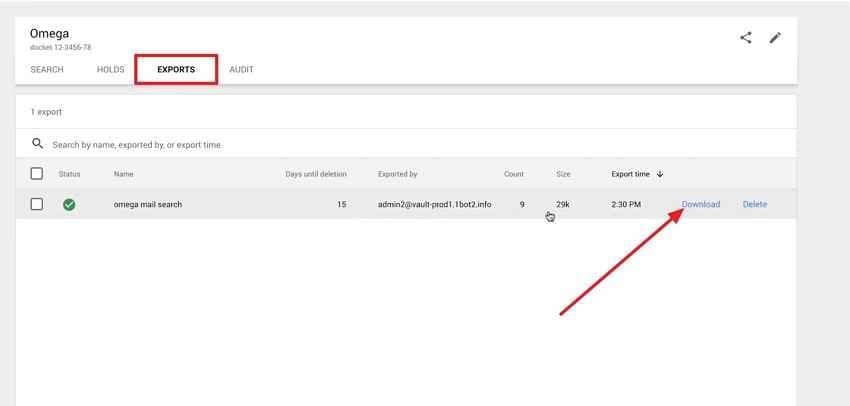
Step 4. After the export is ready, the admin downloads it and provides the recovered message content according to the organization's policy.
Understand Why Discarded Drafts May Still Be Unavailable
Google's Vault retention documentation says discarded drafts are immediately removed from the user's view, get the system-generated ^deleted label, and are purged 30 days after discard. Vault documentation also notes that autosaved draft versions from Gmail web and Gmail mobile clients are generally purged 1 day after Gmail saved them, while some third-party IMAP cases can last longer. Admin access, retention rules, export settings, and purge timing all affect whether anything can be handed back.
Part 5. Recover Deleted Local Email Files With Recoverit
Recoverit applies to local file recovery, not direct Gmail cloud recovery. Use it when Gmail-related data was downloaded, exported, synced, or stored on a computer or external drive, and that local file has been deleted or lost.
When Recoverit Can Help With Gmail-Related Email Files
This table draws the boundary clearly.
| Gmail Data-Loss Situation | Where the Data Existed | Can Recoverit Help? |
| Deleted Google Takeout archive | Computer, external drive, USB drive, or backup disk | Yes, if the archive file is still recoverable and not overwritten. |
| Deleted Thunderbird Mail or profile files | Local Thunderbird profile storage | Yes, if the deleted profile or mailbox file remains on the drive. |
| Deleted Outlook local data file | Local PST or OST file on a computer drive | Yes, for recoverable local files. |
| Deleted Apple Mail Local Data | Mac mail storage, MBOX, or EMLX-related files | Yes, if the local files are recoverable. |
| Discarded Gmail draft retained in Vault | Google Workspace Vault | No. Ask an authorized Vault admin. |
| Draft discarded only in Gmail web | Gmail cloud compose state | No. Recoverit cannot scan Gmail's servers. |
| Draft available only in Gmail online | Google account data | No. Use Gmail, Takeout, or Workspace admin tools instead. |
| Draft present in an unsynced mail client | Local client cache or mailbox | Copy the draft first. Use Recoverit only if the local file was deleted. |
Recover Deleted PST, OST, EML, EMLX, or MBOX Files
Recoverit can scan local storage for deleted email-related files such as PST, OST, MBOX, EML, and EMLX, along with downloaded Gmail exports. It is useful when a desktop mail profile, local archive, or exported Gmail backup is lost before you can open it.
Recovery depends on whether the deleted file data still exists on the drive. Stop using the drive, avoid installing new software on the same disk when possible, and save recovered files to a different storage device.
Use Recoverit After Gmail Was Synced or Exported Locally
Use Recoverit after Gmail content was synced to a desktop client, exported through Google Takeout, or saved as local email files. For broader local email recovery scenarios, Recoverit's data recovery workflow can scan computer drives, external disks, and removable media for lost files. It cannot reconstruct a Gmail draft that existed only in a browser compose window and was never saved to local storage.
How to Scan for Deleted Mail Files Using Recoverit
Follow these steps only when the Gmail-related data existed as a local file.
Step 1. Select the drive holding the mail profile.
Install Recoverit on a safe drive if possible, open the program, and select the drive where the mail client profile, Takeout archive, or local email files were stored.

Step 2. Filter the results by email file type.
Start the scan and filter results by email or archive formats such as PST, OST, MBOX, EML, EMLX, ZIP, or TGZ depending on what you lost.

Step 3. Preview, then save to a different drive.
Preview recoverable files where supported, recover the relevant local email files, and save them to another drive to avoid overwriting more data.

Try Wondershare Recoverit to Perform Data Recovery
 Security Verified. Over 7,302,189 people have downloaded it.
Why Recoverit Cannot Retrieve a Browser-Only Draft From Gmail Cloud
Storage recovery software scans local disks, external drives, USB drives, and similar storage. A discarded browser-only Gmail draft lives in Google's Gmail systems, not as a normal local file that Recoverit can scan. Recoverit cannot sign in to Gmail, access Vault, bypass Google account controls, restore an expired Undo prompt, or recover a draft that was never stored locally.
Part 6. How to Prevent Gmail Draft Loss
The best Gmail draft recovery plan is preventing the loss before it happens.
- Let Gmail finish saving before closing the browser: Wait for Gmail to finish saving the draft before closing the compose window, tab, or device.
- Avoid editing the same draft across multiple tabs or devices: Multiple sessions can overwrite each other or sync an unwanted change.
- Use a stable internet connection for important emails: Poor connectivity can prevent the latest draft changes from reaching Gmail.
- Write long messages in Google Docs first: Gmail Help includes a Docs email draft workflow, and Docs gives you version history that Gmail drafts do not.
- Export Gmail data or maintain local email client backups: Takeout and local mail clients help only if backups exist before the draft is lost.
- Copy important draft text before clearing browser data: Do not clear cookies, cache, or sessions until the message is safely stored elsewhere.
- Watch Google Account storage: Google says storage is shared across Gmail, Drive, and Photos, and going over quota can affect Gmail sending and receiving. Keep enough storage free for normal Gmail operation.
Conclusion
Gmail draft recovery is time-sensitive. Use Undo immediately, check Drafts and minimized compose windows, restore the browser session, and inspect another device before it syncs. If the account belongs to a Google Workspace organization, ask a Vault admin quickly because discarded drafts and autosaved versions have purge limits.
Recoverit fits a narrower but important case: recovering deleted local email files, synced mail-client data, or existing Gmail exports from your computer or external drive. It cannot recover a browser-only Gmail draft directly from Google servers, so the safest habit is to write long messages somewhere with version history and keep local backups of important email data.
FAQ
-
Does Gmail keep earlier versions of an auto-saved draft?
Personal Gmail does not provide a user-facing version history for drafts like Google Docs. Google Vault documentation says autosaved versions can be searched and exported by eligible Workspace admins, but those versions are not available through normal Gmail recovery. -
Are attachments included when Gmail saves a draft?
Attachments are included only after they finish uploading and the draft is saved. If the upload was still in progress when the draft was discarded or the browser crashed, the attachment may not be recoverable from that draft. -
Can Google Takeout back up existing Gmail drafts?
Yes. Google's Gmail export documentation says downloaded Gmail data includes Draft messages. However, Takeout only exports data that has not been deleted, so it is a backup method, not a way to recover a draft that has already disappeared. -
Does Gmail continue saving drafts when account storage is full?
Google Account storage is shared across Gmail, Google Drive, and Google Photos. Google says going over quota can affect Gmail sending and receiving, so keep enough storage free and check whether Gmail is showing storage warnings if drafts stop saving reliably.