The 0xc10100be video error can appear with a "Can't play" message when a Windows video app cannot play a file. The message lists several possibilities, including an unsupported file type, an incorrect extension, and file corruption. It does not identify which one applies to your video.
Start here: Keep the original video safe, confirm that you have the complete local file, and try it in another compatible player. If it plays there, investigate codecs or the original Windows app. Convert a copy only if the source is readable; consider file repair only when the evidence points to damage rather than a playback incompatibility.
In This Article
Part 1. Find the Cause of Error 0xc10100be

Start with two comparisons: play the affected video in a second compatible player, then play a video you know works in the original app. These checks help separate a file problem from an app or codec problem. Failure in two players alone still does not prove corruption; both may lack support for the source.
Also check the source copy. A cloud-only placeholder, interrupted download, or unfinished camera transfer needs a complete local file before codec or repair tests are useful. Compare its size with the original when possible, but remember that a plausible file size alone does not prove a complete transfer. A zero-byte file contains no video data for a repair tool to reconstruct. If the file is still on an SD card or camera, copy it to a healthy computer drive first and avoid recording over the source.
| What you observe | What to check next | Best starting point |
| The video plays in another player but fails in one Windows app. | The affected app's codec support, updates, and settings. | Identify the codec, then update or repair that app. |
| Several videos that previously worked now fail in the same app. | Whether another player still plays those files. | Follow the app repair branch before changing the files. |
| One video fails in compatible players, while other videos work. | Whether a fresh download or copy from the original also fails. | Replace the incomplete copy; assess file damage if the problem persists. |
| The copy is empty, unexpectedly small, or stops at the same point. | Download or transfer completion and the original recording. | Get a complete copy first. Conversion cannot supply missing footage. |
| The video plays in VLC, but you need it to work in a different app. | The destination app's supported video and audio codecs. | Convert a copy to a compatible combination. |
Keep the extension unchanged while diagnosing the problem. MP4 and MKV describe containers; they do not tell you every codec inside. Renaming a file to .mp4 does not convert its contents or repair missing data. A mislabeled file needs its actual format identified before its name is corrected.
Part 2. How to Fix the 0xc10100be Video Error
Choose the method that matches your comparison results. Work on a copy, change one thing at a time, and reopen the same video afterward so you can tell which action helped.
Method 1. Check the File and Try Another Player
This is the first check when you are unsure whether the file or the original player is responsible. If a download or transfer was interrupted, repeat it from the source before testing the new copy.
Step 1. Install VLC from the official VideoLAN website if needed. Right-click the video and select "Open with." In the Windows 11 app chooser, select "VLC media player" and "Just once." The example below uses an MKV file; the comparison also applies to other formats VLC supports.

Step 2. Check the beginning, middle, and end of the video and listen to the audio. Then try a known working video in the app that displayed 0xc10100be.
Step 3. If the affected video plays correctly in VLC, you can use VLC for playback. Continue with the codec or app checks if you need the original Windows app. If only this file fails, compare it with a fresh source copy before trying repair.
Method 2. Identify the Codec Before Installing an Extension
A .mp4 extension does not guarantee that a player supports the video and audio streams inside it. A 4K label or a phone recording also does not establish that the file uses HEVC or AV1.
Step 1. Open the video in VLC and select "Tools > Codec Information." Read the video and audio codec entries. The example shows H.264 video and AAC audio; your file may show different codecs.
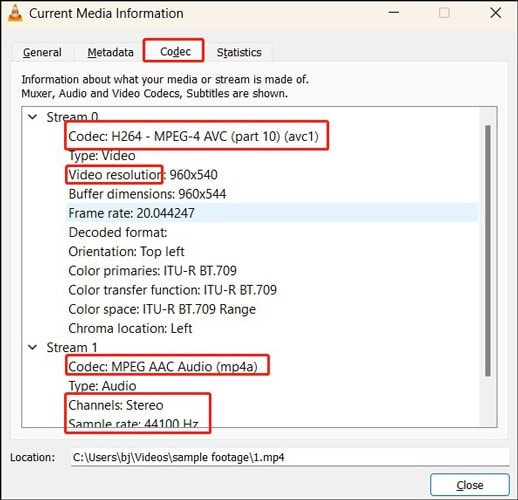
Step 2. Compare the identified codecs with Microsoft's Windows Media Player codec guidance for the Windows app you are using. If the file contains HEVC/H.265 and the affected app lacks HEVC support, check the official HEVC Video Extensions listing in Microsoft Store. Only install an extension that matches the missing codec; avoid unknown codec packs. An extension cannot repair an incomplete or damaged source file.
Step 3. If VLC cannot identify the streams, return to the source-file check rather than guessing a codec. If the required format remains unsupported, use a compatible player or convert a readable copy.
Note for Windows N editions: If media components are missing because your Windows edition ends in N, check the Microsoft Media Feature Pack instructions. On Windows 11 N, open "Settings > Apps > Optional features" and use "View features" to add the pack. Windows 10 N uses the Optional features area under Apps & features. Restart afterward. This is not a generic fix for other editions, and installing the pack does not restore a damaged video.
Method 3. Update or Repair the Affected Windows App
Use this branch when the same files work elsewhere or several previously playable files fail in one app. Media Player, Movies & TV, and Windows Media Player Legacy are different apps; check which one displays the error before choosing its settings.
Step 1. For an app installed through Microsoft Store, open the Store's "Updates & downloads" view and select "Check for updates." Follow Microsoft's app update instructions, install any available update for the affected player, and reopen it. The screenshot illustrates the Store's update control; your app list will differ.
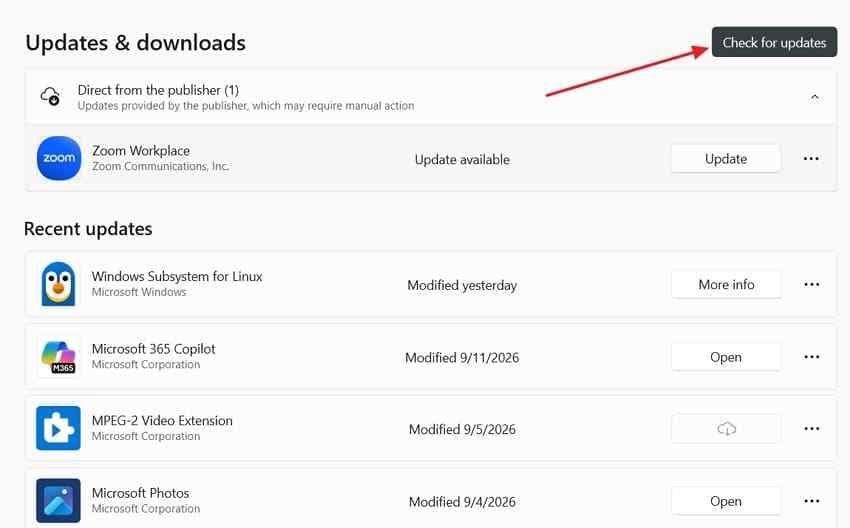
Step 2. On Windows 11, open "Settings > Apps > Installed apps," select the affected app's three-dot menu, and open "Advanced options" if available. Select "Repair" if the app offers it. These are generic Windows 11 repair controls; availability depends on the selected app.

Step 3. Reopen the player and retest both the affected video and your known working video. On Windows 10, the equivalent starting point is "Settings > Apps > Apps & features." Microsoft's app repair instructions distinguish the two versions and note that not every app supports repair.
These settings are not a universal repair route for Windows Media Player Legacy. If the relevant controls are absent, use Microsoft's diagnostics for that player. Avoid selecting "Reset" casually: it can remove the app's settings and data, even though the video files themselves should remain in place.
Windows 10 support note: Microsoft ended regular support for Windows 10 on October 14, 2025. These app menus can still apply to Windows 10, but the operating system no longer receives ordinary free security updates. See Microsoft's support and Extended Security Updates options if you need to keep using it.
Method 4. Convert a Readable Video to H.264 MP4
Use conversion when VLC can read the source and you need a more compatible copy. VLC's transcoding documentation explains why changing the codecs differs from changing the container. Conversion cannot recreate footage that was never downloaded or recorded.
Step 1. In VLC for Windows, open "Media > Convert / Save."

Step 2. In the file selection window, select "Add," choose the source video, and select "Convert / Save" to open the conversion settings.
Step 3. Choose an MP4 profile with H.264 video. The Windows VLC example below uses "Video - H.264 + MP3 (MP4)." Profile names can vary by version. Select "Browse" and give the output a different filename, such as video-compatible.mp4, so the source remains intact.
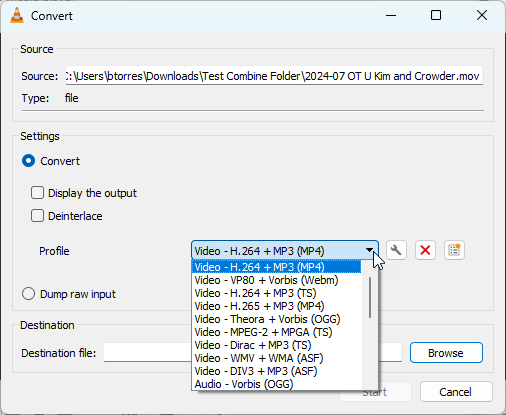
Step 4. Select "Start" and wait for conversion to finish. Open the result in your target app, check its duration, and test both picture and sound at several points. Keep the original: re-encoding can change quality, and an output file alone does not prove the whole video converted successfully.
Method 5. Repair a Damaged Video with Recoverit
Consider this method when other videos play normally, a complete copy still fails in compatible players, and you cannot obtain a working original. Recoverit's File Repair workflow supports damaged video files. It is relevant to file damage, not a replacement for a missing codec or a fix for the playback app.
Step 1. Open Recoverit and select "File Repair > Corrupted Video Repair."
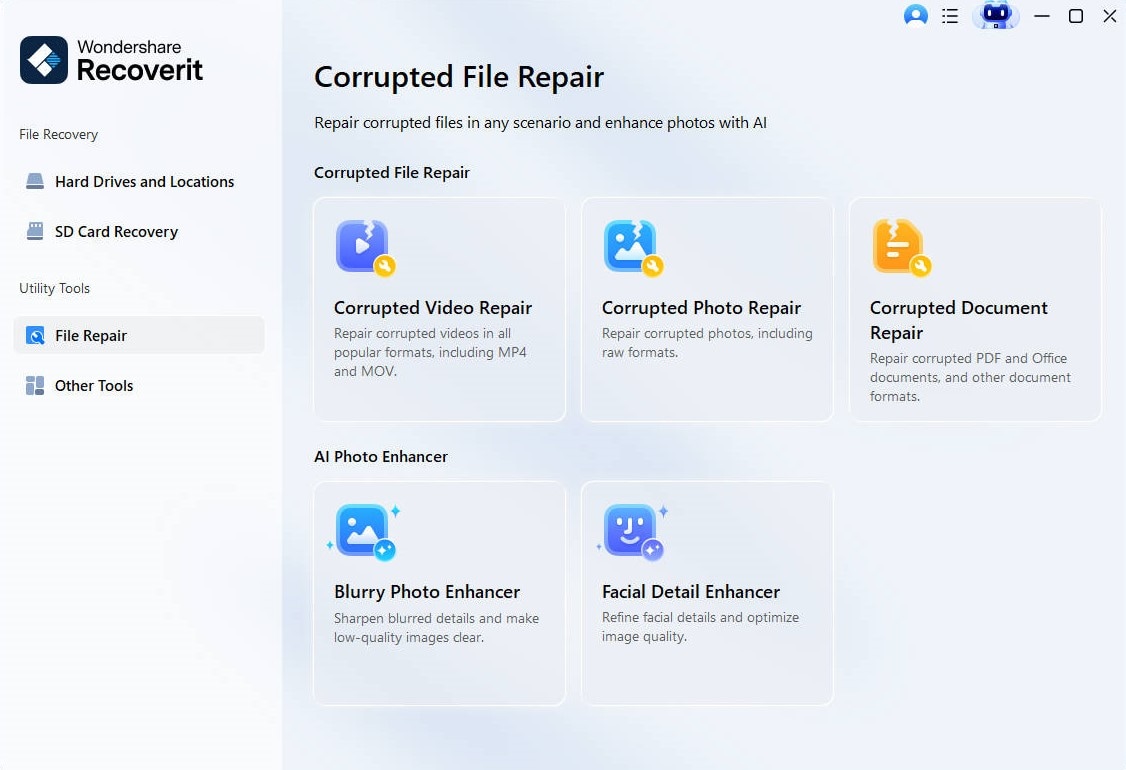
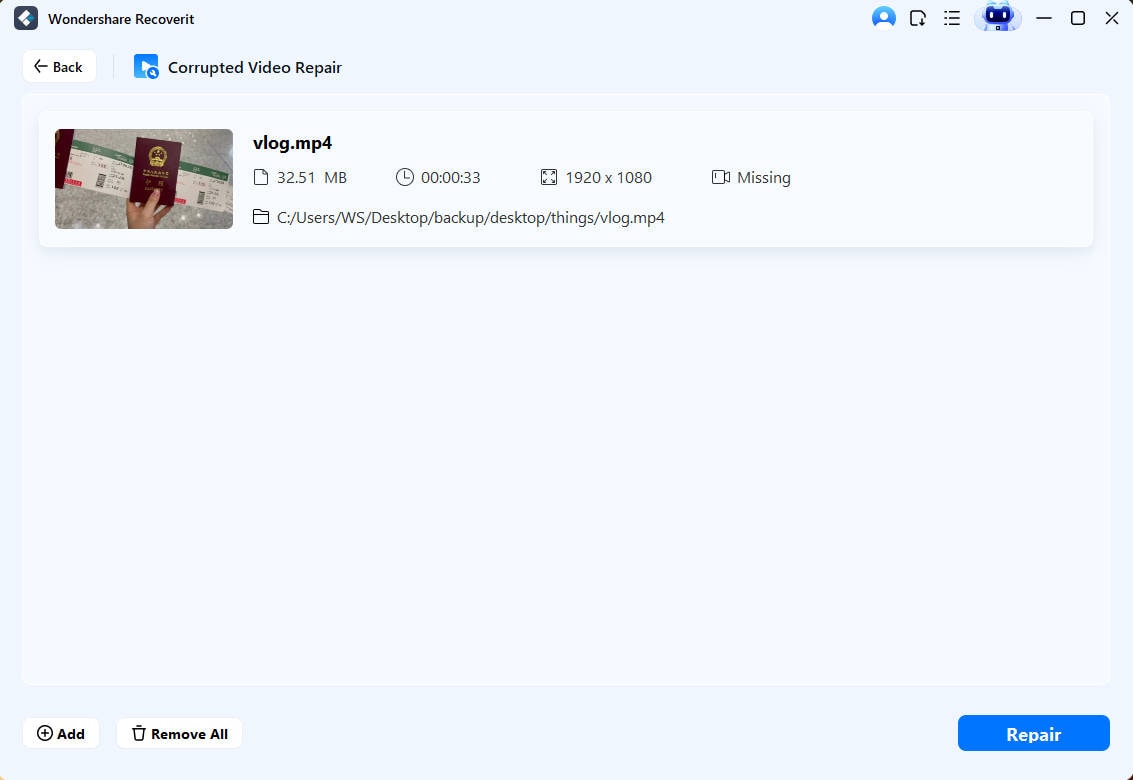
Step 2. Select "Add" and choose a copy of the damaged video. Confirm the file in the list, then select "Repair."
Step 3. Preview the result and check playback and sound. If it is usable, select "Save" and choose a different folder or drive. Reopen the saved file in your usual player to verify it.
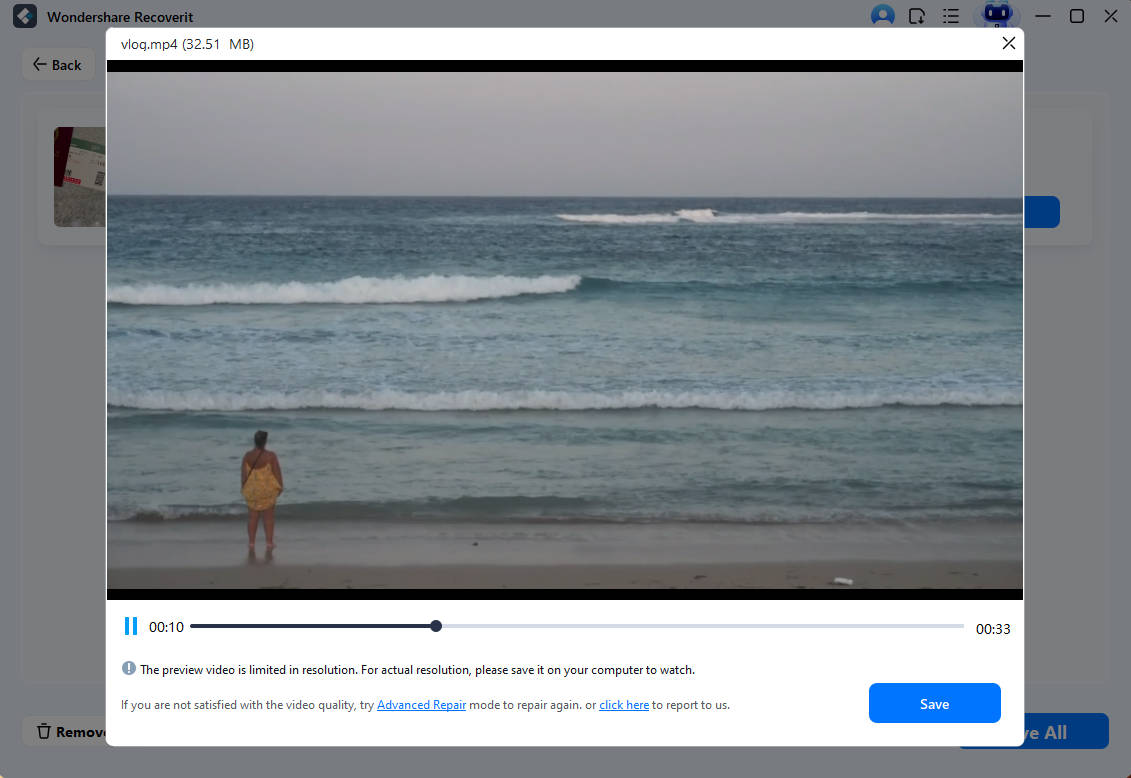
If standard repair is insufficient and your installed version offers "Advanced Repair," add an undamaged sample video in the same format, preferably recorded with the same device. Follow the sample requirements shown in your installed version; do not claim that a file from the exact same device is always mandatory. The sample helps guide a repair attempt, but it cannot recreate footage that was never recorded or successfully transferred.
Before downloading: Recoverit offers a desktop installer, but availability of repair, preview, and saving features can depend on the current license. A "Free Download" button is not a promise of free unlimited video repair, and the outcome cannot be guaranteed.
If this file was already recovered and will not play, follow the separate process for recovered videos that will not play. Repeatedly converting an incomplete recovered file does not recover the missing source data.
Part 3. Check the Result and Choose the Next Step
A successful fix means the video plays where you need it, with the expected duration and usable picture and sound. Before replacing or deleting anything, check the beginning, middle, and end, seek to different points, and compare the result with any working source copy.
- The video works in another player: Keep that working option, or resolve compatibility in the required app. File repair may be unnecessary.
- A fresh copy works: Keep the complete copy and a backup. Investigate the interrupted download or transfer if the problem recurs.
- Many known working files still fail in one Windows app: Use Microsoft's current Get Help troubleshooters. Search Get Help for "Video playback troubleshooter" or "Windows Media Player troubleshooter" as appropriate.
- Only the damaged file still fails: Keep the original and your repair attempts separately. Look for another backup or request a new export from the sender; neither conversion nor repair guarantees a complete result.
If you still need help, record the exact Windows app and error message, file extension, known video/audio codecs, source-device type, and whether the same file plays in VLC. You can share these details with support without uploading a private personal video to an unfamiliar repair website.
Conclusion
The safest way to fix 0xc10100be is to verify the source file, compare playback in another compatible player, and correct only the confirmed problem. Most codec or app issues do not require repairing the video itself. For a genuinely damaged local copy, Recoverit File Repair is a separate option to evaluate, with the original kept intact and the saved result checked before use.
FAQ
-
Does 0xc10100be always mean the video is corrupted?
No. The playback message also mentions unsupported file types and incorrect extensions. Compare the same file in another compatible player and test a known working video in the original app before deciding that the file needs repair. -
Why does an MP4 show 0xc10100be in Windows Media Player?
MP4 is a container, so its video or audio codec may be unsupported by that player even when the extension looks familiar. An incomplete file or an app problem can also prevent playback. Check the actual codecs and which Windows player you are using. -
Can I fix 0xc10100be by changing the file extension?
Changing a name does not convert the video or restore missing data. Correct an extension only when you have identified the real format and confirmed that the file was mislabeled. For a readable file that needs different codecs, create a converted copy instead. -
Can the 0xc10100be error be fixed without paying for software?
Often the next step costs nothing: repeat an incomplete download, use a compatible player, or update or repair the affected app. A readable video may also convert successfully in VLC. Official codec extensions and commercial repair features can have different costs; choose them only when the diagnosis supports that route. -
Does Recoverit Advanced Repair require a sample from the exact same device?
Recoverit's current Windows Guide asks for a healthy reference video in the same format, preferably from the same recording device. Follow any requirements displayed by your installed version. Advanced Repair is for a genuinely damaged file after standard repair is insufficient; a sample cannot guarantee recovery of missing video content.


