

 TL;DR:
Drone footage data recovery restores deleted, lost, or corrupted aerial videos and photos from drones and their storage media using specialized software that scans sectors for raw video data before it is overwritten.
● Immediately stop using the SD card after data loss—do not record, format, or defragment—and connect it directly to a computer via a high-quality card reader for the best recovery chances.
● Wondershare Recoverit supports recovery of high-resolution drone formats (4K/8K, MP4/MOV) and can piece together fragmented clips spread across the card.
● Always save recovered files to a different drive or folder to prevent overwriting the remaining recoverable data on the original SD card.
Ask AI for a summary
 ChatGPT
 Perplexity
 Gemini
 Claude
 Grok
Grok
Introduction
If you are wondering what is Drone Footage data recovery, it is the process of restoring deleted, lost, or corrupted aerial videos and photos from drones and their storage media. Whether your drone uses a microSD card, internal memory, or an external drive, specialized tools can scan the device, locate recoverable video fragments, and help you save them safely, even after accidental deletion, formatting, crashes, or file corruption.
Try Recoverit to Perform Data Recovery
 Security Verified. 3,591,664 people have downloaded it.
In this article
How It Works
What happens when drone footage is deleted
When you delete clips from a drone SD card or format it in the drone, the files usually are not erased immediately. The file system simply marks those sectors as free space and removes the directory entries pointing to your videos. Until new footage overwrites those sectors, the raw video data often remains on the card and can be scanned and reconstructed by recovery tools.
Corruption works differently. Sudden power loss, a drone crash, or pulling the card out while recording can interrupt the writing process, damaging the file structure or index. The data may still be present on the card, but the headers or metadata that tell your player how to open the clip become unreadable.
How recovery software restores drone files
Professional recovery tools analyze the storage device at a low level, sector by sector, instead of relying only on the broken file system. They search for known video signatures (such as MP4, MOV, or AVI headers), rebuild the file table, and list all recoverable media.
In many cases, the software can also piece together fragmented clips spread across the card, recovering long 4K flights that were stored in multiple chunks. Once identified, these files are copied to a safe location, leaving the original drone card unchanged. Some solutions combine data recovery with video repair, fixing damaged headers or rebuilding indexes so that your recovered footage plays smoothly.
Categories and Types
By data loss scenario
Different problems call for slightly different recovery strategies. The main categories include:
- Drone footage data recovery after accidental deletion: Files removed from the drone gallery or camera menu, but not yet overwritten.
- Recovery after quick formatting: The card is reformatted in the drone or computer, but the underlying video data still exists.
- Corrupted drone video repair: Clips that appear with error messages, freeze during playback, or will not open at all.
- Recovery from crashed or unresponsive drones: Cards taken from a damaged drone body and accessed via a card reader.
- Virus or file-system damage: Cards that suddenly show as RAW, need formatting, or appear empty despite having data.
By storage device and file type
Another way to look at drone footage data recovery is by the type of media and file formats involved:
| Category | Description |
|---|---|
| MicroSD / SD card recovery | Most consumer and professional drones record to removable microSD or SD cards, which are highly recoverable if not physically damaged. |
| Internal storage recovery | Some drones and cameras store clips on built-in memory that must be accessed via USB or card emulation. |
| External drive and computer recovery | Once footage is transferred to a PC, laptop, or external SSD/HDD, recovery focuses on those devices instead of the drone itself. |
| 4K / 5K / 8K video formats | High-bitrate MP4/MOV clips demand tools that can handle large, fragmented files without introducing additional corruption. |
Practical Tips
Following best practices right after data loss greatly improves your chances of restoring lost aerial footage.
- Stop using the card immediately. Do not record new flights, format, or run defragmentation, as this can overwrite recoverable clips.
- Remove the card safely. Power off the drone before ejecting the card to prevent further corruption.
- Use a high-quality card reader. Connect the SD or microSD card directly to your computer instead of relying on the drone as a reader.
- Work from a copy when possible. If the card is readable, clone it first and run recovery on the clone to minimize risk.
- Organize recovered files. Save restored clips to a different drive, then rename and sort them to avoid confusion with partially recovered files.
- Adopt a backup workflow. After flights, copy footage to at least two separate locations, such as an external drive and a cloud folder.
How to Use Recoverit to Recover Lost Data
Recoverit introduction
For creators who need reliable drone footage data recovery, Wondershare Recoverit offers a straightforward, professional solution. It can restore deleted, formatted, or corrupted drone clips from SD cards, internal drives, and external storage without requiring technical expertise. You can learn more and download the latest version from the Recoverit official website.
Key features
- Supports recovery of high-resolution drone video formats, including long 4K and HDR flights from SD cards and hard drives.
- Offers advanced scanning modes that dig deep into deleted, lost, or corrupted media sectors to find more recoverable clips.
- Includes a built-in preview feature so you can check drone videos and photos before restoring them to a safe location.
Step-by-step guide
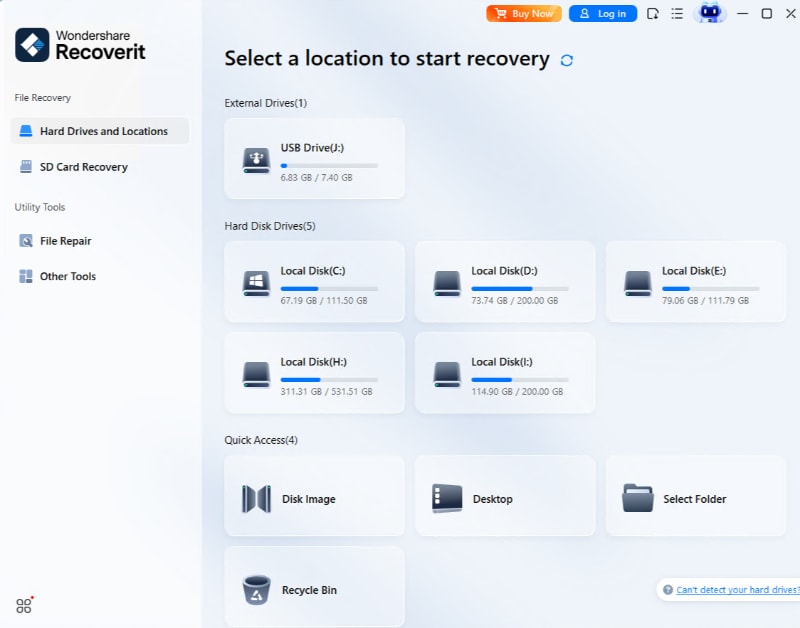
- Choose a Location to Recover Data
Install and open Recoverit on your computer. On the main interface, select the drive or device where your drone footage was stored, such as the drone microSD card connected via a card reader or a folder on your PC where you copied the files. Confirm the correct card or partition to ensure the scan focuses on the right source.
- Deep Scan the Location
Click Start to begin scanning. Recoverit will perform a comprehensive search of the selected location, reading sectors one by one to find deleted or hidden drone videos and photos. You can observe the progress bar, filter by file type as results appear, and pause or stop the scan once you see the clips you need, though letting the scan finish can uncover more footage.
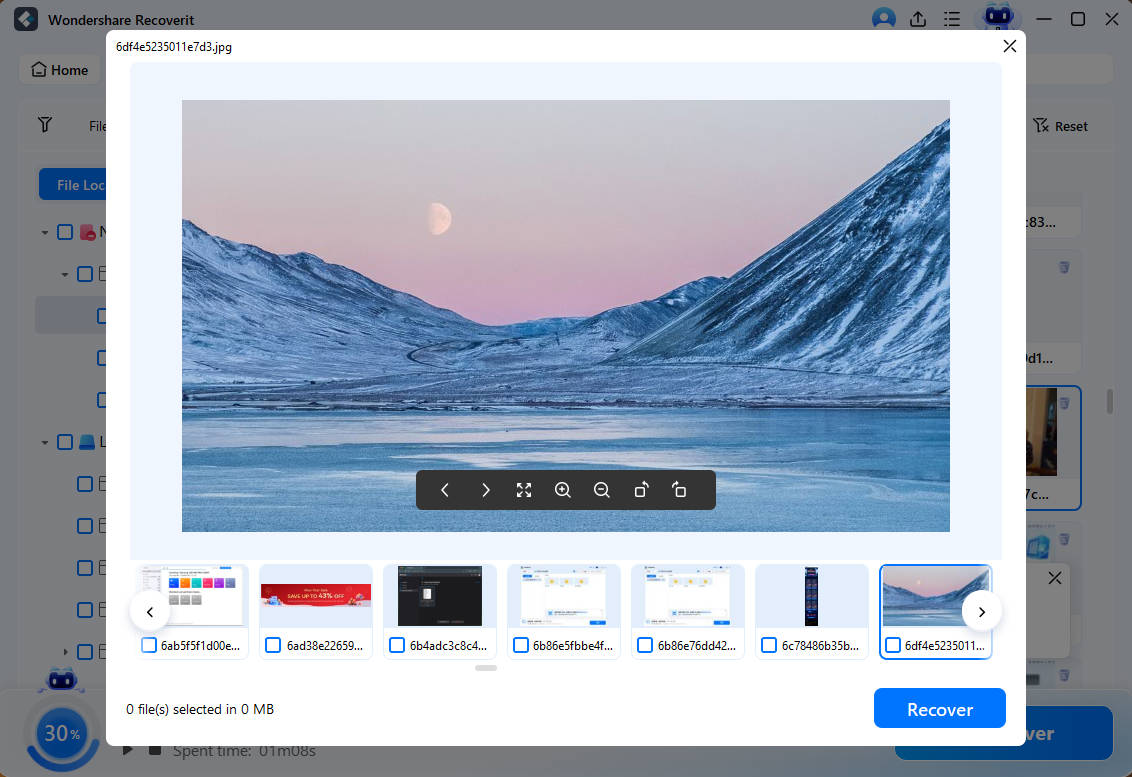
- Preview and Recover Your Desired Data
When the scan completes, browse the found files using the left panel and search tools. Select a video to open the preview window and confirm that it plays correctly and shows the expected content. Tick the checkboxes for the clips and photos you want to restore, then click Recover and choose a new destination drive or folder that is different from the original SD card to avoid overwriting remaining data.
Conclusion
Drone footage is often hard to reshoot, but understanding how drone footage data recovery works gives you a real chance to rescue lost or corrupted clips. By stopping recording immediately, handling the card carefully, and using professional software, many deleted or damaged files can be brought back.
Combining a disciplined backup routine with a reliable tool like Recoverit helps protect your aerial projects long term. Even when accidents happen, you can act quickly and methodically to recover key shots and keep your creative or commercial work on track.
Next: What Is Btrfs Data Recovery
FAQ
-
Can I recover drone footage after a crash if the drone will not power on?
If the drone body is damaged but the SD or microSD card is intact, you can usually remove the card and connect it to a computer with a card reader. From there, recovery software like Recoverit can scan the card and restore accessible clips, regardless of whether the drone itself still works. -
How long does drone footage data recovery usually take?
The time required depends on card capacity, connection speed, and how many files you have. Small cards with a few clips may scan in minutes, while large 256 GB or 512 GB cards filled with 4K video can take an hour or more for a deep scan. -
Is it safe to save recovered drone videos back to the same SD card?
No. Saving recovered files to the same card can overwrite still-recoverable data and reduce your chances of a complete recovery. Always save restored footage to a different drive or partition, then reformat the original card only after you confirm that your recovered clips are safe.


