TL;DR:
Windows Error 0xc00000e9 indicates an unexpected I/O communication failure, requiring you to safely disconnect all nonessential external peripherals first, and then verify if the internal boot drive is consistently detected in the BIOS/UEFI before attempting any software repairs.
● Stop all software troubleshooting, including formatting or running chkdsk /r, and seek qualified hardware service if the internal drive produces clicking noises, generates abnormal heat, or repeatedly vanishes from the firmware menus.
● Run Startup Repair from the Windows Recovery Environment (WinRE) only when the storage device is physically stable and visible, ensuring you have the Microsoft BitLocker recovery key ready beforehand if the system volume is encrypted.
● Execute a Windows update rollback or System Restore via WinRE exclusively if the boot failure began immediately after a specific software change, prioritizing file extraction to a separate healthy disk prior to modifying the installation.
Ask AI for a summary
 ChatGPT
 Perplexity
 Gemini
 Claude
 Grok
Error 0xc00000e9 usually appears when Windows encounters an unexpected input/output (I/O) problem while starting. You might see "Windows has encountered a problem communicating with a device connected to your computer" or "An unexpected I/O error has occurred." The cause can involve an external device, the internal boot drive, its connection, or damaged startup files. The code alone does not prove that the hard drive is broken.
Start safely: Shut down the PC and disconnect nonessential external devices. If Windows still cannot boot, check whether the system drive is visible in BIOS/UEFI. Use Startup Repair only when the drive is detected and stable. If the drive clicks, repeatedly disappears, or holds irreplaceable files you have not backed up, prioritize data protection over further repair attempts.
In This Article
Part 1. What Does Error 0xc00000e9 Mean?
Microsoft identifies 0xC00000E9 as STATUS_UNEXPECTED_IO_ERROR. In the Windows boot context, it signals an I/O problem, not one specific failed component. Intel's storage troubleshooting guide likewise describes both hardware and corrupted system files as possibilities. See the Intel explanation of 0xc00000e9 during startup.
Some older article URLs or screen transcriptions shorten the code to 0x00000e9. Check the full characters on your own screen before choosing a fix: this article addresses the Windows boot error 0xc00000e9, not every similarly spelled hexadecimal code.
| What you observe | What it may indicate | Safer next action |
| PC starts after removing a USB drive or accessory | External-device or boot-order interference | Test the removable device separately without overwriting its files |
| Internal SSD/HDD is absent from BIOS/UEFI | Connection, power, controller, or drive failure | Stop repeated boot attempts; check manufacturer diagnostics or qualified service |
| Boot drive is consistently detected, but Windows will not load | Possible startup-file or boot-configuration problem | Try Windows Recovery Environment Startup Repair after protecting important data |
| Error began immediately after a Windows update | Possible update-related startup conflict | Consider the WinRE uninstall-update option after safeguarding files |
| Files are inaccessible, but the disk remains stable and readable | Possible logical data-loss problem | Copy accessible files or consider recovery to a different healthy drive |
Part 2. Protect Your Files Before Changing the System
A boot error is not permission to format, reset, or overwrite a drive. If the affected storage is failing physically, prolonged scanning and repair attempts may make recovery harder. These precautions apply before you run Windows repair tools.
- If Windows opens intermittently: Copy irreplaceable documents and other files to a separate healthy disk before troubleshooting.
- If Windows does not start: Note the exact error text, storage type, and whether BIOS/UEFI consistently detects the internal drive. Consider a qualified technician if the disk disappears or makes unusual noises.
- If the drive is encrypted: Locate your BitLocker recovery key before using recovery tools. Use the Microsoft BitLocker recovery-key instructions; recovery software cannot bypass encryption.
- Avoid writing to the source: Do not initialize or format the drive, reinstall Windows, reset the PC, or run chkdsk /r as the first response when data has not been protected.
If a stable disk is readable from another computer, use that access to save files first. For a more detailed distinction between logical loss and failing hardware, see how to recover lost files from a hard drive.
Part 3. How to Fix Error 0xc00000e9 on Windows 11 or 10
Choose the next method by what your PC can still detect, not merely by the wording of the blue or black error screen. Begin with external devices and boot-drive visibility; only then try Windows recovery tools on a disk that appears stable.
Method 1: Disconnect Nonessential External Devices
Use when: The error started after attaching USB storage, an SD reader, a docking station, or another accessory. Removing a peripheral is a low-risk test when the computer is fully powered off.
Step 1. Turn off the computer completely. Do not unplug an external drive while it is actively writing data.
Step 2. Disconnect nonessential USB devices and removable storage. Leave the built-in system drive untouched, along with any required input or power connection.
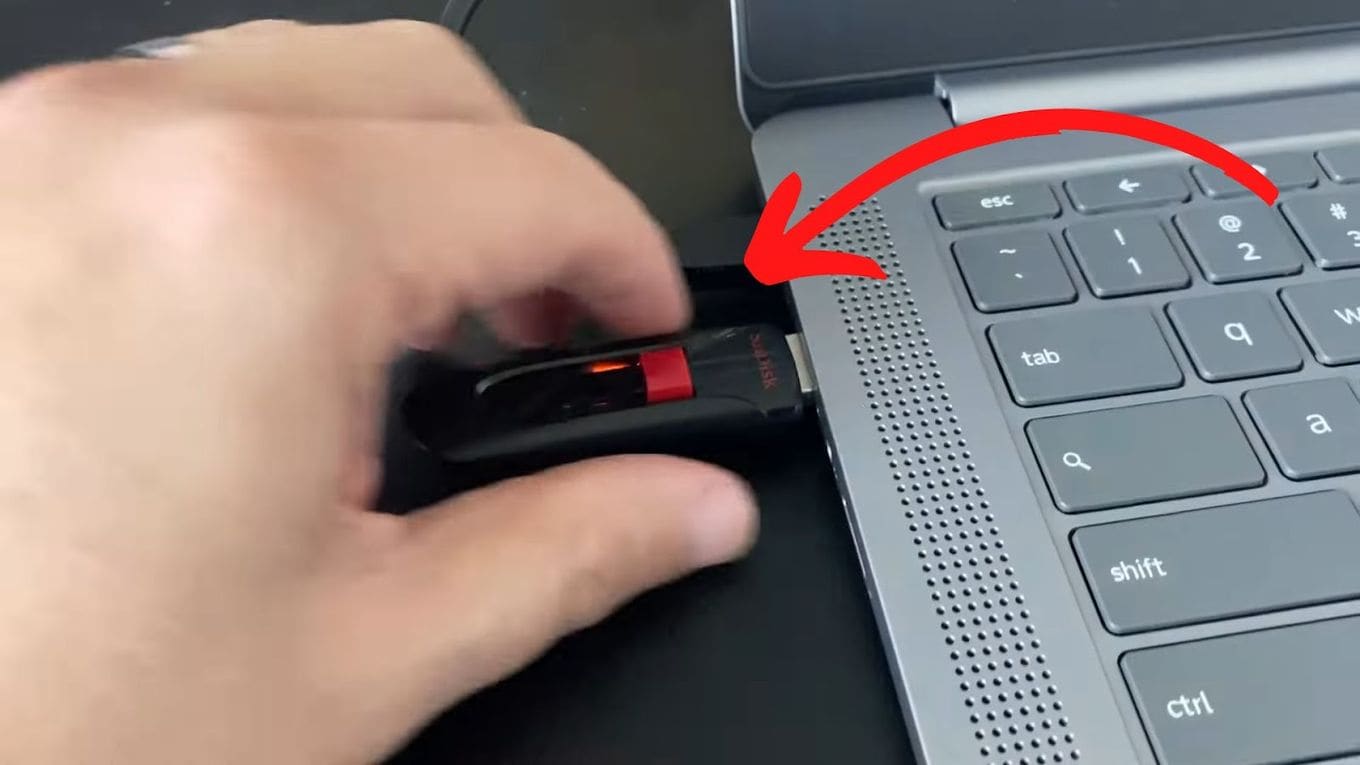
Step 3. Start the PC again. If Windows loads, reconnect accessories individually after the system is stable to identify the conflicting device. Preserve files on the suspect device and check its connection on another computer; do not format it just to test it.
If it still fails: Continue to the boot-drive visibility check. If an external drive is the source of important lost data, stop using that drive until you have a safe copy or recovery plan.
Method 2: Check Whether BIOS/UEFI Detects the Boot Drive
Use when: Error 0xc00000e9 persists with external devices removed, or the manufacturer logo appears but Windows never loads. This is an observation step, not permission to reset firmware settings.
Step 1. Restart the PC and use the setup or boot-menu key displayed by your device manufacturer. The key and menu name vary by model.
Step 2. Open the firmware's storage information or boot-device list. Check whether the internal system SSD/HDD is listed. The legacy BIOS example below shows a boot-device list; modern UEFI interfaces look different.
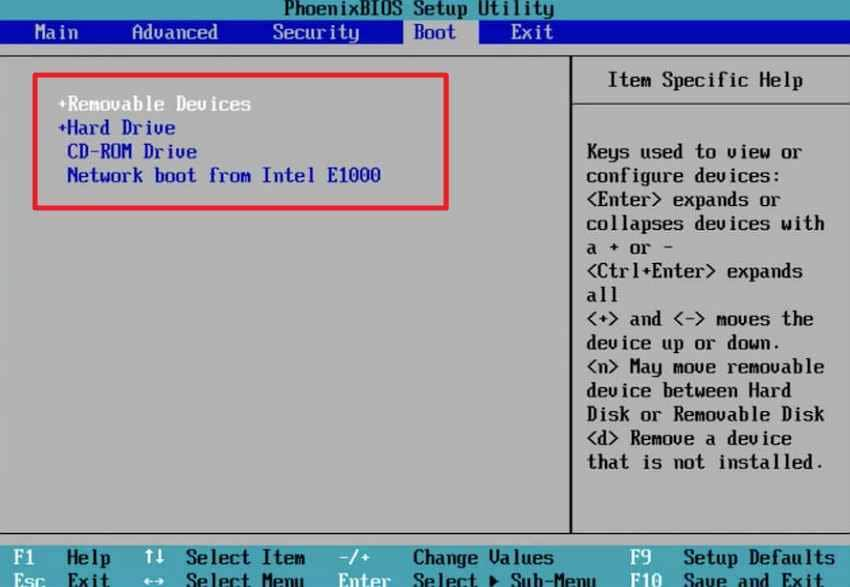
Step 3. If the drive is listed consistently, exit without changing the settings and proceed to Startup Repair. If it is missing, appears intermittently, or produces unusual noises, stop here and consult the manufacturer's drive diagnostics or an experienced data-recovery provider.
Do not: Switch storage-controller modes between AHCI, IDE, and RAID, disable Secure Boot, or load default BIOS values blindly. Such changes can make a previously working installation unbootable or trigger BitLocker recovery.
For more ways to distinguish connection faults from operating-system detection issues, see what to check when a hard drive is not detected.
Method 3: Run Startup Repair from Windows Recovery Environment
Use when: BIOS/UEFI consistently detects the system drive, it shows no obvious physical-failure warning signs, and Windows still does not start. Microsoft's Startup Repair instructions describe the built-in tool for certain startup-file and boot-configuration issues.
Step 1. Open Windows Recovery Environment (WinRE) if it appears automatically after startup failures. If it does not open, use Windows recovery or installation media prepared on a working computer. Creating installation media can erase the USB stick you choose, so use an expendable one and follow Microsoft's current WinRE access instructions. Do not select a Windows installation or reset option.
Step 2. In the recovery environment, select Troubleshoot > Advanced options > Startup Repair and follow the displayed instructions. The screenshot shows the Windows 11-style advanced options menu; wording and appearance can vary.
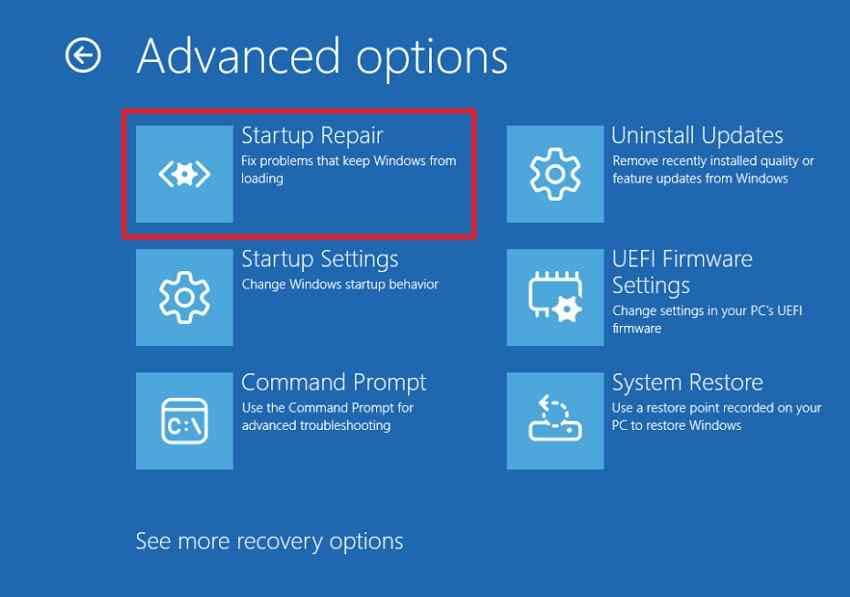
Step 3. If prompted, supply the recovery key for an encrypted system drive. Allow the tool to finish and restart once to test the result. If it reports that it cannot repair the PC, note the message instead of repeatedly running repairs without knowing the storage condition.
If it still fails: Move to a recent-update rollback only if the error started immediately after an update, or protect your files and request targeted hardware or boot troubleshooting.
Method 4: Uninstall a Recent Windows Update If the Timing Fits
Use when: The computer booted normally before a recent quality update and the drive is consistently detectable. This method changes the Windows installation, so protect any important files first.
Step 1. Return to Troubleshoot > Advanced options in WinRE and select Uninstall Updates. The available choices depend on the installed Windows version.
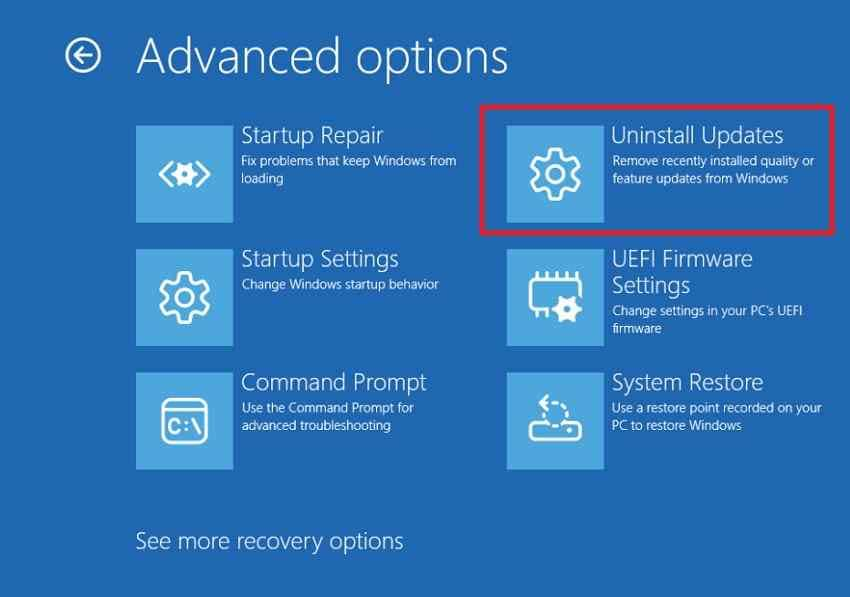
Step 2. Choose the appropriate recent quality update only if the issue clearly followed that update; complete the wizard and test a normal restart.
If it still fails: Do not keep removing unrelated updates. An unexpected I/O error can still indicate storage hardware or a connection problem, which update rollback does not fix.
Method 5: Use System Restore If a Suitable Restore Point Exists
Use when: The drive is stable and a restore point predates a change linked to the error. System Restore affects Windows system settings, drivers, and installed applications; it is not a substitute for saving personal files.
Step 1. In WinRE, select Troubleshoot > Advanced options > System Restore. The example below shows the System Restore tile.
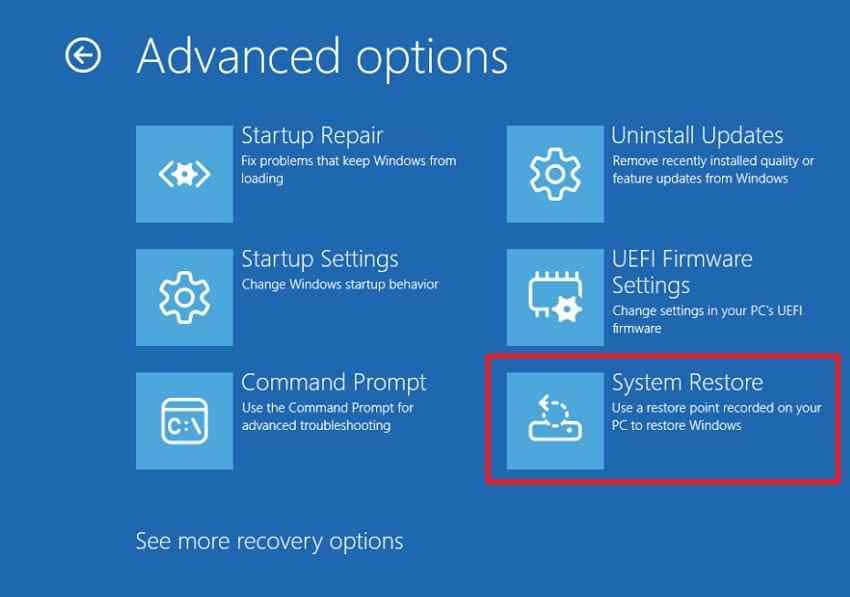
Step 2. Choose an existing restore point from before the relevant software change, review the affected programs, and follow the wizard. Do not create or fabricate a restore point date.
If it still fails: Stop generic software repair attempts if the drive becomes unresponsive or disappears. A restore point does not repair a failing SSD, damaged connector, or unstable storage controller.
Part 4. Recover Important Files Before More Invasive Repairs
Recoverit is a file-recovery tool, not a fix for 0xc00000e9 or a physical disk repair service. Consider it only when files are lost or inaccessible on a stable, detectable drive. If your PC cannot boot, the Recoverit Windows system recovery feature provides a separate recovery path; check the current Recoverit Windows Guide for the exact version's steps.
Option A: Scan a Readable Drive on a Working Computer
When the source drive is recognized reliably by a healthy PC and does not show physical-failure symptoms, avoid installing software or saving output onto that source.
Step 1. Connect the stable source drive safely to a working computer, install Recoverit on a different healthy drive, and select the correct source location. The following image is an authentic older Recoverit interface illustrating drive selection; present-day labels and appearance may differ.
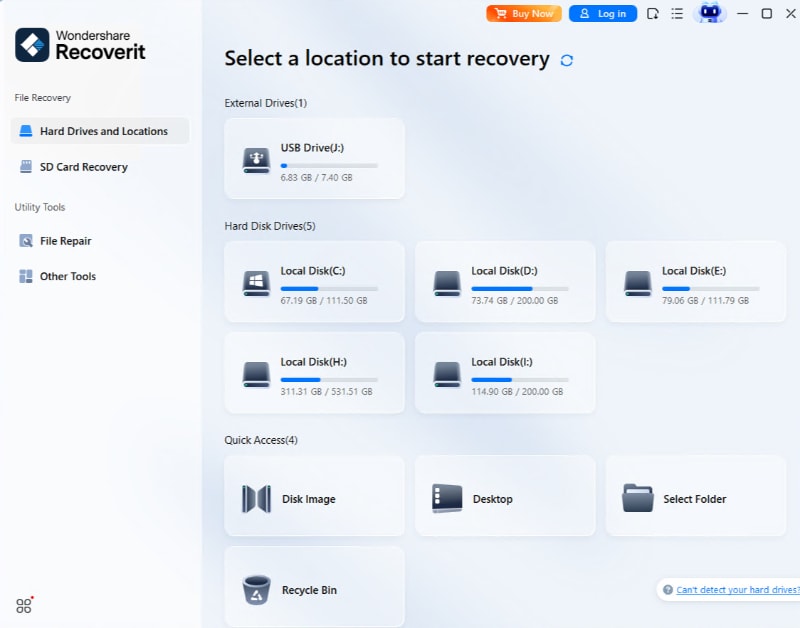
Step 2. Scan the relevant drive, review detected files, and preview supported items before recovery. If the source suddenly disconnects or becomes abnormally slow, stop scanning and reassess its hardware condition.
Step 3. Recover selected files to a different healthy drive, then open representative documents, photos, and videos to confirm they are usable. Scanning cannot guarantee results, especially after overwriting or severe physical damage.
Option B: Prepare Recovery Media on Another PC If Windows Cannot Boot
This option is only for a system whose drive is still stable enough for software access. If BIOS/UEFI cannot see the disk, repeated scanning or boot attempts are not a safe substitute for hardware assessment.
Step 1. On a separate working Windows computer, open the crashed-PC recovery feature documented in the current Recoverit Guide. Choose a spare USB drive with no important data, because creating bootable recovery media erases its contents.
Step 2. Follow the current Guide to create the recovery USB and boot the affected PC from it. After Recoverit can access the source drive, scan and preview the needed files. This picture illustrates file preview in an older Recoverit version; it is not a claim that the current bootable screen is identical.

Step 3. Save selected files to another connected healthy storage device, verify them on a working system, and only then consider further startup repairs or replacing the source drive.
Important: If the drive clicks, is missing from firmware, disconnects repeatedly, smells hot or burnt, or contains high-value irreplaceable files, seek a reputable professional recovery service instead of continuing software scans.

0xc00000e9 Blocked Windows? Your Files May Still Be Reachable
Error 0xc00000e9 can prevent Windows from starting without erasing your files. If the drive remains stable and detectable, Recoverit's Crashed Computer Recovery can help retrieve important data using bootable media created on another PC. Save recovered files elsewhere before resetting or reinstalling Windows.
Part 5. When to Stop Troubleshooting
Repeated repair commands do not make an unreliable storage device healthy. If you see any of the following, preserve the disk's present condition and move from software troubleshooting to hardware assessment:
- Drive absent from BIOS/UEFI: Confirm power and connections only if you are qualified and the device is safely powered off; do not repeatedly reseat delicate components.
- Repeated disconnections, clicks, or abnormal heat: Stop scans and boot attempts. A professional lab may be a better next step.
- Storage visible but recovery tools cannot read the contents: Check encryption requirements and seek specialist advice before initialization, partition changes, or format operations.
- Files successfully saved to another disk: Verify those files before any reinstall, Windows reset, or drive replacement.
After data is secure, consider manufacturer diagnostics and service. This article deliberately does not recommend changing SATA mode, resetting firmware defaults, reformatting, or running chkdsk /r as an automatic response to error 0xc00000e9.
Conclusion
For Windows error 0xc00000e9, begin with the storage connection: remove nonessential devices, check whether firmware detects the internal drive, and use WinRE Startup Repair only on a consistently detected disk. When the error follows a specific update, rollback or System Restore may be appropriate. If files are missing, recover them from stable storage to a separate destination before higher-risk changes. A missing or physically failing drive calls for hardware service, not more repair commands.
FAQ
-
Is 0x00000e9 the same as 0xc00000e9?
Not necessarily. The shortened spelling appears in some search terms and older page URLs, but the documented Windows NTSTATUS code is 0xC00000E9. Check the full code and message shown on your screen. -
Can a USB drive cause error 0xc00000e9?
Yes. A removable drive, faulty port, or boot-order conflict can contribute to startup I/O problems. Power down the computer before disconnecting nonessential external devices, and avoid formatting a drive just to test it. -
Does error 0xc00000e9 mean my SSD or HDD is dead?
No. A faulty drive is one possibility, but boot files, connections, and external peripherals can also be involved. A disk that is absent from BIOS/UEFI, repeatedly disconnects, or makes unusual sounds deserves hardware assessment. -
Will chkdsk /r always fix error 0xc00000e9?
No. CHKDSK cannot repair a broken cable or failing storage controller and can put additional load on a degrading disk. Protect important data first and only use file-system repair after confirming that the disk is stable and the repair is appropriate. -
Can Recoverit repair the 0xc00000e9 boot error?
Recoverit is for recovering accessible or logically lost files, including supported recovery scenarios on computers that cannot boot. It does not repair hardware, bypass BitLocker, or guarantee a successful Windows startup.