TL;DR:
You can successfully recover deleted or quick-formatted files from a FAT32 storage device using dedicated recovery software, provided you immediately stop writing new data to the drive to prevent permanent overwriting.
● FAT32 deletion and quick formatting only remove directory entries while leaving underlying data clusters intact, but executing a full format or causing heavy drive fragmentation will significantly lower recovery success rates.
● To safely extract the data without causing further damage, you must install the recovery tool and save all restored files to a completely separate disk or partition rather than the affected FAT32 drive.
● For logical software-level issues where a FAT32 partition becomes RAW or inaccessible, tools like Wondershare Recoverit can bypass the damaged file system and scan raw sectors to rebuild the folder hierarchy or use file-type recognition to salvage data.
Ask AI for a summary
 ChatGPT
 Perplexity
 Gemini
 Claude
 Grok
Grok
FAT32 file recovery is the process of restoring deleted, lost, or inaccessible files from storage devices formatted with the FAT32 file system. Commonly used on USB flash drives, SD cards, external hard drives, and older systems, FAT32 remains one of the most widespread formats for removable media. When files disappear due to accidental deletion, formatting, file system corruption, or virus attacks, they are often not gone immediately. With the right tools and techniques, you can scan the FAT32 volume, locate the recoverable data, and restore important photos, videos, documents, and other files. This guide explains how FAT32 works, what typically goes wrong, and how to perform safe and effective FAT32 file recovery, including using dedicated software to simplify the process.
Try Recoverit to Perform Data Recovery
 Security Verified. 3,591,664 people have downloaded it.
In this article
What Is FAT32 file recovery
FAT32 is a long-standing file system used on many removable storage devices, including USB flash drives, memory cards, and older external hard disks. It is simple, broadly compatible with Windows, macOS, Linux, game consoles, and cameras, and remains common even though newer formats like exFAT and NTFS are now widespread.
FAT32 file recovery refers to restoring files that were accidentally deleted, lost after formatting, or became inaccessible because the FAT32 file system itself was damaged. Instead of repairing only the file system, recovery focuses on scanning the underlying storage to find and reconstruct lost data such as photos, videos, documents, archives, and project files.
In many loss scenarios, the content of your files still exists on the drive for some time after deletion or formatting. Because FAT32 only changes pointers to where the data is stored, a professional recovery tool can often read those sectors directly and rebuild intact files as long as they have not been overwritten by new data.
| Scenario | What FAT32 File Recovery Targets |
|---|---|
| Accidental deletion from a FAT32 USB drive | Restore files whose entries were removed from the directory but data clusters remain intact. |
| Quick formatted SD card (FAT32) | Reconstruct folder structure and files from data still present on the card. |
| FAT32 partition becomes RAW or inaccessible | Bypass the damaged file system and copy recoverable data to a safe location. |
How Does FAT32 file recovery Work
To understand how FAT32 file recovery works, it helps to look at how FAT32 stores and removes data. A FAT32 drive organizes data into clusters and tracks them using a File Allocation Table (FAT). Directory entries point to clusters in the table, and the operating system reads those pointers to open your files.
When you delete a file on a FAT32 volume, the system usually marks the file's directory entry as deleted and flags its clusters as free. During a quick format, the file system metadata is recreated, but the actual file content often remains on the storage medium until new data is written over the same space.
Recovery tools leverage this behavior by scanning the FAT32 file system structures and raw sectors on the device to locate evidence of previously stored files. By analyzing signatures, headers, and residual directory information, the software can reconstruct original filenames and folder paths or, when metadata is heavily damaged, recover data using file-type recognition.
In practice, FAT32 file recovery typically follows these steps:
- Stop writing new data to the affected FAT32 drive to prevent overwriting existing content.
- Connect the device to a computer and choose a dedicated data recovery tool that supports FAT32.
- Let the software perform a deep scan of the FAT32 partition or entire device, reading sector by sector.
- Preview the found files to confirm integrity and selectively restore them.
- Save recovered files to a different disk or partition, avoiding the original FAT32 device.
Because FAT32 does not include journaling or advanced metadata like NTFS, its simplicity can make some recoveries easier, but it also means that severe fragmentation or heavy reuse of the drive may reduce success rates. Acting quickly and using specialized software significantly improves your chances.
Types of FAT32 file recovery
Not all data loss events on a FAT32 drive are the same. Different situations call for different FAT32 file recovery approaches. Understanding the common categories helps you choose the safest and most effective method for your case.
Logical FAT32 file recovery
Logical FAT32 recovery deals with software-level problems where the hardware itself still works correctly. Typical examples include accidental deletion, quick formatting, corrupted file system structures, or malware that alters folders and filenames but does not physically damage the device.
In these cases, recover deleted FAT32 files techniques can often restore most, if not all, of your lost information because the storage cells are still readable. Common logical scenarios include:
- You remove important photos from a FAT32 SD card used in a camera or drone.
- You perform a quick format on a FAT32 USB stick before copying the files elsewhere.
- The FAT32 partition on an external hard drive shows the wrong capacity or missing folders.
- Malicious software hides or deletes files on a FAT32 device.
For logical issues, software-based solutions such as fat32 file recovery tools are usually the first choice. They scan the device, rebuild file tables, and recover data without needing special hardware.
Physical and advanced FAT32 file recovery
Physical or advanced FAT32 recovery is required when the storage hardware itself has problems. Examples include failing flash memory on a USB drive, bad sectors on an external disk, or an SD card that is no longer detected or becomes extremely unstable.
Physical faults can make FAT32 usb recovery and FAT32 SD card recovery more complex because the device may disconnect during scanning or return unreadable data. In such cases you might encounter symptoms like clicking noises from a hard disk, frequent disconnections, write-protection errors, or an SD card that constantly asks to be formatted.
When damage appears physical, you should minimize power cycles and avoid low-level formatting or repair tools that attempt to write to the device. Sometimes, specialized labs can temporarily repair or clone the media to a healthier drive, after which regular fat32 file recovery software can be used on the clone to extract data safely.
Additional advanced situations involve partition-level issues. You might need to recover FAT32 partition information when a drive's partition table is corrupted, the FAT32 volume disappears, or it is replaced with a RAW or unallocated status in Disk Management. Many recovery tools can operate directly on such disks to reconstruct the original FAT32 layout and recover data even when the partition itself cannot be mounted by the operating system.
Practical Tips for FAT32 file recovery
Even the best software cannot restore data that has already been overwritten. Following practical precautions significantly improves the outcome of any fat32 file recovery attempt and helps you avoid repeated data loss in the future.
Best practices before starting FAT32 recovery
- Stop using the affected FAT32 device immediately after noticing data loss to reduce the risk of new writes overwriting recoverable clusters.
- Do not install recovery tools directly on the same FAT32 drive where files were lost; instead, use the computer's internal disk or another safe partition.
- Avoid running disk cleanup, defragmentation, or formatting utilities on the damaged drive before completing recovery.
- Connect USB drives and SD cards through reliable ports or card readers to prevent disconnections during scanning.
- If the drive is making unusual noises or frequently disconnects, limit power cycles and consider consulting a professional before performing intensive scans.
How to protect FAT32 drives and avoid future data loss
- Safely eject USB drives and SD cards from your computer or camera instead of unplugging them during writes.
- Maintain regular backups of important data on at least two separate locations, such as an external drive and a cloud backup service.
- Scan removable FAT32 media for malware, especially when sharing files between multiple computers or public systems.
- Monitor your devices for slow performance, frequent errors, or file corruption, which may indicate impending hardware failure.
- Consider switching critical data storage from FAT32 to modern file systems like exFAT or NTFS where appropriate, while keeping FAT32 only for compatibility needs.
By combining careful usage habits with reliable data recovery software, you reduce the risk of permanent loss and make it easier to recover data quickly when something goes wrong.
How to Use Recoverit to Recover Lost Data
Recoverit official website provides a comprehensive, user-friendly solution for FAT32 file recovery from USB drives, SD cards, external disks, and many other devices. Recoverit is a professional data recovery solution from Wondershare designed to retrieve lost, deleted, or formatted files from FAT32 and other file systems without requiring deep technical skills.
Key Features Offered by Recoverit
Recoverit includes capabilities tailored to handle common fat32 file recovery scenarios as well as more complex data loss incidents.
- Supports FAT32, NTFS, exFAT, EXT, and many other file systems across diverse storage devices, making it suitable for FAT32 usb recovery, FAT32 SD card recovery, and more.
- Offers deep scanning to locate lost files after deletion, formatting, partition loss, or file system damage, improving the success rate of recover deleted FAT32 files.
- Provides file preview before recovery so you can selectively restore only what you need, reducing clutter and helping you verify data integrity in advance.
Step-by-Step Guide on How To Recover Lost Data
The following steps outline how to perform recoverit fat32 recovery on a USB stick, SD card, or external hard drive using Recoverit.
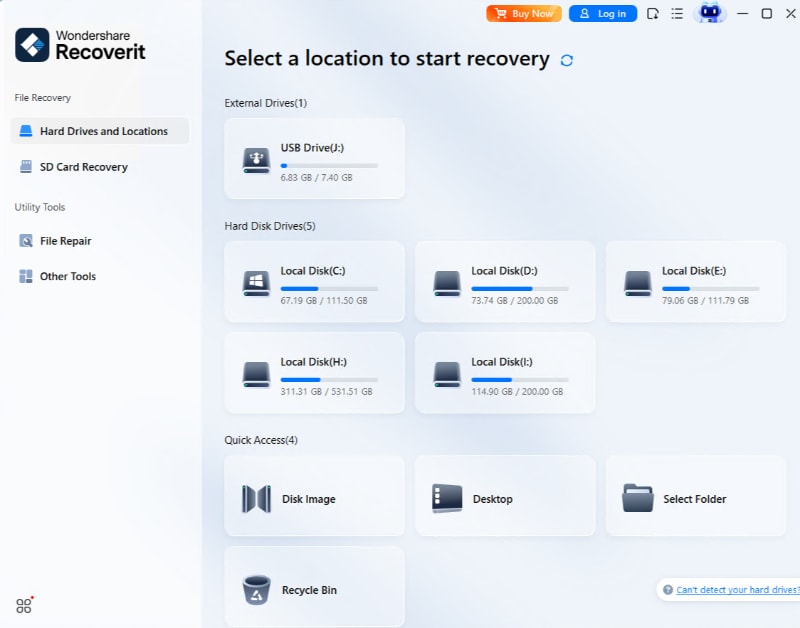
1. Choose a Location to Recover Data
Install and launch Recoverit on a safe drive that is different from the one you are trying to repair. On the main interface, locate the section listing available disks and partitions. Select the specific FAT32 device or partition where your files were lost, such as a USB flash drive, memory card, or external hard disk. Confirm the selection to let Recoverit know which location to scan.
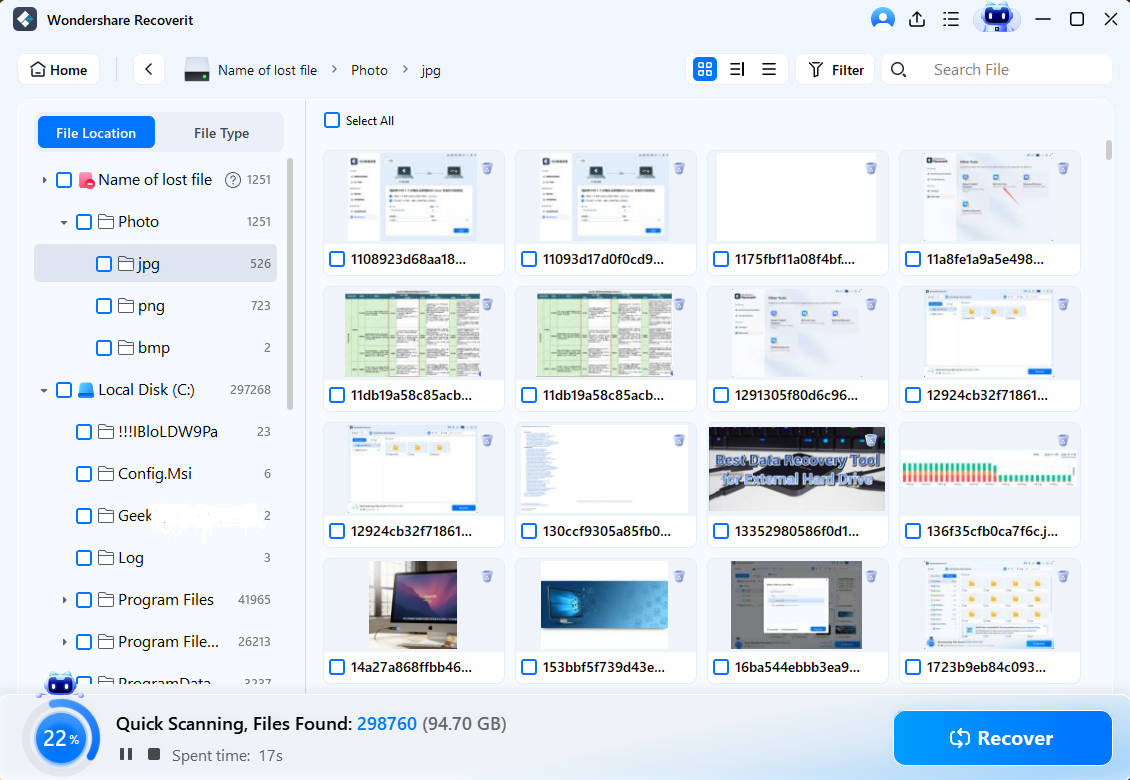
2. Deep Scan the Location
Click the Start button to initiate a deep scan of the chosen FAT32 volume. Recoverit will read the file system structures and raw sectors, searching for deleted, formatted, or otherwise lost data. During the scan, you can monitor progress and see newly discovered files grouped by type, path, or time. For large drives, allow enough time for the scan to complete for the best recovery results.
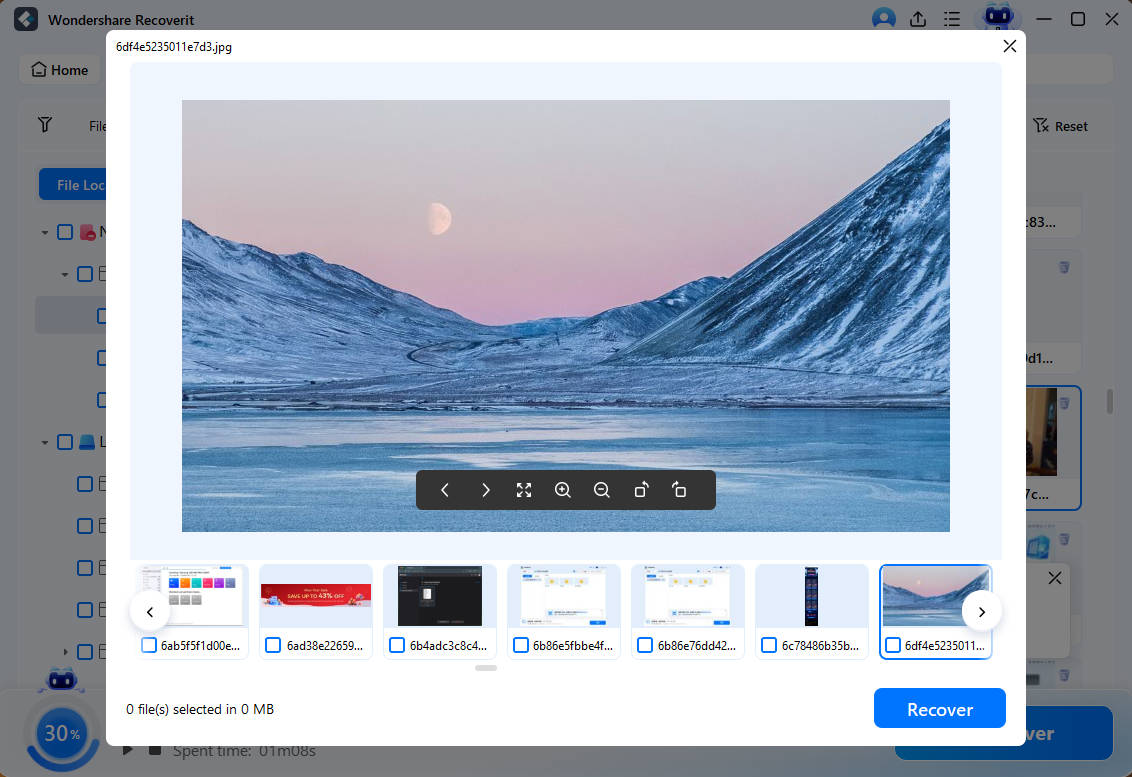
3. Preview and Recover Your Desired Data
When the scan is finished, explore the result list using filters and search to quickly locate important items. Use the built-in preview feature for photos, videos, documents, and other supported file types to verify that they open correctly. Select the files and folders you want to restore, click the Recover button, and choose a safe destination on a different storage device or partition to avoid overwriting remaining data on the original FAT32 drive.
Conclusion
FAT32 file recovery is entirely possible when you act quickly and use safe methods. Understanding how the FAT32 file system stores data, and what happens when files are deleted or a drive is formatted, helps you avoid overwriting important information and improves your chances of successful recovery.
By stopping use of the affected device, applying practical preventive tips, and turning to a dedicated tool like Recoverit, you can efficiently scan FAT32 USB drives, SD cards, and external disks to restore valuable files. With a clear process and the right software, you can resolve many data loss incidents and better protect your storage devices in the future.
Next: Ext4 File Recovery
FAQ
-
Can I recover deleted files from a FAT32 USB drive without software?
In some cases you can restore deleted files from a FAT32 USB drive using the Recycle Bin or existing backups if the deletion occurred on a computer and the bin was not emptied. However, once the Recycle Bin is cleared or data is lost because of formatting or corruption, specialized FAT32 file recovery software is usually necessary to scan the device and rebuild what remains. -
Is FAT32 file recovery possible after formatting the drive?
Yes, recovery is often possible after a quick format because the format mainly recreates file system structures while leaving underlying data clusters untouched until overwritten. You should immediately stop using the drive and run a reliable data recovery tool to search for lost files. A full format or continued writing to the device significantly lowers the odds of successful FAT32 file recovery. -
How safe is it to use FAT32 file recovery software?
Using reputable FAT32 file recovery tools is generally safe as long as you avoid installing the software or saving recovered data on the same drive you are trying to restore. This prevents overwriting remaining content. Always download from the official Recoverit website, follow the recommended workflow, and keep the original drive in read-only usage as much as possible. -
Why does my FAT32 drive show as RAW or inaccessible?
A FAT32 drive may appear as RAW or inaccessible due to improper ejection, sudden power loss, bad sectors, malware, or file system corruption. When this happens, the operating system can no longer interpret the FAT32 structures and labels the partition as RAW. Before attempting formatting or aggressive repairs, it is wise to perform data recovery to extract important files first. -
What is the difference between FAT32 and NTFS for data recovery?
FAT32 and NTFS organize and track files in different ways. NTFS includes features like permissions, compression, and journaling, while FAT32 is simpler and widely supported on removable media. Recovery principles are similar, but the internal structures and available metadata differ, which can influence how tools locate deleted entries and how complete the reconstructed folder hierarchy will be.