TL;DR:
To successfully recover deleted or lost files from Linux file systems, immediately halt all write activity on the affected partition and use specialized recovery tools to extract data from the freed blocks to a separate storage device.
● Remount the affected file system as read-only immediately to prevent the operating system from permanently overwriting recoverable data blocks through background tasks, new installations, or defragmentation.
● For drives exhibiting physical hardware faults or I/O errors, avoid running recovery software directly on the disk; instead, create a sector-by-sector image and perform the recovery on that cloned copy to prevent further damage.
● Utilizing cross-platform software like Wondershare Recoverit requires connecting the affected Linux drive (supporting ext2, ext3, and ext4) to a compatible computer, and deep raw disk scans typically require root or elevated permissions.
Ask AI for a summary
 ChatGPT
 Perplexity
 Gemini
 Claude
 Grok
Grok
Linux file recovery is the process of restoring deleted, formatted, or otherwise lost files from Linux based systems and storage devices. Whether you accidentally removed a critical configuration file, lost a folder after repartitioning, or encountered a corrupted drive, understanding how Linux file recovery works can help you act quickly and avoid permanent data loss. This guide explains why files disappear on Linux, what actually happens on the disk, and which techniques and tools you can use to bring your data back, including when professional grade software such as Recoverit becomes the safest choice.
Try Recoverit to Perform Data Recovery
 Security Verified. 3,591,664 people have downloaded it.
In this article
What Is Linux file recovery
Linux data recovery focuses on restoring files that have been deleted, lost after formatting, corrupted, or made inaccessible on Linux based systems such as Ubuntu, Debian, Fedora, and others. It can involve working with native Linux file systems like ext2, ext3, ext4, XFS, Btrfs, and more, as well as external drives formatted for Linux.
Typical Linux file recovery cases include:
- Accidentally removing files with commands like rm or rm -rf
- Formatting or repartitioning a disk that contained important data
- File system corruption after power loss, kernel panics, or improper shutdown
- Drive errors or bad sectors making partitions unreadable
- Malware, ransomware, or user mistakes overwriting configuration and data files
The goal is always the same: safely restore as many intact files as possible while avoiding actions that overwrite the lost data blocks.
How Does Linux file recovery Work
When you delete a file on most Linux file systems, the operating system usually removes the directory entry and marks the data blocks as free, but the actual data often remains on disk until it is overwritten. Ext4 file recovery and similar operations take advantage of this behavior.
Modern tools for recover deleted files linux generally work in three stages:
- They scan file system metadata (superblocks, inodes, journals) to find recently removed entries.
- They search raw disk space for known file signatures, such as JPEG or PDF headers, when metadata is damaged.
- They rebuild directory structures and allow you to preview and selectively restore data.
On Linux, recovery might be done directly on the affected machine using command-line utilities, or by connecting the drive to another computer and running cross platform tools like Recoverit. In all cases, you must avoid writing new data to the affected partition, because that can permanently overwrite recoverable blocks.
Types of Linux file recovery
Different linux file recovery approaches apply depending on how the data was lost, what file system you are using, and whether there is any hardware damage. Broadly, recovery methods are divided into logical and physical techniques.
Logical Linux file recovery methods
Logical recovery deals with software level issues when the hardware is still working. This covers most everyday ubuntu file recovery and desktop scenarios.
Common logical recovery options include:
- Undoing accidental deletes via trash or GUI tools: Many desktop environments move deleted files to a trash folder, where they can be restored easily.
- Recovering from snapshots and backups: Using rsync backups, Timeshift, LVM snapshots, or NAS snapshots to roll back to a previous state.
- File system aware scanning: Using specialized tools that understand ext2/ext3/ext4, XFS, or Btrfs metadata for efficient recovery.
- Partition table repair: When a partition entry is lost but data is still intact, utilities can reconstruct the table for linux partition recovery.
Logical recovery is usually safer and faster because it works with existing structure, not just raw data.
Physical and advanced Linux file recovery
Physical or advanced recovery deals with hardware faults and severe corruption that simple tools cannot handle. These situations are more complex and often require professional assistance.
Typical scenarios include:
- Drives with bad sectors or failing hardware: The disk may click, freeze, or disconnect frequently, making restore lost files linux attempts risky without prior cloning.
- Completely unreadable partitions: The OS reports I/O errors or cannot mount the file system at all.
- RAID or NAS failures: Multiple-disk systems where array metadata is damaged or drives failed in sequence.
In these advanced cases, a recommended strategy is to create a sector by sector image of the failing drive and then perform linux data recovery from that image instead of the original hardware to reduce additional damage.
| Scenario | Recommended Linux file recovery approach |
|---|---|
| Accidental rm on healthy ext4 partition | Use file system aware recovery tools or professional software that supports ext4 file recovery, and avoid writing new data. |
| Drive showing I/O errors or unusual noises | Stop using the disk, create a full image if possible, and consider professional services instead of DIY tools. |
Practical Tips for Linux file recovery
Following some simple best practices after data loss greatly increases the chance of a successful linux file recovery.
Immediate actions after data loss
As soon as you notice missing files, limit disk activity on that partition. The more data you write, the more likely you will overwrite recoverable blocks.
- Remount the file system as read only if possible.
- Avoid installing new software or updates to the affected disk.
- Do not run defragmentation or file system intensive tasks.
- Document what happened just before the loss to guide your recovery steps.
Best practices to maximize recovery success
To improve outcomes when you recover deleted files linux, keep these guidelines in mind:
- Recover to a different device: Always save restored data to another disk or partition to avoid overwriting files that are still recoverable.
- Create images of risky drives: For unstable disks or critical data, clone the drive and perform recovery on the copy.
- Use trusted tools: Rely on well known solutions like recoverit linux support, which are tested across many file systems and scenarios.
- Maintain regular backups: Automated snapshots and remote backups can completely bypass the need for emergency recovery in many cases.
How to Use Recoverit to Recover Lost Data
Wondershare Recoverit is a professional data recovery solution designed to restore lost, deleted, or formatted files from a wide range of devices and file systems, including Linux based drives that can be attached as accessible storage. It uses smart scanning algorithms and an intuitive interface so you can perform linux file recovery without deep technical skills. Learn more and download it from the Recoverit official website.
Key Features Offered by Recoverit
- Supports recovery from Linux file systems such as ext2, ext3, and ext4 via accessible drives connected to a supported computer.
- Scans internal disks, external hard drives, USB sticks, and memory cards for deleted, formatted, or lost files.
- Offers file preview and selective restore options so you only recover the documents, photos, videos, and other data you actually need.
Step-by-Step Guide on How To Recover Lost Data
1. Choose a Location to Recover Data
Launch Recoverit and, on the main interface, select the drive or partition where your Linux files were stored. This can be an internal disk, an external USB drive, or a memory card that uses a Linux file system. Confirm the location so the program can prepare a targeted scan for linux data recovery on that specific source.

2. Deep Scan the Location
Start the scan to let Recoverit analyze the selected device sector by sector. The software will search for deleted entries, lost partitions, and file signatures associated with documents, images, videos, and more. As the in depth scan continues, you can monitor discovered items in real time and pause or stop once you have located the essential data you want to restore.

3. Preview and Recover Your Desired Data
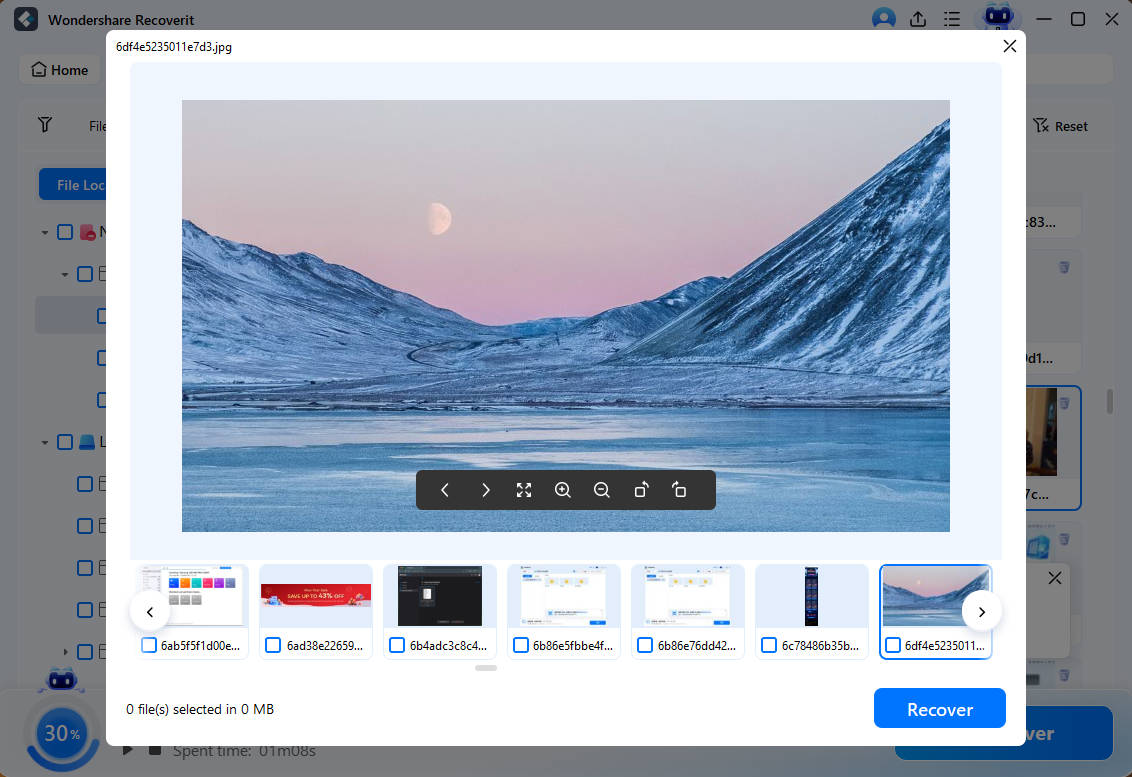
When the scan completes, browse the results by file path or file type. Use the built in preview feature to verify that documents, photos, and videos are intact before recovery. Finally, select the items you need and save them to a different, safe storage location, ensuring you do not overwrite additional recoverable data on the original Linux drive.
Conclusion
Linux file recovery is entirely possible when you understand how data is stored and what actions to avoid after loss. By recognizing the causes of deletion or corruption and acting quickly, you can often bring back critical files with minimal damage.
Built in Linux tools and backups can solve many everyday incidents, while specialized software such as Recoverit adds a powerful safety net for more severe cases, including formatted or inaccessible drives. With a clear plan and the right utilities, most linux file recovery scenarios can be handled calmly and effectively.
Next: D Drive File Recovery
FAQ
-
Can I recover deleted files on Linux without extra software?
In some cases, yes. If you recently deleted files and the trash or a file manager undo option is available, you may restore them quickly. For command line deletions, options are limited, and if the data blocks have already been reused, you will typically need dedicated recovery tools or a recent backup. -
How soon should I act after losing Linux files?
You should act immediately. Stop writing new data to the affected partition, close unnecessary applications, and begin linux file recovery steps as soon as possible to reduce the risk of overwritten data. -
Do I need root access for Linux data recovery?
Root or elevated permissions are often required to access raw disks and system partitions for deep scans. For removable drives that mount with full user rights, root may not be strictly necessary, but using it helps ensure consistent and complete scanning.