TL;DR:
Password protected file recovery retrieves lost, deleted, or corrupted locked files from your storage media, but it strictly requires your original credentials to open the documents once they are restored.
● Data recovery tools like Recoverit reconstruct the deleted file structure using signatures and metadata, but they do not crack passwords, bypass strong encryption, or remove digital rights management.
● If your entire disk is protected by system-level encryption like BitLocker or FileVault, you must first unlock and mount the volume using the correct recovery key or PIN before any software can scan for lost files.
● To prevent permanently overwriting the lost encrypted data blocks, you must immediately stop using the affected drive and save the recovered files to a completely different storage device.
Ask AI for a summary
 ChatGPT
 Perplexity
 Gemini
 Claude
 Grok
Grok
Password protected file recovery focuses on restoring access to files that are locked, encrypted, or no longer opening because of corruption, deletion, or system issues. Whether it is a Word document, Excel spreadsheet, PDF, archive, or another secured format, losing access can disrupt both work and personal plans. In many cases, you are not just dealing with a forgotten password but also with accidental deletion, formatting, or damaged storage. This guide explains what password protected file recovery can and cannot do, how data recovery tools fit into the process, and how to protect your confidential information while trying to get it back.
Try Recoverit to Perform Data Recovery
 Security Verified. 3,591,664 people have downloaded it.
In this article
What Is password protected file recovery
password protected file recovery is the process of locating and restoring documents, archives, and other files that are secured with a password or encryption and have become lost, deleted, inaccessible, or corrupted. Instead of focusing on hacking or bypassing a password, this process is primarily about bringing the original file back to a usable state so that you, the legitimate owner, can open it again with your own credentials.
When you recover password protected files, you are usually dealing with scenarios such as accidental deletion, drive formatting, partition loss, virus attacks, or system crashes. In many cases the password itself still works perfectly, but the storage blocks that contained your file have been marked as free space or partially overwritten. Specialized data recovery software can scan the device at a low level and reconstruct your locked document so it can once again ask for the correct password.
It is important to understand the distinction between data recovery and password cracking. Encrypted and password protected files are designed to resist unauthorized access, which means that respectable tools will not claim to break strong encryption. Instead, they will focus on retrieving the original file as completely and safely as possible, preserving its security properties.
How Does password protected file recovery Work
The way password protected file recovery works depends on how the data was lost and how the file was secured. On a technical level, most file systems mark deleted files as "available space" without immediately wiping the actual data. Until those blocks are overwritten, a professional recovery tool can still find traces of the original document, even if it is password protected.
During scanning, encrypted file recovery relies on file signatures and metadata to identify formats such as DOCX, XLSX, PDF, ZIP, RAR, or password-protected archives. The software then attempts to reassemble the pieces of each file and rebuild its structure. If the reconstruction is successful, you get back a file that behaves just like the original: it still requires the correct password, and its encryption, if any, remains intact.
For locked document recovery on formatted, corrupted, or failing drives, modern tools use a deep scan that reads sector by sector, bypassing normal operating system restrictions. This approach increases the chance of finding lost password protected content, even when the file system table is damaged or missing.
| What data recovery can do | What data recovery cannot do |
|---|---|
| Locate and restore deleted or lost secured files from healthy or logically damaged storage. | Guarantee access if you do not know the password or decryption key. |
| Rebuild file structures for common document, archive, and media formats. | Bypass strong encryption, remove digital rights management, or break legal protections. |
| Recover data after accidental formatting, partition loss, or file system errors. | Repair severely overwritten data or physically destroyed storage media. |
Types of password protected file recovery
Different situations call for different password protected file recovery strategies. The approach you choose depends on whether the security is applied at the file level, the folder or archive level, or across an entire disk, device, or operating system. Understanding these categories helps you pick suitable tools and set realistic expectations for what can be restored.
File-level password protected file recovery methods
File-level protection usually applies directly to individual documents and compressed archives, such as password locked Word files, Excel spreadsheets, PDFs, or ZIP/RAR archives. In these cases, the file itself contains the encryption or password-protection mechanism, while the underlying disk blocks look like any other data to the operating system.
Recovering these items typically involves scanning the storage device for known file signatures, then reconstructing the secured file so that it can be opened with the correct credentials.
- Office documents (Word, Excel, PowerPoint) protected with a password to open or modify.
- PDFs with owner or user passwords restricting printing, copying, or opening.
- Compressed archives such as ZIP, 7-Zip, or RAR files with password protection enabled.
- Database files or proprietary project files locked with application-level passwords.
Once locked document recovery succeeds, you usually need to enter the same password you were using before the loss event. If you no longer remember it, you may need to rely on password management backups, hint mechanisms, or application-specific reset options, where available.
Device and system-level encrypted file recovery
System-level encryption, such as BitLocker, FileVault, or full-disk encryption used on many laptops and external drives, protects all files on a volume at once. Here, encrypted file recovery is more complex, because the raw data on disk is unreadable without the correct key or credentials.
The recovery process behaves differently depending on whether the device is still mountable and whether you can provide the right unlock information.
- If the encrypted volume can still be unlocked with the original password, PIN, or recovery key, you may be able to mount it and then run data recovery software on the decrypted volume to search for deleted secured files.
- If the volume header or encryption metadata is damaged but not overwritten, some specialized tools and services may be able to repair it, allowing you to unlock the disk again.
- If the encryption keys are lost or the encrypted blocks are heavily corrupted, even professional labs cannot typically restore readable content.
In all system-level scenarios, legal access to the encryption keys remains essential. Password protected file recovery on an encrypted disk without keys is, by design, practically impossible in most real-world cases.
Practical Tips for password protected file recovery
Applying a few careful practices after noticing that a secured file is missing can greatly improve your chances of a successful password protected file recovery. Every write operation to the affected device risks overwriting the lost data blocks, so the first rule is always to reduce activity as much as possible.
Best practices immediately after data loss
- Stop using the device that contained your lost password protected files; avoid copying new data, installing apps, or updating large programs on it.
- If possible, shut down the affected computer safely and connect the storage drive to another machine in read-only mode for recovery.
- Avoid running disk cleanup utilities, defragmentation tools, or "system optimizers" until after you complete data recovery efforts.
- Note any details about when you last accessed the file, where it was stored, and whether any crashes or formatting operations occurred.
Protecting confidentiality during recovery
- Use reputable data recovery software that processes data locally rather than uploading your files to unknown servers.
- Perform recovery on a trusted computer in a secure environment, particularly for sensitive business documents or personal records.
- Save recovered files to a different storage device from the one you are scanning, to avoid overwriting additional lost data.
- After successful locked document recovery, store the restored files in an encrypted, regularly backed-up location and use a password manager to reduce the risk of forgetting credentials again.
How to Use Recoverit to Recover Lost Data
Recoverit is a professional data recovery solution from Wondershare that helps you retrieve deleted, lost, or inaccessible files from computers, external drives, and other storage devices. By scanning your storage at a deep level, Recoverit can locate document formats that are often password protected, such as office files, PDFs, and archives, so you can attempt to regain access using your own credentials or other methods. You can learn more and download the software from the Recoverit official website.
Key Features Offered by Recoverit
- Restore deleted or lost documents, photos, videos, and archives from various devices.
- Support for common formats that are often password protected, including Office files, PDFs, and compressed archives.
- Clean, guided recovery process with file preview to confirm data before saving.
Step-by-Step Guide on How To Recover Lost Data
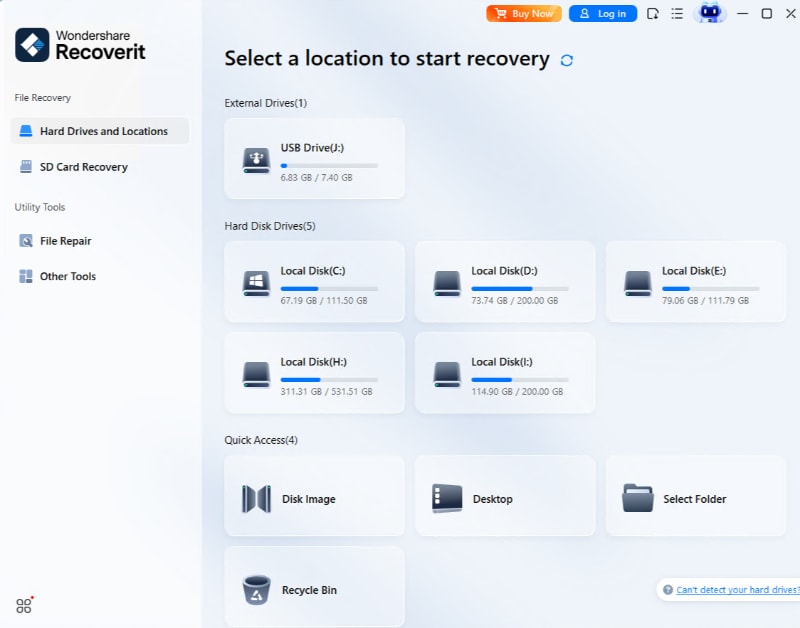
1. Choose a Location to Recover Data
Launch Recoverit and choose the drive, partition, or external device where your password protected files were stored before they became inaccessible. This could be your system disk, an external hard drive, USB flash drive, memory card, or another storage medium. Once you have selected the correct location, start the scan so Recoverit can begin searching for deleted, lost, or hidden secured documents.
2. Deep Scan the Location
Recoverit automatically performs a comprehensive deep scan of the selected location, reading the drive sector by sector to locate recoverable items. During this process, you can monitor progress, pause or resume if needed, and filter results by file type to quickly home in on password protected Word, Excel, PDF, and archive files that might contain your missing data.
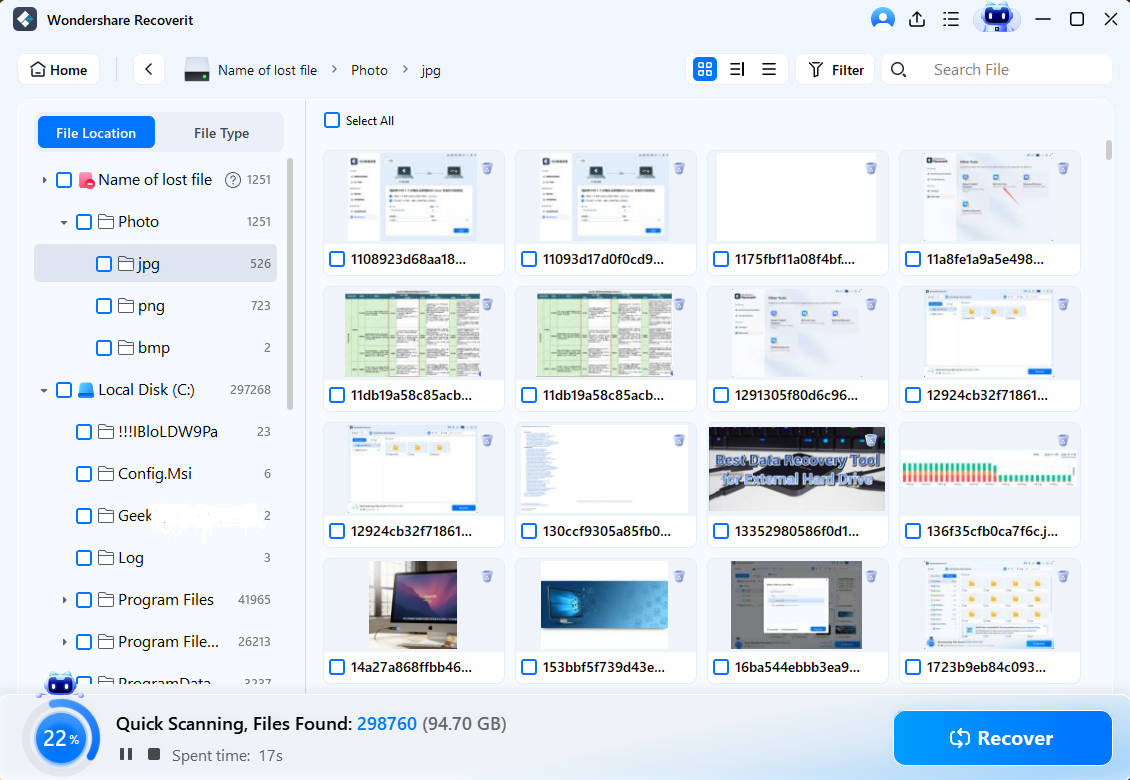
3. Preview and Recover Your Desired Data
After the scan completes, browse through the list of recoverable files and use the preview feature to verify that each item is intact. When you find the password protected documents or archives you need, select them and click "Recover." Save the recovered files to a safe destination that is different from the original drive to prevent overwriting, then open them with the appropriate application and enter your valid password to access the content.

Conclusion
password protected file recovery is about more than breaking passwords. In practice, it usually means locating and restoring lost, deleted, or corrupted secured documents so that you can attempt to unlock them again with your own credentials or other legitimate methods. Understanding the difference between data recovery and password cracking helps you choose safe, legal, and effective solutions.
With a tool like Recoverit, you can scan your drives for missing password protected files and bring them back to a readable state, all while keeping your data under your control. Combine reliable recovery software with good security habits, regular backups, and careful password management to greatly reduce the risk of permanently losing important locked documents.
Next: Large File Recovery
FAQ
-
Can data recovery software remove a password from a protected file?
Data recovery tools are designed to find and restore lost or deleted files, not to remove or bypass passwords. If a file is encrypted or password protected, you still need the correct password or decryption key to open it, even after successful recovery. -
Is it possible to recover deleted password protected files from a formatted drive?
Yes. If you stop using the drive quickly after formatting, a program like Recoverit can often scan the device, locate previously stored password protected files, and restore them. You must still provide the correct password to access the content. -
Are password protected files harder to recover than normal files?
On the storage level, recovering password protected files is similar to recovering regular files. The main difference is after recovery: the document will still ask for a valid password, and without it the content remains inaccessible. -
What should I avoid doing after losing a password protected file?
Avoid saving new data to the same drive, reinstalling the operating system on it, or running cleanup and defragmentation tools. These actions can overwrite the sectors where your lost secured file resides and make recovery much less likely. -
Can Recoverit help with corrupted password protected documents on an external drive?
Yes. You can connect the external drive to your computer, point Recoverit to that device, and scan for lost, deleted, or corrupted secured files. After recovery, use the proper password to open them and, if they remain damaged, consider using dedicated file repair utilities.