TL;DR:
To successfully recover lost or deleted .tar archives, immediately stop writing new data to the affected drive to prevent overwriting the available sectors, and use data recovery software like Wondershare Recoverit to perform a sector-by-sector scan.
● Mount unstable or physically failing drives as read-only or create a full sector-by-sector disk image before attempting recovery, and strictly avoid running disk cleaners or defragmenters that permanently destroy recoverable TAR data.
● When scanning file systems such as NTFS, FAT32, exFAT, HFS+, APFS, or ext4, you must save the restored files to a completely different physical drive or partition to avoid overwriting the underlying data blocks.
● After restoring the archive, you can test the file integrity by running the command tar -tvf filename.tar, or extract the undamaged content using tar -xvf filename.tar.
Ask AI for a summary
 ChatGPT
 Perplexity
 Gemini
 Claude
 Grok
Grok
.Tar file recovery is vital when important tar archives that bundle project files, website backups, or configuration folders suddenly go missing or become unreadable. Whether you accidentally deleted a tar file, lost it after formatting a drive, or encountered corruption while transferring data, there are practical ways to bring those archives back. This guide explains what .tar files are, common data loss scenarios, and effective recovery methods. You will also learn how specialized data recovery software can help you safely restore lost .tar files from Windows, Mac, and external storage devices without overwriting valuable data.
Try Recoverit to Perform Data Recovery
 Security Verified. 3,591,664 people have downloaded it.
In this article
What Is .TAR file recovery
.Tar file recovery refers to the process of restoring lost, deleted, formatted, or corrupted TAR archives so you can access the individual files they contain again. TAR (Tape Archive) is a classic Unix and Linux format used to bundle multiple files, directories, permissions, and metadata into a single archive, often before compression.
Because tar archives frequently store server backups, source code, configuration trees, or website data, losing a single .tar file can mean losing an entire project snapshot. .TAR file recovery, therefore, focuses on scanning the underlying storage media, locating remnants of missing archives, and attempting to rebuild them intact so that standard tools like the tar command can open and extract the content.
In practice, tar archive recovery can involve quick checks such as restoring from backups and recycle bins, as well as deeper techniques like low-level scans with professional file recovery software that recognizes the TAR file structure on disk, even when the file system no longer lists it.
How Does .TAR file recovery Work
At a technical level, most operating systems do not immediately erase data when you delete a .tar archive or format a drive. Instead, they mark the disk space as available. Until new data overwrites those sectors, tar data recovery is often possible by scanning the raw device and reconstructing files from the remaining fragments.
Specialized tools, including Recoverit and command-line utilities, follow several general steps when performing tar archive recovery:
- They analyze the file system (NTFS, FAT32, exFAT, HFS+, APFS, ext4, etc.) to locate entries that reference deleted or lost .tar files.
- If directory information is missing, they perform a sector-by-sector scan, looking for signatures associated with TAR archives and other common file types.
- Once likely TAR data blocks are found, they try to piece together a continuous archive, checking internal headers and metadata to confirm consistency.
- The software then lists recoverable .tar files and allows you to save them to a safe destination, ideally a different disk, to avoid overwriting.
When you face Linux tar recovery after file system errors or accidental deletions, the same principles apply. Tools look beyond what the file system currently exposes and search for evidence of previous data structures that still reside on the storage medium.
Types of .TAR file recovery
.TAR file recovery can be grouped into several categories depending on the damage type, storage environment, and tools used. Understanding these types helps you choose the safest and most effective path to recover tar files with minimal risk of additional data loss.
Logical .TAR file recovery methods
Logical recovery focuses on software-level problems where the hardware remains functional. These scenarios include accidental deletions, formatting, partition loss, and some forms of corruption.
| Logical recovery scenario | Typical .tar recovery approach |
|---|---|
| Accidentally deleted .tar file | Check recycle bin or trash, then use .tar file recovery software to scan the disk if the archive is not visible. |
| Formatted or corrupted partition | Run a deep scan with a reliable tar data recovery tool that supports formatted and inaccessible drives. |
Common logical .TAR file recovery situations include:
- Deleting tar backups from desktop, server, or NAS shares and later emptying the recycle bin.
- Repartitioning or formatting a drive that contained long-term TAR archives.
- File system corruption after improper shutdowns, power outages, or software crashes, resulting in missing .tar entries.
- Virus infection or ransomware that hides or removes TAR-based backup archives.
In these cases, you can often perform restore deleted tar operations by using non-destructive utilities such as Recoverit that scan the device, identify recoverable .tar files, and allow you to export them to a new, healthy volume.
Physical and advanced .TAR file recovery options
Physical and advanced recovery deals with hardware issues or severe damage that prevents normal access to the storage device. Though these situations are more complex, they are sometimes the only option when critical TAR backups reside on failing disks.
Typical scenarios include:
- Mechanical HDD failure, clicking drives, or SSDs with controller problems where the OS cannot mount the volume.
- Severe bad sectors or degraded flash memory that cause repeated I/O errors whenever you access the folder that used to hold your .tar archives.
- Water, fire, or impact damage to external drives or memory cards containing important TAR backups.
In such cases, advanced .tar file recovery may require:
- Imaging the failing device sector by sector to a stable disk, then performing logical linux tar recovery or cross-platform recovery on the image.
- Professional lab services where specialists repair or temporarily stabilize the hardware to extract raw data for further tar file repair attempts.
Because working directly with a failing device can worsen the damage, it is crucial to stop using it immediately and, if the data is extremely valuable, consult a professional recovery service instead of repeatedly trying to mount or repair the drive yourself.
Practical Tips for .TAR file recovery
When a tar archive disappears or becomes unreadable, the actions you take in the first minutes can dramatically influence the final outcome. Follow these practical tips to maximize your chances of a successful .tar file recovery and avoid common mistakes that permanently destroy recoverable data.
1. Stop writing new data to the affected drive
Immediately stop saving new files, installing applications, downloading large archives, or editing existing data on the drive where the .tar file was stored. New writes may overwrite the very sectors that contain your missing archive and make tar archive recovery impossible.
2. Check simple locations first
- Look in the recycle bin or trash for recently deleted TAR files.
- Search cloud-sync folders, remote backups, or version-control repositories for older copies.
- On Linux and macOS, use shell history and tar command logs to determine where and when the archive was created.
3. Avoid risky "cleanup" or "optimization" tools
Disk cleaners, registry optimizers, defragmenters, and duplicate removers can overwrite unused sectors that still contain recoverable TAR data. Delay running such utilities until after you have attempted tar data recovery with a trusted tool.
4. Use read-only access whenever possible
If the volume is unstable or reporting errors, mount it read-only or connect it as a secondary drive to another machine. This helps ensure no background process writes to the disk while you try to recover tar files.
5. Prefer imaging for failing disks
When a drive shows physical issues (clicking, freezing, slow reads, or frequent disconnections), consider creating a full sector-by-sector image to another disk and performing .TAR file recovery from that image instead of the original device.
6. Plan long-term backup strategies
After successful .tar file recovery, implement a 3-2-1 backup rule: keep three copies of your critical TAR archives on two different media, with at least one copy stored offsite or in the cloud. This way, even if one medium fails, your backups remain safe.
How to Use Recoverit to Recover Lost Data
For many users, the fastest and safest route to successful .tar file recovery is to use a professional data recovery suite like Recoverit. Developed by Wondershare, Recoverit combines an intuitive interface with a powerful scanning engine capable of restoring TAR archives and thousands of other file types from internal drives, external HDDs and SSDs, USB sticks, and memory cards. You can learn more about the software, its supported formats, and licensing on the Recoverit official website.
Key Features Offered by Recoverit
- Tar archive recovery support along with over 1000 additional file formats, including documents, photos, and videos.
- Deep and quick scan modes capable of handling deleted files, formatted volumes, and logically corrupted partitions on a wide range of devices.
- Clear, step-by-step workflow with file filtering and preview so you can confirm the integrity of recovered data before saving it.
Step-by-Step Guide on How To Recover Lost Data
1. Choose a Location to Recover Data
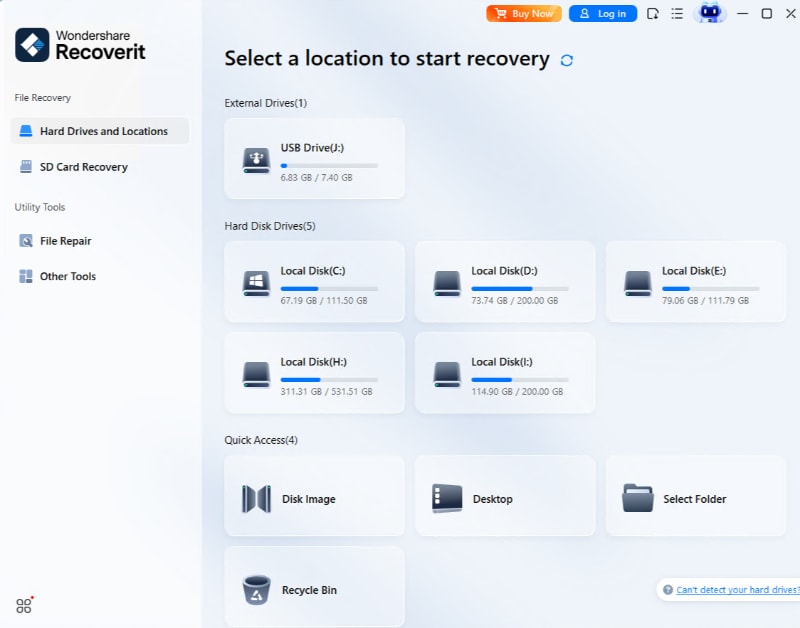
Install and open Recoverit on a working computer, then identify the drive, partition, or external storage that previously contained your missing .tar files. If the archives were stored on an external HDD, SSD, USB flash drive, or SD card, connect the device and wait for the system to recognize it. In the Recoverit interface, click once on the appropriate disk or partition so it is highlighted as the target location for .tar file recovery.
2. Deep Scan the Location
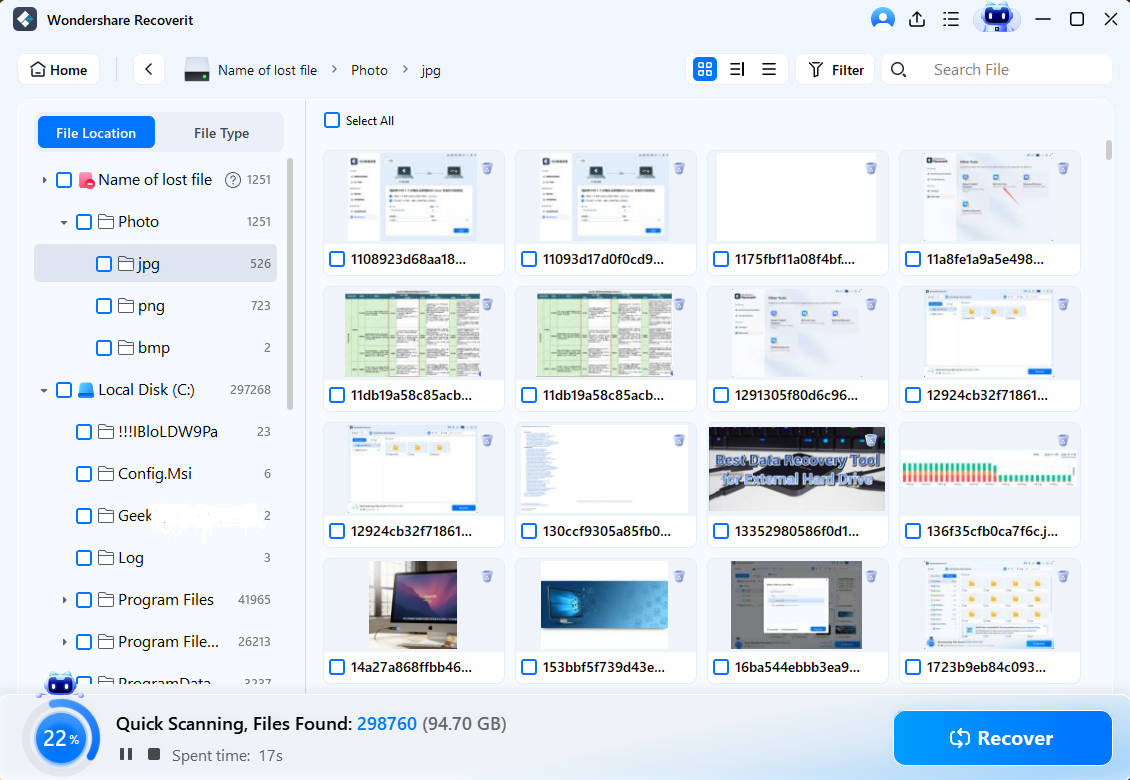
After selecting the correct destination, click the Start button to initiate a thorough scan. Recoverit will examine both file system records and raw sectors to search for deleted, lost, or hidden items, including .tar file recovery candidates that are no longer visible in Explorer or Finder. You can observe the progress in real time, pause the scan if necessary, or narrow the results using file type and path filters while the software continues scanning in the background.
3. Preview and Recover Your Desired Data
When the scan finishes, browse the detected files by category or use the search box to locate specific TAR file names or extensions. For supported formats, take advantage of the preview feature to confirm that the recovered archive appears complete and uncorrupted. Once you have selected all required items, click the Recover button and choose a different physical drive or partition as the save destination to prevent overwriting any still-recoverable data. This non-destructive workflow helps ensure the best results for current and future .tar file recovery attempts.

Conclusion
Losing a .tar archive can disrupt backups, development workflows, and system management tasks, but in many cases the data is still recoverable if you act quickly. Understanding how tar files work, the typical reasons they disappear, and the best practices for handling affected storage greatly improves your chances of success.
By combining safe manual checks with reliable software like Recoverit, you can scan problem drives, locate lost tar archives, and restore them without complicated procedures. Follow the steps outlined in this guide, avoid writing new data to the affected device, and you will maximize the possibility of complete .tar file recovery.
Next: .Gz File Recovery
FAQ
-
Can I recover a .tar file that I deleted from the recycle bin or trash?
Yes. Even after you empty the recycle bin or trash, the underlying data blocks often remain on the disk until they are overwritten. To increase the chances of .tar file recovery, stop using the affected drive immediately and run a deep scan with a reliable data recovery program such as Recoverit. -
Is it possible to repair a corrupted .tar file after recovery?
Sometimes. After you recover tar files, you can run commands like "tar -tvf filename.tar" to test integrity or "tar -xvf filename.tar" to extract undamaged content. For heavily damaged archives, third-party tar file repair utilities might help, but success is not guaranteed. -
Does .TAR file recovery work on Linux, Windows, and macOS?
Yes. On Linux, you can combine disk imaging tools, file-system checkers, and command-line utilities with graphical recovery software. On Windows and macOS, applications like Recoverit provide an easy interface for scanning disks and restoring missing TAR archives. -
What should I avoid doing after losing a TAR archive?
Avoid writing new data to the same disk, running disk cleanup or optimization tools, reinstalling the OS on the affected partition, or reformatting the volume. All of these actions can overwrite sectors that still store recoverable TAR data. -
Can Recoverit find .tar files on formatted or corrupted drives?
Recoverit is designed to scan formatted, inaccessible, or logically corrupted drives for recoverable content, including TAR archives. While it cannot repair severe physical hardware damage, it can often locate and restore files that the operating system no longer lists in the file system.