TL;DR:
A VCF (vCard) file is a standardized plain-text format used to store and exchange contact information across platforms, which can be natively opened and managed by default contact apps on Windows, macOS, Android, and iOS.
● Compatibility depends heavily on the vCard version used (v2.1 for legacy devices, v3.0 for modern desktops, v4.0 for advanced structuring), as version mismatches are the primary cause of import failures.
● While VCF files can store entire address books, some destination applications have a structural limitation where they will only import the first entry from a multi-contact file.
● Direct conversion to CSV requires first importing the VCF into a manager like Google Contacts or Microsoft Outlook, and if a file is lost, you must immediately stop using the storage drive to prevent overwriting before running recovery software like Recoverit.
Ask AI for a summary
 ChatGPT
 Perplexity
 Gemini
 Claude
 Grok
Grok
A VCF file, also known as a vCard file, is a common format for storing and sharing digital contact information across devices and apps. You will see VCF files when you export contacts from your phone, email client, or address book to back them up or move them somewhere else. Understanding what a VCF file is, how it works, and how to open or convert it can help you manage your contacts more safely. It also makes it easier to restore your important contact data if a VCF file gets deleted, corrupted, or lost during transfer.
Try Recoverit to Perform Data Recovery
 Security Verified. 3,591,664 people have downloaded it.
In this article
What Is VCF File
A VCF file (Virtual Contact File) is a standardized format used to store and exchange contact details, also called a vCard file. Each entry in a VCF can include a contact name, phone numbers, email addresses, physical addresses, organization, job title, and sometimes profile photos or custom notes.
Because VCF is widely supported, you encounter it when you export or import VCF contacts from:
- Smartphones (Android and iOS) contact apps
- Email clients such as Outlook, Thunderbird, and Apple Mail
- Web-based address books like Google Contacts or iCloud Contacts
Typical uses of a VCF file include backing up contacts, migrating to a new phone, sending your business card by email, or merging contact lists from different services.
| Aspect | Details |
|---|---|
| Full name | Virtual Contact File (vCard) |
| Typical extension | .vcf |
| Main purpose | Store and share digital contact information across devices and platforms |
How Does VCF File Work
A VCF file is a plain-text file that follows the vCard specification. Inside, contact information is stored as key-value pairs, one per line. For example, you might see lines like "FN:" for full name or "TEL:" for a phone number when you open a VCF file in a text editor.
When you open VCF or import it in a contacts app, the application reads these fields and maps them to its own contact fields. When you export contacts, the app writes those fields into a vCard file that other systems can understand.
Typical VCF Workflow
- You create or maintain contacts in your phone or email client.
- You export VCF from that app to back up or move your contacts.
- You send or copy the VCF file to another device or service.
- You import VCF on the destination app to populate its address book.
This standardized exchange process is what makes VCF contacts so useful when you are switching phones, syncing between services, or sharing business contact details.
How to Open a VCF File
You can open VCF files on most systems using built-in or free software. Common options include:
- Windows: Windows Contacts, Microsoft Outlook, or a third-party VCF viewer.
- macOS: Apple Contacts (Address Book) or Outlook for Mac.
- Mobile devices: the default Contacts app on Android or iOS.
- Web: import into Google Contacts, iCloud Contacts, or other web contact managers.
On many systems, double-clicking a VCF file automatically opens a preview or import dialog, letting you decide whether to add the contact(s) to your address book.
Types of VCF File
Although they all use the same .vcf extension, there are several variations in how VCF file data is structured. Understanding the types helps you troubleshoot import problems and choose the right conversion path.
Common VCF Versions
The vCard standard has evolved through multiple versions. Older and newer devices may use different versions, which can affect compatibility.
| VCF / vCard Version | Characteristics |
|---|---|
| v2.1 | Very widely used legacy format; supported by many older phones and email clients; may lack modern fields like advanced encoding or social links. |
| v3.0 | Common in modern desktop clients; better support for Unicode, extended fields, and improved formatting rules. |
| v4.0 | Most current vCard specification; adds more structured data and improved internationalization; not all apps fully support it yet. |
If a VCF file will not import, the version mismatch between source and destination apps is often a cause. In those cases, converting or re-exporting the contacts to a different vCard version can help.
Single-Contact vs Multi-Contact VCF
Beyond versions, VCF contacts can be stored in different structural layouts.
| Type of VCF | Use Case |
|---|---|
| Single-contact VCF | Contains one contact per file. Useful for sharing a single digital business card via email or messaging apps. |
| Multi-contact VCF | Contains many contacts in a single file. Common when exporting a full address book to move contacts to a new phone or service. |
Most contact apps can handle both types, but some only import the first entry from a multi-contact VCF file. When moving large address books, always confirm how many contacts were actually imported on the destination.
Practical Tips for VCF File
Using a VCF file for backup and migration is simple, but there are some best practices that help you avoid data loss and compatibility issues.
How to Import and Export VCF Contacts
Here is a general outline of how to import VCF and export VCF in common environments (exact menu names vary by app):
- Export (create a VCF file):
- Open your contacts or address book app.
- Look for an Export or Backup option.
- Choose "vCard" or ".vcf" as the output format.
- Save the VCF file to a known folder or cloud storage.
- Import (use an existing VCF file):
- Open the target contacts or email program.
- Select Import and browse to your vCard file.
- Confirm how to handle duplicates (merge, replace, or keep both).
- Check a few entries afterward to ensure fields imported correctly.
How to Convert VCF to CSV, Outlook, and Other Formats
Many people need to convert VCF file data into other formats like CSV or proprietary address books.
- Convert VCF to CSV: Import the VCF file into Google Contacts, Outlook, or another contact manager that supports CSV export, then use its Export feature to create a CSV file.
- Convert VCF to Outlook contacts: Use Outlook's Open & Export options to import a vCard file. In some versions you can simply drag the VCF into Outlook contacts.
- Use online VCF converters carefully: Online tools can convert small sets of VCF contacts, but always consider privacy and avoid uploading sensitive contact lists to untrusted sites.
Preventing and Fixing Corrupted VCF Files
A corrupted VCF file may fail to open or import correctly. Common reasons include interrupted transfers, storage errors, or incorrect encoding.
- Prevention tips:
- Avoid disconnecting USB or SD cards while exporting VCF contacts.
- Keep devices charged and avoid forced shutdowns during export/import.
- Store backups on reliable media or cloud services.
- Basic repair steps:
- Open the VCF file in a text editor and look for obvious truncation or garbled characters.
- Try importing the file into a different app; some handle minor errors more gracefully.
- If the file was deleted or damaged on disk, use data recovery software to restore an earlier, intact copy.
Backing Up and Restoring Contacts Safely
Because contacts are critical, you should keep more than one backup beyond a single vCard file.
- Maintain both a device backup (such as an iTunes or Android backup) and an exported VCF file.
- Store your main backup in the cloud and a secondary copy on an external drive.
- When restoring, always test-import your VCF file into a separate profile or account first if you are worried about duplicates.
If a backup VCF file is accidentally deleted, stop using the affected drive or SD card to reduce overwriting and then attempt data recovery as soon as possible.
How to Use Recoverit to Recover Lost Data
When a VCF file is deleted, lost after formatting, or becomes inaccessible due to corruption, you can often still get it back with a professional data recovery tool. Recoverit by Wondershare is designed to scan computers, memory cards, USB drives, and other storage devices to locate and restore lost files, including VCF contacts. You can learn more and download the software from the Recoverit official website.
Key Features Offered by Recoverit
- Supports recovery of VCF file data alongside thousands of other file formats from internal and external storage devices.
- Uses advanced deep-scanning algorithms to trace lost information even after deletion, formatting, or partition issues.
- Provides a preview feature so you can confirm and selectively restore the exact vCard file or contact-related data you need.
Step-by-Step Guide on How To Recover Lost Data
1. Choose a Location to Recover Data
Install and launch Recoverit, then select the drive or external device where your VCF file was stored. This could be your system disk, an SD card from a phone, or a USB flash drive that contained your exported VCF contacts. Confirm the choice to let Recoverit start analyzing that location for recoverable data.

2. Deep Scan the Location
Recoverit first performs a quick scan and then automatically switches to a deep scan to search for more traces of deleted or lost files. You can monitor progress, pause the scan if needed, and use built-in search or filtering to focus on VCF file types or other contact-related items found on the drive.

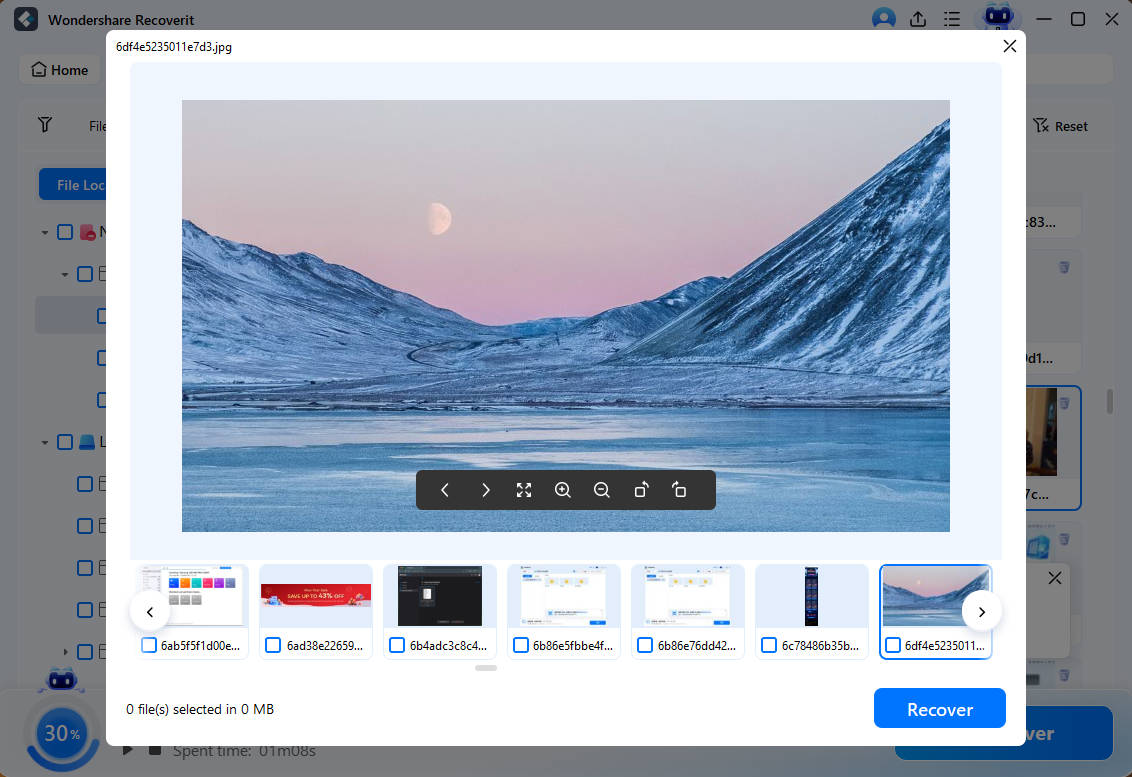
3. Preview and Recover Your Desired Data
After scanning completes, browse the results list and use the preview feature to open recovered items virtually. Check that your vCard file or exported VCF contacts appear complete. Select the items you want to restore and click the Recover button, then choose a safe destination folder on a different drive to avoid overwriting other lost data.
Conclusion
VCF files are a standard way to store and exchange digital contact information between phones, email clients, and other address book tools. Knowing how to open, edit, convert, and back up VCF contacts makes it much easier to move your address book safely between platforms without losing key details.
If a VCF file is accidentally deleted, corrupted, or lost, acting quickly improves your chances of full recovery. With a dedicated data recovery solution like Recoverit, you can scan the affected storage device, preview found vCard file entries, and restore your important contacts with minimal risk and effort.
Next: Db File
FAQ
-
What is a VCF file used for?
A VCF file, or vCard file, is used to store digital contact information such as names, phone numbers, email addresses, and sometimes photos or company details. It allows you to transfer contacts easily between devices, apps, and services. -
How do I open a VCF file on my computer?
You can open a VCF file using contact or email programs like Microsoft Outlook, Windows Contacts, or Apple Contacts. On many systems, double-clicking the VCF file will prompt you to choose an app and then display or import the contact information. -
How can I convert a VCF file to CSV?
To convert a VCF file to CSV, first import the VCF into a contacts application such as Outlook or Google Contacts. Then use the Export or Save As option in that application to generate a CSV file containing your contact data. -
Can I recover a deleted VCF file from my phone or PC?
Yes, you can often recover a deleted VCF file as long as the storage space has not been overwritten. Use a data recovery tool like Recoverit to scan the computer drive, phone storage, or memory card where the VCF was stored and then restore any recoverable vCard files. -
Why will my VCF file not import into my contacts app?
A VCF file may fail to import if it is corrupted, saved in an unsupported vCard version, or contains invalid characters. Try opening it with another contacts program, cleaning or re-saving it with a text editor, or converting it via a compatible app or online service.