TL;DR:
You can recover deleted Android voice recordings for free within 30 to 60 days using native file manager trash bins or Google Drive backups, or extract permanently deleted files using Dr.Fone Android Data Recovery.
● Native file managers and cloud storage portals retain deleted media in their Trash or Bin directories for a 30 to 60-day grace period before permanently purging the files.
● Third-party recording apps often leave duplicate temporary files; enabling hidden system files and checking the `Internal Storage/Android/data/` path allows you to locate raw cache fragments and manually rename them back to .mp3 or .m4a.
● If files are permanently purged and overwritable, Dr.Fone Android Data Recovery can bypass OS blocks to scan unallocated storage sectors, provided you connect the device to a PC or Mac and enable USB Debugging.
Ask AI for a summary
 ChatGPT
 Perplexity
 Gemini
 Claude
 Grok
Grok
Have you ever accidentally deleted an important audio file on your Android phone, only to realize later how much it actually meant to you? Maybe it was a recording of a lecture, an interview, or a special conversation with someone you love. It can be really frustrating and heartbreaking to lose such precious audio data.
But hey, no need to worry! There are ways to recover deleted audio files Android free. In this super-helpful guide, we're going to dive into four easy methods that will help you retrieve those lost audio files. We want to make sure that your valuable memories and recordings aren't lost forever.
Let's jump right in!
Reasons for Audio Files Loss from Android Phone
Before we dive into the methods to recover deleted audio files on Android, it's essential to understand why audio files might get deleted or lost from your Android device.
🔍 Android Audio Storage Architecture & Recovery Potential
Before starting, identify your voice recorder's technical profile to determine how and where your audio files were processed by the file system:
| Native Audio Recorder App | Typical File Extensions | Default File System Path | High-Probability Recovery Strategy |
| Samsung Voice Recorder | .m4a, .3gp | /Internal Storage/Voice Recorder | Check Samsung Cloud / Run Dr.Fone Deep Scan |
| Google Recorder (Pixel) | .m4a (with transcripts) | /Internal Storage/Recordings | Check recorder.google.com Cloud Sync |
| Third-Party Call Recorders | .amr, .mp3, .wav | /Internal Storage/Android/data/[app_name] | Local App Trash Bin / Sector Block Recovery |
- Accidental deletion: It's easy to accidentally delete audio files, especially when trying to free up storage space or inadvertently selecting the wrong file.
- Factory reset or device formatting: Performing a factory reset or formatting your device can erase all data, including audio files.
- Virus or malware attack: Malicious software can corrupt or delete files on your device without your knowledge.
- Physical damage or hardware failure: If your device is physically damaged or experiences hardware failure, it may lead to data loss, including audio files.
- Software glitches or bugs: Occasional software glitches or bugs can cause files to disappear or become inaccessible.
How to Recover Deleted Audio Files on Android?
Follow these verified step-by-step methods to safely locate, rebuild, and extract your missing audio recordings.
Quick Comparison: Best Ways to Retrieve Audio
| Method | Best For... | Success Rate | Cost |
| Trash Bin (Gallery/Files) | Recently deleted (within 30 days) | High | Free |
| Google Drive / Cloud | Synced backups | High | Free |
| Dr.Fone Recovery | Permanently deleted / No backup | Medium-High | Paid (Free Trial) |
| Internal Storage Check | Lost/Misplaced files | Variable | Free |
Method 1: Check the Native App and System Trash Bins
Modern Android systems utilize local trash caches inside file managers and stock recorder applications that hold deleted items for a 30-day grace period.
- Access the Local File Manager App (Open the stock system file navigator)
Launch the native file viewer on your phone, such as Files by Google, Samsung My Files, or your device's default File Manager. - Open the Hidden Trash Directory (Locate the temporary isolation folder)
Tap the hamburger menu icon (three horizontal lines) in the top corner and select Trash or Recycle Bin. For app-specific recordings, open your designated Voice Recorder app, tap its menu icon, and look for Trash.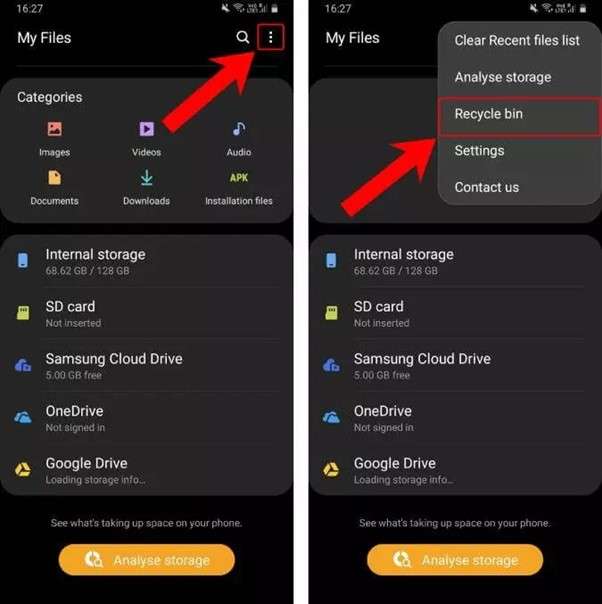
- Execute File System Reconstitution (Restore files to active folders)
Browse the cached audio list. Press and hold the deleted voice recording files you want to retrieve, tap the Restore or Recover button, and verify that the file returns to its original directory path.
Method 2: Restore Deleted Audio Files from Google Drive & Cloud Backups
If your device is configured to back up application data automatically, your audio recordings may be stored in your cloud storage account.
- Access Your Network Cloud Portal (Open the cloud drive application)
Open the Google Drive app on your Android phone, or sign in to your manufacturer's proprietary cloud application (e.g., Samsung Cloud).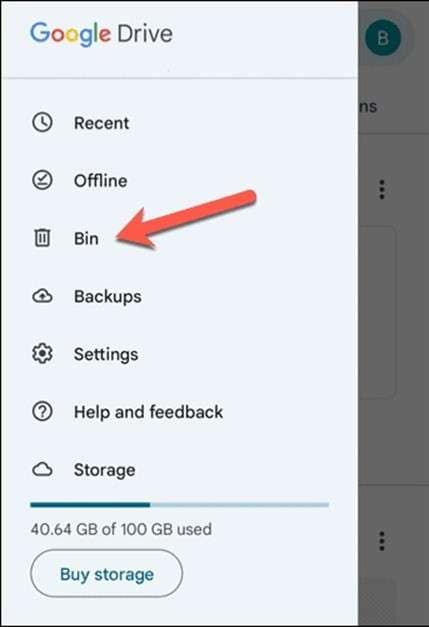
- Check the Cloud Storage Trash Bin (Inspect the network retention folder)
Tap the sidebar menu icon and choose Bin or Trash. Cloud servers typically store deleted media files for 30 to 60 days before purging them permanently. - Download and Synchronize the Audio Files (Pull files back down to local storage)
Locate the missing.m4aor.mp3recording files. Tap the three vertical dots icon next to the file name and select Restore to re-download the audio files to your local Android internal memory.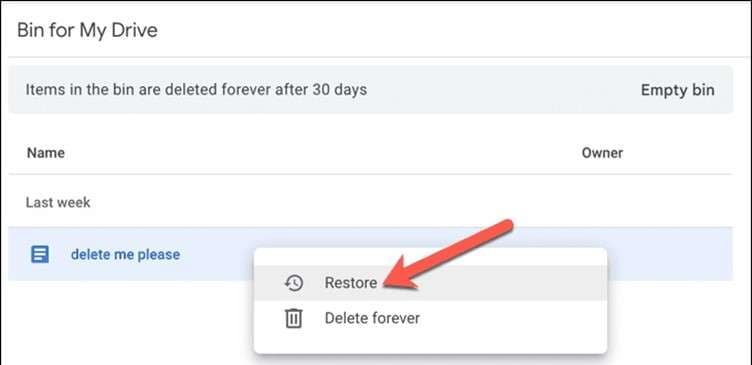
Google Drive keeps deleted files in the trash bin for a certain period of time before permanently removing them. If your audio files are still in the trash bin, you can easily restore them to their original location or download them to your device or computer.
Still can't find your audio? If you've emptied the Trash and have no cloud backup, the file is likely marked as 'overwritable' in the deep memory sectors. This is where Dr.Fone is essential—it scans these hidden sectors to reconstruct the audio file before it's gone forever.
Method 3: Use Dr.Fone Android Data Recovery (Deep Sector Extraction)
When files are permanently deleted from both the system and cloud bins, the Android OS marks those storage sectors as overwritable raw space. To extract this data before it is lost, you must deploy Dr.Fone Android Data Recovery to bypass standard OS blocks.
With user-friendly interface, Dr. Fone helps you recover audio files from Android devices in just several clicks. Here is how to:
- Enable Android USB Debugging Mode (Open the developer communication channel)
On your Android device, go to Settings > About Phone. Tap the Build Number entry seven times consecutively until developer mode is unlocked. Go back to main settings, open Developer Options, and switch USB Debugging to On. - Connect Device and Select Audio Target (Map the file structure via computer)
Launch Dr.Fone on your Windows PC or Mac and select the Data Recovery module. Connect your Android device using a high-quality USB cable. On the desktop interface screen, uncheck all other file options and select Audio, then click Next.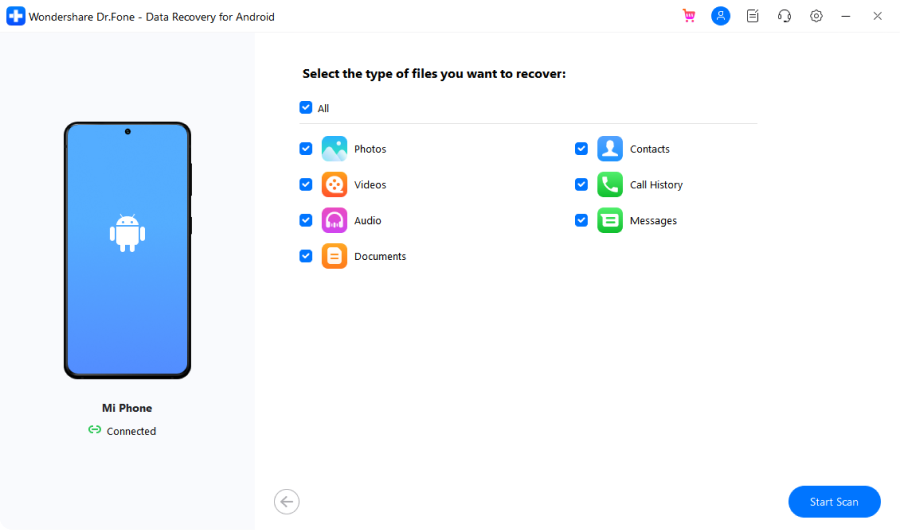
- Execute Low-Level Flash Memory Scan (Parse unlinked clusters for audio headers)
Allow the software to analyze your phone's file architecture and run its deep scanning routines. Dr.Fone will read through unallocated storage blocks to find the headers of deleted voice files.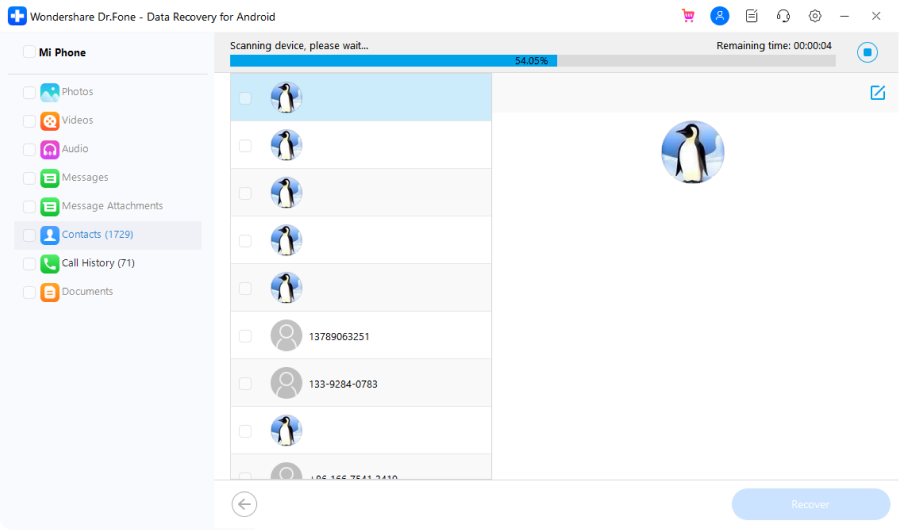
- Preview Audio Waveform Integrity and Export (Save rescued files to a computer)
Once the scan completes, look through the discovered audio files listed on the screen. Select the target voice recordings, click Recover, and choose a secure folder on your computer's local hard drive to complete the data rescue loop.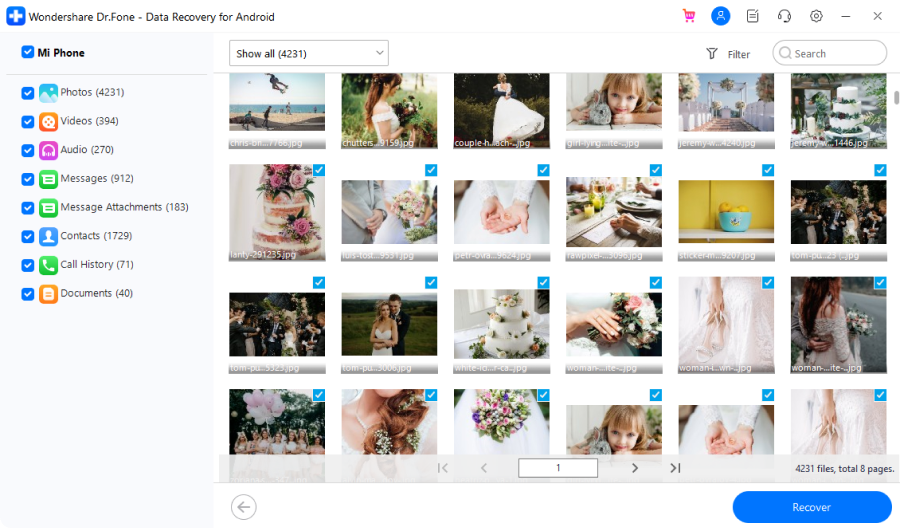
Method 4: Scan App Cache Folders & Local App Data Trees
If you use a third-party audio recording or call recording app, it may save duplicate temporary files inside hidden cache folders that are skipped by standard Android Gallery scans.
- Navigate into Internal Storage Trees (Access system app directories)
Open your File Manager app, go to settings, and enable Show hidden system files. Then select Internal Storage. - Inspect the Android Data Directory Path (Locate application-specific directories)
Navigate to the path:Internal Storage/Android/data/. Look for the specific package folder named after your recording app (e.g.,com.media.audiorecorder). - Search for Hidden Temp and Cache Files (Extract raw audio data fragments)
Open that folder and look for sub-directories labeledcache,temp, orsounds. Sort the files inside by date to find hidden or renamed audio fragments that you can copy out and rename back to.mp3or.m4a.
Conclusion
In this guide, we've looked at four ways to get back audio files you accidentally deleted on your Android phone: using Dr. Fone recovery software, looking in the Trash Bin, getting them back from Google Drive, and asking for help from Customer Service.
It's important to try to recover your files as soon as possible. The quicker you act, the better your chances of getting them back.
To avoid losing your audio files in the future, make it a habit to regularly save copies of them in a safe place online or on an external device. This can help you avoid the trouble and worry of losing important recordings.
By using these methods and keeping good backup habits, you can keep your important audio files safe and recover them if needed.
FAQ
-
Can I recover permanently deleted audio files from my Android phone?
Yes, it is possible to recover permanently deleted audio files from your Android phone using professional data recovery tools like Dr. Fone. However, the chances of successful recovery decrease over time, so it's best to act quickly. -
How long do deleted files remain in the trash bin on Android devices?
The duration for which deleted files remain in the trash bin or recycle bin on Android devices can vary depending on the device manufacturer and the specific settings. Generally, it ranges from 30 to 60 days, after which the files may be permanently deleted. -
Is it safe to use third-party data recovery tools for Android?
Reputable third-party data recovery tools like Dr. Fone are generally safe to use, as they are designed to recover data without causing any harm to your device or existing data. However, it's always recommended to exercise caution and research the tool thoroughly before using it. -
Can I recover audio files from a broken or unresponsive Android device?
Recovering data from a broken or unresponsive Android device can be more challenging, but it's not impossible. In such cases, you may need to seek professional data recovery services or use specialized hardware tools to access the device's storage and retrieve your audio files. -
How can I prevent audio file loss on my Android device in the future?
To prevent audio file loss on your Android device in the future, follow these best practices: regularly back up your audio files to a secure location, be careful when deleting files, keep your device updated with the latest software and security patches, and avoid exposing your device to physical damage or malware.