
 TL;DR:
PC Inspector File Recovery is an outdated version 4.0 freeware utility that remains viable only for simple, low-risk data recovery attempts on legacy FAT or NTFS media within older Windows environments.
● Wondershare Recoverit provides the necessary compatibility for modern workflows, as PC Inspector lacks support for Windows 10/11, Mac APFS/HFS+, GPT disks, and exFAT removable drives.
● Attempting to retrieve MP4 videos or large files often yields corrupted, unplayable results because the software cannot process fragmented data or rebuild missing container metadata.
● Data recovery on modern SSDs is severely limited by TRIM functions that permanently clear deleted files, and running direct scans on physically unstable or clicking drives risks permanent data loss.
Ask AI for a summary
 ChatGPT
 Perplexity
 Gemini
 Claude
 Grok
Grok
PC Inspector File Recovery is a free Windows data recovery program originally released by Convar for recovering deleted files, lost data, and some lost-drive cases on older file systems. It became popular because it was free, lightweight, and useful for legacy FAT and NTFS recovery tasks. In 2026, however, its biggest problem is not price. It is age.
This updated PC Inspector File Recovery review explains what the tool can still do, where it struggles on modern systems, whether it is safe, how its recovery workflow works, and why a modern alternative such as Wondershare Recoverit can be easier for common file recovery from readable drives, USB drives, SD cards, cameras, external disks, and crashed computers.
Current public download listings still identify PC Inspector File Recovery as a freeware product, commonly version 4.0, with historical release/update information from the mid-2000s. We could not verify active modern development from an official current Convar product page, so this review treats PC Inspector as a legacy recovery tool rather than an actively maintained Windows 11 data recovery solution.
Data safety first: do not install recovery software on the same drive you want to recover. Do not save recovered files back to the source drive. If the disk clicks, disconnects, overheats, reports serious read errors, or is not detected reliably, avoid repeated direct scans and consider imaging the disk or using a professional recovery service.
In this article

Part 1. PC Inspector File Recovery Review Verdict
Quick verdict: PC Inspector File Recovery is still worth knowing about because it is free and may help in simple recovery cases on older Windows systems and legacy FAT/NTFS drives. It is not the best choice for modern Windows 10/11 recovery, large external drives, SSDs affected by TRIM, exFAT devices, GPT disks, APFS/HFS+ Mac drives, or corrupted video recovery.
| Review Area | Rating | 2026 Review Notes |
| Overall rating | 2.8/5 | Useful as a free legacy tool, but too outdated to recommend as a first choice for modern file recovery. |
| Recovery capability | 3.0/5 | Can recover some deleted files and lost data from older FAT/NTFS media when the data has not been overwritten. |
| Compatibility | 2.2/5 | Best suited to older Windows systems. Modern Windows, large drives, exFAT, GPT, and SSD cases are weak fits. |
| Ease of use | 2.7/5 | The interface is old, translation can feel rough, and scan results are not easy for beginners to interpret. |
| Pricing value | 4.0/5 | Freeware is attractive, but free does not offset poor modern compatibility for high-value data. |
| Best alternative | Recoverit | Recoverit is easier for common recovery from readable modern drives, memory cards, USB drives, and crashed computers. |
Review Scorecard
| Question | Short Answer | Review Detail |
| Is PC Inspector File Recovery free? | Yes. | It is freeware, with no current paid edition identified in the original article or current public listings. |
| Is it actively updated? | No active modern development verified. | Public download listings commonly show version 4.0 from the 2000s, making it a legacy tool in 2026. |
| Does it support Windows 11? | Not reliably as a modern supported app. | It may launch on some modern PCs, but its intended compatibility is with older Windows versions. |
| Is it good for MP4 recovery? | Weak fit. | Recovered video files can be corrupted if fragmented, overwritten, partially recovered, or missing metadata. |
| Does it support exFAT? | Not a good fit. | PC Inspector is mainly associated with FAT12/16/32 and limited NTFS recovery, not modern exFAT-focused workflows. |
How We Evaluated PC Inspector
This review is based on the original Recoverit source article, preserved source links, current public download listings, older user feedback, and practical data recovery criteria. Because PC Inspector is old, we focus on whether it remains safe and useful in 2026 rather than repeating outdated claims that it supports the latest Windows environments.
| Evaluation Area | What We Checked | Why It Matters |
| Current status | Whether PC Inspector appears to be actively maintained and whether current download pages still list version 4.0. | Old recovery software may not handle modern storage reliably. |
| File system fit | FAT12, FAT16, FAT32, limited NTFS, exFAT, GPT, and modern SSD cases. | File system support determines whether the software can even interpret the source media. |
| Recovery scenarios | Deleted files, formatted drives, lost partitions, corrupted video files, SSD deletion, and damaged hardware. | Users need to know when a free tool is enough and when it is risky. |
| Safety | Installation location, recovery destination, overwrite risk, and unstable-drive behavior. | Wrong recovery steps can permanently reduce the chance of recovery. |
| Alternative fit | Where Recoverit is stronger and where PC Inspector still has value. | Recoverit should be positioned as a modern data recovery alternative, not as a hardware repair or encryption bypass tool. |
Who Should Use It
| User Type | PC Inspector Fit | Reason |
| Users with older Windows PCs | Possible fit | The tool was built for older Windows environments and may still be useful for legacy disks. |
| Users recovering from FAT12/16/32 media | Possible fit | Legacy FAT recovery is one of its better-known use cases. |
| Users with modern USB drives or SD cards formatted as exFAT | Poor fit | Use a modern tool with exFAT support instead. |
| Users recovering deleted MP4 videos | Poor fit | Large videos are often fragmented, and PC Inspector lacks modern video recovery workflow support. |
| Users with SSD deletion | Poor fit | TRIM may remove deleted data quickly, and old software cannot overcome that limitation. |
| Beginners who want guided recovery | Poor fit | Recoverit is easier for guided scan, filter, preview, and recovery on supported readable devices. |
Part 2. What Is PC Inspector File Recovery?
PC Inspector File Recovery is freeware designed to help users recover deleted files, locate lost data, and access some lost-drive situations. It became known for three recovery modes: finding lost drives, recovering deleted files, and searching for lost data when directory entries are damaged.

Its value today is narrow. It may still help on old drives, old memory cards, and simple FAT/NTFS deletion cases. But it does not match modern tools for current Windows 10/11 systems, high-capacity external drives, SSDs, exFAT media, camera video files, or Mac file systems.
Supported File Systems
PC Inspector is mainly associated with legacy Windows file systems. The original article correctly emphasizes FAT support, but it overstates modern compatibility. In 2026, file system support should be understood as a limitation, not a strength.

| File System | PC Inspector Fit | Review Notes |
| FAT12 | Good legacy fit | Useful mainly for old floppy disks and very small legacy media. |
| FAT16 | Good legacy fit | Relevant for older drives, memory cards, and small partitions. |
| FAT32 | Possible fit | Can help with older USB drives, SD cards, and external drives if data has not been overwritten. |
| NTFS | Limited fit | Can work in some cases, but it is not a modern NTFS recovery suite and does not handle advanced modern cases well. |
| exFAT | Poor fit | Many modern SD cards and USB drives use exFAT. Choose newer recovery software for these devices. |
| APFS/HFS+ | Not suitable | PC Inspector is not a Mac recovery tool. |
| EXT4/ReFS | Not suitable | Use a modern tool designed for these file systems. |
Key Features
The feature list looks simple compared with modern recovery suites, but it explains why PC Inspector was popular as freeware. Its strengths are basic recovery modes, no-cost access, and legacy file system support.

- Three recovery modes: PC Inspector includes modes for finding lost drives, recovering deleted files, and finding lost data.
- Deleted file recovery: It can locate some files deleted from FAT/NTFS media when their content has not been overwritten.
- Lost-drive search: The tool can attempt to detect missing drives or partitions in some legacy cases.
- Original timestamps: When metadata is available, it may preserve original file date and time information.
- Known file type recovery: Older documentation and download listings mention support for common formats such as documents, images, archives, audio, and video containers.
- Freeware access: There is no paid upgrade path in the original product model, which makes it attractive for low-risk, low-value legacy recovery attempts.
Is PC Inspector Safe?
PC Inspector can be safe if downloaded from a reputable source, installed away from the source drive, and used only to scan and copy files to another disk. The bigger concern in 2026 is not that the tool itself changes data during a scan. The concern is outdated compatibility, questionable third-party download bundles, and users relying on old software for modern file systems.
| Safety Question | Risk Level | Safe Practice |
| Installing PC Inspector on the same drive | High | Install recovery software on another drive to avoid overwriting deleted data. |
| Downloading from old mirror sites | Medium | Use reputable download pages and scan installers with security software. |
| Scanning a healthy old FAT drive | Low to medium | Scan read-only and save recovered files elsewhere. |
| Scanning a failing HDD repeatedly | High | Do not stress unstable hardware; image the disk or use a professional service. |
| Recovering from an SSD after deletion | Uncertain | Stop using the SSD immediately; TRIM may already have removed recoverable data. |
Part 3. PC Inspector File Recovery Deep Test Analysis
A deep PC Inspector File Recovery review should separate three ideas: whether the software can detect file entries, whether the recovered file opens, and whether the file is complete. This distinction matters because many users recover MP4, JPG, DOC, or ZIP files that appear in the result list but fail to open after recovery.
How to Use PC Inspector File Recovery on Windows
- Install the tool away from the source drive.
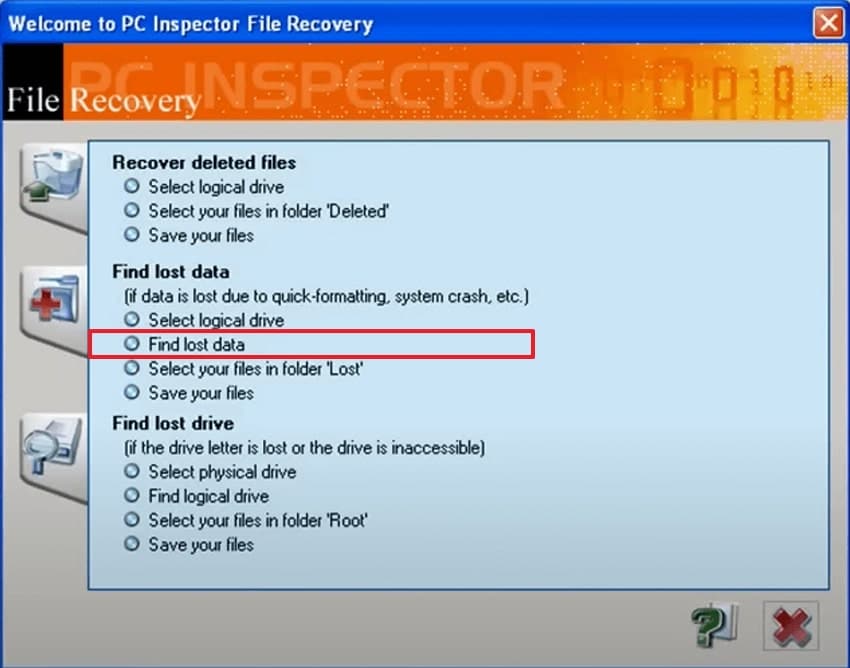
Install PC Inspector on another disk or a separate Windows system. After launching the program, choose the recovery mode that matches your situation. Use file recovery for deleted files and lost data search when normal file listings are missing.
- Select the drive and review detected results.
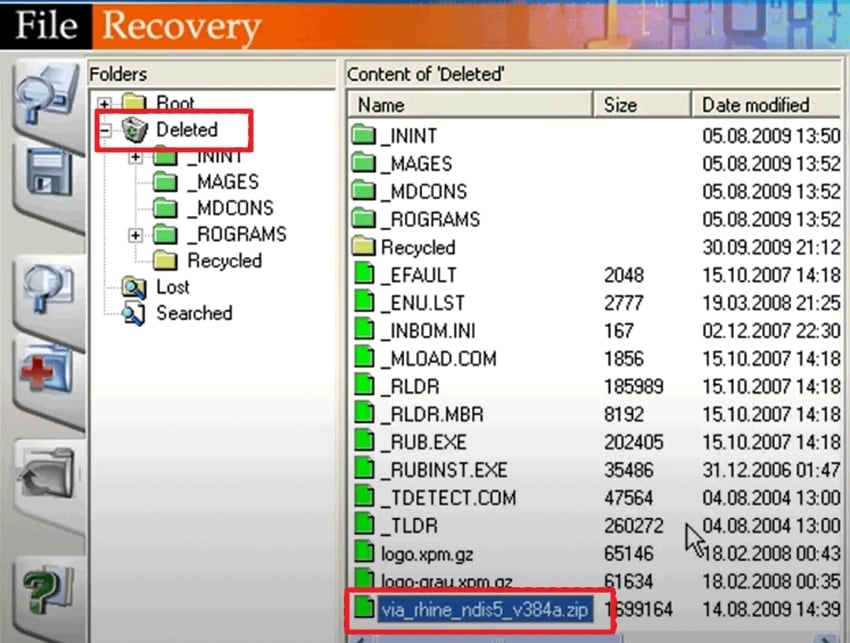
Let PC Inspector scan the available drives. In simple deletion cases, deleted files may appear in a deleted folder or a similar result section. If the drive is not listed or the file system is modern, the tool may not be suitable.
- Recover files to a different destination.
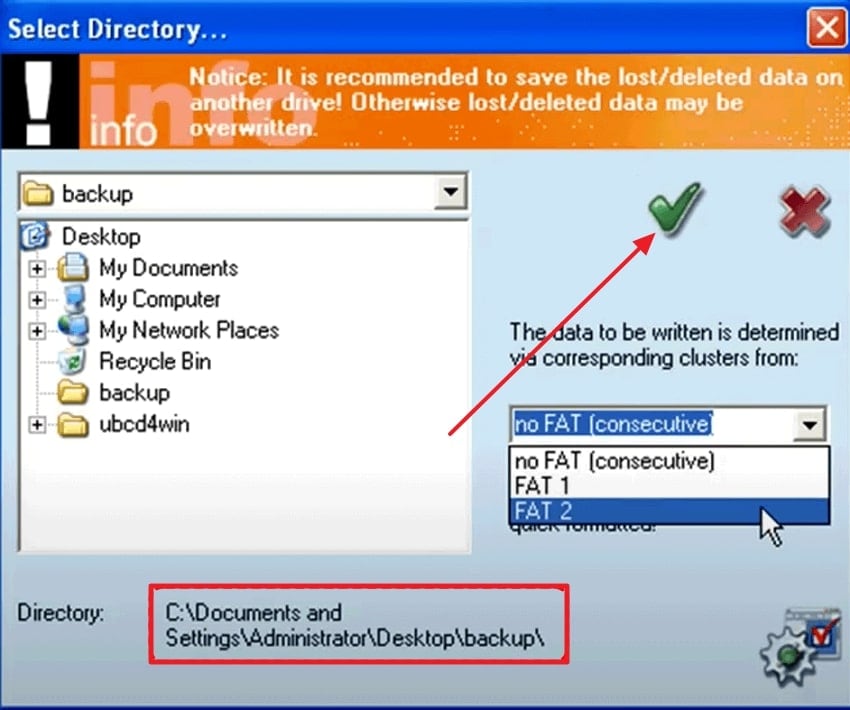
Select the files you want, choose another healthy drive as the recovery destination, and start recovery. After saving, open several recovered files to verify that they are usable.
Scenario-Based Recovery Analysis
| Recovery Scenario | PC Inspector Fit | Why | Better Action |
| Deleted files from an old FAT32 USB drive | Possible | This matches its legacy file-system strengths. | Try PC Inspector only if the drive is healthy and no new data was written. |
| Deleted files from a Windows 11 NTFS SSD | Poor | TRIM and modern storage behavior reduce recovery chances. | Stop using the SSD and use a modern recovery tool, but recovery may still fail. |
| Formatted exFAT SD card | Poor | PC Inspector is not a strong exFAT recovery choice. | Use a modern tool with exFAT and camera-card support. |
| Corrupted MP4 files after recovery | Poor | Videos are often fragmented and need more advanced recovery logic. | Use a tool with modern video recovery and preview features. |
| Lost partition on old HDD | Possible | Lost-drive search may help in some legacy partition cases. | Recover files first; do not format or rebuild partitions before recovery. |
| Physically failing hard drive | Not recommended | Repeated scans can stress damaged hardware. | Create an image if possible or use professional recovery. |
What Recovered but Corrupted Files Mean
The opening Reddit complaint reflects a common recovery problem: a tool may restore filenames or file entries, but the actual content can still be unusable. This happens when data clusters were overwritten, the file was fragmented, the file header is missing, the container metadata is damaged, or the storage device returns unreadable sectors.
| Symptom | Likely Cause | What to Try |
| File is recovered but will not open | Content was overwritten, incomplete, or damaged. | Try another scan mode or a modern tool, but do not save anything to the source drive. |
| MP4 file exists but cannot play | Video fragments or metadata are missing. | Use software with stronger video recovery and preview support. |
| File size looks correct but content is wrong | Recovered entry points to bad or reused sectors. | Recover samples first before restoring a whole batch. |
| Many files have generic names | Original directory metadata was lost. | Sort by file type, size, and date, then verify manually. |
| No files found on an SSD | TRIM may have cleared deleted data. | Stop using the SSD; software recovery may not be possible. |
Part 4. Pros and Cons
PC Inspector's pros are tied to its freeware legacy. Its cons are tied to age and compatibility. For a 2026 review page, both sides should be clear so users do not mistake a free old tool for a modern recovery solution.
| Pros | Why It Matters |
| Freeware | Useful for users who want a no-cost attempt on old, low-risk storage media. |
| Legacy FAT support | Can still be relevant for old USB drives, memory cards, and legacy partitions. |
| Simple recovery modes | Find lost drives, recover deleted files, and find lost data cover basic recovery intent. |
| Small and lightweight | May run on older systems where modern software is too heavy. |
| Can preserve metadata in some cases | Original timestamps can help users organize recovered files when metadata remains intact. |
| Cons | Why It Matters |
| Outdated interface | Beginners may struggle to choose the correct mode or understand scan results. |
| No active modern development verified | Old recovery engines are weaker fits for current storage devices and file systems. |
| Limited modern file system support | exFAT, APFS, ReFS, EXT4, and GPT-era workflows are not good matches. |
| Weak video recovery | Large fragmented videos often recover as corrupted or unplayable files. |
| Download-source caution | Old freeware is often hosted on third-party portals, so users should avoid bundled installers and suspicious mirrors. |
| No Mac version | Mac users need a Mac-compatible recovery tool. |
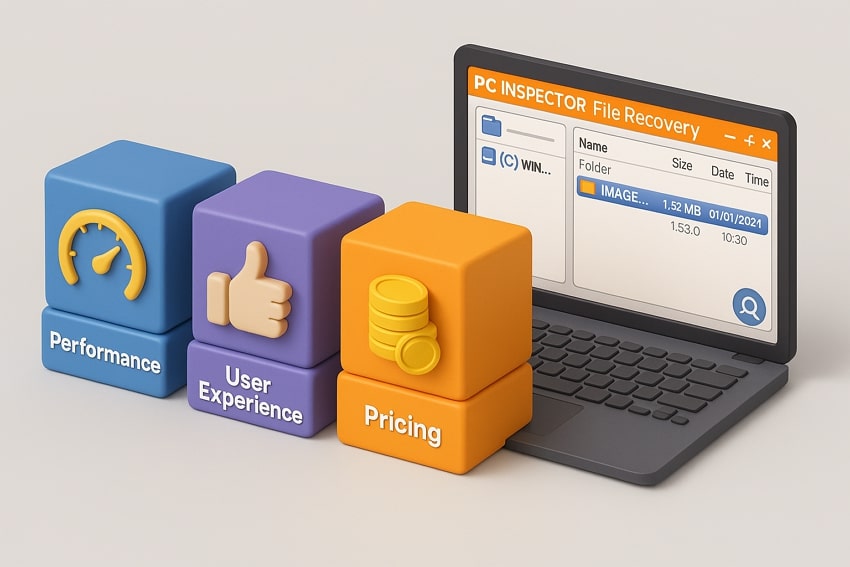
Part 5. Performance, User Experience, and Pricing
This section reviews PC Inspector as users actually experience it today: old but free, sometimes useful on legacy storage, and often frustrating on modern recovery jobs.
Performance
PC Inspector can perform acceptably on small legacy drives where the file system is simple and the deleted data is still intact. It is much weaker for current recovery tasks involving large external drives, high-capacity SD cards, SSDs, exFAT, fragmented videos, and Windows 10/11 system disks. The original article's specific CPU, memory, and 500GB scan claims are not retained here because they were not supported by a current reproducible test source.
| Performance Area | 2026 Assessment | Reason |
| Small FAT media | Acceptable | Matches the tool's legacy design. |
| Large modern HDDs | Mixed | Old scan logic and interface make large recovery jobs harder to manage. |
| SSDs | Weak | TRIM can make deleted data unrecoverable, regardless of software. |
| Video files | Weak | Fragmentation and missing metadata often produce unplayable results. |
| Corrupted partitions | Limited | Some legacy lost-drive cases may work, but modern partition recovery needs newer tools. |
User Experience
Older CNET user feedback preserved in the original article shows both sides of the tool. Some users praised PC Inspector because it helped when other freeware did not. Others complained about translation quality, unclear interface design, and bundled-adware concerns from third-party download experiences. These comments are old, but they still match the central review conclusion: PC Inspector can be useful, but it is not beginner-friendly or modern.
| Feedback Source | Signal | Review Interpretation |
| CNET user feedback | Some users reported successful freeware recovery. | Good sign for legacy cases, but not proof of current Windows 11 reliability. |
| CNET user feedback | Users noted that the program can feel powerful when it works. | Matches its legacy strength: more capable than very basic undelete utilities. |
| CNET user feedback | Some users complained about unwanted bundled software from download experiences. | Use reputable sources and avoid suspicious installers or mirrors. |
Pricing
PC Inspector File Recovery is free. There is no modern paid edition in the original source article. That makes it attractive for low-risk experiments, but it also explains the main tradeoff: there is no clear sign of active feature development for modern file systems, SSD workflows, or current Windows recovery needs.
| Price Factor | PC Inspector File Recovery | Review Note |
| Cost | Freeware | Good for low-value or legacy recovery attempts. |
| Paid upgrade | No current paid tier identified | No subscription pressure, but also no modern upgrade path. |
| Best value case | Older FAT/NTFS media | Worth trying only if the data is not business-critical and the drive is healthy. |
| Poor value case | High-value modern data loss | Use current recovery software or professional service instead of relying on legacy freeware. |
Part 6. PC Inspector vs Recoverit: Which Should You Choose?
After reading this PC Inspector File Recovery review, the main decision is straightforward: use PC Inspector only for low-risk, older Windows/FAT-style recovery attempts. Use Recoverit when you need a modern, guided data recovery workflow for readable storage devices and common file loss scenarios.

| Comparison Area | PC Inspector File Recovery | Recoverit File Recovery |
| Main positioning | Legacy freeware recovery tool. | Modern guided data recovery software. |
| Platform support | Older Windows focus. | Windows and Mac versions are available. |
| Best for | Older FAT/NTFS drives and simple deleted-file attempts. | Common deleted-file, formatted-drive, external-drive, USB, SD card, camera, and crashed-computer recovery. |
| File system coverage | FAT12/16/32 and limited NTFS. | Better fit for modern Windows/Mac and common removable-media recovery workflows. |
| Preview and filtering | Limited and dated. | More visual scan results, filters, and preview workflow. |
| Video recovery fit | Weak for corrupted recovered MP4 files. | Better suited for modern media recovery workflows, though recovery still depends on file condition. |
| Risk level for beginners | Higher because the software is old and less guided. | Lower because the workflow is more guided, but users must still avoid saving files to the source drive. |
Why Recoverit Is Easier for Modern File Recovery
- Guided workflow: Recoverit focuses on choosing a location, scanning, filtering, previewing, and recovering files.
- Common file types: It can help recover documents, photos, videos, audio, emails, archives, and other common file types from readable storage.
- Modern devices: It is suitable for common recovery from internal drives, external HDDs/SSDs, USB drives, SD cards, cameras, and supported storage devices.
- Windows and Mac options: Recoverit has Windows recovery and Mac deleted file recovery resources.
- Removable media guidance: Recoverit provides related guidance for CF card recovery, micro SD and SD card recovery, and Transcend SD recovery.
- Video recovery path: Recoverit provides dedicated resources for video recovery and 8K video recovery guidance.
How to Recover Lost Files With Recoverit
Use Recoverit only on a readable storage device, and recover files to another healthy drive. It cannot repair physical disk damage, recover overwritten files, or bypass encryption without valid credentials.
- Choose the location and begin scanning.
Open Recoverit, go to the hard drives and locations area, and select the drive, folder, external device, or accessible location where the files were lost.

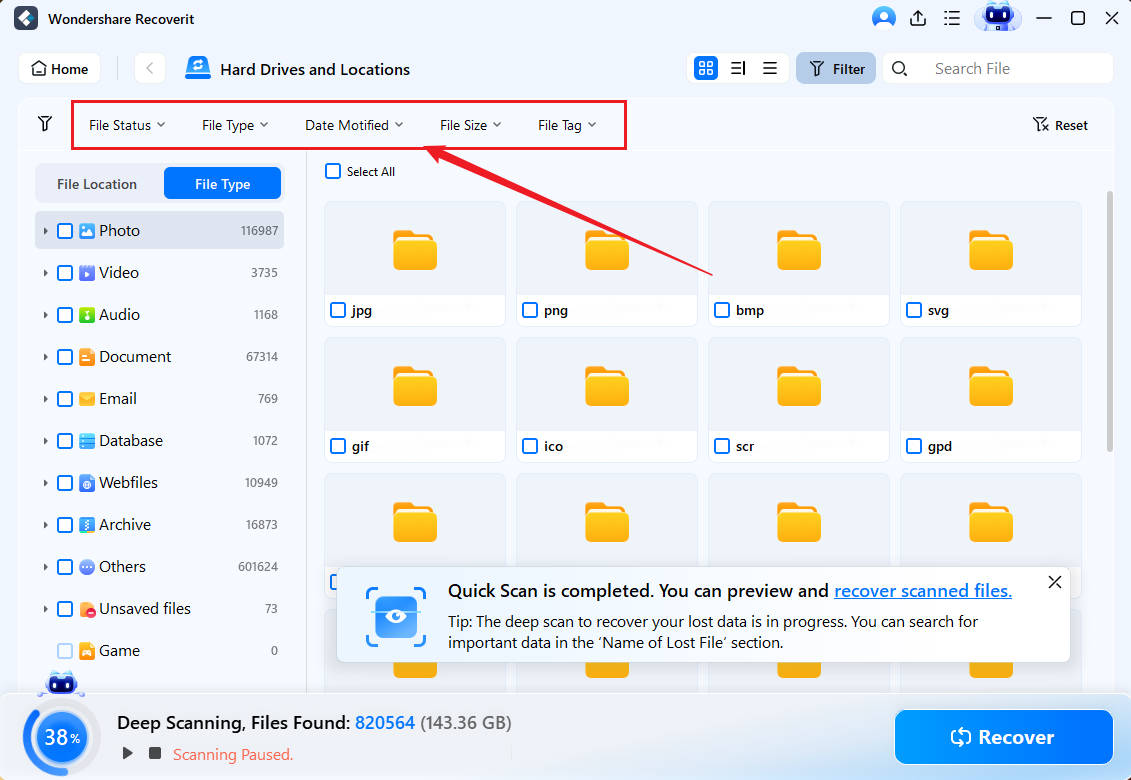
- Filter the search during scan.
Use file type, time, file size, file name, or path filters to narrow the results. This helps when a scan finds many deleted files.
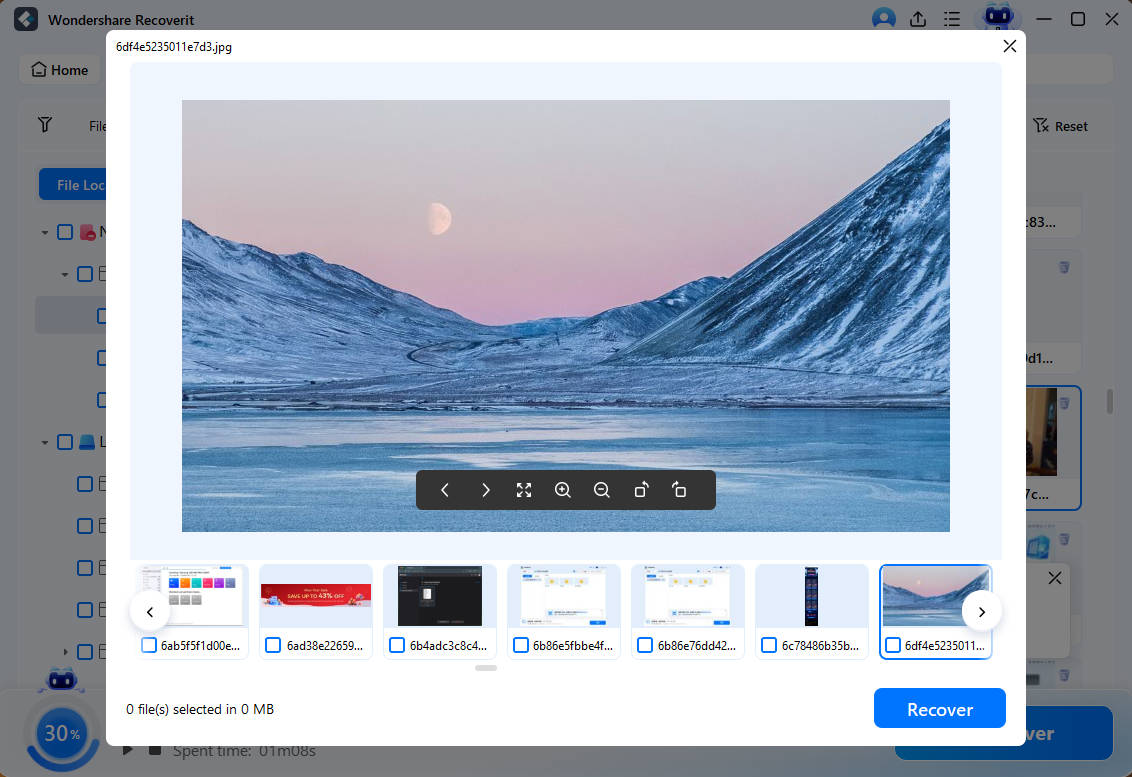
- Select, preview, and recover lost data.
Preview files when possible, choose the items you need, and recover them to another safe storage device instead of the original drive.
Try Recoverit to Perform File Recovery
 Security Verified. 3,591,664 people have downloaded it.
Part 7. Final Verdict
PC Inspector File Recovery deserves historical credit as a free recovery tool for older Windows PCs and legacy FAT/NTFS media. In 2026, it is best treated as a narrow legacy option, not a primary recovery recommendation for modern file loss.
If the lost files are on an old FAT32 USB drive and the data is not critical, PC Inspector may be worth a cautious try. If the case involves Windows 10/11, SSDs, exFAT SD cards, large external drives, lost videos, or important business/personal data, use a modern recovery workflow such as Recoverit or consider professional recovery when hardware instability is involved.
FAQ
-
Is PC Inspector File Recovery still good in 2026?
It is only good for limited legacy cases, such as older Windows systems and FAT/NTFS media. It is not a strong first choice for modern Windows 10/11 drives, SSDs, exFAT devices, or corrupted video recovery. -
Is PC Inspector File Recovery free?
Yes. PC Inspector File Recovery is freeware. The tradeoff is that it appears outdated and lacks active modern development for current storage devices and file systems. -
Why are files recovered by PC Inspector corrupted?
Recovered files can be corrupted when the original data was overwritten, fragmented, partially missing, affected by bad sectors, or missing required header and container metadata. This is common with large MP4 videos. -
Can PC Inspector recover data from SSDs?
It is not a good SSD recovery choice. Deleted SSD files may be cleared by TRIM quickly, and old recovery software cannot reverse TRIM. -
Does PC Inspector support exFAT or Mac drives?
PC Inspector is not a good fit for exFAT, APFS, or HFS+ recovery. Use a modern recovery tool that supports the file system on your device. -
What is the best PC Inspector alternative?
Recoverit is a better alternative for common modern file recovery from readable drives, USB drives, SD cards, external disks, cameras, and crashed computers. Recovery still depends on overwriting, encryption, and device condition.