Kingston USB Drive Recovery
- Recovers deleted or lost files from Kingston USB Flash Drive effectively, safely and completely.
- Supports data recovery from 500+ data loss scenarios, including computer crash, partition loss, accidental human error, etc.
- Supports 1000+ file formats recovery with a high success rate and without any quality loss.

Kingston USB Drive Unable to Format? How to Format a Kingston Flash Drive?

Oct 23, 2026 • Filed to: USB Recovery • Proven solutions
 TL;DR:
If Windows fails to format your Kingston USB drive due to write-protection, partition corruption, or system limitations, bypass these errors using Command Prompt or dedicated third-party formatting utilities.
● Use Windows Disk Management for standard formatting, but if the drive fails to process, launch the diskpart utility in Command Prompt to manually select your specific partition and execute the format fs=fat32 command.
● Because Windows integrated features cannot format USB drives larger than 32GB to the FAT32 file system, you must use alternative software like the Kingston USB Format Tool or HP USB Storage Format Tool for these larger capacities.
● Extract inaccessible files using Wondershare Recoverit Data Recovery before forcing a format on a damaged drive, as the software supports over 1000 file types and prevents permanent data loss during the reset.
Ask AI for a summary
 ChatGPT
 Perplexity
 Gemini
 Claude
 Grok
If you are unable to format Kingston USB Flash Drive or cannot open USB device, it might be due to a fault in your USB Drive, or it might be Windows error. Whatever the reason is, it's important to properly format your USB Drive to use it properly in multiple devices and keep your data safe in it. Thus, go through the article to find out various reasons that make you unable to format your Kingston Drive, and also various methods to format it properly.
Windows File System Compatibility for Kingston Flash Media
| Target Storage Capacity | Native File System Choice | Windows Tool Support | Primary Use Case Profile |
| 01. Less than or equal to 32 GB | FAT32 | Disk Management / Explorer | Legacy electronics, car audio players, older BIOS flashing tools. |
| 02. Greater than 32 GB up to 2 TB | exFAT | Disk Management / Explorer | High-density cross-platform file transfers (Windows, macOS, Linux). |
| 03. Any Capacity | NTFS | Disk Management / Explorer | Dedicated Windows-only environments; supports files larger than 4GB. |
| 04. Corrupted Partition | RAW | Blocked in File Explorer | Requires low-level diskpart clean routines or specialized recovery software. |
Part 1: How Do I Format a Kingston Flash Drive?
Formatting your Kingston USB Drive is as easy and straightforward as any other USB Drive. All you need to do is to connect your USB Drive and follow a procedure to successfully format it, and most of the time you can do so with the help of Windows built-in features. Yes, there are multiple integrated tools in Windows that can help you in formatting your Kingston USB Drive.
Various Windows built-in features you can use to format your Kingston USB Drive:
- Disk Management – This feature allows you to manage various aspects of your Storage Drives, including the formatting of your Drive. It is one of the most straight forward ways to format your Drive.
- Command Prompt – It's a Command-Line in your Windows PC that allows you to make various changes to your PC, including your Drives. You can format your Drive using Command Prompt window; however, it has UI based on coding language.
- PowerShell – PowerShell is again a similar command-line framework like Command Prompt. It is specially built to execute commands from the administrative authority. It allows you to format your USB Drive using scripting language similar to Command Prompt.
Part 2: Windows Unable to Format Kingston USB Drive. What to Do?
There are various ways to format your Kingston USB Drive, some are straight forward, and some require a certain level of expertise. However, there are several cases when Windows might fail to format Kingston USB Drive, in such cases, you can try different methods including built-in Windows tools, and third-party tools as well.
Method 1: Using Disk Management
Using Disk Management to format your USB Drive to full capacity is one of the best and easiest way. It is a built-in tool, thus, carries the least amount of risk and malfunctioning probabilities.
Step 1. To format your Kingston USB Drive on Windows, go to the search panel on the task-bar of your Desktop. On the search panel, type "Disk Management" and click Enter to see the search results. You will see the "Create and Format Hard Disk Partitions" option in the results, click on it to enter the "Disk Management" window.
Step 2. On the Disk Management window, you will see all the storage devices of your System listed, including your connected external Kingston Flash Drive. Right-click on the Drive and select the "Format" option from the contextual menu.
Step 3. You'll see a pop-up window with various options to configure the formatting as per your requirements. Select the "File System" based on your requirement and disable the "Quick Format" option. Now, click "OK" to start formatting your Kingston USB Drive.
Once the process is completed, your USB Drive will be formatted. But there can be cases where Disk Management might be unable to format Kingston Flash Drive. It might show you an error while trying to format the Drive or it might format it incorrectly as well. In that case, try another method to format your USB drive.

Method 2: Forcing a Format Using the Windows Diskpart Utility
When standard graphical user interfaces fail, running the native command-line system configuration tool allows you to wipe clean the underlying logical sector maps.
The Diskpart Clean and Format Execution Loop
- Open an Administrator Command Prompt: Press Win + X and select Terminal (Admin) or Command Prompt (Administrator) to unlock low-level disk access tokens.
- Initialize the Diskpart Environment: Type the command below into the console and hit Enter to launch the system storage configuration utility:
diskpart - Identify Your Connected Kingston Index: Type list disk and press Enter. Identify your Kingston drive's number label by looking closely at its listed storage size capacity (e.g., Disk 1 or Disk 2).
- Select and Isolate the Target Media: Type the string below, replacing # with your exact Kingston disk index number:
select disk # - Purge Overlapping Partition Records: Type
cleanand press Enter. This completely wipes out corrupt partition tables, MBR entries, and formatting barriers, turning the device into unallocated space. - Generate a Fresh Primary Partition Partition: Type
create partition primaryand press Enter to create a new, healthy block container. - Execute Global File System Initialization: Type the exact format parameters string below to initialize the target structure:
format fs=exfat quick
(Note: Replace exfat with ntfs if you require an exclusive Windows environment layout).

After the successful completion of the process, your Kingston USB Drive will be available to the latest formatted configuration. However, there are several cases in which CMD can not format your Kingston Drive. It will either show you that it's unable to format Kingston USB Flash Drive, or it will fail to process the format command. In any case, you should prefer any other method or a third-party tool to format your Kingston Drive.
Method 3: Using Third-Party Tools to Format Kingston USB Drive
If due to several reasons your Windows is unable to format Kingston USB Drive by using its integrated features, then you can try other ways as well. You can use various third-party apps that can help you in formatting your USB Drive.
There are various USB Drive formatting tools available in the market that comes with more features and are more powerful than the integrated tools of Windows. You can use tools like USB Disk Storage Format, HDD Low-Level Format, HP USB Storage Format Tool, etc. All these tools allow you to perform the formatting of your USB Drive in a very easy yet effective manner. These tools also allow you to format kinds of USB Drive in ways that are not supported by Windows through its integrated formatting tools.
For your Kingston USB Drive, you can also use the Kingston USB Format Tool. It is a tool especially to format your Kingston USB Drive and comes from the same manufacturer as your drive.
Method 4: Removing Logical Write-Protection via Windows Registry Editor
If Windows drops an explicit error warning stating "The disk is write-protected" whenever you attempt to run formatting tools, your system registry may be restricting global USB modification access rights.
- Press Win + R to summon the Run execution dialog box, type regedit, and tap Enter to launch the Registry Editor console window.
- Navigate recursively down through the system hierarchical directory folder structures using the sidebar:
HKEY_LOCAL_MACHINE\SYSTEM\CurrentControlSet\Control - Scan down the left menu for a sub-key named StorageDevicePolicies. If it does not exist, right-click the parent Control directory icon, select New -> Key, and name it exactly StorageDevicePolicies.
- Select the StorageDevicePolicies folder icon, look at the right display plane area, right-click an empty zone space, and select New -> DWORD (32-bit) Value. Name this newly generated token exactly: WriteProtect.
- Double-click your newly minted WriteProtect entry, alter the value data parameter setting from 1 (Active Lock) down to 0 (Disabled Lock), and click OK.
- Close the editor window, pull out your Kingston flash drive, restart the computer system completely, reinsert the media hardware, and attempt a standard format pass.
Part 3: Reasons Why Windows is Unable to Format USB Drive
In normal cases, Windows is capable enough to format any USB Flash Drive or any Storage Device by using its built-in formatting features. But, if Windows fails to format Kingston USB Drive, it can be due to various reasons. The reasons might include some fault in the USB Drive or failure of the tools.
Windows unable to Format USB Drive due to an issue with USB Drive:
- USB Drive is Damaged.
- USB Drive is Write Protected.
- Partitions in USB Drive are Corrupted.
- USB Drive is not initialized.
- USB Drive is connected via an unreliable medium.
- Malfunctioning in the drivers of USB Drive.
Windows unable to Format USB Drive due to an issue with Windows and Built-in Tools:
- Lack of ability of Windows built-in features to format a USB Drive above 32 GB to FAT32 file system.
- File Formats like exFAT and NTFS only having support for smaller sized drives.
- Damaged USB Ports.
- Corruption in Windows System.
There can be more reasons due to which Windows is unable to format Kingston USB Drive. But in any case, you will not be able to format your USB Drive until the issues are solved. Thus, it's highly recommended to recover your data from your USB Drive to stay safe from the risk of losing your important data.
Tips: Best Solution to Recover Lost Data from USB Flash Drive
If you are planning to recover data from your Kingston USB Drive, then you need to select the best recovery tool. Yes! It's not wise to go with any tool without knowing it's reliability, as your important data is at risk. What we recommend is based upon the reliability, efficiency, effectiveness, and affordability of the tool, and that's why our recommendation is the Recoverit Data Recovery tool.
The best solution to recover lost data from USB Drive, or data that's at risk of getting lost, is to use Recoverit Data Recovery Tool. Recoverit is one of the best recovery tools available in the market. It's extremely reliable, highly efficient, and yet very affordable, unlike many other tools that charge you $100 for a year. The UI of Recoverit is very easy and has almost no learning curve. Also, many features can help you in recovering data from USB Drive.

Recoverit Data Recovery - The Best File Recovery Software
- Recoverit is capable of recovering more than 1000 File Types.
- Recoverit supports recovery from all kinds of storage Drives like USB Drives, Pen Drives, SD Cards, SSDs, HDDs, Floppy Disks, etc.
- Recoverit has one of the highest recovery rates among all the tools in the market.
- It comes with a supported version for Windows and as well as for Mac.
- It allows you to preview all the files before initiating the recovery of files.
 Security Verified. 3,591,664 people have downloaded it.
How to Recover Lost Data from USB Flash Drive?

Step 1. Download and Install
First, download and install Wondershare Recoverit USB flash drive data recovery software on your computer, and launch it.
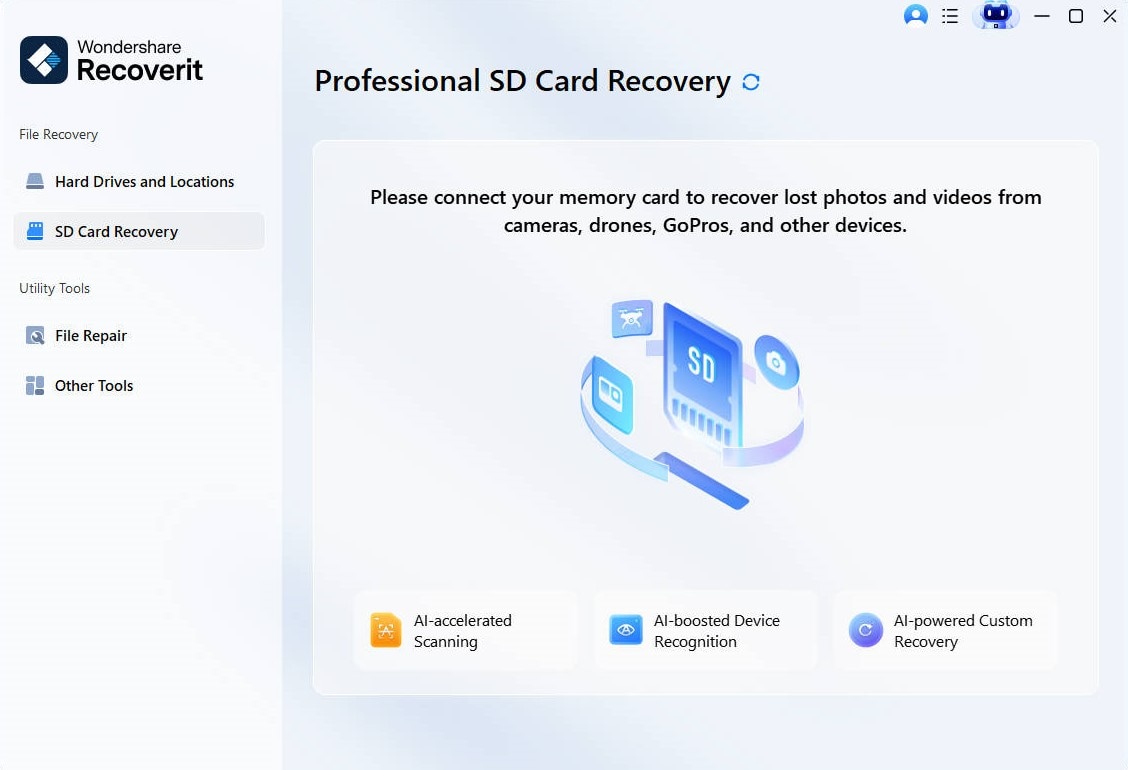
Step 2. Select the USB Drive
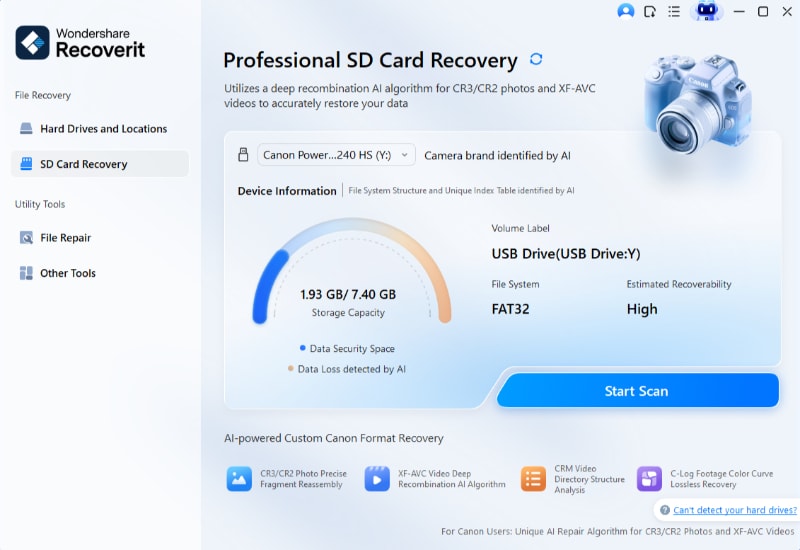
To recover data from your USB drive, you need to start the SD Card feature. All the SD cards and USB drives connected to your computer will be listed here. If you didn't find the Kingston USB drive, you can re-connect it and ensure that it can be recognized by your computer successfully.
Step 3. Scan the Files
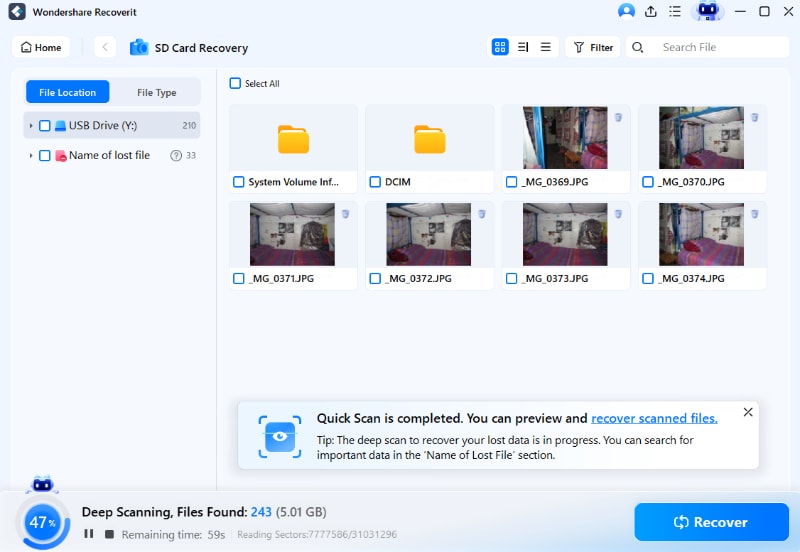
Locate the Kingston USB flash drive, and click the Scan button to start the scanning process.
Step 4. Preview and Recover
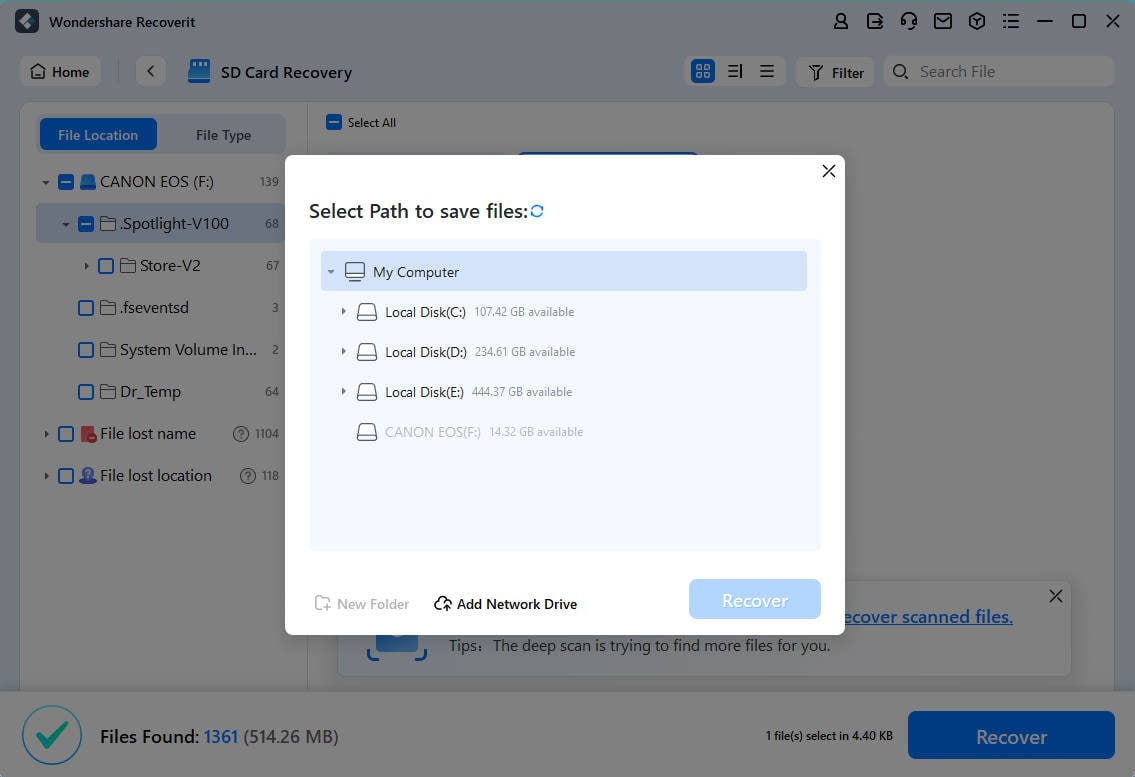
Once Recoverit completes the scanning, you can preview the files by double-clicking. And click the Recover option to complete the Kingston data recovery.
Post-Recovery Checklist: Verifying Your Kingston Hardware Health
- Run a Hardware Sector Verification Pass: Open CMD and run an integrity check (chkdsk X: /f, replacing X: with your drive letter) to ensure the flash card blocks are clean.
- Avoid Continuous Low-Level Multi-Formatting: Repeatedly executing deep, non-quick format sweeps slowly runs down the operational write life cycle limits of flash components.
- Set Default Media Formats Correctly: Stick to the exFAT standard format choice when configuring storage drives larger than 32GB to maintain compatibility between Apple and Windows hardware.
- Verify USB Hub Current Feeds: If formatting attempts constantly hang up mid-way, shift the Kingston unit away from loose front-panel cases and plug it directly into motherboard ports.
- Deploy a Safe Hardware Ejection Rule: Always use the Windows tray menu's Safely Remove Hardware and Eject Media action toggle to avoid corrupting file allocation strings.
Conclusion:
When Windows is unable to format Kingston USB Flash Drive, then it's best to try third-party apps. You can choose the third-party app that meets your requirements and format your USB Drive. However, if your Kingston USB Drive is unable to format, then it's highly recommended to recover your important files using the Recoverit tool.
You may be also interested in: How to Recover Lost Data from Kingston SD Card?
USB Topic
- Recover USB Drive
- Recover files from USB.
- Recover data from raw drive.
- Recover corrupted USB.
- Recover Sandisk USB data.
- Recover Kingston USB data.
- Adata flash drive recovery.
- Format USB Drive
- Fix/Repair USB Drive
- USB device not recognized.
- Fixed: USB not detected.
- Repair your flash drive.
- Fix USB no media error.
- Know USB Drive
 > Resources > USB Recovery > Kingston USB Drive Unable to Format? How to Format a Kingston Flash Drive?


Recoverit Editorial Team
chief Editor