


 TL;DR:
You can format a microSD card on a Samsung tablet by first backing up your files to avoid permanent data loss, then navigating to Settings, opening Device care or Battery and device care, selecting Storage, tapping your SD card, and choosing Format from the More options menu.
● Modern Galaxy tablets require microSD cards rather than older miniSD formats, and relying on the tablet’s built-in formatting tool automatically selects the safest file system, such as FAT32 for broad compatibility or exFAT for files exceeding the 4GB size limit.
● Selecting a private or internal storage option during the setup process will apply device-specific encryption, which prevents you from moving the card to a Windows computer, camera, or another Android device without erasing it again.
● Stop attempting to format the card if the tablet repeatedly fails to complete the process or if a Windows computer displays the storage capacity as 0 bytes, as these specific symptoms indicate physical hardware failure rather than a resolvable file-system error.
Ask AI for a summary
 ChatGPT
 Perplexity
 Gemini
 Claude
 Grok
Grok
TL;DR: Format An SD Card On A Samsung Tablet
1. Back Up First: Formatting permanently erases the card. Copy important photos, videos, downloads, and documents to another location before you continue.
2. Use The Tablet First: On a compatible Galaxy tablet, open Settings > Device care > Storage > SD card > More options > Format. Depending on One UI and the model, the menu may be labeled Battery and device care or Storage settings.
3. Choose The Right Card: Modern Samsung tablets normally use a microSD card, not a miniSD card. A Samsung 8GB microSD card is usually formatted as FAT32 for broad compatibility, but the tablet's supported capacity and file system take priority.
4. If The Tablet Cannot Format It: Try another card reader or a Windows computer. If the card is missing, shows 0 bytes, or repeatedly asks to be formatted, protect the files and check the card for failure before erasing it.
Need to format an SD card on a Samsung tablet? This guide covers the tablet settings path, microSD compatibility, FAT32 and exFAT choices, Windows alternatives, and data recovery before formatting.
Quick answer: Insert the microSD card into the Samsung tablet, open Settings, go to Device care > Storage, select the SD card, tap More options, and choose Format. Confirm the warning only after backing up the files. Samsung tablets may use slightly different labels by model and One UI version. If the card is not detected or the format fails, test the card with a reliable reader on Windows. Do not format a card containing the only copy of important data; use a recovery workflow first.
In This Article
Part 1. What "Samsung SD Card" Means
Most current Samsung tablets use a microSD card slot. The phrase mini SD card for Samsung tablet is usually a naming mix-up: miniSD is an older, larger-than-microSD format and is not the normal removable-card type for Galaxy tablets. Check the tablet's model specifications before buying a card because some Galaxy tablets have no card slot and others support a maximum capacity. Samsung's official support site is the right place to check model-specific specifications and manuals.
A Samsung-branded microSD card is not formatted differently from another compatible microSD card just because it carries the Samsung name. The important factors are the tablet model, card capacity, card condition, and file system. The tablet's built-in format command is usually the safest option when the card will stay in that tablet.
| Search Term | Likely User Need | Best Answer In This Guide |
| format sd card on samsung tablet | Format a removable card from Galaxy tablet settings | Part 4 |
| format sd card for samsung tablet | Prepare a compatible card for use in a tablet | Part 3 and Part 4 |
| format samsung sd card | Format a Samsung-branded microSD card on a tablet or computer | Part 4 and Part 5 |
| samsung 8gb micro sd card | Understand the older 8GB card's compatibility and format choice | Use the card's supported capacity and FAT32 compatibility guidance in Part 3. |
| mini sd card samsung | Find the correct removable-card size | Look for a microSD card, not a miniSD card, unless the tablet documentation says otherwise. |
Part 2. Do You Need To Format A Samsung SD Card?
Not every card needs to be formatted immediately. A new card may work as soon as the tablet mounts it, while a card previously used in a camera, phone, or computer may need formatting before the tablet can use it. Format the card when the tablet requests it, when you are intentionally erasing it, or when the card has a file-system problem and the data is already protected.
Formatting does not automatically increase a healthy card's physical read/write speed. It creates a new file system and removes the existing directory structure. It can resolve a compatibility or file-system problem, but it cannot repair a failing memory controller or turn an unsupported card into a supported one.
| Situation | Format Now? | Recommended Action |
| New card is detected and the tablet asks to format it | Yes, after checking the card is the intended one | Back up anything on the card, then use the tablet's Format option. |
| Card contains important files that exist nowhere else | No | Copy or recover the files to another location first. |
| Card was used in another device and the tablet says it is unsupported | Usually, after data protection | Back up the files, then format the card in the tablet or use the device-specific troubleshooting steps. |
| Card shows 0 bytes, no media, or keeps disconnecting | No | Try one known-good reader. Treat an unchanged result as a possible hardware problem. |
| Card is adopted as private or internal storage on another Android device | Only after understanding the consequence | The card may be encrypted and tied to the original device; formatting it erases that storage. |
Before formatting, close files and apps using the card, cancel unexpected format prompts, and make sure the card is not the only copy of your data. If you want to move the card between a Samsung tablet, computer, and camera, keep it as removable or portable storage rather than treating it as device-specific internal storage.
Part 3. Choose The Best Format For A Samsung Tablet
For a Samsung tablet, the safest file-system choice is the one the tablet and the devices you plan to use both support. When you format from the tablet's Settings app, Samsung generally manages the format choice for that device instead of asking you to select a Windows-style file system.
| Card Or Use Case | Common Choice | Important Limitation |
| Samsung 8GB microSD card or another small card | FAT32 is commonly used | FAT32 has a 4GB maximum for one file and the tablet still determines whether the card is supported. |
| Older tablet or broad cross-device compatibility | FAT32 | Some newer tablets and larger cards may use or prefer another file system. |
| Large card or files larger than 4GB | exFAT, if the tablet and target devices support it | Do not assume every Samsung model supports every capacity or file system; check the model documentation. |
| Card used only in one Samsung tablet | Format in the tablet's Settings app | The tablet may choose the format and partition layout automatically. |
Do not choose NTFS merely because it is available on a Windows PC. Android tablet support for NTFS is not universal. If the card will be used in a camera, game console, dashcam, or another computer, check that device's manual before formatting.
Part 4. How To Format An SD Card On A Samsung Tablet
The tablet method is the first choice for a card that will be used in that Samsung tablet. Menu names vary between Galaxy Tab models, Android versions, and One UI releases. The wording may appear as Device care, Battery and device care, Storage, Storage settings, or SD card.
Step 1. Insert And Mount The MicroSD Card
Power down the tablet if the model manual recommends it, insert the microSD card in the card tray with the contacts oriented correctly, and turn the tablet on. Wait for Android to detect the card. If a notification says the card needs to be set up, open it and follow the on-screen storage flow.
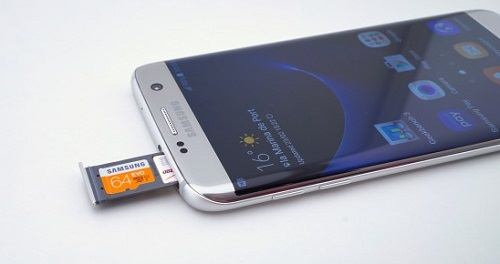
If the card is not detected, remove it once, check the tray and contacts for visible damage, and reinsert it. Do not repeatedly insert and remove a card that is hot, cracked, or unstable.
Step 2. Open The Tablet Storage Settings
Open Settings and look for Device care > Storage or Battery and device care > Storage. Select SD card or the card name. On some models, you may need to open the storage screen's menu first and choose Storage settings.
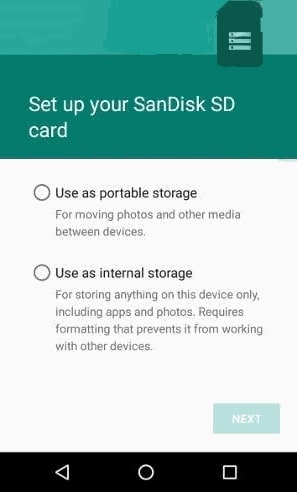
Do not select the tablet's internal storage. Verify the card's name and capacity before choosing an erase or format command.
Step 3. Format The SD Card
Tap More options, the three-dot menu, or Storage settings, then choose Format. Read the warning carefully and confirm only after the files are backed up. Some Android versions label the action Format SD card or Format as portable.
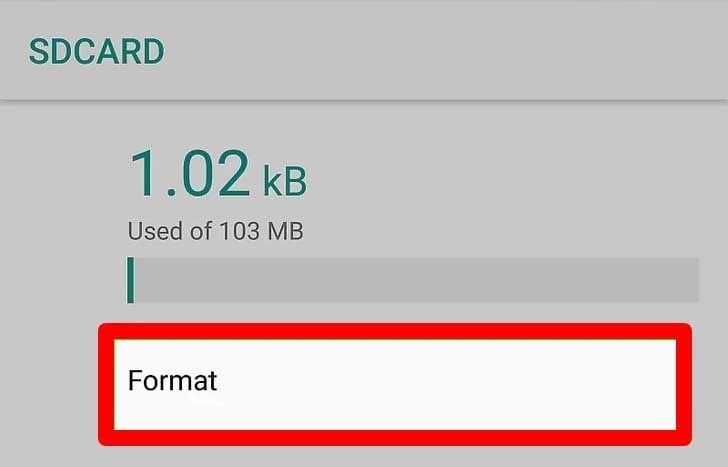
Keep the tablet powered on and do not remove the card while formatting. If Android offers storage types, choose portable or removable storage when you need to move the card between devices. Do not choose a private or internal-storage option unless you accept device-specific encryption and the loss of cross-device portability.
Step 4. Verify The Card After Formatting
When formatting finishes, return to the storage screen and confirm that the card reports its expected capacity. Open My Files, create a small test folder, copy a nonessential file, and open it again. This confirms that the tablet can both write and read the newly formatted card.
If the card is meant for photos or videos, set the camera or download app to use the SD card only after the test succeeds. Keep a separate backup because formatting is not a backup method.
Part 5. How To Format A Samsung MicroSD Card On Windows
Use Windows when the Samsung tablet cannot format the card, when you need to rebuild a removable volume, or when the card will be shared with a computer. Connect the microSD card through a reliable full-size adapter and card reader. If the card contains important files, read the data-protection notice before using either method.
Method 1. Format The Card In File Explorer
File Explorer is appropriate when Windows detects the card with a normal capacity and assigns it a drive letter.
- Open File Explorer: Press Windows + E and select This PC.
- Identify The Card: Compare the SD card's drive letter and capacity with the physical card. Do not rely on the volume label alone.

- Choose A File System: Use FAT32 when the Samsung tablet or another target device requires it. Use exFAT only when the tablet and all important target devices support it, especially if you need files larger than 4GB.
- Start The Format: Leave Allocation unit size at its default unless the device manufacturer specifies another value. Select Quick Format, click Start, and confirm the erase warning.

- Test The Card: Safely eject and reconnect the card, then write and read a small test file before inserting it into the tablet.
If Windows does not offer the file system your tablet needs, use the tablet's own format function or continue with Disk Management. Do not force a file system without checking compatibility.
Method 2. Format The Card In Disk Management
Disk Management can format a detected card with an inaccessible volume, missing drive letter, or unallocated space. It is destructive, so confirm the disk identity twice.
- Open Disk Management: Right-click Start and select Disk Management, or press Windows + R, type
diskmgmt.msc, and press Enter.
- Identify The SD Card: Compare the disk number and capacity with the physical card. Never select the internal Windows disk.
- Format The Existing Volume: Right-click the SD card volume and select Format. Choose the compatible file system and confirm the volume label.

- Confirm The Format: Review the warning and select OK only when the correct card is selected.

- Create A Volume If Needed: If the card is unallocated and the data is safe, right-click the correct unallocated area, choose New Simple Volume, assign a drive letter, and format the new volume.
- Test The Card: Safely eject and reconnect the card, then test it in the Samsung tablet.
If Disk Management displays No Media, 0 bytes, or a changing capacity, formatting is not the correct first response. Check the reader once and continue to Part 7.
Part 6. Recover Files Before Formatting The Card
Protect Your Files Before Formatting: Formatting a Samsung SD card erases its file-system structures. If the card contains photos, videos, downloads, or documents that are not backed up, stop before choosing Format. Copy the files to another location, or use Recoverit memory card recovery to scan a readable microSD card before formatting. A readable card is the best time to protect the data because you can avoid additional writes.

Recoverit is a data recovery tool, not a Samsung SD card formatter. It cannot repair a dead card, bypass Android encryption, or make an unsupported card compatible. Use it before formatting when the card appears on the computer and the files are missing, deleted, formatted, or inaccessible. Save every recovered file to the computer or another healthy drive, never back to the source card.
For related recovery scenarios, see how to recover files from a formatted SD card and how to recover data from a corrupted SD card. If the card is not detected by any reliable reader, recovery software cannot scan it and a professional recovery service may be required.
Part 7. Fix A Samsung Tablet That Cannot Format The SD Card
When the tablet cannot complete a format, first decide whether the problem is the tablet, the card connection, the file system, or the card hardware. Do not repeat the erase process over and over if the card contains needed files.
| Symptom | Likely Cause | Next Step |
| There is no SD card option in Settings | The tablet model may not have a card slot, or the card is not seated or detected | Check the model specifications, reseat the card once, and inspect the tray. |
| The tablet says the card is unsupported | Capacity, file system, card condition, or model compatibility issue | Protect the data, check the tablet's supported capacity, and format the card only after data protection. |
| The format starts but fails | Unstable card, damaged file system, insufficient connection, or hardware failure | Try one reliable reader and Windows formatting after recovery; replace the card if the failure follows it. |
| Windows says the card is write-protected | Full-size adapter lock, reader problem, software read-only status, or card failure | If using an adapter, move its lock slider away from LOCK and test another reader. Recover files before deeper repair. |
| The card shows 0 bytes or No Media | Reader, controller, power, flash-memory, or counterfeit-card problem | Try one known-good reader. Stop repeated formatting attempts if the result does not change. |
| The tablet formats the card but apps or files still fail | Unsupported card, failing flash memory, or an app/device limitation | Test a known-good compatible card and do not use the failing card for important data. |
Do not assume that a Samsung-branded card is automatically compatible with every Galaxy tablet. Check the tablet's model-specific support information, card-capacity limit, and recommended speed class. A card that works in a computer may still be unsuitable for a particular tablet.
Part 8. When To Replace The MicroSD Card
Replace the card after protecting or recovering the data when it repeatedly becomes unreadable, changes capacity, disconnects, produces write errors, or fails formatting in the tablet and in more than one known-good reader. A successful format does not prove that an unreliable card is safe.
Stop DIY attempts and seek professional recovery help when the card is physically damaged, not detected anywhere, reported as 0 bytes, or contains critical business, legal, or production data. Keep the original card unchanged and record which format and repair actions were attempted.
Do not scrape the contacts, bend the card, heat it, freeze it, open it, or use unknown "SD card repair" utilities. These actions cannot repair flash memory and may reduce the chance of controlled recovery.
Part 9. Prevent Samsung SD Card Corruption
- Back Up Photos And Videos: Keep a copy on a computer or cloud service before formatting, removing, or replacing the card.
- Unmount Before Removal: In the tablet's storage settings, eject or unmount the card before physically removing it when the option is available.
- Wait For Transfers: Do not remove the card while the tablet is recording, downloading, moving files, or installing an update.
- Use A Compatible Card: Match the capacity and speed class to the exact Samsung tablet model.
- Leave Free Space: Avoid filling the card completely during long recording or download sessions.
- Protect The Card: Keep the microSD card and tray away from water, heat, dust, and bending.
- Format For The Target Device: When the tablet will be the primary host, use its Settings format function after backing up the data.
For related workflows, see how to format an SD card on Android, Samsung Galaxy unsupported SD card fixes, and SD card repair tools.
Conclusion
To format an SD card on a Samsung tablet, insert a compatible microSD card, open Settings > Device care or Battery and device care > Storage, select the SD card, choose More options > Format, and confirm only after your files are backed up. The exact labels vary by Galaxy Tab model and One UI version.
Use FAT32 for broad compatibility when appropriate, and use exFAT only when the tablet and other target devices support it. If the card cannot be formatted, protect the data, test one reliable reader or Windows computer, and replace the card when the failure follows it. Recoverit can help recover readable files before formatting, but it is not a Samsung SD card formatter.
Frequently Asked Questions
-
How Do I Format An SD Card On A Samsung Tablet?
Back up the files, insert the microSD card, and open Settings > Device care or Battery and device care > Storage. Select the SD card, open More options or Storage settings, choose Format, and confirm. The labels vary by model and One UI version. -
How Do I Format A Samsung SD Card?
Use the Samsung tablet's storage settings when the card will stay in that tablet. For a computer workflow, connect the microSD card through a reliable reader and format it in Windows File Explorer or Disk Management after backing up the data. -
What Is The Best Format For A Samsung 8GB microSD Card?
FAT32 is commonly used for an 8GB microSD card because it offers broad compatibility, but the Samsung tablet and target device determine the supported format. Back up the card and let the tablet format it when the card will be used only there. -
Is A MiniSD Card The Same As A microSD Card?
No. miniSD and microSD are different physical formats. Modern Samsung tablets that support removable storage normally use microSD, so check the exact tablet model before buying a card. -
Why Does My Samsung Tablet Not See The SD Card?
The card may be unsupported, incorrectly seated, dirty, damaged, or beyond the tablet's capacity limit. Reseat it once, check the model specifications, and test it with one known-good reader. If it shows 0 bytes or No Media, suspect a hardware problem. -
Can I Format A Samsung microSD Card On Windows?
Yes. Use a reliable adapter and reader, identify the correct drive by capacity, and format it in File Explorer or Disk Management. Choose FAT32 or exFAT according to the Samsung tablet and other devices that will use the card. -
Will Formatting The SD Card Delete Everything?
Yes. Formatting removes the existing file-system structures and can make recovery more difficult. Copy or recover important files to another drive before formatting. -
Can Recoverit Format A Samsung SD Card?
No. Recoverit is data recovery software, not a Samsung SD card formatter. It can help recover readable files before you format the card. Save recovered files to another drive. -
Why Does The Samsung SD Card Format Fail?
The card may be unsupported, write-protected through an adapter or reader, corrupted, unstable, or failing. Try one known-good reader after protecting the data. If the same card fails in multiple devices or shows 0 bytes, replace it after recovery.


