
 TL;DR:
Permanently deleted or overwritten video clips within Vivint-managed storage cannot be restored using standard recovery software, meaning retrieval is only possible if you previously exported a copy to a local device or if the footage still falls within your active subscription's retention window.
● Verify your specific recording entitlement before assuming permanent deletion, as the Premium Video plan retains cloud event clips for 45 days and continuous recordings for 10 days, whereas legacy Smart Drive tiers operate under different equipment limits.
● Retrieve previously exported iPhone copies directly from the Apple Photos Recently Deleted folder, which typically retains items for 30 days, because photo-service trash features are entirely separate from Vivint cloud events.
● Limit the use of Wondershare Recoverit exclusively to scanning detectable local computer drives for downloaded files, and never attempt to scan the Vivint app, reset the hub, or remove undocumented SD cards from the Outdoor Camera Pro.
Ask AI for a summary
 ChatGPT
 Perplexity
 Gemini
 Claude
 Grok
A Vivint clip that has been permanently deleted or overwritten in Vivint-managed recording storage is not something ordinary computer recovery software can retrieve from the Vivint app or cloud. First check whether the event is still available through your authorized Vivint account, whether playback is temporarily unavailable, and whether you previously saved the clip to your phone or computer. If a downloaded video file was later deleted from a detectable local drive, file recovery may be possible, but it is not guaranteed.
Start with the original recording location rather than uninstalling the app, resetting a hub, or attempting to remove camera hardware. Available history, recording retention, and playback options depend on your Vivint equipment and service plan.
In This Article
Part 1. Can Deleted Vivint Video Clips Be Recovered?
A clip can be missing for several reasons. The first distinction is whether it disappeared from Vivint-managed history or from a separate file you previously downloaded.
What Is Recoverable and What Is Not
Not reliably recoverable: A permanently deleted or overwritten recording in Vivint-managed storage is not a normal undelete operation on your computer. Vivint does not document a universal seven-day undo feature for deleted event clips, and no verified consumer workflow allows Recoverit to scan the provider's remote video store.
Potentially recoverable: An event that still exists in a reachable recording history, a separate saved video in your phone's photo library or backup, or a downloadable file that was later removed from a computer or external drive. Treat each as a different situation.
The location of the missing footage determines whether a restore option exists at all, so identify the original storage before trying another method.
Identify Where the Recording Was Stored
The safest next check depends on where the footage originally lived. A recording that was never saved locally cannot be reconstructed by scanning your computer.
| Original location | Check first | Recovery limitation |
| Vivint camera event or Playback | Authorized app history and recording availability | Not a user-accessible computer disk |
| Legacy Smart Drive or newer recording plan | Equipment and plan-specific retention rules | Do not assume a universal retention window |
| Saved video on iPhone | Photos library and Recently Deleted | Only if the clip was previously saved |
| Saved file on a PC, Mac, or external drive | Trash, Recycle Bin, backup, or local file recovery | Requires a local file and suitable detectable storage |
Part 2. Check Existing Vivint Camera Recordings
Before treating a Vivint event as deleted, make sure the correct camera, event time, and account are selected. Camera views and recording features differ across plans. Vivint announced Premium Video in September 2026, describing up to 45 days of cloud event clips and 10 days of continuous recordings for that service; those limits do not apply automatically to older plans.
Find the Correct Event in the Vivint App
Step 1. Open the Vivint app under the authorized household account and locate the Cameras area. Choose the camera associated with the missing event. Do not reset or remove equipment during this check.
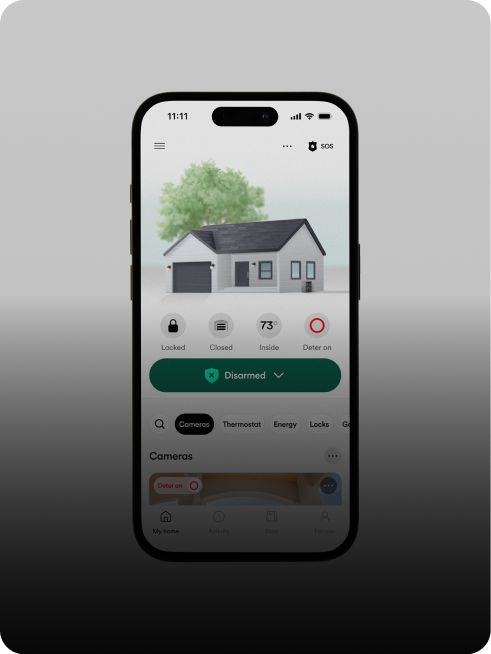
Step 2. Open the camera event or recorded-video view available on your setup. Check the correct date, time, camera and event category. An event still shown in the app is not the same as a permanently deleted file.
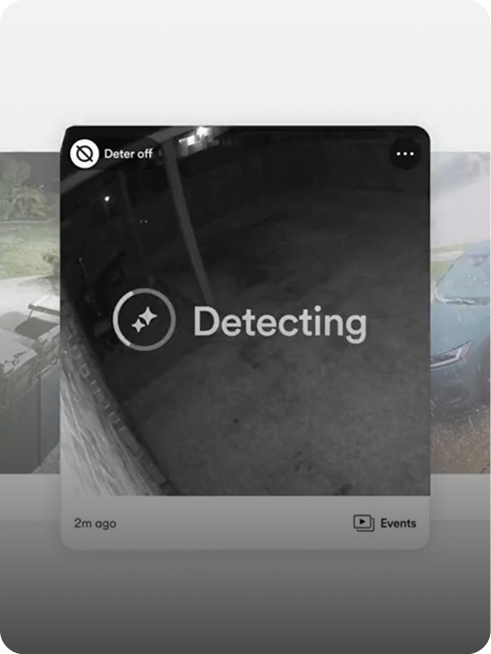
Step 3. If the correct recording is accessible, use the app's available save or share control to preserve a copy immediately. Menu wording may differ by app version, camera, and service entitlement. Confirm the resulting file plays before deleting anything.
If the right camera and date are selected but the event is still absent, review the recording service and access conditions before assuming it was erased.
Check Retention and Playback Access
Step 1. Confirm the exact camera hardware, recording subscription and whether your setup uses event clips, continuous Playback, or a newer Premium Video service. For Premium Video, check the advertised 45-day event and 10-day continuous recording windows; for legacy Smart Drive or another tier, check your specific entitlement instead.
Step 2. If a previously visible event has disappeared but the retention window may still apply, check whether camera video and network service are working. A Playback access error is not proof of deletion.
Step 3. Contact Vivint Support with the camera, approximate time and account details for a supported availability check. Do not assume support can reverse a confirmed permanent deletion. See the Vivint Premium Video announcement for the new plan, rather than applying its limits to every customer.
Part 3. Find a Video You Previously Saved
A file saved from the Vivint app is separate from the original camera event. If you exported the footage earlier, checking that copy is often more useful than repeatedly refreshing the camera history.
Recover a Saved Video in Photos
Step 1. On the iPhone that previously received the saved clip, open Photos and check the Videos collection or search near the recording date. If a matching video is found, play it and create another copy.
Step 2. If the saved iPhone video was itself deleted, open Photos > Recently Deleted, authenticate when prompted, select the eligible video, and use Recover. Apple says deleted items ordinarily remain there for 30 days before permanent deletion; this applies to the Photos copy, not the Vivint cloud event.
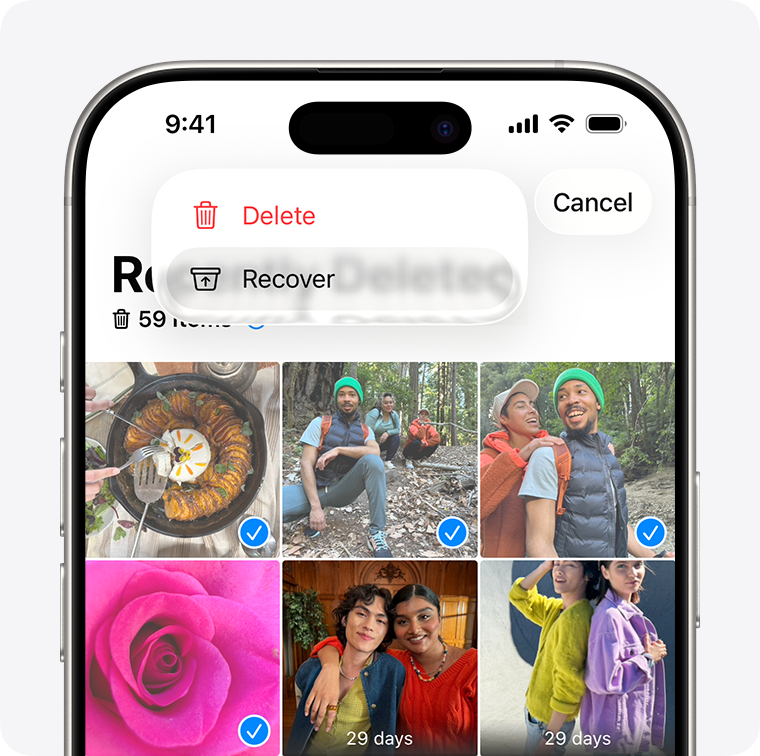
Step 3. Check that the restored video is in Photos and can be played. For current steps and eligibility, use the Apple Photos recovery instructions.
If the file is not in Photos, look for an independent copy in the location where you originally exported or shared it.
Search Other Authorized Saved Copies
If an authorized member previously emailed or shared the clip, check that specific message, download history, or cloud-file backup. On Android, inspect the saved gallery and its trash feature if enabled. A photo-service trash folder only helps when a separate local or synced video copy existed. Avoid installing unverified mobile recovery applications that claim to scan Vivint's cloud.
Part 4. Recover a Deleted Local Vivint Video File
Use computer data recovery only when the missing footage was previously a real file on a computer or connected storage device. It is not a substitute for Vivint account access or a method of recovering remote cloud history.
When Local File Recovery Is Appropriate
Check the Windows Recycle Bin, macOS Trash and your configured backups first. If the deleted file is already available there, restore it without scanning. If it was stored on an external USB device, stop writing new files to that device. Recoverit is relevant only when the source drive can be detected reliably; modern device encryption, overwriting and SSD TRIM can make recovery impossible.
When backups and the local trash are unavailable, the remaining option is a read-only-first scan of an accessible local drive, not the Vivint cloud.
Scan a Local Drive With Wondershare Recoverit
Manages over 500 data loss situations, such as deletion, formatting, and disk corruption.The user-friendly interface allows you to recover data in just a few clicks.

Step 1. Connect the original storage to the computer, if necessary. Launch Wondershare Recoverit and select the original local drive where the saved Vivint video was deleted. Do not scan the Vivint camera, app, or cloud.
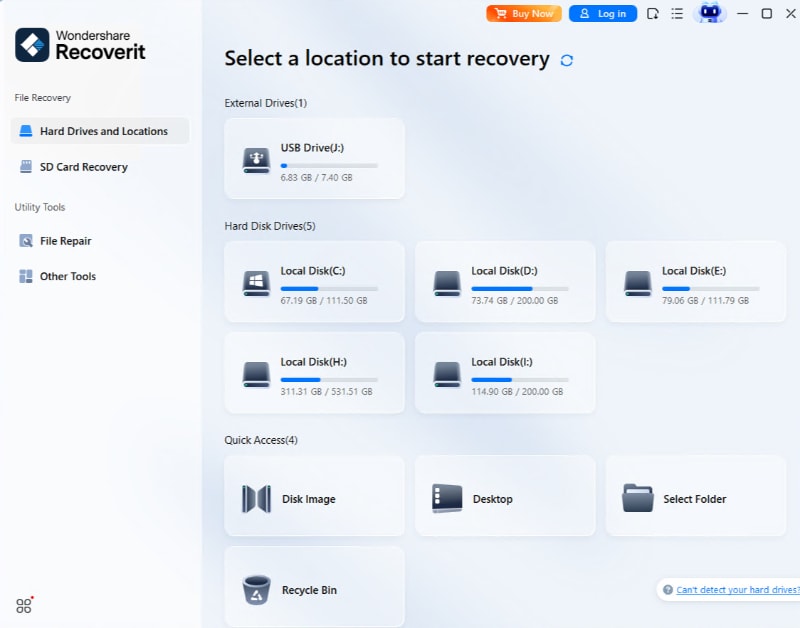
Step 2. Let Recoverit scan the selected drive and look for video files that match the recording date or filename. Use the available preview when supported; a found filename does not guarantee a playable video.
Step 3. Recover the verified video to a different healthy drive. Open the recovered copy and check its duration, image, and audio. If the original storage disconnects repeatedly or is physically damaged, stop DIY recovery and consult a professional.
This security-camera clip recovery guide also explains why provider-managed recordings and separate saved files have different recovery limits. For damaged local video files, see the Recoverit video recovery resources; file repair is a separate task after recovery.
Part 5. When the Vivint Clip Is No Longer Available
Once the storage location and plan are known, it becomes easier to stop unproductive recovery attempts and protect future footage.
Check the Limits Before Repeating Recovery
If the event has expired, was permanently erased from Vivint-managed storage, and has no separate saved copy, there is no verified self-service way to recreate it. Do not remove an undocumented SD card from a Vivint Outdoor Camera Pro or run a storage reset in hope of accessing deleted cloud footage. Ask Vivint Support about model-specific options before making hardware changes.
If no remaining copy exists, the useful next step is to protect future footage through timely authorized exports and verified backups.
Prevent the Next Recording From Being Lost
When footage may be important, save an authorized copy as soon as it becomes available and verify playback on a different device. Confirm the recording and retention features included with your particular Vivint plan rather than assuming all devices retain videos for the same number of days. For irreplaceable events, consider an additional independent, authorized backup.
Conclusion
Recovering a missing Vivint video begins with identifying where it was stored. Inspect existing Vivint camera events and plan-specific Playback access first. If a clip was previously saved to iPhone Photos or a computer, recover that separate copy using the appropriate device or backup workflow. Recoverit may assist with a locally deleted video file on detectable storage, but it cannot undo permanent deletion from Vivint-managed recording services.
FAQ
-
Can You Recover Permanently Deleted Vivint Videos?
There is no verified universal restore workflow for a permanently deleted or overwritten Vivint-managed recording. Check for separate downloads or backups and contact Vivint Support for account-specific assistance. -
Can I Find Deleted Vivint Videos in the App?
You can inspect camera events, filters and Playback that remain available to your account. A missing event may reflect an access, time-range or retention issue rather than a restorable deleted file. -
How Long Does Vivint Keep Camera Recordings?
Vivint announced that Premium Video includes 45 days of cloud event clips and 10 days of continuous footage; older Smart Drive and other subscriptions can differ. Check your own equipment and plan. -
Can Recoverit Retrieve Footage Directly From Vivint Cameras?
No. Recoverit is for eligible files on accessible local storage, not Vivint's hosted recordings, camera firmware or a customer account. A previously downloaded video deleted from a computer is a different situation. -
What If I Saved a Vivint Clip to My iPhone and Then Deleted It?
Check Photos and Recently Deleted. Apple generally retains deleted Photos items for 30 days. If an eligible copy is still there, recover it in Photos; this does not restore a deleted cloud event. -
Does Vivint Offer a Seven-Day Deleted Video Recovery Window?
Do not rely on that claim. No universal seven-day undo period for permanently deleted Vivint clips has been verified in the current official guidance.


