

 TL;DR:
The most effective first step to recover a deleted iPhone video is checking the Recently Deleted album in your local Photos app or iCloud Photos, where Apple retains files for 30 days before permanent deletion.
● Restoring from a Finder, Apple Devices, iTunes, or iCloud backup created before the deletion can retrieve the video, but you must create a current backup first because a full device restore will replace your newer data.
● If the missing video was originally stored on an SD card, USB drive, or computer, scan that specific external device using a tool like Recoverit, which is designed for removable media and cannot directly scan encrypted iPhone internal storage.
● To prevent irreversible data loss while the video still matters, immediately stop recording new media, downloading large files, or installing multiple recovery applications that could overwrite the affected storage sectors.
Ask AI for a summary
 ChatGPT
 Perplexity
 Gemini
 Claude
 Grok
Grok
Quick Answer
● If you deleted the video recently: Open Photos, go to Recently Deleted, unlock the album, and choose Recover. Apple says deleted photos and videos remain there for 30 days.
● If you used iCloud Photos or another cloud service: Check the same account, its Recently Deleted area, and any synced library before installing an app.
● If you made a Finder, Apple Devices, or iTunes backup before deletion: You may be able to restore the iPhone from that backup, but a full restore can replace newer data on the phone.
● If the video was on an SD card, USB drive, computer, or external disk: Scan that storage device from a computer with the matching recovery tool. Recoverit is designed for detectable storage media, not as a direct scanner of iPhone internal storage.
● If the video was permanently deleted from iPhone internal storage: Recovery is not guaranteed. Do not reset, update, restore, jailbreak, or install several apps while the video still matters.
For iPhone deleted video recovery, the safest first step is usually an Apple feature rather than an iPhone video recovery app. iOS keeps deleted videos in system-managed locations and backups, while a desktop recovery program cannot treat an iPhone like an ordinary USB disk.
Your recovery path depends on where the video lived: the Photos library, iCloud Photos, an iCloud or computer backup, an app such as Messages or WhatsApp, or removable storage that you used with the iPhone. Check the least destructive source first, then use a third-party tool only when it matches the actual storage location.
In This Article
Part 1. Find The Right iPhone Video Recovery Path
Where Your Video Was Stored
Think about what happened immediately before the video disappeared. You may have deleted it in Photos, removed it from a message, erased it from Files, removed it after an import, or lost it from an external card. Each event leaves you with a different recovery option.
| Likely location | First place to check | Best matching tool or method |
| Photos app on iPhone | Photos > Recently Deleted | Apple's built-in recovery |
| iCloud Photos library | Photos on another Apple device or iCloud.com Photos | Restore from Recently Deleted or download an existing synced copy |
| iCloud, Finder, Apple Devices, or iTunes backup | Check the backup date before the deletion | Restore the iPhone from the correct backup, or use compatible backup-extraction software |
| Files app, Messages, WhatsApp, or another app | Check that app's conversation, folder, trash, draft, or backup | Use the app's own restore path first; third-party access may be limited |
| SD card, camera card, USB drive, Mac, or Windows PC | Stop writing to the source and connect it to a computer | Use Recoverit or another recovery tool for that storage device |
Apple distinguishes between information that is synchronized to iCloud and information included in iCloud Backup. When you use iCloud Photos, your photos and videos are synchronized through that service rather than copied into your daily iCloud Backup. Read Apple's current iCloud Backup explanation before assuming that an iCloud device backup contains every video in Photos.
What You Should Do Before Recovery
- Stop creating new data: Do not record new videos, download large files, install several recovery apps, or edit storage on the affected device.
- Do not erase the iPhone: Avoid Erase All Content and Settings, a factory reset, bootloader-related changes, or an unplanned system restore.
- Do not restore a backup blindly: Make a current backup first if the iPhone still contains newer data. A full backup restore can replace the current device state.
- Check every account: Look at the Apple Account used for iCloud, Google Photos if you enabled it, shared albums, Messages, Files, and any editing app that may have exported the video.
- Protect removable media: If the video came from an SD card or USB drive, eject it safely and do not format it when the phone or computer asks you to.
These steps reduce the chance that new data will replace a deleted file and prevent a recovery attempt from destroying a backup that may still contain the video.
Part 2. Compare iPhone Video Recovery Options
An iPhone video recovery app can mean an Apple feature, a cloud app, a computer program that reads an iPhone backup, or software that scans an external drive. Treating all of them as equivalent creates the wrong expectation.
| Option | Best for | Strength | Limit |
| Photos Recently Deleted | Recently deleted videos from Photos | Fast, free, and does not require a scan | Apple says items are permanently deleted after 30 days |
| iCloud Photos or another cloud library | Videos that were synchronized or backed up | Restores an existing cloud copy without modifying local storage | It cannot restore an item permanently removed from that service |
| Finder, Apple Devices, or iTunes backup | Videos included in a backup made before deletion | Uses Apple's supported device restore process | A full restore can replace current device data; Photos synced to iCloud may not be inside the backup |
| Third-party iPhone recovery software | Supported iPhone backups or supported device workflows | May help inspect a backup or offer a device-specific workflow | Compatibility, iOS version, backup encryption, permissions, and app support vary |
| Recoverit | SD cards, USB drives, computers, cameras, and external disks | Scans detectable storage from Windows or Mac and lets you save results elsewhere | It is not a direct scanner for iPhone internal storage and cannot bypass iOS encryption or restore overwritten data |
Apple Photos Recently Deleted
Use Apple's built-in album first. It is the correct route when you deleted the video in Photos and the retention period has not expired. Apple currently states that a deleted photo or video stays in Recently Deleted for 30 days. After that, Apple says it is permanently deleted and cannot be recovered through that album.
Unlock the album with Face ID, Touch ID, or your device passcode when prompted. If the video is there, recover it before you test another method, then copy it to a Mac, PC, or external drive and verify that it plays.
iCloud, Finder, Apple Devices, And iTunes Backups
A backup is different from a live synced library. A Finder or Apple Devices backup is a snapshot of the device state at a particular time. If the video was present when that snapshot was created, restoring or extracting the backup may help. If Photos was already syncing the video through iCloud Photos, it may not be included in the device backup because it was already synchronized with iCloud.
Apple's current restore instructions cover restoring from an iCloud backup or a backup on a computer. Before you use either method, check the backup date, make a current backup of the iPhone, and confirm that losing changes made after the older backup is acceptable.
Third-Party iPhone Recovery Software
Desktop products such as Dr.Fone may provide iOS device or backup recovery workflows, but you should verify the current iOS version, iPhone model, backup type, encryption requirements, and supported data categories before you pay or connect the phone. A product page that says it can recover iPhone data does not prove that it can recover a permanently deleted video from your exact device.
Do not enter your Apple Account password into an unverified app, and do not disable security settings or erase the iPhone simply because a program requests it. You can review the current Dr.Fone iPhone data recovery page for its supported workflow, then confirm the details in the product before starting.
Recoverit For External Storage
Recoverit is the better match when the missing video is on an SD card from a camera, a USB drive, a computer, or another external disk. You can remove the storage device, scan it from Windows or Mac, preview recoverable video files, and save them to a different healthy drive.
Recoverit does not directly scan the protected internal storage of an iPhone as if it were a normal disk. It also does not repair a failed storage controller, bypass encryption, recover overwritten data, or guarantee that every recovered video will play.
Part 3. Restore Deleted Videos From Recently Deleted
Recover A Video On Your iPhone
Step 1. Open the Photos app on your iPhone.
Step 2. Swipe up and open Recently Deleted under Utilities. Unlock the album when your iPhone asks for authentication.
Step 3. Select the video, tap the more-options button if needed, and choose Recover.
Step 4. Return to your library, play the video, and copy a second version to a computer or external drive.

If the video is not in Recently Deleted, check whether you are using the correct Apple Account and whether the item was moved to another app or device. Do not empty the album while you are checking.
Recover A Video From iCloud.com
Step 1. Open iCloud Photos in a browser and sign in with the Apple Account used on the iPhone.
Step 2. Open Recently Deleted in the sidebar. If you do not see it, open the sidebar or use the current iCloud Photos menu.
Step 3. Select the video and choose Recover. Download a separate copy after it returns to the library.
Apple's current deleted photo and video instructions apply to iPhone, iPad, Mac, Apple Vision Pro, and iCloud.com. The menu wording can vary slightly across devices, but the retention rule remains the important limit: Apple says Recently Deleted items are kept for 30 days.
Part 4. Restore Videos From An iPhone Backup
Use a backup only after you know the video was present when the backup was made. A full device restore can change the current contents of your iPhone, so preserve newer photos, messages, and videos first.
Restore From Finder Or Apple Devices
On a Mac, Apple uses Finder to manage connected iPhones. On Windows, the current Apple workflow uses the Apple Devices app for supported setups; some older environments may still use iTunes. The labels can vary, but the decision is the same: select a backup dated before the video was deleted.
- Make a current backup: Back up the iPhone before restoring an older snapshot so you can preserve your current state.
- Connect the iPhone: Use a trusted cable and unlock the phone. Approve the trust prompt if it appears.
- Open the device manager: Select the iPhone in Finder, Apple Devices, or the supported iTunes interface.
- Check the backup date: Choose a backup created before the video disappeared. Do not select a newer snapshot without checking it.
- Restore only after checking the tradeoff: Start the restore and keep the iPhone connected until the process completes.
- Verify the video: Open Photos or the original app after the restore. Copy the video to another location before making further changes.

Apple provides the official steps to restore an iPhone from an iCloud or computer backup. If your backup is encrypted, keep its backup password available. If you only want one video and cannot accept a full-device replacement, check whether a compatible backup-extraction workflow can export the media instead of restoring the entire phone.
Restore From An iCloud Backup
Apple's iCloud backup restore flow is intended for setting up or restoring a device. If your iPhone is already set up, Apple may require you to erase it before you can choose From iCloud Backup. That erase is destructive, so do not start it simply to test whether a video might be present.
- Confirm the backup first: Check the backup date and make a current backup of anything you cannot lose.
- Reach the setup screen: Follow Apple's current restore instructions. If erasing the iPhone is required, understand that this removes the current device content.
- Choose From iCloud Backup: Sign in to the correct Apple Account and select the snapshot created before deletion.
- Wait for synchronization: Keep the iPhone connected to power and Wi-Fi while content and apps return.
- Check the source library: Look in Photos, Files, Messages, or the original app. If the video was synchronized through iCloud Photos, check that library separately.

A full iCloud restore is usually the wrong first step when the video may still be in Recently Deleted or another synced service. Check those locations before you consider erasing the device.
Part 5. Recover Videos From An SD Card Or Computer
Many iPhone videos do not originate in internal iPhone storage. You may have imported them from a camera card, copied them to a computer, edited them on an external disk, or stored a second copy on a USB drive. In these cases, recover the source storage rather than trying to scan the iPhone.
Scan External Storage With Recoverit
Use this workflow when your SD card, USB drive, Mac, Windows PC, or external disk is detected with a stable capacity and the video files are missing or inaccessible.
Step 1. Stop using the source storage. Cancel any format or initialize prompt, then connect the device to a computer with a reliable reader, cable, or enclosure.
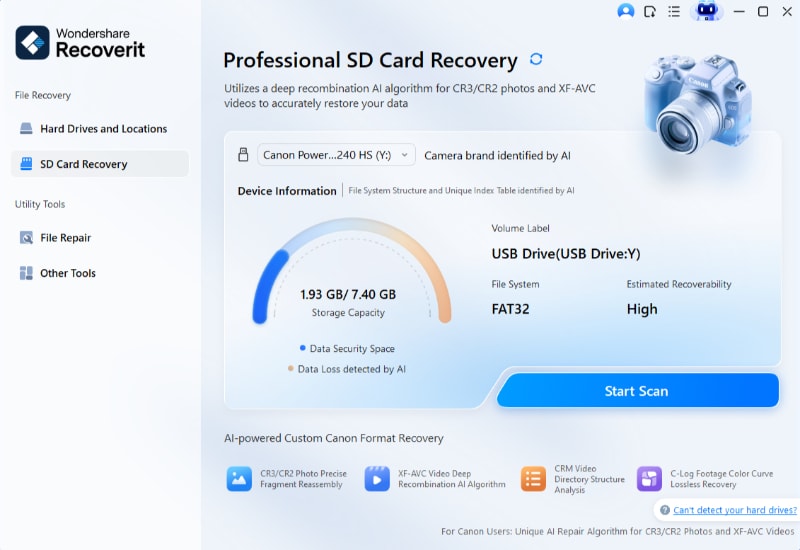
Step 2. Open Recoverit and select the SD card, USB drive, computer disk, or external disk that held the video.
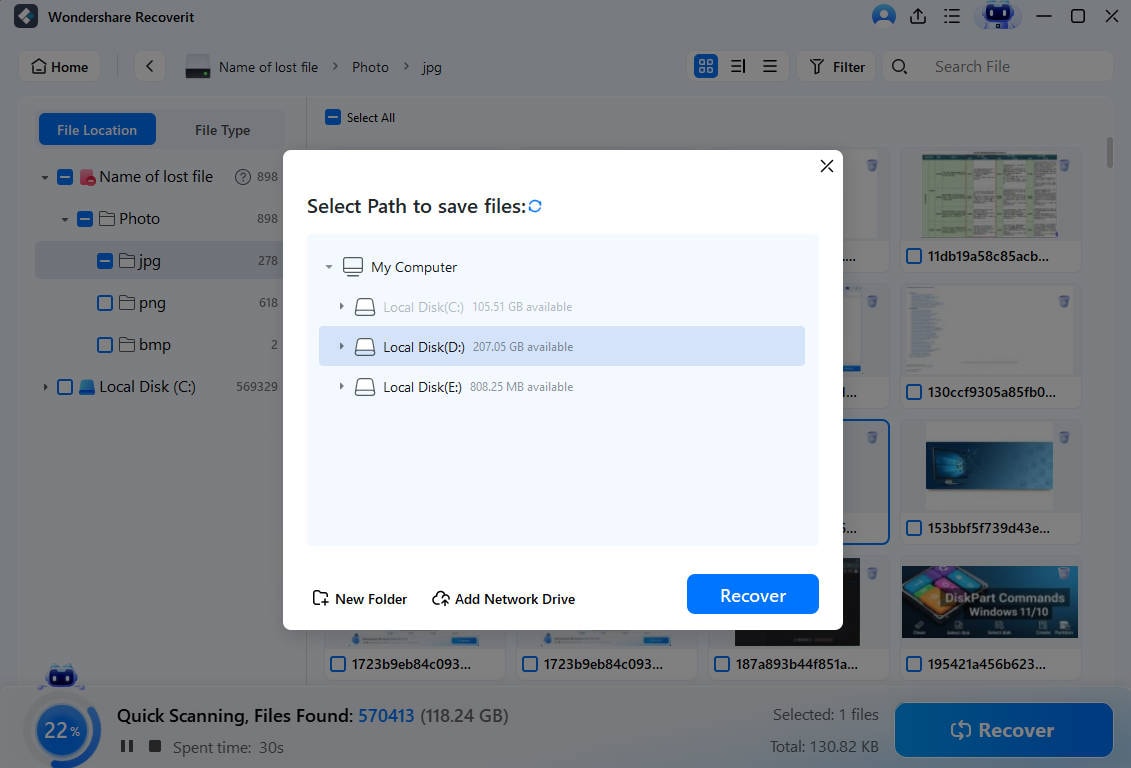
Step 3. Start the scan and keep the source connected. Do not save the scan results or recovered files to the source device.
Step 4. Filter the results by video type or search by file name. Preview the video when possible and check its size and playback.
Step 5. Select the files you need and choose Recover. Save them to the computer's internal drive or another healthy external drive.
For a video lost from a camera card, you can follow Recoverit's SD card video recovery guide. For a formatted card, use the formatted SD card recovery guide.
Do not keep scanning if the source shows 0 bytes, No Media, changing capacity, repeated disconnects, unusual heat, water damage, or physical damage. Software recovery normally requires the operating system to expose usable storage.
Recover Videos From An SD Card Or Computer
 Security Verified. Over 7,302,189 people have downloaded it.
Check Imported And App-Specific Copies
Before scanning anything, search for a second copy. Check the Mac Photos library, Windows Photos or File Explorer folders, iCloud Drive, Google Photos, OneDrive, Dropbox, Messages attachments, WhatsApp media, editing-project folders, and exported files from apps such as iMovie or Final Cut Pro.
If you find a copy that opens, duplicate it to a different drive before editing. If you deleted the video from an app, use that app's own backup or trash feature first. A third-party iPhone recovery app may not be able to read private, sandboxed, or end-to-end encrypted app data.
Part 6. Check Why A Recovered Video Will Not Play
A recovered file and a playable video are not always the same thing. A scan may locate a file entry while the video data is incomplete, fragmented, or missing its container metadata.
- Check the file size: A zero-byte file or a file much smaller than the original recording may be incomplete.
- Test more than one player: Try a trusted player and check whether the video opens, seeks, and plays through its important sections.
- Keep the original recovered file: Make a copy before you attempt a repair or conversion.
- Check the container and codec: Confirm that the extension matches the actual file and that the player supports the recorded format.
- Use repair only after recovery: A repair tool can work on a recovered file with damaged metadata, but it cannot recreate video data that was never recovered.
You can review Recoverit's guide to repairing recovered video files. Do not delete the original until the repaired copy has been checked for image, sound, duration, and seeking.
Conclusion
For iPhone deleted video recovery, start with Photos Recently Deleted, iCloud Photos, the original app, and any Apple or cloud backup. Apple currently gives Recently Deleted a 30-day recovery window, so check it before you install software or restore the phone.
Use a Finder, Apple Devices, or iCloud backup only after confirming its date and protecting newer data. Use Recoverit when the missing iPhone video actually came from an SD card, USB drive, computer, camera, or external disk. Recoverit can scan detectable storage and save results elsewhere, but it cannot directly scan iPhone internal storage, bypass iOS encryption, restore overwritten data, or guarantee a playable file.
FAQ
-
How Do You Recover Deleted Videos From An iPhone?
Open Photos, go to Recently Deleted, unlock the album, select the video, and choose Recover. If it is not there, check iCloud Photos, the original app, and backups created before deletion. -
Can You Recover Permanently Deleted Videos On An iPhone?
Only when another copy still exists in iCloud Photos, a cloud service, an app backup, an Apple device backup, or external storage. Apple says a video permanently deleted from Recently Deleted cannot be restored through that album, and no app can guarantee recovery from overwritten or inaccessible iPhone internal storage. -
How Long Do Deleted Videos Stay On An iPhone?
Apple currently says deleted photos and videos stay in the iPhone Photos Recently Deleted album for 30 days. After 30 days, Apple says they are permanently deleted from that recovery location. -
Is There An iPhone Video Recovery App?
Yes, you can find apps and desktop tools that handle Apple Photos, cloud backups, iPhone backups, or specific device workflows. Their access depends on iOS, the backup type, encryption, permissions, and the original storage location. A desktop tool such as Recoverit is intended for external storage, not a direct scan of iPhone internal storage. -
Can Recoverit Recover Deleted Videos From An iPhone?
Recoverit can recover videos from an SD card, USB drive, computer disk, camera card, or external storage that held the video. It does not directly scan iPhone internal storage or bypass iOS encryption. Save recovered files to a different healthy drive. -
Can You Restore A Deleted Video From An iPhone Backup?
You may be able to restore the iPhone from a backup created before deletion, but a full restore can replace newer data on the device. Make a current backup first, confirm the old backup date, and use an extraction workflow when you need one file without replacing the whole device. -
Why Is A Recovered iPhone Video Not Playing?
The recovered file may be incomplete or have damaged container metadata. Keep the original, make a copy, test another trusted player, and use a video-repair workflow only on the copy. A zero-byte or heavily overwritten file may not contain enough data to repair.


