
 TL;DR:
The most reliable Android video recovery approach depends entirely on your storage configuration: immediately check Google Photos, Files by Google, or Gallery Trash for internal memory deletions, but use a desktop software scan via a card reader if the footage was lost from a removable microSD card.
● DiskDigger strictly requires root access to perform a full scan for deleted videos on internal storage, while Dumpster acts exclusively as a recycle bin that cannot restore media deleted prior to its configuration.
● If the missing MP4 or 3GP was on a portable microSD card, immediately stop writing new data to prevent overwriting, safely eject it, and perform the recovery using a Windows PC or Mac card reader rather than downloading an Android APK.
● Never remove or initialize a microSD card configured as adopted internal storage for a computer scan, because Android's file-based encryption strictly ties that accessible data to the original device.
Ask AI for a summary
 ChatGPT
 Perplexity
 Gemini
 Claude
 Grok
What is the best video recovery app for Android? Start with Google Photos or your phone's Trash if the video was recently deleted. If the missing MP4 or 3GP was stored on a removable microSD card used as portable storage, desktop video recovery software can scan that card through a reader. Android's built-in encrypted storage is a different case: installing another app or connecting the phone by USB does not guarantee access to deleted video data.
This comparison explains which Android video recovery apps and desktop tools fit each storage situation, what their real limitations are, and when Recoverit Memory Card Recovery is worth trying. Before experimenting, avoid recording new videos, downloading more apps, clearing caches, or formatting the affected storage.
In This Article
Part 1. Choose the Right Android Video Recovery Method
A promising recovery app can still be the wrong tool if it cannot access the storage that held your deleted footage. Check the original location before deciding whether you need an Android app, an existing backup, or software on a computer.
Check Where the Deleted Video Was Stored
Videos recorded on Android may live in DCIM/Camera on the phone, in an app-specific folder, in Google Photos, or on a removable card. Those locations behave differently after deletion.
- Phone internal storage: Check app Trash and backed-up copies first. Modern Android file-based encryption and app access restrictions make low-level deleted-file scanning unreliable. Connecting a phone by USB normally exposes files that are still accessible, not its deleted storage sectors.
- Portable microSD card: If the card was used as portable storage and a Windows PC or Mac detects it through a card reader, software such as Recoverit can scan the card for recoverable video files. Stop using it immediately.
- Adopted/internal microSD card: If Android configured the card as part of internal storage, do not remove and format it for a PC scan. Adopted storage is tied to the original phone and is not equivalent to a portable card.
- Cloud or synced folder: A video may still exist in Trash, another account, a phone manufacturer's gallery backup, a shared chat, or a computer import.
Google's Android SD card guidance explains the difference between portable and internal card configurations. If you are unsure which setup you used, do not reformat the card just to test it.
Compare Your Options at a Glance
| Where the Video Was Lost | Best First Choice | When Another Tool May Help |
| Google Photos library | Google Photos Trash and the correct signed-in account | Find an exported or synchronized copy |
| Android internal storage | Gallery or file-manager Trash; existing backups | Specialized Android apps have limited, device-dependent results |
| Portable microSD card | Stop using card; check any Trash/backup copy | Remove card, use a reader and scan with Recoverit |
| Adopted/encrypted microSD card | Keep card paired with original phone; export accessible files | Seek qualified assistance if files are irreplaceable |
| Video found but does not play | Check file size, transfer integrity and alternative copies | Use a video repair workflow on a separate copy if file data remains |
Quick recommendation: Searching for the best app to recover deleted videos on Android does not necessarily mean you should install one. The most successful first move may be restoring a file already retained by the phone or cloud. For a detected portable microSD card, go directly to the computer-based recovery steps without writing new data to that card.
Part 2. Try Free Android Video Recovery Before Installing Software
Trash and backups are not deep scans: they restore copies that already exist. That makes them the fastest and lowest-risk options for a recently deleted video, whether you use Samsung, Pixel, Xiaomi, OnePlus, or another Android phone.
Restore Videos From Google Photos Trash
Open Google Photos on the phone, switch to the account that backed up the missing video, then select Collections > Trash. Touch and hold the video and choose Restore if the file is still available. Also check Archive and the device folders associated with the relevant account. Google's current Android restore instructions say deleted items retained in its Trash are recoverable for the stated period, currently up to 30 days, provided they have not been permanently deleted.
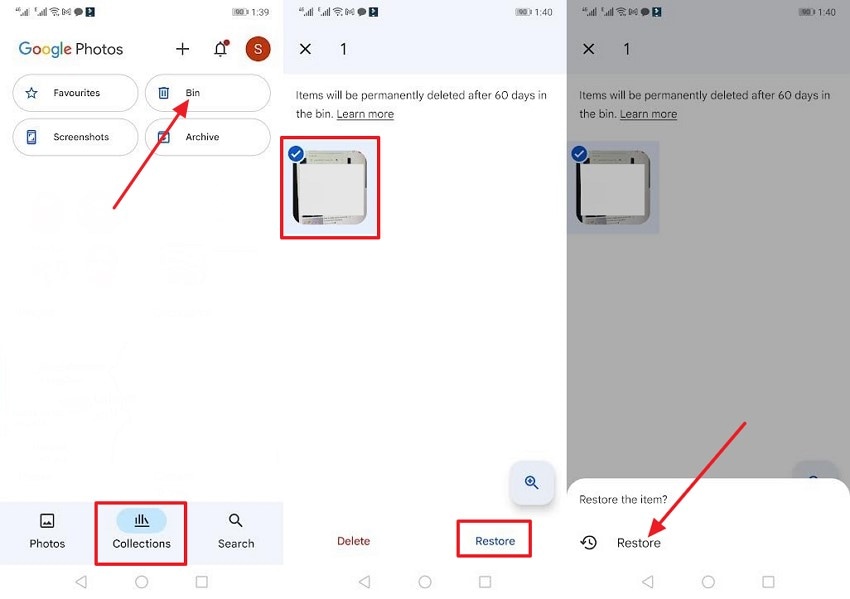
If the video is missing from that account's Trash, do not empty any remaining Trash. Check whether it was backed up under a different account or stored only in a folder whose backup setting was disabled. A Google Photos thumbnail in a gallery does not, by itself, establish that a full video backup exists.
Check Files by Google and Your Phone's Gallery Trash
In Files by Google, select Menu > Trash, choose the file and tap Restore. Google states that eligible items stay there for 30 days; its Junk cleanup behaves differently and does not move deleted files to Trash. For exact instructions, see Files by Google Help.
On Samsung Galaxy phones, check the Gallery > Menu > Recycle Bin and, when relevant, My Files > Recycle bin. Samsung's official instructionsOther brands may use different menu names, and the Gallery layout varies by One UI version.
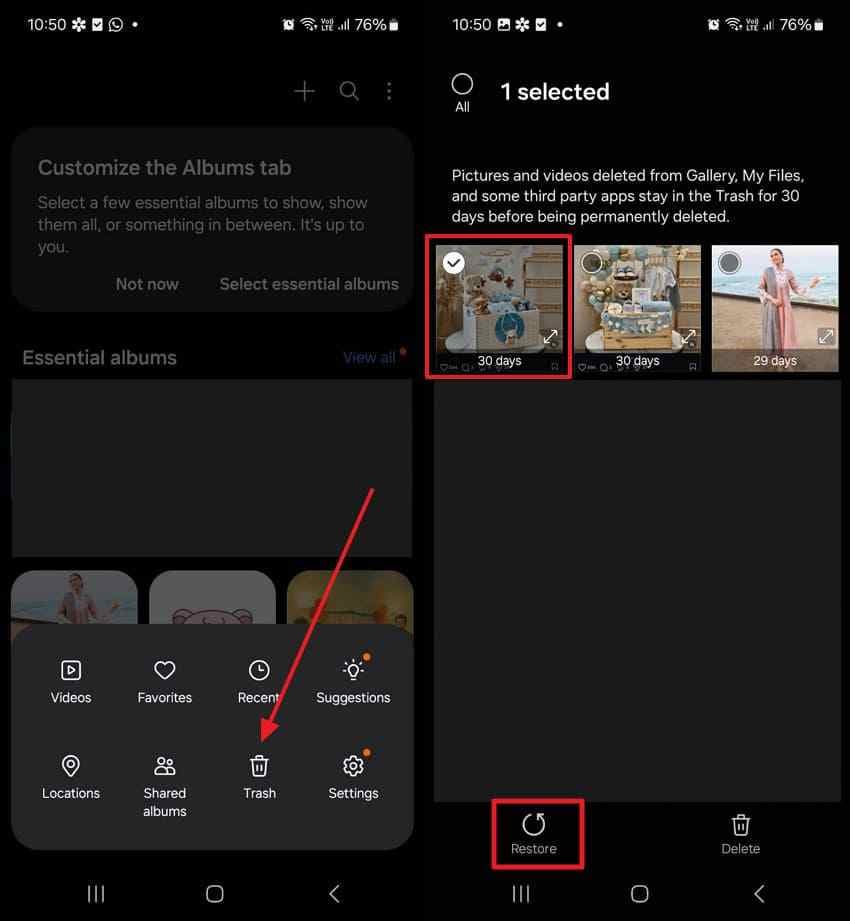
Find an Existing Backup or Shared Copy
Before trying deleted video recovery software for Android, inspect your other devices, Google Drive or other cloud folders, camera imports, USB transfers, and original messages where the video may have been sent. A messaging app may have retained a compressed copy even when the original MP4 is gone. Restore or export the best existing copy to a different location and play it before changing any storage settings.
Part 3. Best Video Recovery Apps and Software for Android Compared
The best video recovery app for Android depends on whether it restores an existing saved copy, scans phone storage or scans a removable card from a computer. These four options serve different needs; none can guarantee the return of a permanently deleted original video. The comparison below is based on current developer descriptions and official workflows, not an invented hands-on recovery benchmark.
| Tool | Best for | Video recovery without root | Source it can use | Free entry point |
| DiskDigger for Android | Rooted-phone scans; basic photo searches on non-rooted phones | No for deleted video scanning, per the developer | Accessible phone storage; deeper scan with root | Free version; optional Pro upgrade |
| Dumpster | Restoring videos retained after prior setup | Yes, for eligible saved copies | Its own recycle-bin copies, not raw erased sectors | Ad-supported app; Premium options |
| Dr.Fone Data Recovery (Android) | Supported phone, cloud-backup and broken-phone workflows | Depends on the chosen recovery mode and phone | Eligible Android devices, Google Drive or supported broken phones | Free scan and preview; check export terms |
| Wondershare Recoverit | Deleted video files on portable microSD cards | Not applicable: it scans a card on a PC or Mac | Removable, computer-detectable microSD card | Free scan and preview; export limits may apply |
Quick choice: Already deleted a video from a non-rooted phone's internal storage? Check Trash and backups before installing any scanning app. Deleted it from a portable microSD card? Go to Recoverit's computer-based SD card recovery steps after protecting the card.
DiskDigger for Android

Best for: Android users who understand the difference between a basic, no-root photo search and a full scan on a rooted device. For deleted videos, DiskDigger's developer explicitly requires root access; this is not a reliable no-root video recovery recommendation.
DiskDigger offers scanning on the phone, but its official Android guide distinguishes Basic Scan from Full Scan. Basic Scan can run without root and may surface photo thumbnails or cached images. Full Scan requires root, and the developer specifically states that recovering videos requires a rooted device, even with the free version.
Key Features
- Two scan modes: Basic photo scanning without root; partition-level Full Scan on supported rooted devices.
- File-type selection and filtering: Select target formats on the supported scan path and filter found items by size or type.
- Selective recovery: Choose discovered files and export through supported share destinations or save them to another location.
- Free and Pro editions: The free edition covers supported photo/video functions; Pro adds other file types and FTP export, subject to root requirements.
Pros
- Clearly documented differences between the free/basic and rooted/full workflows.
- Filtering can help narrow down a crowded list of scanned items.
- Can send results to another app or location instead of writing them back to the same storage.
Cons and Limitations
- Actual deleted video recovery requires root, according to the developer; a no-root scan may only display cached photos or thumbnails.
- Rooting or bootloader unlocking may erase data or create risks and does not guarantee video recovery.
- Encrypted, fragmented or overwritten video data may remain unrecoverable even with root.
Pricing and Free Access: A free Android edition and a separate Pro edition are available. Check the current Google Play listing for region-specific charges; avoid assuming that buying Pro removes the root requirement for videos.
Our Take: DiskDigger merits inclusion because it has a documented scanning workflow, but it should not be labeled the best app to recover deleted videos on an unrooted Android phone. For a portable microSD card, its own FAQ recommends scanning the card through a computer; do not root the phone just to recover card footage. See the official Android FAQ.
Dumpster Photo and Video Recovery

Best for: People who want an Android recycle bin for future accidental deletions, provided Dumpster was installed, configured and permitted to save the relevant media before the loss.
Dumpster works differently from a deep recovery scanner. It restores supported photos and videos that it has already retained. Its official Google Play listing clarifies that files deleted before setup do not suddenly appear in Dumpster's recycle bin. That timing distinction is vital if someone is installing an app only after a video disappears.
Key Features
- Recycle-bin retention: Browse supported items that Dumpster successfully saved and restore eligible photos or videos.
- No-root operation: Its backup-and-restore workflow does not require rooting the Android device.
- Premium cloud backup: Optional cloud retention for supported photos and videos.
- Privacy and convenience extras: Premium app lock, custom themes and an ad-free experience, subject to the current subscription.
Pros
- Simple restore process when an intact copy is already present in its recycle bin.
- No need to perform risky low-level scans or root the phone to use retained copies.
- Optional cloud backup helps add another layer of protection for future media loss.
Cons and Limitations
- Cannot restore a video deleted before Dumpster was installed and configured unless another accessible copy exists.
- Protection depends on Android permissions, background behavior, file location and actual retention.
- It cannot rebuild deleted internal-storage video sectors or recover permanently removed Dumpster copies by itself.
Pricing and Free Access: The Google Play listing identifies ads and in-app purchases. Cloud backup, app lock, themes and ad-free use are Premium features; pricing varies by market and offer.
Our Take: Dumpster is a useful future-loss safety net, not a rescue download for a clip that vanished before you installed it. If the file disappeared already, check Google Photos and your phone's native Trash first; if it was on portable microSD storage, avoid further writes and use a card reader.
Dr.Fone Android Data Recovery
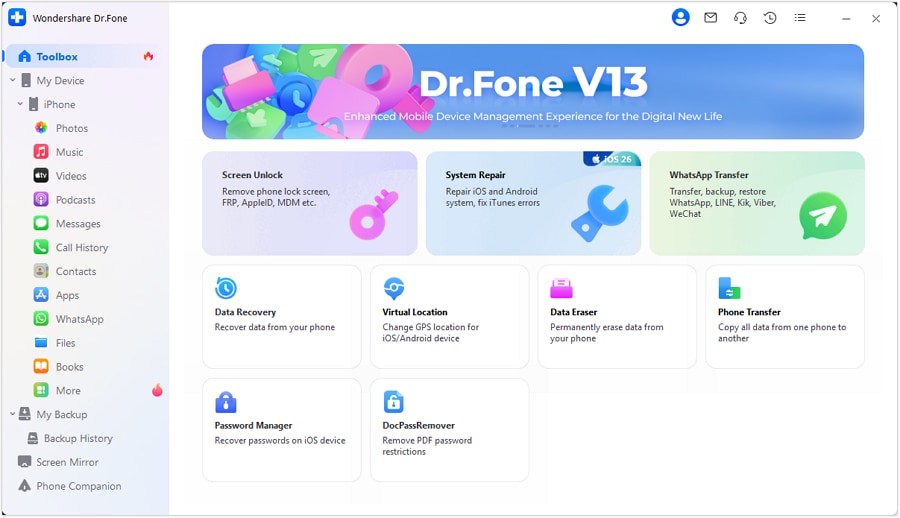
Best for: People willing to use a computer to evaluate a supported Android-phone recovery route, an existing Google Drive backup or an eligible broken-device extraction workflow before paying for an export.
Dr.Fone focuses on phone-oriented recovery rather than removable-disk scanning. Its official Android recovery overview lists several recovery sources and file categories, including videos. However, phone models, Android versions and recovery modes affect which data can actually be accessed. A no-root option for cloud backups or a supported broken-phone path does not establish raw, no-root access to all deleted internal videos.
Key Features
- Multiple recovery routes: Options for supported phone scanning, Google Drive data and selected broken-phone situations.
- Video and other file categories: Depending on the mode, it can look for eligible videos, photos, messages and other supported data types.
- Scan and preview: The vendor offers free scanning and preview of available results before selecting files for export.
- Selective computer export: Save supported recovered items to a computer, rather than returning them directly to potentially affected phone storage.
Pros
- More directly designed around eligible Android phones than Recoverit's removable-card workflow.
- Separate recovery sources help users distinguish existing cloud backups from direct phone scanning.
- Preview-before-export can help establish whether the specific video appears in supported results.
Cons and Limitations
- Compatibility is specific to model, system version, type of loss and recovery route; not every Android phone/video combination is eligible.
- A USB connection does not bypass Android encryption or guarantee retrieval after permanent deletion.
- Trial preview is not equivalent to a free unlimited export; confirm license and supported options before purchase.
Pricing and Free Access: Free scanning and preview are advertised. Export and full-function access may require a paid license; review current prices and conditions on the official product page rather than relying on a fixed price quoted in an old roundup.
Our Take: Dr.Fone is the more relevant option to investigate when a phone-specific recovery method is required. First verify that the exact device, Android version, video file type and recovery mode are supported. Avoid factory reset, bootloader unlocking or other irreversible changes simply to make a recovery tool run.
Recoverit for Removable Android Memory Cards
Recoverit scans supported memory cards connected to a Windows PC or Mac for lost MP4 and other video files. Preview eligible results for free, then recover your selected videos to a different drive—all without rooting your phone.

Best for: Videos deleted from a portable microSD card that a Windows PC or Mac can detect through a card reader, including cases involving accidental deletion, formatting or missing folders on a logically damaged but readable card.
Unlike the phone apps above, Wondershare Recoverit Memory Card Recovery works on computer-readable memory cards. That makes it relevant when Android recorded the lost footage to a removable card, but not for raw scanning of encrypted internal phone storage or a card adopted as internal storage.
Key Features
- Dedicated SD Card Recovery: Select a connected SD or microSD card rather than scanning the phone's inaccessible internal storage.
- Scan and file filtering: Search detected storage for lost files and narrow results by file type, name, size or location where available.
- Video preview: Preview supported recovered footage to check likely content before committing to export; preview availability and duration depend on the edition.
- Choose a safe destination: Recover selected videos to a different computer drive to avoid overwriting the original card.
Pros
- Matches an actionable, defined scenario: a portable microSD card visible to the computer.
- Offers a structured select, scan, preview and recover workflow without rooting the Android phone.
- Can help recover multiple video clips and other supported files from the same card.
Cons and Limitations
- Requires a Windows PC or Mac plus a readable portable card; it is not a direct Android APK for deleted internal-memory videos.
- Cannot decrypt adopted internal-storage cards or reconstruct video data that has been overwritten.
- Export availability and free recovery allowance depend on the current edition and license.
Pricing and Free Access: Recoverit offers free scanning and preview, with limited free recovery and paid options. Check the current official download and license details before exporting.
Our Take: Among these options, Recoverit is the most directly relevant desktop video recovery software for an Android portable SD card. If that describes your lost footage, stop using the card and follow the recovery steps below. If the video was stored only in phone memory, do not download Recoverit expecting it to scan deleted Android sectors.
Part 4. Recover Deleted Android Videos From a Portable Memory Card
This is the desktop software path for people who removed videos from a portable Android microSD card, formatted the card, or lost folders while the card still appears in a computer. It is particularly relevant to readers searching for software to recover deleted videos from an Android phone when the phone saved those files on removable media.
Prepare the Card Without Overwriting Videos
First verify that the missing videos were on a removable portable microSD card, not the phone's internal or adopted storage. Stop filming and downloading to the card. Power off or safely eject the card, then use a compatible reader with a Windows PC or Mac. If the computer asks to format, repair, or initialize the card, cancel that request. Repeated disconnects, overheating, visible damage, or total non-detection call for a professional assessment rather than repeated scans.
Scan and Recover With Wondershare Recoverit
Recoverit is a suitable next step once a reader detects the portable card reliably. Use its SD Card Recovery workflow on a Windows PC or Mac while keeping the original card unchanged.
Step 1. Choose SD Card Recovery. On the computer, open Recoverit and select SD Card Recovery. Choose the removable card by its displayed identity and capacity, not the computer's system drive.
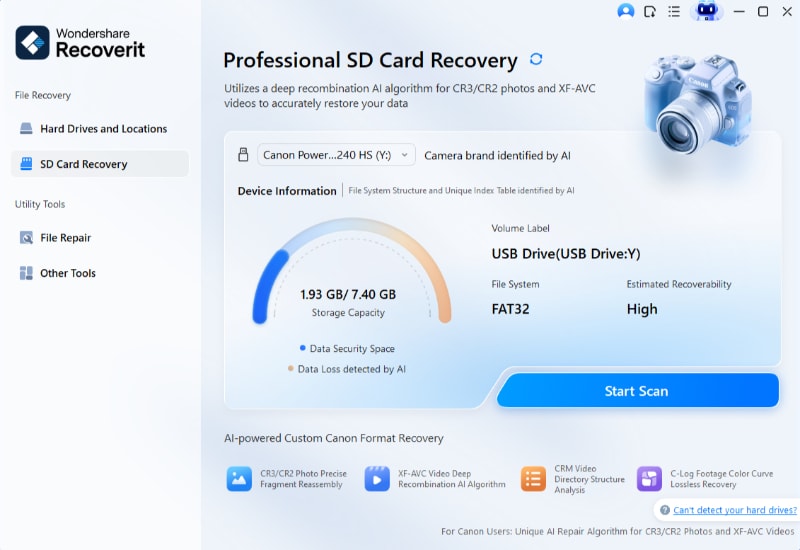
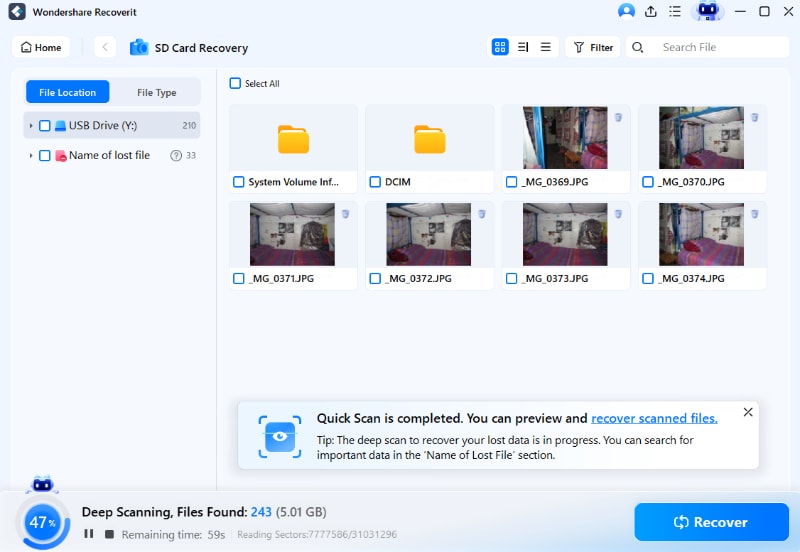
Step 2. Scan and filter for video files. Start the scan and keep the reader connected. Search or filter the results for likely video formats such as MP4, MOV, 3GP and for folders such as DCIM. Allow enough time for the scan to examine the card; file names and folder paths may not survive all deletion or formatting scenarios.
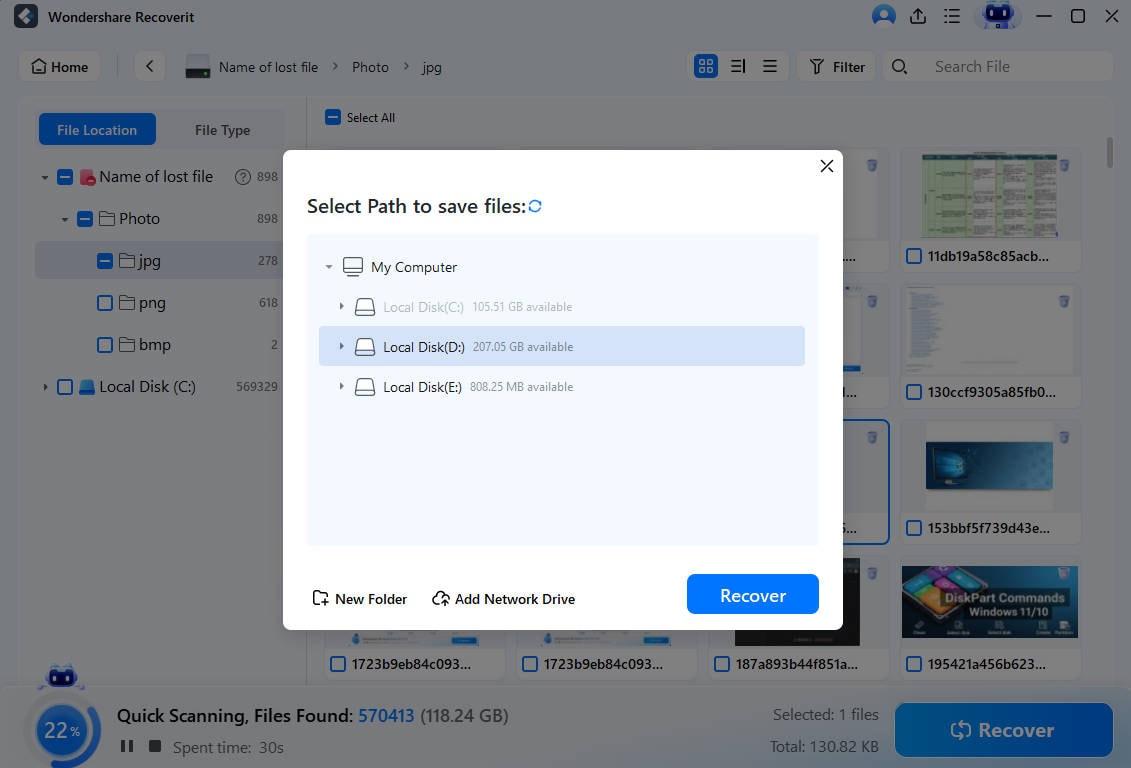
Step 3. Preview and recover to another drive. Preview supported files where possible, select the missing videos, and click Recover. Save them to the computer or a second healthy external disk, never to the same microSD card. Then open several recovered videos to confirm that their picture and sound are usable.
Ready to try a card scan? If the missing videos were on a portable microSD card and your computer detects it, open the official Recoverit product page, select the installer for your computer, and test the scan. The available scanning and preview options help you assess likely recoverable files before export; free-version export limits depend on the current edition.
For card-level troubleshooting and adopted-storage exceptions, use the focused guide to recover deleted files from an Android SD card. Wondershare's current Recoverit Windows user guide documents the SD Card Recovery screen, scan and export workflow.
Part 5. Why Android Video Recovery Sometimes Fails
Search results often promise to restore any permanently deleted video, but the outcome is controlled mainly by storage access and the data still available, not by the number of apps you install. Understanding the failure mode can protect the remaining files and help you choose the next step.
Deleted Files, Encrypted Storage, and Overwriting
- The file was permanently removed from Trash: The retained copy may no longer exist; check another backup rather than repeatedly emptying or cleaning storage.
- The file was on modern internal Android storage: Android uses encryption and storage-access controls. Apps generally cannot treat a USB-connected phone like a raw unencrypted hard drive; see Android's file-based encryption documentation.
- The portable card was heavily reused: Newly recorded videos may overwrite older data. No software can reconstruct bytes that are no longer present.
- The card was formatted as adopted storage: Its original phone and encryption state matter. Do not initialize it as a portable card for convenience.
- The card is physically unstable: Stop if it disappears, heats up or cannot be detected consistently; an ordinary software scan is not a substitute for hardware recovery.
What to Do if a Recovered Video Will Not Play
First confirm that the exported file is not zero bytes and that the video really was recovered from the correct storage. Try a current player that supports its format, inspect another original copy, and compare file size with your expectations. A broken MP4 container, a partially overwritten recording and an unsupported codec are different problems.
For a file that exists but is corrupted, consult the Recoverit video recovery overview for retrieval scenarios and a separate dedicated video-repair workflow if needed. Keep the damaged original on a healthy drive and work from a copy. A repair tool cannot recreate entirely missing video data.
Conclusion
The best video recovery software for Android depends on where the footage was stored. For recently deleted phone videos, start with Google Photos, Files by Google or the phone's Gallery Trash. Among the apps, DiskDigger needs root to scan deleted videos, while Dumpster can restore only previously retained files. A portable, computer-readable microSD card is where desktop software such as Recoverit is a practical choice: protect the card, scan it, preview what remains and export recovered clips to a different drive. Avoid purchasing or installing tools that cannot access your particular storage.
FAQ
-
What is the best app to recover deleted videos on Android?
Use Google Photos or your device's built-in Trash first if the video is still retained. DiskDigger requires a rooted Android device for deleted-video scanning, and even then cannot guarantee a complete original from encrypted or overwritten storage. For videos lost from a portable microSD card, a computer-based scan may be more appropriate. -
Can I recover permanently deleted videos from an Android phone without root?
If a backup or retained copy exists, yes: restore it without root. If the original video was permanently deleted from encrypted internal storage and no copy survives, installing a no-root recovery app is unlikely to guarantee retrieval. Avoid rooting or unlocking the bootloader without considering data-loss risks. -
Does Recoverit have an Android APK for video recovery?
The Recoverit workflow described here is Windows or Mac desktop recovery from removable, computer-detectable storage. It does not scan deleted sectors of a phone's encrypted internal memory through an Android APK. -
Can I use video recovery software for Android on a formatted SD card?
A card configured as portable storage may be scannable after formatting if it is detectable through a reader and relevant data has not been overwritten. Do not reformat it again or save new files. An adopted internal-storage card has different encryption limitations. -
Is there a free deleted video recovery app for Android?
Google Photos, Files by Google and some manufacturer Gallery Trash features let you restore retained videos without paying. DiskDigger offers free basic photo scanning but requires root for video scanning; Dumpster has an ad-supported bin and paid extras. Free app availability does not imply successful recovery of permanently deleted full-resolution files. -
Why does an Android recovery app show thumbnails but not my original video?
Thumbnail caches, previews and existing files can remain visible after the full video data was deleted or overwritten. A discovered preview alone is not proof that a complete, playable MP4 can be reconstructed. -
Should I connect the Android phone to a PC or remove its SD card?
If the lost video was on a portable microSD card, safely remove the card and use a stable card reader so desktop software can select the media. If the video was on phone internal or adopted storage, a USB connection does not provide unrestricted access to deleted raw sectors; check backups and phone-side recovery features instead.


