

 TL;DR:
Windows 10 and 11 protect against permanent data loss through automated, incremental backups that utilize File History for continuous personal folder protection and legacy Backup and Restore for full system images.
● The underlying Volume Shadow Copy Service enables the system to capture point-in-time snapshots of open documents and active programs without forcing you to close them during the backup process.
● Because system restore points solely revert system files and registry settings, you must explicitly assign an external USB or network location to back up critical user data.
● If a storage drive becomes corrupted or files are deleted prior to the next scheduled backup, you must use sector-level recovery software like Wondershare Recoverit to retrieve the unbacked data.
Ask AI for a summary
 ChatGPT
 Perplexity
 Gemini
 Claude
 Grok
Grok
Windows Backup is a built in way to protect your files and system from accidental deletion, hardware failure, malware, or software issues. By saving copies of your important data to another drive or network location, you can restore what you need when something goes wrong. Modern versions of Windows include several backup tools, such as File History and system image backups, that let you preserve personal files, apps, and system settings. Understanding how Windows Backup works, what options you have, and how to combine backup with professional data recovery software helps you build a safer and more reliable protection plan for your PC.
Try Recoverit to Perform Data Recovery
 Security Verified. 3,591,664 people have downloaded it.
In this article
What Is Windows Backup
Windows Backup refers to the collection of built in tools in Windows that create extra copies of your files and system. These copies are stored on another drive, partition, or network location so that you can restore them if your main drive fails or data is deleted.
In Windows 10 and Windows 11, the core backup tools include File History, Backup and Restore (Windows 7), and system image backups. Together they provide options ranging from continuous protection for personal folders to full disk images that capture Windows, installed apps, and system settings.
The goal of any data backup is to reduce the risk of permanent loss. When you configure Windows Backup properly, regular copies of your documents, photos, and system state are made in the background so that you can quickly roll back to an earlier version if something goes wrong.
How Does Windows Backup Work
Windows Backup works by copying your data from its original location to another storage device or location on a recurring schedule. Once you select what to back up and where to store it, Windows runs automatic jobs that update your backups with new and changed files.
Under the hood, the backup tools rely on technologies like the Volume Shadow Copy Service (VSS), which takes point in time snapshots of files even while they are in use. This allows Windows to capture consistent copies of system files, open documents, and program data without forcing you to close everything first.
Core steps in a Windows backup process
- Choose a destination, such as an external USB drive, secondary internal disk, or network share, for your PC backup.
- Select which data to protect, ranging from specific folders to a complete system image of the entire drive.
- Set up a schedule so that Windows 10 backup or Windows 11 backup runs automatically (for example, hourly or daily).
- Windows performs incremental backups, copying only new or changed data after the first full backup to save time and space.
- When needed, you use the restore tools to browse backups, select files or images, and bring them back to your PC.
Where Windows backups can be stored
| Backup destination | Typical use case |
|---|---|
| External USB hard drive or SSD | Simple and affordable local backup for home and small office users. |
| Network location (NAS or server) | Centralized backup for multiple PCs and protection against single device failure. |
| Secondary internal drive or partition | Fast backups within the same machine, useful but less safe than an external device. |
What are the Types of Windows Backup
Windows offers several types of backup so you can match protection to your needs. Some methods guard against accidental file edits, while others let you restore the entire system after a major crash.
File-level Windows backup options
File-level tools focus on individual folders and documents instead of the entire operating system. They are ideal for day to day protection of personal data.
- File History continuously monitors selected folders such as Documents, Pictures, Desktop, and libraries. It creates versions of modified files so you can roll back to earlier copies or restore items you deleted by mistake.
- OneDrive and cloud sync are not traditional backups but offer additional protection by syncing your files to the cloud. Combining File History with cloud storage improves resilience.
- Manual copy-based backups involve periodically copying critical folders to an external drive. While simple, they rely on you remembering to run them and lack automation.
System-level Windows backup options
System-level backups capture the operating system, installed programs, and configuration so you can recover from serious issues like drive failure or severe malware infection.
- Backup and Restore (Windows 7) is still available in Windows 10 and Windows 11 as a legacy tool. It can create system images and scheduled backups of libraries and system folders, allowing full or partial restores.
- System image backup creates an exact snapshot of the system drive, including the Windows installation, boot files, apps, and settings. Restoring from a system image can return your PC to a known working state.
- System Restore and restore points are not full backups but can roll back system files and registry settings to an earlier state. They are useful for undoing bad drivers or updates but do not protect all user data.
Practical Tips for Windows Backup
Good backup hygiene matters as much as the tools you use. A poorly configured backup can leave important data unprotected when disaster strikes.
Best practices for setting up Windows backups
- Use at least two backup locations. Keep one backup on an external drive and another in the cloud or on a network device to avoid a single point of failure.
- Schedule backups automatically. Configure File History and other backup jobs to run without manual action so new files are always protected.
- Include all critical folders. Add custom folders outside the standard libraries to File History, such as project directories stored on non-default paths.
- Test your restore process. Periodically restore a few files to verify that your backups are usable and that you know the recovery steps.
- Monitor disk space. Ensure your backup destination has enough capacity, and adjust retention settings if it starts to fill up.
Common mistakes to avoid with Windows backups
- Relying only on a single external drive that stays connected and can be damaged or infected along with your PC.
- Assuming that system restore points or cloud sync alone equal a complete backup strategy.
- Never updating or revisiting your backup settings after major changes like adding a new drive or moving your libraries.
- Ignoring alerts or error messages that indicate that scheduled backups are failing or disabled.
How to Use Recoverit to Recover Lost Data
Even with a carefully configured Windows Backup routine, data loss can still happen if files are deleted before the next backup, a drive becomes corrupted, or a backup job fails silently. Recoverit by Wondershare complements built in Windows system image and File History tools by scanning your storage directly for lost data, giving you another chance to retrieve important files. You can learn more and download the software from the Recoverit official website.
Key Features Offered by Recoverit
- Recover deleted files and lost data from HDDs, SSDs, USB drives, SD cards, and other common storage devices on Windows.
- Support for hundreds of file types, including Office documents, photos, videos, audio files, archives, and emails.
- User friendly interface with advanced and deep scan modes, plus built in file preview so you can confirm content before recovery.
Step-by-Step Guide on How To Recover Lost Data
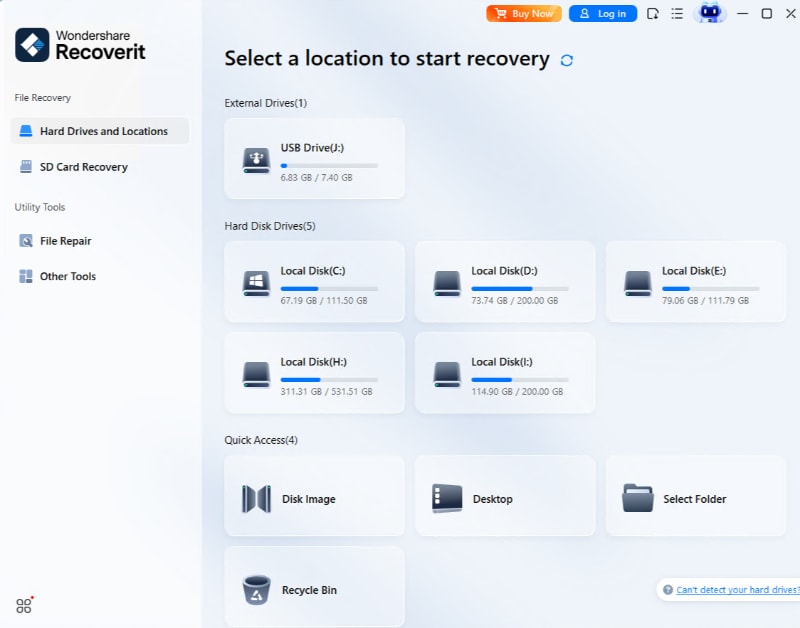
1. Choose a Location to Recover Data
Launch Recoverit on your Windows PC and review the list of available disks and locations. Select the specific drive, partition, external USB device, or folder where your files were lost so the program can target the right area for scanning.
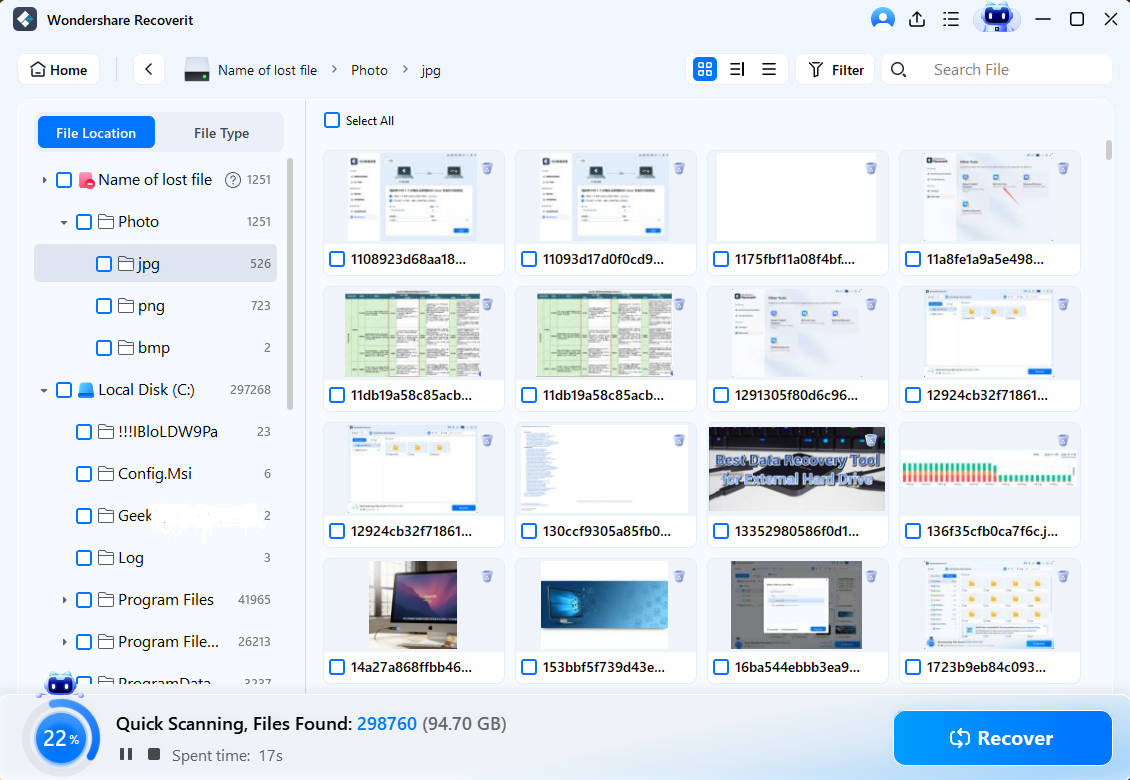
2. Deep Scan the Location
Start the scan and let Recoverit perform a thorough sector by sector analysis of the selected storage. As it runs, you will see recoverable files appear in real time, grouped by path, type, or time, and you can pause or stop the scan if you already find what you need.
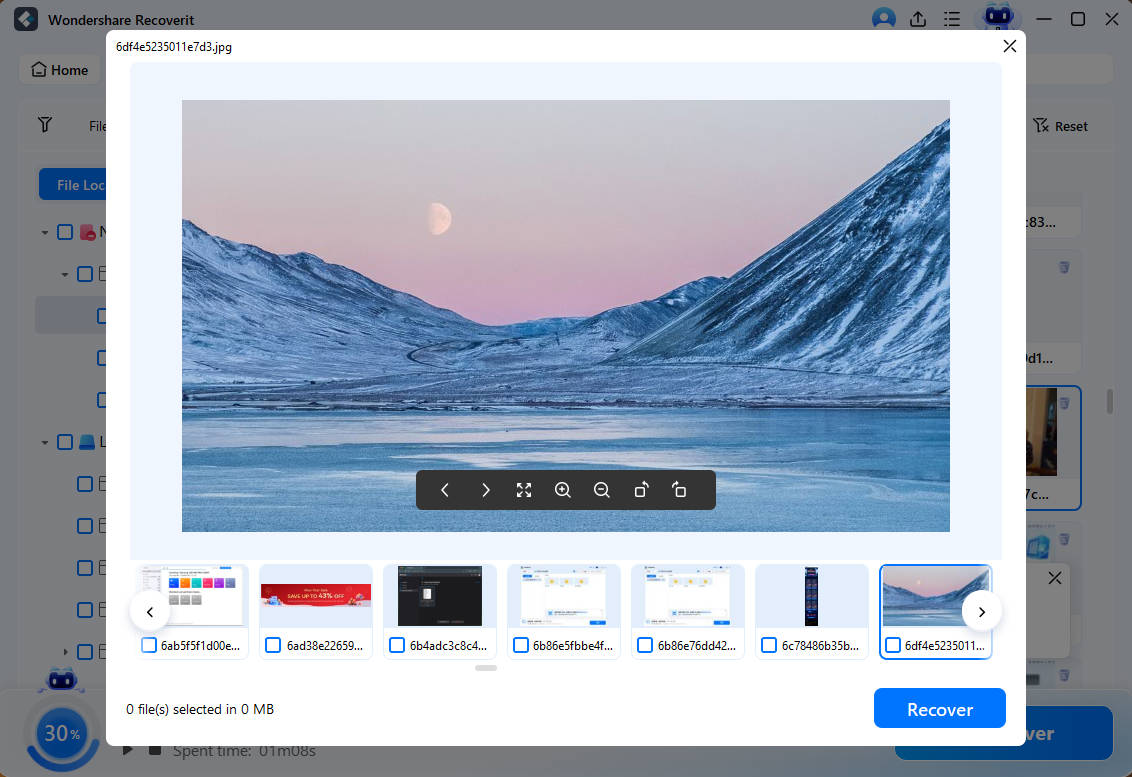
3. Preview and Recover Your Desired Data
When the scan is complete, browse through the results, use filters or search to narrow them down, and click files to preview supported documents, photos, or videos. Finally, select your desired items, choose a different drive as the save destination, and click Recover to restore your files safely.
Conclusion
Windows Backup gives you several built in methods to safeguard your personal files and system state, from File History to full system images. When configured correctly and run on a regular schedule, these tools greatly reduce the risk of losing important documents, photos, or work after a crash or error.
However, no backup plan is perfect. If files go missing before they are backed up, or your backup fails unexpectedly, pairing Windows backup tools with a dedicated recovery solution like Recoverit offers a crucial second line of defense. By understanding how backup and recovery work together, you can keep your Windows PC resilient and your data far safer over the long term.
Next: Time Machine
FAQ
-
What is Windows Backup used for?
Windows Backup is used to create copies of your files and system so you can restore them after issues like accidental deletion, hardware failure, malware, or software problems. -
Is Windows Backup the same as File History?
File History is one component of Windows backup tools. It focuses on personal files in libraries and selected folders, while Windows also supports system image backups and Backup and Restore for full system protection. -
How often should I run Windows Backup?
You should run backups at least once a week, or more frequently if you change important files every day. Setting an automatic schedule ensures that new and modified data is always protected without manual effort.


