Crashed Computer Recovery
- Recovers inaccessible files from black-screen Toshiba laptop effectively, safely and completely.
- Supports data recovery from 500+ data loss scenarios, including computer crash, partition loss, accidental human error, etc.
- Supports 1000+ file formats recovery with a high success rate and without any quality loss.

Toshiba Laptop Black Screen or No Display? Causes and Safe Fixes

Oct 23, 2026 • Filed to: Windows Computer Solutions • Proven solutions
 TL;DR:
A Toshiba laptop black screen is frequently caused by a stuck power state, incorrect display output, or corrupted graphics drivers rather than a permanently broken display, which can often safely be resolved by forcing a restart, testing an external monitor, or booting into Safe Mode to roll back drivers.
● Connecting an external monitor quickly isolates the hardware status; an active external display points to a failed internal LCD panel or display cable, whereas no image on either screen suggests a more severe RAM, GPU, motherboard, or Windows boot failure.
● You can safely bypass temporary software glitches without restarting by pressing Windows + Ctrl + Shift + B to reset the graphics driver, or using Windows + P to verify the system is not mistakenly routing the video signal to an absent secondary display.
● If safe fixes fail, you must extract your files using a bootable USB data recovery tool before initiating a Windows reset, formatting the drive, or pursuing professional motherboard repairs to prevent permanent data loss.
Ask AI for a summary
 ChatGPT
 Perplexity
 Gemini
 Claude
 Grok
This is one of the most common ways users describe a Toshiba laptop display problem. The laptop may have power, fan noise, keyboard lights, or charging indicators, while the built-in screen stays completely black.
A black screen on a Toshiba laptop does not always mean the screen is broken. It can come from a drained battery, stuck sleep mode, low brightness, the wrong display output, a failed graphics driver, Windows startup errors, overheating, RAM issues, or a damaged LCD cable. This guide starts with the safest checks first, then moves to Windows repair, hardware diagnosis, and file recovery before any reset or reinstall.
| Official Checkpoint | Why It Matters | Official Source |
| Windows black or blank screen troubleshooting | Microsoft recommends checking connections, restarting the graphics driver, using Safe Mode, rolling back display drivers, and using Windows Recovery options when the screen stays black. | Microsoft Support: Troubleshooting black or blank screens in Windows |
| Windows display output shortcut | Windows + P helps switch projection modes when Windows sends the image to an external display instead of the built-in screen. | Microsoft Support: black screen checks |
| Windows graphics driver restart | Windows + Ctrl + Shift + B can restart the graphics driver when the system is running but the screen is black. | Microsoft Support: black screen checks |
| Toshiba and Dynabook model support | Use the official Dynabook support site for model-specific drivers, BIOS updates, manuals, warranty, and repair guidance for Toshiba-branded laptops. | Dynabook and Toshiba Support |
| Data safety before reset | Windows repair and reset options can affect apps, settings, or files depending on the selected path. Recover important data before destructive repair. | Microsoft Support: Windows recovery options |
Part 1. What Does a Toshiba Laptop Black Screen Mean?
A Toshiba laptop black screen means the computer is powered on or trying to start, but the built-in display does not show a usable image. The issue can be as simple as low brightness or the wrong display output, or as serious as a failed LCD panel, display cable, RAM, GPU, motherboard, or boot drive.
| Screen State | What It Usually Means | Safe First Test |
| Completely black but power light on | The laptop may be stuck in sleep, using the wrong display output, or failing to load the graphics driver. | Force restart, press brightness-up, press Windows + Ctrl + Shift + B, then press Windows + P. |
| Very dim image under flashlight | The LCD image may exist but the backlight is failing. | Connect an external monitor and plan screen or backlight repair. |
| Black screen after Windows logo | Windows, display driver, update, or startup files may be causing the failure. | Use Safe Mode, driver rollback, Startup Repair, or System Restore. |
| Black screen with cursor | Windows may be loaded but Explorer, display driver, or user profile startup failed. | Open Task Manager and restart explorer.exe. |
| No image on internal or external monitor | The issue may involve RAM, GPU, motherboard, BIOS, power, or severe boot failure. | Stop repeated restarts and get hardware diagnosis after protecting important files. |
Part 2. Quick Diagnosis: Why Is Your Toshiba Laptop Screen Black?
Use the table below to narrow down the cause before you try deeper fixes.
| Situation | Most Likely Cause | Safe First Fix |
| No lights, no fan, no charging indicator | Dead battery, faulty charger, or power port issue | Test another outlet and charger if available |
| Power light is on but screen is black | Stuck power state, wrong display mode, bad driver, or screen hardware fault | Force restart, Windows + P, external monitor |
| Screen is very dim with a faint image | Backlight, inverter on older models, or LCD panel issue | Use an external monitor and plan screen repair |
| Toshiba screen goes black after Windows logo | Graphics driver, failed update, or Windows startup problem | Boot Safe Mode and roll back the driver |
| Black screen with cursor | Windows Explorer, driver, or user profile problem | Open Task Manager and restart Explorer |
| External monitor works but laptop screen stays black | Internal screen, display cable, or backlight issue | Repair or replace the screen assembly |
| No image on the laptop or external monitor | RAM, GPU, motherboard, or serious Windows boot failure | Try Windows Recovery, then professional diagnosis |
| Screen goes black after a few minutes | Overheating, power plan, or failing hardware | Let it cool, clean vents, check power settings |
Part 3. Common Reasons for a Toshiba Laptop Display Problem
A Toshiba computer black screen can come from either software or hardware. The most common causes include:
- Power or battery failure: A drained battery, damaged charger, or loose DC jack can stop the display from starting.
- Stuck sleep or hibernation: The laptop may power on but fail to wake the screen correctly.
- Wrong display output: Windows may be sending the image to an external display instead of the built-in screen.
- Low brightness or disabled backlight: The laptop may be working while the panel appears black.
- Graphics driver error: A failed update or incompatible driver can make the Toshiba screen black after startup.
- Windows startup corruption: Damaged boot files or system files can block Windows from loading normally.
- Overheating: Heat can cause sudden shutdowns, blackouts, or GPU instability.
- Screen hardware failure: A broken LCD panel, backlight, or display cable can cause a blank screen on a Toshiba laptop.
- RAM, GPU, or motherboard failure: If no display appears on any screen, an internal component may need repair.
Part 4. How to Fix a Toshiba Laptop Black Screen
| Fix Level | Try These Fixes | Risk Level |
| Level 1: No data risk | Check power, charger, brightness, wake screen, force restart, drain residual power, press Windows + P, and press Windows + Ctrl + Shift + B. | Low |
| Level 2: Diagnosis | Connect an external monitor, disconnect external devices, test charger, observe indicator lights, and check for overheating. | Low |
| Level 3: Windows repair | Boot Safe Mode, restart Windows Explorer, roll back display driver, run Startup Repair, use System Restore, and uninstall recent updates. | Medium |
| Level 4: Advanced repair | Disable Fast Startup, run sfc /scannow, run DISM, update BIOS only if officially required, or repair Windows. |
Medium to high |
| Level 5: Data protection first | Recover important files before Reset this PC, reinstalling Windows, formatting, replacing hardware, or sending the laptop for service. | High if skipped |
| Level 6: Hardware service | Screen replacement, display cable repair, RAM reseat, motherboard diagnosis, GPU repair, storage replacement, or liquid damage repair. | High |
Start with the simple fixes. They are safer and often solve the issue without changing your files or Windows installation.
Fix 1-8: Try Safe No-Data-Risk Checks First
These checks do not reset Windows or delete files. Try them before Safe Mode, driver repair, or system recovery.
- Check power and charger: Connect the AC adapter firmly, test another wall outlet, inspect the cable, and confirm whether the charging light or power light turns on.
- Force restart: Hold the Power button for 10 to 20 seconds until the laptop shuts down, wait 10 seconds, then turn it on again.
- Drain residual power: Shut down, unplug the adapter, remove the battery if the model has a removable battery, hold Power for 30 to 60 seconds, reconnect power, and restart.
- Wake and brighten the screen: Press a key, move the touchpad, press Spacebar, and use the brightness-up function key.
- Restart the graphics driver: Press Windows + Ctrl + Shift + B. You may hear a beep or see the display flicker.

- Switch display output: Press Windows + P, press P again to cycle display modes, and press Enter. Choose PC screen only or Duplicate when visible.

- Test an external monitor: Connect HDMI, VGA, DisplayPort, or USB-C depending on the Toshiba or Dynabook model. If the external display works, suspect the internal screen, backlight, cable, or hinge area.

- Remove external devices and cool the laptop: Disconnect USB drives, SD cards, docks, printers, HDMI cables, and let the laptop cool for 20 to 30 minutes if overheating is possible.
Fix 9-14: Repair Windows When the Toshiba Screen Goes Black After Startup
Use these fixes when the Toshiba laptop shows the logo, starts loading Windows, then turns black after the Windows logo, after login, or after a recent update.
- Open Windows Recovery Environment: Hold Power for 10 seconds to turn off the laptop. Turn it on and interrupt startup when Windows begins loading. Repeat 2 to 3 times until recovery options appear.
- Boot Safe Mode: Go to Troubleshoot > Advanced options > Startup Settings > Restart, then press 4 or F4 for Safe Mode.

- Restart Windows Explorer: If you see a black screen with cursor after login, press Ctrl + Shift + Esc, open Task Manager, restart Windows Explorer, or run
explorer.exe. - Roll back display driver: In Safe Mode, open Device Manager, expand Display adapters, open the driver properties, and choose Roll Back Driver if the problem started after an update.
- Update or reinstall display driver: If rollback is unavailable, update the driver or uninstall the display adapter and restart. Use Windows Update, Dynabook/Toshiba support, or the graphics chip vendor as trusted sources.

- Run Startup Repair: From recovery options, choose Startup Repair to fix Windows boot problems.

- Use System Restore or Uninstall Updates: If the black screen began after an update, driver, or app install, restore to an earlier point or uninstall the latest quality or feature update.

- Disable Fast Startup: In Safe Mode, open Power Options and uncheck Turn on fast startup if repeated black screens happen after shutdown.

- Repair system files: Run
sfc /scannowfirst. If needed, runDISM /Online /Cleanup-Image /RestoreHealthfrom an elevated Command Prompt in Windows.
Part 5. Recover Important Files Before Resetting, Reinstalling, or Repairing the Toshiba Laptop
| Stop DIY When You See This | Why It Matters | Safer Next Step |
| Drive clicking or not detected | A failing HDD or SSD can get worse with repeated boot and repair attempts. | Recover files first or consult a data recovery professional. |
| Reset or reinstall is the next step | Reset and reinstall options may remove apps, settings, or files depending on the choice. | Use bootable recovery or backup the drive before continuing. |
| Repair shop will replace parts | Storage drives may be erased, replaced, or reimaged during service. | Recover or back up files before sending the laptop out. |
| Liquid damage or burning smell | Powering on can worsen corrosion or electrical damage. | Turn off power and seek professional repair. |
| External monitor works but internal screen is broken | Your system may still be usable long enough to copy files. | Back up files through the external display before screen replacement. |
If your Toshiba laptop has a black screen and you do not have a recent backup, protect your files before trying risky fixes. This is especially important before:
- Reset this PC
- Reinstalling Windows
- Formatting the drive
- Sending the laptop to a repair shop
- Replacing the internal drive
- Opening the laptop when you suspect storage damage
Windows recovery tools can be useful, but some recovery paths may remove apps, settings, or personal files depending on the option selected. A failing drive can also become worse after repeated repair attempts. That is why file recovery should come before reset or reinstall when the data matters.
How to Recover Files from a Toshiba Laptop with a Black Screen
Use this method when the Toshiba laptop cannot boot normally, the screen is unusable, or you need to protect files before reset, reinstall, formatting, hardware repair, or drive replacement. Prepare a working Windows computer, a blank USB drive, and an external storage device for recovered files.
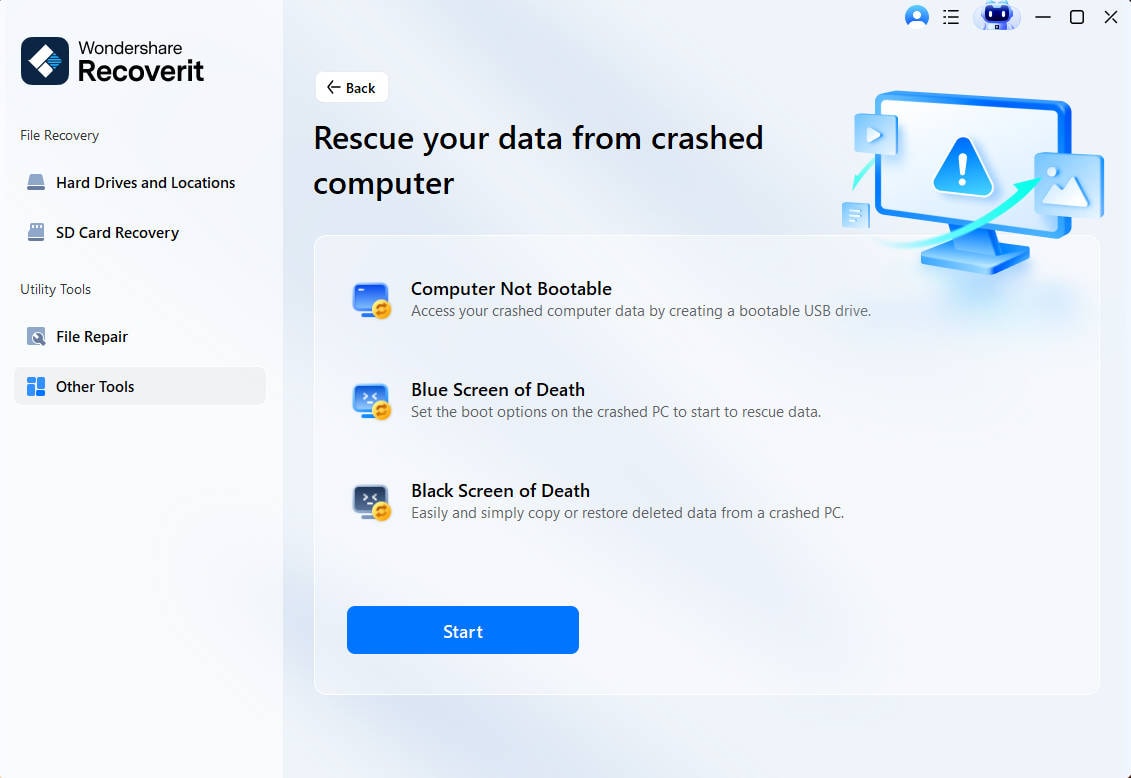
- Create bootable media: Install Recoverit on a working Windows computer, connect a blank USB drive, and create bootable recovery media from the crashed computer recovery feature.
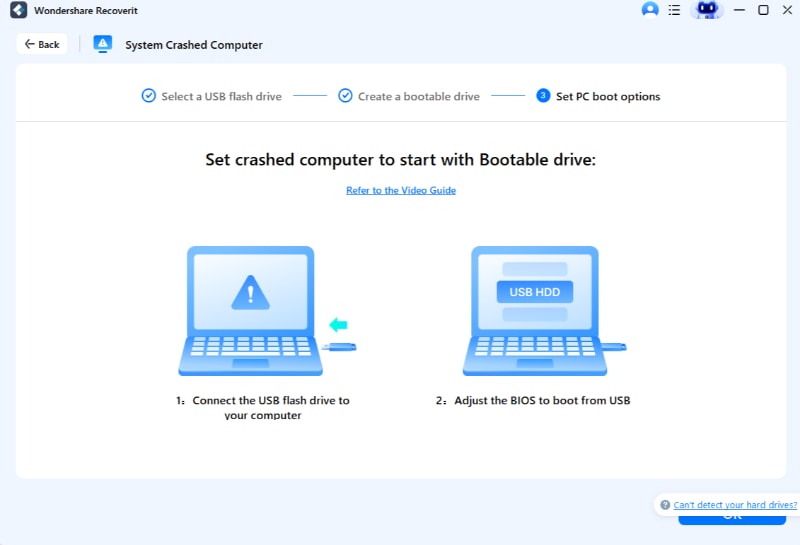
- Boot the Toshiba laptop from USB: Connect the bootable USB drive to the Toshiba laptop. Open the boot menu or BIOS/UEFI settings. Depending on the Toshiba or Dynabook model, common boot keys may include F12, F2, or Esc.
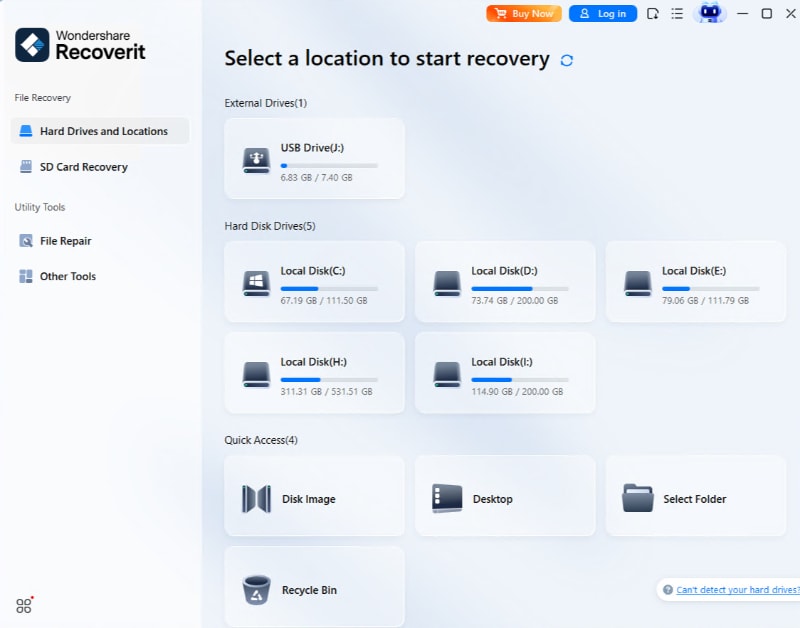
- Select the internal drive: After booting into the recovery environment, choose the Toshiba internal HDD, SSD, NVMe SSD, or affected partition.
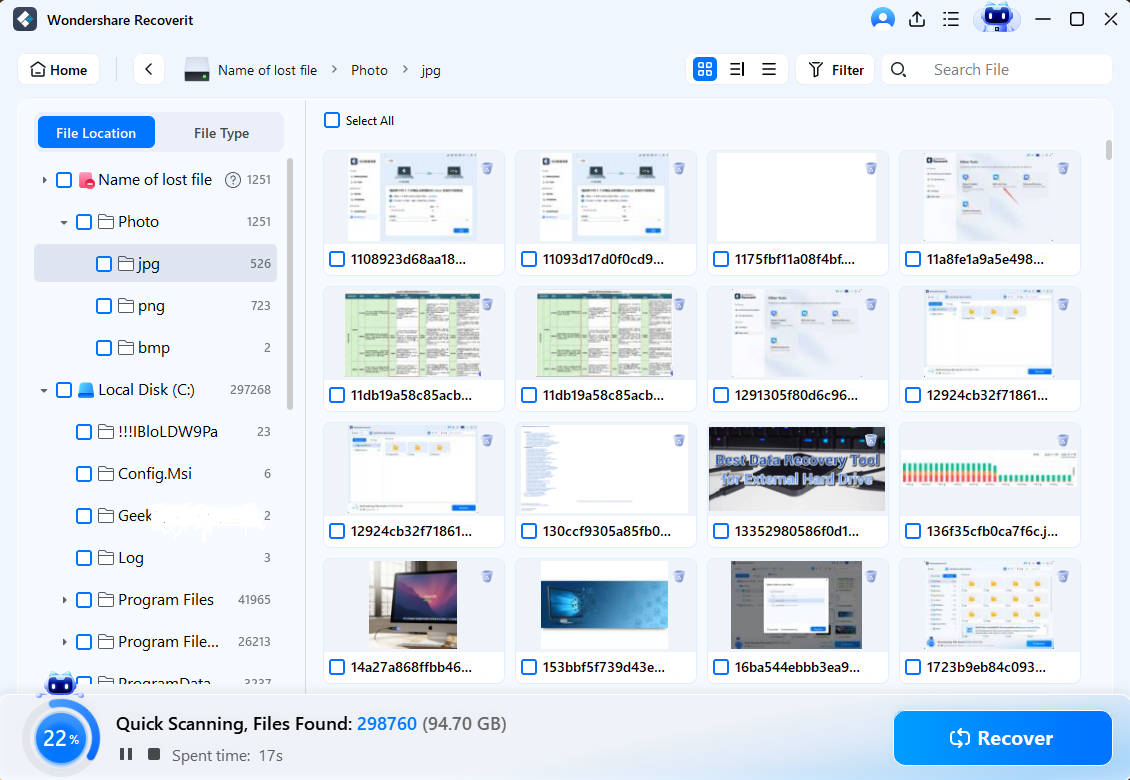
- Scan and preview files: Scan for documents, photos, videos, audio, archives, email files, and other important data. Preview recoverable files when available.
- Recover to another drive: Save recovered files to an external drive, not to the same Toshiba internal drive being scanned.
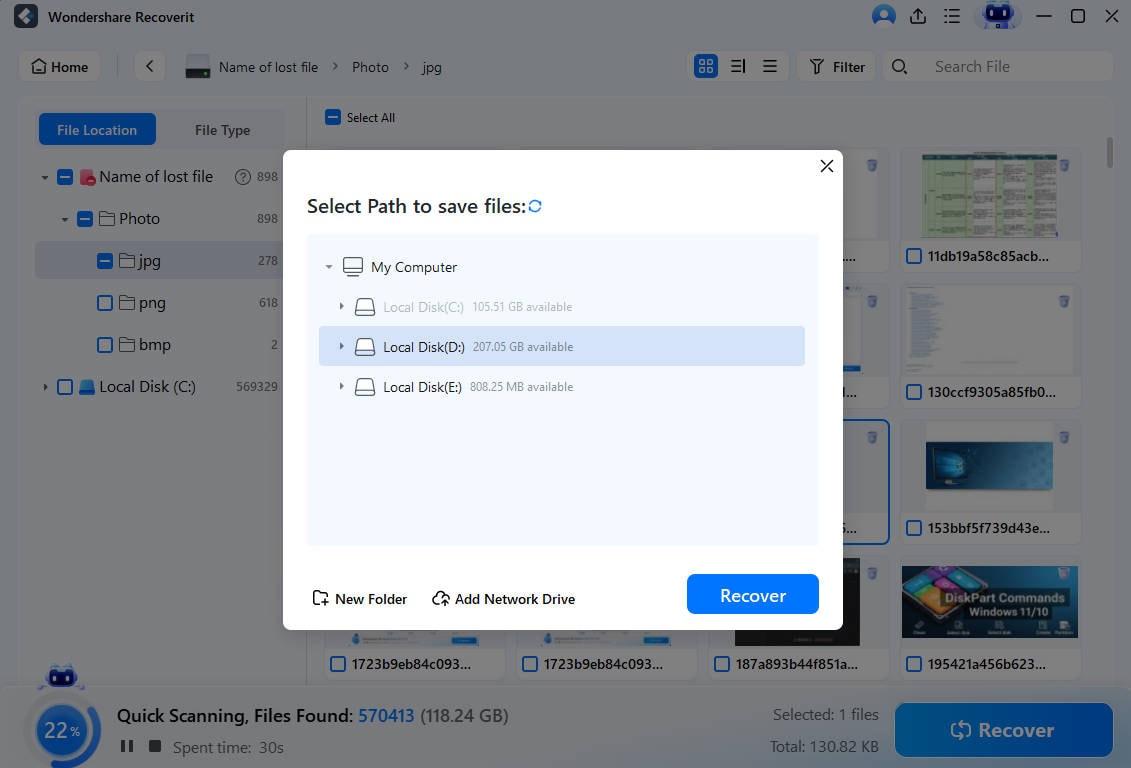
- Verify before repair: Open recovered files on another computer before resetting Windows, reinstalling the system, or sending the laptop for service.
Recoverit can help recover local files from accessible storage devices, but it cannot repair a broken laptop screen, motherboard, GPU, RAM, or physically damaged storage device.
Part 6. What Does "Toshiba Black Screen of Death" Mean?
The phrase Toshiba black screen of death usually describes a severe black screen problem where the laptop cannot start Windows or display anything useful. It is not one single error. It can be caused by a failed Windows update, corrupted system files, a broken graphics driver, bad RAM, a failing GPU, a damaged motherboard, or a storage problem.
If the black screen of death appears only after Windows starts loading, try Safe Mode, driver rollback, Startup Repair, System Restore, and file recovery before reset. If there is no image on the laptop screen or an external monitor, stop repeated restart attempts and get a hardware diagnosis.
Part 7. When Should You Repair or Replace the Toshiba Laptop Screen?
The external monitor test is the fastest way to decide whether the problem is mainly the built-in display or a deeper system failure.
| Test Result | Likely Problem | Recommended Action |
| External monitor works, laptop screen black | LCD panel, backlight, display cable, hinge cable, or screen connector issue. | Back up files through the external monitor, then repair or replace the internal display assembly. |
| Faint image appears with flashlight | Backlight or panel lighting failure. | Screen repair is likely needed. |
| Screen flickers when lid moves | Loose or damaged display cable near the hinge. | Stop moving the lid repeatedly and get cable or hinge-area repair. |
| Cracked, bleeding, or physically damaged panel | LCD panel damage. | Replace the screen and recover data first if repair service may access the drive. |
| No display on internal or external screen | GPU, RAM, motherboard, BIOS, power, or severe boot issue. | Get professional diagnosis after protecting important files. |
| Storage drive makes noise or is not detected | Possible HDD or SSD failure. | Prioritize data recovery before repeated repairs or reinstall attempts. |
Part 8. How to Prevent Toshiba Black Screen Problems
To reduce the chance of another Toshiba laptop no screen display issue:
- Keep Windows and display drivers updated from trusted sources.
- Avoid interrupting Windows updates or BIOS/UEFI updates.
- Shut down or restart properly instead of holding the Power button unless the laptop is frozen.
- Use the correct charger for your Toshiba or Dynabook model.
- Keep air vents clean and use the laptop on a hard, flat surface.
- Avoid pressure on the lid and do not carry the laptop by the screen.
- Back up important files regularly to an external drive or cloud storage.
- Create recovery media before a serious system failure happens.
Conclusion
A Toshiba laptop black screen can be caused by a simple display output problem, low brightness, stuck sleep state, or graphics driver error. It can also indicate a failed screen, display cable, RAM, GPU, motherboard, storage drive, or Windows startup problem. Start with low-risk checks such as power, brightness, force restart, Windows + Ctrl + Shift + B, Windows + P, external monitor testing, and Safe Mode.
If Windows repair is needed, try driver rollback, Startup Repair, System Restore, uninstalling recent updates, Fast Startup changes, and system file repair before reset or reinstall. If reset, reinstall, formatting, hardware replacement, or repair service is next, recover important files first. Recoverit Windows Data Recovery can create bootable media and recover files from an accessible Toshiba drive before destructive repair steps.
People Also Ask
-
Why is my Toshiba laptop on but the screen is black?
The laptop may be stuck in sleep, using the wrong display output, running with very low brightness, failing to load the graphics driver, or experiencing internal display hardware failure. Start with force restart, brightness keys, Windows + Ctrl + Shift + B, Windows + P, and an external monitor test. -
How do I know if my Toshiba screen is broken?
Connect an external monitor. If the external monitor works but the built-in screen stays black, the issue is likely the laptop LCD panel, backlight, display cable, hinge cable, or screen connector. -
What shortcut fixes a black screen on Windows Toshiba laptop?
Press Windows + Ctrl + Shift + B to restart the graphics driver. Press Windows + P to switch projection output if Windows is sending the display to another monitor. -
Can I fix Toshiba black screen without losing files?
Yes, try non-destructive fixes first: force restart, brightness, display output, external monitor, Safe Mode, driver rollback, Startup Repair, System Restore, and uninstalling updates. Avoid reset or reinstall until files are backed up or recovered. -
Can Recoverit recover files from a Toshiba laptop with black screen?
Recoverit can help recover local files if the Toshiba internal drive is accessible. It can create bootable recovery media on another computer, boot the affected laptop, scan the drive, and save files to an external storage device. -
When should I stop trying to fix the black screen myself?
Stop DIY attempts if there is liquid damage, burning smell, severe overheating, drive clicking, no display on any monitor, or repeated boot failure. Protect important files first and seek professional diagnosis.
Computer Troubleshooting
- Win System Crash
- Crack Bios Password
- Fix Run Dll Errors
- Fix Taskbar Disappeared Error
- Fix BootMGR Image Corrupt
- MBR Errors Fixed
- Windows Tips
- How to Edit DLL Files
- How to Test Hard Drive Speed
- Bootcamp Windows 10 No Sound Issue
- Download iCloud on PC
- Difference between File Systems
- Fix Computer Overheat
- Computer Problems
- Best Bad Sector Repair Tools
- Audio Not Working in Windows 10
- Fix Windows 10/11 Error Code 0xc000014c
- Fix Windows 10 Error Code 0xc0000034
- SMART Status Bad Error
- Fix Grub Loading Error
- Remove Admin Password
- Blue Screen Errors
 > Resources > Windows Computer Solutions > Toshiba Laptop Black Screen or No Display? Causes and Safe Fixes


Recoverit Editorial Team
chief Editor