 TL;DR:
To recover lost data from a pen drive, immediately stop using the device to prevent overwriting, and either restore from a backup or use recovery tools like Recoverit or Windows File Recovery, ensuring you save the extracted files to a completely different healthy disk.
● Cancel any operating system prompts asking to format a RAW drive, and abandon software scans in favor of professional evaluation if the USB shows 0 bytes, repeatedly disconnects, or exhibits physical damage.
● Never run CHKDSK, DiskPart clean, or initialization commands to fix missing files, because these utilities write changes directly to the source disk and can permanently destroy recoverable data.
● If using the free Windows File Recovery command-line tool, you must use the Extensive mode parameter to successfully scan USB drives formatted as FAT, FAT32, or exFAT.
Ask AI for a summary
 ChatGPT
 Perplexity
 Gemini
 Claude
 Grok
A pen drive may still contain recoverable files after accidental deletion, formatting, or a file-system error. What you should do depends on whether the files are actually deleted, merely hidden, or inaccessible because the drive is failing. Stop using the pen drive now: do not copy new files to it, format it, initialize it, or run disk-repair commands while the missing data matters.
If your computer still detects the USB drive with a plausible capacity and it stays connected, check for an existing backup, then consider scanning it with recovery software. If the drive is physically broken, repeatedly disconnects, or reports a nonsensical capacity, avoid repeated scans and seek a specialist's assessment. Pen drive, pendrive, USB flash drive, and thumb drive refer to the same general kind of storage device here.
In This Article
Part 1. Can You Recover Data from Your Pen Drive?
File recovery is more likely to be practical when the pen drive is recognized by the computer and the missing content has not been overwritten. A folder that has become hidden is a different problem from a deleted file, and neither should be treated like a USB drive that has stopped responding electrically.
Check Whether the Pen Drive Is Detected
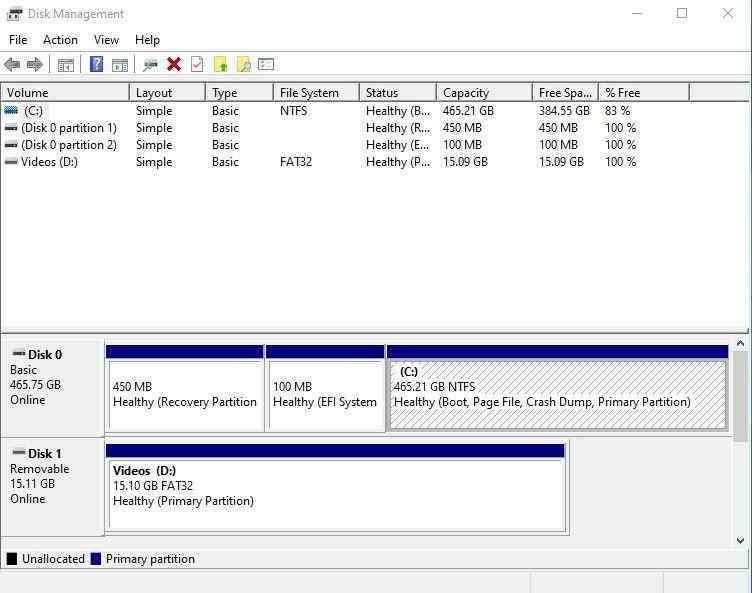
On Windows: connect the drive directly to a known-good port and open This PC. If the drive is absent, right-click Start, open Disk Management, and check whether the removable device appears with approximately the expected capacity. This is an inspection step: do not create a volume, assign new partitions, initialize the disk, or accept a format prompt. Make sure you identify the correct device by capacity before doing anything else.
On Mac: check the drive in Finder and Disk Utility (open Disk Utility and choose View > Show All Devices). Do not click Erase or run First Aid before important files have been protected. A removable drive can appear in Disk Utility even if Finder cannot mount its file system.
If the drive behaves normally on a second port or computer, copy any still-accessible important files to a separate disk first. If it becomes unusually hot, disconnects repeatedly, or shows signs of broken connectors or water damage, stop troubleshooting it with software.
Choose a Safe First Step by Symptom
The fastest useful action is determined by the symptom, not by how many recovery tools you can try. Start with the row that matches what you actually see.
| What happened? | Best first action | Important limit |
| Files were deleted, but the USB drive opens | Stop writes; check an existing copy, then scan the detected drive | Overwritten data may be unrecoverable |
| The pen drive was accidentally formatted | Do not use it again; assess a recovery scan before any further changes | Results depend on formatting, subsequent use, and device behavior |
| Folders seem empty, but used space remains | Check whether files are hidden, then copy accessible files elsewhere | Hidden files are not the same as deleted files |
| Windows says the disk must be formatted or shows RAW | Cancel the prompt; check detection and capacity without changing the drive | A damaged file system may prevent normal access |
| The USB shows 0 bytes, disappears, or disconnects repeatedly | Check one known-good port, then stop if the symptoms persist | Software scanning may be inappropriate for hardware failure |
Before starting: have a second healthy disk with enough free space for recovered files. Never choose the affected pen drive as the recovery destination, and do not install recovery software onto that drive.
Part 2. How to Recover Files from a Pen Drive
Use the least invasive option that can produce a verified copy. An existing backup is preferable to searching for deleted data. If no backup exists and the pen drive is consistently detected, choose a scan method compatible with the computer and file system.
Method 1. Restore Files from a Backup or Previous Version
Best for: files that were previously copied to a computer, external backup disk, or cloud account. You do not need to scan or alter the affected USB drive if that other copy is intact.
- Search the original folder on your PC or Mac, and check the backup disk or cloud service you used. Also check your synced storage's trash or deleted-items area if the file existed there.
- Open one of the available copies to confirm the document, photo, or video is readable.
- Copy the verified file to a healthy location on your computer or another USB drive. Avoid restoring it directly to the affected pen drive until the original data-loss case is resolved.
Windows File History and Previous Versions: if File History was already set up and backed up the relevant computer folder, right-click that folder in File Explorer and select Restore previous versions. Open the desired version, check the file, and use Restore to... when available to save it somewhere else. A removable USB drive does not automatically have Previous Versions available merely because you connect it to Windows. See Microsoft's File History instructions.
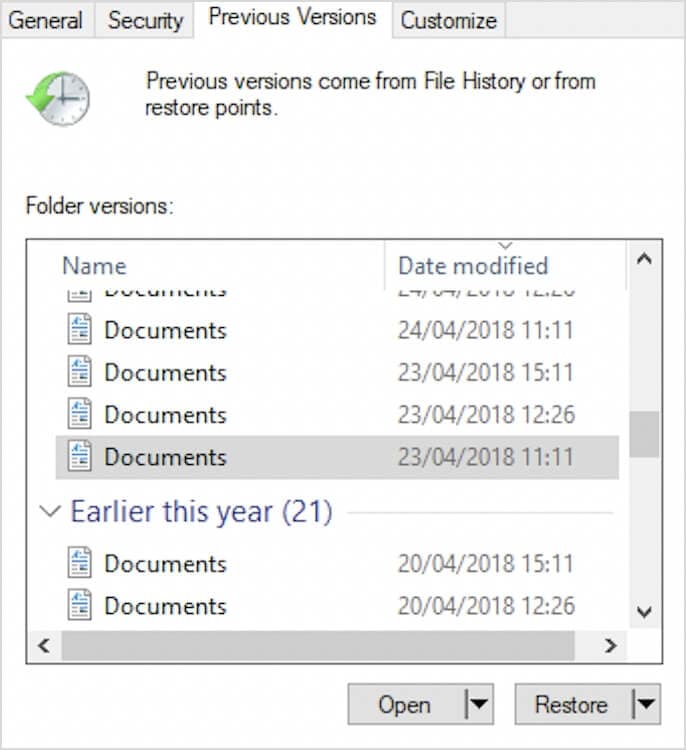
If no earlier copy exists, there is nothing for File History to restore. Move to a recovery scan instead of changing the original drive.
Method 2. Scan a Detected Pen Drive with Recoverit
Best for: deleted or missing files, or some formatted or logically inaccessible USB drives that the computer can still detect. Wondershare Recoverit supports USB flash drives as external storage in its current Windows guide. A scan can find potential file matches, but it cannot guarantee that a file was not overwritten or that damaged hardware will remain readable.
Step 1. Connect and select the correct pen drive. Install Recoverit on your computer, not on the affected pen drive. Open the app, find the USB device in the available external drives or storage locations, and choose it as the scan source. Confirm its capacity or drive letter so you do not scan the wrong disk.
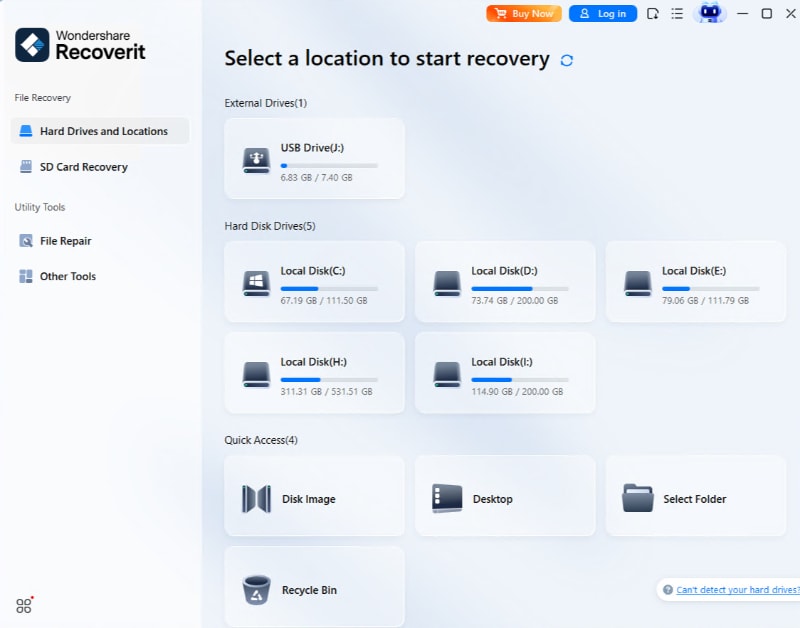
Step 2. Scan and examine the matches. Start the scan and allow it to finish when possible. Use file names, file types, paths, and previews to narrow down the results. A found filename or thumbnail is not proof that the exported file will open correctly.
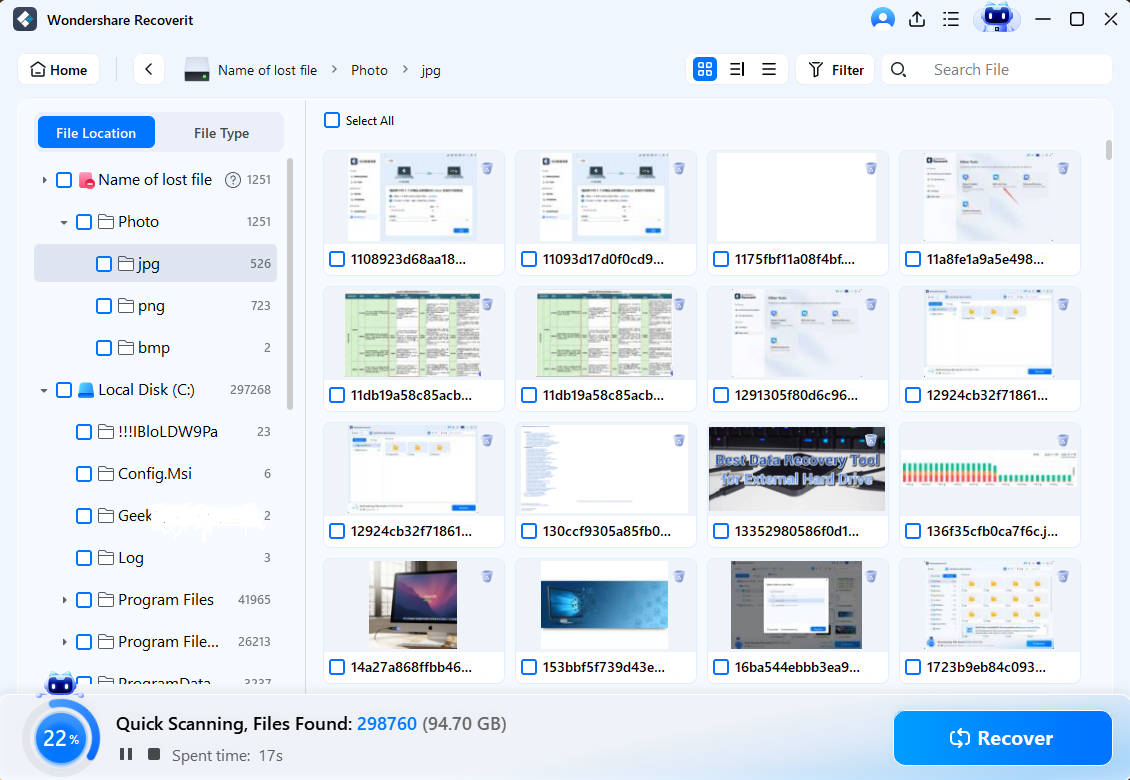
Step 3. Recover to another disk, then verify. Select the needed files, click Recover, and save them to a different healthy storage device. Open several exported documents and photos; play videos from beginning to end to check usability. If files cannot be previewed or opened, consider a different non-destructive recovery method rather than formatting the source.
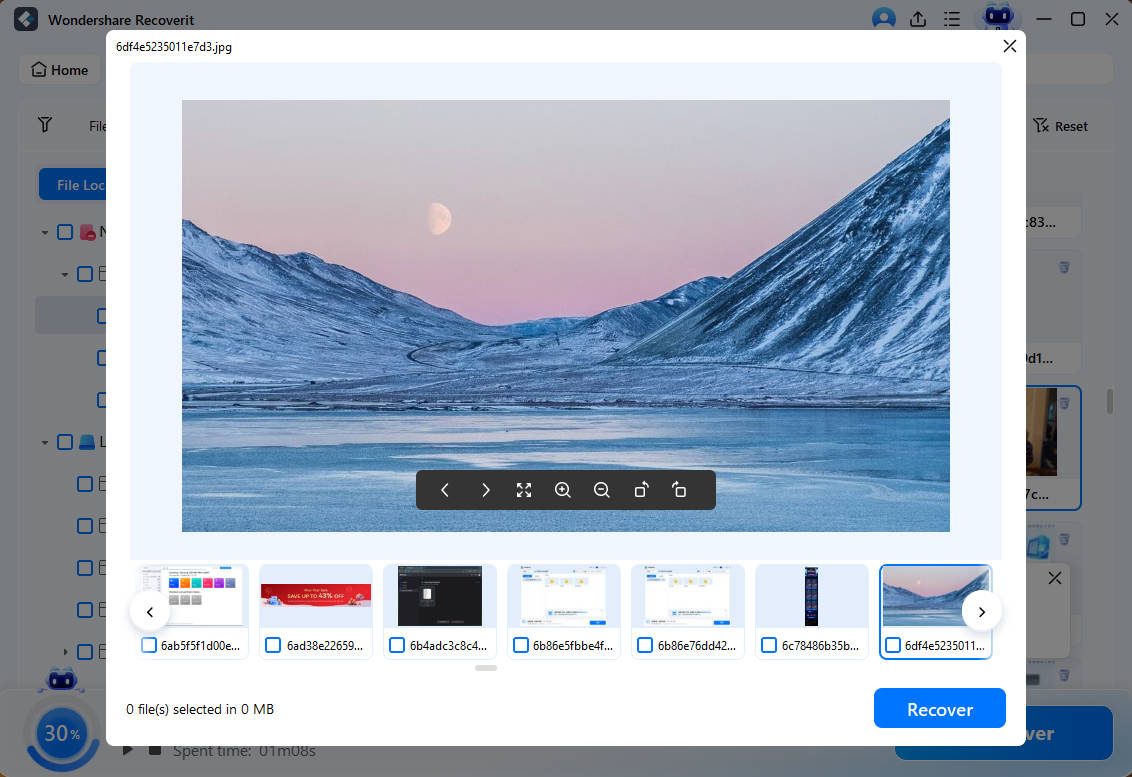
The Windows procedure above follows the official Recoverit guide for external devices. Mac users can use the corresponding external-device workflow in the Recoverit for Mac application; menus and available controls may differ.
Important: scanning and previewing are not the same as recovering an intact file. If the drive is not detected reliably or has physical damage, stop repeated scans and use the specialist route described below.
Method 3. Use Windows File Recovery for Deleted Files
Best for: Windows users comfortable with a command-line tool who have a readable USB drive and a different destination disk. Microsoft's Windows File Recovery is an official free option for eligible Windows systems, not a browser-based recovery service.
- Install Windows File Recovery from the Microsoft Store on your PC. Connect the pen drive and make sure you know its correct drive letter in File Explorer. In this example, E: is the affected USB source and C: is a separate healthy computer disk with available space.
- Open Windows File Recovery. For a FAT, FAT32, or exFAT USB drive, use the Extensive mode. To look for PDFs in this example, enter
winfr E: C: /extensive /n *.pdfand confirm the prompt. Replace both drive letters and the file filter with your own verified values.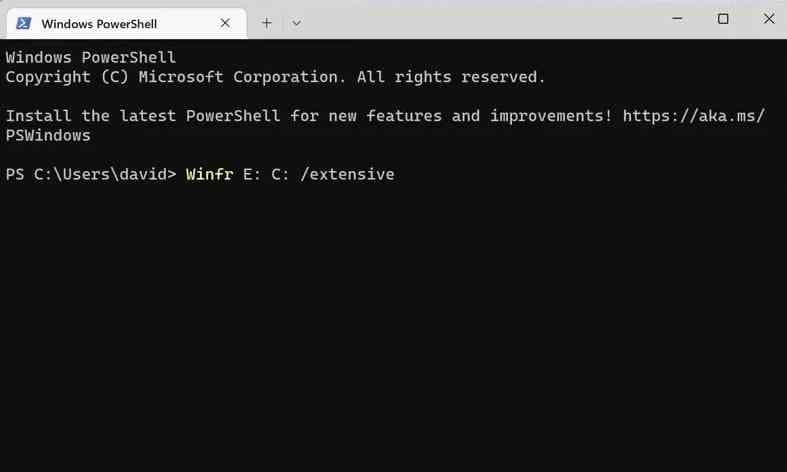
Note: The screenshot shows the basic
/extensivecommand without the optional/n *.pdffilter used in the example above. - When the scan finishes, inspect the recovery folder created on the destination drive. Open the recovered files to see which are usable. If you find no valid copies, do not keep writing to or repairing the USB drive.
Limitations: Regular mode is primarily for NTFS; USB drives formatted as FAT/exFAT require the appropriate Extensive option. File names or original folder paths may not be preserved, and success is not guaranteed. The source and destination must be different drives. This is a Windows-only alternative, not a Mac command.
Part 3. Recover Pen Drive Files That Are Hidden, Not Deleted
When the pen drive opens and reports used capacity but some folders are missing, first check display settings. A hidden file still exists on the file system; changing its visibility is not the same as recovering data that was deleted.
Show Hidden Files in File Explorer
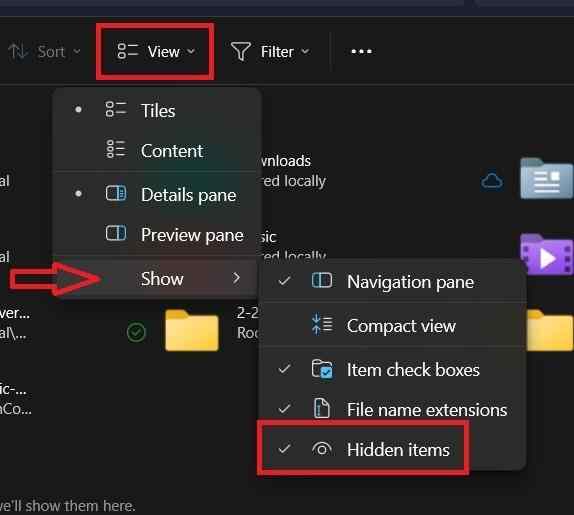
On Windows 11: open the USB drive in File Explorer and choose View > Show > Hidden items. On Windows 10, use the View tab and enable Hidden items. Look for the missing files and copy them to a healthy disk if they appear. If folders are replaced by suspicious shortcuts, avoid opening the shortcuts; inspect the machine for malware using your usual security software without installing anything onto the pen drive.
If files remain missing after this check, they may have been deleted, the directory may be damaged, or the device may be failing. A visibility setting alone cannot reconstruct them.
Understand What the ATTRIB Command Can Do
Windows ATTRIB displays or changes file attributes such as hidden and system. For users familiar with Command Prompt, attrib E:\* /s /d can list attributes on an accessible drive, assuming E: is the correct letter. This read-only inspection does not restore deleted file contents. Clearing attributes would write changes to the source, so prefer viewing hidden items and making a separate copy before considering that operation.
ATTRIB does not generate recovered .chk files. Those may be related to file-system repair and cannot be assumed to contain complete documents. For exact syntax, see Microsoft's ATTRIB reference.
Part 4. What If the Pen Drive Is Corrupted or Not Recognized?
Pen drives can become inaccessible because of logical file-system damage, missing partitions, bad connectors, or failing flash memory. The next step depends on what the operating system can still identify; do not treat every error as a reason to repair or format the USB.
The Drive Shows RAW or Asks to Be Formatted
If Windows displays You need to format the disk before you can use it, choose Cancel. A RAW status often means the operating system cannot interpret the current file system; it does not establish that the original files are gone. Look in Disk Management to check whether the device still reports its expected capacity. If it is stable and correctly identified, assess recovery from the existing storage state before any repair or new file-system creation.
If the drive contains irreplaceable data and you are unsure how to inspect it safely, consider professional assistance before attempting multiple software tools. Avoid writing a new partition table, running DiskPart clean, or initializing the device.
The Drive Shows 0 Bytes or Keeps Disconnecting
A pen drive that appears as 0 bytes, repeatedly disconnects, overheats, has a broken USB plug, or is not detected in a second known-good port may have a hardware, controller, or connector problem. One careful port check can rule out a simple connection issue; repeated reconnection and full-drive scans may make a failing device harder to handle.
Stop DIY recovery when: the drive has visible physical damage, becomes hot, produces repeated connection errors, or reports inconsistent capacity. Ask a reputable professional data recovery service whether they handle USB flash memory and controller-level failures. They can evaluate the device, but no lab can promise full recovery in every case.

When CHKDSK and Formatting Are Appropriate
Windows CHKDSK is a file-system diagnostic and repair utility, not an undelete tool. Parameters such as /f and /r can change structures on the drive while attempting repairs. Likewise, formatting, initialization, and DiskPart clean change the source disk. These actions should not appear among the first steps for restoring missing files.
After you have secured verified copies of the important data, you may decide whether the USB drive is worth repairing and reformatting for future use. If the device remains unreliable, replace it. See the Microsoft CHKDSK documentation and its DiskPart clean reference for what these commands actually change.
Part 5. Verify Your Recovered Files and Protect the Drive
A recovery scan reporting hundreds of matches is only a starting point. Count the files that were successfully exported and opened, not just the items a scanner displayed.
- Check the saved files: open PDFs and Office documents; inspect several photos at full size; play important videos beyond the first seconds. If a file opens only partially, record it as incomplete rather than recovered intact.
- Keep more than one copy: store verified documents and media on a healthy computer disk and a separate backup destination. Do not treat the suspect pen drive as your only copy again.
- Assess the hardware: if the pen drive caused unexplained errors or capacity changes, retire or replace it. Do not rely on reformatting to fix a device that repeatedly disappears.
- Use safer habits: safely eject the USB drive, keep a backup of files that matter, and do not unplug storage during file transfers.
If you have other USB storage symptoms rather than a Pen Drive file-loss case, the broader USB flash drive recovery page covers the software category, while recovering files from USB addresses general USB file recovery.
Conclusion
For pen drive data recovery, protect the original storage before attempting a fix. First look for an existing copy, then scan a consistently detected drive with a suitable recovery tool if needed. Hidden files require a visibility check, while RAW, 0-byte, or unstable devices need a different decision. Recover files to a separate disk, verify that they open, and leave file-system repair or formatting until after the important data is safe.
FAQ
-
Can I recover deleted files from a pen drive for free?
Sometimes. Check existing backups first. On a supported Windows PC, Windows File Recovery can scan a readable USB drive for deleted files and save matches to a different drive. Results depend on the file system and whether the deleted data has been overwritten. -
Can I recover pen drive data after formatting?
A recovery scan may find files after some formats, but it cannot guarantee success. Stop using the drive immediately; the type of format, subsequent writes, and condition of its flash storage affect what may remain. -
Can CMD recover deleted pen drive files?
ATTRIB can reveal or change attributes on files that still exist. It is not an undelete command. CHKDSK repairs file-system errors and may modify the disk; it should not be your first action when you need missing files back. -
Why does my pen drive show empty folders but use storage space?
Folders may be hidden, directory information may be damaged, or another application may be using the space. Check hidden items first. If files do not appear, protect the drive from writes and evaluate a recovery scan instead of formatting it. -
Should I format a RAW or unrecognized pen drive?
No, not before protecting important data. Cancel a format prompt and inspect whether the computer identifies the device and its capacity. A stable, detected drive may be a software-recovery case; physically failing or repeatedly disconnecting devices warrant a specialist evaluation. -
Will Recoverit recover files if my pen drive is physically broken?
Software recovery requires storage that the computer can access reliably enough to scan. A broken connector, failed controller, or seriously damaged flash memory may require a professional service instead. No result is guaranteed. -
Do USB files automatically go to the Windows Recycle Bin?
No. Files deleted directly from removable USB drives often bypass the Windows Recycle Bin. You can check for a separate copy on your computer, but do not assume that Recycle Bin will contain the originals deleted from the pen drive.


