


 TL;DR:
To safely format an SD card for a Wii or Wii U, use a standard SD card up to 2GB or an SDHC card up to 32GB and erase it on a computer using the SD Association's SD Memory Card Formatter with the Overwrite format option selected.
● Original Wii consoles require a system update to Wii Menu 4.0 or later to recognize SDHC media, while the Wii U strictly rejects all SDXC cards over 32GB and fast-transfer UHS formats.
● MicroSD and miniSD cards function only when inserted into a passive full-size SD adapter, but this adapter does not bypass Nintendo's capacity limits to make oversized cards compatible.
● The formatted SD card cannot be used to expand normal Wii U game storage, because native Wii U downloads and save data exclusively require system memory or a compatible external USB drive.
Ask AI for a summary
 ChatGPT
 Perplexity
 Gemini
 Claude
 Grok
Grok
⚡ TL;DR: Wii And Wii U SD Card Rules
Use A Supported Capacity: Wii U accepts standard SD cards up to 2GB and SDHC cards up to 32GB. Wii also accepts SDHC up to 32GB only after updating to Wii Menu 4.0 or later.
Use An Adapter For microSD: A microSD or miniSD card must sit in a full-size SD adapter. The adapter does not make an unsupported SDXC card compatible.
Prefer The Official Formatter: Nintendo recommends the SD Association's formatter and instructs Wii U owners to select Overwrite format. Recover or copy every needed file before starting.
Do Not Buy An SD Card For Wii U Game Storage: In Wii U mode, the SD card is mainly used for Mii information and Wii-mode content. Wii U downloads and save data use system memory or compatible USB storage.
Quick answer: For the safest Wii SD card format, use a standard SD card up to 2GB or an SDHC card from 4GB to 32GB, connect it to a computer, and format it with the official SD Memory Card Formatter. Nintendo tells Wii U users to select Overwrite format. A microSD card can work only through a full-size SD adapter and only when its capacity type is supported. Do not use exFAT, NTFS, SDXC, or UHS cards for an official Wii U workflow.
Before formatting, confirm which console and use case you actually have. A Wii SD card can hold supported save data, channels, and photos. A Wii U SD card does not expand normal Wii U game storage. Formatting also erases the card, so protect any screenshots, Mii images, Wii save exports, photos, or other personal files before following a method below.
Fact-checked on September 2, 2026: Capacity limits, microSD adapter requirements, formatting guidance, and Wii U storage roles were checked against current Nintendo Support and SD Association documentation.
In This Article
Part 1. Wii Vs Wii U SD Card Compatibility
Wii and Wii U use the same physical full-size SD slot, but their supported cards and storage roles are not identical. The label printed on the card matters: SD, SDHC, and SDXC are capacity standards, not interchangeable marketing terms.
| Console | Officially Compatible Card | Important Limit |
| Wii with Wii Menu earlier than 4.0 | Standard SD card up to 2GB | Cards above 2GB will likely not work until the console is updated. |
| Wii with Wii Menu 4.0 or later | Standard SD up to 2GB and SDHC up to 32GB | Some software may still be incompatible with SDHC, even when the console recognizes it. |
| Wii U | Standard SD up to 2GB and SDHC up to 32GB | SDXC and fast-transfer UHS-type cards are not compatible. |
| Wii mini | None | Nintendo states that Wii mini does not support SD cards. |
Nintendo's current Wii SD card compatibility page ties SDHC support to Wii Menu 4.0 or later. Its Wii U compatibility page sets the maximum at 32GB SDHC and explicitly excludes SDXC and fast-transfer UHS cards.
This makes a 4GB, 8GB, 16GB, or 32GB SDHC card the simplest shared choice for an updated Wii and a Wii U. A standard 1GB or 2GB SD card is the conservative choice for an older Wii or software that does not support SDHC. Check the exact game or channel documentation if compatibility with a legacy title matters.
Which File System Does Wii Use?
The SD standard pairs cards up to 2GB with FAT12/FAT16 and SDHC cards above 2GB through 32GB with FAT32. For a modern 4GB-32GB Wii or Wii U card, FAT32 is the correct practical target. Do not select NTFS, APFS, Mac OS Extended, or exFAT.
| Card Label | Capacity | Standard File System | Wii U Status |
| SD | Up to 2GB | FAT12/FAT16 | Supported |
| SDHC | More than 2GB up to 32GB | FAT32 | Supported |
| SDXC | More than 32GB up to 2TB | exFAT | Not supported |
| SDUC | More than 2TB up to 128TB | exFAT | Not supported |
The SD Association capacity standard explains these card families. Reformatting a 64GB or 128GB SDXC card to FAT32 changes its file system, but it does not turn the hardware into an SDHC card or make it officially compatible with Wii U. For a reliable supported setup, choose the correct card type instead of forcing an oversized card into FAT32.
Part 2. What An SD Card Can And Cannot Store
The phrase “Wii U SD card” often creates the wrong expectation. The front SD slot is not the normal expansion target for Wii U downloads and Wii U save data. In Wii U mode, Nintendo says the SD card is used mainly for Mii information such as QR codes or pictures. It is also important in Wii mode, where compatible Wii content can use the card.
| Data Or Task | Wii SD Card | Wii U SD Card |
| Compatible Wii save data | Can be copied for supported titles; some games block or limit copying | Used through Wii mode, subject to the same Wii restrictions |
| WiiWare, Wii Channels, and Virtual Console content | Available through the Wii SD Card Menu where supported | Handled in Wii mode, not as native Wii U storage |
| Mii QR codes or images | Limited related uses | Supported in Wii U mode |
| Wii U downloaded games | Not applicable | Not stored on the SD card; use system memory or Wii U-formatted USB storage |
| Wii U game save data | Not applicable | Use system memory or compatible USB storage, not the front SD card |
| Personal photos or computer files | Can exist on the card, but the console reads only supported formats and use cases | Can exist on the card; back them up before console-related formatting |
Nintendo's Wii U SD card troubleshooting page states that the card is used in Wii U mode for Mii information and is primarily used in Wii mode to expand available memory. For native Wii U downloads, Nintendo recommends a compatible external USB storage device. That USB device is formatted by the console with a Wii U-specific storage format and is a different topic from a FAT32 SD card.
If your goal is to make room for Wii U games, formatting a 32GB SDHC card will not solve the problem. Use the console's supported USB storage workflow instead. If your goal is Wii saves, Wii channels, Mii images, or a Wii-to-Wii U transfer, an SD or SDHC card is relevant.
Part 3. Checks To Make Before Formatting
Formatting is appropriate only after you have selected a supported card and protected its contents. Spend one minute on these checks before opening any format tool.
- Confirm The Console: Wii, Wii U, and Wii mini have different SD support. A Wii U can also enter Wii mode, which does not turn the SD card into native Wii U game storage.
- Read The Card Label: Use SD up to 2GB or SDHC up to 32GB. If the card says SDXC, UHS, 64GB, 128GB, or more, replace it with a supported card for an official Wii U setup.
- Check Wii Menu Version: An original Wii needs Wii Menu 4.0 or later for SDHC. If it is older, use a standard SD card no larger than 2GB.
- Copy Readable Files: Save screenshots, photos, Mii images, documents, and any visible Wii data to another drive. Open a few copied files to verify the backup. This SD card backup guide explains safer copy and image-backup options.
- Recover Missing Files Before Erasing: If the card looks empty, asks to be formatted, shows RAW, or contains missing folders, stop. Do not overwrite the file system before scanning for data.
- Unlock The Adapter: Move the full-size SD adapter's side switch away from Lock. A loose or damaged switch can make a card appear write-protected.
- Identify The Correct Drive: On a computer, compare the card's capacity and drive name before formatting. Disconnect unrelated removable drives if that makes the target easier to identify.
- Use Stable Power And A Good Reader: Do not remove the card or let the computer sleep during an overwrite format.
If the data is valuable and the card disconnects repeatedly, becomes unusually hot, shows an impossible capacity, or is not detected by any reader, stop DIY formatting. Those symptoms can indicate a controller, flash-memory, or physical fault that software formatting cannot repair.
Part 4. How To Format An SD Card For Wii Or Wii U
The Wii and Wii U do not provide a normal menu command to format the front SD card. Nintendo directs users to the SD Association's computer tool. Use that as the first choice. Windows File Explorer and macOS Disk Utility are included as practical alternatives when the official formatter cannot run, but they require you to choose the file system manually.
Method 1. Use SD Memory Card Formatter
This is the official-first method. Nintendo's current Wii U formatting instructions recommend the SD Association tool and specifically tell users to select Overwrite format. The SD Association recommends its tool because general operating-system formatters are not always optimized for SD standards.
- Back up or recover every file you still need. Overwrite formatting is designed to erase the user data area and makes later recovery unlikely.
- Connect a supported SD or SDHC card to the computer. Put a microSD card into a full-size SD adapter first.
- Download the current SD Memory Card Formatter. As of September 2, 2026, the page lists version 5.0.4 for Windows and 5.0.3 for Mac.
- Run the app with administrator rights. Select the card and verify its type and capacity. For Wii U, it should show SD at 2GB or less or SDHC at 32GB or less.
- Select Overwrite format, following Nintendo's instruction. Leave CHS format size adjustment off unless a specific official support instruction tells you otherwise.
- Enter a simple volume label if desired, click Format, confirm, and keep the computer awake until the process finishes.
- Eject the card safely before removing it.
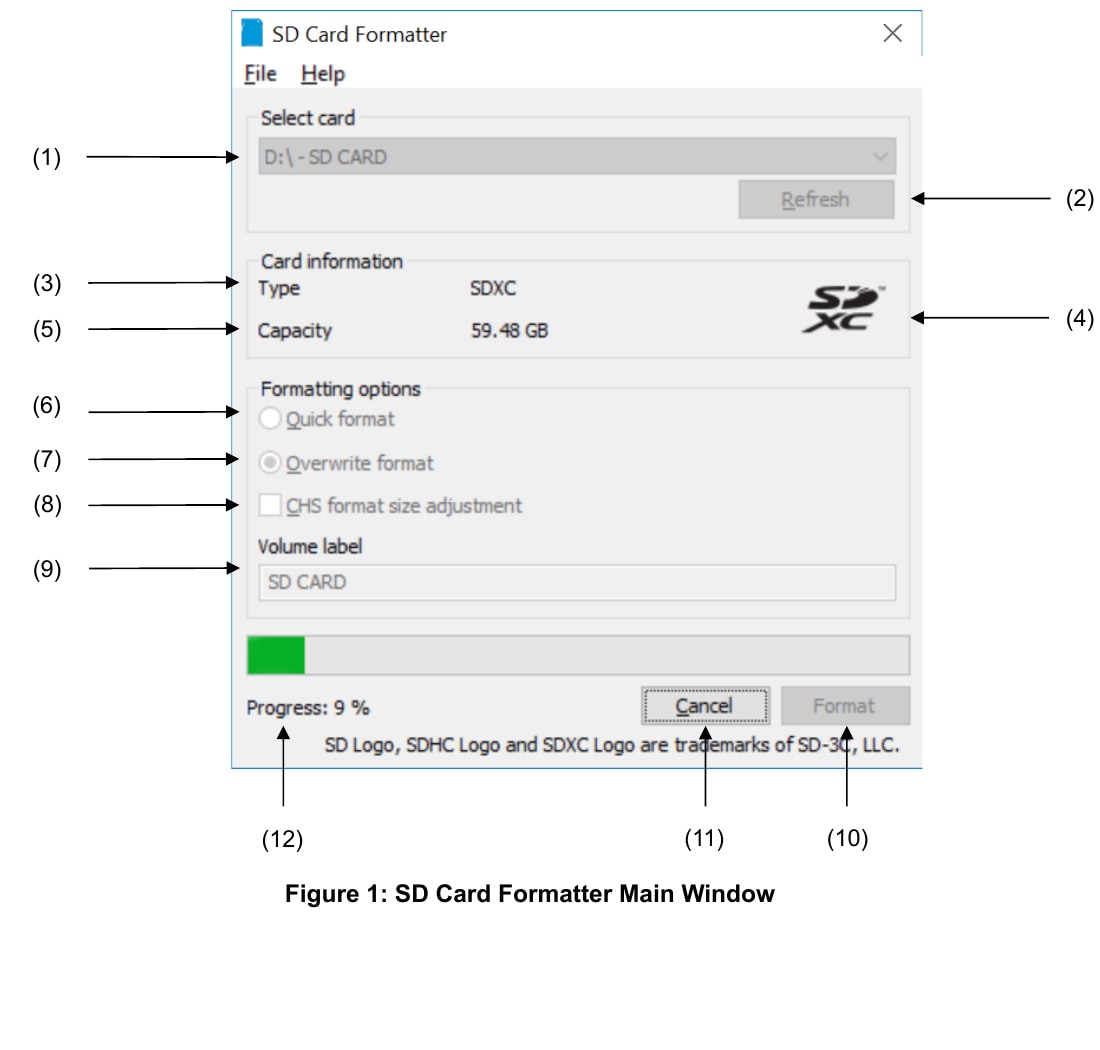
Important screenshot note: The official manual's sample interface displays a 59.48GB SDXC card to explain the formatter controls. That sample card is not compatible with Wii U. For this task, verify that the actual card selected in your app is SD or SDHC and within Nintendo's capacity limit.
SD Memory Card Formatter selects a file system based on the card's SD capacity type. That is another reason to begin with a real SD or SDHC card instead of converting an SDXC card with a third-party FAT32 tool.
Method 2. Format A Wii SDHC Card On Windows
Use Windows File Explorer only as a fallback for a supported card. The steps below are suitable for a 4GB-32GB SDHC card. Do not use them to force a larger SDXC card into the Wii U workflow.
- Insert the SDHC card into the PC or a compatible reader.
- Open File Explorer and select This PC.
- Compare the card's name and capacity with the physical card. Right-click the card and choose Format.
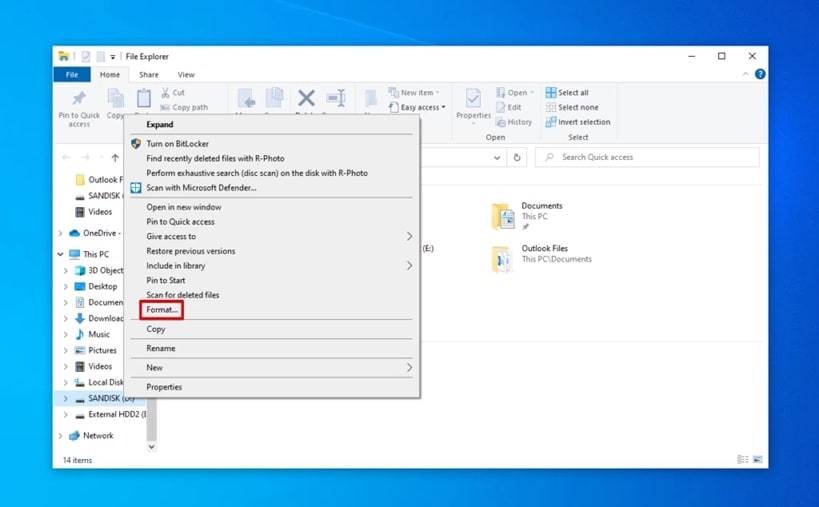
- For a 4GB-32GB SDHC card, choose FAT32 from the File system menu. Keep Allocation unit size at Default; Wii U does not require a manually forced 32KB or 64KB cluster size.
- Enter a short volume label. Clear Quick Format if you want Windows to perform a full format, but use the SD Association overwrite option when following Nintendo's preferred procedure.
- Click Start, read the erasure warning, and confirm only if the displayed card is correct.
- When Windows finishes, use Eject before removing the card.
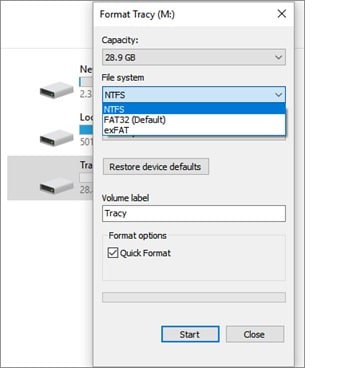
If FAT32 is not offered, recheck the card. It may be larger than 32GB and therefore SDXC, the reader may be reporting the media incorrectly, or the partition state may be damaged. Do not reach for DiskPart clean; that command deletes partition information and is unnecessary for a normal Wii SD card format.
Method 3. Format A Wii SDHC Card On Mac
Disk Utility can create a FAT32 card on macOS. Apple labels FAT32 as MS-DOS (FAT) or may display MS-DOS (FAT32) for a supported volume. Select the physical card carefully because Erase cannot be undone.
- Insert the supported SD or SDHC card into the Mac or a compatible USB reader.
- Open Applications > Utilities > Disk Utility.
- Choose View > Show All Devices so the physical card appears above its volume.
- Select the physical card by checking its capacity, then click Erase.
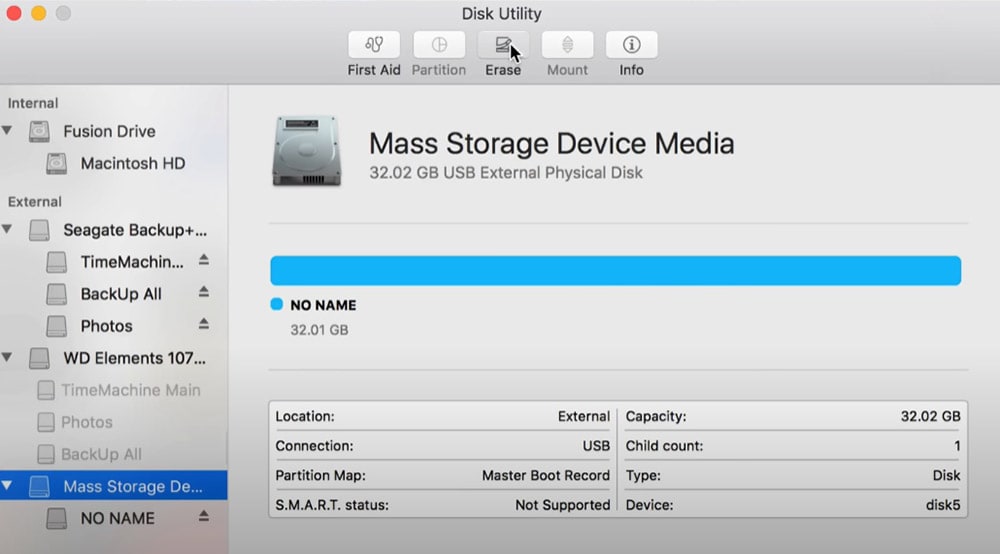
- Enter a short name and choose MS-DOS (FAT) or MS-DOS (FAT32). Do not choose exFAT, APFS, or Mac OS Extended.
- If Disk Utility shows a Scheme menu, choose Master Boot Record for broad legacy-device compatibility.
- Click Erase and wait for completion. Do not remove the reader during the process.
- Click Done, then eject the card in Finder.
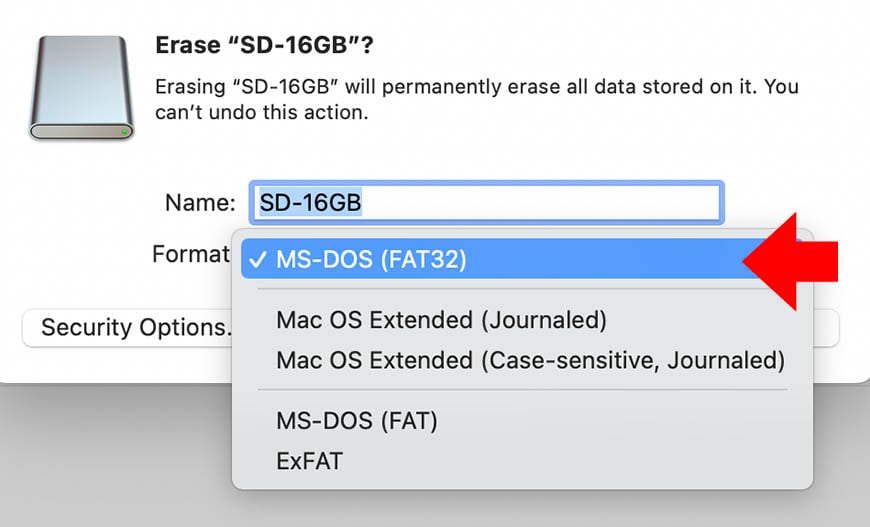
Disk Utility may show ExFAT automatically for a card above 32GB. That is a signal that the card is probably SDXC and not an officially supported Wii U card. Use an SDHC card of 32GB or less instead of changing an oversized card with an unofficial formatter.
Part 5. How To Use A microSD Card With Wii Or Wii U
A microSD card can work in Wii or Wii U only through a passive full-size SD adapter. Nintendo's Wii U compatibility page explicitly requires an adapter for miniSD and microSD cards. The console reads the card through the adapter; the adapter does not add storage intelligence or change the card standard.
- Choose a microSD card whose label and capacity are supported. For Wii U, use microSD or microSDHC no larger than 32GB; avoid microSDXC and UHS-type cards under Nintendo's published rules.
- Insert the microSD card fully into a full-size SD adapter.
- Move the adapter's lock switch to the unlocked position.
- Format the card on a computer with Method 1, preferably using SD Memory Card Formatter.
- Power off the Wii or Wii U before inserting the adapter. On Wii U, open the front cover and insert the adapter with its label facing the disc drive until it clicks.
- Power on the console and test the relevant Wii, Wii-mode, or Mii feature.
| microSD Marking | Typical Capacity | Official Wii U Choice? |
| microSD | Up to 2GB | Yes, with a full-size adapter |
| microSDHC | More than 2GB up to 32GB | Yes, with a full-size adapter |
| microSDXC | 64GB and above | No |
| UHS-marked microSD | Varies | Nintendo states fast-transfer UHS-type cards are not compatible with Wii U |
If the microSD card works in a phone but not in Wii U, test another adapter before reformatting. Adapters have mechanical contacts and a lock switch that can fail even when the flash card itself is healthy.
Part 6. Fix A Wii SD Card That Is Not Recognized
A “not recognized” message does not automatically mean the card needs formatting. First determine whether the console, adapter, reader, file system, or card is responsible. Reformatting too early can erase the files without fixing the actual cause.
| Symptom | Likely Cause | Safest Check |
| Card works on a PC but not Wii U | Unsupported SDXC/UHS type, wrong file system, or dirty console contacts | Confirm SD/SDHC at 32GB or less and format with the official tool after backup. |
| microSD works without the adapter but not through it | Faulty or locked adapter | Unlock it and try another full-size SD adapter. |
| Wii reads 2GB SD but not 16GB SDHC | Wii Menu is earlier than 4.0 or the software does not support SDHC | Check the system menu version and the game's compatibility. |
| Computer asks to format the card | Damaged or unsupported file system | Recover needed data before accepting the prompt. |
| Card is write-protected | Adapter lock switch, damaged adapter, or failing media | Move the switch upward, reinsert it, then test another adapter or reader. |
| Card disconnects or shows the wrong size | Reader, controller, counterfeit, or flash failure | Stop formatting attempts and test once with a known-good reader. |
- Turn the console off before removing or inserting the card. Nintendo warns against changing SD cards while Wii U is powered on.
- Remove the card, inspect the contacts for dirt or damage, and reinsert it fully. Do not use liquid inside the console slot.
- For microSD, unlock the adapter and try another adapter.
- Check the capacity label and card family. Replace SDXC or UHS media with a supported SD or SDHC card for Wii U.
- Test the card in a computer and copy readable files immediately.
- If files are missing or the computer reports RAW/unformatted media, recover them before repair or formatting.
- After the files are safe, use SD Memory Card Formatter with Overwrite format and test the card again.
- If errors return, retire the card. Repeated formatting is not a reliable fix for failing flash memory.
For a broader diagnostic flow, see how to fix an SD card that will not read. Do not use CHKDSK, First Aid, or any write-based repair until you have copied or recovered important data.
Part 7. Recover Files Before Or After Formatting

Use recovery only when files are missing, deleted, inaccessible, or accidentally formatted. Recoverit is not required to format a healthy empty card, and it cannot make an unsupported SDXC card compatible with Wii U. Its role is to protect data before you erase the card or to scan after an accidental quick format.
Recovery is most realistic when a computer can still detect the card or its reader, the card is not physically failing, and new data has not overwritten the missing files. It may help recover personal photos, videos, screenshots, documents, and some exported Wii files as ordinary files. It cannot restore content from Wii U internal memory through the SD-card reader, reconstruct data already overwritten, or guarantee that protected game data will be usable by the console.
Method 4. Recover Wii SD Card Files With Recoverit
- Stop using the card. Do not format it, copy new files to it, run repair commands, or put it back into active use.
- Connect the card to a Windows PC or Mac with a stable reader.
- Open Recoverit and choose the SD card under SD Card or External Devices. Confirm the displayed capacity before starting the scan.
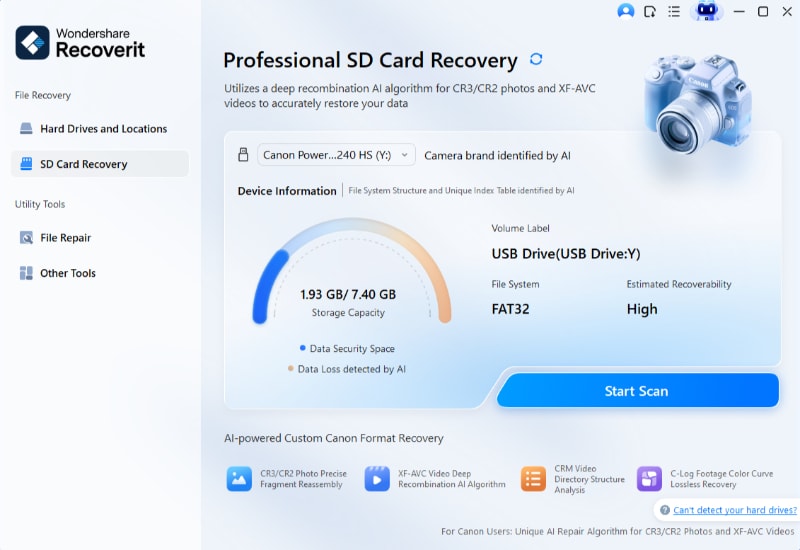
- Start the scan. Use file type, path, size, and date filters to narrow results, but allow the full scan to finish when the expected folder is not found immediately.
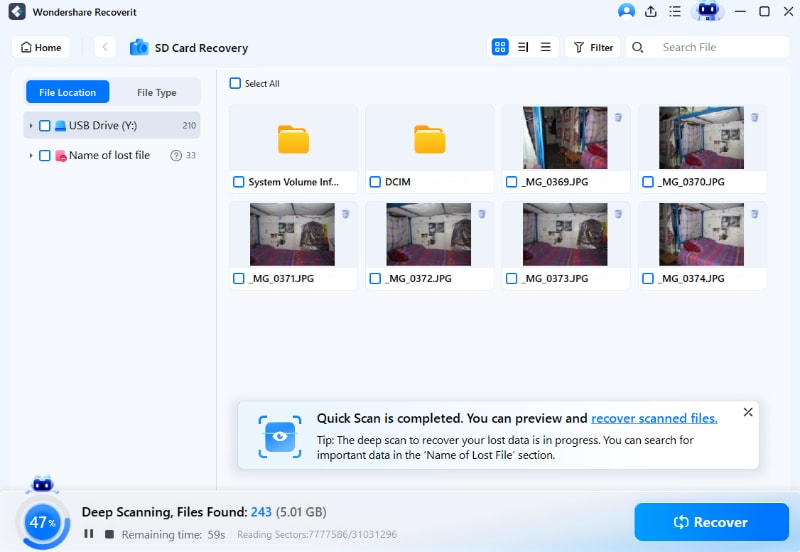
- Preview supported photos, videos, or documents. Check several files rather than relying only on a filename or thumbnail.
- Select the files you need and click Recover.
- Save them to the computer or another healthy external drive, never back to the same SD card.
- Open the recovered copies and confirm their contents before formatting or replacing the original card.

If you already performed a quick format, stop using the card and follow this formatted SD card recovery guide. If you used SD Memory Card Formatter's Overwrite format, recovery prospects are much lower because the process writes across the user data area.
Recover Wii SD Card Files With Recoverit
 Security Verified. Over 7,302,189 people have downloaded it.
Part 8. Verify The Card After Formatting
A successful format message proves that the computer created a file system; it does not prove that Wii or Wii U accepts the card or that the flash media is reliable. Verify both the computer and console sides.
- Reconnect the card to the computer and confirm that it mounts without a format prompt.
- Check that a 4GB-32GB SDHC card reports FAT32. On Windows, open Properties; on Mac, select the volume in Disk Utility.
- Copy a small nonessential test file to the card, eject it, reconnect it, and open the file. Delete the test file afterward if the console does not need it.
- Power off the Wii or Wii U, insert the card, and power the console back on.
- Open the feature that actually uses the card: the Wii SD Card Menu, Wii Data Management, Wii mode on Wii U, or Mii Maker image/QR options.
- If the console still rejects the card, recheck the card family, capacity, adapter, Wii Menu version, and software-specific restrictions.
Do not judge success by free-space size alone. Computers report capacity differently, and formatting uses a small amount of space for file-system structures. A 32GB card showing somewhat less usable space is normal; a card showing only a tiny fraction of its labeled capacity is not.
Part 9. Mistakes To Avoid
| Mistake | Why It Fails | Better Choice |
| Buying a 64GB or 128GB SDXC card for Wii U | Nintendo officially supports only SD up to 2GB and SDHC up to 32GB. | Use a supported SDHC card no larger than 32GB. |
| Formatting SDXC to FAT32 | Changing the file system does not change the card's SDXC hardware standard or official support status. | Start with SD or SDHC media. |
| Using an SD card for Wii U downloads | The SD slot is not normal native Wii U game storage. | Use system memory or a compatible Wii U-formatted USB storage device. |
| Running DiskPart clean | It destroys partition information and adds risk without solving official compatibility. | Use SD Memory Card Formatter on the correct card. |
| Forcing a 32KB or 64KB allocation unit | Nintendo does not require that tweak for a standard Wii/Wii U card. | Let the official formatter create the SD-standard layout. |
| Formatting before recovering missing files | Every erase or write can reduce recovery chances; Overwrite format is especially destructive. | Copy or recover files to another drive first. |
| Following Homebrew-specific folder or capacity instructions for normal use | Unofficial software workflows have different assumptions and do not change Nintendo's support limits. | Use official specifications for standard console features. |
This guide deliberately does not provide Homebrew, custom firmware, or game-image instructions. Those workflows are outside Nintendo's supported storage design and introduce different legal, security, and compatibility considerations.
Conclusion
The safest Wii or Wii U SD card format starts with the correct media: SD up to 2GB or SDHC up to 32GB. An original Wii needs Wii Menu 4.0 or later for SDHC, while Wii U excludes SDXC and fast-transfer UHS-type cards. A microSD card is acceptable only through a full-size adapter and within the same capacity rules.
Back up or recover needed files, then use SD Memory Card Formatter with the Overwrite option Nintendo specifies. Use FAT32 in Windows or MS-DOS (FAT) on Mac only as a fallback for a supported SDHC card. Finally, remember that the Wii U front SD slot does not replace USB storage for Wii U downloads and save data.
FAQ
-
What format should an SD card be for Wii?
Use the SD-standard format for the card type. A standard SD card up to 2GB normally uses FAT16, while an SDHC card from more than 2GB through 32GB uses FAT32. The simplest approach is SD Memory Card Formatter rather than manually choosing a file system.
-
What format should an SD card be for Wii U?
Use a standard SD card up to 2GB or an SDHC card up to 32GB and format it with the SD Association tool. Nintendo recommends Overwrite format. For a 4GB-32GB SDHC card, the resulting file system is FAT32.
-
Can Wii U use a 64GB or 128GB SD card?
Not under Nintendo's official compatibility specification. Cards above 32GB are SDXC, and Nintendo states that SDXC cards are not compatible with Wii U. Reformatting one to FAT32 does not change its card standard.
-
Can I use a microSD card for Wii U?
Yes, if it is a supported microSD or microSDHC card no larger than 32GB and is inserted into a full-size SD adapter. Nintendo requires an adapter for microSD and miniSD cards.
-
Can I use a microSD card for Wii?
Yes, through a full-size SD adapter, provided the card meets the Wii capacity rules. Wii Menu versions before 4.0 are limited to standard SD cards up to 2GB; Wii Menu 4.0 or later can also use SDHC up to 32GB.
-
Can Wii U format an SD card itself?
Nintendo's current instructions direct users to format the SD card on a computer with the SD Association tool. Do not confuse this with a Wii U USB storage device, which the console formats for Wii U game storage.
-
Why does Wii U not recognize my FAT32 SD card?
FAT32 alone is not enough. The card may be SDXC, UHS-type, larger than 32GB, locked, inserted through a faulty adapter, or physically unreliable. Verify the card label, capacity, adapter, and contacts before reformatting.
-
Can an SD card store Wii U games or save data?
Not as normal native Wii U storage. In Wii U mode, the SD card is mainly used for Mii information, while Wii-mode content has its own supported uses. Wii U downloads and save data use system memory or compatible USB storage.
-
Should I choose Quick format or Overwrite format?
Nintendo's Wii U SD formatting page tells users to select Overwrite format in SD Memory Card Formatter. Because that process erases the user data area, copy or recover any needed files before starting.
-
Can Recoverit recover a formatted Wii SD card?
It may recover ordinary files after deletion or some quick formats if the card is detectable and the data has not been overwritten. Recovery after an overwrite format is much less likely. Save recovered files to another drive, not to the source card.


