


 TL;DR:
For Apple Music subscription songs, sign in to the correct Apple Account, enable Sync Library, search the catalogue, and download the song again. For iTunes Store purchases, open Purchased and re-download them. For local MP3 or AAC files removed from a Mac, check Trash and Time Machine, then use recovery software if the storage device is detected. Avoid restoring an iCloud backup until you have backed up the iPhone's current data.
- Identify whether the missing item is streamed, purchased, or locally stored.
- Check Apple Account, Sync Library, Purchased, Trash, and backups.
- Re-download cloud-based or purchased music instead of scanning Apple servers.
- Use data recovery software only for missing local audio files.
- Save recovered local files to a separate healthy location.
Ask AI for a summary
 ChatGPT
 Perplexity
 Gemini
 Claude
 Grok
Grok
If music disappears from Apple Music on a Mac or iPhone, first identify what kind of music is missing. A subscription song, an iTunes Store purchase, and a local MP3 file use different recovery paths.
Apple Music items are usually restored by signing in to the correct Apple Account, enabling Sync Library, re-adding the item, or downloading it again. Local audio files stored on a Mac, external drive, or SD card may require a backup or data recovery tool.

This guide explains how to recover deleted or missing music from Apple Music on Mac or iPhone without confusing streaming access with file recovery.
Quick Guide: Which Recovery Method Do You Need?
| Music Type | Best Recovery Method | Important Limit |
| Apple Music subscription song | Sign in, enable Sync Library, search, and download again | Requires an active subscription and catalogue availability |
| iTunes Store purchase | Open Purchased and re-download | Requires the Apple Account used for the purchase |
| Local MP3/AAC on Mac | Trash, Time Machine, or recovery software | Recovery depends on overwriting and drive detection |
| Music on an external drive or SD card | Backup or recovery software | Stop writing to the source storage |
| Music included in an iPhone backup | Restore from the backup | Full iPhone restoration may replace current data |
Why Are Songs Missing from Apple Music?
Apple Music may appear to remove songs for several reasons, but the song may not be permanently deleted from every source.

- Sync Library is disabled: The same Apple Account's library may not appear across devices.
- Different Apple Account: Purchased content and library items are tied to the account used to obtain or add them.
- Subscription or catalogue change: Subscription access can end, or a song may become unavailable in a region.
- Download removed: Removing a download frees device storage but may leave the item in the cloud library.
- Storage or system problem: Low storage, an update issue, or a library database problem can hide local downloads.
- Local file moved or deleted: MP3 and other imported files may be outside the Music media folder or in Trash.
Where Are Local Music Files Stored on a Mac?
Imported and downloaded local audio files are commonly stored in the Music media folder, but the exact location depends on your Music app settings and library configuration.

- Open Finder and choose Go > Home > Music.
- Check the Music folder and the media folder used by your library.
- In the Music app, open Music > Settings > Files to review the media folder location.
- Search Finder for the file extension, such as
.mp3,.m4a, or.aac.
Recover Local Music Files with Wondershare Recoverit
If local MP3, AAC, WAV, or other audio files were deleted from a Mac hard drive, external drive, USB drive, or SD card, Wondershare Recoverit may be able to scan the detected storage device.
Recoverit is not a tool for restoring Apple Music subscription rights or downloading protected catalogue songs. Use Apple Music, Purchased, or a backup for those items.
Steps to Recover Local Music Files
- Protect the source: Stop copying new data to the location where the music was stored.
- Select the storage: Open Hard Drives and Locations and choose the detected Mac drive, external drive, or SD card.
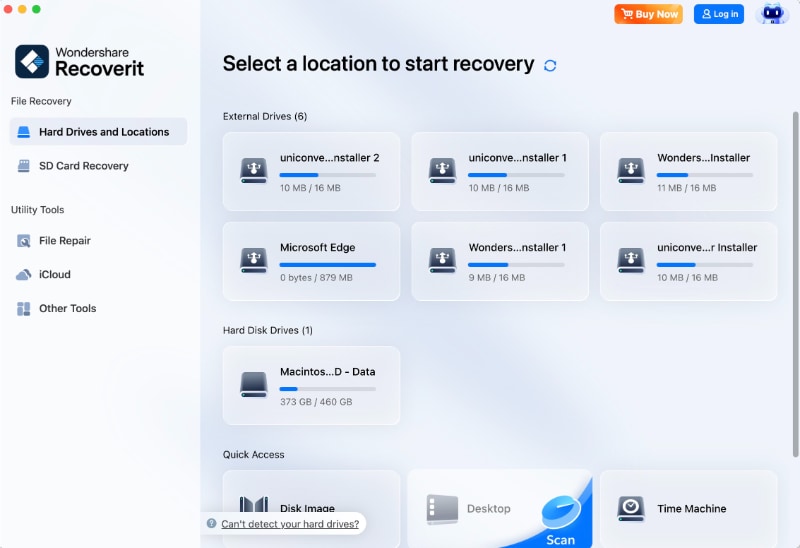
- Scan: Start the scan and avoid disconnecting the source.

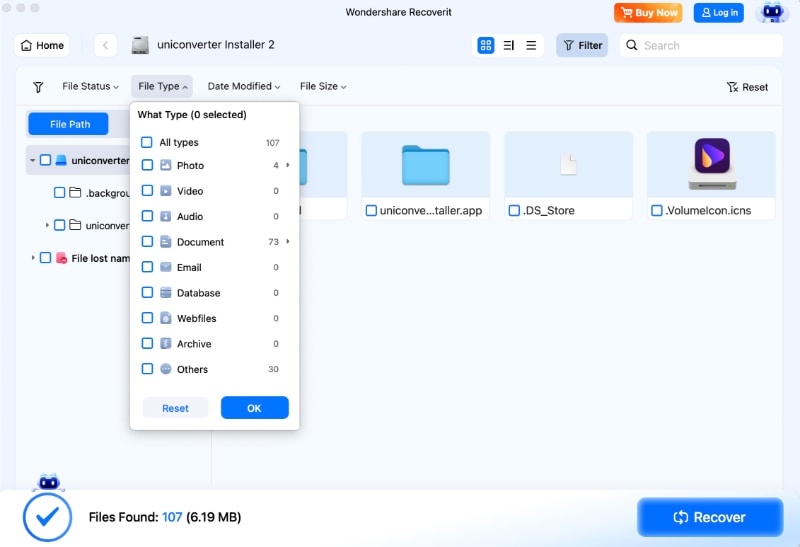
- Filter: Select the Audio category or search by file extension.
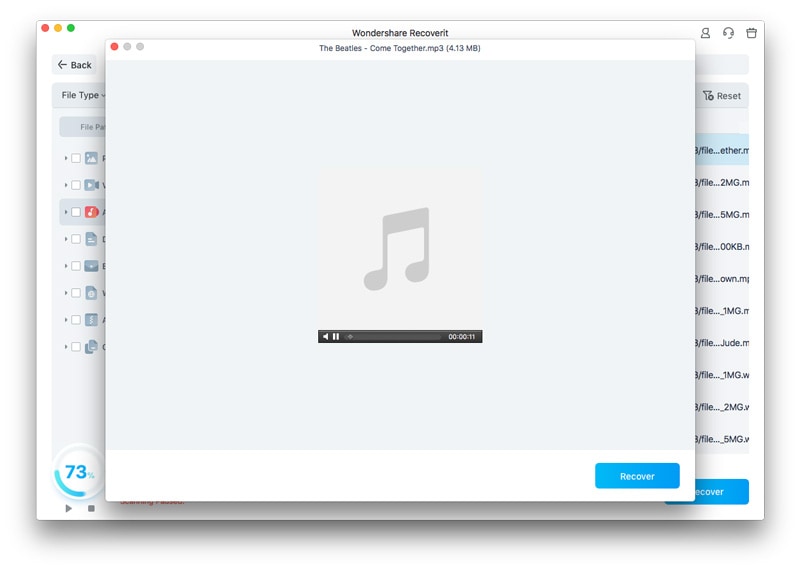
- Preview: Preview supported audio files before recovery.
- Recover elsewhere: Save files to another healthy location, not the source drive.
- Recovers lost songs, photos, videos, documents, and other 1000+ file types safely, and completely.
- Manages over 500 data loss situations, such as sudden deletion, formatting, system crash, and disk corruption.
- The user-friendly interface allows you to recover data in just a few clicks.

Video Tutorial on How to Recover Files from SD Card on Mac
How to Recover Deleted or Missing Songs on Mac and iPhone
Use the method that matches the missing music type. Re-sync or re-download Apple Music and purchased items. Use Trash, Time Machine, or recovery software for local audio files. Treat full iPhone backup restoration as a last resort because it can replace current device data.
- Sync the Apple Music library again.
- Download purchased or catalogue songs again.
- Find and re-add local files on the Mac.
- Restore local files from Time Machine.
- Sync music from an iTunes/Finder backup when appropriate.
- Restore an iCloud backup only after backing up current iPhone data.
Way 1: Sync Your Music Library Again
Use Sync Library when Apple Music items are missing on one device but still belong to the same Apple Account and library. An active Apple Music subscription may be required for subscription content.
On iPhone
- Open Settings and tap Music.

- Turn on Sync Library when the option is available.

- Open Apple Music and wait for the library to refresh over a stable connection.
On Mac
- Open the Music app and sign in to the correct Apple Account.

- Choose Music > Settings > General.

- Enable Sync Library and click OK.

- Allow the library to update before downloading songs again.
Way 2: Download Purchased or Catalogue Songs Again
On Mac
- Open the Music app and sign in to the Apple Account used for the purchase or subscription.
- For purchases, open iTunes Store from the Music app and choose Account > Purchased.

- Open Not in My Library or the relevant category.

- Click the download icon for the song or album.
On iPhone
- Open the Music app.

- For purchased items, open your account and choose Purchased.
- Locate the song and tap the download icon.

Subscription songs may no longer be available if the subscription ended or the catalogue changed. In that case, re-downloading is not the same as recovering a deleted local file.
Way 3: Find and Re-Add Local Music Files
Use this method when the audio file still exists on the Mac but no longer appears in the Music library.
- Search the Mac for the original file or open the Music media folder.

- Open the Music app and choose File > Add to Library or Import.

- Select the MP3, AAC, WAV, or other local audio files.
- After import, back up the files and sync them to the iPhone if needed.
Way 4: Restore Local Songs from Time Machine
Time Machine can restore local music files and the Music library if a backup from before deletion exists. It does not restore Apple Music subscription access separately from your Apple Account.
- Connect the Time Machine backup disk.
- Open the folder where the local music files or Music library was stored.
- Enter Time Machine and select a backup date before the files disappeared.

- Select the files or folder and click Restore.

- Open the Music app and re-add the restored local files if necessary.
Way 5: Sync Local Music from a Finder or iTunes Backup
On newer macOS versions, iPhone management is handled in Finder rather than iTunes. Use this method for local music included in your computer library or backup workflow, not for re-downloading Apple Music catalogue content.
- Connect the iPhone to the Mac with a compatible cable.
- Open Finder on modern macOS, or iTunes on older systems.

- Select the iPhone and open the Music section.
- Choose the entire music library or selected playlists, artists, albums, and genres.
- Click Sync and wait for the process to finish.
Way 6: Restore Music from an iCloud Backup Carefully
An iCloud backup may contain app data and local files from before the loss, but restoring it to an iPhone generally requires erasing the device first. This can replace current photos, messages, and other data.
- Back up the iPhone's current data before considering a full restore.
- Confirm that an iCloud backup from before the music loss exists.
- On the iPhone, open Settings > General > Transfer or Reset iPhone.

- Choose Erase All Content and Settings only after confirming the risks.

- During setup, choose Restore from iCloud Backup and sign in to the correct Apple Account.

- Select the relevant backup and wait for the restore to finish.

Conclusion
Recovering deleted music from Apple Music depends on what was actually lost. Subscription songs are usually restored by signing in, enabling Sync Library, and downloading them again. iTunes Store purchases can be re-downloaded from Purchased. Local MP3 and other audio files require Trash, Time Machine, a computer backup, or recovery software.
Do not factory-reset an iPhone or save recovered local files to the same source drive without checking the risks. Use a separate healthy destination for recovered files and keep regular backups of local music.
FAQ About Recovering Deleted Music on Mac or iPhone
-
What is the safest way to restore an Apple Music song?
Sign in to the correct Apple Account, enable Sync Library, search for the song, and download it again. Avoid factory-resetting the iPhone for a catalogue item. -
Can I recover an iTunes Store purchase without buying it again?
Usually, yes. Open the Purchased section with the Apple Account used for the purchase and download the item again when it is still available. -
Can Recoverit recover music deleted from a Mac?
It may recover local audio files from a detected Mac drive, external drive, USB device, or SD card. Save results to another healthy location. -
Does Apple Music have a Recently Deleted folder for songs?
Apple Music does not provide a universal Recently Deleted workflow for every library item. Check Sync Library, Purchased, the catalogue, Trash for local files, and backups. -
Will iCloud recovery delete my current iPhone data?
A full iCloud backup restore generally requires erasing the iPhone first. Back up current data and confirm the older backup is necessary before proceeding. -
Where should I save recovered local music files?
Save them to a different healthy drive or a safe Mac location, then import or sync them. Do not save them back to the source location being scanned.


