
Sep 02, 2026 • Filed to: Windows Computer Solutions • Proven solutions
 TL;DR:
Selecting the right hard drive partition software depends on your technical expertise and hardware configuration, with AOMEI Partition Assistant serving best for beginners, MiniTool Partition Wizard for SSD data migration, and GParted for Linux live boot environments.
● When configuring NVMe M.2 or SATA SSDs, ensure the software supports 4K alignment to prevent up to a 30% decrease in read/write speeds, and convert drives over 2TB from MBR to GPT for modern UEFI motherboard compatibility.
● Be aware of specific software limitations: Active@ Partition Manager cannot downsize locked system volumes, GParted requires unmounting active partitions before making offline edits, and Paragon Partition Manager requires a paid upgrade for advanced system migrations.
● After modifying partitions, verify that your starting offset is cleanly divisible by 4096, execute chkdsk C: /f in an elevated Command Prompt to audit file system integrity, and create a fresh system image backup to save the new storage configuration.
Ask AI for a summary
 ChatGPT
 Perplexity
 Gemini
 Claude
 Grok
Grok
| Partition Software | Best Use Case Profile | Key Unique Feature | License Model |
| 01. AOMEI Partition Assistant | Best Overall / Beginners | Windows To Go USB Creator | Free / Paid Upgrade |
| 02. MiniTool Partition Wizard | Data Migration & SSDs | Advanced Disk Benchmark Tools | Free / Paid Upgrade |
| 03. Paragon Partition Manager | Enterprise & Power Users | Advanced Virtual Disk (vHdx) Support | Paid Only |
| 04. GParted | Linux Systems & Boot Disks | Live Bootable USB Environment | Open Source / Free |
| 05. Macrorit Partition Expert | System Administrators | Disaster-proof Power-off Protection | Free / Paid Upgrade |
Partitioning is a computer term that refers to the creation of multiple regions on the hard disk to allow the operating system as well as partition manager software to efficiently and separately manage information in each region. People with a history of heavy computer usage will most likely benefit from having multiple partitions. One benefit of having partitions in the hard disk is that it is easier to separate the operating system and program files from the user files.
Partition managers help make partitioning easier to manage. With partition managers, one can create, delete, resize, move, check, and copy the partitions. The partition managers are also useful in creating more space for a new operating system, copying the data stored in the hard disk, reorganizing the disk usage, as well as disk imaging. Backing up files and restoring the backups are possible with partition manager software too.
Part 1: Top 10 Partition Manager for Hard Drive
There are numerous partitioning managers that one can obtain from the market nowadays. However, not all of the options one can find in the market are suitable for a person or is easier to use. Most of the partitioning managers in the market are not worth your attention and money.
Here are the top picks you should consider if you want to get your hands on quality partitioning manager software:
When partitioning modern NVMe M.2 or SATA SSDs, ensure your chosen partition software supports 4K Alignment. Improper alignment can degrade your SSD's read/write speeds by up to 30% and significantly shorten its lifespan.
Furthermore, if you are setting up drives larger than 2TB, always convert the drive partition scheme from MBR (Master Boot Record) to GPT (GUID Partition Table) to ensure all storage space is recognized by modern UEFI motherboards.
1. AOMEI Partition Assistant
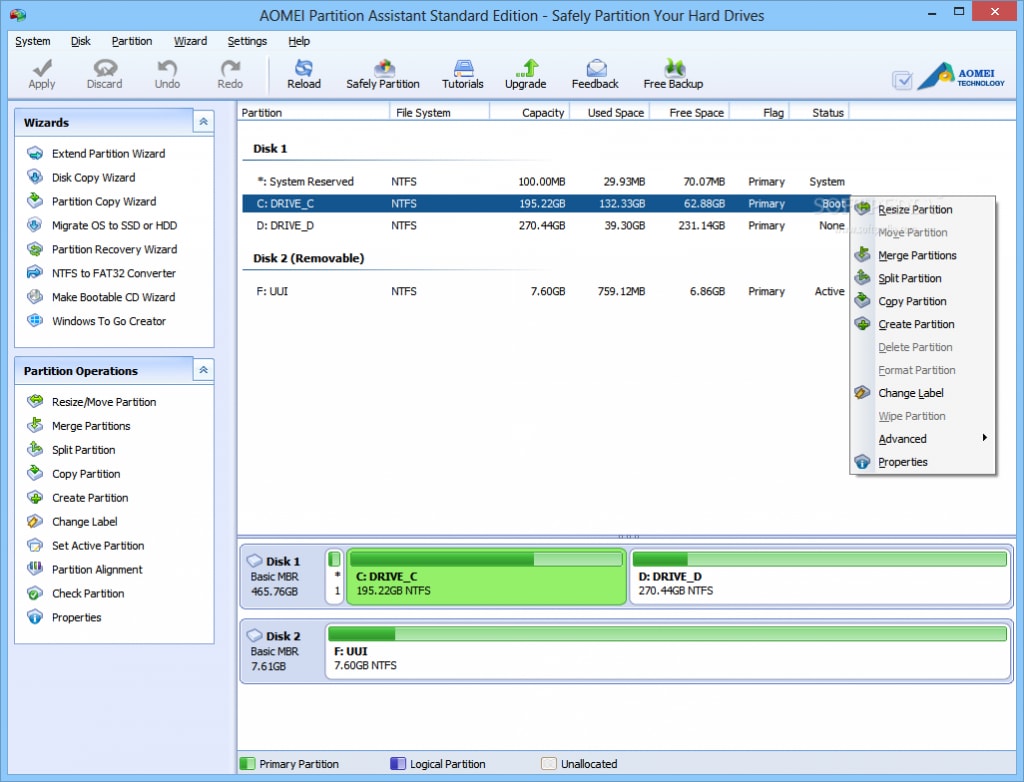
Equipped with the basic partitioning tools, this is a suitable partitioning wizard for those who are just beginning to step into the tech world. It offers features like copying, extending, resizing, formatting, and deleting partitions. It is very easy to use and you also have a tutorial to rely on for the usage of the said program. Many unique functions come with this tool, such as Windows To Go Creator which enables you to put Windows 10/8 installation on USB flash drive, Quick Partition which is very convenient and specially designed for users who need to partition a hard drive regularly or create the same partition layout for large quantities of computers. Last but not the least, this partition manager is free for personal and commercial use.
- Best For: General Windows users looking for a risk-free, all-in-one disk manager.
- Pros: Includes "Windows To Go Creator" for portable OS installations; features a "Quick Partition" mode built for bulk drive configuration; 100% free for personal usage.
- Cons: Advanced partition conversions (like dynamic to basic disks) require upgrading to the Pro version.
2. IM-Magic Partition Resizer
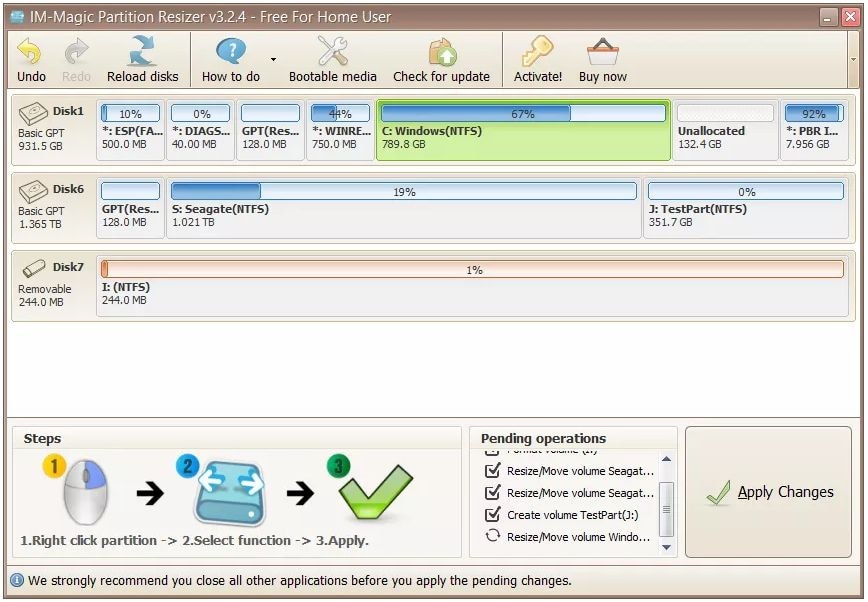
With IM-Magic Partition Resizer, this partition software can help you move and resize partition, copy or change the drive partition letter and label. It also can help you check the errors of partition, delete and format partitions. It supports to wipe all that data off of partitions.
- Best For: Quick, non-destructive volume resizing on low-spec hardware.
- Pros: Exceptionally lightweight; safe layout previews before executing changes; features single-click secure data wiping.
- Cons: Interface looks outdated; lacks advanced partition type conversion utilities.
Read More: Magic Partition Recovery Review
3. Paragon Partition Manager
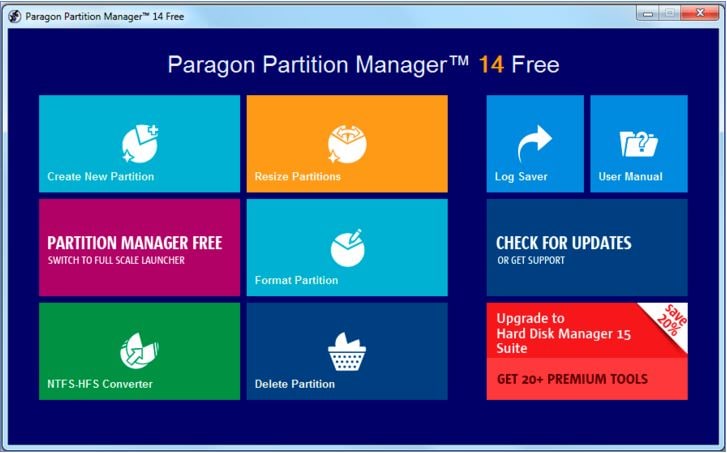
This program is an easy stand-alone partition manager. It helps create, resize, format, and copy partitions and even support deletions. It shows detailed information of the partitions, with a customizable layout for the main interface. However, using Paragon will require you to register to get a serial number. Advanced features are also available only when you get the paid version.
- Best For: Complex multi-boot disk environments and professional IT setups.
- Pros: Highly customizable UI layout; complete support for virtual hard disks; displays incredibly granular drive geometry data.
- Cons: Free version requires mandatory account registration; advanced system migrations are locked behind a paywall.
4. Macrorit Partition Expert
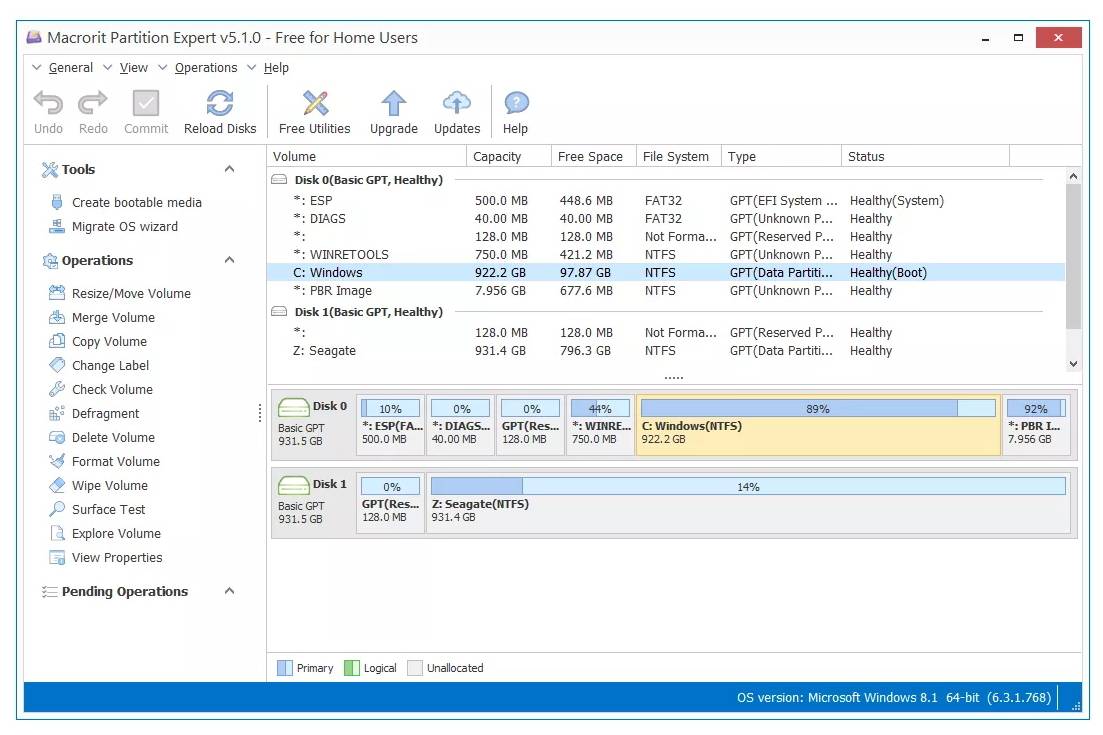
Another partition Manager that can be counted on is Macrorit. It has a very intuitive interface that easily allows users to take advantage of options such as moving, resizing, copying, deleting, hiding, unhiding, exploring, converting, and formatting disk partitions. It is highly compatible with Windows OS. However, you might want to prepare for the fact that this partition manager does not have any recovery CDs.
- Best For: Users worried about unexpected power losses during partition modifications.
- Pros: Built-in power-off disaster protection; completely portable version available (no installation required); highly responsive UI.
- Cons: Does not include a tool to create bootable recovery media or CDs in the free tier.
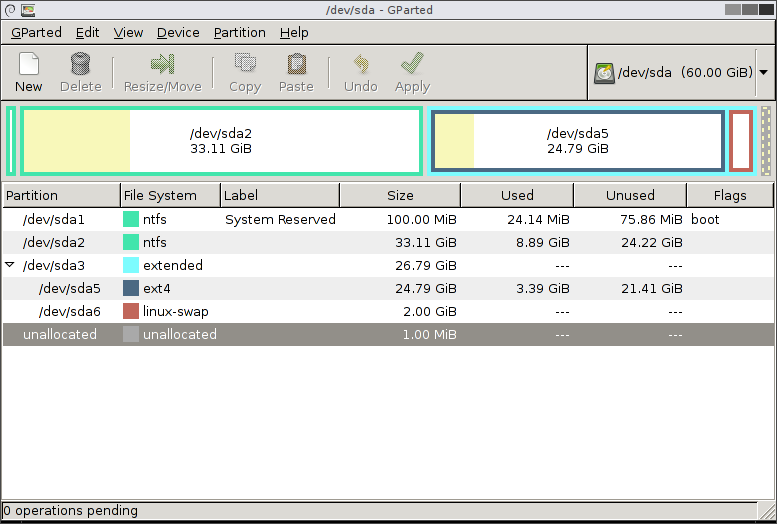
5. Gparted
Gparted is another stand-alone partition manager available in the market. It supports file systems such as ext2, ext3, and ext4. This program is extremely reliable, especially on the Linux OS. The only drawback is that when it is offline, it will require you to unmount the partitions before you can edit anything.
- Best For: Advanced users, Linux administrators, and system rescue tasks.
- Pros: Native support for ext2, ext3, ext4, NTFS, and FAT32; runs completely independent of host operating systems via live USB boot.
- Cons: Requires unmounting active partitions before editing; steeper learning curve for Windows-centric users.
6. Cute Partition Manager
Cute partition manager is one of the advanced hard disk partition management utility programs available for common users. Adding, deleting, editing, and managing partitions are just some of the features that can be enjoyed with this program. With this program, you can easily preview changes before saving them. It is extremely easy to use. The only thing that you cannot do with this program is to resize or merge existing partitions.
- Best For: Vintage computer maintenance and low-level diagnostic work.
- Pros: Extremely compact; lets you inspect change tables completely before saving them to disk sectors.
- Cons: Text-only interface; cannot resize or merge existing volumes without erasing them.

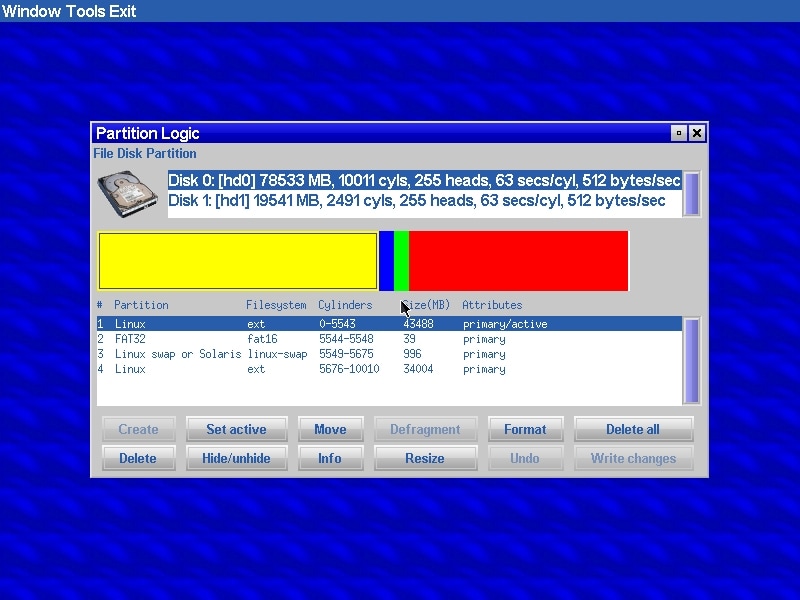
7. Partition Logic
Partition Logic is another data management and hard disk partitioning tool that you can consider for managing your partitions. The features include erasing, formatting, creating, defragmenting, copying, resizing, and moving partitions. You can even modify the attributes as well as copy an entire hard disk from one to another. A drawback of this program though is that it will not run on the older models of computers.
- Best For: Complete drive data erasure and raw physical disk imaging.
- Pros: Functions entirely in RAM; excellent built-in partition defragmentation and optimization tools.
- Cons: Struggles with hardware compatibility on older legacy motherboard architectures.
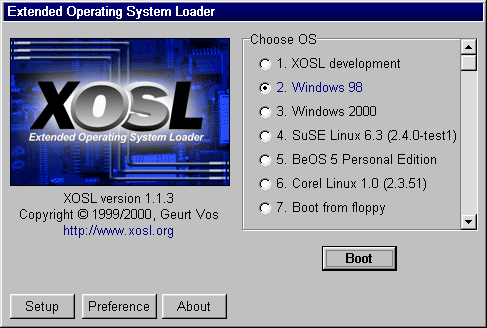
8. Ranish Partition Manager
This program is designed to provide users with high-level controls for running several operating systems on one disk. With this program, one can copy, create, and resize primary or extended partitions. Ranish hard drive partition manager can be quite intimidating for beginners, though.
- Best For: Advanced hobbyists setting up complex multi-boot environments.
- Pros: Provides complete control over the primary and extended partition tables; allows highly granular boot sector modifications.
- Cons: Intimidating text interface that can cause accidental data loss if misused by beginners.
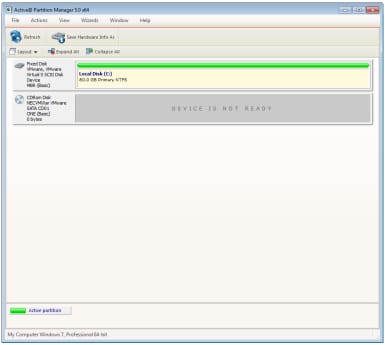
9. Active@ Partition Manager
If you are a home user, and you just want to focus on the basics, then the Active@ Partition Manager is your best choice. Aside from the basics, you can also do some advanced and powerful tasks such as setting up new disks, assign partition attributes, mark partitions, and so much more. The only setback is that you are unable to downsize any locked volumes, such as the system volume.
- Best For: Home users looking to configure new secondary storage drives quickly.
- Pros: Fast allocation of drive letters and volume paths; handles advanced partition attributes cleanly.
- Cons: Completely unable to resize or downsize locked volumes (such as active system C: drives).
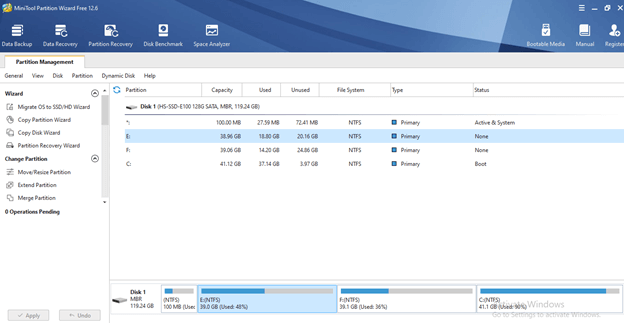
10. MiniTool Partition Wizard
With MiniTool Partition Wizard, you can easily manage your partitions, file systems, and disk devices. It helps with moving, deleting, resizing, copying, and creating partitions. It is very easy to use. The interface is user-friendly, too.
- Best For: SSD optimization, data migration, and comprehensive hardware testing.
- Pros: Incredibly intuitive, user-friendly interface; includes a built-in disk speed benchmark tool; fast MBR-to-GPT conversions.
- Cons: The free installer frequently bundles promotions for other secondary software products.
More Related: How To Resize Or Extend a Partition in Linux/Ubuntu (GUI & Commands)
Recoverit Data Recovery - The Best Partition Recovery Software
With partition manager to partition a hard drive often comes along with data lost from your hard drive, and with the wrong operations to partition a hard drive will cause data formatted or damaged hard drive. Under these circumstances, you will need a powerful data recovery tool to retrieve lost data from deleted partition.
Risk Analysis: Hard Drive Partition Mistakes vs. Recovery Confidence
| Common Partition Failure Mode | Primary Root Cause Event | System File Impact | Recoverit Success Rate |
| 01. Accidental Volume Deletion | Misclicking target index in disk utility tools | Partition map wiped; data sectors remain intact | 99% - Highly Recoverable |
| 02. Interrupted Resizing Process | Power failure or software freeze mid-move | Fragmented file tables and corrupt clusters | 94% - Deep Scan Required |
| 03. Accidental Format Command | Choosing the wrong drive letter during setup | Complete file allocation table (FAT/MFT) wipe | 96% - Raw File Recovery |
| 04. Bad Sector Allocation Failure | Hardware deterioration during repartitioning | Physical block dropouts and sector read errors | 88% - Advanced Sector Copy |

Recoverit - The Best Partition Recovery Software
- Recover lost or deleted files, photos, audio, music, emails from any storage device effectively, safely and completely.
- Supports data recovery from recycle bin, hard drive, memory card, flash drive, digital camera, and camcorders.
- Supports to recover data for sudden deletion, formatting, lost partition, virus attack, system crash under different situations.
Video Tutorial on How to Recover Lost/Deleted Partition Data?

Post-Partition Checklist: Verifying System Disk Health
- Verify Drive Letter Mappings: Open Windows Disk Management and confirm that all primary data storage volumes retain their correct, original drive letters (D:, E:, etc.).
- Check 4K Sector Alignment: Run System Information (msinfo32) -> Components -> Storage -> Disks. Ensure your partition starting offset is cleanly divisible by 4096.
- Audit File System Integrity: Run an elevated Command Prompt and execute a validation routine to clean up allocation tables:
chkdsk C: /f - Confirm Partition Table Scheme: Ensure your boot drive is running under the GPT scheme if your computer utilizes modern UEFI security standards.
- Update Disaster Recovery Backups: Once your new partition layout is stable, create a fresh system image to save your storage configuration.
Partition Solutions
- Manage Your Partition
- Top 9 Partition Manager for Mac
- How To Partition a Hard Drive
- RAW partition to NTFS
- Convert GPT to MBR
- Remove partition on Mac
- Recover deleted partition
- Create a boot partition
- Create partition on Win/Mac
- Convert exFAT to NTFS
- Fix Partition Errors
- Fix "Active Partition Not Found" Error
- Fix "No Bootable Partition in Table"
- Fix current read only state yes
- Repair a damaged partition
- Can't create new partition
- Partition Tips
 > Resources > Windows Computer Solutions > Top 10 Partition Manager - The Best Hard Drive Partition Software


Theo Lucia
chief Editor