 TL;DR:
To recover deleted GoPro JPG or GPR RAW photos, immediately stop recording to the microSD card to prevent data overwriting, check GoPro Cloud Trash or the Quik app for existing backups, and scan the readable card using recovery software while saving the files to a separate drive.
● For readable cards, Wondershare Recoverit supports searching for both JPG and proprietary GPR files, while free alternatives like Windows File Recovery (using Extensive mode) and PhotoRec are best suited for retrieving JPEG images but may fail to reconstruct GPR formats or retain original filenames.
● Recovered GPR images require an Adobe DNG-compatible photo editor to open, and finding THM files only indicates retrieved video thumbnails rather than the missing high-resolution still photos.
● Stop all DIY software scanning and seek specialist assistance if the microSD card is physically damaged, repeatedly disconnects, or reports a No Media error, as further attempts or running CHKDSK can permanently alter the remaining file system data.
Ask AI for a summary
 ChatGPT
 Perplexity
 Gemini
 Claude
 Grok
Deleted a favorite GoPro photo, lost a burst of action shots, or formatted the microSD card before copying the pictures? Stop taking photos or recording video, turn off the GoPro, and remove the card. New files may reuse the space where your deleted images were stored. If you had uploaded the photos to GoPro Cloud or transferred them to your phone, check those copies before scanning the card.
If no intact copy exists, you may be able to recover JPG photos and, on supported GoPro models, GPR RAW images from a microSD card that a computer can still read. Recovery depends on the card's condition and whether the original data has been overwritten; no software can guarantee every picture. This guide focuses on photos. For lost MP4, LRV, or 360 footage, follow the separate GoPro video recovery steps.
In This Article
Part 1. Can Deleted GoPro Photos Be Recovered?
The first question is where the missing picture was last saved. A photo removed from GoPro Cloud, a JPG deleted from the camera's microSD card, and a RAW file that your photo viewer cannot open call for different actions. Choose the situation that actually happened before installing a recovery tool.
| What happened | First action | What to expect |
| Photo was backed up to GoPro Cloud | Check Media Library and its Trash | Restore or download an existing cloud copy if available |
| Photo was transferred to a phone or computer | Check Quik, Photos/Gallery, Recycle Bin/Trash, and backups | Find the saved copy without scanning the camera card |
| JPG or GPR was deleted from the GoPro microSD card | Stop writing to the card; scan a readable card | Possible file recovery if the data remains |
| The microSD card was formatted accidentally | Do not reformat or record again; scan only if stable | Some photos may remain recoverable, with no guarantee |
| Photos are present but unreadable | Check the file type and compatible viewer | The problem may be opening the file rather than finding it |
| Card is cracked, wet, reports No Media, or repeatedly disconnects | Stop DIY attempts; seek specialist advice | Software scanning may be unsafe or ineffective |
Understand GoPro JPG and GPR RAW Photos
Most GoPro still photos are saved as .JPG files. On models and capture modes that support RAW, enabling that setting can also create a paired .GPR RAW photo alongside the JPEG. GPR is a GoPro image format based on Adobe DNG, not an MP4 clip or an LRV video preview. GoPro's HERO8 Black photo specifications document the modes that support RAW, and its GPR technical overview explains the format. File output and RAW settings vary by camera model.
If you shot RAW, look for both extensions. The JPG may still be accessible even if your usual photo app cannot display the GPR. Conversely, finding a JPG does not prove a matching RAW file was recorded. When a camera uses a different photo mode, refer to that model's photo settings instead of assuming every shot includes both files.
Part 2. Look for Existing GoPro Photo Copies First
A backed-up photo is safer to retrieve than an accidentally deleted one. Start with GoPro's own cloud and app storage, then check any phone or computer you used to import the pictures. These checks do not write to your original microSD card.
Restore Photos From GoPro Cloud or Cloud Trash
Best for: Photos that finished uploading to GoPro Cloud before they disappeared from the camera, phone, or cloud library.
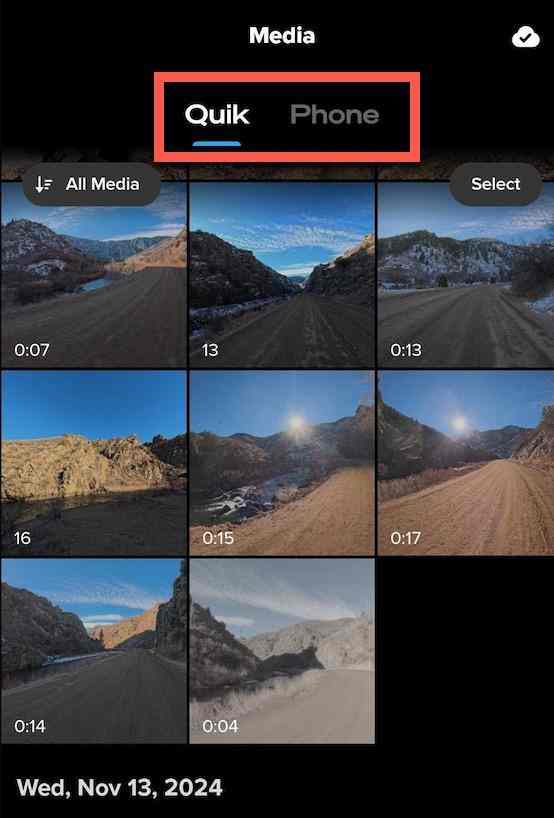
Step 1. In the current GoPro Quik app, open Media and select the Quik tab. Use All Media or the available media filters to look for an uploaded photo. You can also sign in to GoPro.com and inspect your cloud Media Library. Check dates and thumbnails, and confirm the photo finished uploading before relying on the cloud copy.
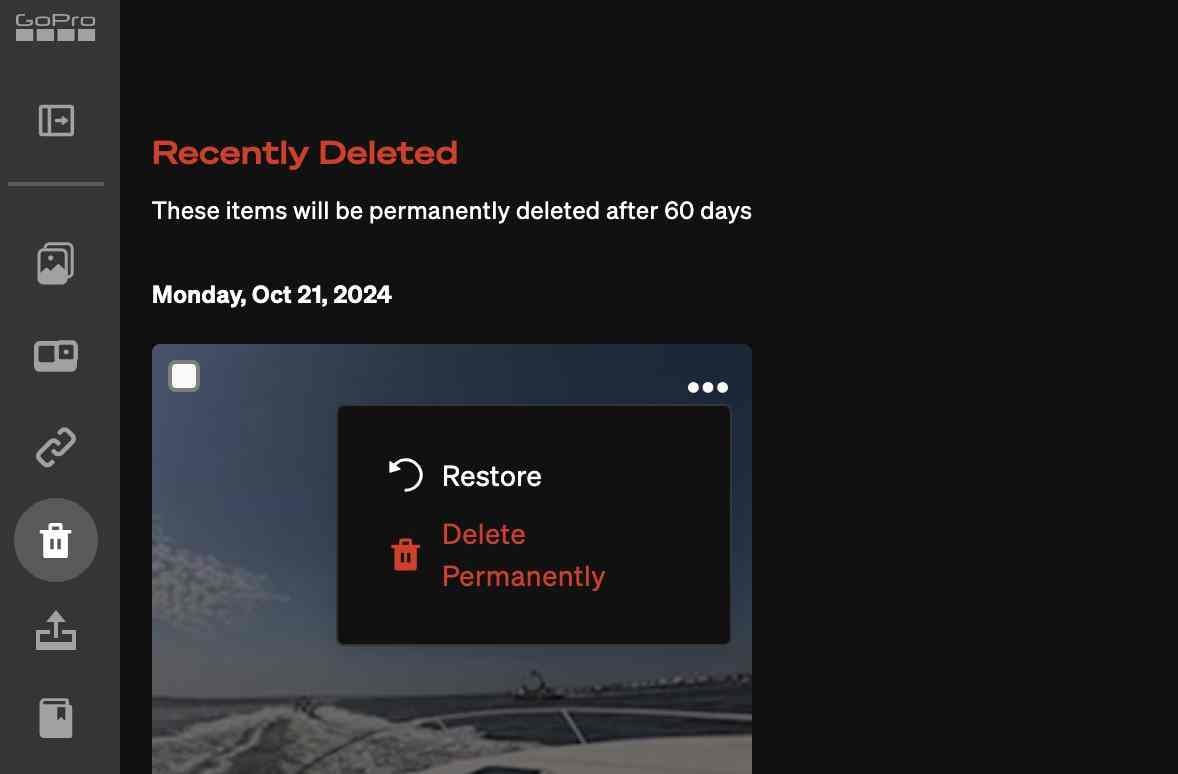
Step 2. If you deleted the photo from the cloud library, sign in at GoPro.com, open Media Library, then choose Trash from the sidebar. For an available deleted item, open its menu and choose Restore.
Step 3. Once the photo appears in the media library, download an intact copy to your computer or phone. Open the saved JPG to confirm it contains the expected photo.
If it is missing: Cloud recovery only works when the upload actually completed and the item is still available under your account's retention and deletion conditions. A photo that was never uploaded cannot be restored from Cloud Trash. GoPro describes the media-location and Trash workflow in its official Quik media help.
Check Quik, Your Phone, and Computer Backups
Best for: Photos you imported to Quik, downloaded to your phone, or copied to a laptop before the microSD card was erased.
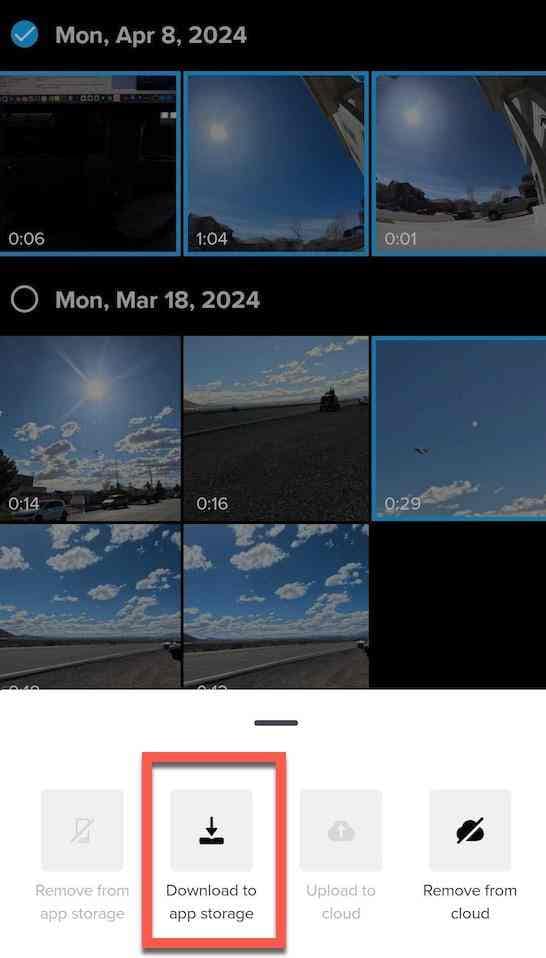
Step 1. In GoPro Quik, open Media > Quik and look for photos already downloaded to app storage. If a photo is still available in the cloud, select it and choose Download to app storage where that action is offered. Also check the Phone tab for media saved on your device. A cloud-only photo is not automatically an offline backup.
Step 2. On iPhone or Android, open Photos or Gallery and search by the date of your GoPro trip. If you deleted a copy from the phone gallery, check the phone's own Recently Deleted or Trash area, if available.
Step 3. On your computer, check the folder where you previously copied GoPro photos. If a copy was deleted from the computer after import, open Windows Recycle Bin, find that file, and choose Restore; on a Mac, check Trash and choose Put Back when available. Also check any File History or Time Machine backup. The Windows example below applies only to a file deleted from the PC, not directly from the GoPro card.
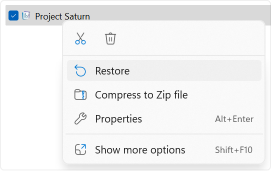
Expected result: You find a complete local JPG or RAW original and save it to a second secure location. Deleting a file directly from the camera's microSD card does not automatically place it in a computer's Recycle Bin.
Part 3. Recover GoPro Photos From an SD Card With Recoverit
If the photo is no longer in Cloud, Quik, or another backup, the original readable microSD card is the next place to look. Wondershare Recoverit Photo Recovery can scan a supported camera card for recoverable image files. It cannot recreate overwritten photos or repair physical card damage.
Scan the Card for Deleted JPG and RAW Photos
Best for: A stable GoPro microSD card that your Windows or Mac computer recognizes after you deleted JPG files or accidentally formatted the card. Recoverit's published file format list includes GPR, but format support does not guarantee that every deleted RAW photo can be found, previewed, or recovered intact.
Step 1. Turn off the GoPro, remove its microSD card, and connect the card to the computer with a reliable card reader. Do not agree to a Windows or macOS prompt to format or initialize it. Open Recoverit and select the correct card in its SD Card Recovery workflow.
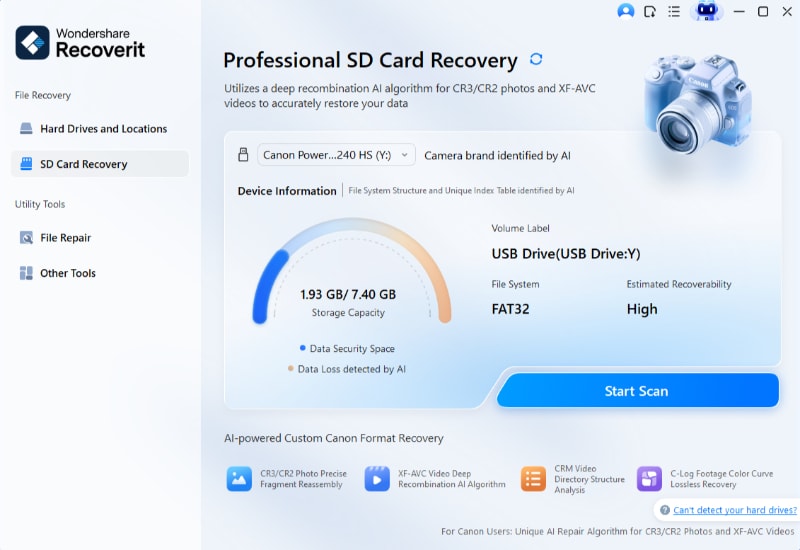
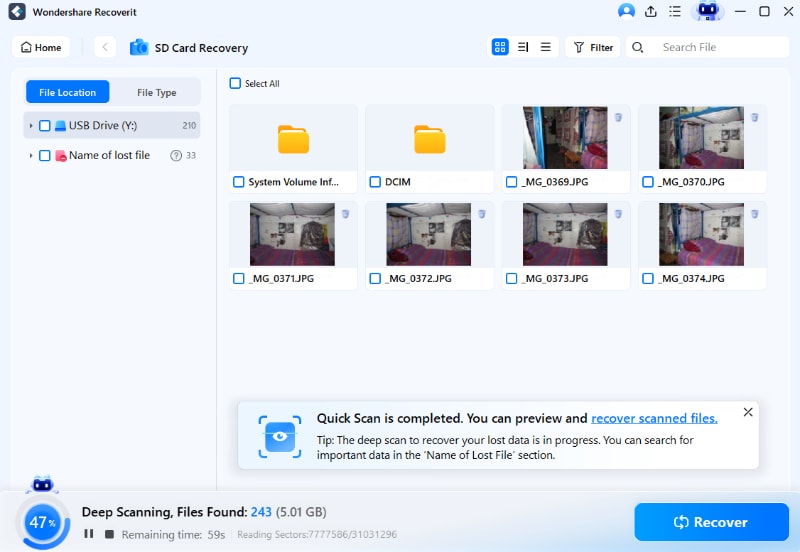
Step 2. Scan the selected card. Keep the reader connected and avoid writing anything to the source card. If the card remains stable, allow the scan to finish so Recoverit can fully parse the results before you recover files; stop instead if the card starts repeatedly disconnecting or reporting read errors.
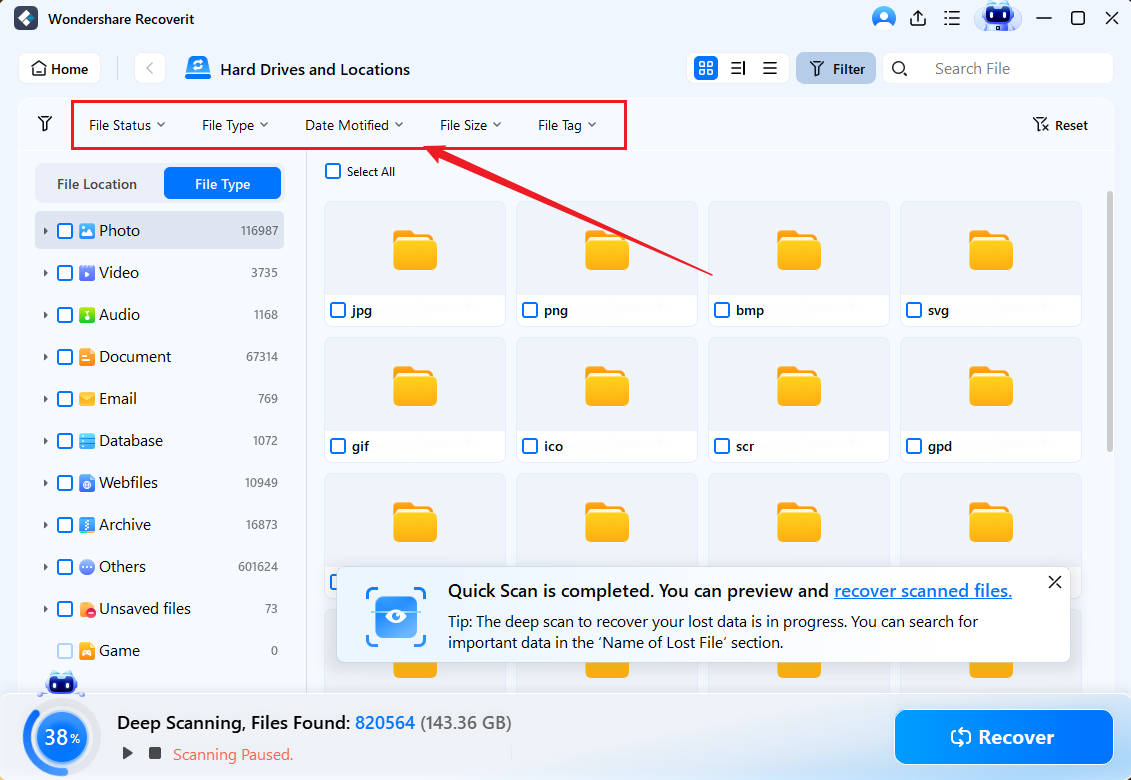
Step 3. Use the photo category or search filters to look for JPG/JPEG images and any supported RAW files, including GPR when available. Search by original file type or camera date if those details survive; filenames and timestamps may be lost after deletion or formatting.
Step 4. Preview recoverable JPG photos when the file format allows preview. Select the photos that match the lost session; a thumbnail or partial preview alone does not guarantee a fully usable restored file.
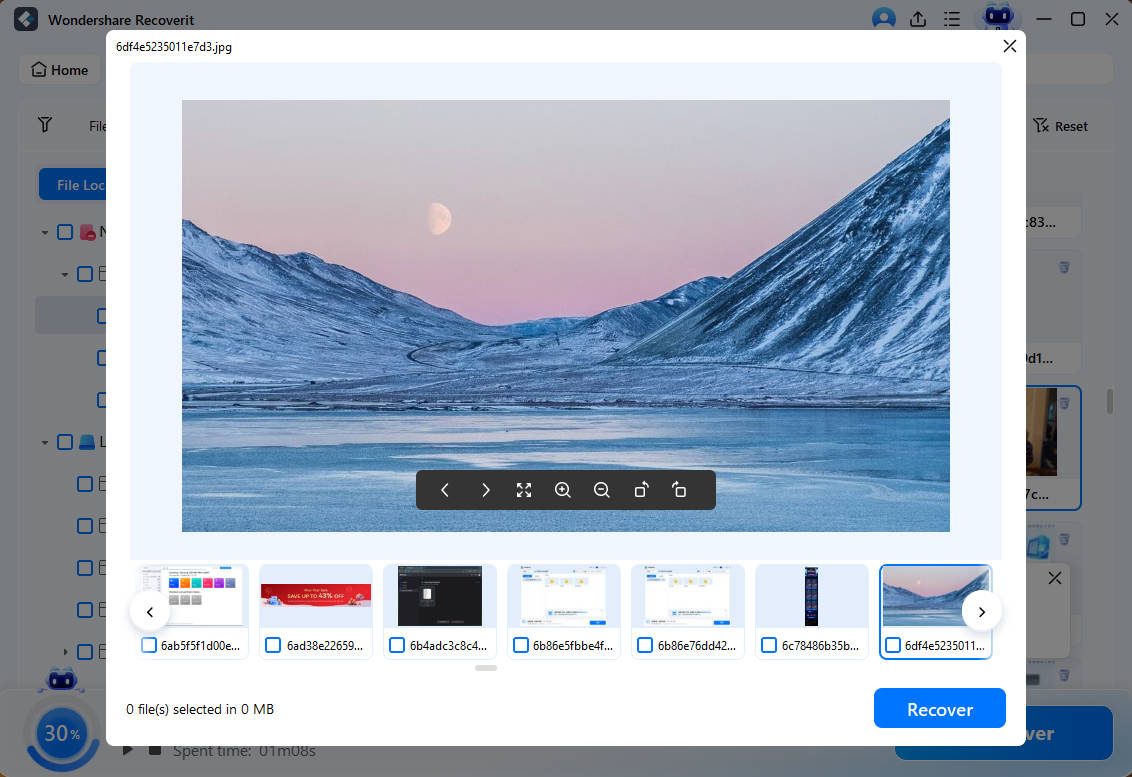
Step 5. Choose Recover and save your selected files to the computer or another healthy drive, never to the original GoPro card. Check the saved images before making any changes to the card.
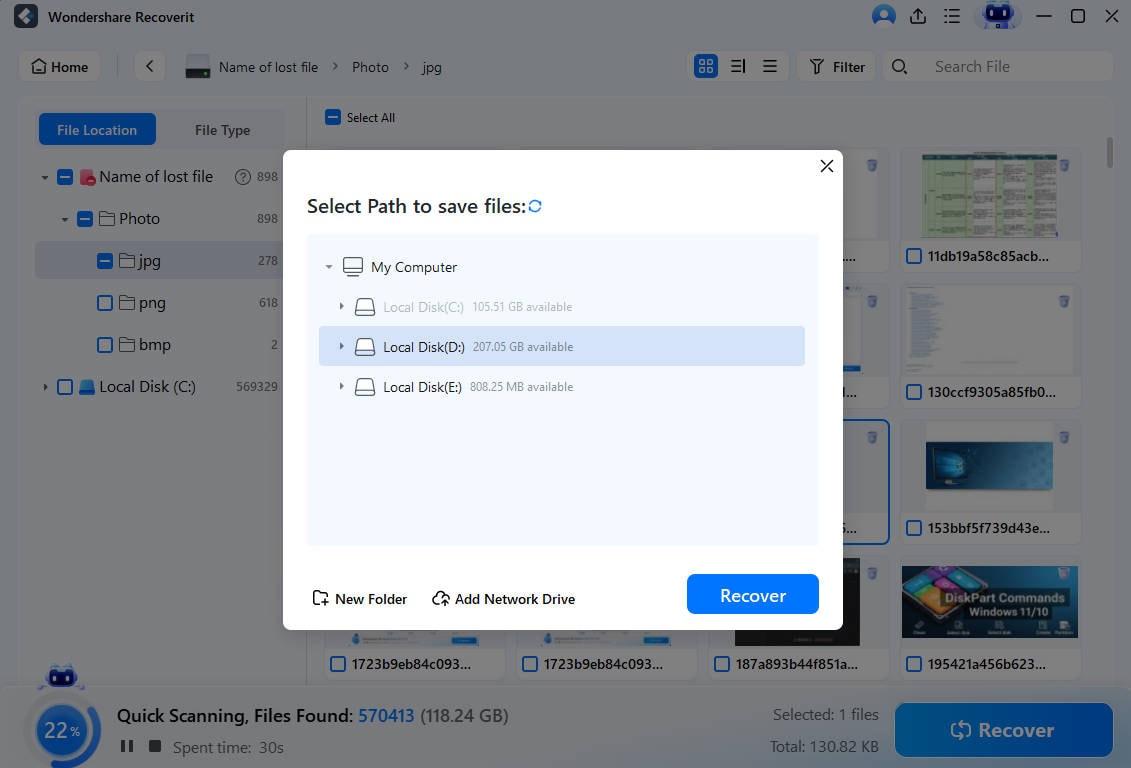
If nothing appears: Stop and reassess whether the card is stable, whether the image was actually saved to this card, and whether further scanning could be risky. No recovery tool can produce a photo whose underlying data has already been overwritten. The Recoverit Windows guide explains the current device-scan, preview, and separate-save workflow.

Verify Recovered JPG and GPR Files
Open several recovered JPG files at full size and check the details, not just their thumbnails. If a recovered .GPR file exists, open a copy in software that supports GoPro RAW/DNG-based files and inspect the image there. A RAW photo that cannot be opened in an ordinary gallery app is not necessarily deleted or corrupt.
If you need both the edited JPEG and the original RAW image, keep any matching JPG and GPR files together when they are found. Do not rename a GPR file to JPG as a repair attempt, and do not delete the card's surviving contents until the recovered files have been checked and backed up.
Part 4. Free Ways to Recover Deleted GoPro Photos
For a readable card, two established free tools offer different trade-offs. Windows File Recovery needs Windows and a command line; PhotoRec can search for recognizable picture-file signatures even when file-system metadata is damaged. Neither option guarantees that every GoPro JPG or proprietary RAW file can be reconstructed.
Try Windows File Recovery on a Readable SD Card
Best for: A GoPro microSD card detected by Windows when you want to recover deleted JPG files without a paid application. Microsoft requires a different destination drive; for FAT/exFAT SD cards, use Extensive mode.
Step 1. Install Windows File Recovery from the Microsoft Store. Insert the GoPro card and note its drive letter, for example J:. Prepare another drive, for example D:, with sufficient free space.
Step 2. Run Windows File Recovery as administrator. Replace the letters in this example with the source and destination shown on your own computer:
winfr J: D: /extensive /n *.jpg /n *.jpeg
Step 3. Confirm the scan when prompted, then inspect the recovery folder on D:. Open any found JPEGs and check whether they contain full-size images.
If it fails: This command targets JPEG photographs. It is not a promise that the tool supports the proprietary GPR RAW format on every card. If your missing files are GPR-only, check backups and the file-type capabilities of other software. Do not try a repair or format command just because Windows File Recovery found nothing.
Use PhotoRec for Missing JPG Photos
Best for: A GoPro card with a damaged file system, a quick format, or missing JPEG files when you are comfortable selecting the correct disk manually. PhotoRec is free and open-source; because it reconstructs files from signatures, recovered items may lose their original names and folders.
Step 1. Download PhotoRec from CGSecurity's official instructions. Launch it with the appropriate permissions and select the GoPro microSD card by its capacity. Double-check the disk before proceeding.

Step 2. Use File Opt to choose relevant recognized photo types, such as JPEG. Choose the correct partition and, when asked for file-system family, use Other for typical FAT/exFAT cards. On a formatted or badly damaged card, the whole partition may be appropriate; avoid making changes to its file system.
Step 3. Choose an output folder on a different disk, then start the search. PhotoRec places found files in recovery directories such as recup_dir.1. Sort recovered JPGs by dimensions, date metadata when present, and actual visual contents.

If it fails: Do not assume that PhotoRec can reconstruct every GPR file. Verify support for your specific RAW format before relying on it; finding only JPEGs or embedded thumbnails is not equivalent to recovering the original RAW images. Check PhotoRec's file-system and file-type limitations before another attempt.
Part 5. What If Your GoPro Photos Still Cannot Be Found?
A failed recovery attempt can mean the photo was saved elsewhere, the camera produced a different file type, or the card itself is failing. Identify which case applies rather than trying more utilities against an unstable card.
You Found THM Files Instead of Original Photos
A THM file is typically a small thumbnail associated with video media. Recovering it does not restore a deleted full-resolution still JPG or GPR photo. If only THM or LRV files appear, check whether you were actually searching for a video recording and use the dedicated GoPro video recovery guide.
The GPR Photo Exists but Will Not Open
First make a copy of the GPR file, then try a photo editor that can interpret GoPro's DNG-based RAW format. Check whether a companion JPG exists with a similar filename. RAW compatibility is not the same as file recovery: a photo may be intact but unsupported by the viewer you used. If the RAW file is genuinely damaged, preserve the original and distinguish a photo-repair attempt from restoring deleted data.
The GoPro SD Card Is Not Detected or Keeps Disconnecting
Try one known-good card reader or port only if the card is physically intact. If it is cracked, wet, overheating, reports No Media, or repeatedly disconnects, stop repeated scans. A specialist recovery service may be safer than consumer software. Never run CHKDSK, initialize, or format the card while valuable photos remain unrecovered; those actions can change file-system data.
Part 6. Prevent Losing GoPro Photos Again
Once you have verified your recovered pictures, set up a routine that protects the next trip's photos without relying on a single memory card:
- Confirm each backup: Check that GoPro Cloud or your chosen backup actually shows the uploaded photos before removing local originals.
- Keep original files: Copy your JPGs and any paired GPR RAW files to a clearly named folder, then back up that folder to another storage location.
- Check a sample: Open several full-size photos and a RAW file, if applicable, after transferring. File counts alone do not prove the pictures are usable.
- Only reuse the card afterward: Do not format the GoPro microSD card until important photos have been copied and verified. Follow the correct procedure for your camera model when you are ready to reuse it.
For the broader GoPro storage workflow, see GoPro photo and video recovery from microSD cards. If your loss involves camera videos rather than still images, the deleted GoPro video recovery instructions explain the additional video-file issues.
Conclusion
For deleted GoPro photos, stop using the camera and check GoPro Cloud, Cloud Trash, Quik, and any copies on a phone or computer first. If you still need the missing JPG or GPR image, scan the original readable microSD card and save recoverable files to a different drive. Verify full-size JPGs and use a compatible viewer for GPR RAW files before deciding whether recovery worked. If the card is physically failing or the photo data has been overwritten, software may not be able to bring it back.
FAQ
-
Can you recover deleted GoPro photos?
Sometimes. Check GoPro Cloud or previously transferred copies first. For a deleted JPG or RAW photo on a readable microSD card, recovery may be possible if the file data has not been overwritten. Stop shooting and save any recovered photos to another drive. -
How do I recover deleted GoPro photos for free?
First check copies already in Quik, GoPro Cloud, your phone gallery, or a computer backup. On Windows, Windows File Recovery can search a detected SD card for JPG/JPEG files using Extensive mode. PhotoRec is another free option for recognized JPEG images, but it may lose filenames and does not guarantee proprietary RAW recovery. -
Where are GoPro JPG and GPR photos stored?
GoPro still photos are commonly stored on the camera's microSD card. With RAW enabled in supported modes, some cameras save a JPG together with a GPR RAW image. The precise file layout and RAW availability depend on the camera model and settings. -
Can I recover photos after formatting a GoPro SD card?
Possibly, if the card remains readable and the photos have not been overwritten by new recordings. Do not format it again or save anything to it. Scan the original card and recover files to a different healthy disk; outcomes are not guaranteed. -
Does GoPro have a Recently Deleted folder?
GoPro offers a Trash area for eligible media in its web Cloud Media Library. That is not the same as claiming every GoPro camera has an on-camera Recently Deleted folder. Cloud Trash can help only with media previously uploaded and still available to restore. -
Why can I open a recovered JPG but not its GPR RAW file?
GPR is a GoPro RAW format based on DNG and needs a compatible editor. Try opening a copy with supported RAW software. If the file is actually incomplete or damaged, a compatible viewer alone cannot rebuild missing data.


