 TL;DR:
To successfully recover missing CapCut content, determine whether you lost an editable project or an exported video: check the correct signed-in CapCut workspace or cloud Trash for projects, and check your device's recently deleted photo folders or system backups for exported MP4s.
● Do not uninstall the CapCut app, clear app data, or save new files to your device, as these actions will permanently erase unsynced local drafts and overwrite recoverable exported videos.
● CapCut cloud and web projects can be restored from the workspace Trash within a 30-day retention window, but this feature does not apply to mobile-only local drafts.
● Local data recovery software can sometimes retrieve deleted exported MP4 files from readable drives, but it cannot access CapCut cloud servers or reconstruct a vanished editing timeline.
Ask AI for a summary
 ChatGPT
 Perplexity
 Gemini
 Claude
 Grok
Quick answer: First determine what disappeared: an editable CapCut project or an exported video file. Check the same CapCut account and Projects list; if a cloud project was deleted, inspect any available Trash before its retention expires. For exported videos, check Photos/Trash or computer backups. File recovery software can sometimes help with deleted local video files, but it cannot reliably reconstruct a missing CapCut editing timeline or fetch a deleted cloud project.
Before you try anything: Do not uninstall CapCut, clear app data, start a new edit on the affected storage, or reset the phone. These steps may remove the only remaining local draft or overwrite a recoverable video. Save any accessible copy first.
In This Article
Part 1. What Can You Recover From CapCut?
The word “video” can mean an editable CapCut timeline, an export saved to a device, or the original camera footage. Their recovery options differ, so identifying the missing item is more useful than starting with a generic video scanner.
Identify What Was Deleted
Use this decision table to choose the least destructive route. A project may reference original clips without containing separate full copies of them.
| Missing item | First place to look | What recovery can do |
| CapCut draft/project | Projects on the same device/account; cloud workspace or Trash where supported | Restore an existing project copy; a lost editing timeline may not be reconstructable |
| Cloud project moved to Trash | CapCut cloud/web Trash under the account that owns it | Restore within the available retention window when that control exists |
| Exported MP4 on iPhone/iPad | Photos Recently Deleted and configured backups | Restore an existing file, not the editable project |
| Exported MP4 on Android | Google Photos Trash and file manager folders | Restore from Trash or a backup, if present |
| Exported video on a computer | Recycle Bin/Trash, File History/Time Machine, prior exports | Local file recovery may help when data has not been overwritten |
A project file and its source media are separate assets. If the project still opens with “media missing,” restore the original source files before expecting the timeline to play normally.
Part 2. Find Missing or Deleted CapCut Projects
Start inside CapCut if the lost item was a draft or editable timeline. The mobile, desktop, and web interfaces do not have identical storage or deletion behavior, and Trash availability depends on where the project was stored.
Check Drafts and the Correct CapCut Account
A project that is merely not visible may still exist on another signed-in profile, workspace, or device. Inspect these locations without reinstalling the app.
Step 1. On your iPhone, Android phone, or iPad, open CapCut and inspect the Projects area under the account used to edit the video.
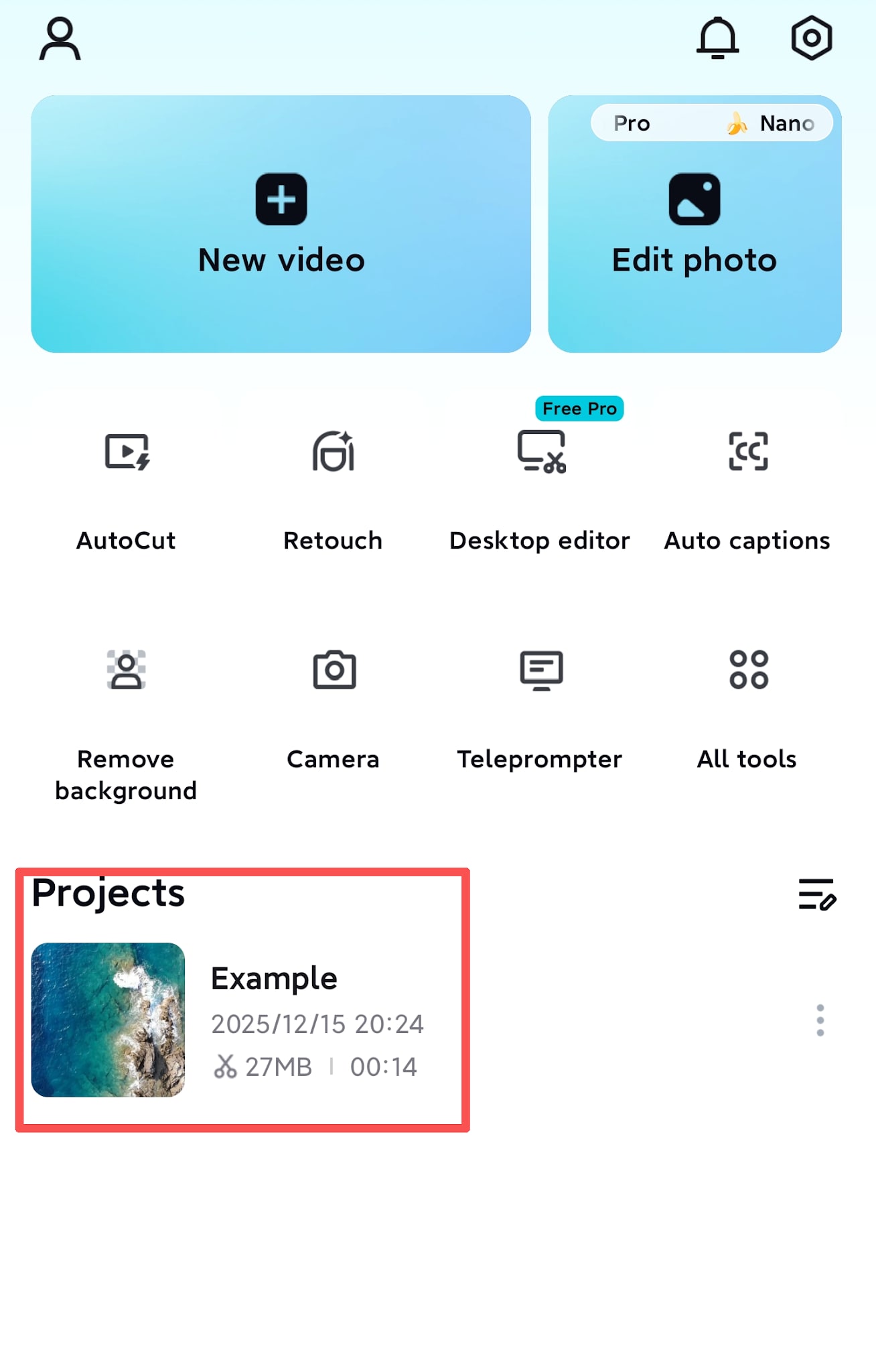
Step 2. On a computer, open the CapCut desktop home screen and check its Projects section. Confirm the account rather than creating a new project with the same title.
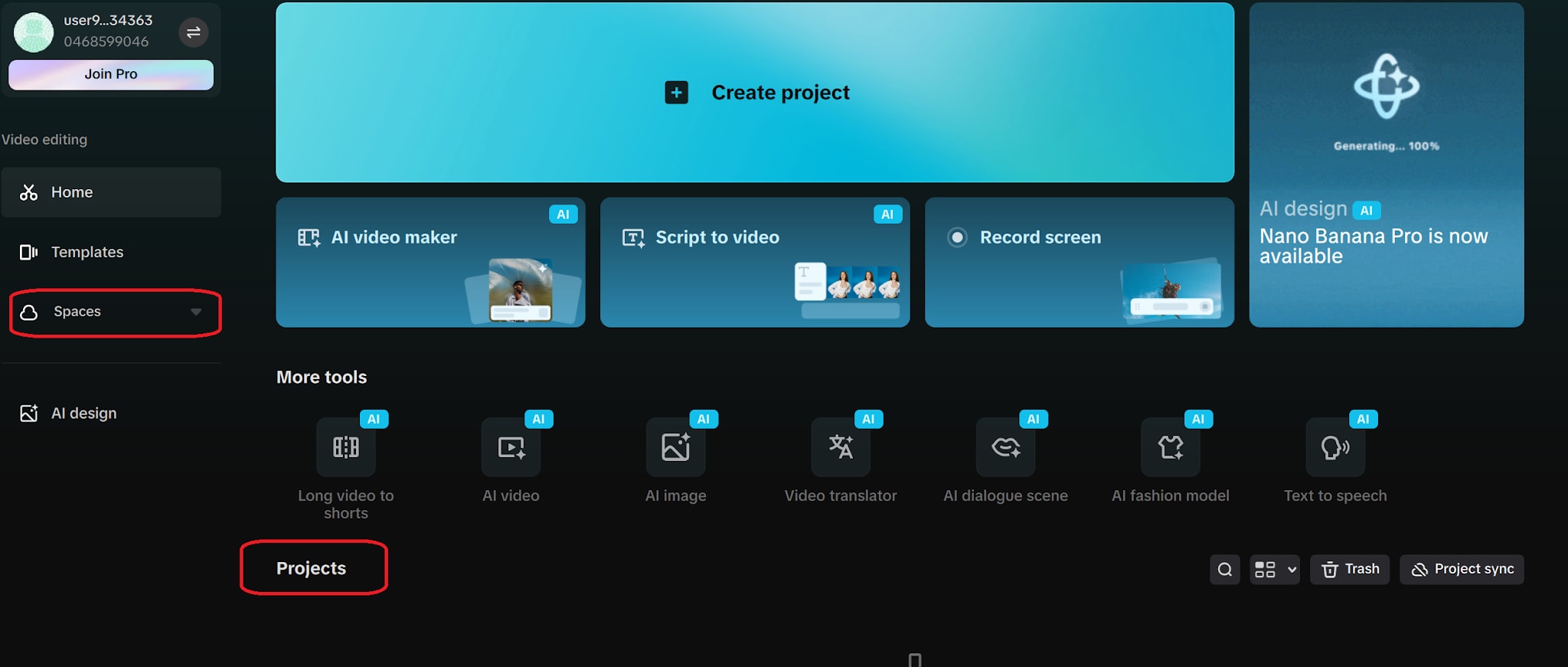
Step 3. Check any CapCut cloud or workspace you previously enabled. If a project reappears, open it to verify that the timeline and linked source files are available; then create a separate export or backup.
CapCut explains that local drafts, app storage, and cloud projects are not interchangeable. Consult the official CapCut project-management guidance for the interface shown in your version.
Check CapCut Cloud or Web Trash
If the deleted project was in CapCut cloud/web storage, a Trash action may be available. Do not assume this feature is a universal “Recently Deleted” folder for every mobile local draft.
Step 1. Sign in to the original CapCut account on the supported web or desktop interface, open its projects/workspace, and look for the affected project or its Trash.
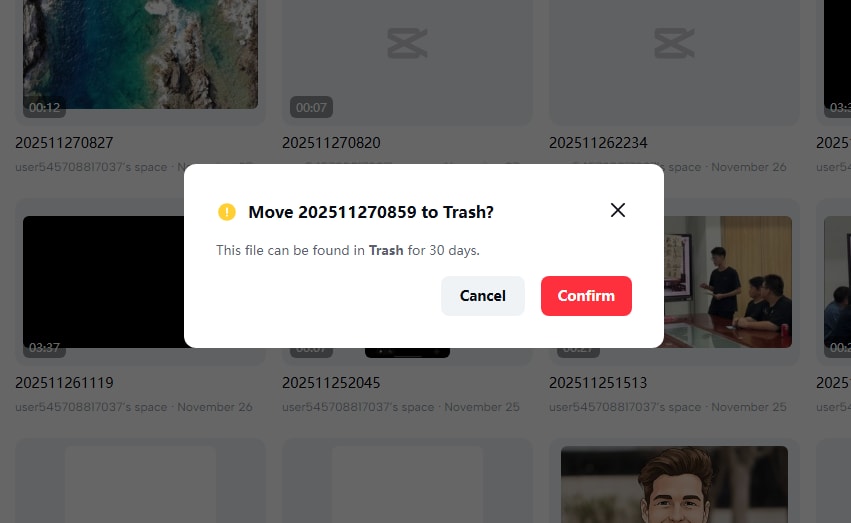
Step 2. In the CapCut web project list, the project menu can show Move to Trash. The image below identifies the cloud/web workflow rather than a deleted phone-only draft.
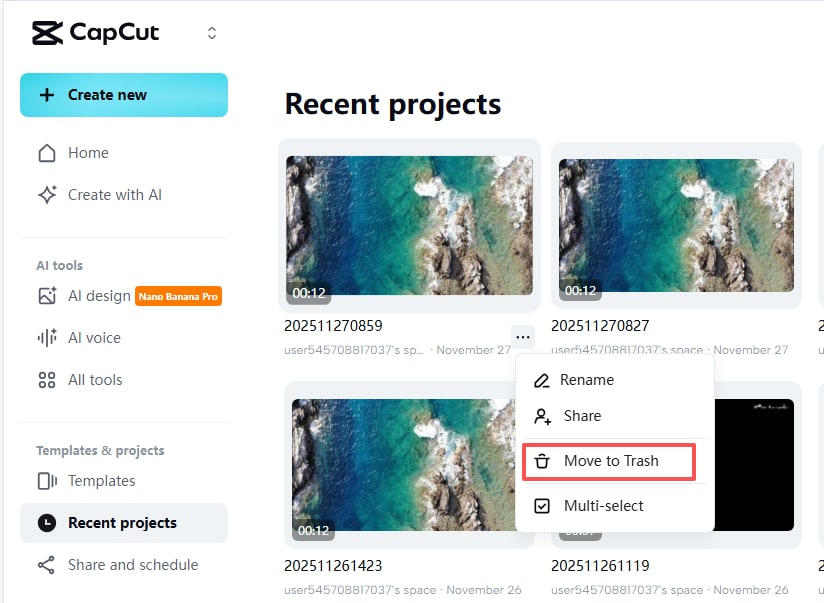
Step 3. Follow the Trash/restore controls shown by your signed-in version. In the pictured web flow, the confirmation says the project can be found in Trash for 30 days; that period should not be generalized to all CapCut local drafts.
Step 4. If using the desktop version, check whether the affected item belongs to a cloud workspace and whether a Trash control is present. Verify the restored project opens with its media.
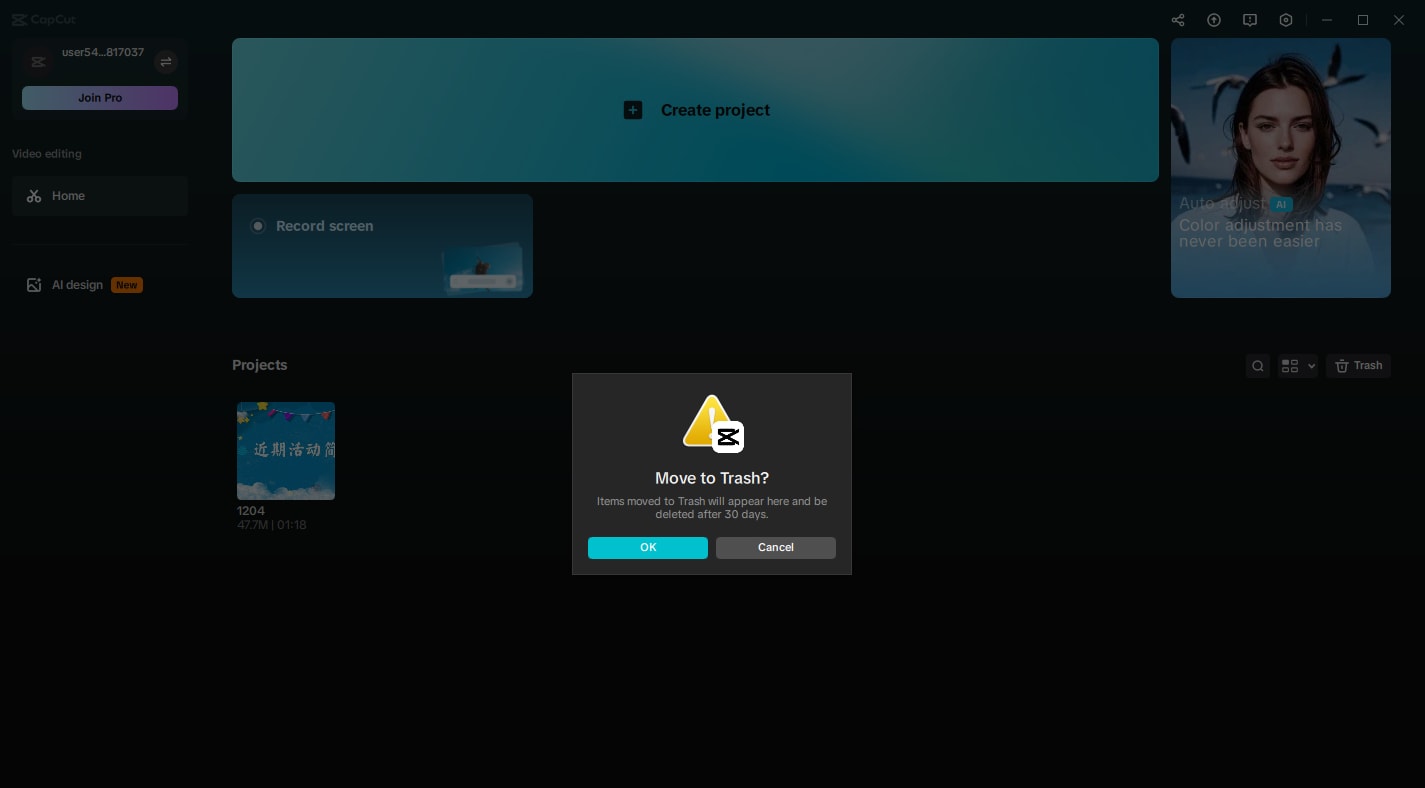
Note: If you cannot see the expected cloud project, confirm the login method and workspace first. A deleted local-only draft may not appear in online Trash even when the same account is signed in.
Part 3. Recover an Exported CapCut Video on iPhone and Android
An MP4 exported from CapCut is often stored in your phone gallery or media library. Restore that exported file using the phone’s own deletion and backup tools before trying recovery software.
Check iPhone Photos Recently Deleted Videos
Apple Photos offers a specific recovery window for videos deleted from its library. This restores an exported video only; it does not rebuild CapCut draft edits.
Step 1. Open Photos on the iPhone or iPad and navigate to Recently Deleted within its collection/utilities area. Authenticate if prompted.
Step 2. Select the video and choose Recover if it is still available. Apple generally keeps deleted Photos items for 30 days before permanent deletion.
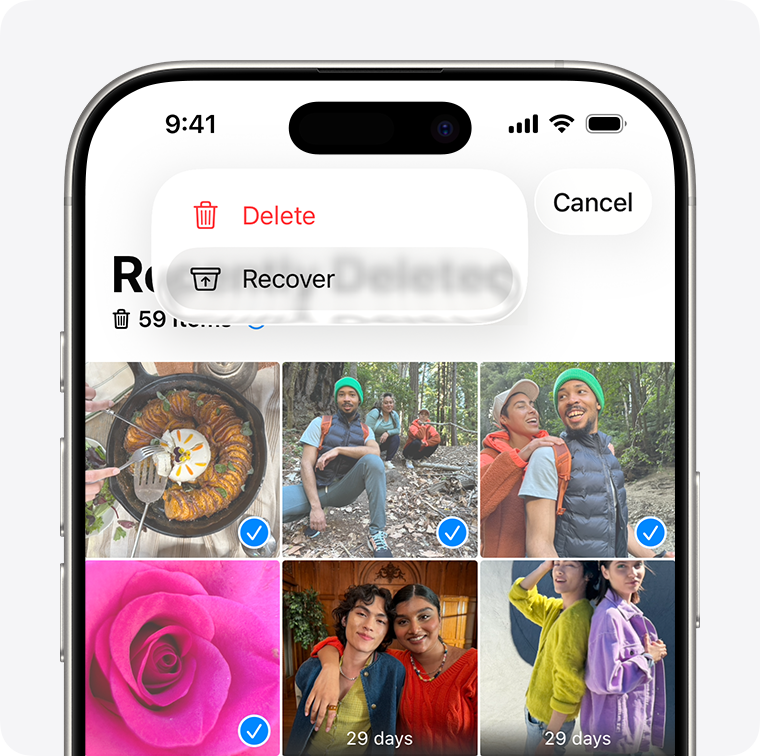
Step 3. Return to the Photos library and play the export. If it was saved to Files rather than Photos, also check the Files app’s Recently Deleted section and any configured iCloud or device backup. See Apple’s deleted-photo recovery instructions.
Check Android Google Photos Trash
On Android, the outcome depends on where CapCut exported the file and whether Google Photos backed it up. Google Photos Trash is not the same as the CapCut project list.
Step 1. Open Google Photos and find the Trash under Collections/Library as presented by your installed app version. Look for the deleted exported video.
Step 2. Select the video and use Restore if offered. Backed-up videos may remain in Trash for up to 60 days; items without backup generally remain for 30 days, subject to Google’s current policy.
Step 3. Also check the phone’s file manager or manufacturer’s Gallery Trash if the export was not in Google Photos. Verify playback after restoration. Use Google Photos’ official restore guide for the current screen labels.
Note: No independently authenticated Google Photos UI image was available for redistribution in this pass. Use the official support page when matching the screen; do not substitute a fabricated interface.
Part 4. Restore Missing CapCut Videos on Windows or Mac
When the missing item is an exported MP4, source clip, or separate backup on a computer, check system-provided recovery paths first. They preserve more original context than an unrestricted disk scan.
Check Windows Recycle Bin and File History
Windows deletion and backup features may still retain a copy of a previously saved video even if the CapCut project itself is gone.
Step 1. Open the Recycle Bin and look for the video by its filename or deletion date. If found, choose Restore to return it to its original folder.
Step 2. If File History was configured before the file went missing, navigate to the original file folder, open Restore previous versions or File History, and inspect the dated backups.
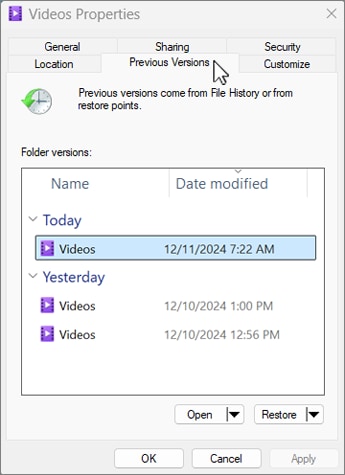
Step 3. Restore a copy of the video, ideally to another location, and verify playback. File History cannot recreate a backup that was never enabled. Microsoft documents the workflow in Windows File History help.
Check Mac Trash and Time Machine
On Mac, first look for a straightforward Trash recovery, then use Time Machine only when backups were already running before the deletion.
Step 1. Open the Trash and select the deleted video. Use Put Back if it is still there.
Step 2. If Time Machine was enabled, open the folder that held the export in Finder and enter Time Machine. Navigate to a backup from before the video disappeared.
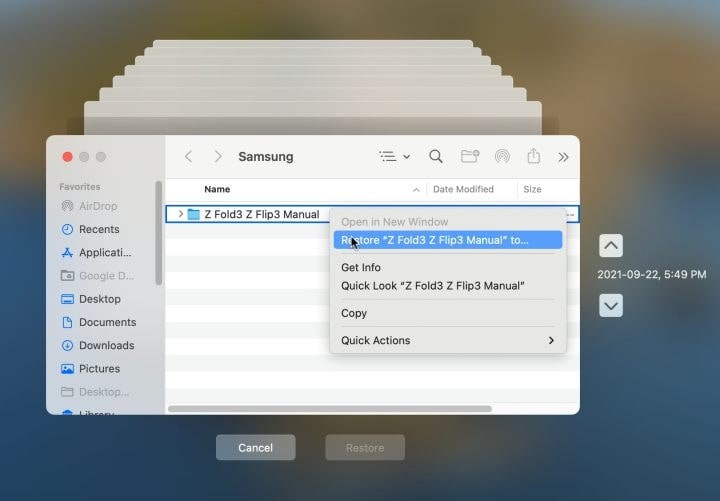
Step 3. Select a matching file, choose Restore, and check the restored file before editing further. The Apple Time Machine guide explains restoration and its prerequisites.
Part 5. Use Recoverit for Deleted Local Video Files
Manages over 500 data loss situations, such as deletion, formatting, and disk corruption.The user-friendly interface allows you to recover data in just a few clicks.

Only consider disk recovery if the missing item was a real video file stored on a device or connected drive and it is not present in Trash or available backups. Scanning a drive cannot access CapCut’s cloud servers or reliably reconstruct the structure of a deleted editing project.
When a Local File Scan Makes Sense
A local scan may be useful for an MP4 that was deleted from a Windows/Mac drive, USB device, memory card, or another supported medium that the operating system can still detect.
- Stop saving new files to the original drive to reduce overwriting.
- Do not format, initialize, reset, or run repair tools on the source before protecting the files.
- On modern phones, encryption and storage restrictions can make deleted app drafts or videos inaccessible to desktop recovery tools.
- If the storage repeatedly disconnects or is physically damaged, consult a professional recovery service.
Scan and Preview a Recoverable Video
For a readable local storage device, the goal is to recover the original video file—not CapCut’s vanished editing state. Save anything recovered to a different healthy drive.
Step 1. Launch Wondershare Recoverit on a computer, connect the source storage if needed, and select the drive or location where the deleted export was last saved. Follow the official Recoverit recovery guide.
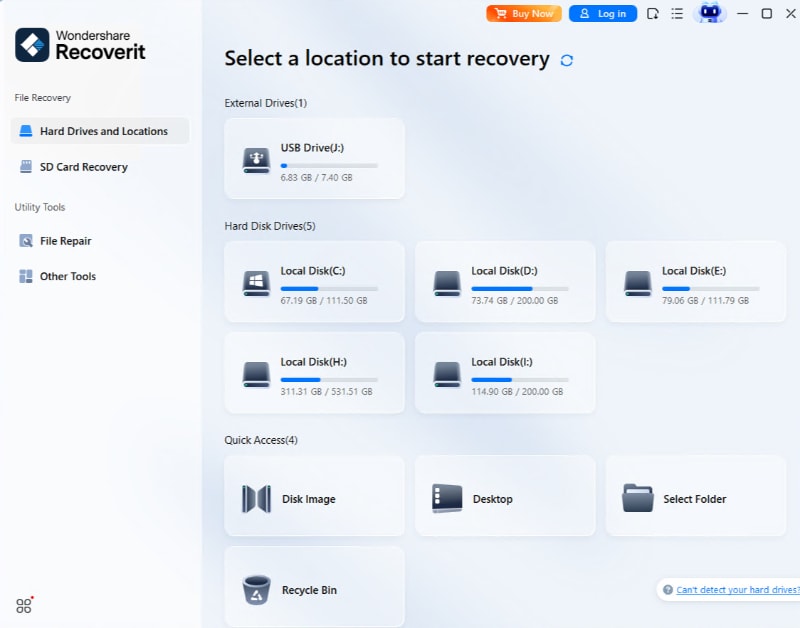
Step 2. Start the scan and filter the results by the relevant video file types or filenames. Preview available results where the preview feature supports the file.
Step 3. Select the matching video and recover it to another healthy storage device. Verify the recovered video plays before editing or deleting anything else. Recovery is not guaranteed if the file data has already been overwritten.
Part 6. When a CapCut Draft Cannot Be Restored
Some missing projects no longer have a usable cloud or local copy. In that case, protect remaining media and identify whether a new edit can be rebuilt from the originals rather than attempting destructive reinstalls.
After an App Uninstall or Cleared App Data
If a project was stored only in app-local data, uninstalling CapCut or clearing its storage may remove the sole editing copy. Reinstalling the app is not a guaranteed way to restore it; cloud projects and previously exported MP4 files must be checked separately.
If the timeline is gone but the original source footage remains in Photos, Files, or a computer, import those sources into a new project and rebuild the edit. This may restore the final content but not the original effects, transitions, or timeline history.
How to Avoid Losing a Project Again
Once the immediate recovery attempt is complete, create two independent copies of important exports and any project backup your CapCut version supports. Confirm cloud syncing is complete before deleting local files or changing devices. Keep original footage until the final export has been independently verified.
Conclusion
Start with the location of the missing CapCut item. Projects belong in the correct account, Projects list, or supported cloud Trash; exported videos belong in device Photos, Trash, and backups. Recoverit becomes relevant only when an actual local video file was deleted and may still be recoverable. Avoid further changes to the source until you have checked each plausible copy.
FAQ
-
Can I recover a deleted CapCut project?
Sometimes. Check the same account, device Projects list, and cloud/web Trash where supported. A local-only project deleted with app data may not have a recoverable timeline. -
Does CapCut have a Recently Deleted folder?
CapCut cloud/web project management can offer Trash, but do not assume that a phone-only local draft has the same trash or retention window. Check the storage type first. -
How do I recover deleted CapCut projects on an iPad?
Open CapCut on the original iPad and account; inspect Projects and any synced cloud workspace. For videos exported to Apple Photos, check Photos Recently Deleted. -
Can I recover CapCut drafts after uninstalling the app?
Only if a usable cloud, backup, or other project copy survives. Reinstalling alone does not guarantee restoration of unsynced local draft data. -
Can I recover deleted CapCut videos on Android?
For exported videos, check Google Photos Trash and the phone gallery or file manager. Recovery of deleted local CapCut app drafts is a different, generally less reliable problem. -
Will Recoverit restore a CapCut editing project?
Recoverit can scan supported local storage for recoverable video files; it cannot promise reconstruction of a deleted CapCut timeline or cloud project. -
How long can CapCut cloud projects remain in Trash?
The verified web project confirmation shown in this article states 30 days. Availability and retention depend on CapCut product, version, and storage type; do not apply that period to every local draft.


