
 TL;DR:
Error Code 224002 indicates an HTML5 media decoding failure in JW Player, which you must troubleshoot by isolating browser conflicts before altering settings or assuming a file is permanently broken.
● If the video successfully plays in an incognito window or an alternate browser, the failure stems from your primary browser profile, requiring you to temporarily disable extensions or clear the affected website's specific cached data.
● When a specific video consistently fails across multiple updated browsers while other online content plays normally, the website is serving a damaged media segment that only the site publisher can resolve.
● Do not use data recovery software as a first response to online streaming errors; desktop tools like Recoverit File Repair are strictly applicable only when a downloaded, local MP4 or MOV file fails to open in offline media players.
Ask AI for a summary
 ChatGPT
 Perplexity
 Gemini
 Claude
 Grok
A video stops halfway through a lesson or refuses to start, and the player displays “This video file cannot be played (Error Code: 224002).” Start by reloading the page and trying the same video in another browser. If it works there, check your original browser's extensions and site data. If it fails everywhere but other videos play, the website or its video stream may need attention from the site owner.
In JW Player's error reference, 224002 means the browser failed to decode the media. That does not, by itself, mean a video saved on your computer is damaged or missing. The checks below help you narrow down the failure before changing browser settings or installing anything.
In This Article
-
- Fix 1. Reload the Video and Compare Browsers
- Fix 2. Test a Private Window, Then Disable Conflicting Extensions
- Fix 3. Update Your Browser and Check Video Permissions
- Fix 4. Clear Website Data Only When a Browser-Specific Problem Persists
- Fix 5. Check Firefox or Safari Settings, or Reset Chrome as a Last Resort
Part 1. What Does Error Code 224002 Mean?
JW Player identifies 224002 as an HTML5 media decoding error: playback began loading but the browser could not decode the video resource. Its adjacent code 224003 means the browser does not support the media source. The messages can look similar, but the underlying categories differ. See the JW Player error reference for the exact definitions.
The number alone does not tell you whether the fault is in your browser, a particular video stream, or the website's delivery setup. A short comparison will point you toward the right fix.
| What happens | More likely area to check | Best next action |
| The same video plays in another browser | Browser settings, extensions, or cached site data | Use a private window, then test extensions |
| Other videos work, but this one fails in every browser | The specific video or the website's streaming setup | Report the video URL to the site owner |
| Multiple videos fail across websites | Browser update, network, or device playback environment | Check browser updates and connection |
| An MP4 downloaded to your computer also fails in a local media player | A local file or format problem, separate from the website error | Keep the original file and diagnose it separately |
Part 2. How to Fix Error Code 224002 in Chrome and Other Browsers
Begin with checks that do not change your saved settings. Move on to updates or clearing website data only when the comparison suggests a browser-specific issue. Test the original video after each change so you know which action helped.
Fix 1. Reload the Video and Compare Browsers
Use this first when a single webpage reports error 224002. Comparing the same URL is more useful than guessing whether a codec or extension is responsible.
- Reload the page once. If the website has a sign-in requirement, make sure your session is still active.
- Open another video on the same website. Note whether it plays normally.
- Copy the failing page's URL and open it in an up-to-date second browser, such as Firefox, Safari, or Edge. Use the same account where required.
- If practical, try a different network to distinguish a local connection problem from a website-specific issue.

Success check: The original video plays in the alternate browser or after reloading. If it plays only in the alternate browser, continue with Fix 2. If it fails in both while other videos work, jump to Part 3; repeatedly resetting your browser is unlikely to help.
Fix 2. Test a Private Window, Then Disable Conflicting Extensions
Use this when the video fails in regular Chrome but works in another browser. Privacy tools, script blockers, or extensions can sometimes interfere with a site's video player. A private-window test helps isolate the browser profile, although private browsing does not turn off extensions explicitly allowed to run there.
- In Chrome, select More > New Incognito window, then open the video URL.
- If it plays, return to the regular window and open More > Extensions > Manage extensions.
- Temporarily turn off extensions, especially ones that filter website scripts or media requests. Reload the video.
- If playback returns, re-enable extensions one at a time until the conflict reappears. Keep the conflicting extension disabled for the affected site or adjust its settings.

Success check: Playback works with a particular extension disabled. If the private window fails too, move to the browser update and site-data checks. Google's Chrome video troubleshooting guide uses the same private-window comparison.
Fix 3. Update Your Browser and Check Video Permissions
Use this if several video sites fail, especially after an operating-system or browser change. Chrome normally updates in the background, but an update may still need a relaunch.
- In Chrome, open More > Help > About Google Chrome. Let Chrome check for an update and select Relaunch if it appears.
- Return to the video and retry. If the page has interactive playback controls that never load, check Settings > Privacy and security > Site settings > JavaScript and confirm the affected site is allowed to use JavaScript.
- If you're using Firefox or Safari, install an available browser or system update through its official update controls, then retry the same URL.

Success check: The page loads and the video plays after relaunch. If the browser is already current, do not keep reinstalling it; test stored site data next. Google documents the Chrome update route and video playback settings.
Fix 4. Clear Website Data Only When a Browser-Specific Problem Persists
Use this when the video works in a private window or another browser, but not in your usual window. Old cached files or website data can be involved. Start with data for the affected site where the browser offers that option; removing all cookies may sign you out of unrelated services.
- In Chrome, open Settings > Privacy and security. Find the site's stored data through Chrome's site-data settings, search for the affected domain, and remove its data. Menu wording can vary by version.
- If you cannot locate a site-specific option, open More > Delete browsing data and choose Cached images and files first. Only select cookies and site data if necessary and you can sign in again afterward.
- Reload the failing video and sign back in to the website if prompted.

Success check: The video plays in the normal window after reloading. If it still fails but the same video plays elsewhere, proceed to Fix 5. Google's browsing-data guide describes what clearing each category removes.
Fix 5. Check Firefox or Safari Settings, or Reset Chrome as a Last Resort
Use this once you have narrowed the problem to your own browser. Switch browsers only for comparison; do not change every browser's settings at once.
- Firefox: Open Help > Troubleshoot Mode to temporarily disable extensions and certain graphics features. If the video works in this mode, investigate an extension or hardware acceleration setting using Mozilla's troubleshooting guide.
- Safari on Mac: Open the video in a New Private Window. If it works there, use Safari > Settings > Privacy > Manage Website Data to remove data for the affected site, or review Safari extensions. See Apple's Safari troubleshooting steps.
- Chrome: If videos fail on multiple websites after the earlier checks, open Settings > Reset settings > Restore settings to their original defaults. Review the confirmation before resetting; you may need to restore custom startup, extension, and site settings afterward.

Success check: Test the original URL once after the targeted change. If it still fails in multiple browsers, stop resetting settings and investigate the website, account access, or stream itself.
Part 3. What If Error 224002 Appears Only on One Website?
If one hosted video fails on several up-to-date browsers and another video on the same device plays, there may be nothing useful left to change on your computer. The website could be serving a damaged media segment or a stream that the player cannot decode in your environment. The exact fault requires information from the service owner; error 224002 alone does not prove a server defect.
Contact the website's support team or video publisher and include the page URL, the exact error number, the browser and device you tried, the approximate time, and whether other videos play. Mention any difference between Wi-Fi and mobile data. If the video belongs to a course, workplace portal, or subscription service, use its official support channel instead of a third-party download site. Never share your password or a private video link publicly.
Success check: The publisher provides a working video source, an alternative player, or a confirmed service update. If the page becomes playable in a different browser in the meantime, use that workaround while awaiting a fix.
Part 4. When Can Recoverit Help With a Video That Will Not Play?
A browser error and a damaged local file are different problems. Recoverit cannot change a website's JW Player configuration or restore a stream you only watched online. Its desktop tools become relevant when you also have an actual video file saved on supported storage that has gone missing or cannot be opened locally.
If Your Own Downloaded Video Is Damaged
If your own local MP4 or MOV file fails in more than one offline media player, keep an untouched copy first. Recoverit File Repair provides a workflow to add a damaged file, attempt repair, preview the result, and save a separate copy. The official Recoverit Mac Guide also documents the repair workflow.
The screenshots below show the Windows workflow. For a Mac, use the official Mac guide if the interface differs.
- Open Recoverit File Repair on your Windows or Mac computer, choose the video repair option, and add the damaged local file.
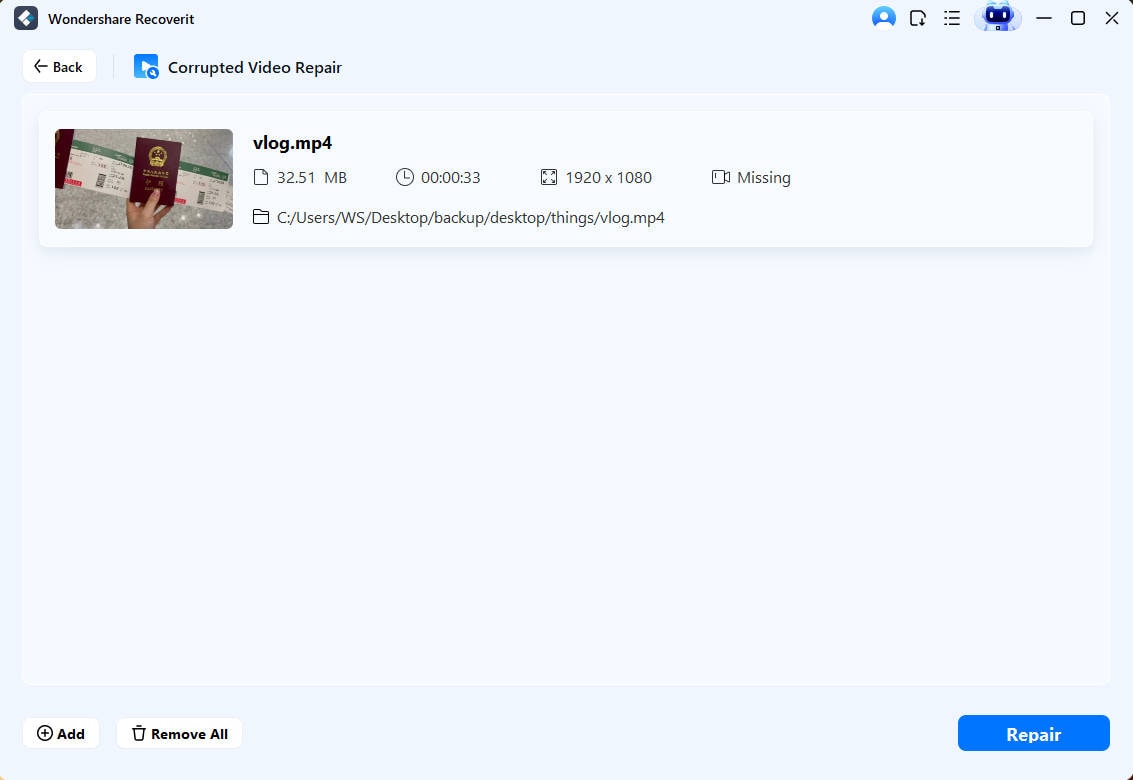
- Start Repair and wait for the result. If standard repair cannot handle the damage, consider the advanced option where available and provide a suitable undamaged sample as the official guide specifies.
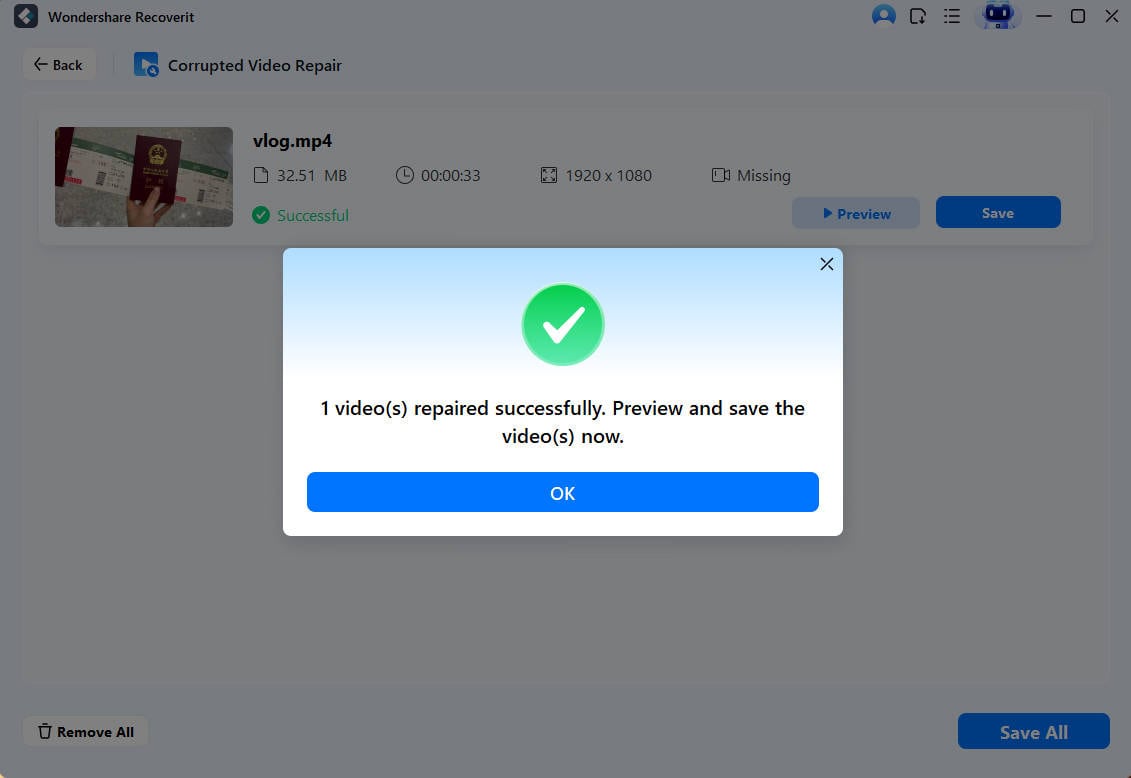
- Open Preview to confirm the video plays and contains the expected content. If the result looks usable, save the repaired copy somewhere different from the source and compare its playback and duration with the original recording.
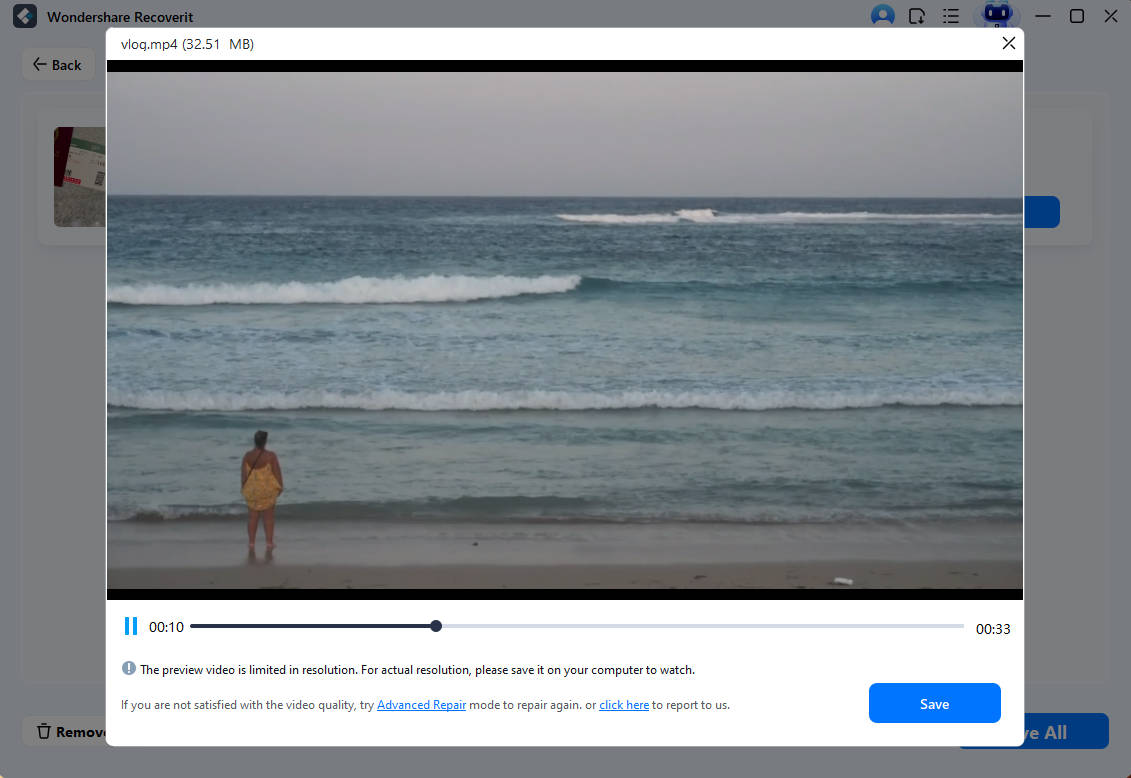
Success check: Your saved copy opens and plays locally. If it does not, retain the original and seek a different source copy or specialist help; a browser error code by itself is not evidence that file repair will work.
If the Original Video File Was Deleted or Lost
If your recording was deleted from a PC, camera card, or supported external drive, stop writing new data to that source. Recoverit File Recovery can scan supported storage for lost files, let you preview recoverable candidates when available, and save results to another healthy drive. For a video-specific loss, see Recoverit Video Recovery. Recovery depends on the source condition and whether the data has been overwritten.
For a missing or damaged local video, use the corresponding Recoverit workflow. For an online-only 224002 error, continue with the browser and website steps above rather than downloading data-recovery software as a first response.
Conclusion
When you see Error Code 224002, start with a browser comparison instead of assuming the video is permanently broken. The official JW Player definition points to a decoding failure, but checking whether the issue follows the website, browser, or local file tells you what to do next. Try a private window, update the browser, and remove affected site data only if the evidence points to your settings. If the same online video fails everywhere, contact the video publisher. Reserve Recoverit's local-file repair or recovery tools for a separate, real problem with your own saved video.
FAQ
-
Is error code 224002 the same as error code 224003?
No. In JW Player, 224002 means the browser could not decode the media. Code 224003 indicates the source is not supported by that browser. Both stop playback, but they point to different failure categories. -
Why does a video play in Incognito but fail in a regular Chrome window?
That suggests a difference in extensions or stored browsing data. Test extensions one by one first, then consider removing the affected website's cached data. Private windows can still run extensions explicitly allowed there. -
Will clearing Chrome cache delete my downloaded videos?
Clearing cached images and files removes temporary browser copies, not video files you previously downloaded to a folder. Deleting cookies and site data can sign you out of websites, so check the selected categories before confirming. -
Can I fix error 224002 on my phone?
Try the same video in an updated mobile browser and, if available, a private tab. If only one website fails across devices, contact its publisher. Desktop Recoverit is not a way to repair a live stream or directly scan an Android or iOS phone.


