


 TL;DR:
To successfully update Microsoft Office on a Mac, you must use the specific updater that matches your original installation source: Microsoft AutoUpdate for direct Microsoft downloads, or the Mac App Store for Apple-managed installations.
● Run the Terminal command mdls -name kMDItemAppStoreReceiptType /Applications/Microsoft\ Word.app to verify an unknown installation source; a (null) output means you must use Microsoft AutoUpdate, while Production means you must use the Mac App Store.
● Microsoft only supports Office updates on the three most recent major versions of macOS, and perpetual licenses stop receiving updates after their support lifecycles expire, such as October 10, 2023, for Office 2019 and October 13, 2026, for Office 2021.
● If the Check for Updates option is completely missing from a Microsoft-installed app menu, do not alter your DNS or firewall settings; instead, download and reinstall the newest Microsoft AutoUpdate package to repair the broken update service.
Ask AI for a summary
 ChatGPT
 Perplexity
 Gemini
 Claude
 Grok
Grok
To update Microsoft Office on Mac, first identify where your Office apps came from. If Word, Excel, PowerPoint, Outlook, or OneNote was installed from Microsoft, use Help > Check for Updates to open Microsoft AutoUpdate. If the apps came from the Mac App Store, update them from App Store > Updates. Choosing the wrong updater is one of the most common reasons an Office update seems to be missing.
Before updating, save open documents and make sure important local files are backed up. An Office app update should not normally delete your documents, but a failed macOS update, damaged storage, or an unrelated deletion can create a separate data-loss problem. This guide keeps the update process and file recovery clearly separated.
- Microsoft-installed Office: Open an Office app, choose Help > Check for Updates, then use Microsoft AutoUpdate.
- Mac App Store Office: Open the App Store, select Updates, then update the Office apps listed there.
- Office will not update: Verify the install source, update Microsoft AutoUpdate, confirm macOS support, and check whether your Mac is managed by work or school.
- Office files are missing: Treat that as a separate file-recovery issue and avoid writing new data to the affected drive until the files are safe.
In This Article
Part 1. Before You Update Microsoft Office on Mac
Office for Mac can be updated through two different systems, and the correct route depends on how the apps were installed. Checking that first prevents you from troubleshooting the wrong update service and also helps explain why two Macs can show different update options.
Choose the Correct Office Update Method
Microsoft currently directs Microsoft.com installations to Microsoft AutoUpdate and Mac App Store installations to the App Store. If you are not sure which version you have, use the decision table below before changing any settings.
| How Office Was Installed | Where to Update | What to Look For |
| Downloaded from Microsoft.com or installed with a Microsoft package | Microsoft AutoUpdate | Open Word, Excel, PowerPoint, Outlook, or OneNote and choose Help > Check for Updates. |
| Downloaded from the Mac App Store | Mac App Store | Open the App Store and select Updates in the sidebar. |
| Work or school Mac | May be controlled by IT | Update timing, channels, or permissions may be managed by your organization. |
| Install source is unknown | Verify before updating | Use Microsoft's documented install-source check or compare the available update controls. |
Microsoft also documents a Terminal check for the Word installation source. Enter the following command exactly:
Command: mdls -name kMDItemAppStoreReceiptType /Applications/Microsoft\ Word.app
If the result is (null), Microsoft says to use Microsoft AutoUpdate. If the result is Production, use the Mac App Store. See Microsoft's current Office for Mac update instructions for the same distinction.
Check Your macOS and Office Version
After you know the updater, confirm that the Mac is still within Microsoft's supported operating-system range. Microsoft supports Office for Mac on the three most recent major versions of macOS, so the cutoff changes when Apple releases a new major macOS version. Check the current Microsoft 365 and Office system requirements instead of relying on an old version list.
As of September 17, 2026, Microsoft's Office for Mac update history lists Version 16.112.3 (build 26083020), released September 1, 2026, as the most current package on that page. Update channels can differ, so use Microsoft's Office for Mac update history as the live reference rather than treating any build number in an evergreen article as permanent.
Part 2. Update Office on Mac With Microsoft AutoUpdate
If your Office apps were installed from Microsoft, Microsoft AutoUpdate is the normal route for a Mac Office 365 update and for updating individual apps such as Word, Excel, Outlook, or PowerPoint. The steps below follow Microsoft's current support flow.
Update Word, Excel, PowerPoint, Outlook, and OneNote
Start from any installed Microsoft Office app. You do not need to open every app separately because Microsoft AutoUpdate can show updates for the Microsoft apps it manages.
Step 1. Save Your Work and Open an Office App
Save open documents, then launch Word, Excel, PowerPoint, Outlook, or OneNote.
Step 2. Open Microsoft AutoUpdate
From the menu bar, choose Help > Check for Updates.

Step 3. Review Available Updates
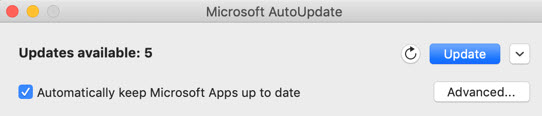
Microsoft AutoUpdate opens and checks the Microsoft apps it manages. If updates are available, choose Update for one app or Update All when you want to update all listed apps.
Step 4. Reopen the App and Verify It
After the update finishes, reopen the app. You can check its version from the app menu, such as Word > About Microsoft Word or Excel > About Microsoft Excel.
If Check for Updates is missing entirely, do not start changing DNS or disabling the firewall. Microsoft recommends installing the latest Microsoft AutoUpdate component first, which is covered in Part 5.
Turn On Automatic Microsoft Office Updates
If manual updating works, you can reduce future maintenance by letting Microsoft AutoUpdate keep supported Microsoft apps current automatically.
- Open an Office app and choose Help > Check for Updates.
- In Microsoft AutoUpdate, enable Automatically keep Microsoft apps up to date.
- Leave Office on the normal production channel unless you intentionally need preview builds for testing.
Microsoft also offers preview channels through AutoUpdate for users who deliberately test upcoming builds. Those channels are not required for a normal Office update on Mac.
Part 3. Update Office Apps From the Mac App Store
If Word, Excel, Outlook, PowerPoint, or another Office app was installed from the Mac App Store, the App Store owns the update process. In that case, Microsoft AutoUpdate may not be the correct place to look for the newest version.
Update Word, Excel, Outlook, or PowerPoint in the App Store
Apple's current Mac App Store flow is simple: open the Updates section, then update the individual Office app or all available apps.
Step 1. Open the Mac App Store
Open App Store from the Dock, Applications folder, or Spotlight.
Step 2. Select Updates
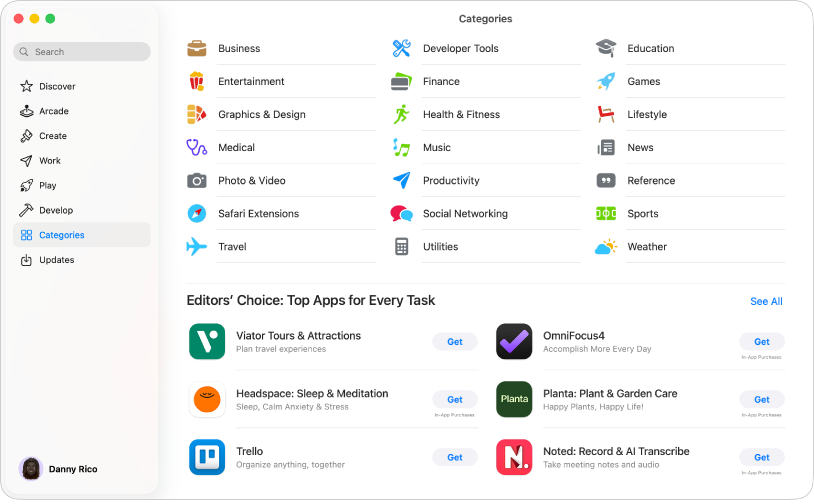
Click Updates in the sidebar. The current App Store interface keeps the Updates entry in the left navigation.
Step 3. Install the Office Update
Choose Update next to Word, Excel, Outlook, or PowerPoint, or choose Update All if you want to install every available app update. Apple documents the same workflow in its current app-update guidance.
Turn On Automatic App Store Updates
If you prefer the App Store to handle Office updates automatically, enable automatic app updates after confirming that your Office apps are App Store versions.
- Open App Store.
- Choose App Store > Settings from the menu bar.
- Turn on Automatic Updates.
This setting applies to eligible App Store apps generally, not only Microsoft Office.
Part 4. Update Word, Excel, Outlook, and PowerPoint Individually
The search terms “update Word for Mac,” “update Excel Mac,” “update Outlook in Mac,” and “update PowerPoint Mac” all lead to the same core rule: the app's install source determines the updater. You can still choose to update only one app when the updater offers that option.
| Office App | How to Check the Installed Version | How to Update It |
| Microsoft Word | Word > About Microsoft Word | Use Microsoft AutoUpdate for Microsoft-installed Word, or App Store Updates for the App Store version. |
| Microsoft Excel | Excel > About Microsoft Excel | Use Microsoft AutoUpdate or the Mac App Store according to the install source. |
| Microsoft Outlook | Outlook > About Outlook | Update through Microsoft AutoUpdate or the Mac App Store, depending on how Outlook was installed. |
| Microsoft PowerPoint | PowerPoint > About Microsoft PowerPoint | Use the updater associated with the installed copy. |
If Word still will not launch after it is fully updated, that is a different troubleshooting intent. Use the dedicated guide for Microsoft Word not opening on Mac rather than repeatedly reinstalling updates.
Part 5. What to Do If Office Update Fails on Mac
When an Office update fails, troubleshoot the update layer before reinstalling Office. The safest order is to verify the updater, repair the update service, confirm macOS compatibility, and only then investigate licensing or organization-managed restrictions.
Confirm You Are Using the Right Updater
A Mac App Store copy of Word will not follow exactly the same update route as a Microsoft.com copy. Recheck Part 1 or use Microsoft's documented install-source command before assuming the update system itself is broken.
- Microsoft-installed app: Use Help > Check for Updates and Microsoft AutoUpdate.
- App Store-installed app: Use App Store > Updates.
- Managed Mac: Your organization may delay or control update availability.
Update or Repair Microsoft AutoUpdate
If Check for Updates is missing, Microsoft AutoUpdate will not open, or it repeatedly fails, use Microsoft's current AutoUpdate troubleshooting path rather than generic network tweaks.
- Quit Office apps.
- Download and install the latest Microsoft AutoUpdate package from Microsoft's support guidance.
- Reopen Word or another Office app and choose Help > Check for Updates.
- If a managed Mac blocks the installer or helper service, contact your IT administrator.
Microsoft notes that AutoUpdate problems can involve a missing helper or insufficient permissions. See the official Microsoft AutoUpdate troubleshooting guidance. Avoid disabling the macOS firewall or replacing your DNS settings unless a qualified administrator has diagnosed a specific network problem.
Update macOS Before Updating Office
If Office says your Mac is unsupported, or a newer Office build will not install, check the operating system next. Microsoft ties current Office support to recent macOS releases, and Apple recommends backing up before installing a major macOS update.
Step 1. Back Up Important Files
Before a major macOS upgrade, make sure important local documents are backed up to a healthy destination.
Step 2. Open Software Update
Choose Apple menu > System Settings > General > Software Update.

Step 3. Install a Compatible macOS Update
Install the compatible update offered for your Mac, then restart and try the Office update again. Apple documents the current path in its macOS update guidance.
Fix Reduced Functionality, Error 0x0, or License Problems
Not every “Office stopped working after an update” symptom is an updater failure. In July 2026, Microsoft documented a reduced-functionality condition in which affected Office apps could open and print but could not edit, save, or create files on unsupported configurations. Microsoft also documented and resolved a separate Unknown Error 0x0 / License Not Found issue.
If Office opens but editing and saving are disabled, follow Microsoft's current macOS and Office update guidance and verify both the operating system and Office build. If you specifically see Error 0x0, use the dedicated Recoverit explainer for Office Error Code 0x0 on Mac for that separate troubleshooting path.
Check Whether Your Mac Is Managed by Work or School
On organization-owned Macs, Microsoft AutoUpdate settings, update channels, helper permissions, and app installation can be managed centrally. If AutoUpdate says you do not have permission or your update channel differs from a personal Mac, contact the IT or help-desk team instead of removing management profiles or security controls yourself.
Part 6. Update vs. Upgrade Microsoft Office on Mac
“Update Office” and “upgrade Office” are often used interchangeably in searches, but they are different actions. Knowing which one you need prevents repeated update attempts on a product that has already left support.
| Action | What It Means | Typical Example |
| Update | Install a newer build, security update, or quality update for the Office product you already use. | Updating Microsoft 365 Word from an older supported build to a newer supported build. |
| Upgrade | Move to a newer Office product or subscription because the old product no longer meets your needs or has left support. | Moving from an unsupported perpetual Office release to Microsoft 365 or a newer supported Office release. |
Office 2019 for Mac reached end of support on October 10, 2023. Microsoft also states that Office 2021 reaches end of support on October 13, 2026. If you are trying to “upgrade Microsoft Word for Mac” or “upgrade Excel for Mac” from one of these older perpetual releases, confirm the product lifecycle first; installing the last available update does not extend support indefinitely.
Part 7. What If an Office File Is Missing After an Update?
An Office app update should not normally delete your Word, Excel, or PowerPoint files. If a document is missing after an update, treat it as a separate file-loss problem and first determine whether the file was unsaved, moved, synced elsewhere, deleted, or stored on a drive that is no longer accessible.
- Unsaved Word document: Check Word's recent files and AutoRecovery options before using data-recovery software.
- OneDrive or cloud file: Check the correct Microsoft account, OneDrive folder, and cloud recycle bin.
- Deleted local file: Check Trash and any current backup before scanning the drive.
- Missing file on a readable drive: Stop unnecessary writes to that drive because new data can overwrite recoverable content.
For Word-specific recovery paths, see how to recover a deleted Word file on Mac. If a local Office file has actually been deleted or become inaccessible and the storage device is still detected, Recoverit for Mac can be used to scan supported readable storage. No software can guarantee recovery after data has been overwritten, and recovered files should be saved to a different healthy location.
For the current product workflow and limits, use the official Recoverit for Mac user guide rather than treating file recovery as part of the Office update itself.

Conclusion
The correct way to update Microsoft Office on Mac depends on the installation source. Microsoft-installed copies use Microsoft AutoUpdate, while Mac App Store copies update through the App Store. If an Office update fails, verify the updater first, then repair AutoUpdate, check macOS support, and investigate license or organization-managed restrictions. Keep file recovery separate from app maintenance: only use a recovery workflow when a local Office file is genuinely missing, deleted, or inaccessible.
FAQ
-
How do I update Microsoft Office on a Mac?
If Office was installed from Microsoft, open Word, Excel, PowerPoint, Outlook, or OneNote and choose Help > Check for Updates to open Microsoft AutoUpdate. If the apps were installed from the Mac App Store, open App Store > Updates and update them there. -
Why do I not see Check for Updates in Word on Mac?
Your Word copy may be an App Store version, or Microsoft AutoUpdate may be missing or damaged. First check the installation source. App Store versions update in the App Store; Microsoft-installed versions should use Microsoft AutoUpdate. -
How do I update only Word or Excel on Mac?
Use the updater that matches the installation source, then choose the update for Word or Excel when individual updates are available. Microsoft-installed apps use Microsoft AutoUpdate; App Store apps use the Mac App Store. -
What is the latest version of Office for Mac?
As checked on September 17, 2026, Microsoft's Office for Mac update history lists Version 16.112.3, build 26083020, released September 1, 2026, as the most current package on that page. The current version changes regularly, so verify it on Microsoft's update-history page. -
Can I still update Office 2019 or Office 2021 on Mac?
Office 2019 for Mac reached end of support on October 10, 2023. Microsoft states that Office 2021 reaches end of support on October 13, 2026. End of support means security updates and technical support stop, so check the product lifecycle before relying on an older perpetual Office release. -
Will updating Microsoft Office delete my Word or Excel files?
An Office app update should not normally delete your documents. If a file is missing afterward, check recent files, cloud storage, Trash, backups, and AutoRecovery first. Treat genuine deletion or drive-access problems as a separate data-recovery issue.


