 TL;DR:
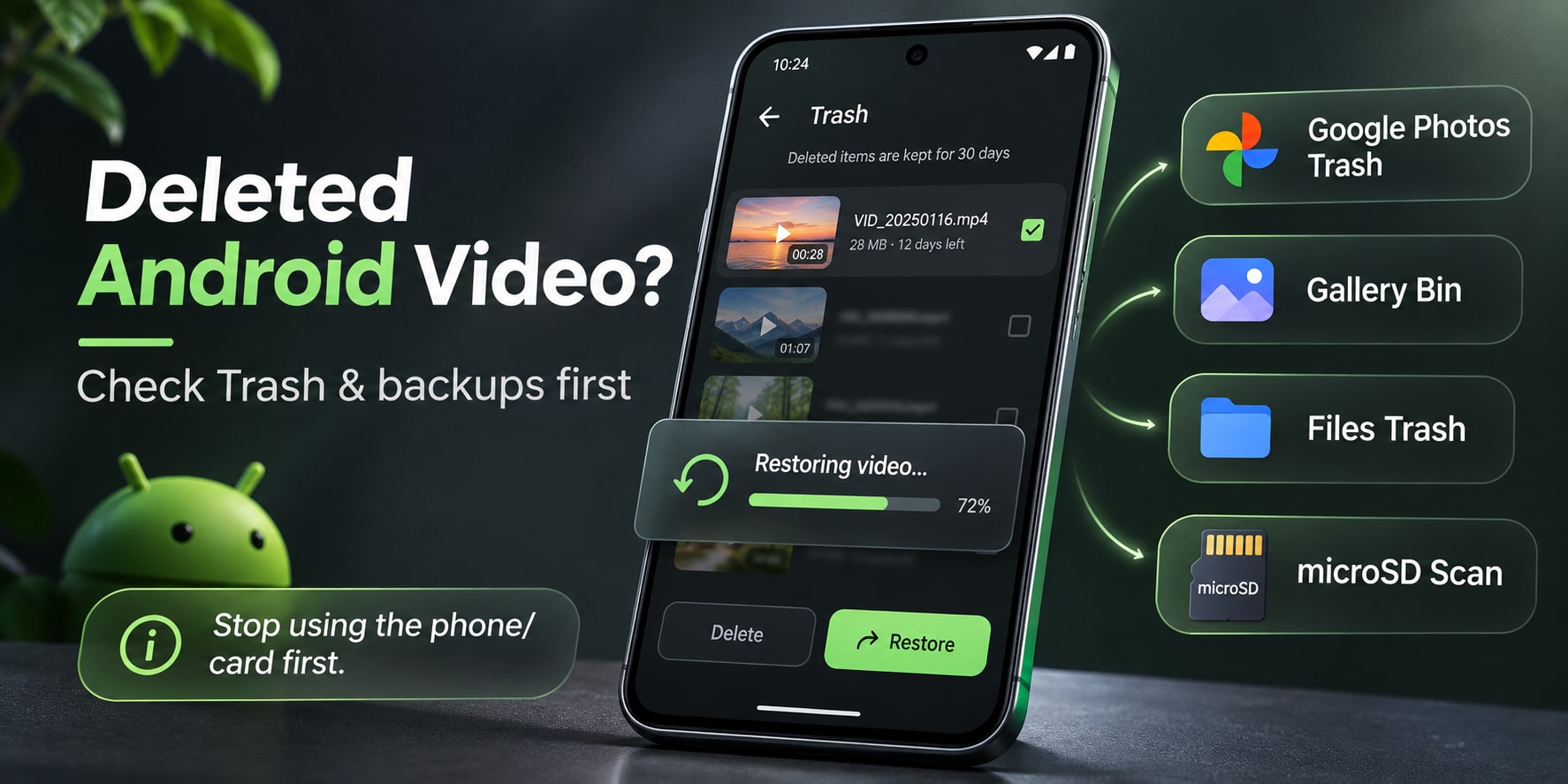
To recover a deleted Android video for free, immediately check the 30-day Trash folders in Google Photos, Samsung Gallery, or Files by Google, as consumer software cannot restore permanently deleted files directly from modern encrypted internal phone storage.
● Desktop recovery tools like Wondershare Recoverit can only scan a removable portable microSD card connected through a computer card reader, with the Windows free edition currently limited to a 500MB recovery allowance.
● Stop recording new videos or downloading recovery apps directly to the phone to prevent overwriting data, and never root or factory-reset the device in an attempt to bypass Android file-based encryption.
● Videos permanently deleted from Google Photos or removed via the Files by Google Junk cleanup feature bypass the standard Trash retention and can only be recovered if you previously saved an independent copy to a computer, chat app, or separate cloud drive.
Ask AI for a summary
 ChatGPT
 Perplexity
 Gemini
 Claude
 Grok
Deleted a video on your Android phone? Start with the app that handled the deletion. Google Photos, your phone's Gallery, and Files by Google may each have a separate Trash where you can restore the clip for free. If it is no longer there, check copies you uploaded, sent, or transferred. A desktop recovery scan is an option only when the original video was on a removable microSD card that your computer can access.
Before you begin: Stop recording new videos or downloading recovery apps to the phone. Do not root, unlock the bootloader, factory-reset, or format storage in an attempt to find the deleted clip. If it came from a removable card, stop using that card. Internal phone storage and portable microSD storage require different recovery approaches.
In This Article
Part 1. Which Android Recovery Path Fits Your Video?
The fastest free recovery path depends on where the video was stored and which app deleted it. Use this table to choose a safe first check rather than installing multiple recovery apps; checking your existing Trash folders and saved copies costs nothing.
| Where the video was | Safest first action | What to expect |
| Google Photos | Photos > Collections > Trash | Eligible items may be restored within 30 days if not permanently deleted |
| Samsung or another manufacturer's Gallery | Gallery > Menu > Recycle bin / Recently Deleted | App-specific Trash; Samsung Gallery normally keeps eligible items for 30 days |
| Files by Google | Files > Menu > Trash | Eligible files remain in Trash for 30 days; some cleanup deletions bypass it |
| Another cloud account, chat, or computer | Look for an independently uploaded, shared, or transferred video | Copy the existing file instead of scanning the phone |
| Removable microSD used as portable storage | Stop using the card; inspect it with a computer and card reader | A scan may find some unoverwritten files, with no guarantee |
| Modern encrypted phone internal storage, permanently deleted | Check Trash, original account, and separate backups | No reliable universal software-recovery method |
Important: A microSD card adopted as encrypted internal storage is not an ordinary portable card. Do not format it, initialize it, or assume a computer card reader can decrypt it.
Part 2. Restore Deleted Videos from Google Photos for Free
If you deleted the clip through Google Photos or used Google Photos backup, check its Trash first. Google's current Android help specifies a 30-day Trash retention period for eligible deleted videos. An item removed permanently or from an emptied Trash cannot be restored through Google Photos. Older guides and some manufacturer help pages may still show a different period, so check the current Google Photos instructions.
Step 1. Open Google Photos and confirm you are using the Google Account associated with the missing video.

Step 2. Open Collections > Trash (called Bin in some regions), touch and hold the missing video, and tap Restore. You should find it back in your Photos library or the applicable album. Play it to confirm the video and sound are intact.
Step 3. If the video is not in Trash, search the Photos library, check Archive and shared items, and review other Google Accounts that you actually used. Do not empty Trash while looking.
Watch for synced deletion: Deleting a backed-up video through Google Photos can also remove it from other devices where backup is enabled. An independently saved copy on a computer or in a chat is a different possibility; a synced Google Photos library is not necessarily a second backup.
For the current buttons and retention policy, see Google's Android restore instructions and Google Photos deletion rules. Google Photos cannot restore items that have been permanently deleted from its service.
Part 3. Check Gallery and Files by Google Trash
A video deleted with your phone's Gallery or a file manager may never have reached Google Photos Trash. Check the app that originally handled the file; its recovery location and retention rules can be different.
Restore from Your Phone's Gallery
Samsung Gallery usually keeps deleted photos and videos in its own Recycle bin for 30 days. Other manufacturers may call this Trash or Recently Deleted, or may not provide the same feature.
Step 1. Open Gallery or Albums. On a recent Samsung Galaxy device, choose Menu > Recycle bin. On another brand, look for Trash or Recently Deleted in the app's menu.

Step 2. Find and select the missing video, then tap Restore if available. Reopen the original album, play the video to the end, and verify the sound.
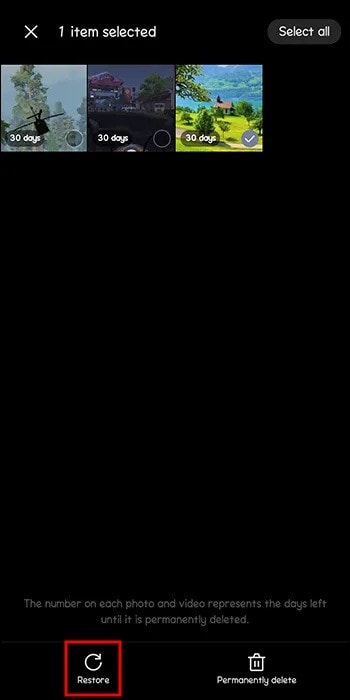
If you use Samsung Galaxy, follow the official Samsung Recycle bin instructions. Menu labels vary by model and software version. If the video is not there, the Samsung-specific video recovery guide covers additional Galaxy account and storage checks; do not reset the device just to look for a deleted file.
Restore from Files by Google
If the video was deleted in Files by Google, check that app's own Trash. Google says files moved to Trash remain there for 30 days before automatic deletion; items removed through certain cleanup actions, including the Junk files card, may bypass Trash entirely.
Step 1. Open Files by Google. Tap the menu at the top left and open Trash.
Step 2. Select the missing video if you see it, tap Restore, and confirm. Find it in the restored location and check that the file opens and plays normally.
If you cannot find the video in Files Trash, it may have been deleted by another app or removed permanently through a cleanup action. A missing item in Files Trash does not mean a recovery app can scan encrypted phone storage. Compare your menu with Google's current Files by Google recovery steps before moving to saved copies.
Part 4. Look for a Saved Copy Before Trying Recovery Software
When all Trash folders are empty, an independent copy is usually the safest next lead. Think about where you actually exported, transferred, or shared the video before it disappeared.
Step 1. Check Google Photos in the correct account, and search Google Drive only if you previously uploaded the video there. If the file was saved in Drive and later deleted, check Drive Trash as well.
Step 2. Search any computer or external drive used for transfers, and the original conversation, shared album, or other cloud service where the video was sent. Some messaging apps only retain compressed copies, which may be lower quality than the original recording.
Step 3. Save an available copy somewhere safe. Play it fully and compare its duration, audio, and resolution before removing or overwriting any other copy.
What if nothing is found? Determine whether the original video lived on a portable microSD card. If it was only in modern encrypted internal phone storage, skip desktop disk-scanning instructions and review the limitations in Part 6.
Part 5. Recover Videos from a Removable microSD Card
If the video was recorded onto a removable microSD card used as portable storage, a Windows or Mac computer may be able to scan that card. This is the relevant use case for Wondershare Recoverit Memory Card Recovery. It is not a promise to recover encrypted internal phone storage or an adopted/encrypted SD card.
For removable microSD cards readable by a computer, scan for lost video files, review supported previews, and save recoverable results to another healthy drive. Scanning and previewing are available without a purchase; file recovery in the free edition has limits. Recoverit cannot decrypt Android internal storage or guarantee a deleted video's recovery.

Step 1. Stop using the card. Turn off the phone, remove the portable microSD card safely, and connect it to a computer through a reliable card reader. If Windows or macOS prompts you to format or initialize the card, cancel. Do not run a repair or disk-check utility before preserving important files.
Step 2. If your computer detects the card as a separate storage device, open Recoverit and choose SD Card Recovery in the current version. Select the removable card rather than the computer's system drive, then start the scan. If the card is encrypted as adopted internal storage or not detected reliably, stop here instead of attempting a normal card scan.
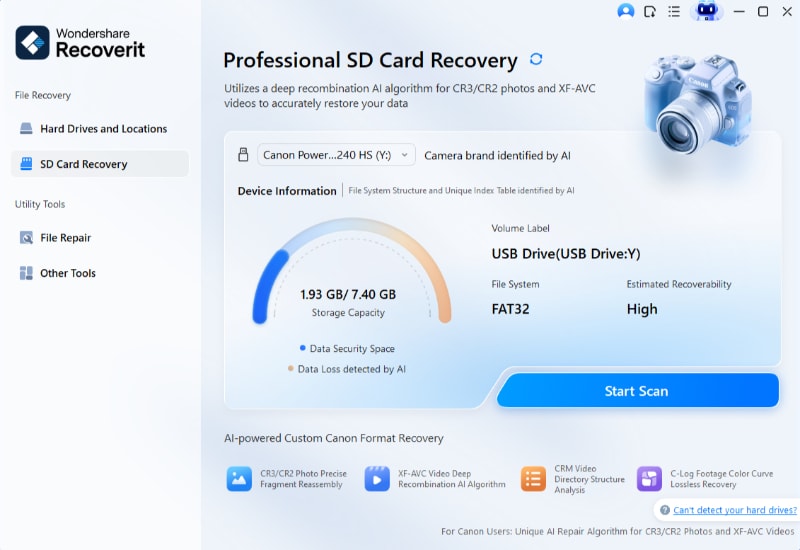
Step 3. Let the scan complete, then filter for video files such as MP4 or MOV and preview any supported results. If the footage looks recoverable, select it and save the output to the computer or a different healthy drive, not the original card. Check that the saved video opens, plays to the end, and has the expected duration and audio.
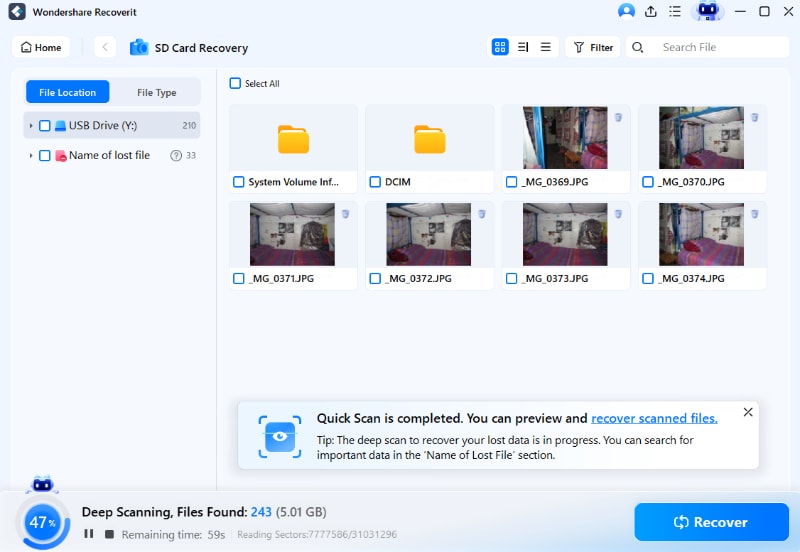
What is actually free? Checking Trash and your existing copies is free. Recoverit can scan a computer-accessible microSD card and preview supported findings, but downloading Recoverit is not the same as being able to save any video for free. The official Recoverit Free for Windows page currently states a total recovery allowance of up to 500MB; larger video files may require a paid license. Features and limits can differ by platform and edition, so review the current terms for your installed version before paying or recovering. The Recoverit Guide shows the current SD Card Recovery controls.
Stop and seek help when needed: If the card repeatedly disconnects, is physically damaged, overheats, or cannot be detected reliably, stop trying repeated scans. A specialist may be safer. See the broader video recovery overview for computer-accessible media, not internal Android storage.
Part 6. What If the Video Was Permanently Deleted?
If a video is permanently deleted from Google Photos or a Gallery Trash, that app cannot restore the item from its Trash. Modern Android phones use encrypted internal storage; Android devices launched with Android 10 or later are required to use file-based encryption. USB file transfer does not expose that encrypted storage as a raw disk that Recoverit can scan, and a claimed guaranteed "deep scan" is not a reliable workaround. See Android's file-based encryption documentation for the platform boundary.
Check any distinct cloud account, exported file, chat attachment, computer copy, or removable portable card that might still contain the video. If you already tried those paths, avoid rooting, unlocking the bootloader, resetting, or installing repeated recovery apps in the hope of restoring an internal file. These steps can erase or overwrite remaining data.
If you can still find the video file but it will not play, treat that as a playback or file-damage question rather than a deletion question. If no copy exists and the file was deleted from encrypted internal storage, it may not be recoverable with consumer software.
Conclusion
To recover a deleted Android video for free, start with the Trash in the app that handled it, then check any independent backup or shared copy. Only move to a computer scan if the original was stored on a portable, readable microSD card. Recoverit may find files on that card, subject to the free edition's limits, but no scan guarantees restoration. You are finished when the recovered or copied video plays correctly and is saved somewhere safe.
FAQ
-
Can I recover permanently deleted Android videos without a backup?
You may still find a separate transferred copy or data on a portable, computer-readable microSD card. If the file was permanently deleted from modern encrypted internal storage and no backup exists, ordinary recovery apps are unlikely to restore it. -
How long does Google Photos keep deleted videos in Trash?
Google's Android help currently specifies 30 days for eligible deleted videos. If you emptied Trash or permanently deleted the file, Google Photos cannot restore it; always check the current app and official help for your account. -
Can Recoverit recover deleted videos directly from my Android phone?
Not from modern encrypted phone internal storage simply by plugging in a USB cable. Recoverit can scan a separate, computer-accessible microSD card used as portable storage when recoverable video data remains on that card. -
Does Files by Google keep videos that I deleted through Cleanup?
Not always. Files moved into Files by Google's Trash can normally be restored within 30 days, but some actions, including deleting Junk files, bypass Trash. Check the app's official help for the exact deletion path. -
Should I root or factory-reset my phone to get the video back?
No. These are not safe first steps for video recovery. Unlocking a bootloader or resetting a phone can erase data, and rooting does not guarantee access to deleted encrypted files. Check Trash, independently saved copies, and removable storage first.


