


 TL;DR:
Wise Data Recovery version 6.2.2 is a lightweight Windows utility highly effective for retrieving recently deleted files within its 2GB free limit, though it struggles with formatted disks, SSDs with TRIM enabled, and complex data loss scenarios.
● To prevent permanent data overwrite, users must run the portable version from a separate drive and never save recovered files back to the original storage location.
● Wondershare Recoverit serves as a more capable alternative for complex recovery jobs, offering the guided workflows and deeper scanning required for formatted drives, missing partitions, and high-value media files.
● The 2GB free allowance applies strictly to the Windows edition supporting Windows XP through 11, while macOS users are redirected to a separate third-party product with different pricing and recovery limits.
Ask AI for a summary
 ChatGPT
 Perplexity
 Gemini
 Claude
 Grok
Grok
Short verdict: Wise Data Recovery is worth trying if you need a simple Windows tool for recently deleted files and your recovery job is under the free 2GB limit. It is less convincing for formatted drives, complex partitions, damaged storage, or users who need clearer preview, broader recovery workflows, and stronger guidance before saving files.
This Wise Data Recovery review looks at the current Windows version, free and paid limits, scan workflow, performance notes from our source test, support options, and the cases where a more complete alternative like Wondershare Recoverit may be the more practical choice.
In this article
Part 1. Wise Data Recovery Review: Quick Verdict
Wise Data Recovery earns a practical place among lightweight Windows recovery tools because it is fast, clean, and easy to understand. The official Windows product page lists version 6.2.2 as of August 8, 2026, with support for Windows 11, 10, 8.1, 8, 7, Vista, and XP, including both 32-bit and 64-bit editions. The free Windows edition can recover up to 2GB, which is generous for a basic deleted-file recovery tool.
However, the tool should not be judged only by its free limit. In real recovery work, the key question is whether it can find the exact files you need before they are overwritten, whether it can preview them clearly, and whether the software fits the loss scenario. Wise Data Recovery is strongest when the file was deleted recently from a readable drive. It is weaker when the disk was formatted, the file system is badly damaged, the drive is unstable, or the data was stored on an SSD where TRIM may have already cleared deleted blocks.
| Review item | Wise Data Recovery result |
| Overall rating | 3.7/5 for basic Windows deleted-file recovery |
| Best for | Recently deleted documents, photos, videos, and small file batches on readable Windows drives |
| Not ideal for | Formatted drives, complex partitions, failing storage, encrypted drives, or large mixed-media recovery jobs |
| Free limit | Up to 2GB recovery on the Windows free edition, according to WiseCleaner |
| Current Windows version checked | 6.2.2 on the official WiseCleaner page, checked August 8, 2026 |
| Primary risk | Saving recovered files back to the same drive can overwrite recoverable data |
Bottom line: Try Wise Data Recovery when you want a no-friction Windows recovery tool and your lost files are recent. Consider a broader recovery product if the deleted files are valuable, the drive was formatted, the folder structure matters, or you need stronger preview and recovery workflow control.
Part 2. What Is Wise Data Recovery?
Wise Data Recovery is a file recovery tool from WiseCleaner. It is designed to scan storage devices for deleted or lost files such as documents, photos, videos, audio, archives, and emails. The official page positions it as a simple recovery tool for local drives, external drives, USB drives, memory cards, digital cameras, and other storage devices that Windows can still detect.
Its main appeal is speed and simplicity. Users can choose a drive, run a scan, filter results, preview supported files, and recover selected items. WiseCleaner also offers a portable version, which is useful because installing recovery software on the same drive where files were deleted can reduce recovery chances by writing new data to the disk.
Wise Data Recovery should be understood as a data recovery scanner, not a file repair, hardware repair, or password-unlocking utility. It may locate deleted file records or raw file signatures, but it cannot rebuild data after overwrite, repair physically failed drives, or unlock encrypted files without the legitimate password or recovery key.
| User question | Direct answer |
| Is Wise Data Recovery free? | Yes, the Windows free edition can recover up to 2GB. Larger or advanced recovery requires a Pro plan. |
| Is Wise Data Recovery safe? | It is safest when downloaded from WiseCleaner directly. Avoid cracked installers or unofficial license-key sites. |
| Does it work on Mac? | WiseCleaner links to a separate Mac data recovery product powered by Stellar, so Mac pricing and limits should be checked separately. |
| Can it recover formatted drives? | It may find some files after a quick format, but results depend on overwrite, file system damage, SSD TRIM, and drive condition. |
Part 3. How We Tested Wise Data Recovery
The original hands-on test used Wise Data Recovery 6.1.6 in a clean Windows 11 virtual machine. The official WiseCleaner page now lists version 6.2.2, so this review keeps the original test findings while updating product facts where the official page has changed.
The test used 25 files across three virtual NTFS drives. The files included an SQLite database, a torrent file, XML files, PNG images, JPG photos, FLAC files, and MP3 files. The test scenarios covered recently deleted files, an emptied Recycle Bin, and a quick-formatted drive.
| Test dimension | Details |
| Operating system | Clean Windows 11 virtual machine |
| Wise Data Recovery version in original test | 6.1.6 |
| Current official Windows version checked | 6.2.2, checked August 8, 2026 |
| Test file count | 25 files |
| File types | MP3, FLAC, JPG, PNG, SQLite, torrent, and XML |
| Test drive format | NTFS virtual hard drive |
| Loss scenarios | Deleted files, emptied Recycle Bin, and quick format |
| Additional utility used | Victoria freeware program for drive-status checks |
This is a limited practical test, not a universal recovery benchmark. Real results vary based on whether the lost data was overwritten, whether the disk is an SSD with TRIM enabled, whether the file system is readable, and whether the drive has hardware issues. If the data is business-critical or evidence-related, stop using the drive and consider professional help before running repeated scans.
Part 4. Wise Data Recovery Features and Limits
Wise Data Recovery covers the core features expected from an entry-level recovery tool. It supports common file categories, file filtering, preview for supported file types, standard and deeper scan workflows, and a portable version. According to WiseCleaner, the Windows version supports file systems including FAT, exFAT, NTFS, HFS, HFS+, HFSX, Ext2, and Ext3.
The most useful feature is the fast scan experience. If a file was deleted recently and the file system still has enough metadata, Wise Data Recovery can make the search process quick. The file-condition indicator also helps users avoid wasting time on files that are unlikely to open after recovery.
The biggest limitation is that a clean interface does not remove the underlying recovery risks. If files have been overwritten, if the device is failing, or if the file system is heavily corrupted, no consumer tool can promise a complete result. Wise Data Recovery can scan readable storage, but it should not be treated as a replacement for professional lab recovery when a drive is clicking, overheating, disconnecting, or not detected by the computer.
| Feature | What it means in practice | Important limitation |
| Quick scan | Fast search for recently deleted files and visible file-system records | May miss files after formatting or severe file-system damage |
| Deep scan | Looks more broadly for recoverable traces and raw file signatures | Can be slower and may recover files without original names or folder paths |
| Preview | Lets users inspect some recoverable files before saving | Preview support depends on file type and file integrity |
| Portable version | Can run from external storage to reduce installation writes on the affected drive | Still requires the storage device to be readable by Windows |
| WinPE recovery | May help access files when the installed Windows system cannot boot normally | It is not an operating system repair tool and cannot fix hardware failure |
| Free 2GB recovery | Enough for small document, photo, and mixed-file recovery jobs | Not enough for large video folders, camera cards, or full-drive recovery |
Important safety note: Do not install Wise Data Recovery on the same drive where files were lost. Do not save recovered files to that drive either. Use another internal drive, external drive, or USB storage device as the save destination.
Part 5. How to Use Wise Data Recovery
Wise Data Recovery is easy to use, but recovery software can accidentally reduce recovery chances if installed or saved to the wrong location. Before starting, stop using the affected drive as much as possible, prepare a separate destination drive, and download the installer only from the official WiseCleaner website.
Install Wise Data Recovery
- Download the software from WiseCleaner. If your deleted files were on the system drive, use the portable version or install the program on another drive when possible.
- If you use a Mac, select Go to Mac version and check the separate Mac product page carefully because the Mac version, limits, and pricing are different from the Windows product.

- Double-click the installation file to start the setup wizard.
- Read the license agreement, tick I accept the agreement, and click Next.

- Click Install and wait for the setup process to complete.

Recover Deleted Files With Wise Data Recovery
- Launch Wise Data Recovery, choose the drive or folder where the files were lost, and click Scan.

- Use the file-type and keyword filters to narrow the scan results. This is especially useful when the scan returns many old deleted files.

- Preview recoverable files when preview is available. If the preview fails, the file may still be recoverable in some cases, but it may also be corrupted or incomplete.

- Select the files you need and click Recover. Save them to a different drive, never to the same location where they were deleted.

If the scan does not find the target file, avoid repeated write-heavy attempts on the same device. For an unstable external drive, SD card, or hard drive, continued scanning may make the device disconnect more often. In that case, clone the drive first if you have the right tools, or use professional recovery help for high-value data.
Part 6. Wise Data Recovery Performance Review
In the original Windows 11 test, Wise Data Recovery was fast in the simple deleted-file scenario. A quick scan on an undamaged SSD took about 18 seconds. A deeper scan took almost eight minutes and found a previously deleted folder with TIFF images and multimedia files removed from the Recycle Bin. The recovered items in that scenario opened normally and retained their filenames.

The formatted-drive test was less impressive. After 25 files were deleted and the test drive was quick-formatted, Wise Data Recovery recovered only 13 of them in the source test. That result is not surprising: formatting can remove or rewrite file-system metadata, and raw recovery may bring back files without original names or complete folder paths.
Resource usage was reasonable during the source test. Memory usage stayed around 450MB, and CPU consumption did not exceed about 20 percent on the test machine. That makes Wise Data Recovery comfortable for basic scans on common Windows computers, but scan speed should not be confused with better recovery quality. A slower tool with better preview, clearer file grouping, or more advanced handling of formatted drives may be more useful for valuable data.
| Scenario | Observed result | Review interpretation |
| Recently deleted files | Fast scan and usable results in the original test | Good fit for Wise Data Recovery |
| Emptied Recycle Bin | Some files were found and opened after recovery | Worth trying quickly before new data overwrites the disk |
| Quick-formatted drive | 13 of 25 deleted test files were recovered | Mixed result; use caution for important formatted-drive jobs |
| Unstable or physically failing drive | Not covered by the source test | Do not rely on repeated consumer scans if the drive is failing |
Part 7. Wise Data Recovery Pricing
Wise Data Recovery has a straightforward Windows pricing model. As of August 8, 2026, the official WiseCleaner page lists a free Windows edition with a 2GB recovery limit, a Pro 1 plan at $39.97 for one year and one PC, and a Pro 2 plan at $49.99 for one year and three PCs. Prices and offers may change, so users should always confirm the final price on the WiseCleaner checkout page before purchasing.

| Plan | Current official Windows offer checked | Best for |
| Free | Recover up to 2GB | Small deleted-file recovery jobs |
| Pro 1 | $39.97 for one year and one PC | One Windows PC with larger recovery needs |
| Pro 2 | $49.99 for one year and three PCs | Users managing several Windows computers |
| Mac version | Separate Mac product linked by WiseCleaner | Mac users who should verify the separate 1GB free limit and Mac pricing |
The free Windows allowance is a real strength. Many competing tools give a smaller trial recovery limit or only allow scanning before payment. Wise Data Recovery is more useful than those scan-only trials when the lost files are small enough.
However, the paid upgrade decision should depend on your case. If the scan preview shows the files you need, a paid Wise plan may be reasonable. If the drive was formatted, the missing files are videos, the folder structure is important, or the result list looks incomplete, compare Wise Data Recovery with a broader recovery tool before paying.
A Note on Wise Data Recovery Pro License Key Searches
Many users search for a Wise Data Recovery Pro license key or cracked installer after hitting the free recovery limit. That is risky. Unofficial keys and patched installers can contain malware, collect personal data, or corrupt the recovery environment. More importantly, installing unknown software on the same computer after data loss can overwrite recoverable files. Use the official WiseCleaner purchase flow if you choose Wise Data Recovery Pro.
Part 8. Customer Support and Safety
WiseCleaner provides several support paths, including the support center, FAQ page, customer feedback form, and WiseCleaner forum. The product page also references email support and optional priority support.

The more important issue is not just support availability, but whether users know when to stop. Data recovery is time-sensitive. If a file was deleted from an HDD, the deleted data may remain until overwritten. If it was deleted from an SSD, TRIM can make recovery much harder. If the drive is failing mechanically, each scan can add stress. Wise Data Recovery is best used early, carefully, and only on drives that remain stable and readable.
| Warning sign | What to do |
| The drive clicks, overheats, or disconnects | Stop scanning and consider professional recovery support |
| Windows asks you to format the drive | Do not format before recovering files or creating an image of the drive |
| The lost files were on the system drive | Minimize computer use and install recovery software on another drive if possible |
| The files were deleted from an SSD | Act quickly, but understand that SSD TRIM may already have removed recoverable blocks |
| The drive is encrypted | Use the legitimate password or recovery key; recovery software cannot bypass encryption |
Part 9. Wise Data Recovery Pros and Cons
Wise Data Recovery is good at one thing: making simple deleted-file recovery feel approachable. It does not bury new users under advanced disk terminology, and the free 2GB Windows limit makes it more useful than many trial-only recovery products. That simplicity is also its ceiling. Users with formatted disks, missing partitions, camera card video loss, NAS drives, or crashed-system recovery needs will usually need a more complete recovery workflow.

Part 10. Best Wise Data Recovery Alternative: Recoverit
If Wise Data Recovery finds the exact files you need and the recovery size stays under the free limit, it may be enough. If it cannot find the target files, the formatted-drive result looks incomplete, or you need a clearer workflow for larger storage devices, Wondershare Recoverit is a stronger alternative to consider.
Recoverit Overview
Wondershare Recoverit is professional data recovery software for Windows and Mac users who need to recover deleted, lost, or missing files from readable storage devices. It can help scan internal drives, external hard drives, USB drives, SD cards, cameras, and other supported storage media. Recovery depends on drive condition, overwriting, encryption, and whether the device remains detectable.
Recoverit is not an operating system repair or hardware repair tool. Its role in a recovery workflow is to help users scan readable storage and save recoverable files to a safe destination before formatting, reinstalling Windows, replacing a drive, or trying risky disk operations.
Recoverit vs Wise Data Recovery
| Comparison point | Wondershare Recoverit | Wise Data Recovery |
| Best fit | Broader data recovery workflows across common devices and larger file sets | Fast recovery of recently deleted files on Windows |
| Free recovery limit | Free trial available; check current product page for the recovery allowance | Windows free edition recovers up to 2GB |
| Formatted-drive recovery | Better suited when users need deeper scanning and clearer preview workflow | Mixed result in the source quick-format test |
| Supported devices | Internal drives, external drives, USB drives, SD cards, cameras, and other supported storage media | Local drives, removable drives, memory cards, cameras, and other readable media |
| Ease of use | Guided scan, filter, preview, and save workflow | Very simple drive selection and scan workflow |
| Use before risky actions | Useful before format, reinstall, or advanced troubleshooting when storage is still readable | Useful for quick deleted-file checks before continued computer use |
| Main limitation | Cannot repair physical drive failure, bypass encryption, or rebuild data after overwrite | Less suitable for complex or high-value recovery cases |
The main reason to choose Recoverit over Wise Data Recovery is not a vague promise of better results. It is workflow depth. When you have more files, more device types, or more uncertainty about what happened, a guided recovery process with stronger filtering and preview can reduce guesswork. That matters most when the lost files are videos, photo shoots, project documents, or client work.
How to Recover Files With Recoverit
Download and install Recoverit on a drive that is not the data-loss location. Then follow these steps.
- Launch Wondershare Recoverit and open the File Recover menu.
- Select Hard Drives and Locations.
- Choose the target location under Hard Disk Drives, External Drives, or Quick Access, then click Start.

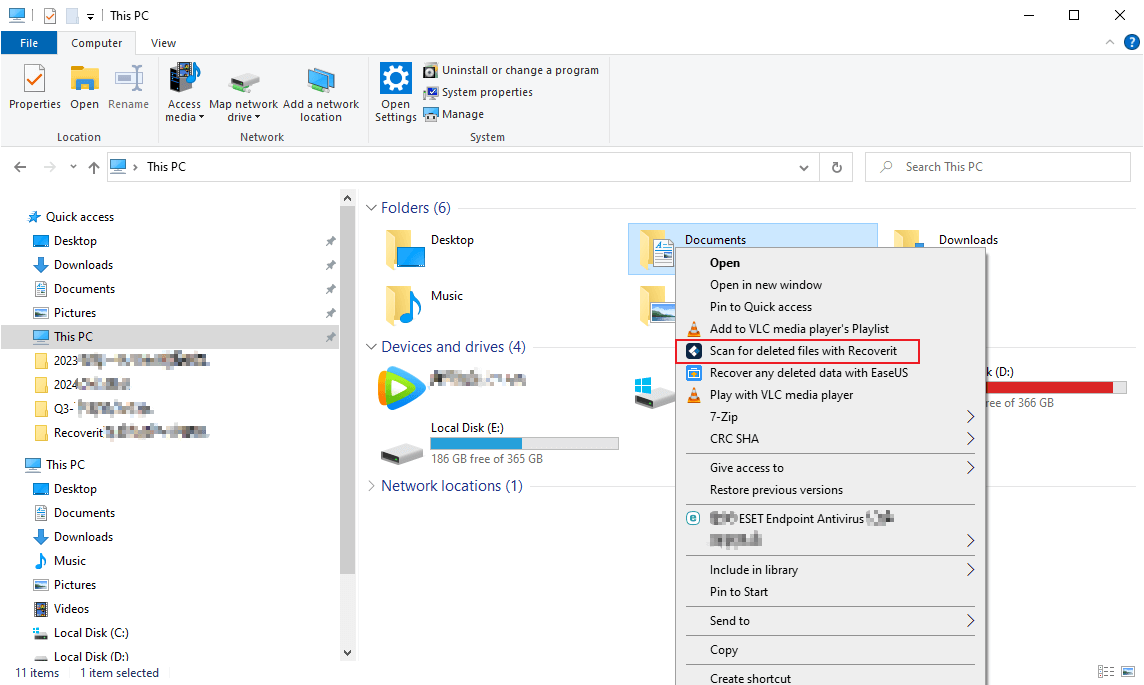
Alternatively, right-click the target drive in File Explorer and click Scan for deleted files with Recoverit.
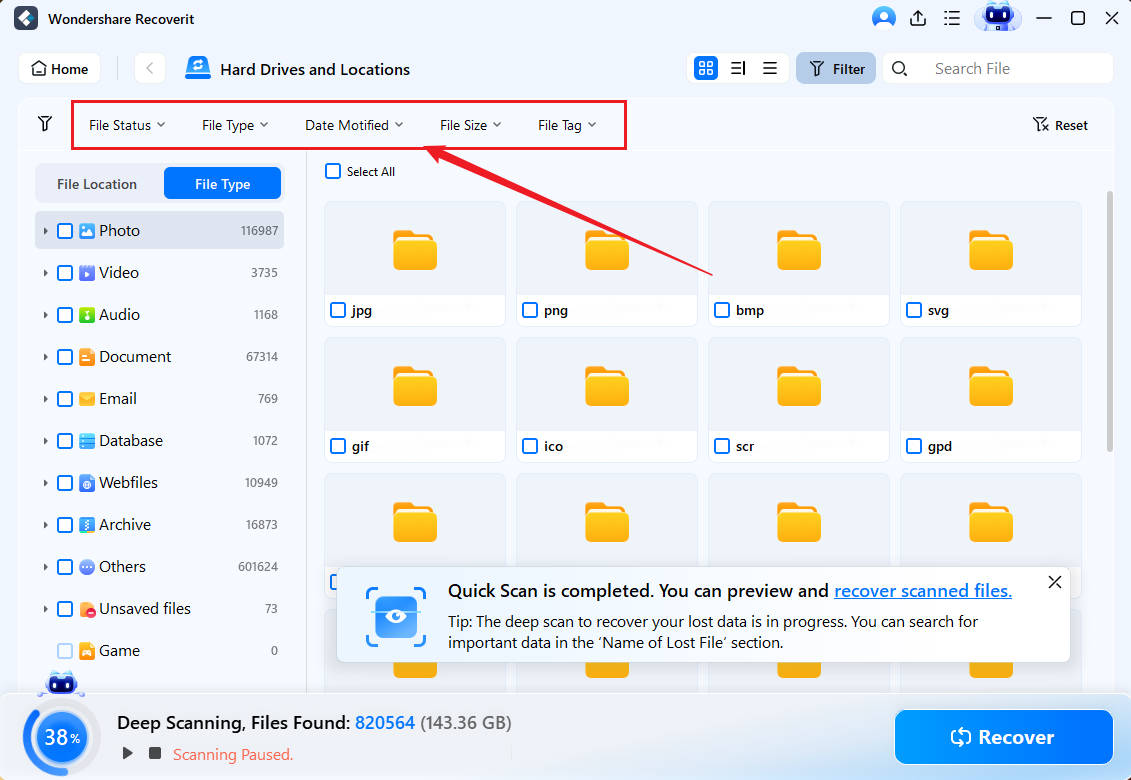
- Recoverit will scan the selected location for recoverable files.

- Use filters to narrow results by file type, size, date, or keyword.
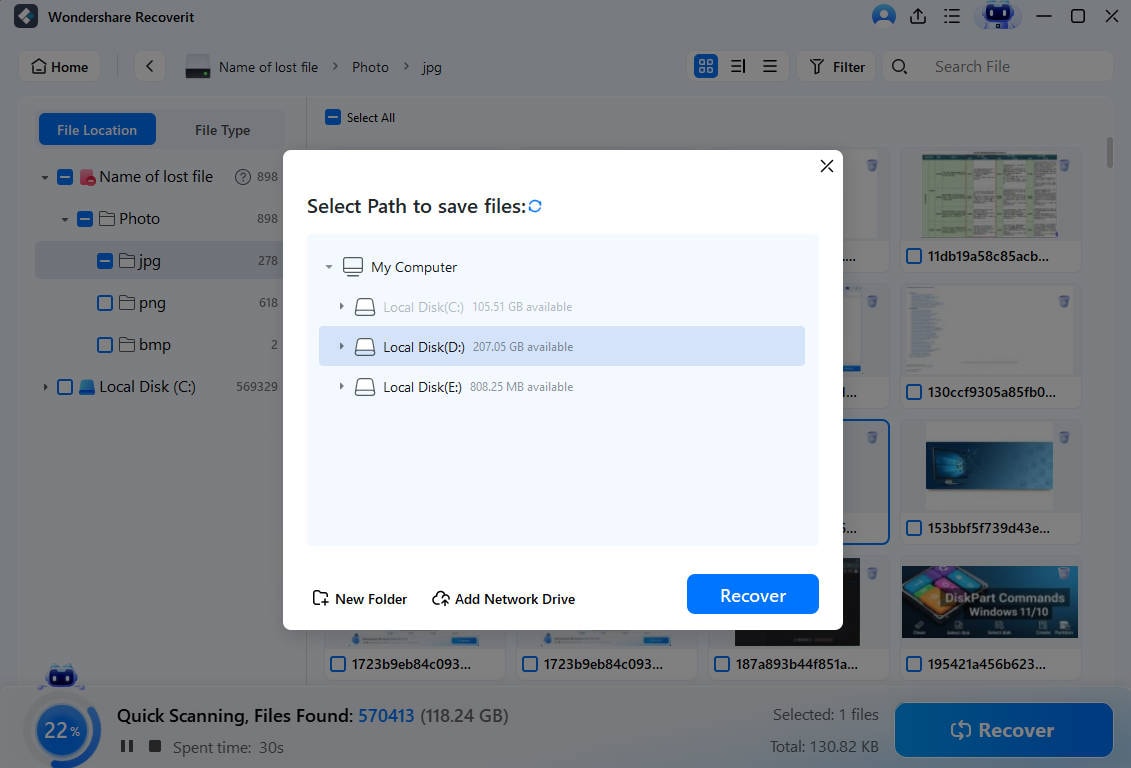
- Preview files before recovery when preview is available.

- Click Recover, then choose a new save location on a different drive.

Conclusion
Wise Data Recovery is a legitimate and useful Windows recovery tool for simple jobs. Its 2GB free recovery allowance, portable option, and clean interface make it a sensible first attempt for recently deleted files. It is especially attractive when you only need a few documents, photos, or small media files and the drive is healthy.
It is not the best choice for every case. The source formatted-drive test recovered only part of the test set, and the Mac product is not the same as the Windows edition. For larger file sets, formatted storage, camera cards, external drives, or situations where preview and workflow control matter, Recoverit is a stronger Wise Data Recovery alternative. No matter which tool you choose, recover files to a different drive and avoid writing new data to the affected storage.
FAQ
-
Is Wise Data Recovery free?
Yes. The Windows free edition of Wise Data Recovery can recover up to 2GB, according to WiseCleaner. If your recovery job is larger or needs paid features, you need to upgrade to a Pro plan. -
Is Wise Data Recovery safe to use?
Wise Data Recovery is safest when downloaded from the official WiseCleaner website. Avoid cracked installers, unofficial license keys, and third-party download sites because they can add malware and overwrite recoverable files. -
What is the Wise Data Recovery free limit?
The current Windows free limit checked on August 8, 2026 is 2GB. The Mac product linked by WiseCleaner is separate and should be checked on its own product page because its free allowance and pricing differ. -
Can Wise Data Recovery recover files from a formatted drive?
It may recover some files after a quick format, but results vary. In the source test, Wise Data Recovery recovered 13 of 25 deleted files after a quick format. Recovery depends on overwrite, file-system damage, drive condition, and SSD TRIM. -
Does Wise Data Recovery have a portable version?
Yes. WiseCleaner offers a portable version. This is useful because running recovery software from external storage can reduce the chance of installing new files onto the drive you are trying to recover. -
Is Recoverit a good Wise Data Recovery alternative?
Recoverit is a good alternative when you need a broader recovery workflow, clearer filtering and preview, or support for larger storage-device scenarios. It can help scan readable storage, but it cannot repair physical drive failure, bypass encryption, or rebuild data after overwrite.


