
 TL;DR:
To successfully retrieve lost files from a SanDisk storage device, you must immediately stop writing new data to it and scan the drive using a reliable recovery program like Wondershare Recoverit, Disk Drill, or Recuva.
● EaseUS Data Recovery Wizard offers a straightforward graphical interface but limits free data recovery to 500MB, whereas PhotoRec is completely free and specializes in media files but requires navigating a more challenging command-line interface.
● Overwritten files are typically impossible to retrieve, making it a strict prerequisite to save any successfully recovered data to a completely different storage drive rather than back to the original SanDisk device.
● If the software's initial quick scan fails to locate your missing files from a corrupted or formatted drive, utilize the deep scan option to perform a slower but much more thorough search of the storage sectors.
Ask AI for a summary
 ChatGPT
 Perplexity
 Gemini
 Claude
 Grok
Grok
Losing data from a SanDisk storage device can be stressful, whether the files were on a SanDisk SD card, microSD card, USB flash drive, portable SSD, or external drive. Data loss can happen after accidental deletion, formatting, file system corruption, device errors, malware, unsafe removal, or a system crash.
In 2026, many SanDisk data recovery software options offer a free version, free scan, free recovery quota, open-source recovery, or a bundled license for eligible SanDisk products. However, “free” does not always mean unlimited recovery. Before choosing a tool, check whether it can recover from your SanDisk device type, whether it supports your operating system, and whether it lets you save the recovered files without upgrading.

Part 1: What Is a SanDisk Recovery Tool?
A SanDisk recovery tool is software that scans a SanDisk storage device and tries to recover lost, deleted, formatted, corrupted, or inaccessible files. It can be used with devices such as SanDisk SD cards, microSD cards, USB flash drives, memory cards, external drives, and some SSDs when the device is still detected by Windows or macOS.
These tools work by reading the storage media and locating file records, file signatures, or leftover data blocks. They can often recover photos, videos, documents, archives, and other files when the original folders no longer appear. Recovery works best when the lost files have not been overwritten.
- Best DIY cases: accidental deletion, quick formatting, missing folders, RAW file system, or SanDisk SD/USB devices that still appear in the computer.
- Risky cases: physically damaged devices, undetected USB drives, broken memory cards, or SSDs affected by
TRIMand encryption. - Safe workflow: scan the SanDisk device in read-only mode if possible and save recovered files to a different drive.
- Free model: free tools may be open-source, freeware, free scan only, free recovery with a data limit, or included with eligible SanDisk purchases.
TRIM, or lost due to physical failure, software recovery may not work.
Part 2: What to Do Before Using SanDisk Data Recovery Software
| SanDisk Data Loss Situation | Best First Action | Recommended Recovery Path |
| Files deleted from a SanDisk SD card or microSD card | Stop using the card and connect it through a reliable card reader. | Recoverit, PhotoRec, Recuva, or R-Undelete. |
| SanDisk USB drive was formatted | Do not format again or copy new files to it. | Use deep scan or signature recovery with Recoverit, PhotoRec, or Windows File Recovery. |
| SanDisk device asks to be formatted or shows RAW | Cancel the format prompt and recover files first. | Use recovery software before disk repair or formatting. |
| Photos or videos disappeared from a camera card | Remove the card from the camera and avoid taking more photos. | Use Recoverit, PhotoRec, or eligible SanDisk RescuePRO. |
| Files deleted from a SanDisk SSD | Stop using the SSD and check backups immediately. | Try software only if the SSD is detected; TRIM may make deleted files unrecoverable. |
| SanDisk device is not detected by any computer | Try another cable, reader, port, and computer once. | Use a professional recovery service if it remains undetected. |
Part 3: 10 Free SanDisk Data Recovery Software in 2026
The tools below can help recover lost files from SanDisk storage devices in different ways. Some are fully free, some are open-source, some provide a free recovery quota, and some are free to scan before paid recovery. Choose based on your device, operating system, file type, and comfort level.
For best results, download recovery software only from the official website, scan the SanDisk device before repairing or formatting it, and recover files to a different drive.
#1 Wondershare Recoverit
Recoverit is a guided SanDisk recovery tool for users who want a simple scan, preview, and recovery workflow. It can scan SanDisk SD cards, microSD cards, USB flash drives, external drives, and other storage media on Windows and Mac.
- Free model: Free scan and limited free recovery depending on the current plan.
- Best for: deleted files, formatted SanDisk devices, lost partitions, inaccessible drives, photos, videos, and documents.
- Useful features: preview, file filters, deep scan, photo recovery, video recovery, and recovery to another location.
- Platform: Windows and macOS.
Video Tutorial on How to Recover Deleted or Corrupted Files from an SD Card

#2 SanDisk RescuePRO
SanDisk RescuePRO is the recovery software associated with select SanDisk products. It can recover images, documents, videos, music, and other file types from SanDisk memory cards, USB drives, and related flash storage when files were deleted or the device was formatted.
- Free model: Available to eligible users with a valid RescuePRO license or included SanDisk product offer.
- Best for: SanDisk SD cards, microSD cards, USB drives, and photo or video recovery.
- Useful features: recovery from deleted files and formatted devices.
- Platform: Windows and macOS versions are available through the RescuePRO support flow.
#3 MiniTool Power Data Recovery
MiniTool Power Data Recovery is a Windows data recovery tool that can scan SanDisk drives, SD cards, USB drives, HDDs, and SSDs. Its free edition is useful when you only need to recover a small amount of data.

- Free model: Free edition with a limited recovery quota.
- Best for: deleted files, formatted partitions, USB drives, SD cards, and file system errors on Windows.
- Useful features: quick scan, deep scan, preview, and recovery from multiple storage devices.
- Platform: Windows, with a separate Mac product line available from the vendor.
#4 Disk Drill
Disk Drill is a polished data recovery tool for Windows and macOS. It can scan SanDisk memory cards, USB flash drives, external disks, disk images, and other storage devices.

- Free model: Free scan and preview; recovery limits depend on operating system and plan.
- Best for: users who want a visual interface, preview, and recoverability indicators.
- Useful features: multi-device scanning, file preview, disk image support, and recovery from many storage sources.
- Platform: Windows and macOS.
#5 EaseUS Data Recovery Wizard
EaseUS Data Recovery Wizard can recover files from SanDisk USB drives, SD cards, external drives, and internal disks. It is designed for a simple scan-and-preview workflow.

- Free model: Free edition with a limited recovery quota.
- Best for: deleted files, formatted SanDisk devices, lost documents, photos, and videos.
- Useful features: scan, preview, file filters, and guided recovery.
- Platform: Windows and macOS product versions are available.
#6 Recuva
Recuva is a Windows file recovery tool from CCleaner/Piriform. It can recover files from Windows computers, Recycle Bin, digital camera cards, memory cards, USB sticks, and other rewritable media recognized by Windows.

- Free model: Free version available for Windows.
- Best for: recently deleted files from SanDisk USB drives, SD cards, and camera cards.
- Useful features: recovery wizard, deep scan, file condition indicators, and recovery from damaged or newly formatted drives.
- Platform: Windows.
#7 PhotoRec
PhotoRec is a free open-source recovery tool from CGSecurity. Despite its name, it can recover photos, videos, documents, archives, and many other file types from SanDisk cards, USB drives, and other storage media.

- Free model: Fully free and open-source.
- Best for: formatted, corrupted, or file-system-damaged SanDisk storage devices.
- Useful features: signature-based recovery, read-only source access, broad file type support, and multi-platform downloads.
- Platform: Windows, macOS, Linux, and other systems.
#8 Windows File Recovery
Windows File Recovery is Microsoft's command-line recovery app for Windows. It can recover files from local storage devices, including internal drives, external drives, and USB devices, when files cannot be restored from Recycle Bin.
- Free model: Free Microsoft Store app.
- Best for: Windows users who are comfortable with command-line recovery.
- Useful features: Regular and Extensive modes, file extension filters, and recovery to a different destination drive.
- Platform: Windows 11 and Windows 10.
#9 Wise Data Recovery
Wise Data Recovery is a Windows recovery tool that can scan local drives, external drives, USB drives, SD cards, mobile phones, and other removable devices recognized by Windows.

- Free model: Free edition with a limited recovery quota.
- Best for: simple deleted file recovery from SanDisk USB drives and SD cards on Windows.
- Useful features: file type filters, quick recovery workflow, and support for many common file types.
- Platform: Windows. The native Wise Data Recovery app does not support macOS or Linux.
#10 R-Undelete Home
R-Undelete Home is a Windows undelete tool from R-Tools Technology. Its free Home version is especially useful for FAT and exFAT devices, which makes it relevant for many SanDisk USB drives and memory cards.
- Free model: Free for home users with strong support for FAT and
exFATstorage devices. - Best for: deleted photos, videos, and files from SanDisk USB drives and camera memory cards.
- Useful features: wizard-style interface, deep scan, file signatures, and preview before upgrade for some file systems.
- Platform: Windows.
Part 4: SanDisk Recovery Software Comparison Table
| Tool | Free Model | Platform | Best For | Main Limitation |
| Recoverit | Free scan or limited free recovery depending on plan | Windows, macOS | Guided recovery for SanDisk SD cards, USB drives, external drives, photos, videos, and documents | Large recoveries may require a paid plan. |
| SanDisk RescuePRO | Included for eligible users with a valid RescuePRO license | Windows, macOS | SanDisk card and flash media recovery | Access depends on product eligibility and RescuePRO support. |
| MiniTool Power Data Recovery | Free recovery quota | Windows | Small Windows recovery tasks from SanDisk cards, USB drives, and disks | Free quota may be too small for large video recovery. |
| Disk Drill | Free scan and preview; recovery limits vary | Windows, macOS | GUI recovery with preview and disk image support | Full recovery may require upgrade. |
| EaseUS Data Recovery Wizard | Free recovery quota | Windows, macOS | Beginner-friendly SanDisk USB, SD card, and external drive recovery | Free edition has recovery limits. |
| Recuva | Free Windows version | Windows | Recently deleted files from SanDisk USB drives and camera cards | Not available as a native Mac recovery app. |
| PhotoRec | Fully free and open-source | Windows, macOS, Linux | Formatted, corrupted, or damaged file system cases | Interface is less beginner-friendly and original names may be lost. |
| Windows File Recovery | Free Microsoft app | Windows | Command-line recovery from USB and external drives | Requires source and destination drives to be different. |
| Wise Data Recovery | Free recovery quota | Windows | Simple deleted file recovery from removable devices | Native app does not support macOS or Linux. |
| R-Undelete Home | Free for home users on FAT and exFAT storage |
Windows | SanDisk USB drives and memory cards using FAT or exFAT |
NTFS and ReFS recovery have limits in the free Home version. |
Part 5: How to Use Recoverit SanDisk Recovery Tool: Step-by-Step Guide
Recoverit is a good choice when you want an easy SanDisk recovery workflow with scan, preview, filters, and selective recovery. It can help recover files from SanDisk SD cards, microSD cards, USB flash drives, and other storage devices that are still detected by your computer.
- Stop using the SanDisk device: Remove the SD card, microSD card, or USB drive from the original device to prevent overwriting.
- Connect it to your computer: Use a reliable card reader, USB port, or cable. Make sure the SanDisk device appears in Windows or macOS.
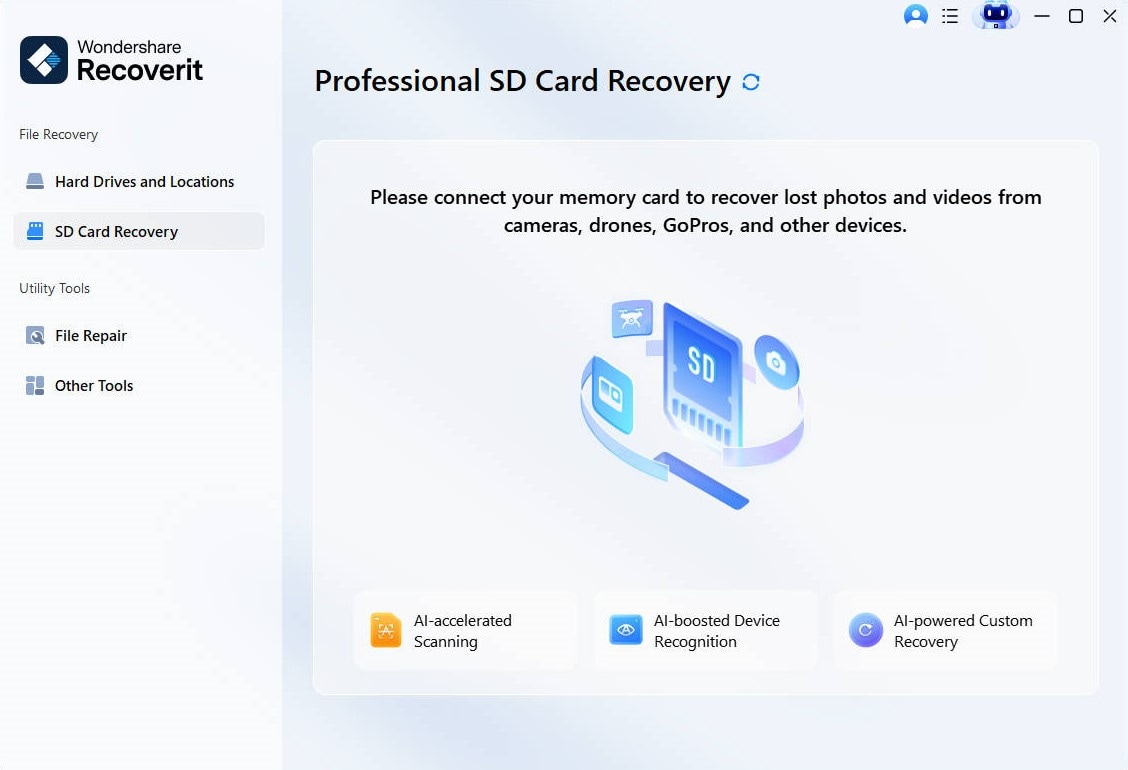
- Open Recoverit: Launch Recoverit and select the SanDisk device under external devices, hard drives, or SD Card Recovery.
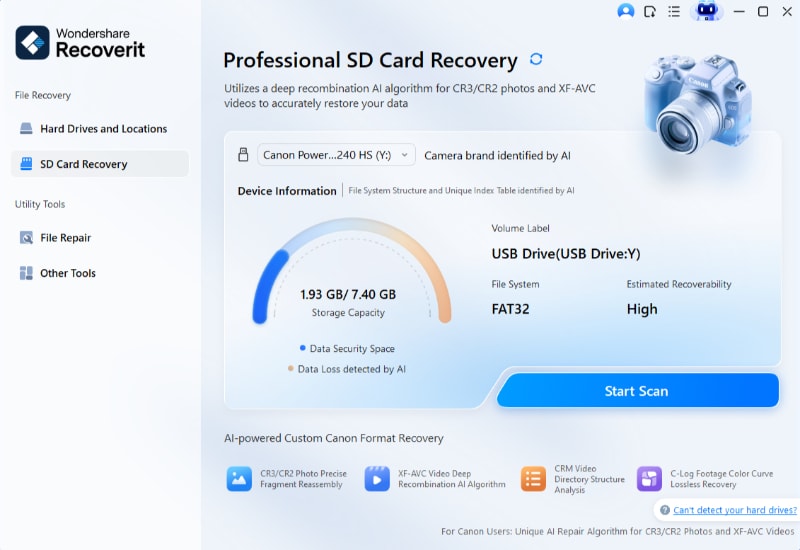
- Start scanning: Click Scan and wait while the software searches for deleted, formatted, or lost files.
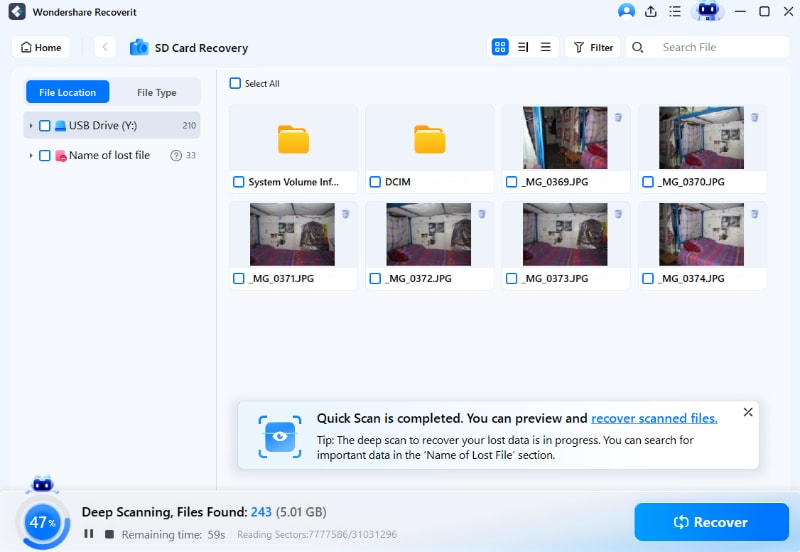
- Filter results: Narrow the scan results by file type, keyword, date, size, or extension such as
.jpg,.mp4,.docx,.pdf, or.zip. - Preview before recovery: Open photos, videos, and documents in preview to confirm that the files are usable.

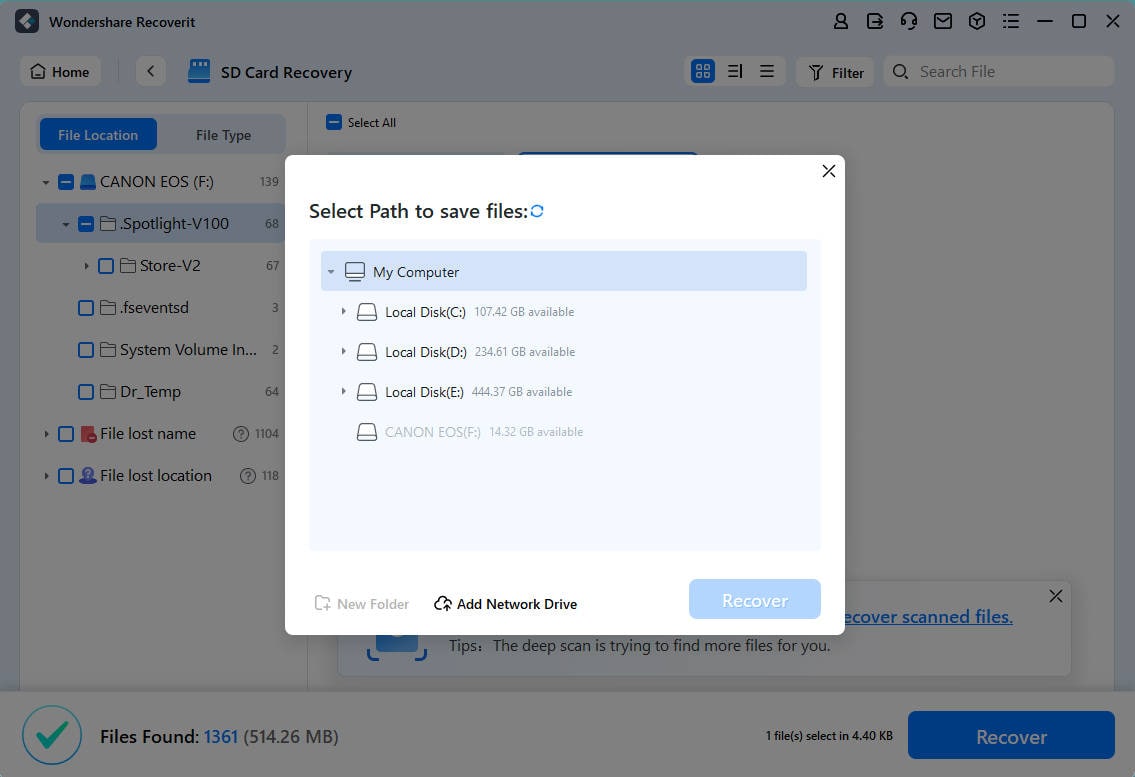
- Recover to another location: Click Recover and save files to your computer or another external drive, not to the same SanDisk device.
Part 6: Tips to Use a SanDisk Recovery Tool Like a Pro
- Act quickly: Deleted files stay recoverable only until new data overwrites them.
- Stop writing to the SanDisk device: Do not save new files, run downloads, record videos, or reformat the device before recovery.
- Recover to another drive: Always choose a different destination, such as your computer drive or another external drive.
- Use official downloads: Download recovery tools from the vendor's official site, Microsoft Store, CGSecurity, or SanDisk support links.
- Start with preview: Preview important files before recovery so you do not waste time restoring unusable results.
- Use deep scan for formatted devices: Quick scan is faster, but formatted or RAW SanDisk devices usually need deeper scanning.
- Consider a disk image: If the SanDisk device is unstable but still readable, advanced users should create an image and scan the image instead of repeatedly scanning the original media.
- Watch SSD limits: SanDisk SSDs with
TRIMenabled may permanently clear deleted data blocks, making software recovery less likely. - Recover before repairing: Do not run formatting, disk repair, or partition changes before the important files are saved.
- Back up after recovery: Keep important files in at least two places, such as local storage and cloud backup.
Conclusion
SanDisk data loss can often be handled with the right recovery tool if you stop using the device quickly and avoid overwriting the lost files. For an easy guided workflow, Recoverit is a strong option for scanning SanDisk SD cards, microSD cards, USB drives, and external devices. For fully free recovery, PhotoRec and Windows File Recovery are useful options for users who are comfortable with technical workflows.
If your SanDisk product includes a valid RescuePRO license, SanDisk RescuePRO may be worth trying. For simple Windows recovery, tools such as Recuva, Wise Data Recovery, R-Undelete Home, and MiniTool Power Data Recovery can help depending on the file system and free recovery limits.
Always recover files to another drive, verify the recovered data, and back up important files before reusing or formatting the SanDisk device.
FAQ
-
What is the best free SanDisk recovery tool?
Wondershare Recoverit is considered one of the best free SanDisk recovery tools due to its high success rate and extensive file format support. It can recover data from various scenarios such as system crashes, accidental deletions, and corrupted files. Its user-friendly interface makes it accessible even to non-technical users, and its deep scanning feature ensures thorough recovery of lost data, making it a top choice for many users. -
Can I recover files from a corrupted SanDisk device?
Yes, many SanDisk recovery tools can recover files from corrupted devices. Tools like Wondershare Recoverit, Disk Drill, and EaseUS Data Recovery Wizard are equipped with advanced algorithms that can retrieve data from damaged or corrupted SanDisk devices. However, the success rate of recovery may depend on the extent of the corruption and how promptly you attempt the recovery process. It's important to use reliable recovery software to increase the chances of successful data retrieval. -
Is it possible to recover files after they have been overwritten?
Recovering files after they have been overwritten is typically very challenging and often not possible. When a file is overwritten, the original data is usually replaced by new data, making it difficult to retrieve. However, if you act quickly and avoid using the device as soon as you realize the data has been overwritten, there might be a slim chance to recover some parts of the original files using advanced recovery tools. It's always best to back up important data regularly to prevent such situations.


