


 TL;DR:
Recuva is a safe and legitimate data recovery tool best suited for casual users needing basic retrieval of recently deleted files, but it struggles with complex recoveries, deep scans, and SSDs.
● The free version permits unlimited data recovery but yields a lower success rate of up to 65%, whereas the $24.95 Professional version increases the success rate to up to 80% and includes priority support.
● The software is restricted to Windows operating systems and works best on traditional HDDs, suffering from limited success on SSDs due to the TRIM command, and its Deep Scan feature may not run on 32-bit Windows OS.
● While Recuva is adequate for simple deletions and common file formats, Wondershare Recoverit is recommended for complex data loss, corrupted videos, or professional use, offering a 98% average success rate and support for macOS.
Ask AI for a summary
 ChatGPT
 Perplexity
 Gemini
 Claude
 Grok
Grok
Recuva is one of the best-known free Windows data recovery tools, but its reliability depends on the type of data loss. It performs best when files were recently deleted and the storage device has not been heavily used since deletion.
For this review, the key question is not simply whether Recuva works, but when it works well. A reliable recovery workflow should consider file deletion timing, storage overwrite risk, scan depth, preview ability, supported devices, and whether the recovered files can be saved to a separate location.

| Review Factor | Recuva Verdict | What It Means |
| Best for | Simple Windows file recovery | Good for recently deleted photos, documents, archives, and common media files |
| Free version | Useful for basic recovery | Attractive for casual users who need a no-cost first attempt |
| Deep scan | Helpful but limited | Can find more files, but may take longer and still fail if files are overwritten |
| Advanced recovery | Not its strongest area | Less suitable for crashed systems, NAS, complex video repair, and severe corruption |
| Best alternative | Wondershare Recoverit | Better fit for complex data loss, video repair, wider device support, and professional workflows |
1. Recuva Overview
Recuva is a Windows data recovery tool from the CCleaner family, designed to recover deleted files from Windows computers, USB drives, memory cards, and other supported storage devices.
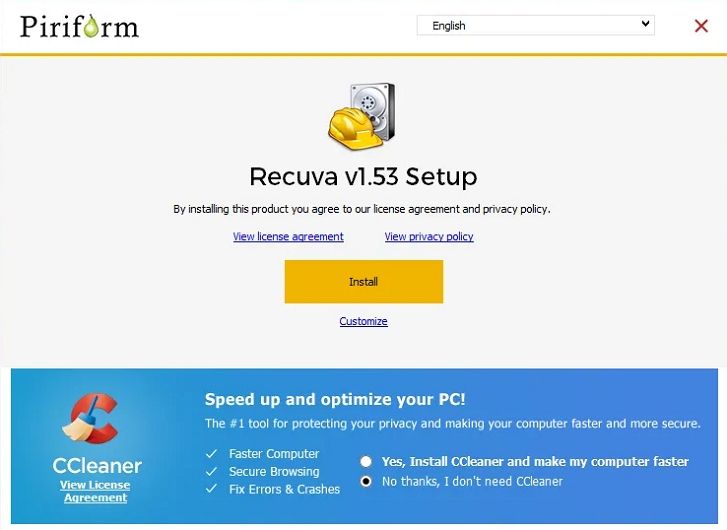
According to the official Recuva download page checked in July 2026, the current listed version history includes v1.55.133, released on 22 Jun 2026. This means older claims that the latest version is v1.53.2096 from 2023 should be updated before publication.
2. Recuva Pricing in 2026: Is It Really Free or Paid?
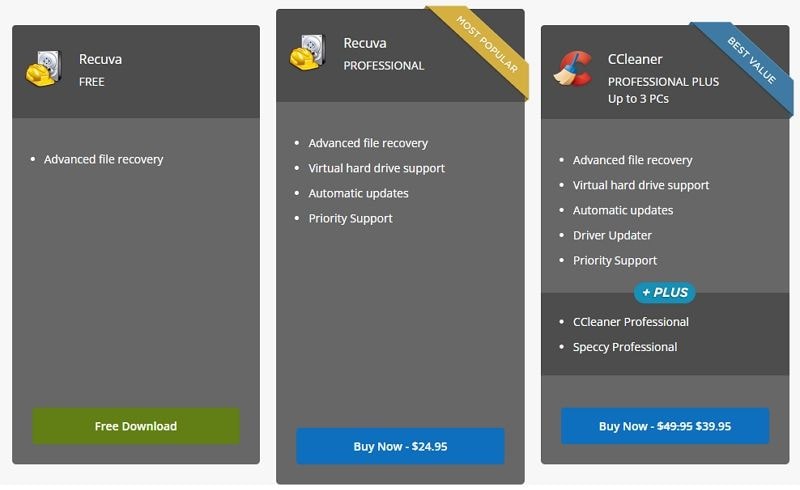
Recuva is commonly known as free data recovery software, but there is also a paid Professional version. The free version is suitable for basic recovery attempts, while the Professional version is positioned for users who want extra support and added features.
| Version | Best For | Key Difference |
| Recuva Free | Basic deleted file recovery | Good first attempt for recently deleted files on supported Windows devices |
| Recuva Professional | Users who want added support and Pro features | Officially positioned with professional features such as virtual hard drive support, automatic updates, and premium support |
| CCleaner Professional Plus | Users who want multiple CCleaner-family tools | Bundle value depends on whether you need the included maintenance tools |
3. Is Recuva Safe to Use?
Recuva is generally safe to use when downloaded from the official CCleaner website. The larger risk in data recovery is not usually the scanner itself, but user behavior after data loss.
- Download Recuva only from the official website.
- Do not install it on the same drive where deleted files were located.
- Scan the affected drive without writing new files to it.
- Recover files to a different drive, external disk, or safe folder.
- Use secure deletion or overwrite features only when you intentionally want files to become unrecoverable.
4. How To Use Recuva to Recover Deleted Files
Use Recuva for deleted file recovery only after you stop using the affected storage device. The fewer new files written to the drive, the better your recovery chance.
- Download Recuva from the official website and install it on a different drive if possible.
- Open Recuva Wizard and choose the file type you want to recover.

- Select the original location where the deleted files were stored.
- Run Quick Scan first for recently deleted files.

- If the files are not found, enable Deep Scan and scan again.
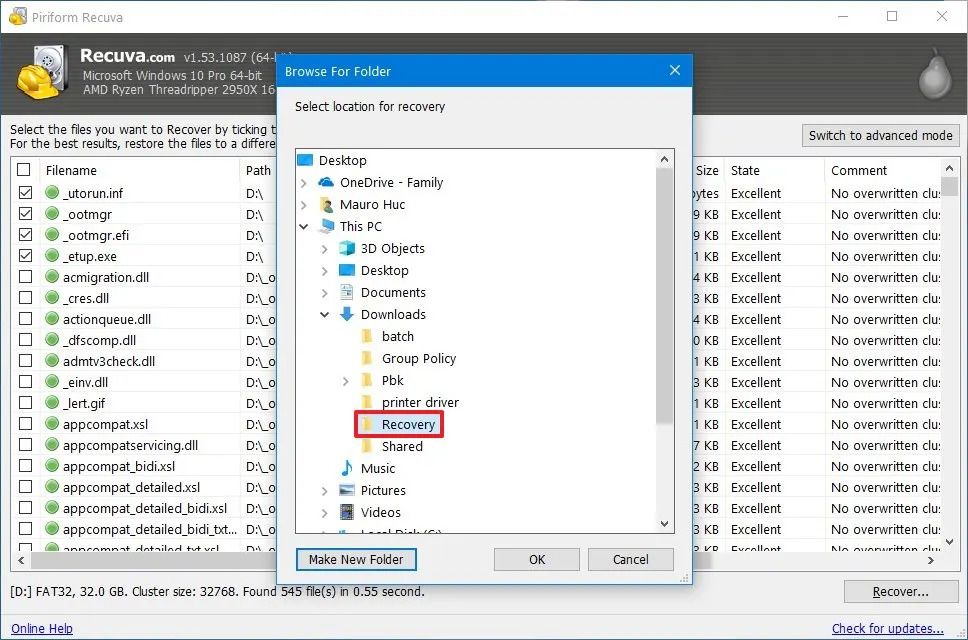
- Preview or review the recovery condition of found files.
- Select the files you need and click Recover.

- Save recovered files to a different drive or external storage device.
Try Best Alternative to Recuva - Wondershare Recoverit
 Security Verified. Over 7,302,189 people have downloaded it.
5. Is Recuva Worth It?
Consider all the following factors to determine whether you should use Recuva or find a better alternative.
When Should You Use Recuva?
| Recovery Scenario | Use Recuva? | Better Choice |
| Recently deleted files from a Windows PC | Yes, it is a good first attempt | Recuva |
| Deleted files from USB drive or memory card | Yes, if the device has not been overwritten | Recuva or Wondershare Recoverit |
| Formatted drive or partition loss | Maybe, but results vary | Wondershare Recoverit |
| Crashed computer or unbootable system | Not ideal | Wondershare Recoverit |
| Corrupted video repair | Not ideal | Wondershare Recoverit |
| NAS, Linux, or complex professional recovery | Not ideal | Wondershare Recoverit |
Key Features
Recuva doesn't offer many features for your recovery experience. Instead, you can find standard tools for safe data retrieval. These are some of them:
- Quick scan
- Deep scan
- Advanced data recovery
- Automatic backups
Although it isn't much, it's still enough to fulfill an average user's recovery needs. Most features work perfectly, so you'll get the most out of your journey.
Recuva File Type Support

Recuva is easy to use, but it is not designed for every data loss case. Use the table below to understand its practical strengths and limits.
| Evaluation Area | Strength | Limitation |
| File type support | Supports many common documents, images, audio, video, and archive files | May not be enough for specialized professional formats |
| User interface | Wizard-style workflow is beginner-friendly | Interface looks dated compared with modern recovery tools |
| Quick scan | Useful for recently deleted files | Cannot recover files that have been overwritten |
| Deep scan | Can locate more deleted data than a quick scan | May take longer and may still miss complex cases |
| Storage support | Works well for standard Windows drives, USB drives, and memory cards | Not ideal for NAS, crashed systems, or advanced encrypted recovery workflows |
| Support | Professional version includes higher-tier support options | Free users may rely more on documentation and community resources |
6. Recuva User Reviews and Ratings
User feedback for Recuva is mixed because recovery results vary widely. A user who deleted files minutes ago from an unused USB drive may have a positive experience, while a user recovering overwritten files from a failing disk may be disappointed.
- Positive reviews often mention: free recovery, simple interface, quick scan speed, and usefulness for recently deleted files.
- Negative reviews often mention: inconsistent deep scan results, limited recovery in complex cases, dated interface, and support expectations.
- Best way to interpret reviews: compare the reviewer's data loss situation with yours before assuming the same outcome.
| Review Platforms | Ratings |
| Spiceworks Community |  4.6/5.0 with 135 user votes 4.6/5.0 with 135 user votes |
| Microsoft Apps |  3.7/5.0 with 10 user votes 3.7/5.0 with 10 user votes |
| CNET |  4.1/5.0 with 233 user votes 4.1/5.0 with 233 user votes |
| PC Magazine | 3.5/5.0 reviewed by Edward Mendelson |
7. Recuva vs. Wondershare Recoverit: A Head-to-Head Comparison
Recuva and Wondershare Recoverit serve different recovery needs. Recuva is a good free first attempt for basic Windows deletion cases, while Wondershare Recoverit is better suited for broader and more complex recovery workflows.
| Comparison Area | Recuva | Wondershare Recoverit |
| Best for | Simple deleted file recovery on Windows | Complex data loss, formatted drives, crashed systems, NAS, and video repair |
| Ease of use | Beginner-friendly wizard | Modern guided workflow with preview and broader recovery modes |
| Free use | Strong appeal for basic recovery attempts | Useful preview and trial workflow before full recovery |
| Advanced video recovery | Limited | Designed for damaged, corrupted, or professional video recovery scenarios |
| Device support | Standard drives, USB drives, and memory cards | Broader device coverage, including more advanced storage and professional scenarios |
| Best decision | Try first for simple, recent deletion | Use when Recuva fails or the case is complex |
Final Verdict
Recuva is reliable enough for basic Windows recovery, especially when files were deleted recently and the storage device has not been overwritten. It is free, lightweight, and easy for beginners to try.
However, Recuva is not the best choice for every data loss scenario. If you need recovery from formatted drives, crashed computers, corrupted videos, NAS devices, or more complex storage problems, choose a more advanced tool such as Wondershare Recoverit.
FAQ
-
Is Recuva Really Free?
Yes, Recuva offers a fully functional free version with basic file recovery. For advanced features (e.g., virtual hard drive support, automatic updates), the Pro version ($24.95) is recommended. -
Can Recuva Recover Permanently Deleted Files?
Recuva can recover deleted files if they haven’t been overwritten. Success depends on: 1.File system (NTFS > FAT32). 2.Time elapsed since deletion. 3.Disk usage after deletion. -
Is Recuva Safe to Use?
Yes, Recuva is malware-free. But remember not to install it on the same drive where files were lost to prevent overwriting. -
Does Recuva Work on SSDs?
Limited success on SSDs due to TRIM command (erases deleted data on SSDs). Recuva works best on traditional HDDs.


